7.27 Compensatory Damages in Prisoner Cases
Overview of this form
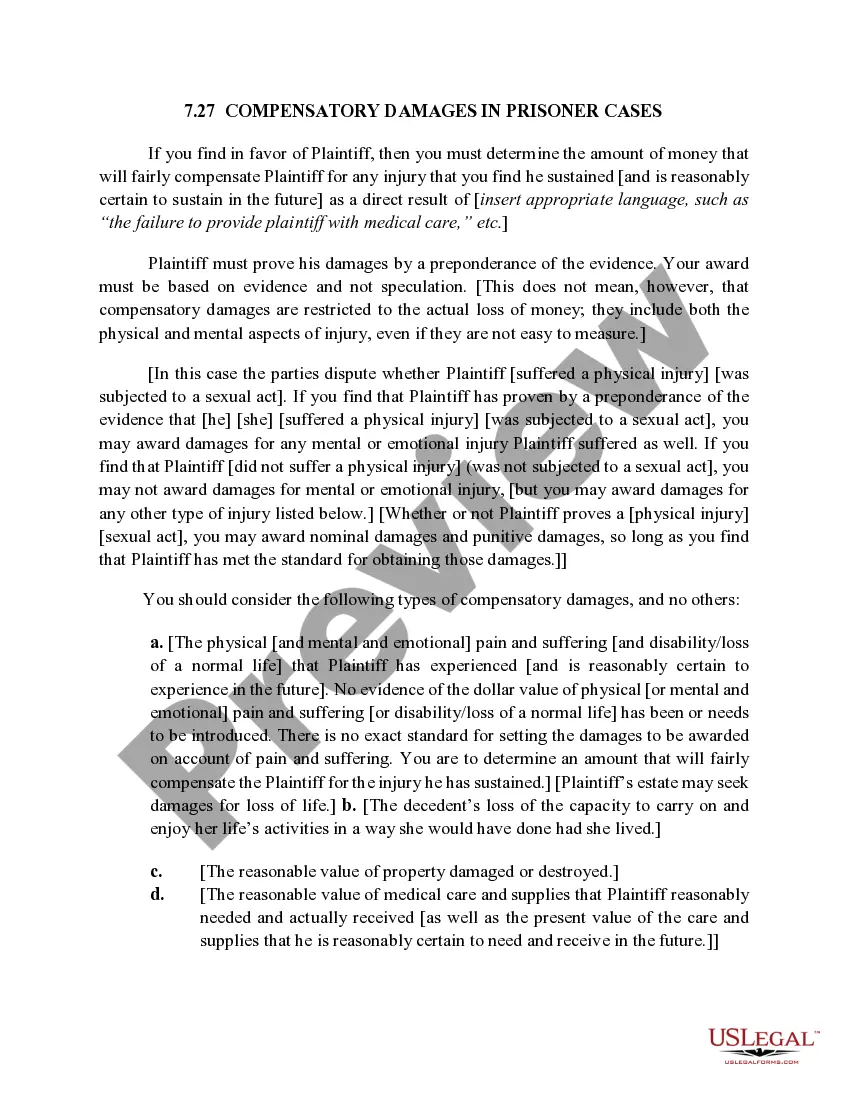
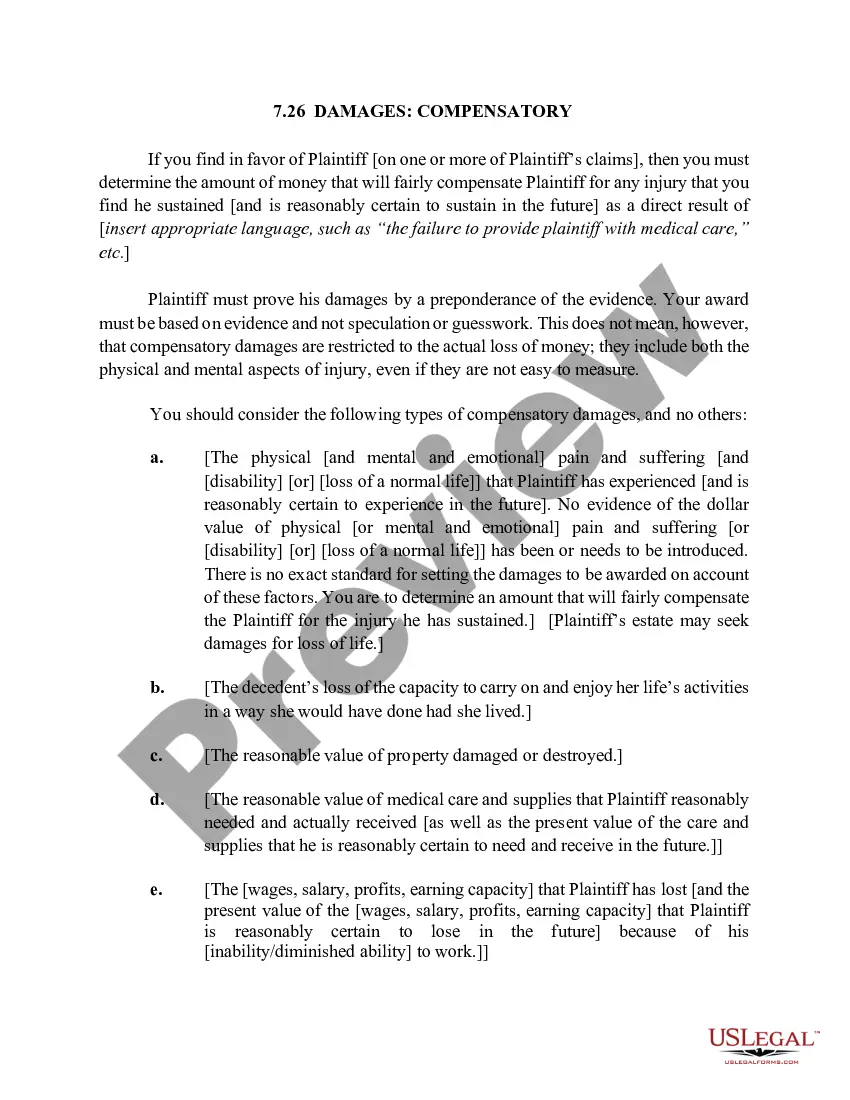
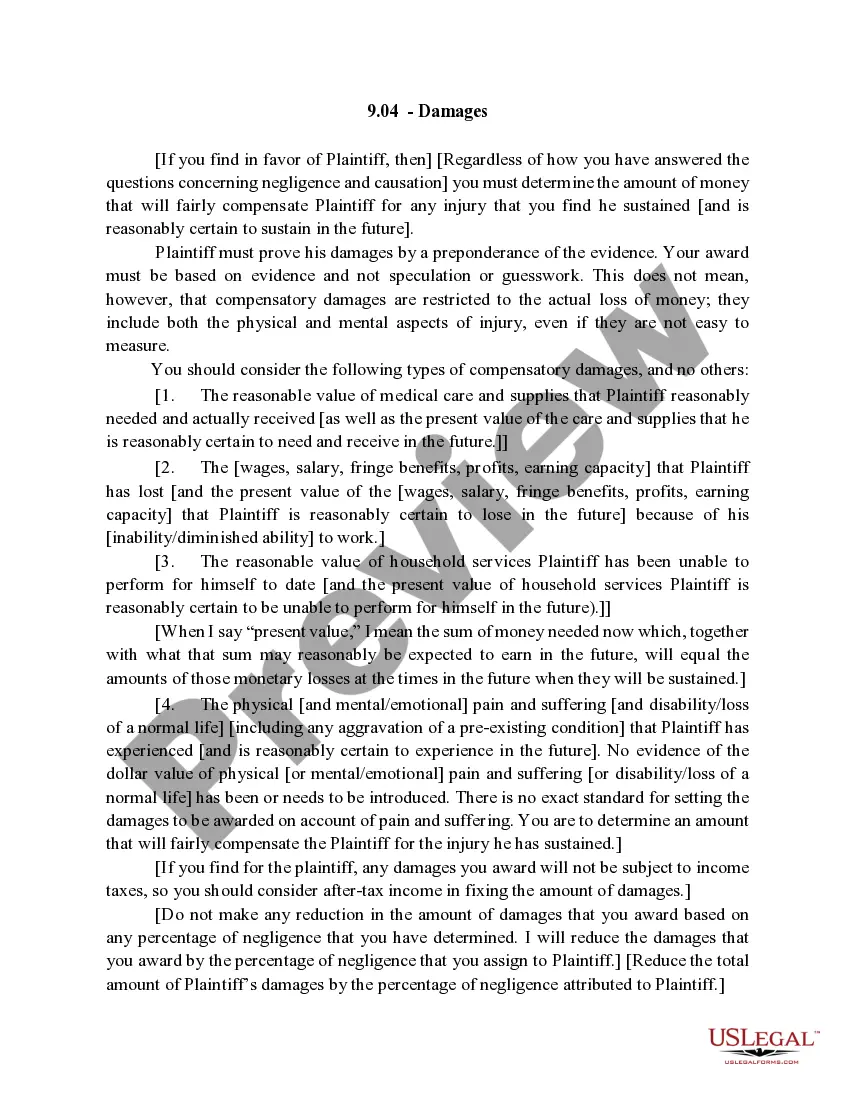
The 7.27 Compensatory Damages in Prisoner Cases form guides jurors in determining the appropriate amount of compensatory damages for injuries sustained by a plaintiff who is a prisoner. This form is specifically tailored for cases involving allegations of physical injury or sexual acts while incarcerated, helping jurors distinguish between different types of damages, including those related to both physical and emotional suffering. It serves a critical role in ensuring fair compensation based on evidence presented during the trial.
Key components of this form
- Criteria for determining compensatory damages based on the plaintiff's injuries.
- Distinction between physical injuries and emotional distress claims.
- Types of damages a juror may consider, including pain and suffering and loss of earning capacity.
- Requirements for proving damages by a preponderance of the evidence.
- Guidelines on awarding nominal and punitive damages.


When to use this document
This form is used in federal civil cases where a prisoner alleges that they have suffered injuries due to the actions or negligence of prison officials. Situations may include instances of inadequate medical care, physical harm, or sexual abuse while in custody. It helps jurors assess the extent of harm and compensation owed under applicable laws.
Intended users of this form
- Jurors involved in federal trials concerning prisoner cases.
- Attorneys representing plaintiffs in prisoner injury lawsuits.
- Legal professionals seeking to understand jury instruction processes in compensatory damage claims.
Steps to complete this form
- Review the evidence presented regarding the plaintiff's injuries.
- Determine if the plaintiff proved a physical injury or was subjected to a sexual act.
- Consider compensatory damages that account for physical pain, suffering, and emotional distress.
- Calculate lost wages and future earning capacity based on the evidence available.
- Decide on any nominal or punitive damages as appropriate under the circumstances.
Notarization guidance
Notarization is generally not required for this form. However, certain states or situations might demand it. You can complete notarization online through US Legal Forms, powered by Notarize, using a verified video call available anytime.
Get your form ready online
Our built-in tools help you complete, sign, share, and store your documents in one place.
Make edits, fill in missing information, and update formatting in US Legal Forms—just like you would in MS Word.
Download a copy, print it, send it by email, or mail it via USPS—whatever works best for your next step.
Sign and collect signatures with our SignNow integration. Send to multiple recipients, set reminders, and more. Go Premium to unlock E-Sign.
If this form requires notarization, complete it online through a secure video call—no need to meet a notary in person or wait for an appointment.
We protect your documents and personal data by following strict security and privacy standards.

Make edits, fill in missing information, and update formatting in US Legal Forms—just like you would in MS Word.

Download a copy, print it, send it by email, or mail it via USPS—whatever works best for your next step.

Sign and collect signatures with our SignNow integration. Send to multiple recipients, set reminders, and more. Go Premium to unlock E-Sign.

If this form requires notarization, complete it online through a secure video call—no need to meet a notary in person or wait for an appointment.

We protect your documents and personal data by following strict security and privacy standards.
Typical mistakes to avoid
- Failing to distinguish between physical and emotional injuries when awarding damages.
- Relying on speculation rather than evidence presented in court.
- Overlooking the requirement for a physical injury to claim emotional damages under federal law.
Benefits of using this form online
- Convenient access to essential legal instructions for jurors and legal professionals.
- Editability allows users to adapt the instructions according to case specifics.
- Reliable formatting ensures clarity and adherence to legal standards.
Legal use & context
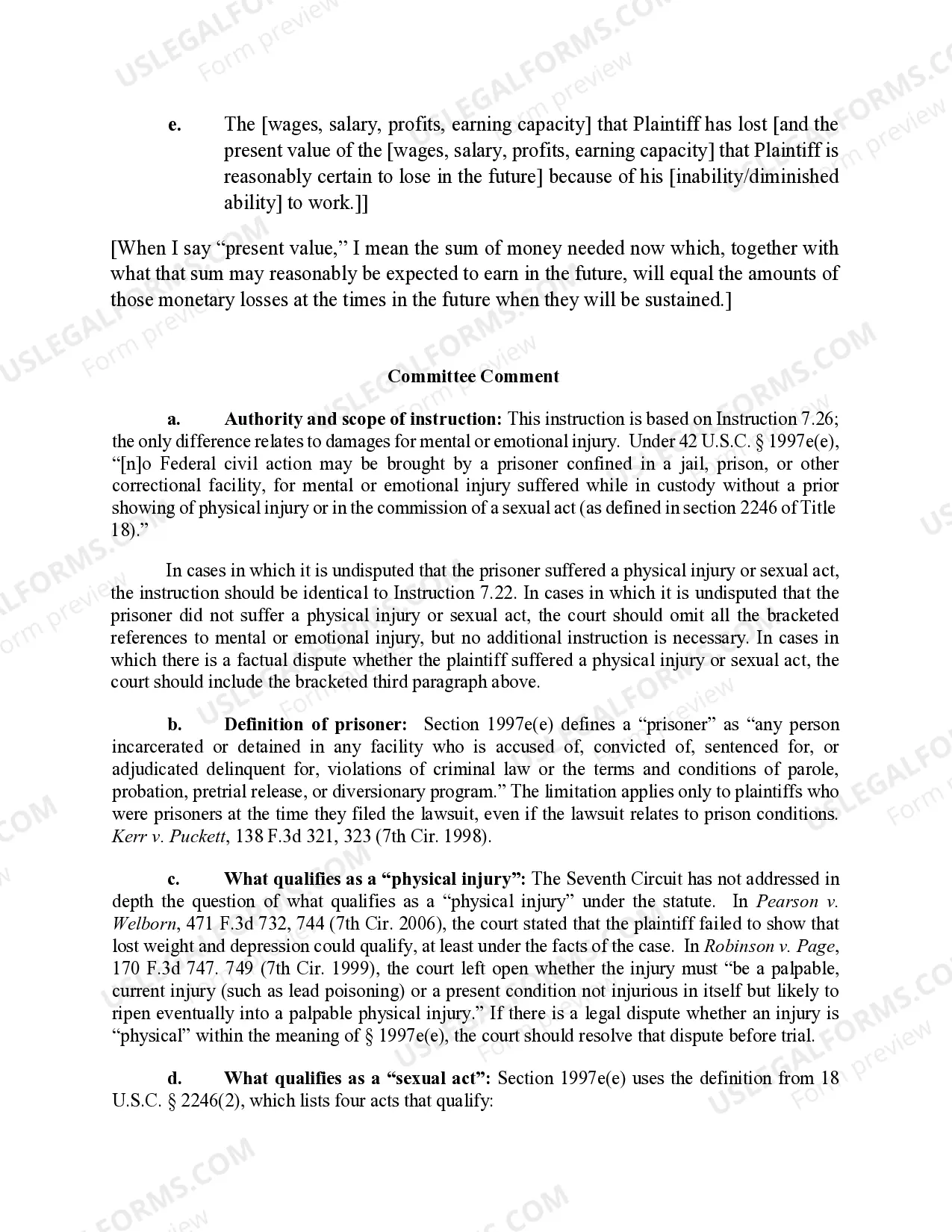
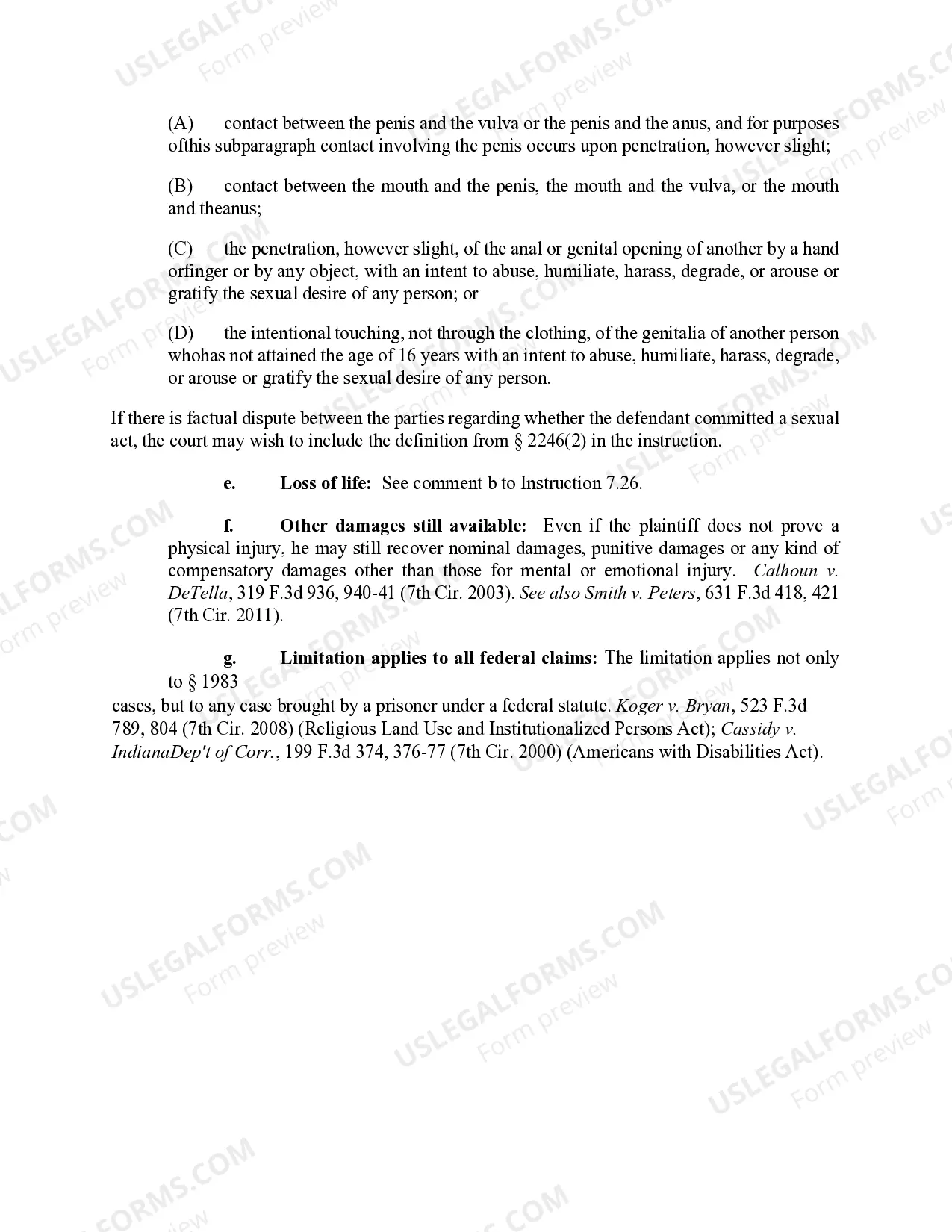
- This instruction is based on federal law under 42 U.S.C. § 1997e(e), which outlines the requirements for compensatory damages in prisoner cases.
- The form clarifies the conditions under which mental or emotional injuries can be claimed.
- It is essential for jurors to follow these guidelines to uphold the integrity of the legal process.
Quick recap
- The 7.27 Compensatory Damages in Prisoner Cases form is crucial for determining fair compensation in prisoner lawsuits.
- Jurors must base their decisions on evidence, ensuring that all awarded damages are justifiable.
- This form emphasizes the need for a physical injury when considering emotional injury claims.
Looking for another form?
Form popularity
FAQ
Section 1983 of the United States Code is a federal law that provides a cause of action for victims of constitutional violations by state or local government officials. The law is commonly used to challenge police misconduct, but can also be used to assert other civil rights violations.
However, the U.S. Supreme Court has interpreted Section 1983 of the U.S. Code to permit prisoners to sue state correctional officials when the conditions of confinement fail to meet constitutional standards of physical security, adequate medical treatment, freedom of religious expression, and so forth.
What is the purpose of Section 1983 of the U.S. Code, as it relates to prisoners? It allows inmates to sue in federal court.
The hands-off era ended in 1970 when a federal district court declared in Holt v. Sarver the entire Arkansas prison system so inhumane as to be a violation of the Eighth Amendment bar on cruel and unusual punishment.
Administrative rules do not discuss compensation. ?Researchers are not to provide compensation or other rewards to an inmate for his/her participation in research, unless special permission is granted by the RRC (Research Review Committee).? Compensation decisions are made on a case-by-case basis.
The "hands-off" doctrine stated that the federal government had no legal standing to interfere in the operations of state institutions. Extreme conditions and changing public sentiment provided the impetus needed to breach the "hands-off" doctrine in the 1960s.
Section 1983 provides an individual the right to sue state government employees and others acting "under color of state law" for civil rights violations. Section 1983 does not provide civil rights; it is a means to enforce civil rights that already exist.
Section 1983 allows defendants to be found liable only when they have acted ?under color of any statute, ordinance, regulation, custom, or usage, of any State or Territory or the District of Columbia.? 42 U.S.C.