INSANITY
What is this form?
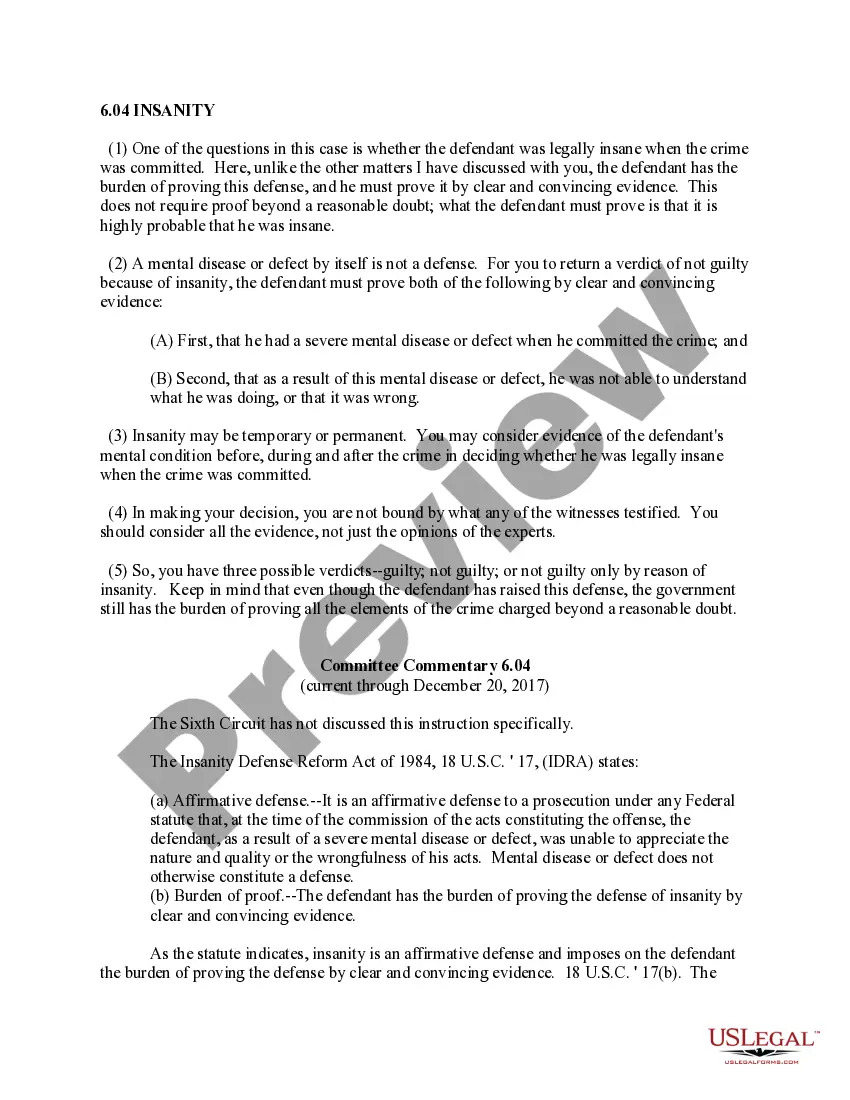
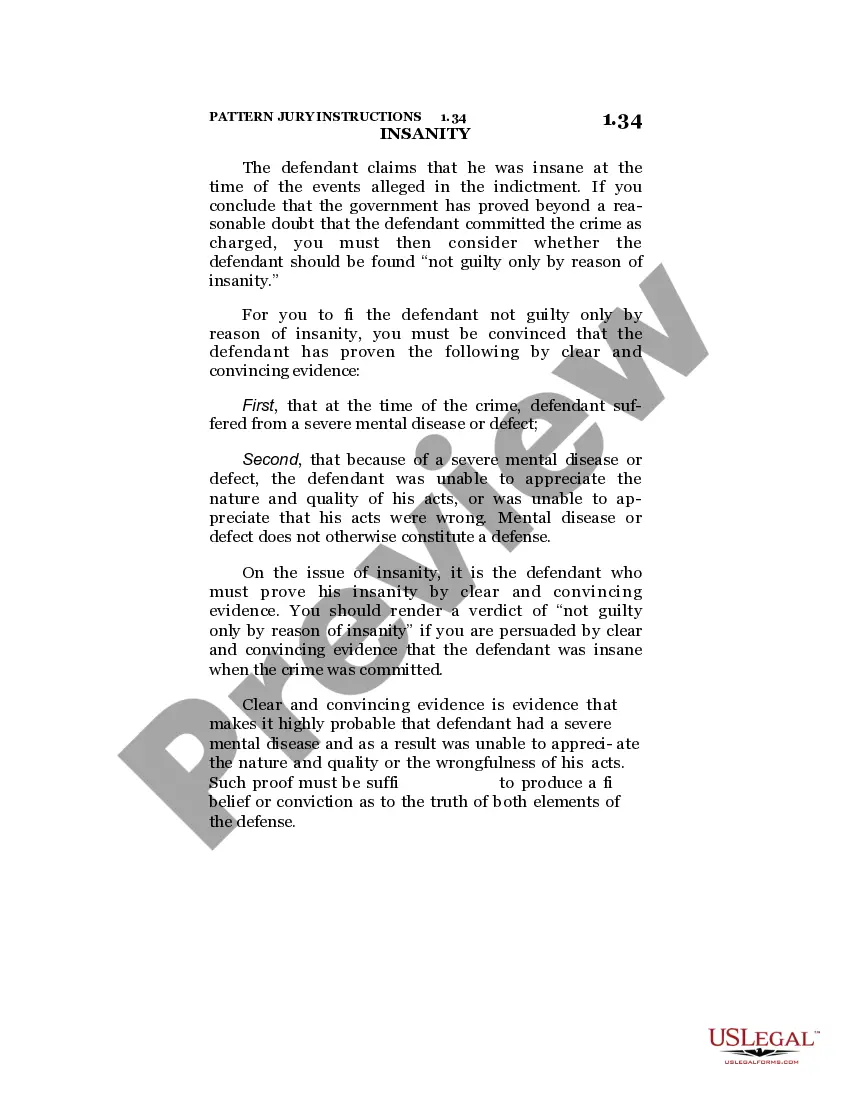
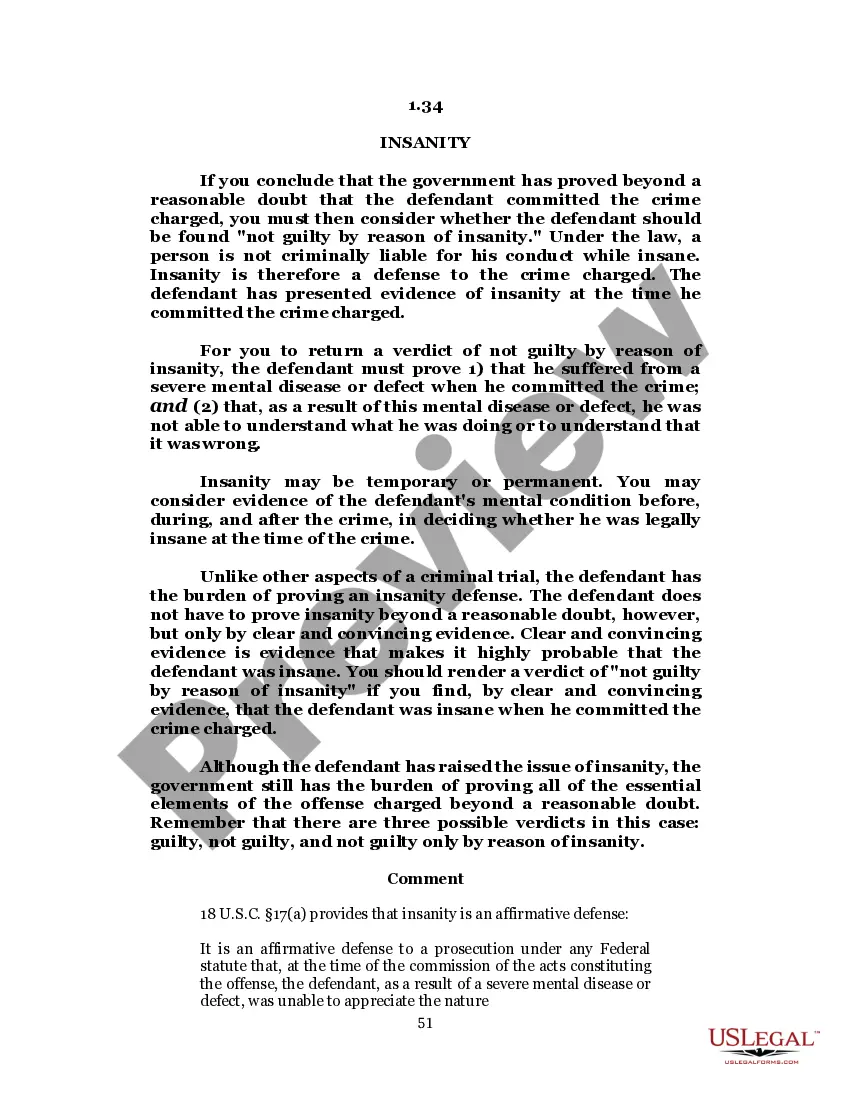
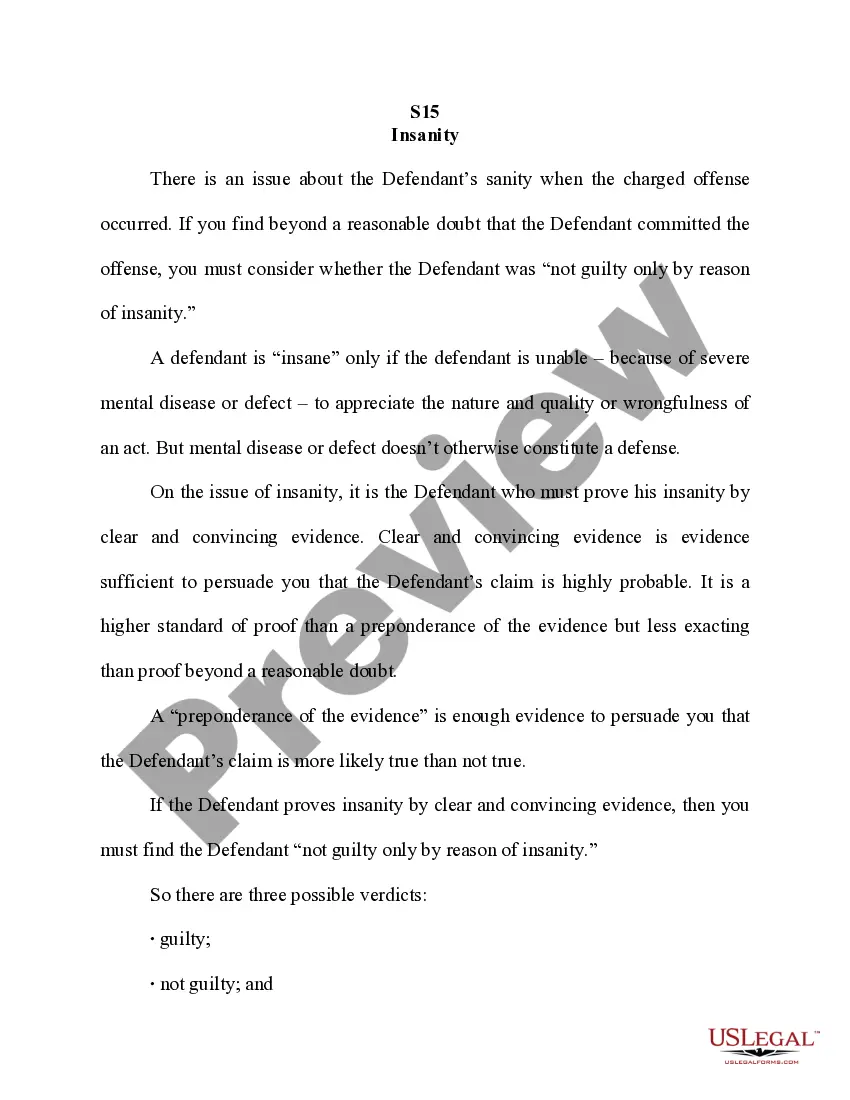
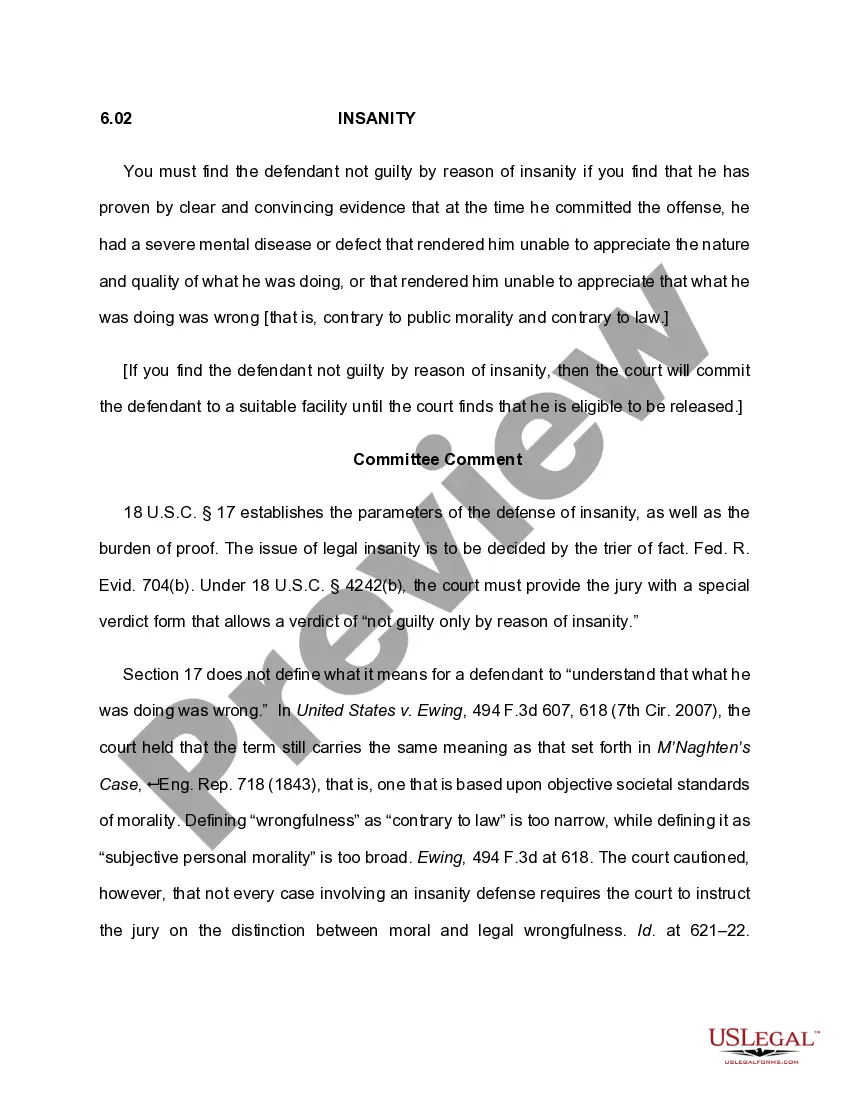
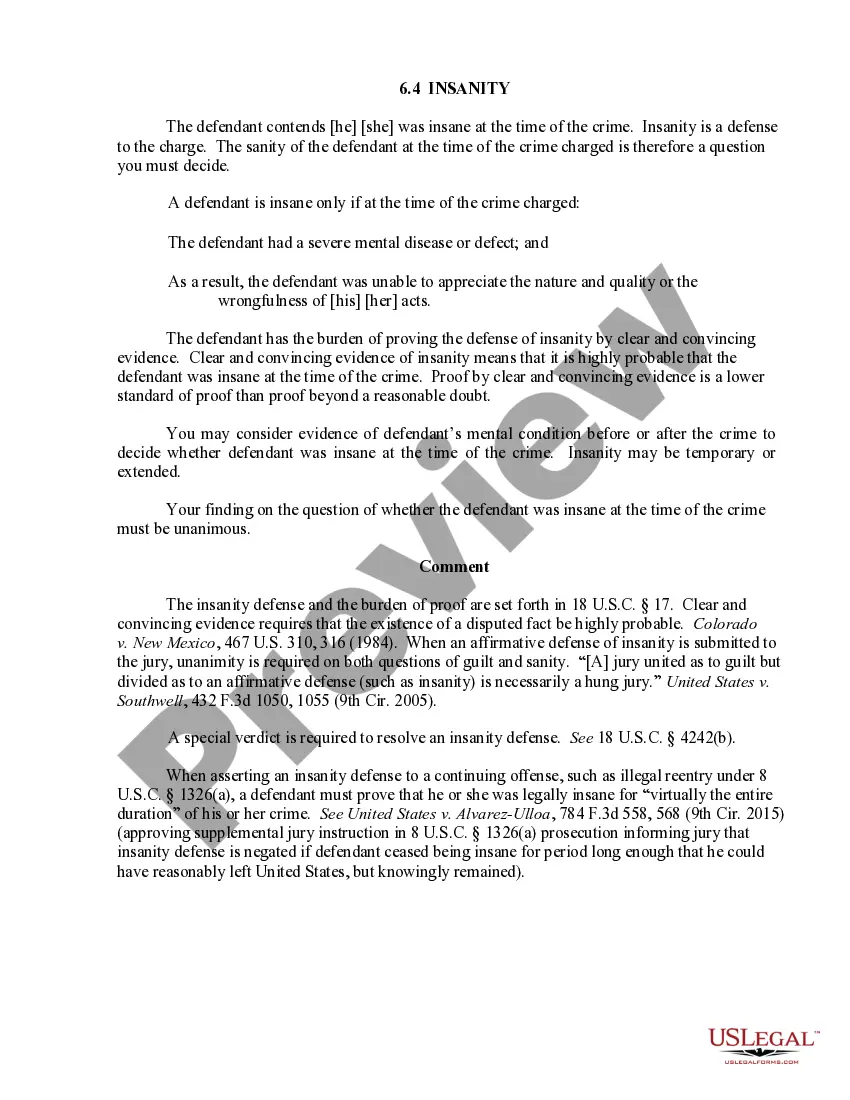
The Insanity form is a legal document used in criminal cases to assert a defense based on the defendant's mental state at the time of the offense. This form is utilized to argue that the defendant was legally insane when the crime was committed, thereby affecting the outcome of the trial. The insanity defense differs from other defenses as it requires the defendant to prove, by clear and convincing evidence, that they were suffering from a severe mental disease or defect that impaired their understanding of their actions or the wrongfulness of those actions.
Key components of this form
- Definition of insanity: Clarifies what constitutes legal insanity and the required proof.
- Burden of proof: Outlines that the defendant must prove the defense by clear and convincing evidence.
- Severe mental disease or defect: Specifies that a mere mental illness is insufficient for the defense.
- Consideration of mental condition: Discusses how evidence from before, during, and after the crime may be utilized.
- Possible verdicts: Lists the verdict options available to the jury, including not guilty by reason of insanity.
When this form is needed
This form is necessary when a defendant wishes to utilize the insanity defense in a criminal trial. It is specifically relevant in cases where the defendant's mental health may have significantly impaired their understanding of their actions or the morality of those actions at the time of the offense. It should be used when there is substantial evidence supporting the claim of a severe mental defect that needs to be presented to the jury.
Who needs this form
- Defendants in criminal cases where mental health issues are a factor in the crime.
- Legal representatives or attorneys seeking to assert an insanity defense on behalf of a client.
- Individuals advised by mental health professionals to consider the insanity defense based on their condition.
Instructions for completing this form
- Gather evidence of the defendant's mental health history, including evaluations and testimonies.
- Clearly state the mental disease or defect that the defendant is claiming affected their reasoning at the time of the crime.
- Detail how this condition prevented the defendant from understanding their actions or recognizing their wrongfulness.
- Provide supporting documentation from mental health professionals to substantiate the claim.
- Ensure that all statements are clear and convincing as per the requirements of the legal standard.
Is notarization required?
Notarization is generally not required for this form. However, certain states or situations might demand it. You can complete notarization online through US Legal Forms, powered by Notarize, using a verified video call available anytime.
Get your form ready online
Our built-in tools help you complete, sign, share, and store your documents in one place.
Make edits, fill in missing information, and update formatting in US Legal Forms—just like you would in MS Word.
Download a copy, print it, send it by email, or mail it via USPS—whatever works best for your next step.
Sign and collect signatures with our SignNow integration. Send to multiple recipients, set reminders, and more. Go Premium to unlock E-Sign.
If this form requires notarization, complete it online through a secure video call—no need to meet a notary in person or wait for an appointment.
We protect your documents and personal data by following strict security and privacy standards.

Make edits, fill in missing information, and update formatting in US Legal Forms—just like you would in MS Word.

Download a copy, print it, send it by email, or mail it via USPS—whatever works best for your next step.

Sign and collect signatures with our SignNow integration. Send to multiple recipients, set reminders, and more. Go Premium to unlock E-Sign.

If this form requires notarization, complete it online through a secure video call—no need to meet a notary in person or wait for an appointment.

We protect your documents and personal data by following strict security and privacy standards.
Common mistakes
- Failing to provide sufficient evidence to support the insanity claim.
- Not clearly articulating the connection between the mental defect and the crime committed.
- Overlooking the legal standard of "clear and convincing evidence."
- Relying solely on expert testimony without additional supporting evidence.
Benefits of completing this form online
- Convenience of completing the form from any location at any time.
- Editability allows for adjusting details as needed before final submission.
- Ensures reliability with forms created by licensed attorneys.
Legal use & context
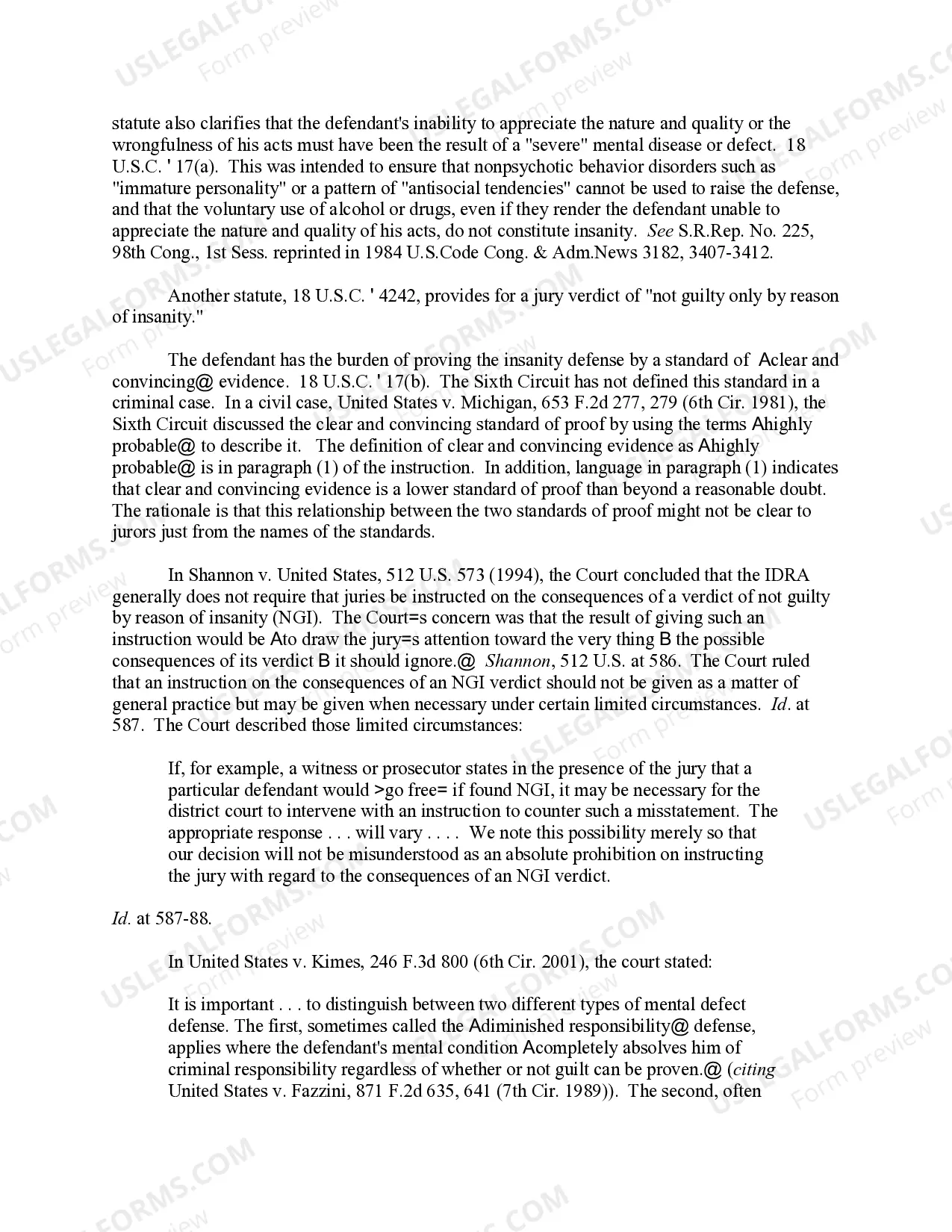
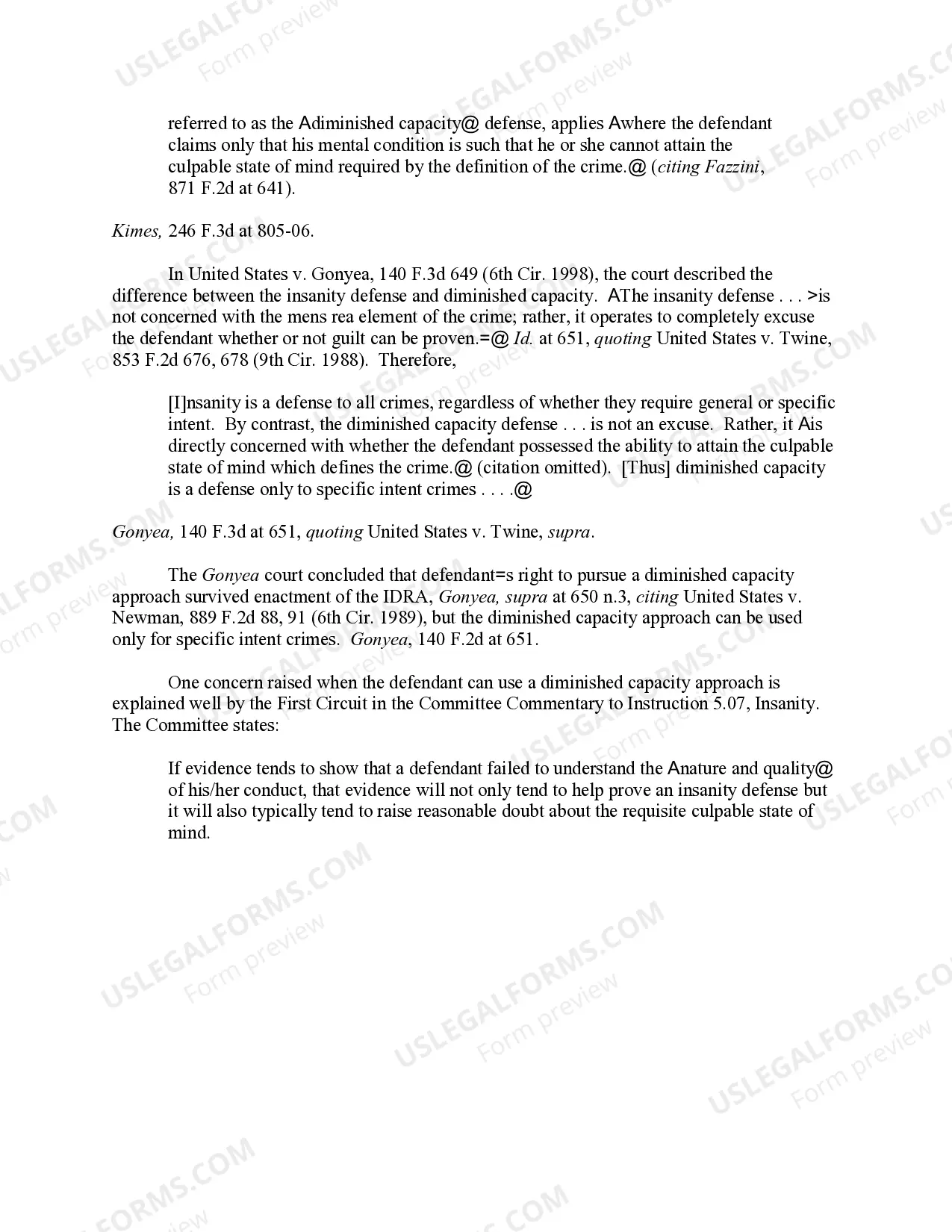
- The insanity defense is a recognized legal argument that can absolve a defendant of criminal responsibility.
- It operates under specific conditions that must be demonstrated with clear evidence, differentiating it from other defenses.
- Jury instructions play a crucial role in how the insanity defense is perceived and applied in court.
Looking for another form?

Form popularity
FAQ
N. 1. in law, the state of not suffering from a mental disorder or neurological defect that impairs one's ability to understand or appreciate one's acts or to conform to the requirements of the law.
Insanity in Contemporary Times For example: ?A person with depression? instead of ?a depressed person.? ?A person who has anorexia nervosa? or ?a person diagnosed with an eating disorder? instead of ?an anorexic? or ?a bulimic.?
The APA favors a standard for legal insanity which involves an inability to appreciate the wrongness of the behavior at issue due to a mental disease or mental retardation.
You probably know that the word insane means crazy. Well, the opposite of insane is sane ? or not crazy. A sane person is of sound mind and is mentally healthy. Sane people have good judgment, are reasonable, and can tell the difference between what's real and imagined.
: unsoundness of mind or lack of the ability to understand that prevents one from having the mental capacity required by law to enter into a particular relationship, status, or transaction or that releases one from criminal or civil responsibility: as.
Sanity, a term used more colloquially than otherwise in recent years, can be understood to refer to the state of having a sound, rational mind and being capable of good judgment.
The term "insanity" has been retired from medical nomenclature for about 100 years. Formerly interchangeable with the legal term, implying unsoundness of mind, it persists as a legal determination, mainly in criminal matters. However, the most prevalent uses of "insanity" are in colloquial speech and media.