6.02 INSANITY
Overview of this form
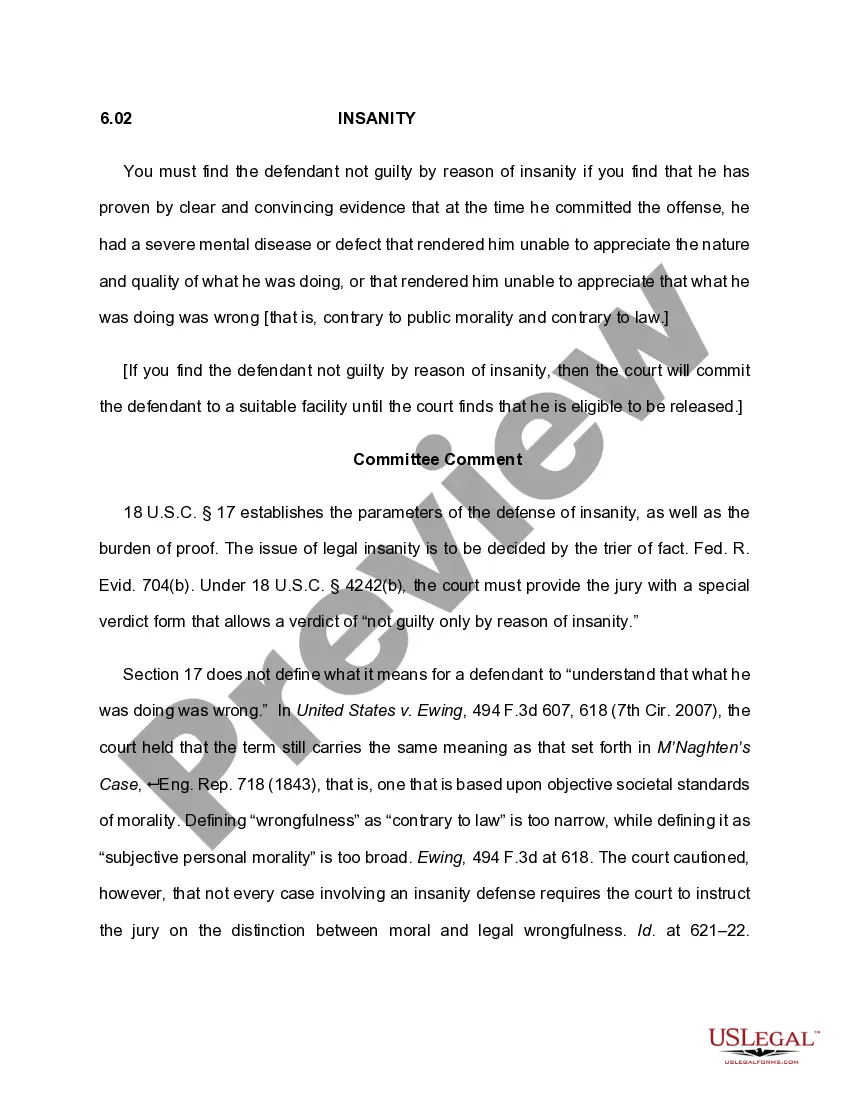
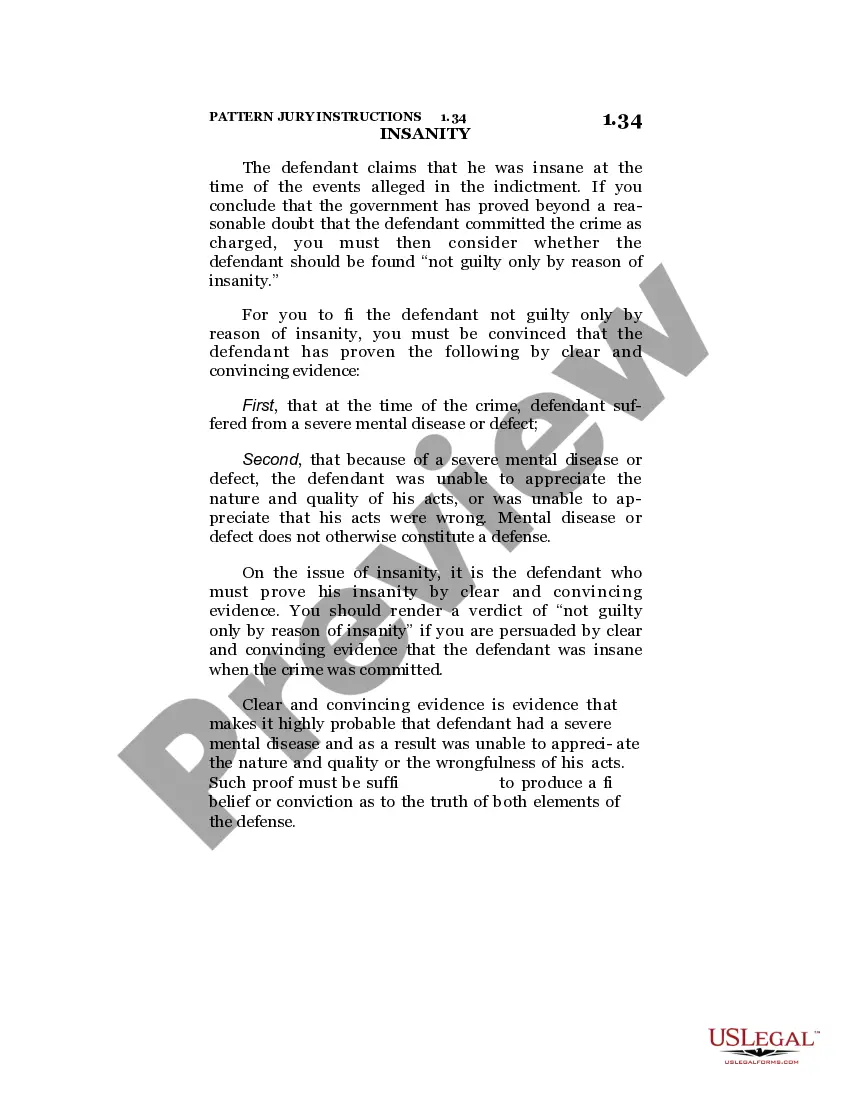
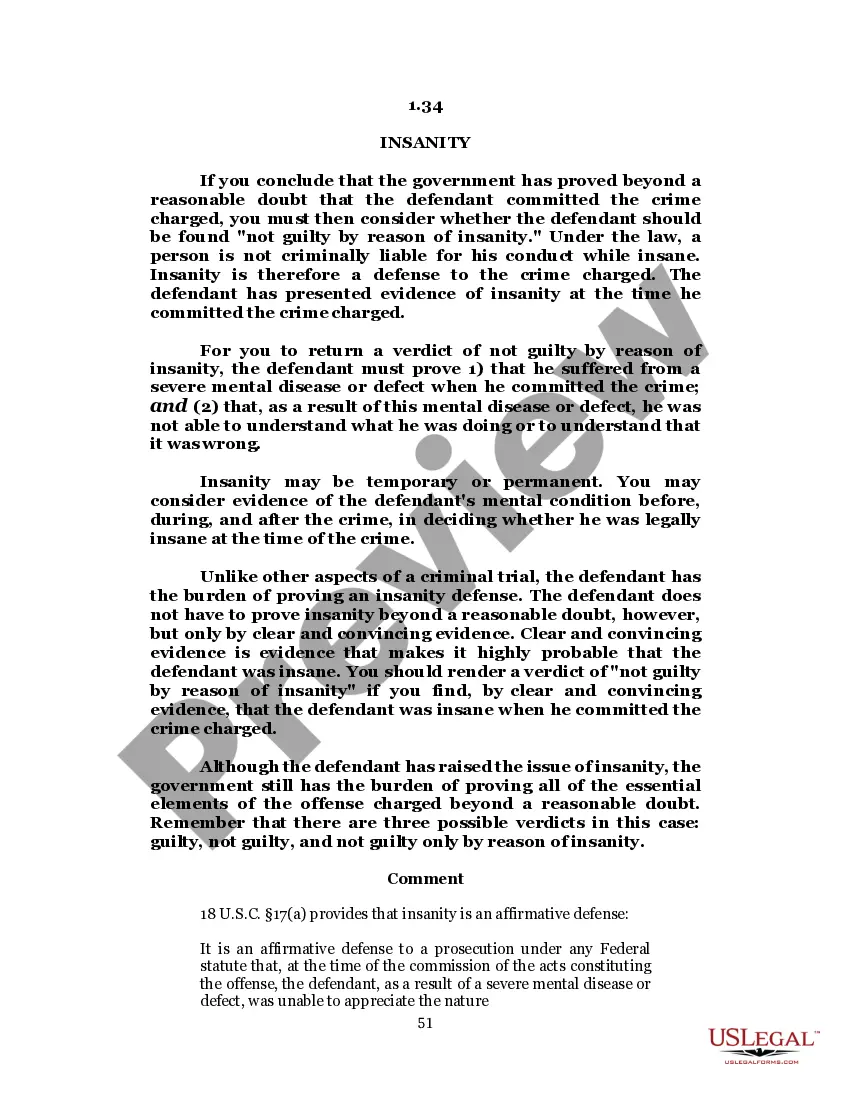
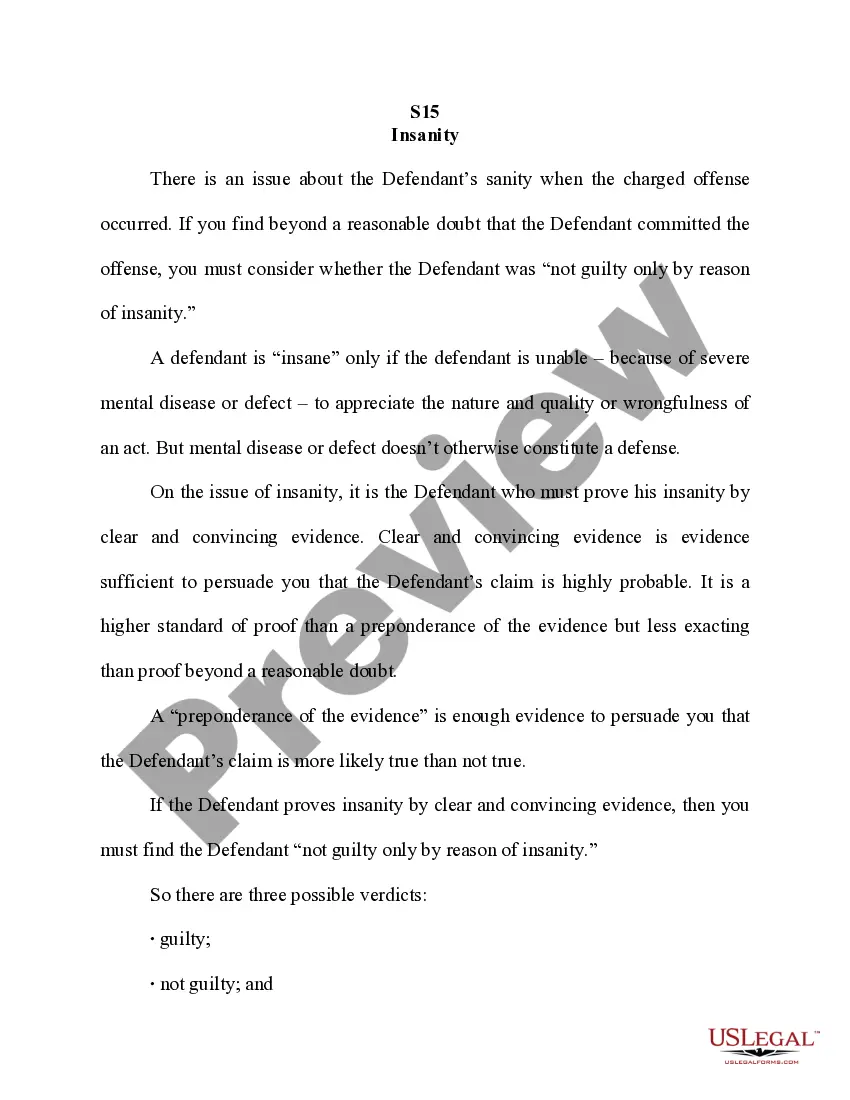
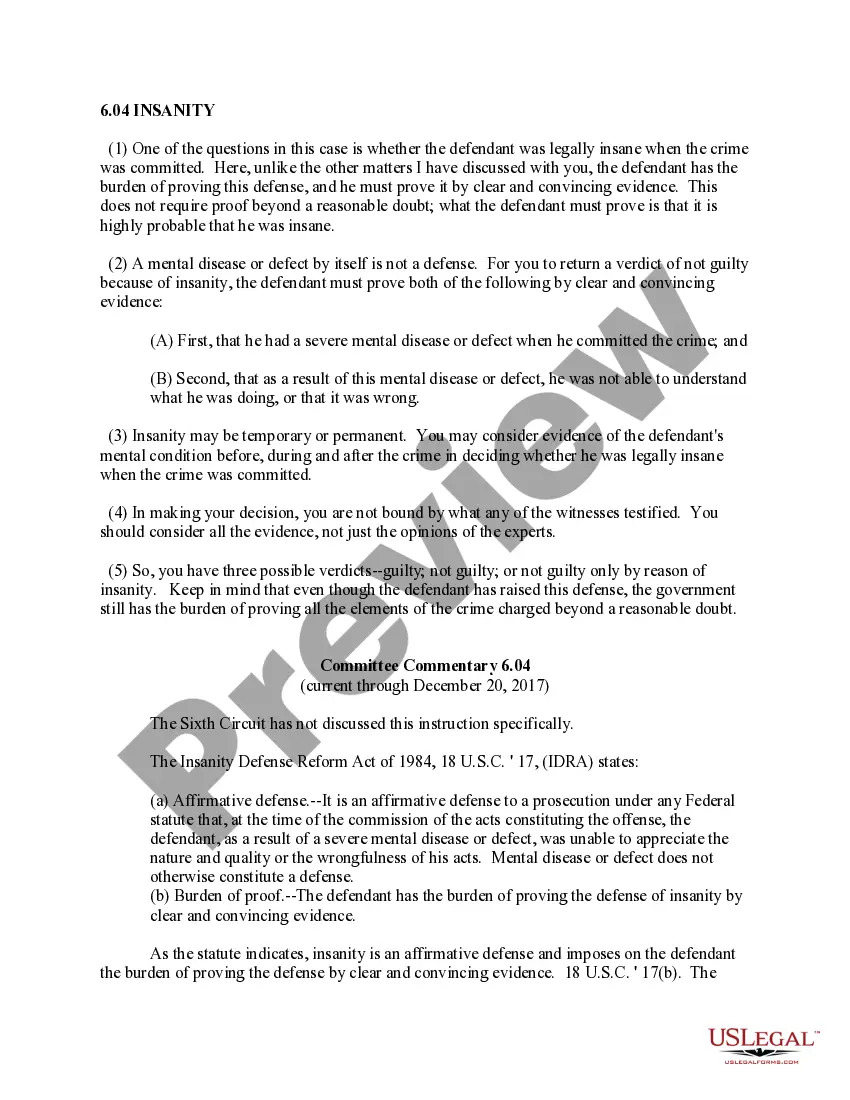
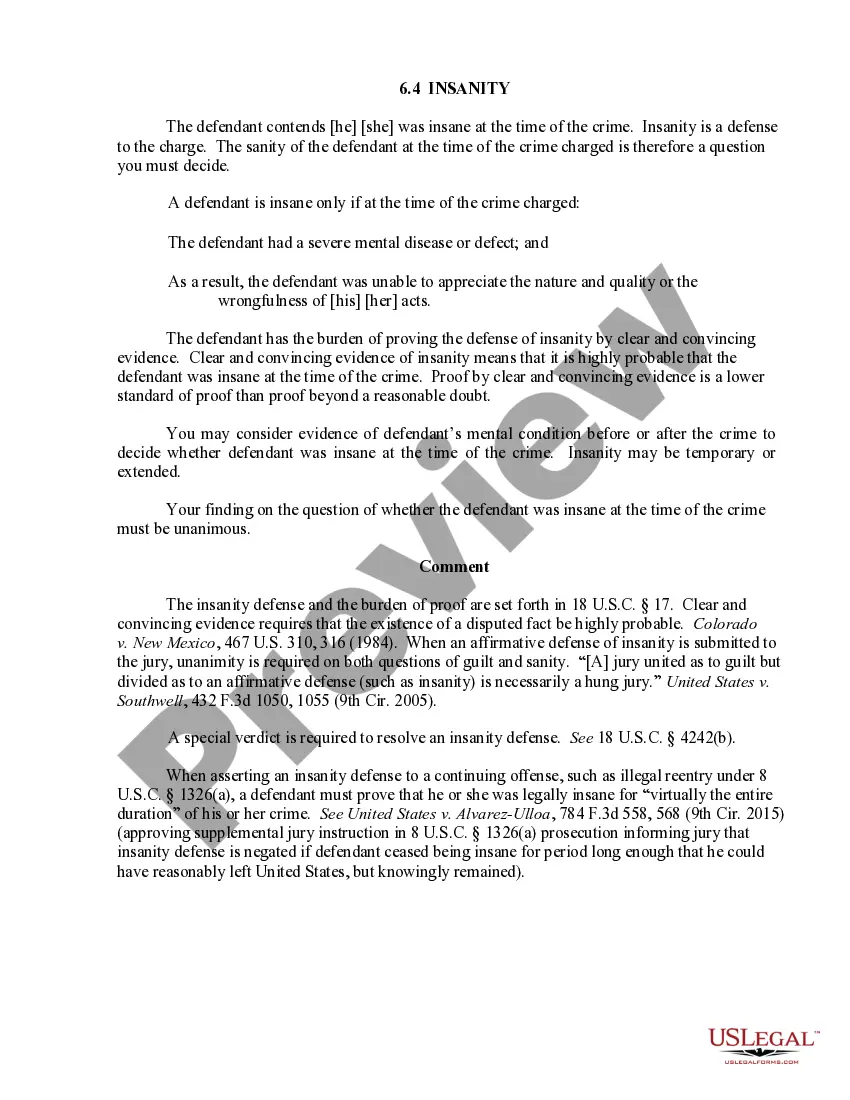
The 6.02 Insanity form is a legal document that outlines the criteria under which a defendant may be found not guilty by reason of insanity. This form, derived from the Official Pattern Jury Instructions of the Federal 7th Circuit Court, serves as a guideline for jurors to determine if a defendant had a severe mental disorder at the time of the offense, preventing them from understanding the nature or wrongfulness of their actions. It is specifically designed for cases involving the insanity defense, distinguishing it from standard criminal verdict forms.
Form components explained
- Definition of insanity based on a severe mental disease or defect.
- Clarification that the burden of proof lies with the defendant.
- Instructions for jurors regarding the evaluation of the defendant's understanding of right and wrong.
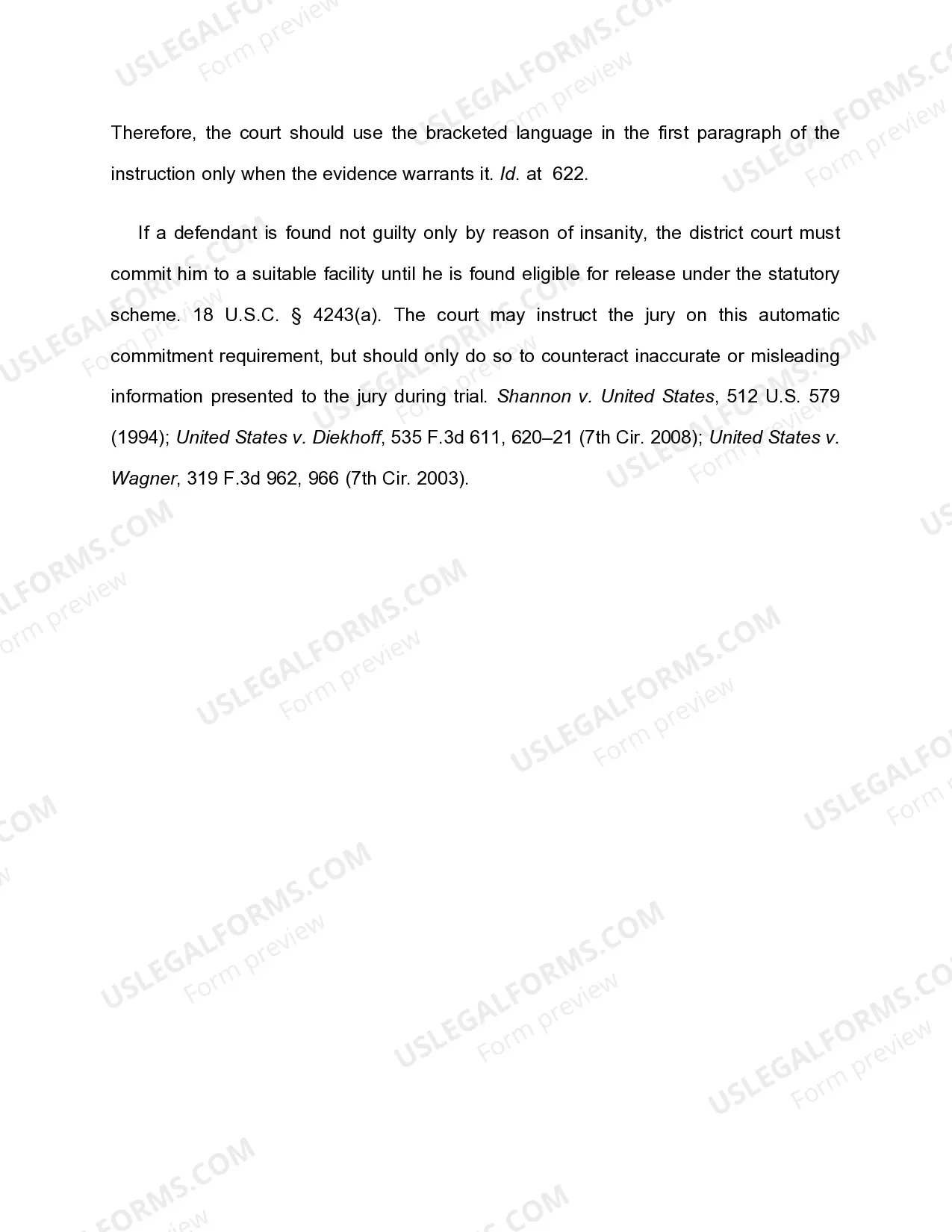
- Details on automatic commitment for defendants found not guilty by reason of insanity.
- References to relevant legal statutes and case law that inform the instructions.
Situations where this form applies
This form is used in criminal cases where the defendant raises the insanity defense. It is applicable during trials where the mental state of the defendant is a key factor in determining legal responsibility for the alleged offense. Use this form if you need to instruct a jury on how to evaluate the claim of insanity and the legal implications of a verdict of not guilty by reason of insanity.
Who this form is for
- Judges presiding over criminal trials involving the insanity defense.
- Legal practitioners representing defendants claiming insanity.
- Jurors who need guidance on evaluating the insanity defense.
- Legal scholars or students studying criminal law and the insanity defense.
How to prepare this document
- Review the legal criteria for insanity as defined in the instructions.
- Ensure that all jurors understand the burden of proof and the standards of clear and convincing evidence.
- Discuss whether the evidence presented supports the claim of the defendant's lack of understanding.
- Decide on the inclusion of moral wrongfulness as part of the evaluation.
- Complete the special verdict form as required by the court.
Does this document require notarization?
This form usually doesn’t need to be notarized. However, local laws or specific transactions may require it. Our online notarization service, powered by Notarize, lets you complete it remotely through a secure video session, available 24/7.
Get your form ready online
Our built-in tools help you complete, sign, share, and store your documents in one place.
Make edits, fill in missing information, and update formatting in US Legal Forms—just like you would in MS Word.
Download a copy, print it, send it by email, or mail it via USPS—whatever works best for your next step.
Sign and collect signatures with our SignNow integration. Send to multiple recipients, set reminders, and more. Go Premium to unlock E-Sign.
If this form requires notarization, complete it online through a secure video call—no need to meet a notary in person or wait for an appointment.
We protect your documents and personal data by following strict security and privacy standards.

Make edits, fill in missing information, and update formatting in US Legal Forms—just like you would in MS Word.

Download a copy, print it, send it by email, or mail it via USPS—whatever works best for your next step.

Sign and collect signatures with our SignNow integration. Send to multiple recipients, set reminders, and more. Go Premium to unlock E-Sign.

If this form requires notarization, complete it online through a secure video call—no need to meet a notary in person or wait for an appointment.

We protect your documents and personal data by following strict security and privacy standards.
Avoid these common issues
- Failing to properly instruct the jury on the burden of proof required for the insanity defense.
- Misinterpreting the definition of understanding right from wrong.
- Overlooking the importance of statutory requirements for jury instructions.
Benefits of using this form online
- Immediate access to accurate legal instructions drafted by licensed attorneys.
- Easy download and editing capabilities to tailor the form to specific case needs.
- Convenient access anytime and from anywhere, enhancing preparation efficiency.
Legal use & context
- The form is legally binding when used correctly in accordance with federal law.
- Jurors must understand the application of the insanity defense in the context of societal standards of morality.
- Non-compliance with procedural requirements can affect the validity of the insanity defense verdict.
Key takeaways
- The 6.02 Insanity form serves as crucial guidance for juries evaluating insanity defenses.
- Understand the importance of clearly defining the mental state required for a not guilty by reason of insanity verdict.
- Be aware of the automatic commitment process following a verdict of not guilty by reason of insanity.
Looking for another form?

Form popularity
FAQ
A dead man's statute states that in a civil action, a party with an interest in the litigation may not testify against a dead party about communications with the dead party.
The prohibition applies not only to supposed conversations with a now dead person, but also to conversations with any person who is not competent to testify. So, for example, a party cannot testify as to what someone in a coma said.
A dead man's statute states that in a civil action, a party with an interest in the litigation may not testify against a dead party about communications with the dead party.
Code § 8.01-397, does two things: (1) it provides a hearsay exception allowing certain statements to come into evidence when the person who made them is dead or otherwise incapable of testifying; and (2) it prohibits an adverse party in litigation from winning a judgment based solely on uncorroborated testimony that
The Dead Man's Statute is a carryover from the ancient prohibition against persons with an interest in a transaction from being witnesses in litigation over that transaction.
The Purpose of the Dead Man's Statute It prevents interested parties from testifying about their conversations or transactions with the decedent, based on the premise that the deceased party cannot refute or corroborate the testimony.
Code § 8.01-397, does two things: (1) it provides a hearsay exception allowing certain statements to come into evidence when the person who made them is dead or otherwise incapable of testifying; and (2) it prohibits an adverse party in litigation from winning a judgment based solely on uncorroborated testimony that
Some states take a broader definition of what information is banned, while more than half of the states, including California, have done away with the Dead Man's Statute altogether and generally allow testimony about statements made by a deceased person.