New York Training Contract - Horse Equine Forms
What this document covers
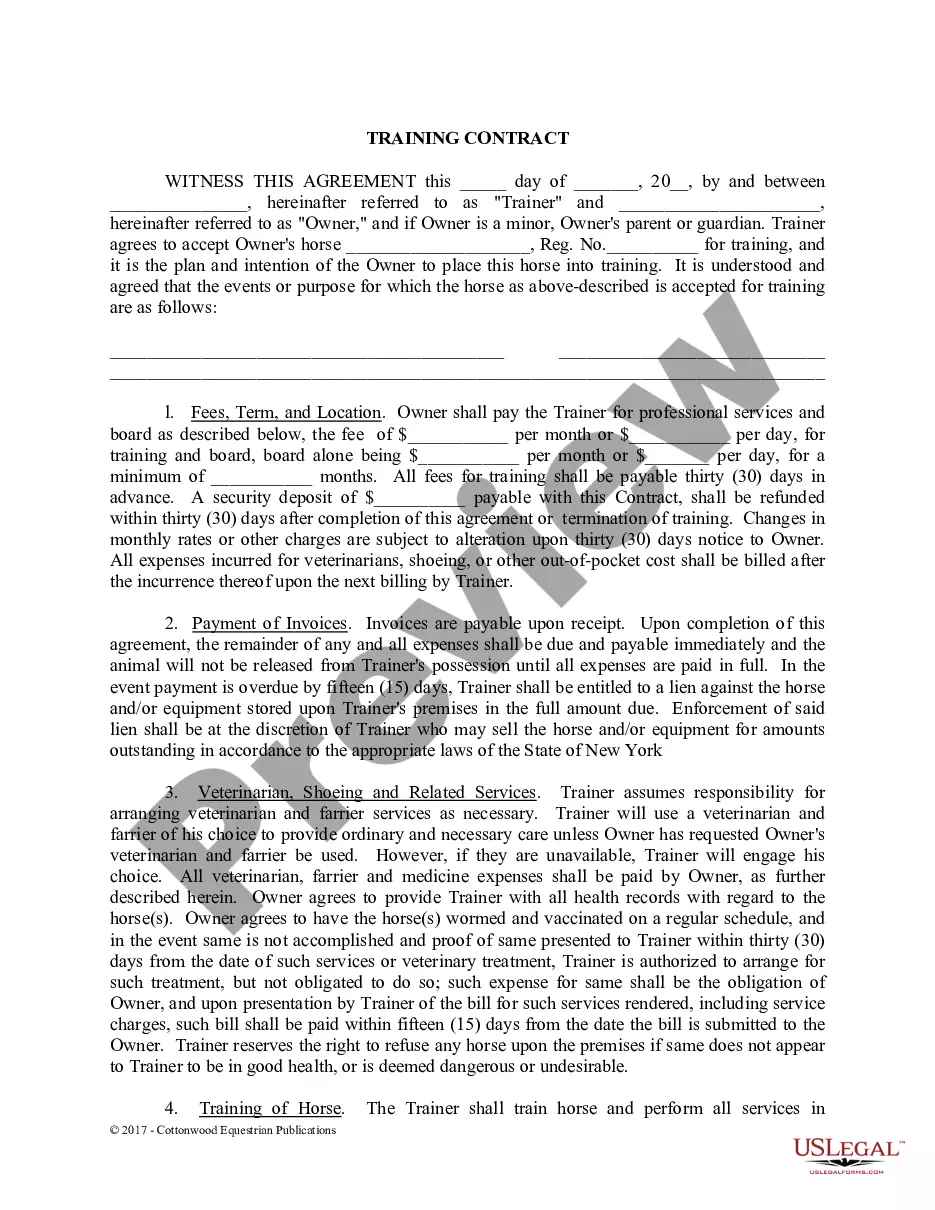
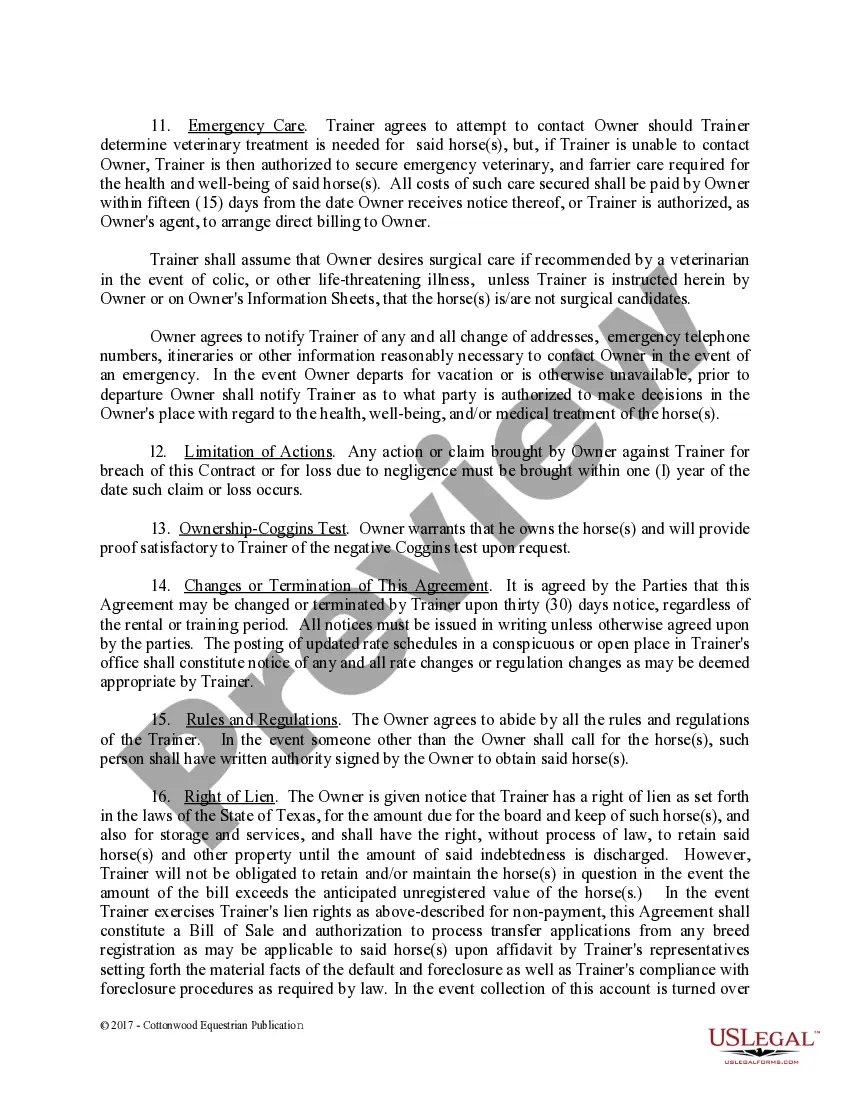
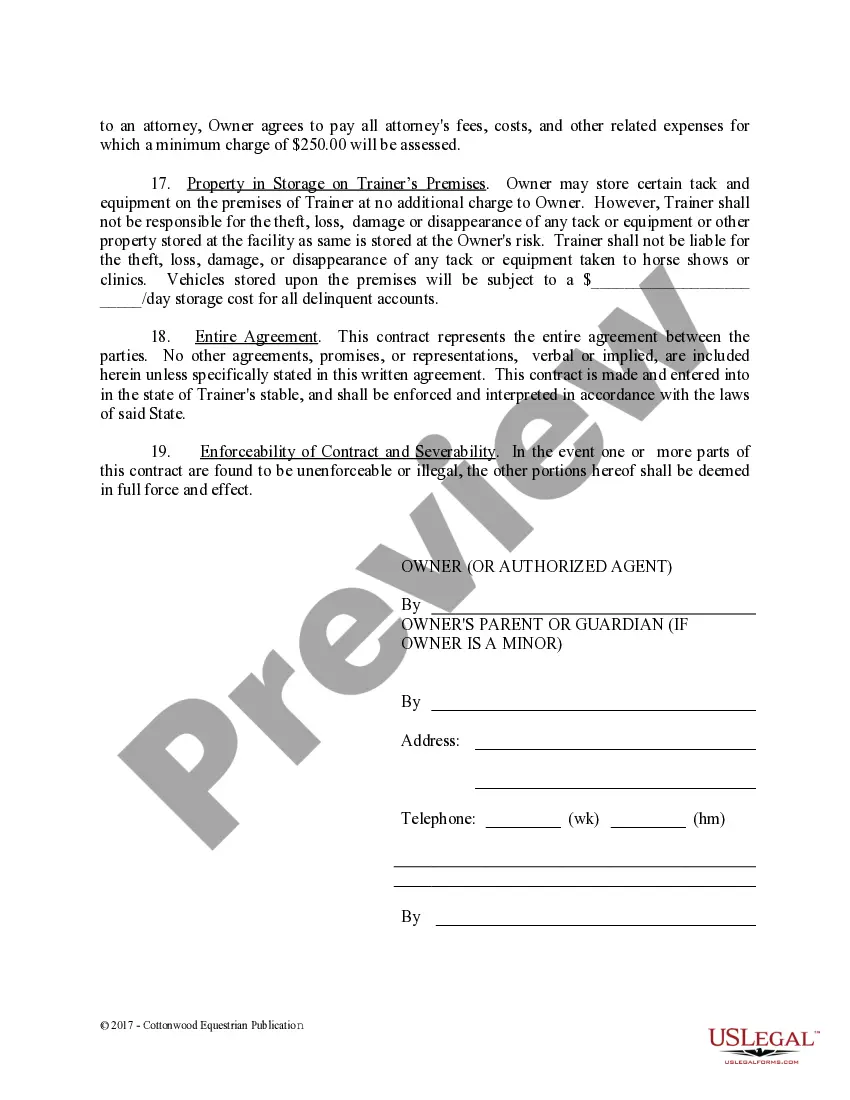
The Training Contract for horses is a legal agreement between a horse trainer and horse owner. This contract outlines the professional services provided by the trainer, including details on boarding, veterinary care, and terms for showing the horse. It establishes clear expectations and responsibilities for both parties, distinguishing it from other equine agreements by its comprehensive nature specific to training arrangements.
Key components of this form
- Identification of the trainer and the horse owner.
- Details of fees for training and boarding, including payment terms and security deposits.
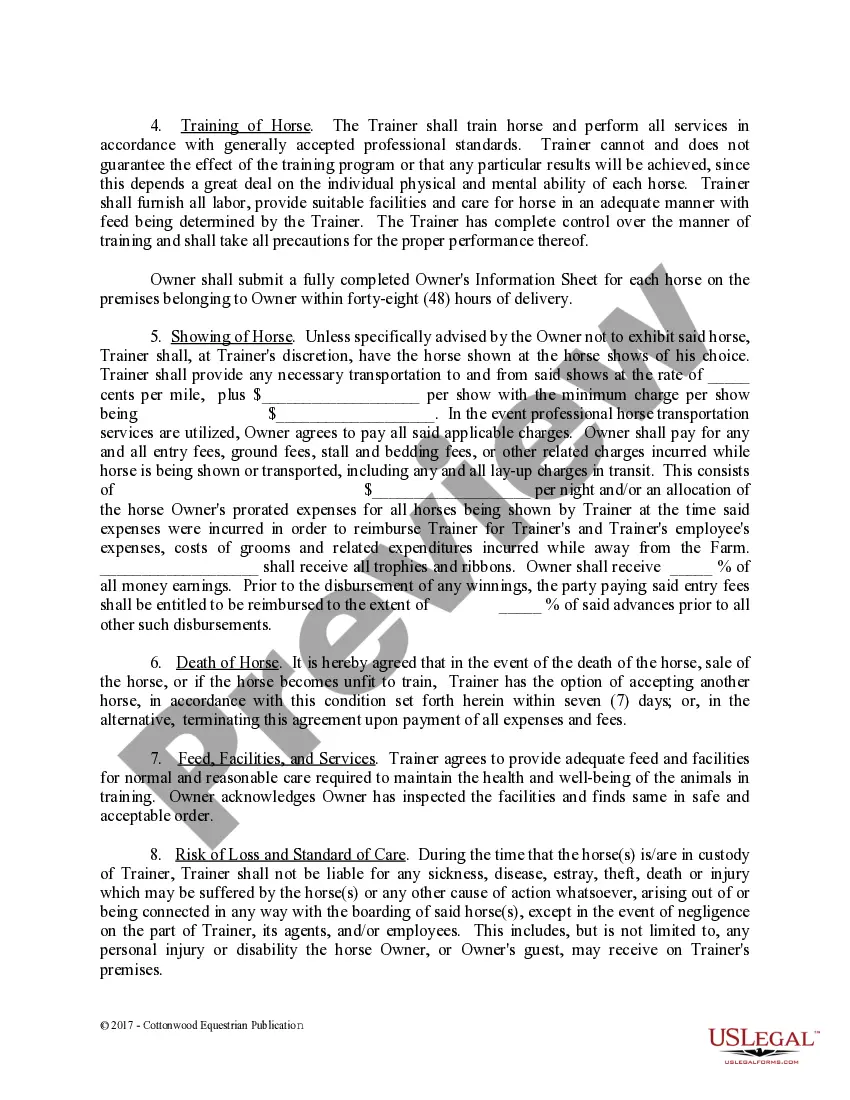
- Responsibilities for veterinary care, shoeing, and health maintenance.
- Terms for showing the horse, including associated costs and responsibilities before and after shows.
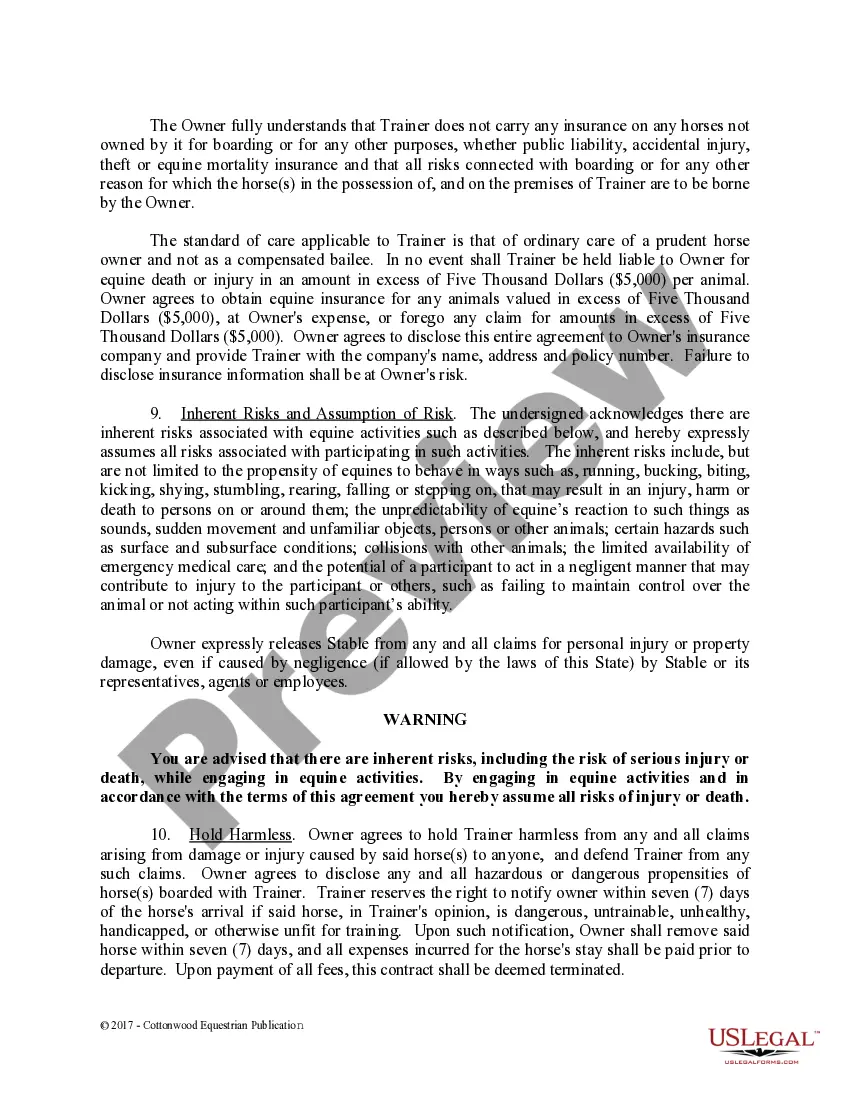
- Liability limitations for the trainer regarding the horse's wellbeing and potential risks.
- Provisions for the death of the horse and conditions for termination of the contract.

When to use this document
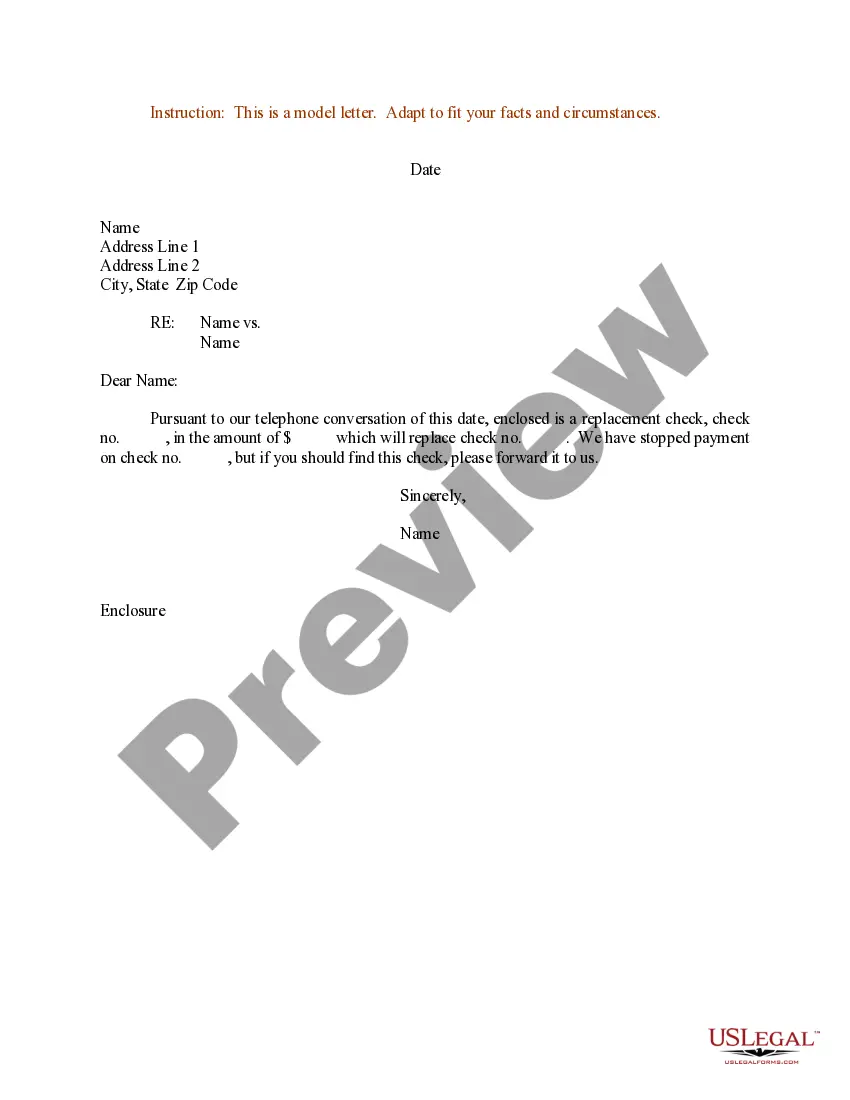
This form is necessary when a horse owner wishes to place their horse under the care of a professional trainer for training purposes. It is suitable for owners who seek to ensure professional management of their horse's training, boarding, and veterinary needs. The contract provides protection and clarity to both the owner and trainer about their obligations, making it essential for any formal training situation involving horses.
Who this form is for
This contract is intended for:
- Horse owners looking to have their horses professionally trained.
- Trainers who require a formal agreement for their services and responsibilities.
- Parents or guardians signing on behalf of minor owners.
Instructions for completing this form
- Identify the parties involved: enter the names of the trainer and owner, and the horse details.
- Specify the fees: fill in the agreed upon monthly or daily rates for training and boarding.
- Outline responsibilities: include terms for veterinary care, showing events, and other charges.
- Indicate the duration: state the minimum training period and any conditions for termination.
- Sign and date the contract: ensure all parties sign and date the form where indicated.
Does this document require notarization?
This form does not typically require notarization unless specified by local law. However, having the document notarized may provide an additional level of security and validity to the agreement.
Get your form ready online
Our built-in tools help you complete, sign, share, and store your documents in one place.
Make edits, fill in missing information, and update formatting in US Legal Forms—just like you would in MS Word.
Download a copy, print it, send it by email, or mail it via USPS—whatever works best for your next step.
Sign and collect signatures with our SignNow integration. Send to multiple recipients, set reminders, and more. Go Premium to unlock E-Sign.
If this form requires notarization, complete it online through a secure video call—no need to meet a notary in person or wait for an appointment.
We protect your documents and personal data by following strict security and privacy standards.

Make edits, fill in missing information, and update formatting in US Legal Forms—just like you would in MS Word.

Download a copy, print it, send it by email, or mail it via USPS—whatever works best for your next step.

Sign and collect signatures with our SignNow integration. Send to multiple recipients, set reminders, and more. Go Premium to unlock E-Sign.

If this form requires notarization, complete it online through a secure video call—no need to meet a notary in person or wait for an appointment.

We protect your documents and personal data by following strict security and privacy standards.
Common mistakes to avoid
- Failing to specify the detailed fees and payment schedule.
- Not completing the horse health information, which can affect care.
- Overlooking required signatures from all relevant parties.
- Not clarifying responsibilities for emergency veterinary care.
- Ignoring local regulations that could affect the contract's enforceability.
Why use this form online
- Easy access: Downloadable and editable format saves time.
- Legal assurance: Forms are drafted by licensed attorneys to ensure compliance with applicable laws.
- Flexibility: Users can customize fields to fit specific arrangements between the trainer and owner.
- Convenience: Allows for quick updates to terms if necessary.
- This contract is enforceable as a legal agreement between the parties when all required sections are properly filled out and signed.
- In the event of any legal disputes, the terms outlined in this contract will guide the resolution process.
- The trainer's right to a lien for unpaid fees is protected under New York state law.
Key takeaways
- The Training Contract formalizes the relationship between horse trainer and owner, ensuring clear expectations.
- Details about fees, veterinary care, and liability help protect both parties involved.
- Proper completion and understanding of the contract terms are crucial for legal protection in horse training arrangements.
Looking for another form?


Form popularity
FAQ
Equestrians prepare horses for competition in a variety of disciplines, manage equine diet and nutrition in preparation for breeding, and work with students of all ages to improve equitation. Each position in the horse industry is available in a variety of concentrations, or disciplines.
To begin the certification path an instructor must have at least 1 year of teaching experience, meet riding skill requirements, participate in at least one open clinic and complete a 7-day certification course. Costs may vary based on level and where the course is taking place.
150 hours of logged training time plus 20 hours assisting; these hours will be completed on campus during the regular course of study and will be documented in the student's training log book. Completion of training portfolio. Satisfactory completion of a written and practical examination.
Each horse riding school has the experience to teach different types of riding skills, so while most teach beginners the basicsgrooming, tacking up, mounting, balance, posture, and stopping a horsethey then offer lessons in other aspects of horsemanship such as dressage, showjumping, trail riding, Western riding, and
While there are no specific qualifications required to be a horse riding instructor, most work towards a recognised qualification. These are offered by organisations such as the British Horse Society (BHS) and the Association of British Riding Schools (ABRS).
All equine professionals should be comfortable working around horses in a hands-on capacity. Basic skills should include haltering, leading, picking out hooves, bathing, blanketing, wrapping legs, and cooling horses out after a workout.
On average, lessons (an instruction session when you are present and riding the horse) and training (a session between the trainer and the horse) cost between $30 and $100 per half hour.
Horse training refers to a variety of practices that teach horses to perform certain behaviors when commanded to do so by humans. Horses are trained to be manageable by humans for everyday care as well as for equestrian activities from horse racing to therapeutic horseback riding for people with disabilities.
Farrier. Equine Veterinarian. Equine Pharmaceutical Sales Representative. Equine Dental Technician. Mounted Police Officer. Feed or Product Sales Representative. Equine Insurance Agent.