Sample Letter for Closing of Estate with no Distribution
Overview of this form
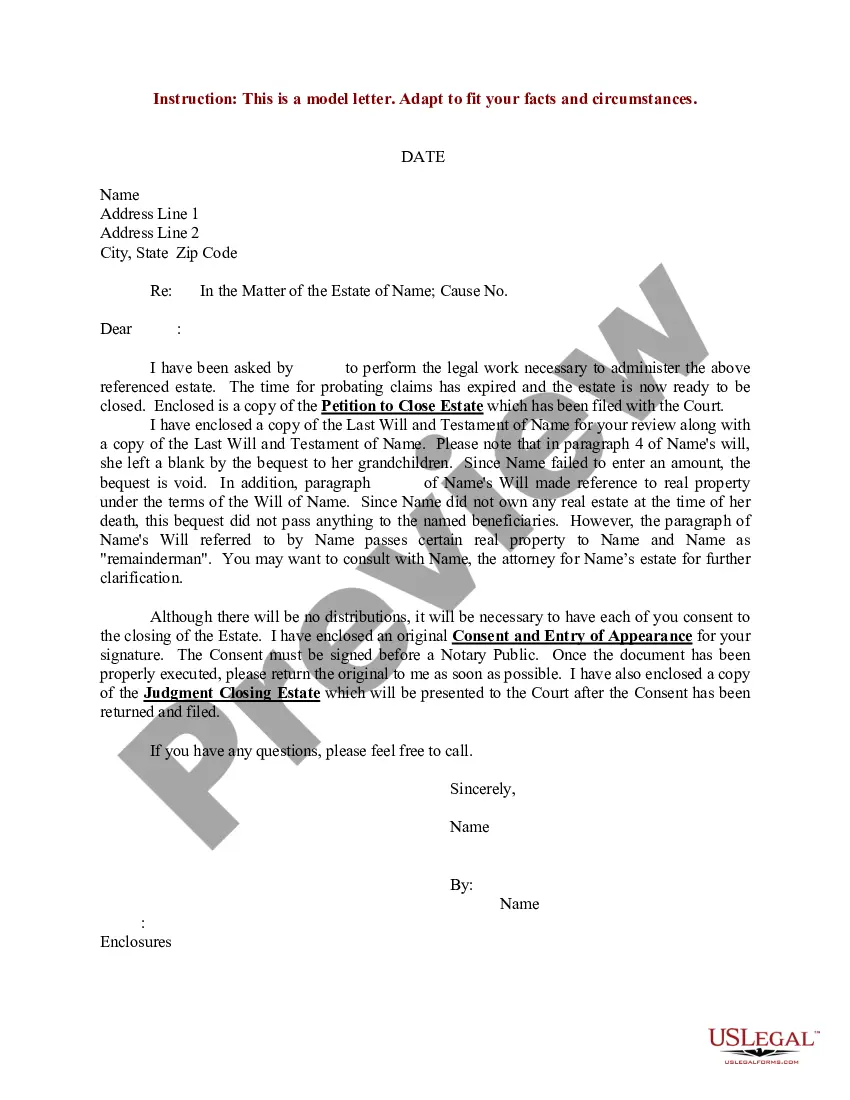
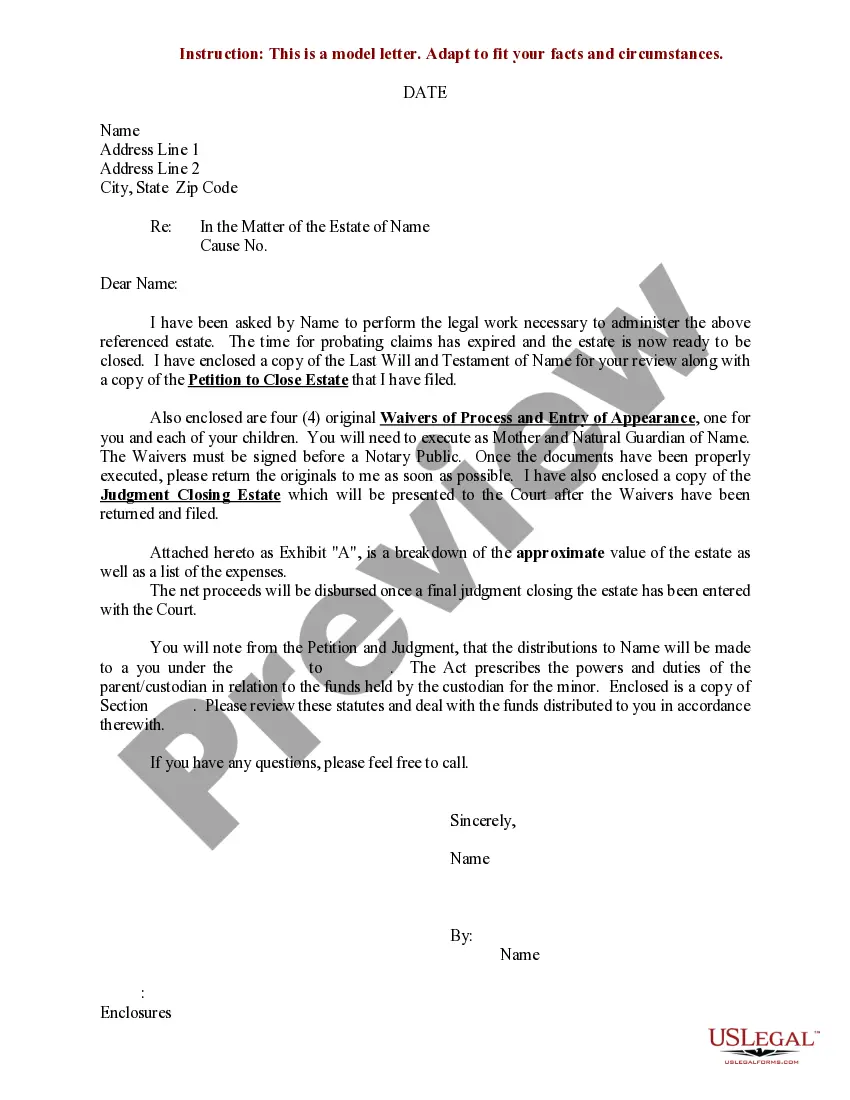
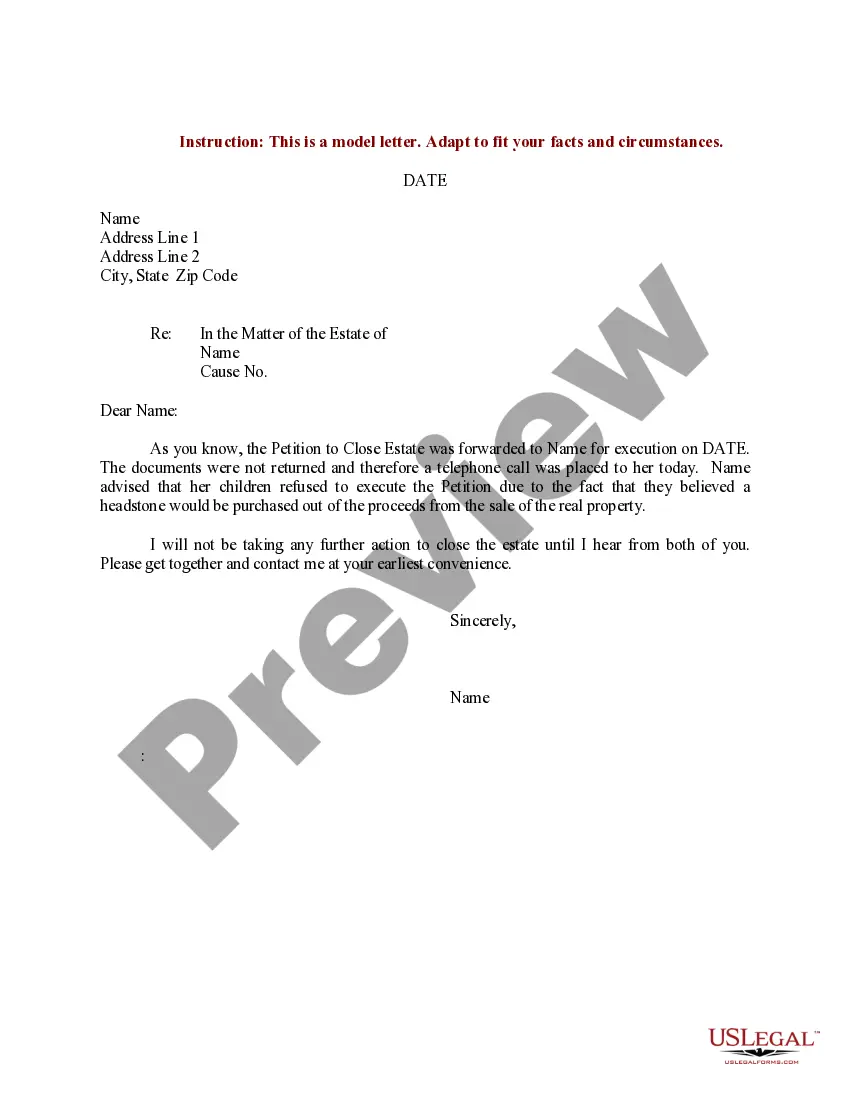
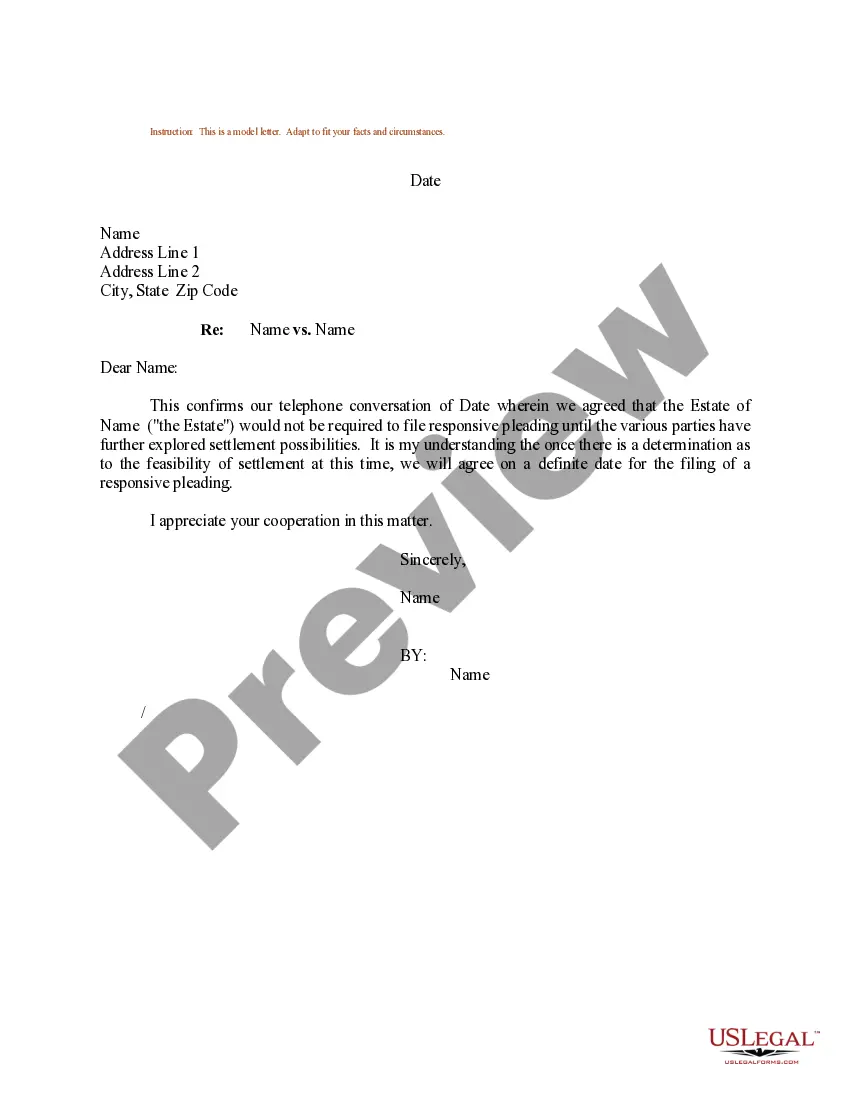
The Sample Letter for Closing of Estate with No Distribution is a formal communication that notifies interested parties of the estate's closure without any financial distribution. This letter necessitates the consent of the involved parties to finalize the estate's closing. Unlike other estate closure documents, this sample letter specifically outlines the procedure when no assets are distributed, making it essential for administrators in such scenarios.
Main sections of this form
- Date of the letter
- Recipient's name and address details
- Notification regarding the need for consent to close the estate
- Enclosure of a Consent and Entry of Appearance document
- Instructions for notarization and return of the signed document
- Contact information for any questions
When to use this form
This form is useful when an estate is being closed without any distributions to beneficiaries. It serves as a formal way to seek consent from involved parties to ensure compliance with legal requirements. Use this letter if you are an estate executor or administrator who must communicate with heirs or beneficiaries about the estate's closure.
Who should use this form
- Executors or administrators of an estate
- Heirs or beneficiaries of an estate who need to give consent
- Legal professionals handling estate matters
Instructions for completing this form
- Enter the date at the top of the letter.
- Fill in the recipient's name and address information.
- Clearly state the requirement for consent to close the estate in the body of the letter.
- Include instructions regarding the notarization of the Consent and Entry of Appearance document.
- Provide your contact information for any follow-up questions.
Notarization requirements for this form
Notarization is required for this form to take effect. Our online notarization service, powered by Notarize, lets you verify and sign documents remotely through an encrypted video session, available 24/7.
Get your form ready online
Our built-in tools help you complete, sign, share, and store your documents in one place.
Make edits, fill in missing information, and update formatting in US Legal Forms—just like you would in MS Word.
Download a copy, print it, send it by email, or mail it via USPS—whatever works best for your next step.
Sign and collect signatures with our SignNow integration. Send to multiple recipients, set reminders, and more. Go Premium to unlock E-Sign.
If this form requires notarization, complete it online through a secure video call—no need to meet a notary in person or wait for an appointment.
We protect your documents and personal data by following strict security and privacy standards.

Make edits, fill in missing information, and update formatting in US Legal Forms—just like you would in MS Word.

Download a copy, print it, send it by email, or mail it via USPS—whatever works best for your next step.

Sign and collect signatures with our SignNow integration. Send to multiple recipients, set reminders, and more. Go Premium to unlock E-Sign.

If this form requires notarization, complete it online through a secure video call—no need to meet a notary in person or wait for an appointment.

We protect your documents and personal data by following strict security and privacy standards.
Common mistakes
- Failing to include all necessary recipient details.
- Not explaining the reasons for closing the estate clearly.
- Ignoring the requirement for notarization of consent.
- Providing insufficient contact details for follow-up inquiries.
Benefits of completing this form online
- Convenience of downloading and customizing the form easily.
- Reliability of using a document drafted by licensed attorneys.
- Accessibility to local legal requirements and forms tailored to your situation.
Main things to remember
- This letter is vital for closing an estate without asset distribution.
- Consent from all parties involved is necessary for legal compliance.
- Notarization of the consent form is required for validity.
Looking for another form?
Form popularity
FAQ
This form is a formal notice to interested parties that an estate is being closed without distributing assets. It is used to obtain consent to close and to document the process. Executors send it when no assets are distributed, and it directs actions such as enclosing a Consent and Entry of Appearance, notarizing the document, and returning it.
To close out an estate with this form, the involved parties must consent to the closure since no assets will be distributed. The document includes an enclosure of a Consent and Entry of Appearance and requires a completed date, recipient name and address, and a notarized signature; the signer then returns the signed copy following the included instructions.
Prepare the letter with the date and recipient details, notify involved parties that the estate will be closed with no distributions, obtain their consent using the enclosed Consent and Entry of Appearance, have signatures notarized, and return the signed documents as directed. This creates a formal record of closure under multi-state practices.
Using this form can simplify the consent and closure process, but whether an attorney is needed depends on the state and the complexity of the estate. The form is designed for executors, administrators, and beneficiaries who must consent; consult a licensed attorney if there are questions about probate requirements or timing in your state.
This form is intended for estates being closed with no distributions. If closure cannot be completed due to unresolved issues or missing consents, this form may not be the appropriate tool. Consider ongoing administration or other probate steps, and consult an attorney for alternatives.
This form focuses on closing the estate without asset distribution and requires consent from heirs or beneficiaries. It also specifies the enclosure of a Consent and Entry of Appearance and includes notarization and return instructions, aligning with multi-state practices for estate closures.