Partial Assignment of Note and Mortgage
Understanding this form
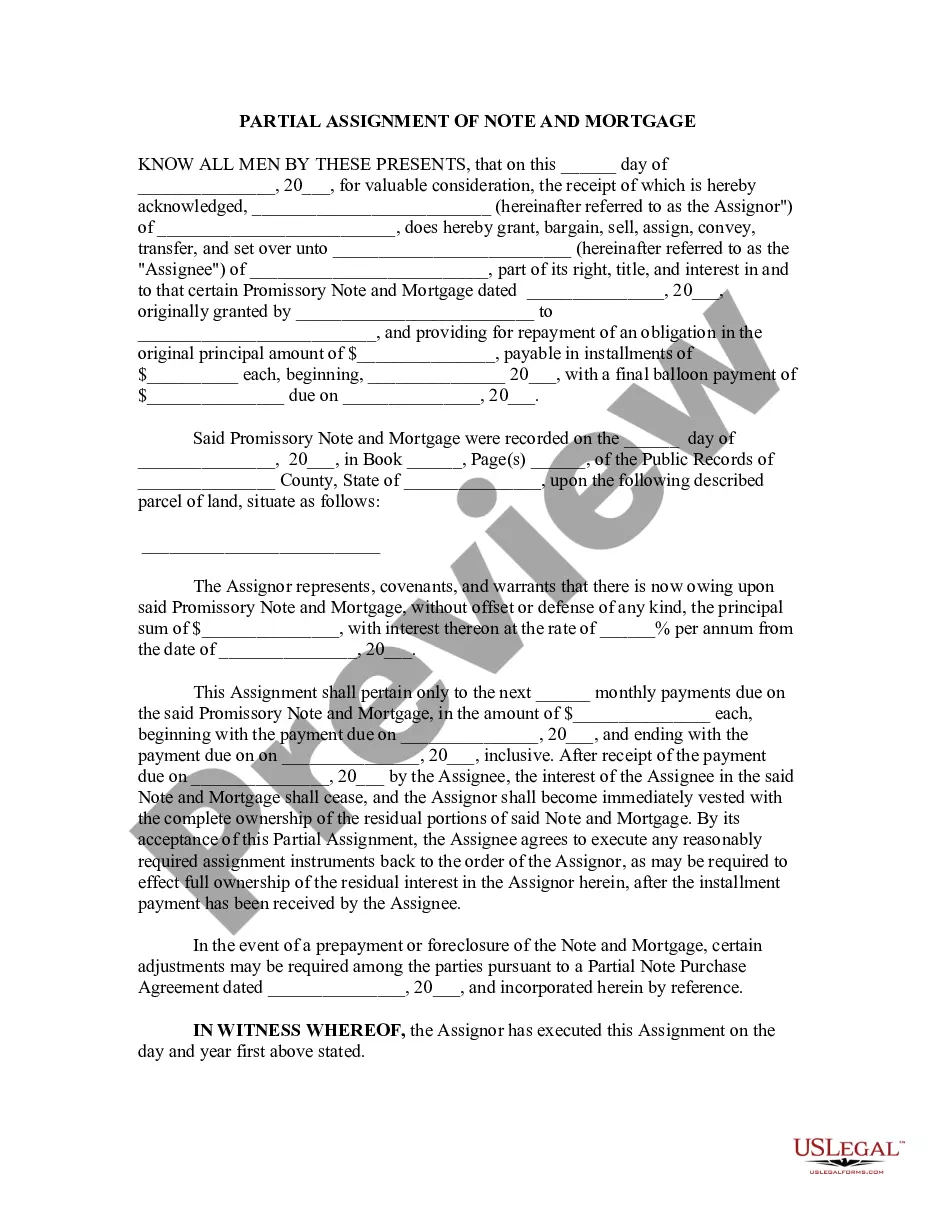
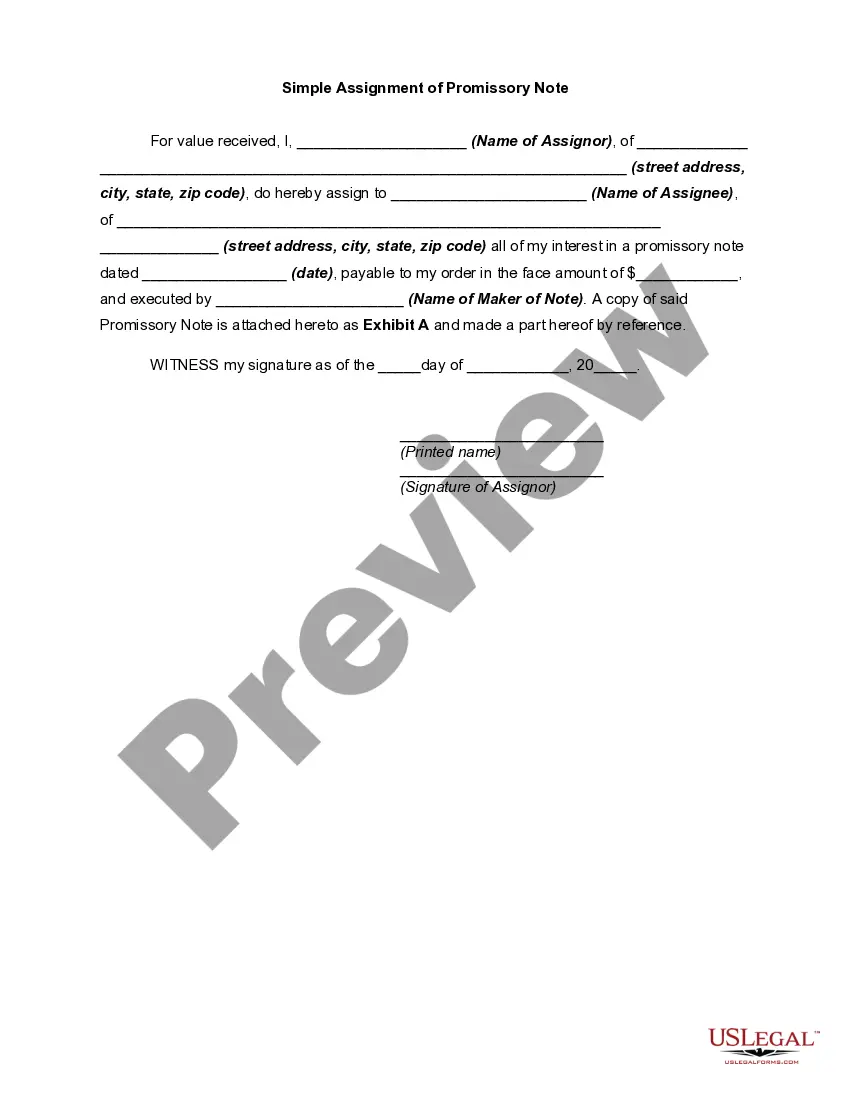
The Partial Assignment of Note and Mortgage is a legal document that allows one party (the Assignor) to transfer specific rights in a promissory note and mortgage to another party (the Assignee). This assignment is partial, concerning only designated monthly payments rather than the full debt. This form differs from a total assignment, making it suitable for situations where the Assignor wants to maintain some control while allowing another to collect certain payments.
Key components of this form
- Date of execution, which establishes when the form takes effect.
- Information about the Assignor and Assignee, including their names and addresses.
- Details of the original promissory note and mortgage, including the executed date and principal amount.
- Specification of the monthly payments being assigned, including amounts and payment terms.
- Conditions under which the Assigneeâs interest ends, allowing for the Assignor to regain full control.
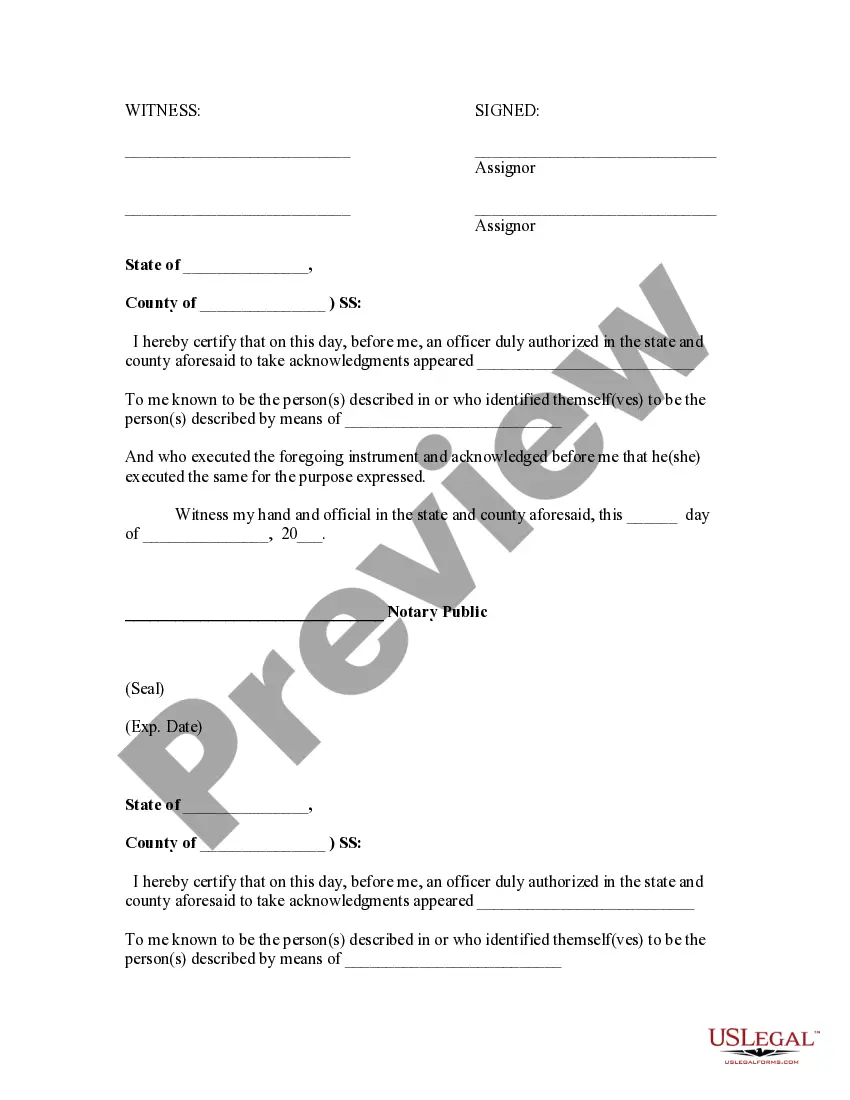
- Signature lines for the Assignor and requirements for notarization, validating the transaction.
When to use this document
This form is useful in situations where a borrower wishes to partially transfer the right to receive specific payments from a loan to another individual or entity. This may happen in cases of financial restructuring, partnerships, or temporary financial arrangements where the original debtor prefers to retain overall ownership of the loan while allowing another party to benefit from certain payments.
Intended users of this form
- Individuals or entities looking to transfer specific portions of their payment rights to another party.
- Borrowers seeking to arrange temporary financing without relinquishing full ownership of their obligations.
- Lenders or investors who wish to purchase a part of the rights to receive monthly payments.
- Any party involved in real estate transactions requiring precise legal documentation of payment assignments.
How to prepare this document
- Identify the Assignor and Assignee by entering their names and addresses in the designated fields.
- Detail the original promissory note and mortgage information, including dates and amounts.
- Specify the exact monthly payments being transferred, including amounts and relevant dates.
- Sign the form in front of a Notary Public to verify the identity of the parties involved.
- Complete any necessary recording with the local public records office to finalize the assignment.
Does this form need to be notarized?
Yes, this form must be notarized to be legally valid. Notarization is essential as it verifies the identities of the parties involved and confirms that they willingly sign the document. US Legal Forms offers integrated online notarization services, allowing you to complete this step securely and conveniently via video call at any time.
Get your form ready online
Our built-in tools help you complete, sign, share, and store your documents in one place.
Make edits, fill in missing information, and update formatting in US Legal Forms—just like you would in MS Word.
Download a copy, print it, send it by email, or mail it via USPS—whatever works best for your next step.
Sign and collect signatures with our SignNow integration. Send to multiple recipients, set reminders, and more. Go Premium to unlock E-Sign.
If this form requires notarization, complete it online through a secure video call—no need to meet a notary in person or wait for an appointment.
We protect your documents and personal data by following strict security and privacy standards.

Make edits, fill in missing information, and update formatting in US Legal Forms—just like you would in MS Word.

Download a copy, print it, send it by email, or mail it via USPS—whatever works best for your next step.

Sign and collect signatures with our SignNow integration. Send to multiple recipients, set reminders, and more. Go Premium to unlock E-Sign.

If this form requires notarization, complete it online through a secure video call—no need to meet a notary in person or wait for an appointment.

We protect your documents and personal data by following strict security and privacy standards.
Mistakes to watch out for
- Failing to specify the correct amounts or payment periods being assigned.
- Not obtaining a notarization which can invalidate the form.
- Omitting important details of the Promissory Note and Mortgage.
- Leaving out signatures from both Assignor(s) and Assignee.
Advantages of online completion
- Convenient access to templates that ensure you are using current, legally compliant language.
- Easy-to-tailor options that can be downloaded and completed at your own pace.
- Immediate availability without the need for physical appointments or lengthy delays.
- Clear instructions provided within the form to assist with proper completion.
Looking for another form?


Form popularity
FAQ
A disadvantage of a mortgage assignment is the consequences of failing to record it. Under most state laws, an entity seeking to institute foreclosure proceedings must record the assignment before it can do so. If a mortgage is not recorded, the judge will dismiss the foreclosure proceeding.
For example, the debtor may have entered into an agreement with the assignor whereby the assignor agreed to accept a lesser amount of the debt owed by way of settlement. Because the assignee acquires the same rights and obligations of the assignor, the terms of that previous settlement agreement will bind the assignee.
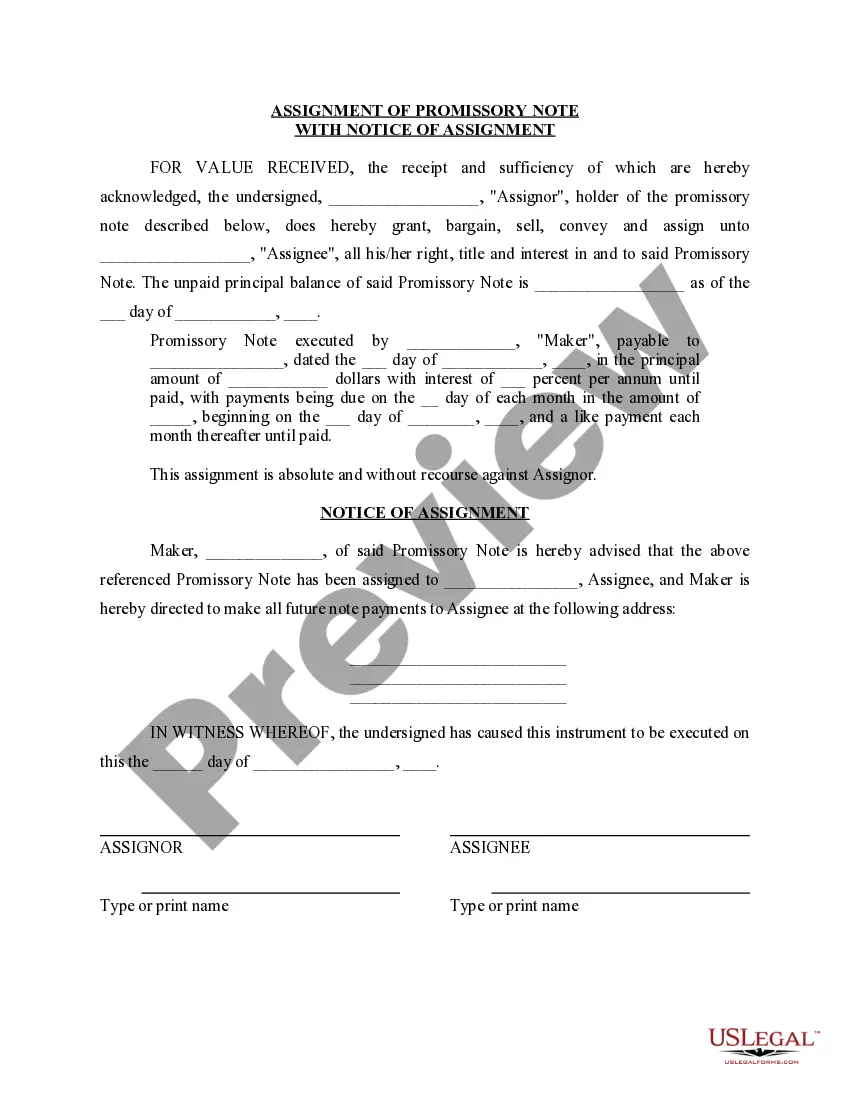
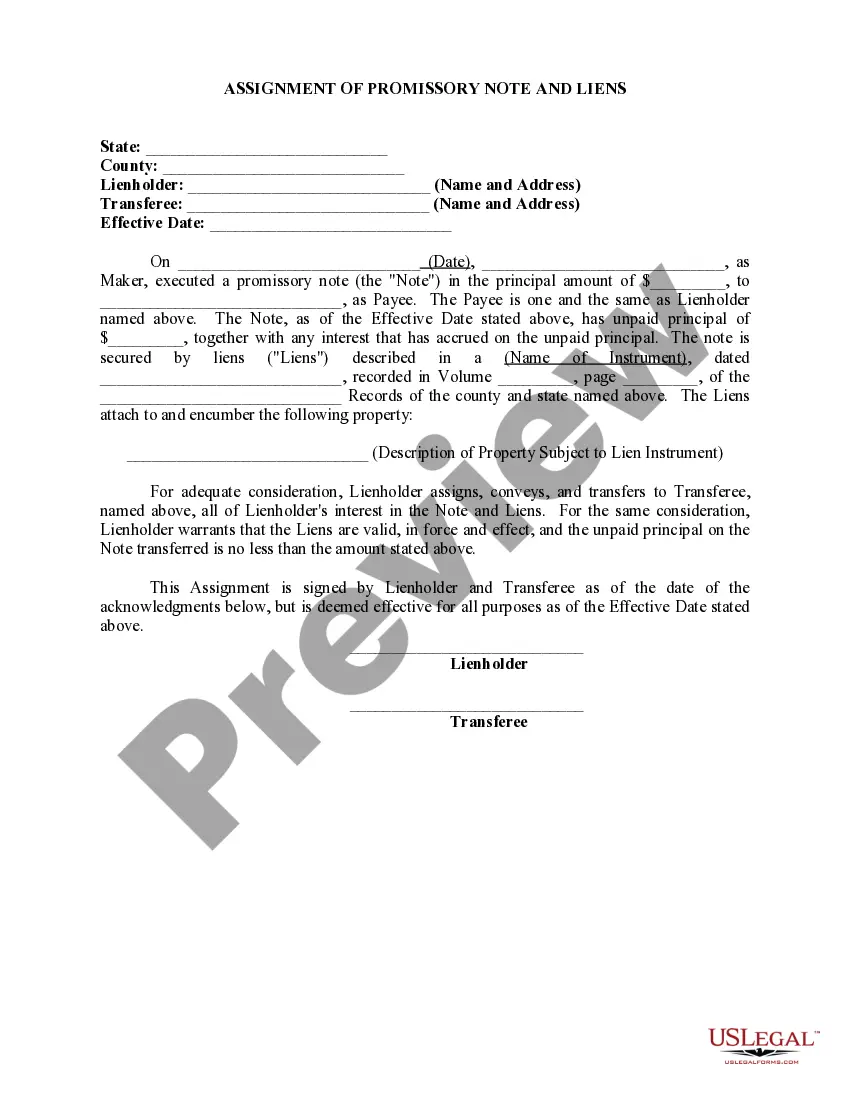
The term debt assignment refers to a transfer of debt, and all the associated rights and obligations, from a creditor to a third party. The assignment is a legal transfer to the other party, who then becomes the owner of the debt.
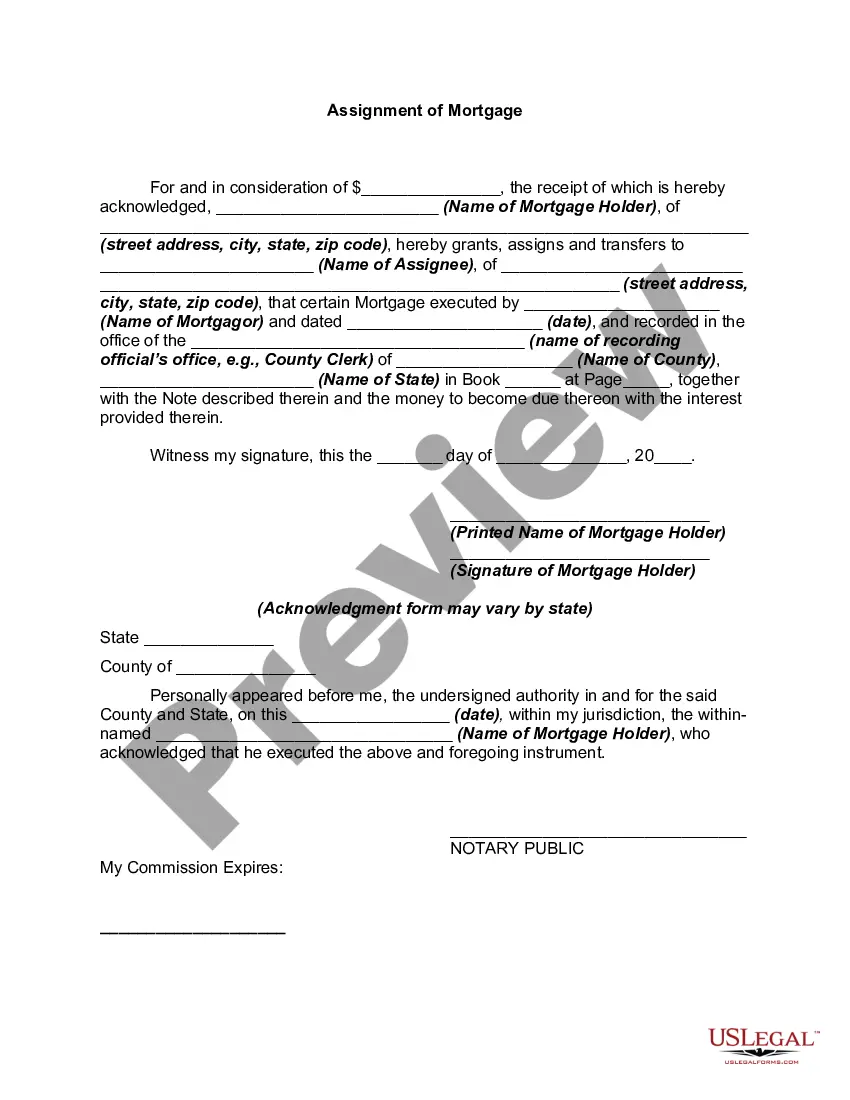
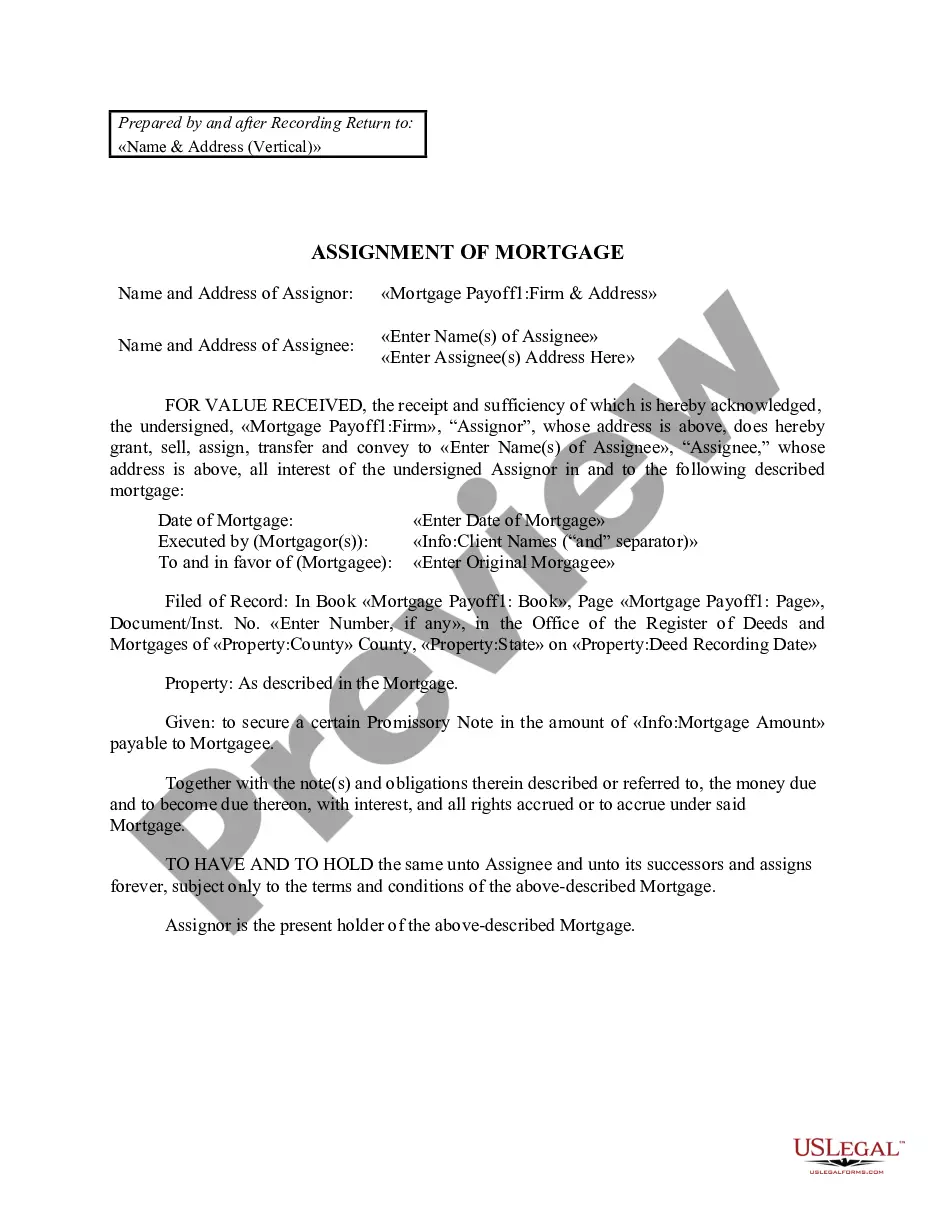
An assignment of mortgage is a legal term that refers to the transfer of the security instrument that underlies your mortgage loan ? aka your home. When a lender sells the mortgage on, an investor effectively buys the note, and the mortgage is assigned to them at this time.
In bank loan financings, the sale of all or part of the rights and obligations of a lender (the assignor) under a loan agreement to another party (the assignee).
The difference between assignment and transfer is that assign means it's legal to transfer property or a legal right from one person to another, while transfer means it's legal to arrange for something to be controlled by or officially belong to another person.
A partial assignment of contract occurs when the assignor of a contract is assigning a portion of his or her contractual right. This can only occur if the other involved party can perform that portion of the contractual obligation separately from the rest of the obligations.
However, the basic difference between participation and assignment is that the former involves the original lender continuing to manage the loan while the latter takes on the responsibility of doing so. As a rule, loan participation is a good option if the original lender does not want to keep the title of the loan.