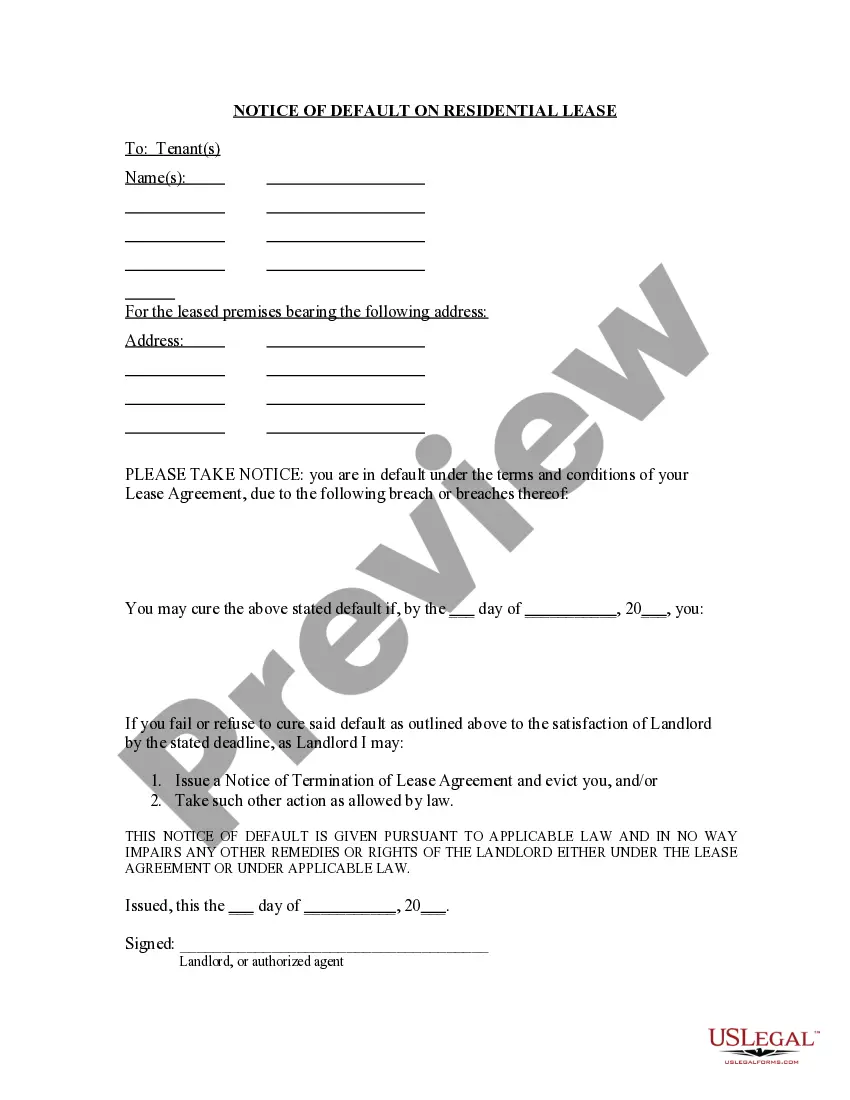
Promissory Note Assignment and Notice of Assignment
What is this form?
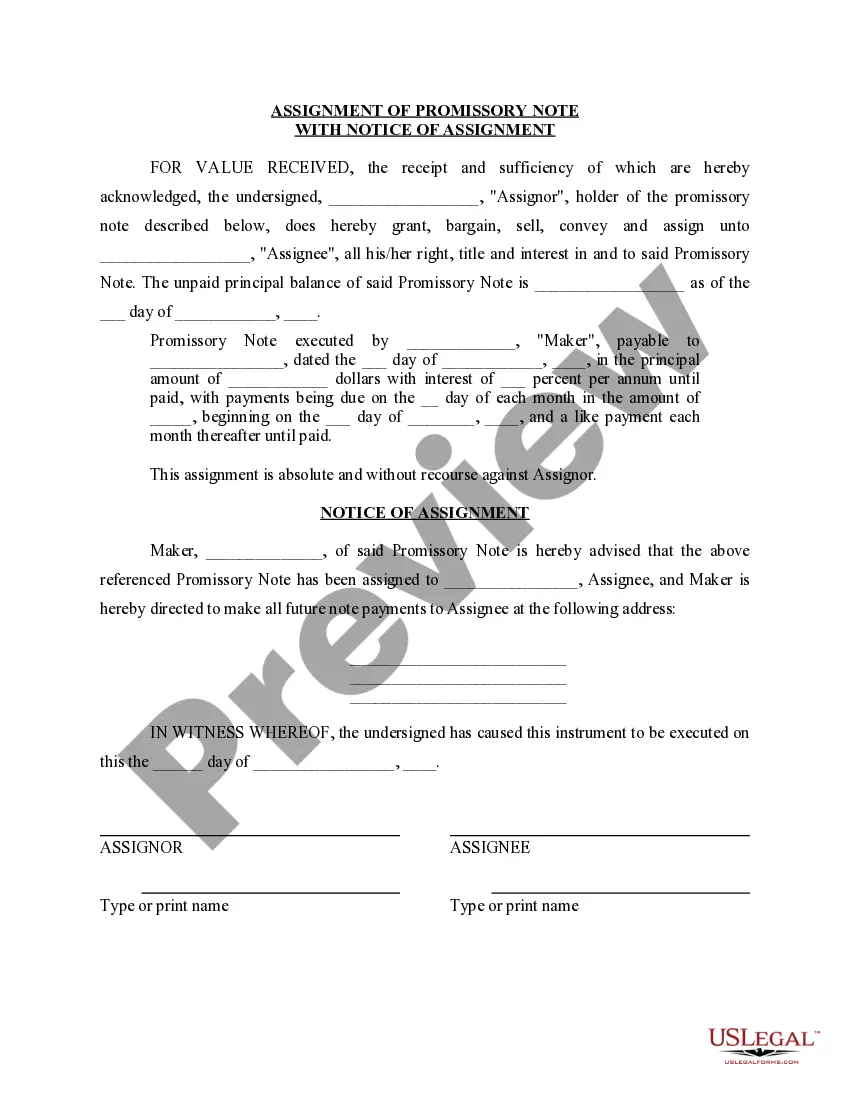
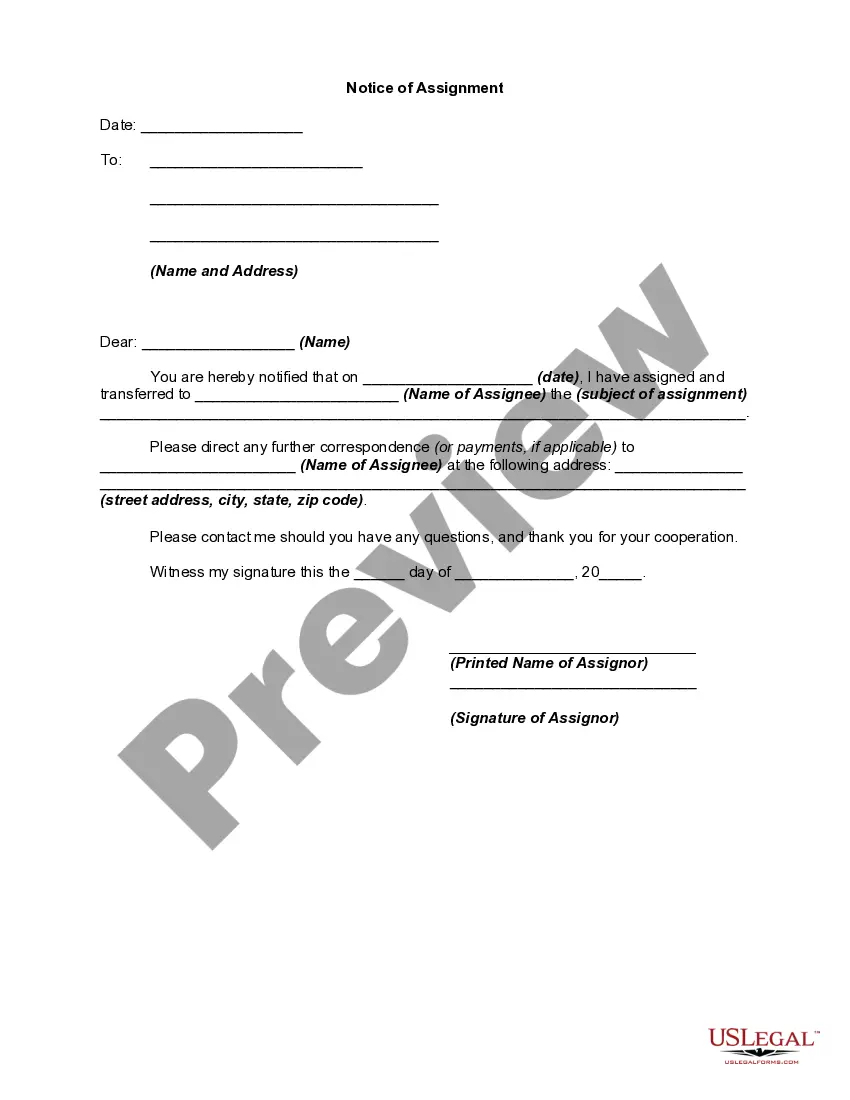
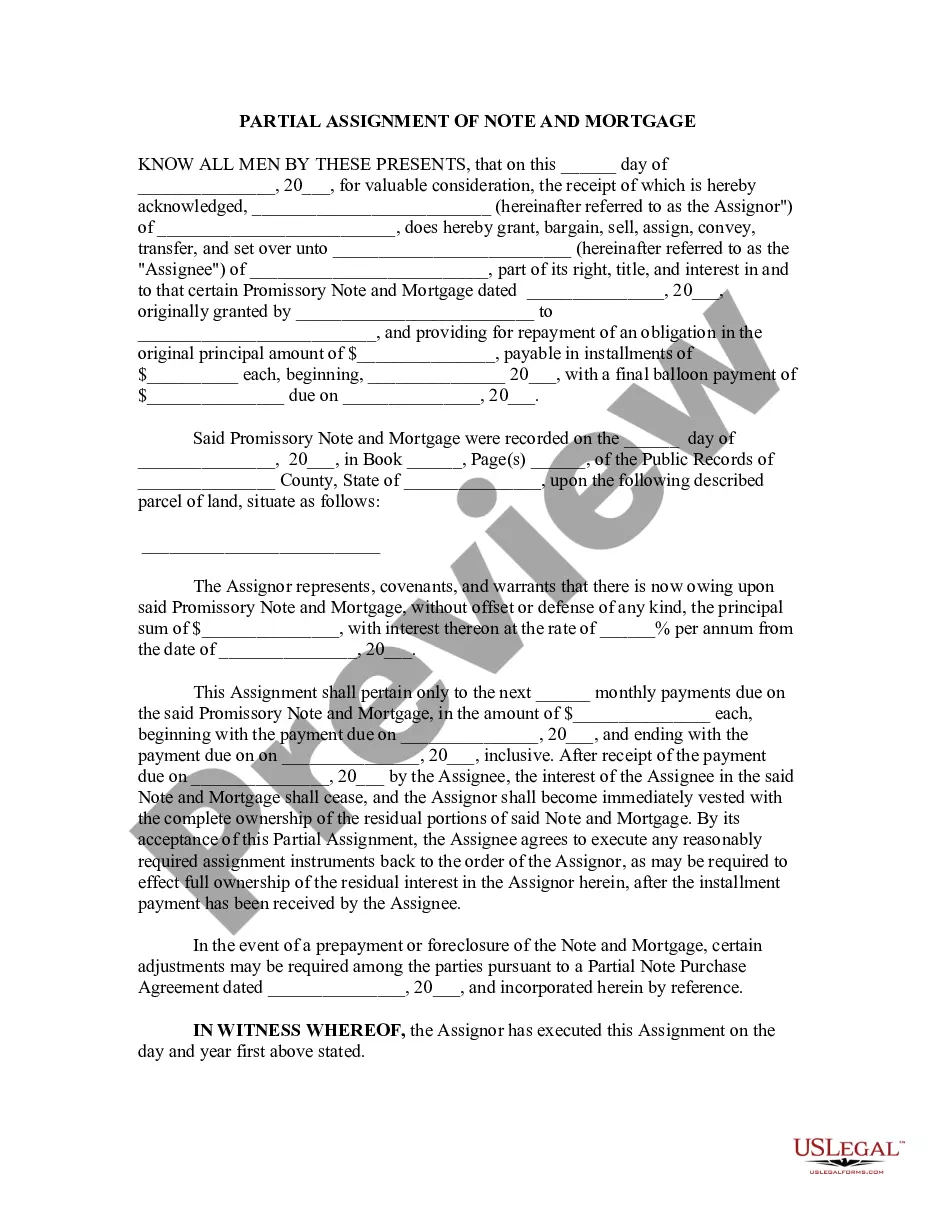
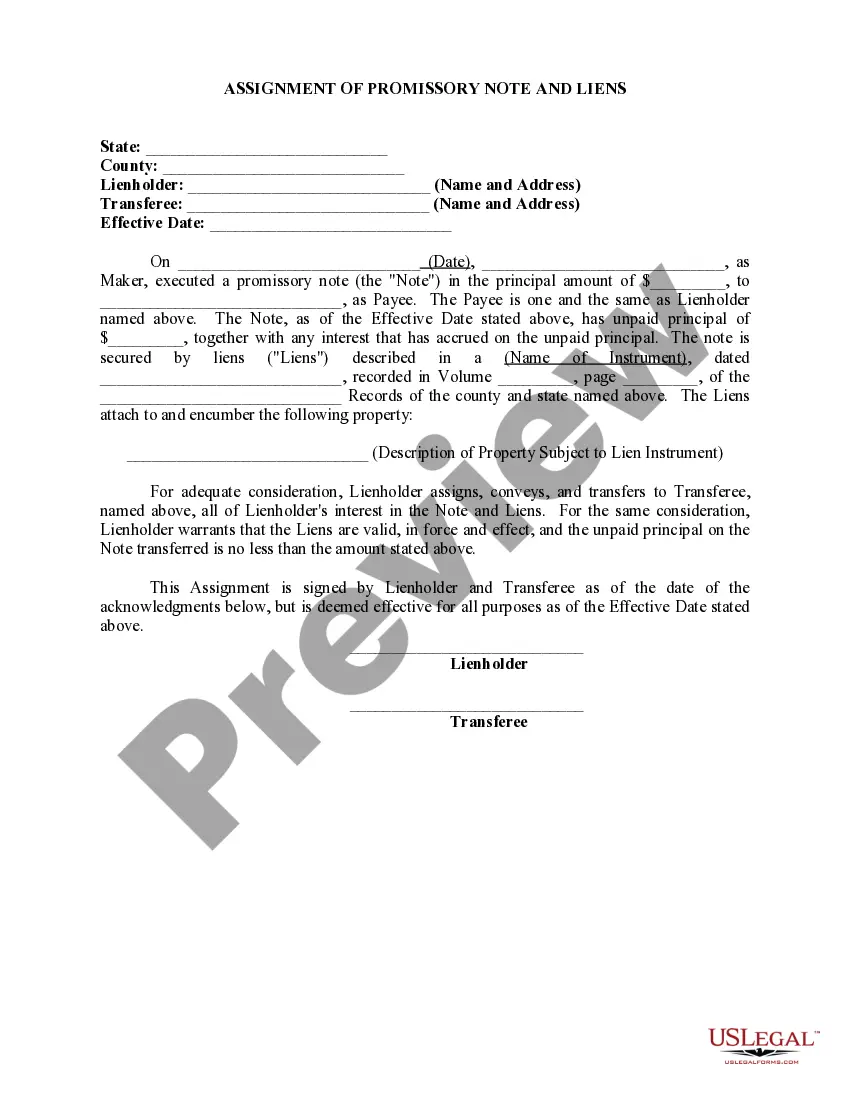
The Promissory Note Assignment and Notice of Assignment is a legal document that enables the holder of a promissory note to transfer their rights to another party, known as the assignee. This form serves a dual purpose: it not only conveys these rights but also informs the maker of the note that they must direct all future payments to the assignee. Unlike other agreements, this form specifically includes a notice to the maker, ensuring that all parties are aware of the assignment and how it affects payment responsibilities.
Form components explained
- Details of the Assignor and Assignee: Information about the parties involved in the assignment.
- Payment Information: Specifics regarding the promissory note, including principal balance and interest rates.
- Notice to Maker: Confirmation that the maker of the note must now make payments to the assignee.
- Declaration of Assignment: A statement indicating that the assignment is absolute and without recourse against the assignor.
- Execution Clause: Signature lines for both the assignor and the assignee, indicating their agreement to the terms.
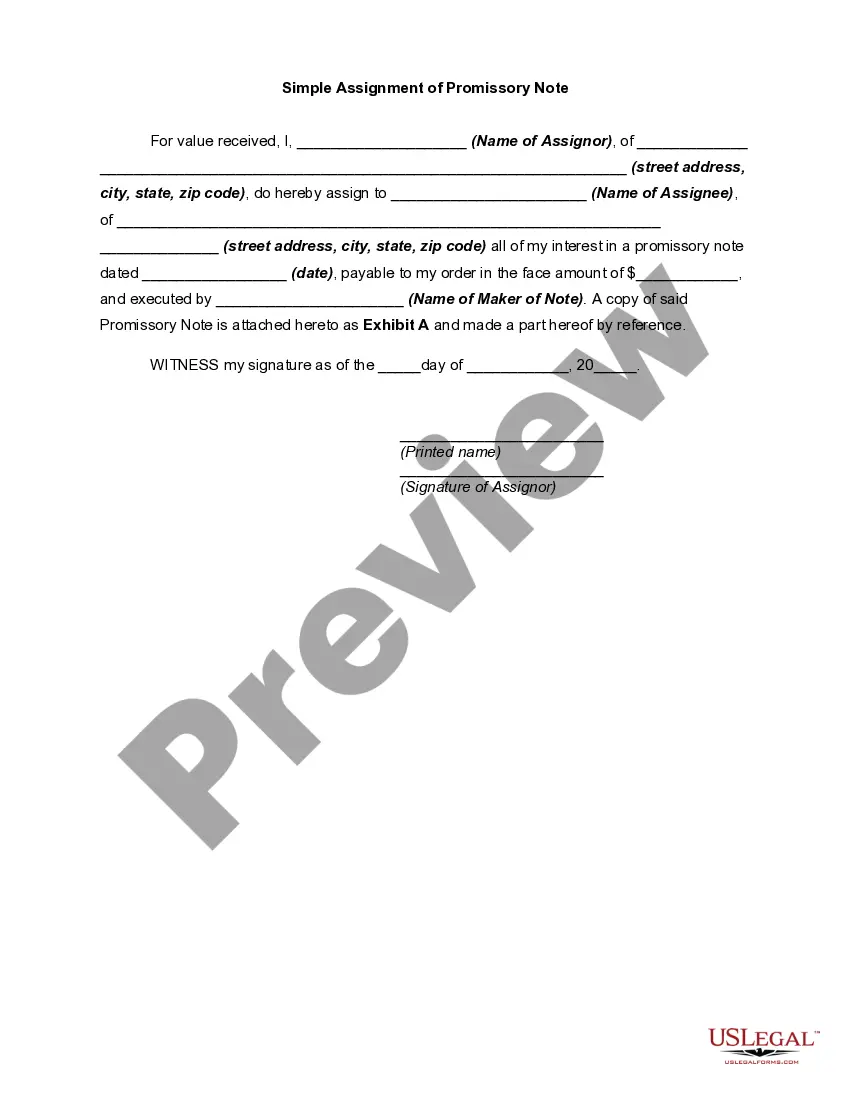
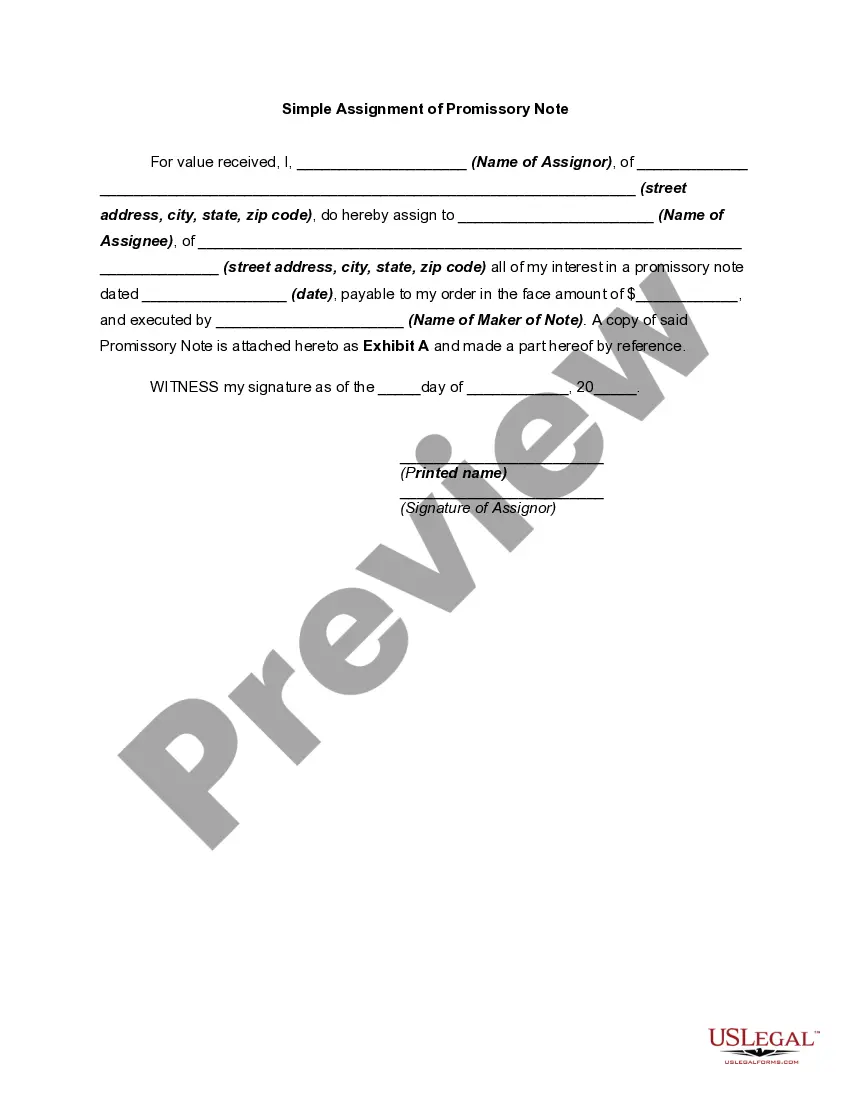
When this form is needed
This form is useful in various scenarios, including when a lender decides to sell or transfer their rights to receive payments from a borrower. It is often employed in real estate transactions, when financing is arranged through promissory notes, or during negotiations for the sale of a business where existing notes are involved. This ensures that the new party (assignee) can legally collect payments as intended.
Who this form is for
- Lenders wishing to assign their rights to receive payments on a promissory note.
- Borrowers (makers of the note) who need clarity on payment obligations.
- Businesses involved in the transfer of financial instruments.
- Individuals or organizations managing financial transactions involving promissory notes.
Completing this form step by step
- Identify the parties: Fill in the names and addresses of the assignor and assignee.
- Specify the note details: Enter the original date of the promissory note and any terms related to payments such as amounts and interest rates.
- Declare assignment terms: Clearly state the terms of the assignment and ensure it indicates the assignment is absolute.
- Complete the notice section: Notify the maker of the note of the assignment and provide the assignee's address for future payments.
- Obtain signatures: Have both the assignor and assignee sign and date the form to make it legally binding.
Notarization guidance
This form usually doesn’t need to be notarized. However, local laws or specific transactions may require it. Our online notarization service, powered by Notarize, lets you complete it remotely through a secure video session, available 24/7.
Get your form ready online
Our built-in tools help you complete, sign, share, and store your documents in one place.
Make edits, fill in missing information, and update formatting in US Legal Forms—just like you would in MS Word.
Download a copy, print it, send it by email, or mail it via USPS—whatever works best for your next step.
Sign and collect signatures with our SignNow integration. Send to multiple recipients, set reminders, and more. Go Premium to unlock E-Sign.
If this form requires notarization, complete it online through a secure video call—no need to meet a notary in person or wait for an appointment.
We protect your documents and personal data by following strict security and privacy standards.

Make edits, fill in missing information, and update formatting in US Legal Forms—just like you would in MS Word.

Download a copy, print it, send it by email, or mail it via USPS—whatever works best for your next step.

Sign and collect signatures with our SignNow integration. Send to multiple recipients, set reminders, and more. Go Premium to unlock E-Sign.

If this form requires notarization, complete it online through a secure video call—no need to meet a notary in person or wait for an appointment.

We protect your documents and personal data by following strict security and privacy standards.
Common mistakes
- Failing to properly identify all parties involved in the assignment.
- Omitting the specific details of the promissory note, such as payment amounts and due dates.
- Not including the notice to the maker of the note regarding new payment directions.
- Forgetting to include signatures, which can render the assignment invalid.
Why use this form online
- Convenience: Access the form anytime and anywhere, allowing for easy completion at your pace.
- Editability: Customize the form to fit your specific needs before downloading.
- Reliability: The forms are created by licensed attorneys, ensuring they meet legal standards.
- Saves time: Eliminate the need for in-person consultations or lengthy legal processes.
Looking for another form?
Form popularity
FAQ
Transferring the right to receive payments from a promissory note to a new holder and notifying the maker to direct future payments to that holder, the Promissory Note Assignment and Notice of Assignment does both. It lists the assignor and assignee, outlines payment information, includes a declaration of assignment, and provides an execution clause to confirm agreement.
A notice of assignment is the portion of this form that informs the maker that the promissory note’s rights have been transferred to the assignee. It confirms that future payments must go to the assignee and helps ensure the maker follows the new payment instructions, supported by the form’s execution and declaration provisions.
An assignment of promissory notes is the transfer of the right to receive payments from one party (the assignor) to another (the assignee). In this form, the assignment is stated as absolute and without recourse, and the execution clause records the agreement, while the payment details remain part of the note’s terms.
It means you transfer your right to collect payments from the borrower to another person or entity (the assignee). The form ensures the maker is notified that payments should go to the assignee and includes the assignor/assignee details, the note’s payment terms, and an execution clause to bind the parties.
It provides a single, legally binding document that both transfers the right to receive payments and notifies the maker who to pay. It includes details for the assignor and assignee, the note’s payment information, a declaration of assignment, and signatures, creating a clear record of the transfer.
It combines two functions in one document: the assignment of rights and a formal notice to the maker. It also includes a declaration that the assignment is absolute and without recourse and execution lines for both parties. A plain assignment may not include the notice or the without-recourse language.