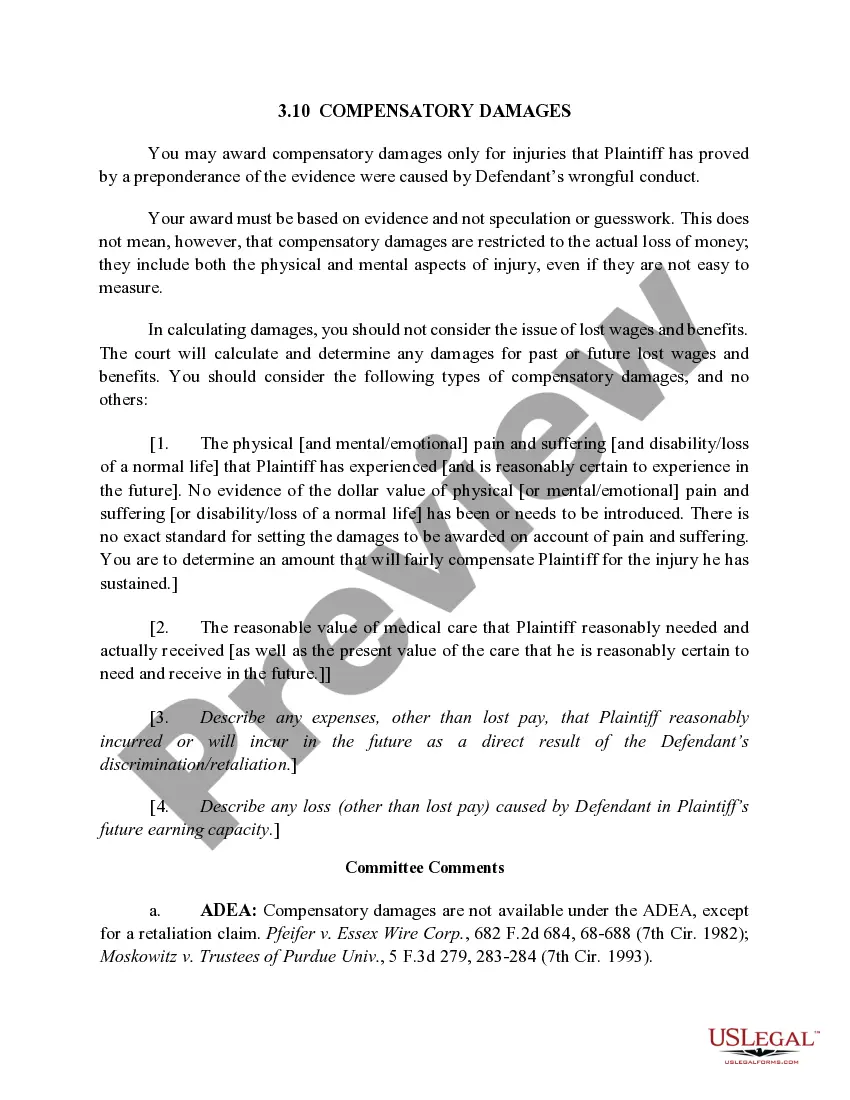
3.10 Compensatory Damages .
What is this form?
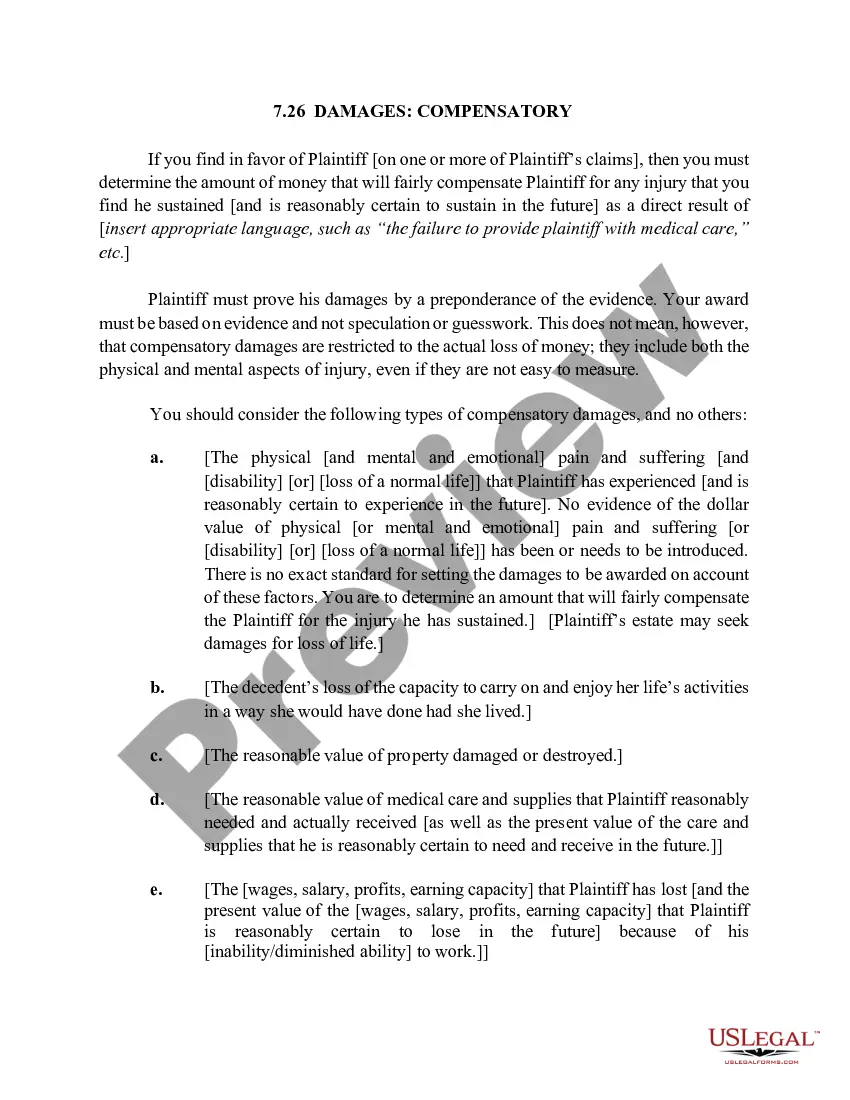
The 3.10 Compensatory Damages form provides guidelines for determining the appropriate compensatory damages to award in legal cases involving wrongful conduct by a defendant. This form is specifically designed for use in the Federal 7th Circuit Court, and it outlines how damages can encompass various physical, emotional, and financial injuries sustained by the plaintiff. Unlike other forms, it distinctly emphasizes the need for damages to be based on solid evidence rather than speculation.
Main sections of this form
- Definition of compensatory damages and their evidential basis.
- Exclusions regarding the consideration of lost wages and benefits.
- Types of compensatory damages, including physical, mental, and care-related expenses.
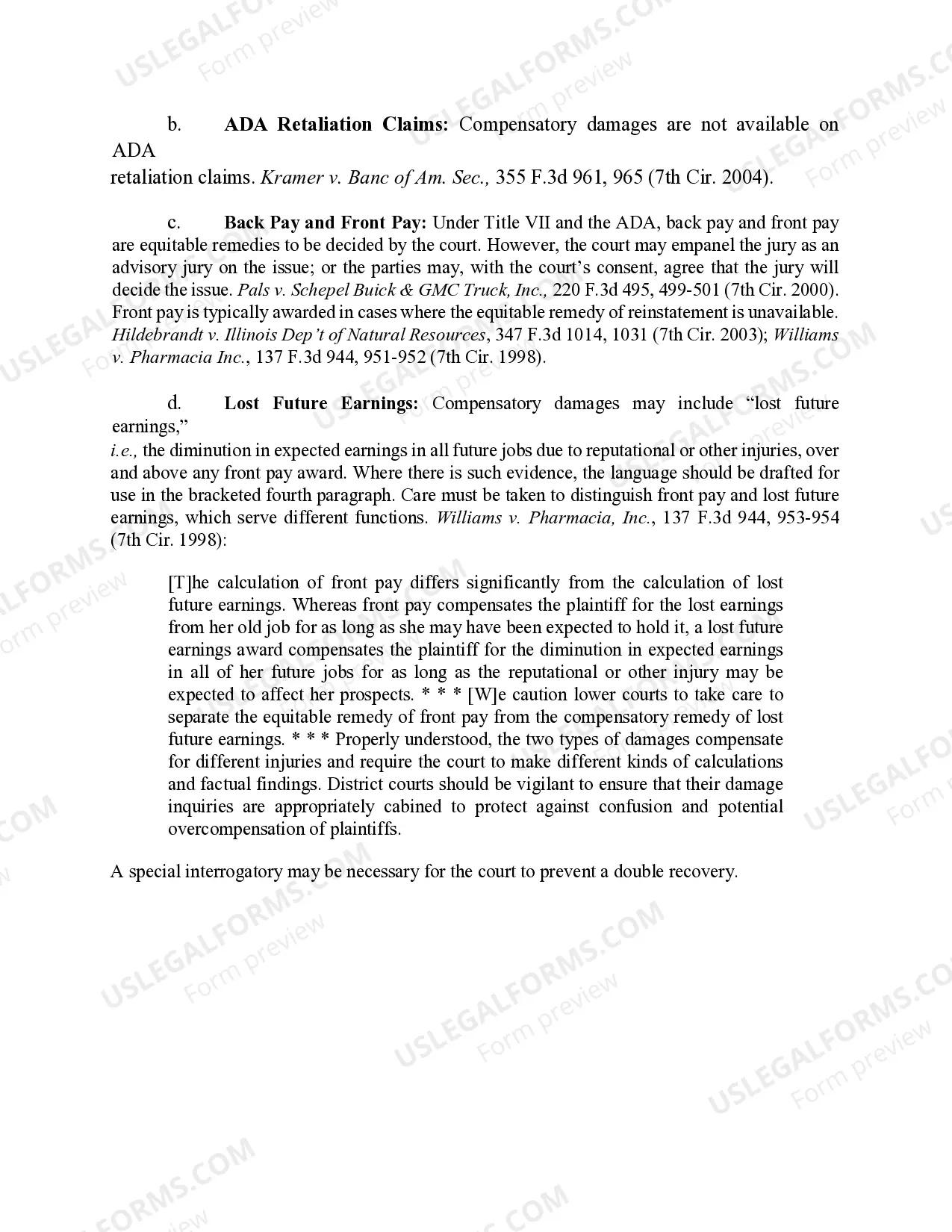
- Clarifications on damages related to future earning capacities versus lost wages.
- Jurisdiction-specific comments regarding the application of compensatory damages in discrimination and retaliation cases.

When to use this form
This form should be used in legal cases where a plaintiff is seeking compensation for injuries resulting from the defendant's wrongful actions. It is particularly relevant in instances of discrimination, retaliation, or personal injury claims, where the plaintiff needs to demonstrate the extent of both physical and emotional suffering alongside related expenses. Use this form to articulate the bases for compensatory damages during trial proceedings.
Who should use this form
- Attorneys representing plaintiffs in federal cases involved in personal injury or discrimination claims.
- Judges who need to instruct juries on the principles of awarding compensatory damages.
- Legal professionals preparing for litigation that involves claims of wrongful conduct requiring clear damage assessments.
How to complete this form
- Review the evidence presented to establish damages caused by the defendant's actions.
- Identify the types of compensatory damages relevant to your case, including physical pain, emotional distress, and necessary medical care.
- Document expenses incurred directly due to the defendant's conduct, excluding lost wages.
- Prepare evidence for any future needs for medical care or evidence supporting diminished earning capacity.
- Submit the completed form as part of the trial materials to guide jury instructions on damages.
Notarization guidance
This form does not typically require notarization to be legally valid. However, some jurisdictions or document types may still require it. US Legal Forms provides secure online notarization powered by Notarize, available 24/7 for added convenience.
Get your form ready online
Our built-in tools help you complete, sign, share, and store your documents in one place.
Make edits, fill in missing information, and update formatting in US Legal Forms—just like you would in MS Word.
Download a copy, print it, send it by email, or mail it via USPS—whatever works best for your next step.
Sign and collect signatures with our SignNow integration. Send to multiple recipients, set reminders, and more. Go Premium to unlock E-Sign.
If this form requires notarization, complete it online through a secure video call—no need to meet a notary in person or wait for an appointment.
We protect your documents and personal data by following strict security and privacy standards.

Make edits, fill in missing information, and update formatting in US Legal Forms—just like you would in MS Word.

Download a copy, print it, send it by email, or mail it via USPS—whatever works best for your next step.

Sign and collect signatures with our SignNow integration. Send to multiple recipients, set reminders, and more. Go Premium to unlock E-Sign.

If this form requires notarization, complete it online through a secure video call—no need to meet a notary in person or wait for an appointment.

We protect your documents and personal data by following strict security and privacy standards.
Mistakes to watch out for
- Failing to provide sufficient evidence to support claims for pain and suffering damages.
- Including lost wages in the damages calculation when these must be addressed separately by the court.
- Overlooking future medical expenses that may arise due to the injuries sustained, leading to under-compensation.
Benefits of using this form online
- Immediate access to legally vetted documents created by licensed attorneys.
- Easy download and editing capability to tailor the document to your specific case.
- Convenience of filling out forms at your own pace without the pressures of legal deadlines.
Looking for another form?

Form popularity
FAQ
An organizational conflict of interest is similar to a personal conflict of interest in terms of its harmful effects on the integrity of the acquisition process. The difference is that, with an organizational conflict of interest, no person stands to directly benefit from the conflict of interest.
Personal conflict of interest means a situation in which a covered employee has a financial interest, personal activity, or relationship that could impair the employee's ability to act impartially and in the best interest of the Government when performing under the contract.
Most federal statutes regarding government contracts can be found in Title 41 of the United States Code (U.S.C.), ?Government Contracts.? The notable exceptions to this general rule are the Anti-Deficiency Act and Armed Services Procurement Act statutes, which can be found in Title 31 and Title 10, respectively.
The Preventing Organizational Conflicts of Interest in Federal Acquisition Act requires agencies to identify potential conflicts for specific contracts early in the process.
Unfair business practices include misrepresentation, false advertising or representation of a good or service, tied selling, false free prize or gift offers, deceptive pricing, and noncompliance with manufacturing standards.
An OCI occurs when a contractor's performance on one government contract may compromise its ability to perform on another government contract or may compromise its ability to compete for a government contract in a fair way.
A conflict of interest occurs when an individual's personal interests ? family, friendships, financial, or social factors ? could compromise his or her judgment, decisions, or actions in the workplace. Government agencies take conflicts of interest so seriously that they are regulated.