3.13 Punitive Damages
What is this form?
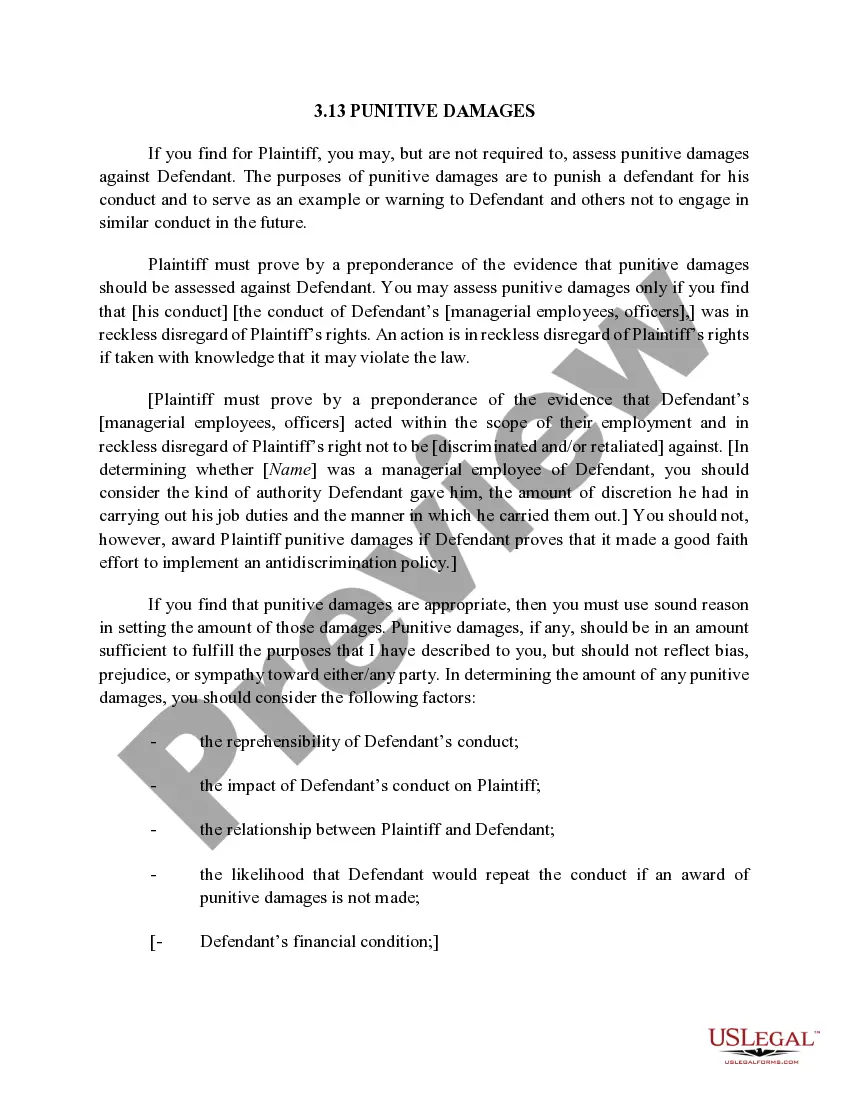
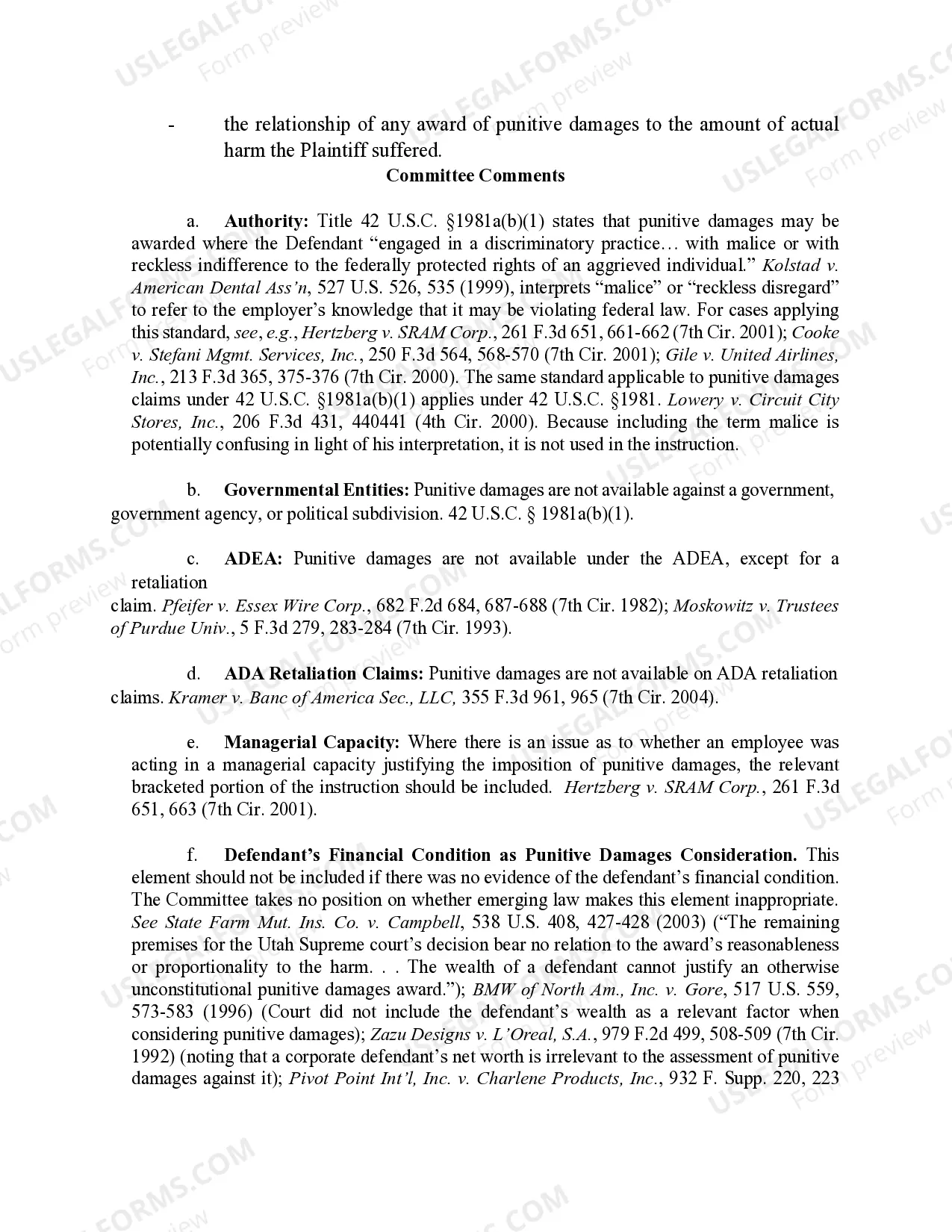
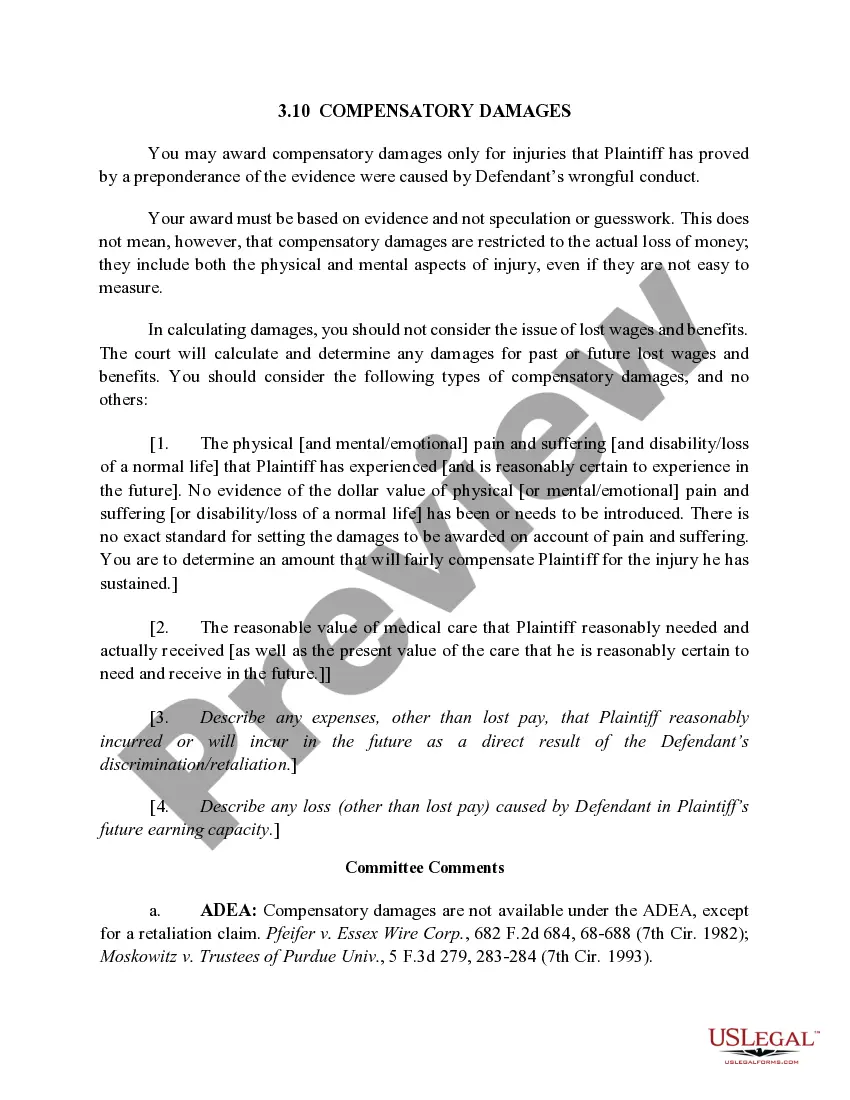
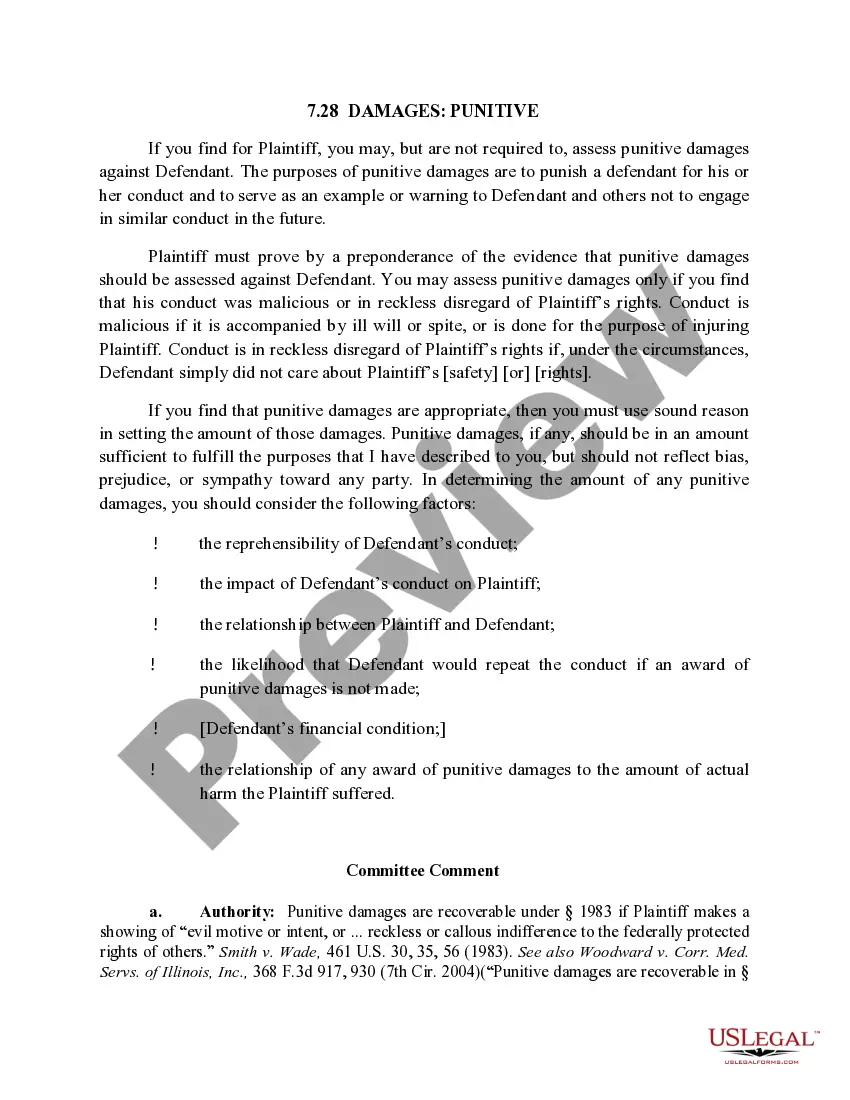
The 3.13 Punitive Damages form is a legal template that provides the official pattern jury instructions adopted by the Federal 7th Circuit Court. This form is utilized in civil cases to determine whether punitive damages should be awarded against a defendant. It serves to inform jurors about the criteria for assessing punitive damages, distinguishing it from other types of damage awards by emphasizing punishment and deterrence of wrongful conduct.
What’s included in this form
- Definition of punitive damages and their purpose.
- Criteria for awarding punitive damages based on the defendant's conduct.
- Requirements for the plaintiff to prove reckless disregard of rights.
- Considerations used for determining the amount of punitive damages.
- Comments from the committee on relevant legal standards and cases.
When to use this form
This form should be used when a plaintiff seeks to establish grounds for punitive damages in a jury trial. Situations can include cases where a defendant's behavior exhibited gross negligence, willful misconduct, or a blatant disregard for the rights and safety of others, such as in civil rights violations or severe instances of personal injury. It is important for jurors to have clear instructions on how punitive damages can be assessed and the factors influencing their determination.
Intended users of this form
This form is intended for:
- Judges presiding over civil trials involving punitive damages claims.
- Jury members tasked with deliberating on the appropriateness and amount of punitive damages.
- Legal professionals representing plaintiffs or defendants in civil litigation cases.
How to complete this form
- Identify the parties involved in the case: plaintiff(s) and defendant(s).
- Review the evidence to determine if punitive damages may apply based on the defendant's conduct.
- Assess the impact of the defendant's actions on the plaintiff, considering factors such as severity and intent.
- Set the amount of punitive damages based on the nature of the conduct and the relationship between the parties.
- Ensure the jury instructions reflect fairness and are free from bias toward either party.
Is notarization required?
This form does not typically require notarization to be legally valid. However, some jurisdictions or document types may still require it. US Legal Forms provides secure online notarization powered by Notarize, available 24/7 for added convenience.
Get your form ready online
Our built-in tools help you complete, sign, share, and store your documents in one place.
Make edits, fill in missing information, and update formatting in US Legal Forms—just like you would in MS Word.
Download a copy, print it, send it by email, or mail it via USPS—whatever works best for your next step.
Sign and collect signatures with our SignNow integration. Send to multiple recipients, set reminders, and more. Go Premium to unlock E-Sign.
If this form requires notarization, complete it online through a secure video call—no need to meet a notary in person or wait for an appointment.
We protect your documents and personal data by following strict security and privacy standards.

Make edits, fill in missing information, and update formatting in US Legal Forms—just like you would in MS Word.

Download a copy, print it, send it by email, or mail it via USPS—whatever works best for your next step.

Sign and collect signatures with our SignNow integration. Send to multiple recipients, set reminders, and more. Go Premium to unlock E-Sign.

If this form requires notarization, complete it online through a secure video call—no need to meet a notary in person or wait for an appointment.

We protect your documents and personal data by following strict security and privacy standards.
Common mistakes
- Failing to establish the necessary legal standard of "reckless disregard" for the plaintiff's rights.
- Overlooking the need to assess the relationship between the amount of punitive damages and actual harm suffered.
- Misinterpreting the guidelines regarding the defendant's financial condition.
Benefits of using this form online
- Immediate access to the latest legal standards in a user-friendly format.
- Editability allows for customization based on case specifics.
- Reliable and up-to-date legal information drafted by licensed attorneys.
Legal use & context
- Punitive damages are meant to deter wrongful conduct and punish defendants beyond compensatory damages.
- Fees for punitive damages are not awarded against governmental entities or agencies under certain regulations.
- Legal standards regarding punitive damages can vary by jurisdiction, impacting the applicability of this form.
Main things to remember
- The 3.13 Punitive Damages form is vital for determining whether to impose punitive damages.
- Clear understanding of the criteria is essential for jury members.
- This form aids in ensuring fair legal proceedings concerning punitive damages.
Looking for another form?
Form popularity
FAQ
To determine the amount of punitive damages to award, the Book of Approved Jury Instructions (BAJI) states that the jury should consider: (1) The reprehensibility of the conduct of the defendant. (2) The defendant's financial condition and (3) the relationship to actual damages.
A typical cap on punitive damages is four times the amount of compensatory damages. Criteria for punitive damages differs from state to state, with some more likely to award punitive damages than others.
The median amount of punitive damages that are awarded is around $64,000.
These are (1) how reprehensible the defendant's conduct was, (2) the disparity between the harm experienced by the plaintiff and the punitive damages award, and (3) the difference between the punitive damages award and the civil penalties and remedies imposed in similar cases.
Individuals can also be ordered to pay punitive damages that injure someone else due to negligent behavior. Examples of this would be drunk driving or distracted driving. In both cases, the defendant would have made a conscious decision to engage in behavior that could easily harm another person.