4.14 Punitive Damages
About this form
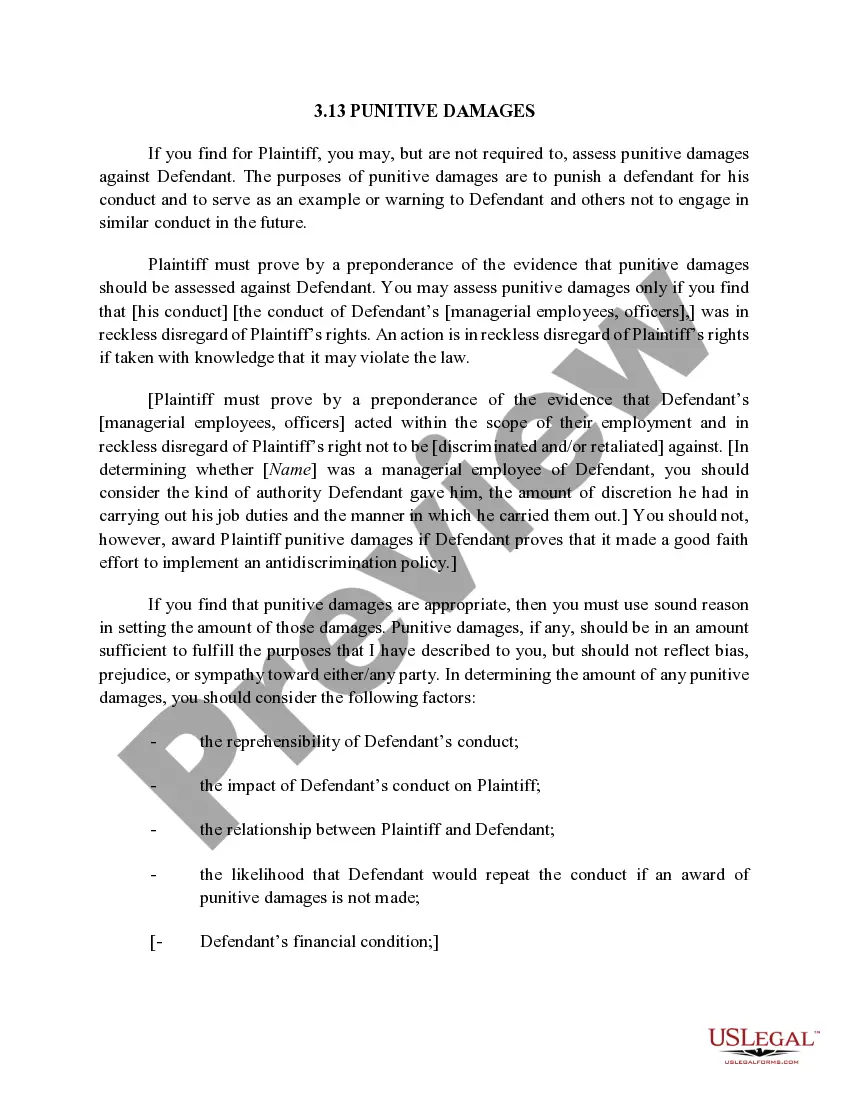
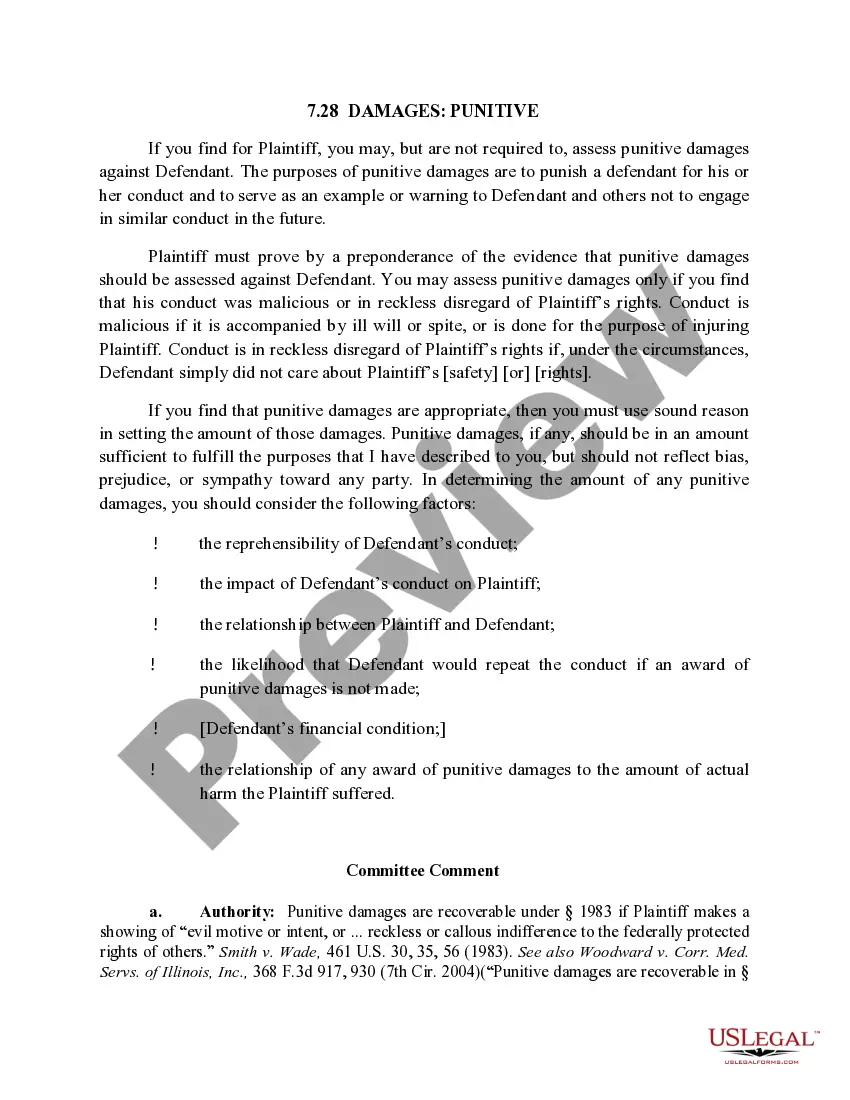
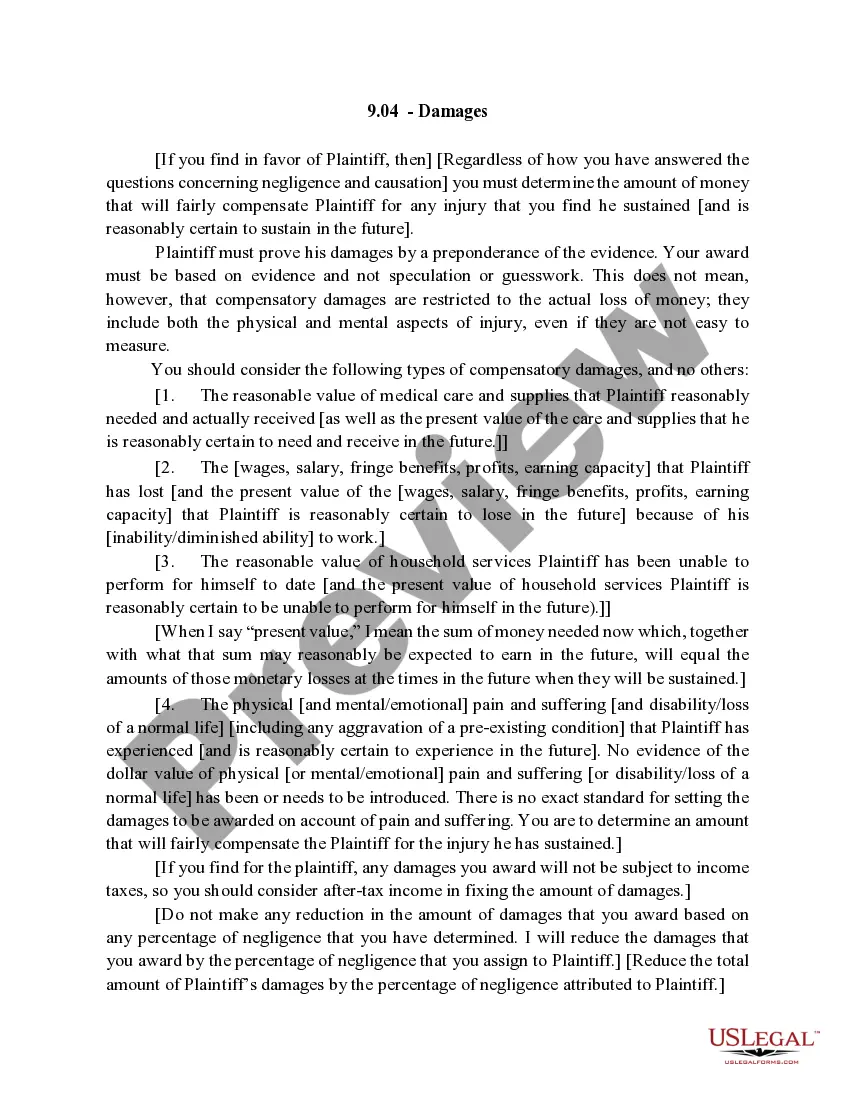
The Punitive Damages form is an official pattern jury instruction adopted by the Federal 7th Circuit Court. It serves as guidance for jurors when they are determining whether to award punitive damages in a legal case. Punitive damages are awarded in addition to compensatory damages to punish the wrongdoer and deter similar conduct in the future. This form is essential in cases where negligence or misconduct is evident and helps clarify the conditions under which punitive damages may be awarded.
Form components explained
- Reference to Instruction No. 3.13 for additional context.
- Guidelines for the determination of punitive damages.
- Framework for jurors to evaluate evidence related to punitive damages.

Situations where this form applies
This form is used in civil litigation where the plaintiff seeks punitive damages against a defendant. It applies primarily in cases involving egregious behavior, such as fraud, malice, or recklessness. If a case involves these elements, the jury will use this form to assess whether punitive damages should be awarded based on the circumstances of the case.
Who this form is for
- Attorneys representing clients in civil lawsuits where punitive damages may be sought.
- Plaintiffs seeking to establish grounds for punitive damages.
- Legal professionals advising clients on potential awards in tort cases.
Steps to complete this form
- Review the jury instructions and relevant case law regarding punitive damages.
- Prepare a factual basis that demonstrates the need for punitive damages.
- Refer to Instruction No. 3.13 for additional guidance on applying the law.
- Ensure jurors understand the purpose of punitive damages and the criteria for awarding them.
Is notarization required?
In most cases, this form does not require notarization. However, some jurisdictions or signing circumstances might. US Legal Forms offers online notarization powered by Notarize, accessible 24/7 for a quick, remote process.
Get your form ready online
Our built-in tools help you complete, sign, share, and store your documents in one place.
Make edits, fill in missing information, and update formatting in US Legal Forms—just like you would in MS Word.
Download a copy, print it, send it by email, or mail it via USPS—whatever works best for your next step.
Sign and collect signatures with our SignNow integration. Send to multiple recipients, set reminders, and more. Go Premium to unlock E-Sign.
If this form requires notarization, complete it online through a secure video call—no need to meet a notary in person or wait for an appointment.
We protect your documents and personal data by following strict security and privacy standards.

Make edits, fill in missing information, and update formatting in US Legal Forms—just like you would in MS Word.

Download a copy, print it, send it by email, or mail it via USPS—whatever works best for your next step.

Sign and collect signatures with our SignNow integration. Send to multiple recipients, set reminders, and more. Go Premium to unlock E-Sign.

If this form requires notarization, complete it online through a secure video call—no need to meet a notary in person or wait for an appointment.

We protect your documents and personal data by following strict security and privacy standards.
Common mistakes
- Failing to adequately demonstrate the defendant's malice or reckless behavior.
- Misunderstanding the legal standards for awarding punitive damages.
- Not referencing the appropriate jury instructions during deliberation.
Why use this form online
- Convenient access to necessary legal documents from anywhere at any time.
- Editable formats that allow users to customize the form as needed.
- Reliability of using professionally drafted templates ensures legal compliance.
Looking for another form?
Form popularity
FAQ
To determine the amount of punitive damages to award, the Book of Approved Jury Instructions (BAJI) states that the jury should consider: (1) The reprehensibility of the conduct of the defendant. (2) The defendant's financial condition and (3) the relationship to actual damages.
Punitive damages are given on top of compensatory damages when the misconduct was deemed grossly negligent, intentional, or malicious. These are designed to deter the defendant from repeating harm or misconduct in the future.
These are (1) how reprehensible the defendant's conduct was, (2) the disparity between the harm experienced by the plaintiff and the punitive damages award, and (3) the difference between the punitive damages award and the civil penalties and remedies imposed in similar cases.
There are three types of damage that form the foundation of most civil lawsuits: compensatory, nominal, and punitive.
It must be proven by clear and convincing evidence that a defendant acted with oppression, fraud, or malice. Clear and convincing evidence means that there must be a very high degree of probability that something is true.
To support an award of punitive damages you must find that plaintiff has proved, by clear and convincing evidence, that the harm suffered by plaintiff was the result of defendant's conduct21 and that either (1) defendant's conduct was malicious or (2) defendant acted in wanton and willful disregard of
Although there is no maximum sum, punitive damages typically do not exceed four times the amount of compensatory damages. For example, if a plaintiff recovers $100,000 in compensatory damages and is awarded punitive damages, they most likely will receive up to $400,000 in punitive damages.
Individuals can also be ordered to pay punitive damages that injure someone else due to negligent behavior. Examples of this would be drunk driving or distracted driving. In both cases, the defendant would have made a conscious decision to engage in behavior that could easily harm another person.