Mississippi Motion to Quash Deposition Subpoena Duces Tecum
What is this form?
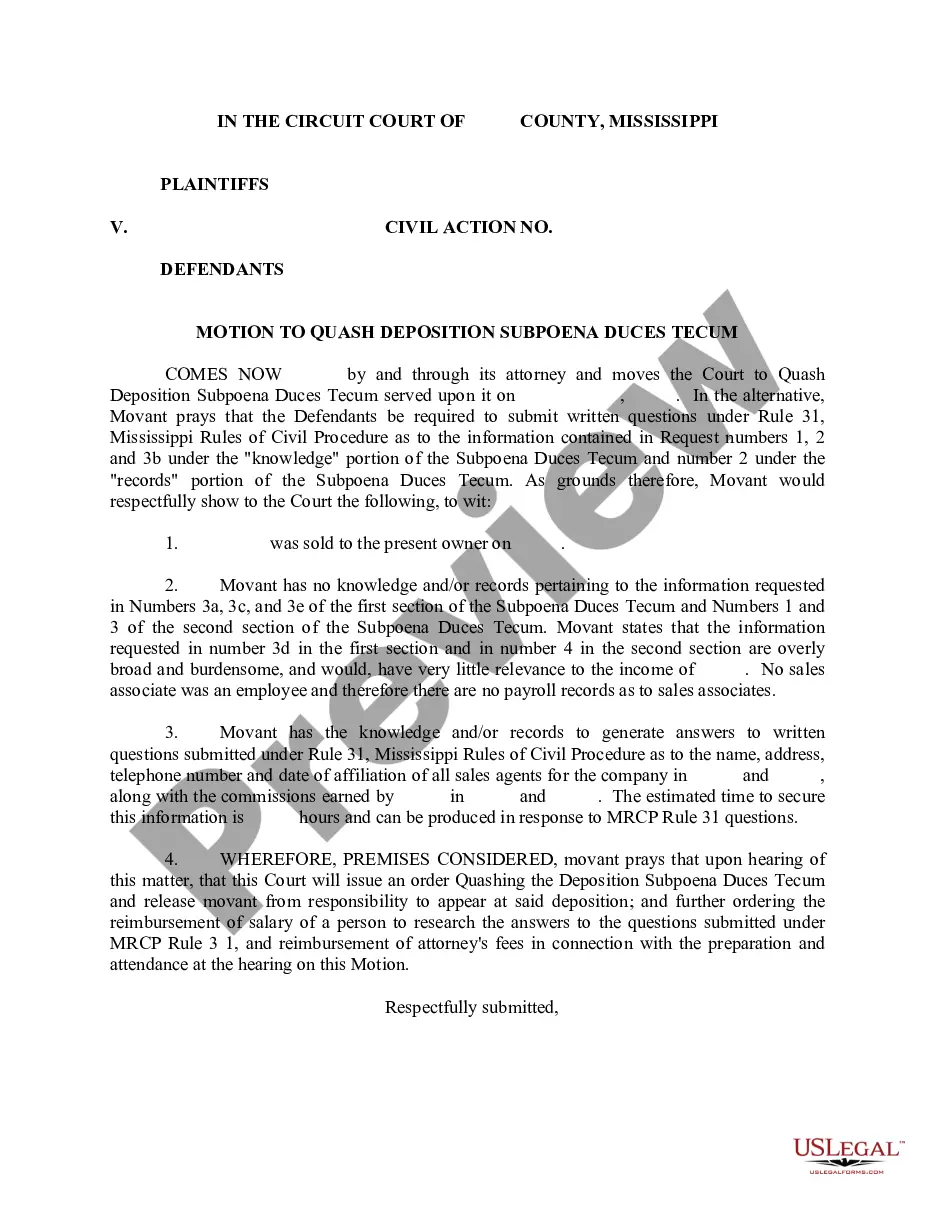
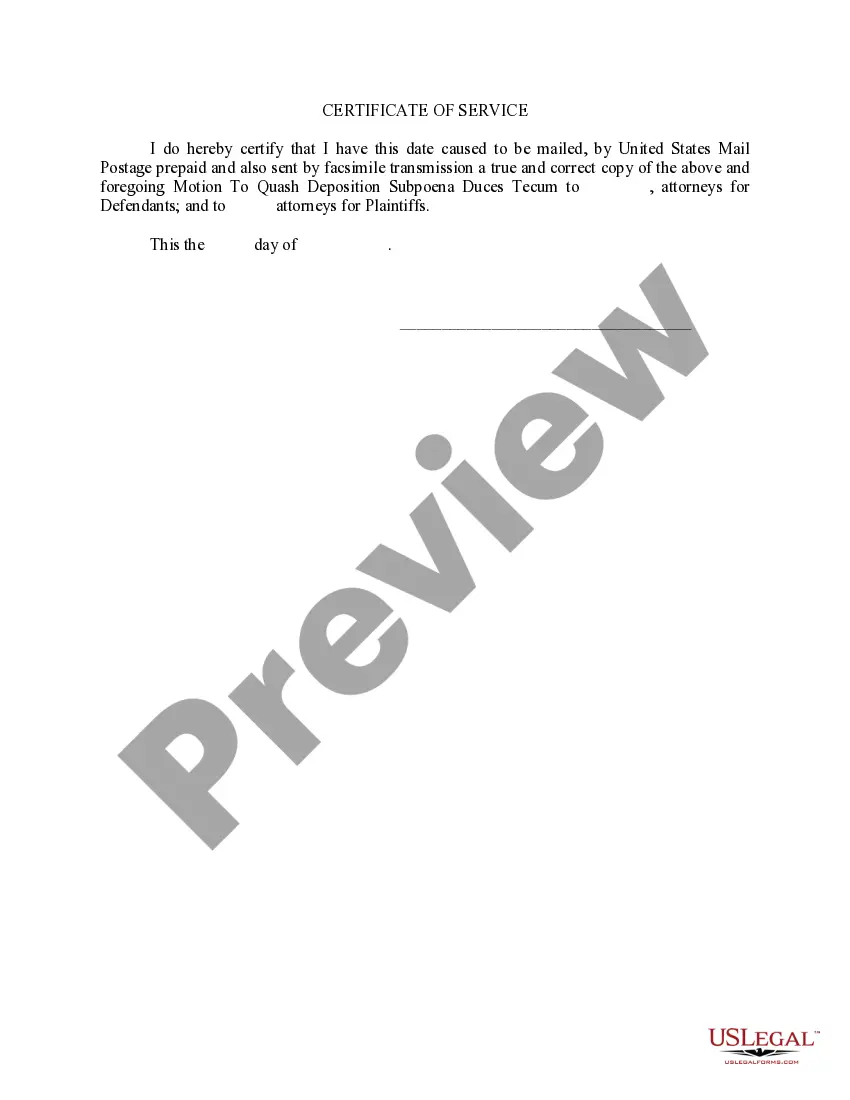
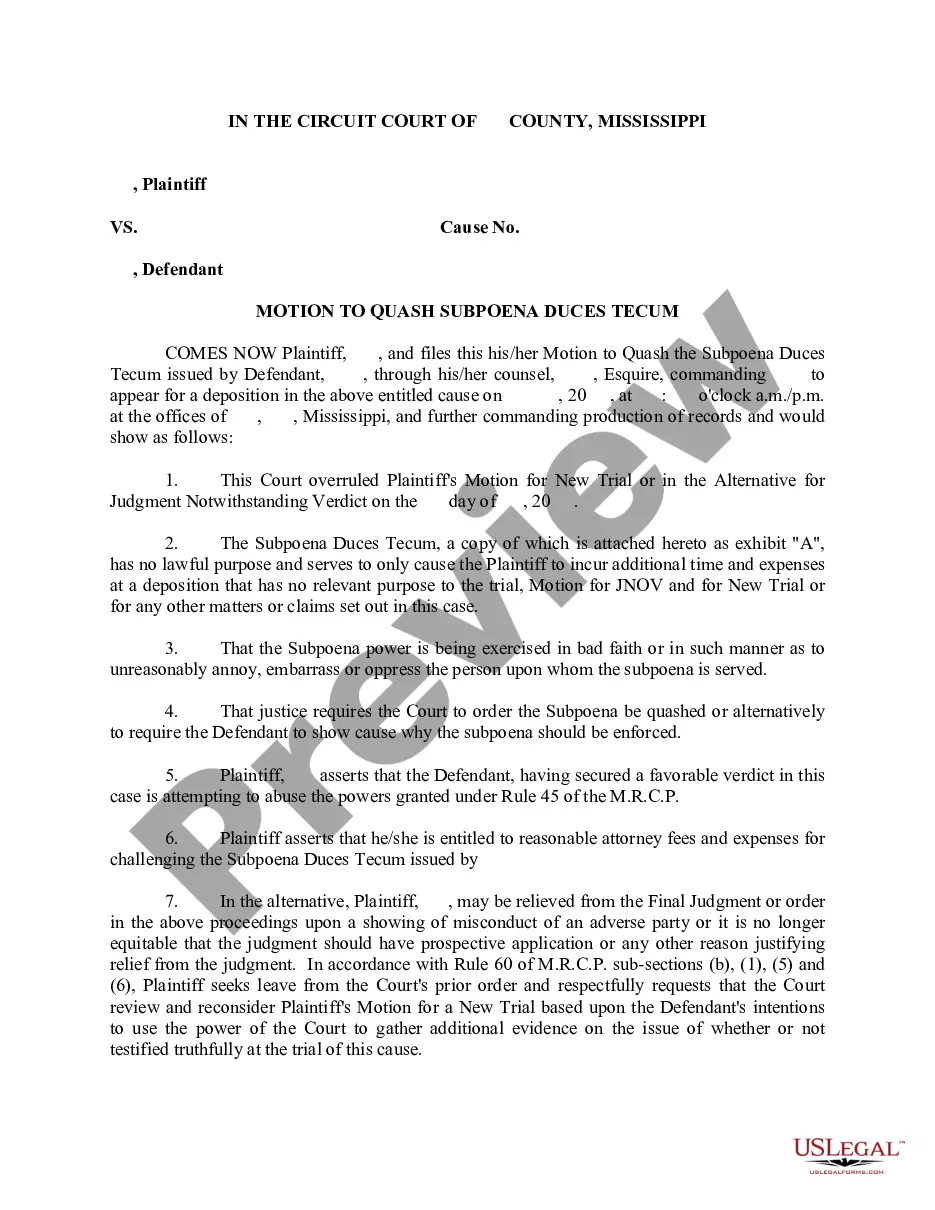
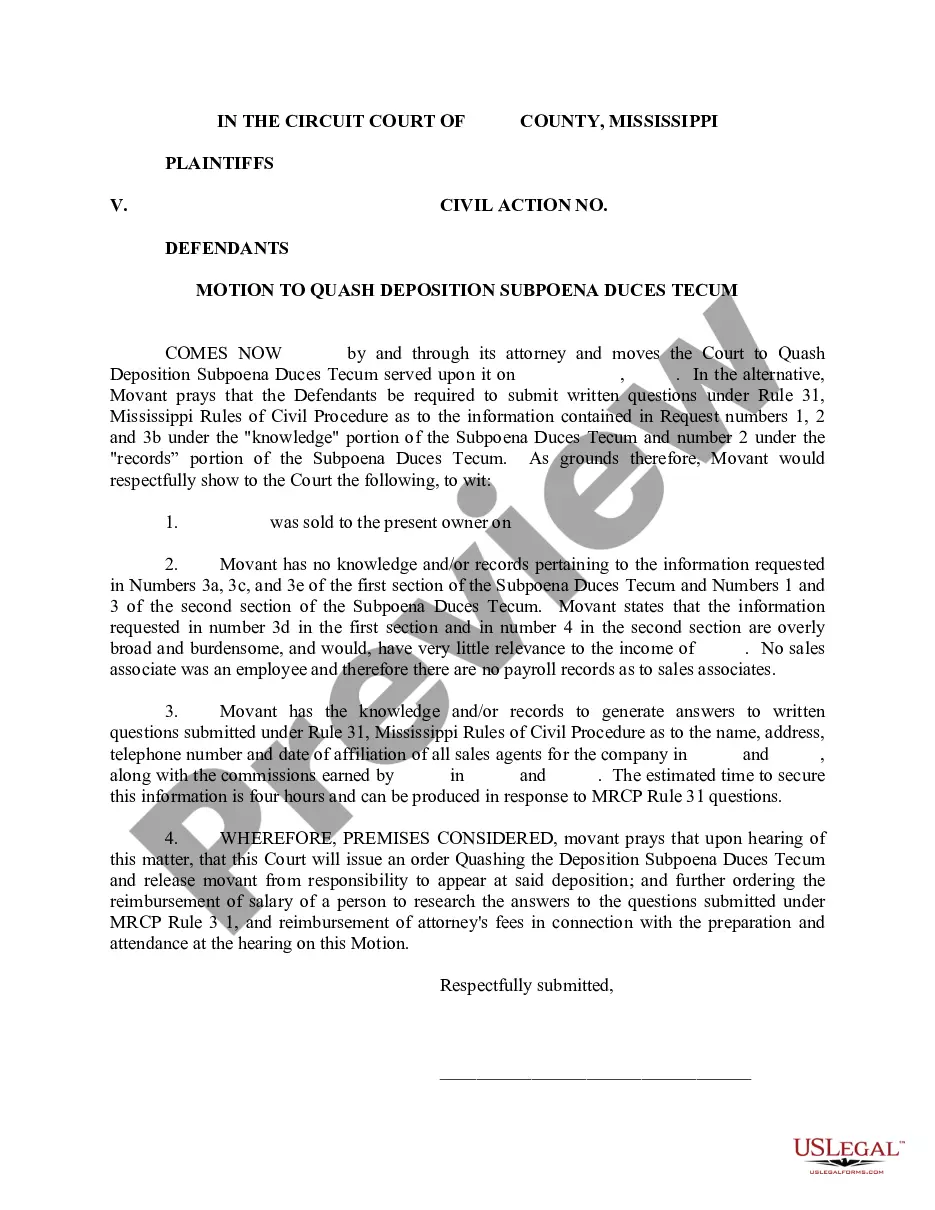
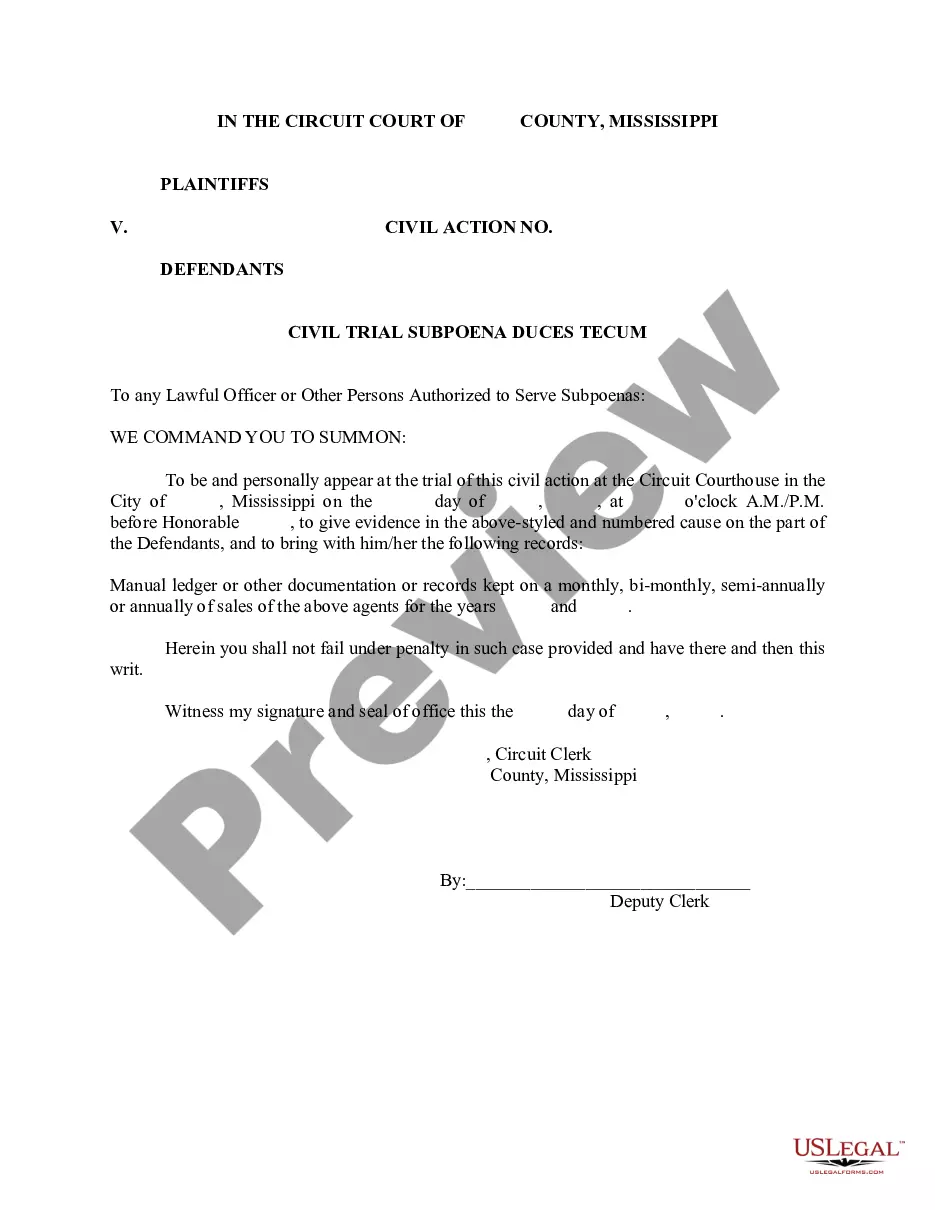
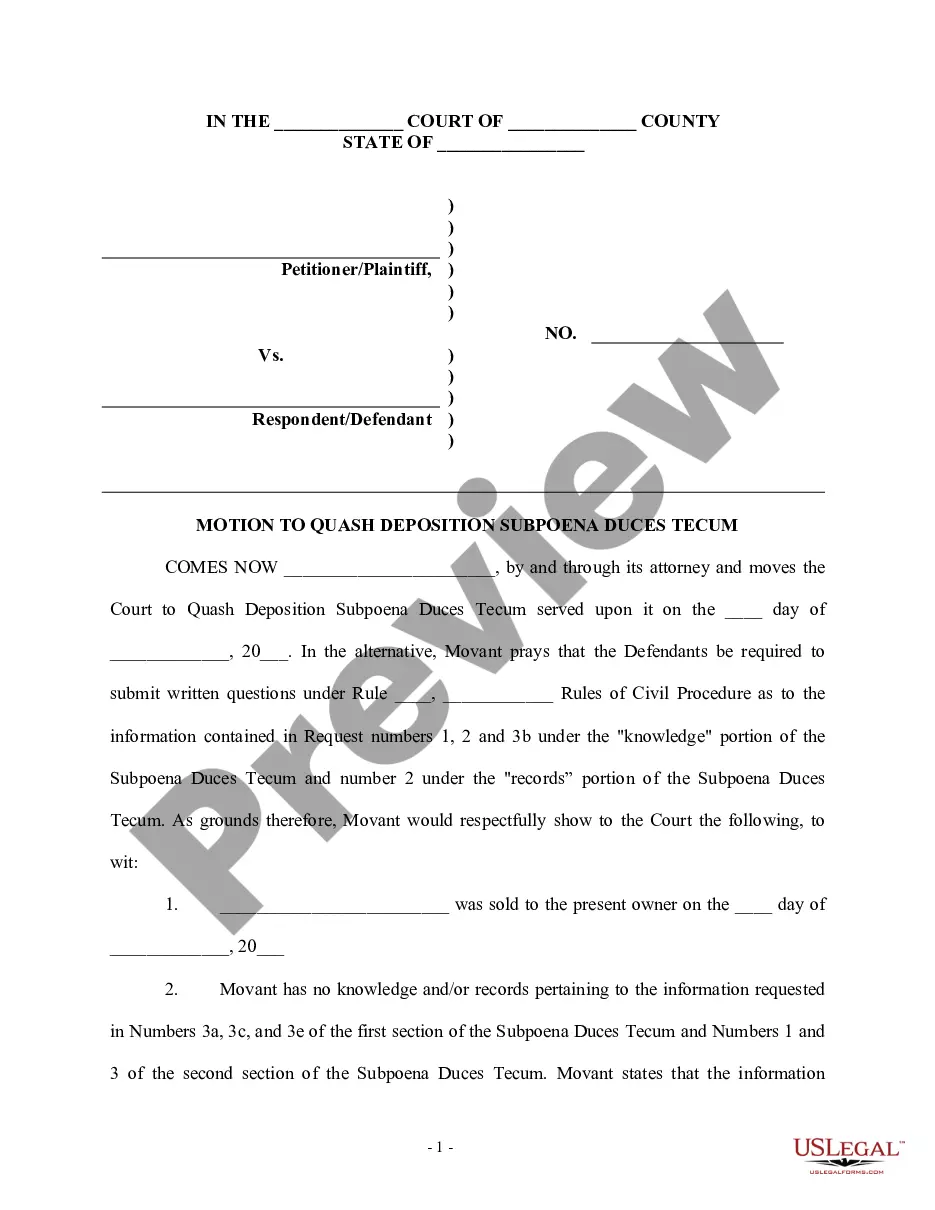
A Motion to Quash Deposition Subpoena Duces Tecum is a legal document that requests the court to cancel a subpoena requiring the production of documents during a deposition. This motion is essential for protecting against improper requests that could impose undue burden or invade privacy. Unlike other motions, this specific form focuses on compelling a response to a request for documents rather than merely a deposition of a witness. Users can adapt this template to their specific legal circumstances.
Form components explained
- Caption: Identifies the court and parties involved.
- Introduction: States the purpose of the motion to quash.
- Legal Basis: Provides the legal reasons supporting the request.
- Request for Relief: Clearly states the relief sought from the court.
- Conclusion: Invites the court to grant the motion formally.

When to use this document
This form is typically used when a party is served with a deposition subpoena duces tecum that they believe is overly broad, irrelevant, or burdensome. If you want to prevent the disclosure of certain documents or materials that you believe should not be provided, this motion is necessary. It protects your rights and interests during the discovery process in litigation.
Who can use this document
- Individuals or businesses that have received a deposition subpoena duces tecum.
- Parties in a legal dispute who want to challenge the validity of a subpoena.
- Attorneys representing clients in civil litigation involving information requests.
- Anyone seeking to protect confidential or proprietary information from disclosure.
Instructions for completing this form
- Identify the court: Fill in the name of the court where the motion is being filed.
- Provide party details: Include the names and addresses of the parties involved in the case.
- State the legal grounds: Clearly articulate the reasons for your request to quash the subpoena.
- Include the relief sought: Specify what you are asking the court to do (e.g., cancel the subpoena).
- Sign and date the document: Ensure you provide the necessary signature and date at the bottom of the form.
Does this form need to be notarized?
In most cases, this form does not require notarization. However, some jurisdictions or signing circumstances might. US Legal Forms offers online notarization powered by Notarize, accessible 24/7 for a quick, remote process.
Get your form ready online
Our built-in tools help you complete, sign, share, and store your documents in one place.
Make edits, fill in missing information, and update formatting in US Legal Forms—just like you would in MS Word.
Download a copy, print it, send it by email, or mail it via USPS—whatever works best for your next step.
Sign and collect signatures with our SignNow integration. Send to multiple recipients, set reminders, and more. Go Premium to unlock E-Sign.
If this form requires notarization, complete it online through a secure video call—no need to meet a notary in person or wait for an appointment.
We protect your documents and personal data by following strict security and privacy standards.

Make edits, fill in missing information, and update formatting in US Legal Forms—just like you would in MS Word.

Download a copy, print it, send it by email, or mail it via USPS—whatever works best for your next step.

Sign and collect signatures with our SignNow integration. Send to multiple recipients, set reminders, and more. Go Premium to unlock E-Sign.

If this form requires notarization, complete it online through a secure video call—no need to meet a notary in person or wait for an appointment.

We protect your documents and personal data by following strict security and privacy standards.
Mistakes to watch out for
- Failing to include necessary legal grounds for quashing the subpoena.
- Not filing within the required time frame set by local rules.
- Omitting the signature or date on the motion.
- Using vague language that does not clearly state the reasons for the motion.
Why complete this form online
- Easy download: Get instant access to a professionally drafted form.
- Editable format: Tailor the form to suit your specific needs and circumstances.
- Reliability: Forms are created by licensed attorneys to ensure legal compliance.
Looking for another form?
Form popularity
FAQ
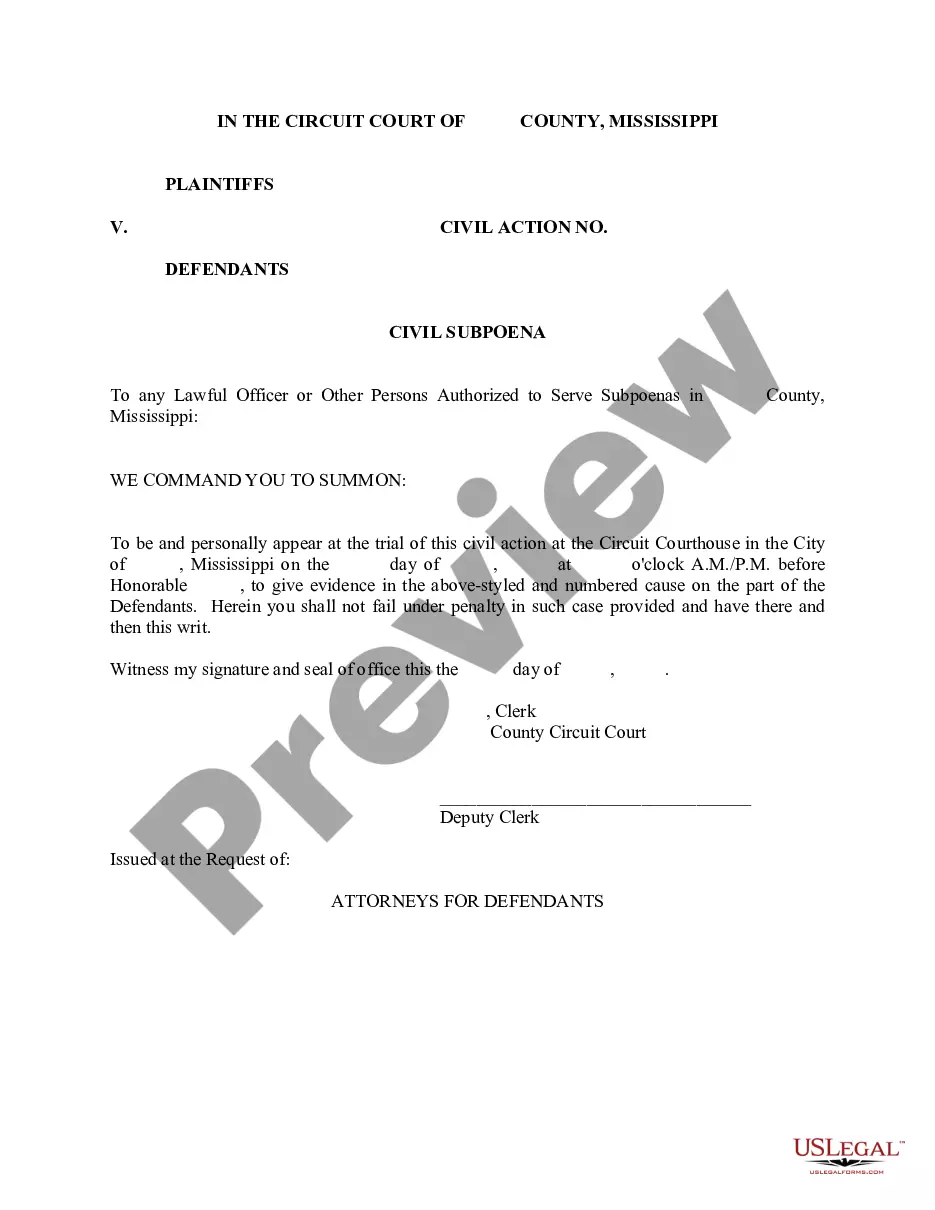
A subpoena is an Order that is issued to require the attendance of a witness to testify at a particular time and place. A subpoena duces tecum is an Order that requires a witness to bring documents, books or other items under his, her or their control, that he she or they is bound by law to produce into evidence.
A motion to quash must be based on valid grounds.If the court grants the motion, it may quash the subpoena entirely, modify it, or order that you comply with it on specified conditions. If the court denies the motion, you will usually have to comply with it as written.
Any employee whose employment records are sought by a subpoena duces tecum may bring a motion to quash. Note that non-party employees may object to a subpoena by serving written objections. 3. Any non-party who has been served with a business records subpoena may bring a motion to quash.
A Deposition Subpoena differs from the Subpoena DucesTecum in that the documents and testimony requested are part of the discovery process before trial and may not be used in an actual court hearing.
Under HIPAA, any subpoena duces tecum that is not accompanied by a court order must contain a written statement and accompanying documentation demonstrating that the requesting party made reasonable efforts to (1) notify the patient whose records are being requested, or (2) secure a qualified protective order.