Mississippi Civil Subpoena
What this document covers
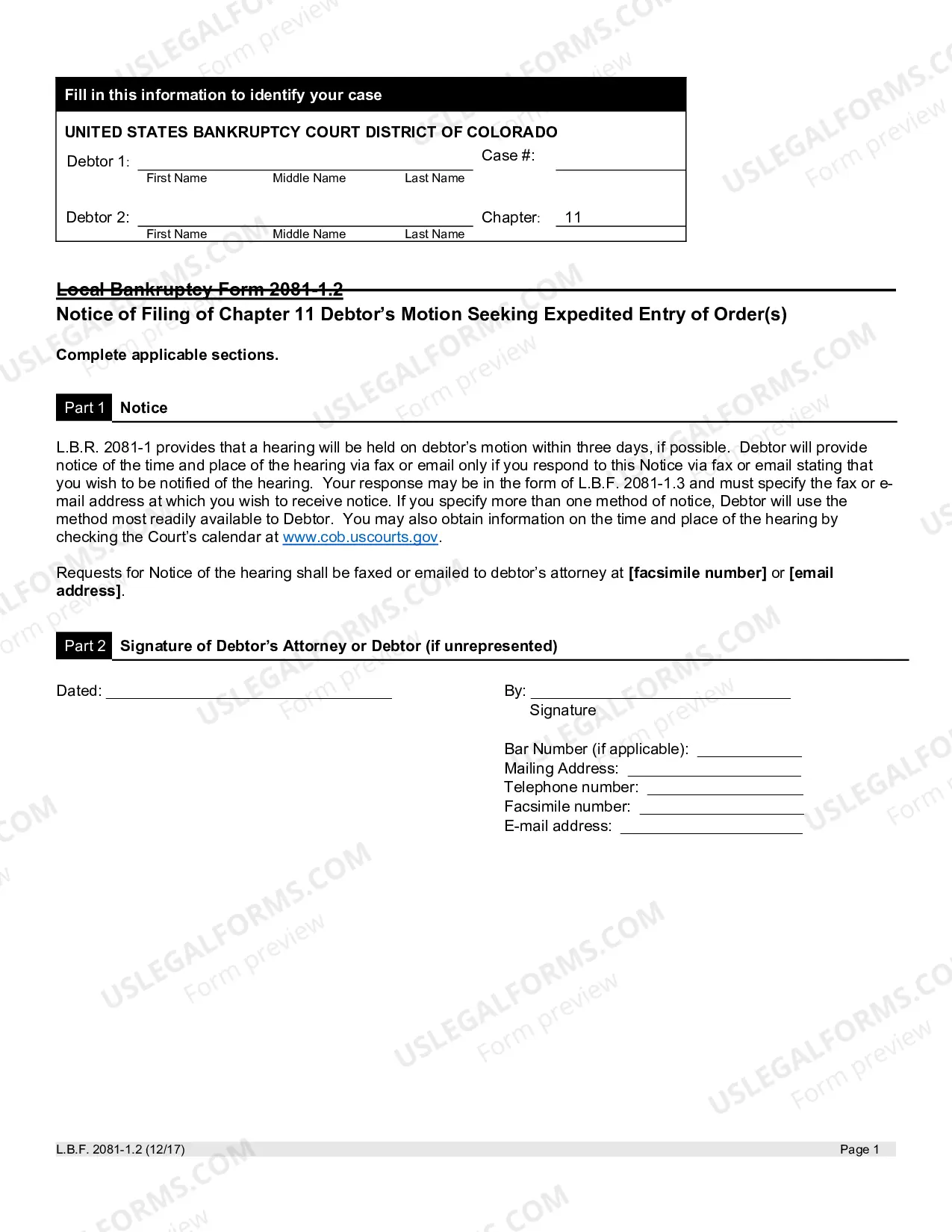
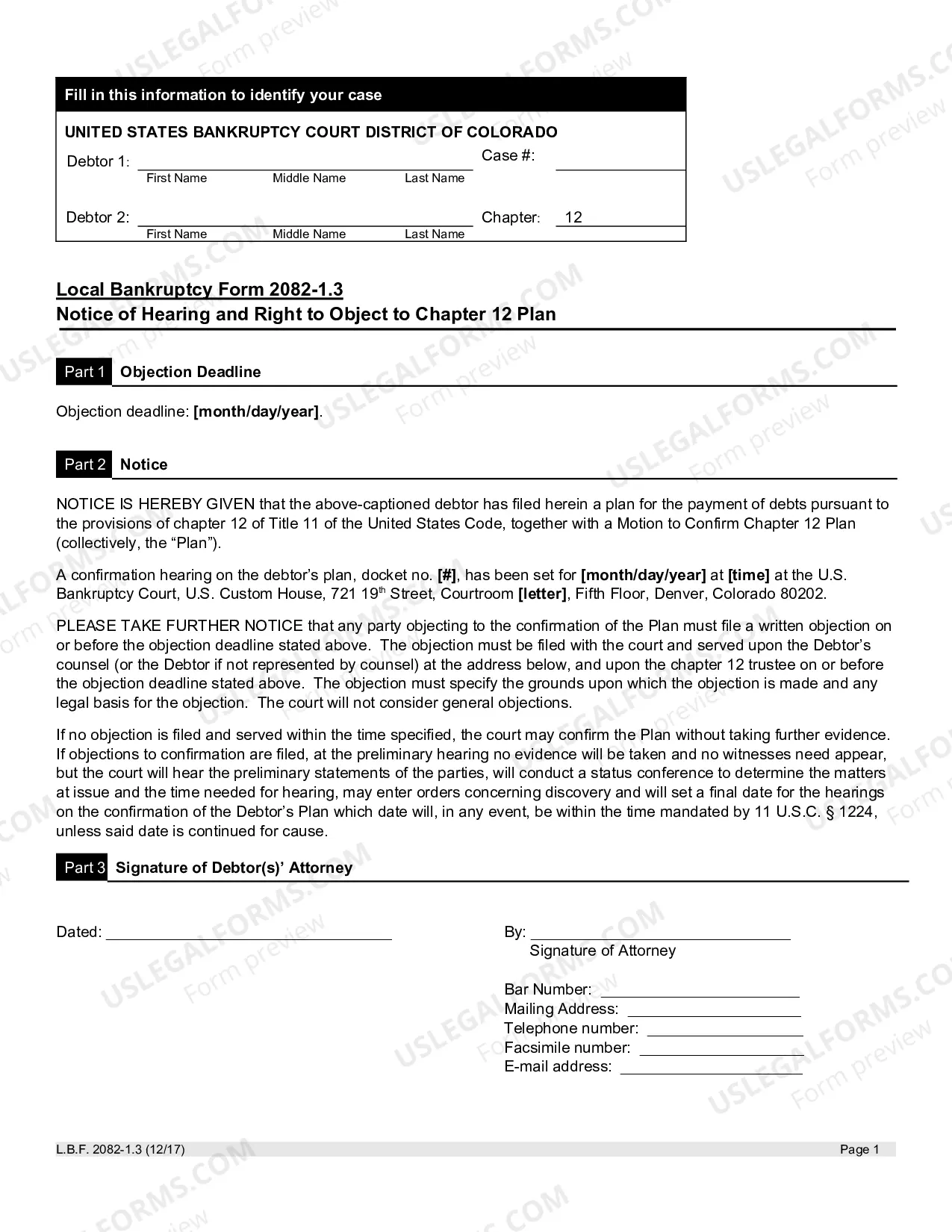
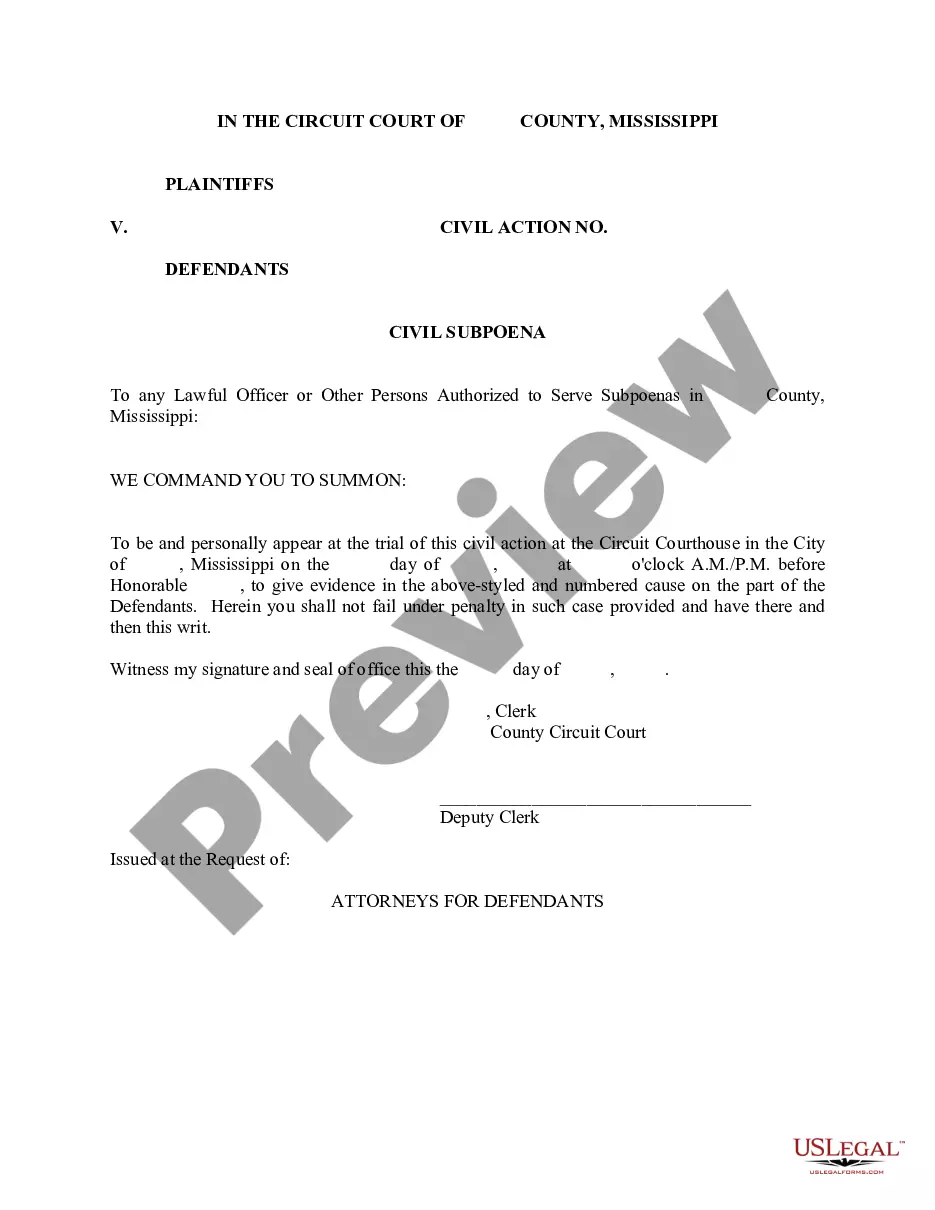
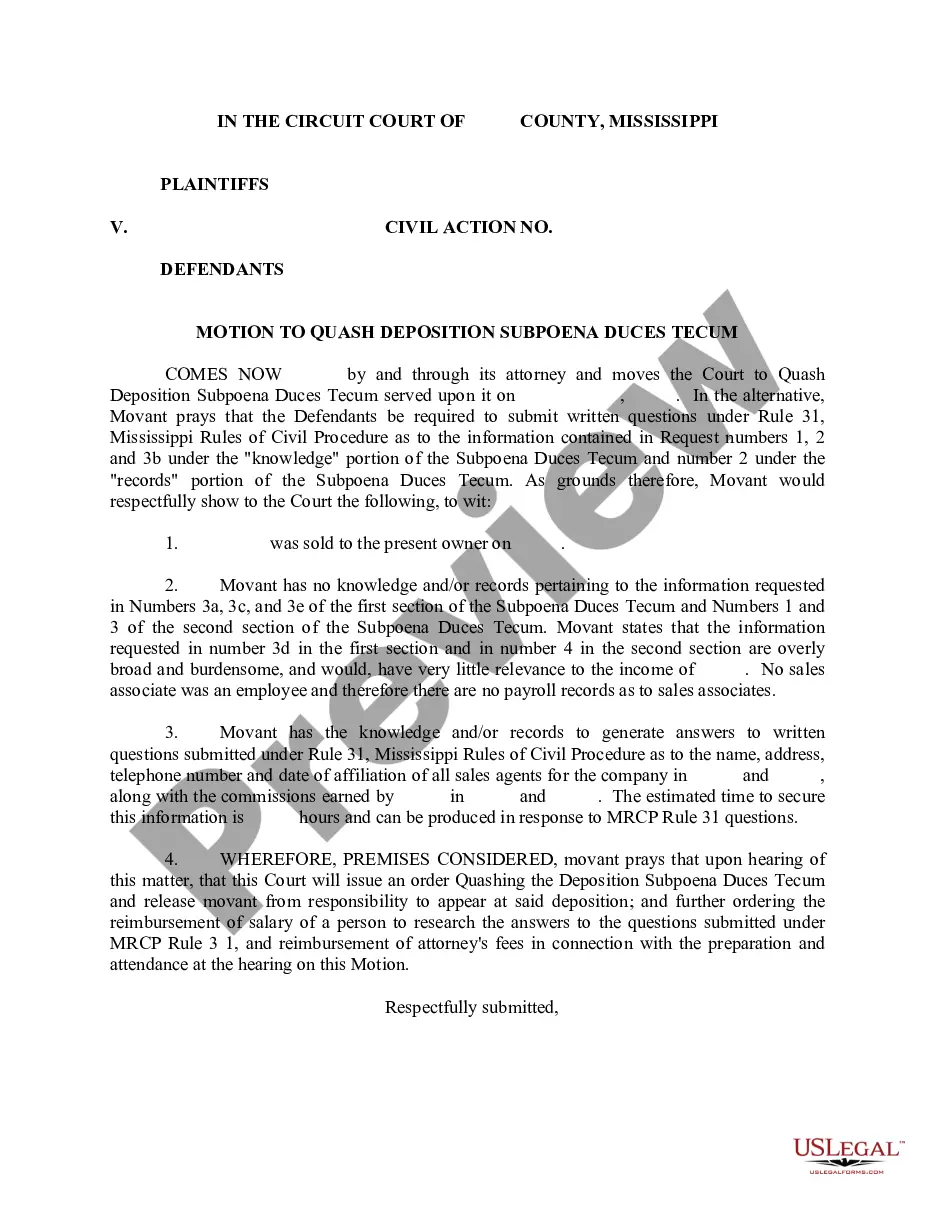
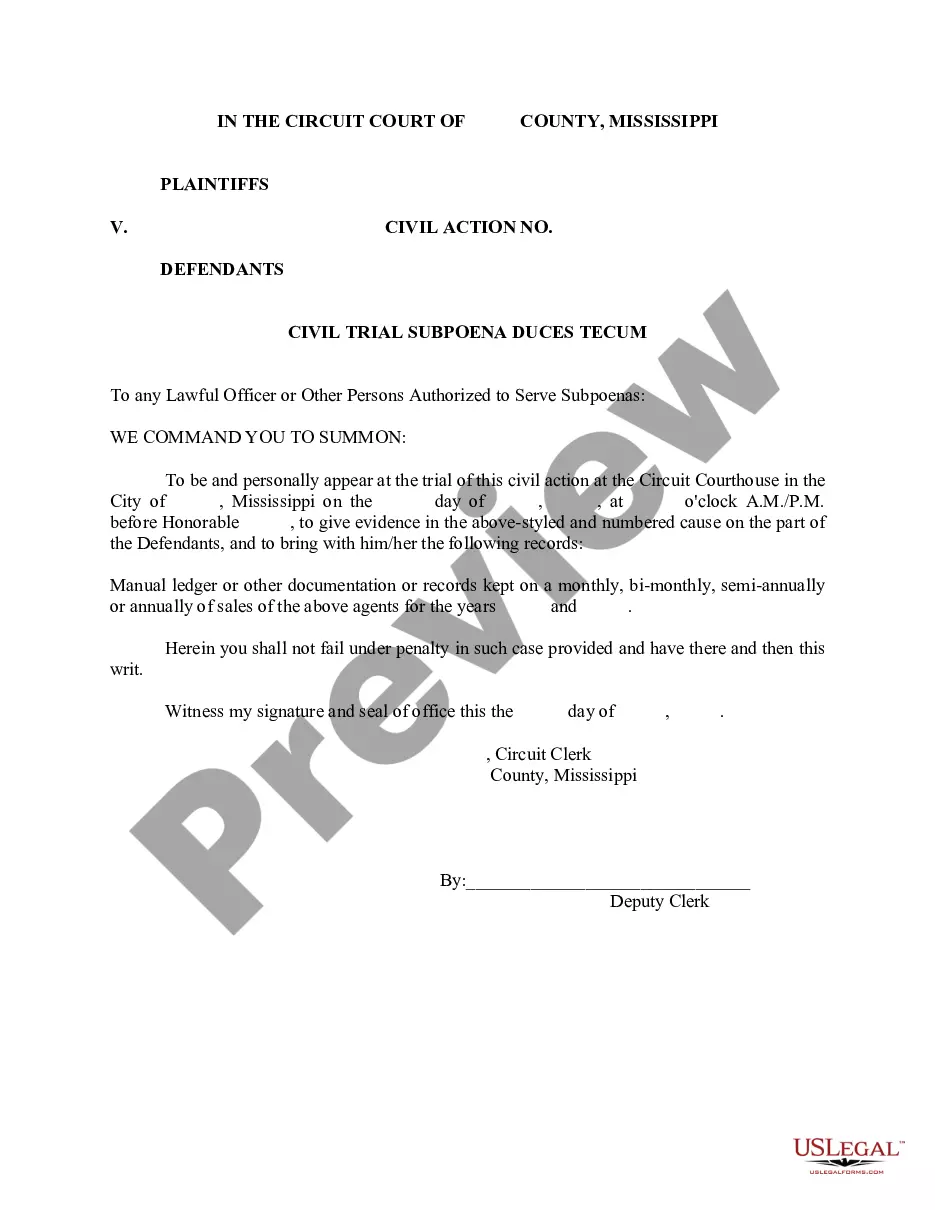
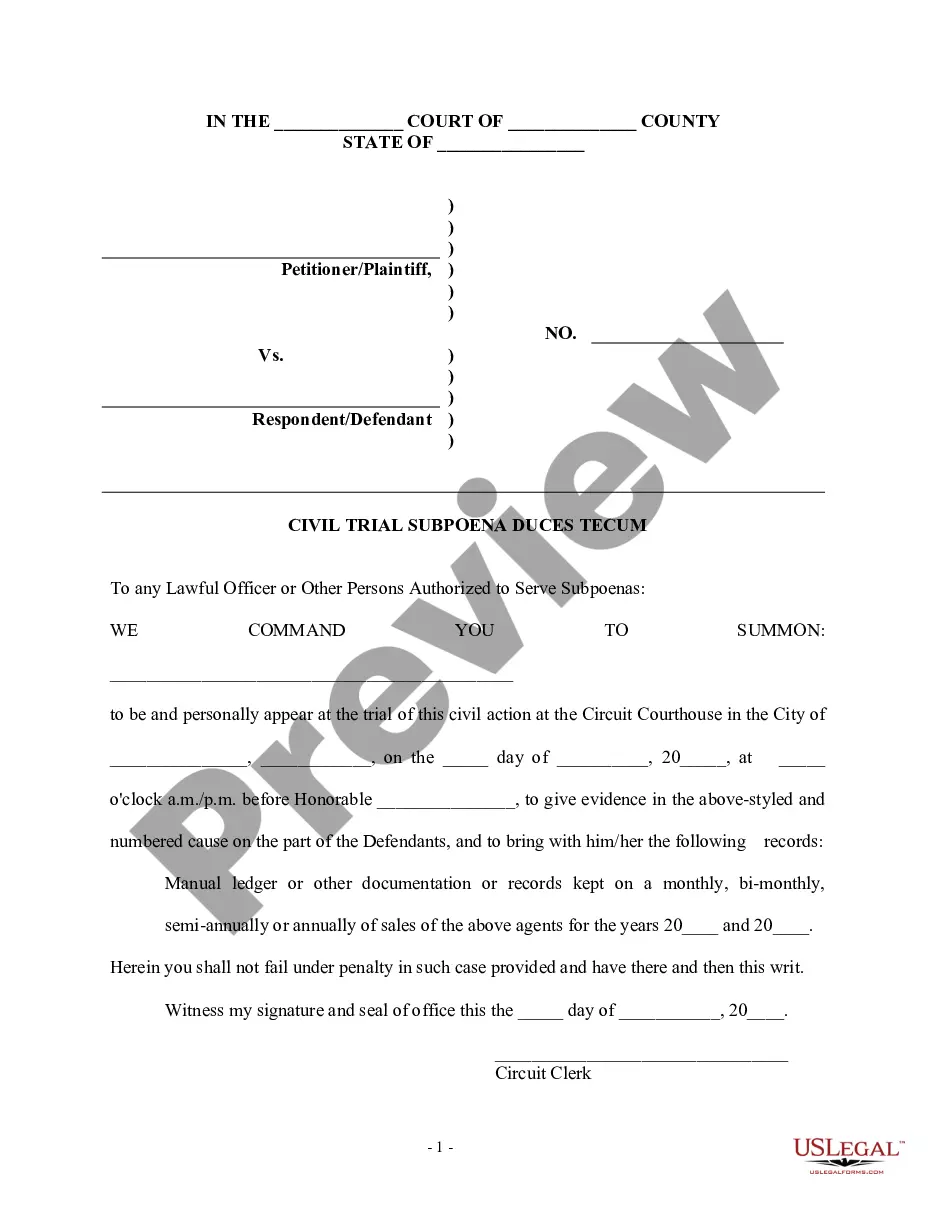
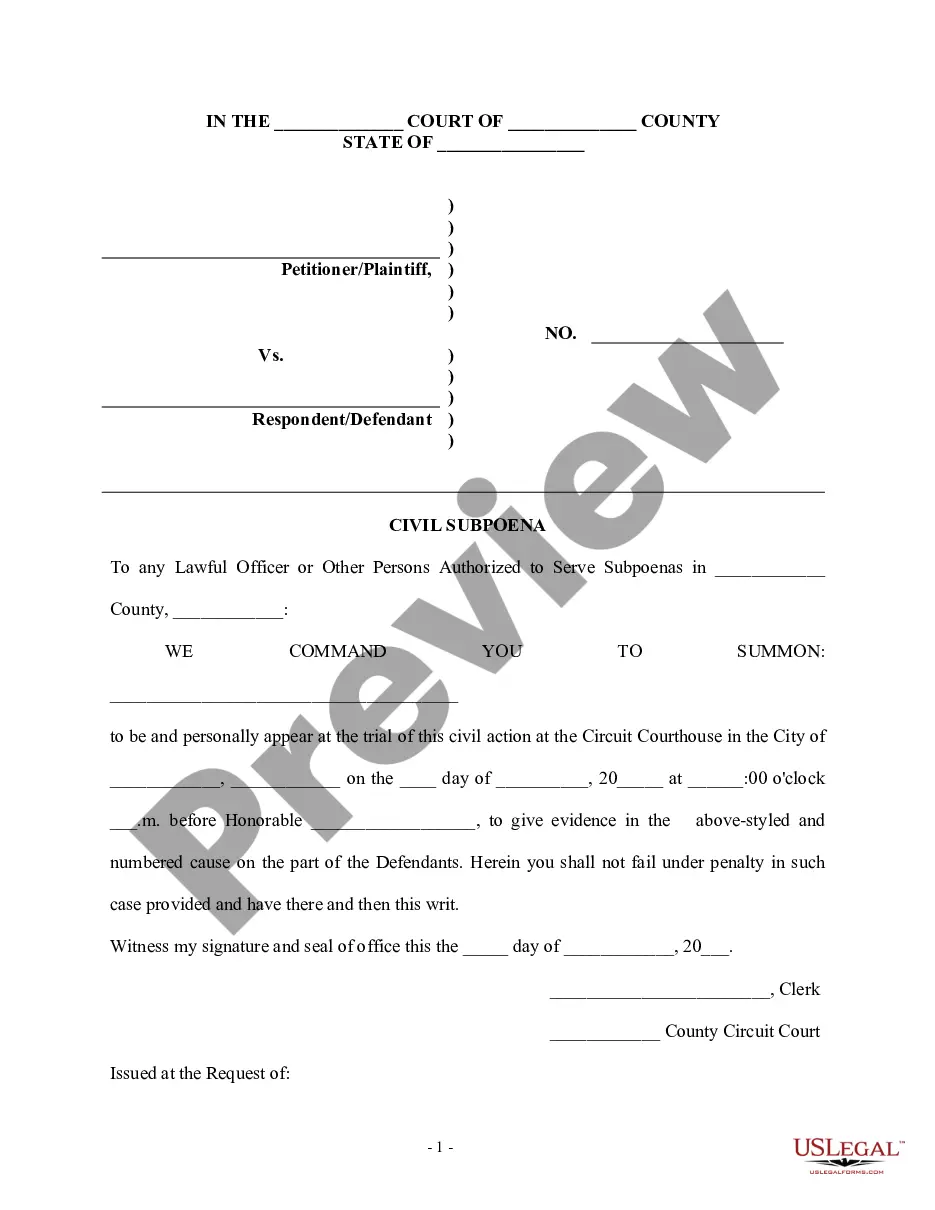
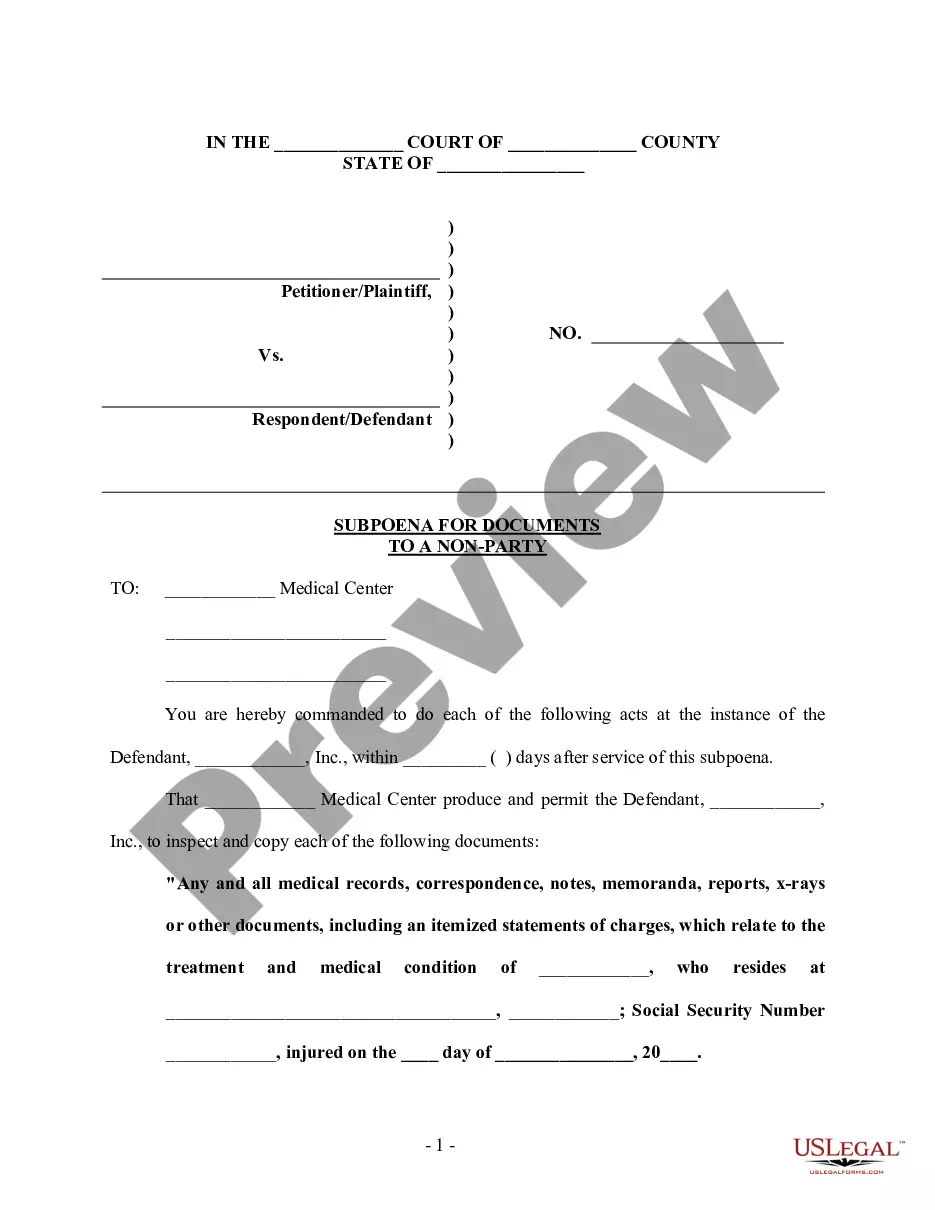
The Civil Subpoena is a legal document used primarily in civil cases to compel a specific individual to appear at a hearing, trial, or deposition. It requires that the individual bring certain documents specified in the subpoena. This form differs from other legal summons in that it not only mandates an appearance but also requests specific documentation, making it a crucial tool in the discovery process of a legal proceeding.
Key components of this form
- Case information: Includes the names of the parties involved in the legal matter.
- Document request: Specifies the particular documents that the individual must bring.
- Date and time: Clearly states when and where the individual is required to appear.
- Signature: Signed by the issuing attorney to validate the subpoena.
- Notice: Provides information regarding the individual's rights and obligations under the subpoena.
Common use cases
This form is needed when a party involved in a civil litigation wants to obtain documents or testimony from a witness. It is commonly used during the discovery phase, particularly when a party believes that the witness possesses information that is crucial to the case.
Who needs this form
The following individuals should consider using this form:
- Attorneys representing clients in civil cases.
- Individuals involved in lawsuits who require further evidence to support their position.
- Witnesses who have been requested to produce documents or appear at a legal proceeding.
Steps to complete this form
- Fill in the case information with the names and contact details of all parties involved.
- Clearly specify the documents required from the individual being subpoenaed.
- Indicate the date, time, and location where the individual must appear.
- Sign the subpoena to confirm its validity, ensuring that your details as the issuer are correct.
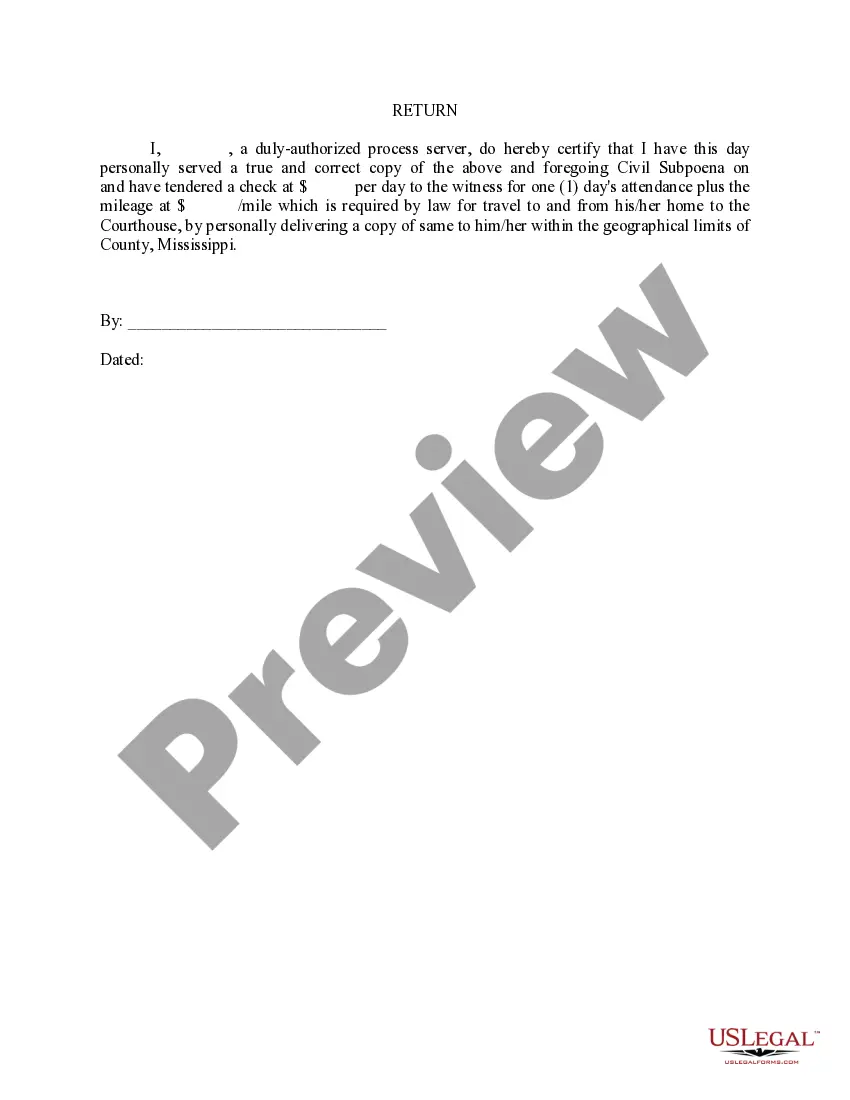
- Deliver the subpoena to the individual, complying with applicable laws regarding service of process.
Does this document require notarization?
In most cases, this form does not require notarization. However, some jurisdictions or signing circumstances might. US Legal Forms offers online notarization powered by Notarize, accessible 24/7 for a quick, remote process.
Get your form ready online
Our built-in tools help you complete, sign, share, and store your documents in one place.
Make edits, fill in missing information, and update formatting in US Legal Forms—just like you would in MS Word.
Download a copy, print it, send it by email, or mail it via USPS—whatever works best for your next step.
Sign and collect signatures with our SignNow integration. Send to multiple recipients, set reminders, and more. Go Premium to unlock E-Sign.
If this form requires notarization, complete it online through a secure video call—no need to meet a notary in person or wait for an appointment.
We protect your documents and personal data by following strict security and privacy standards.

Make edits, fill in missing information, and update formatting in US Legal Forms—just like you would in MS Word.

Download a copy, print it, send it by email, or mail it via USPS—whatever works best for your next step.

Sign and collect signatures with our SignNow integration. Send to multiple recipients, set reminders, and more. Go Premium to unlock E-Sign.

If this form requires notarization, complete it online through a secure video call—no need to meet a notary in person or wait for an appointment.

We protect your documents and personal data by following strict security and privacy standards.
Common mistakes
- Failing to accurately describe the documents requested.
- Not providing the correct date and time for the appearance.
- Omitting necessary signatures or contact information of the issuing attorney.
Benefits of using this form online
- Convenient access allows you to complete the form at any time.
- Editability lets you personalize the form to meet your specific needs.
- Reliability ensures that you are using an accurate and up-to-date legal document.
Looking for another form?


Form popularity
FAQ
If you ignore the order, the court will hold you in contempt. You could go to jail or face a large fine for ignoring the Subpoena. Subpoenas are used in both criminal and civil cases.If you get a Subpoena and do not want to testify or turn over documents, do not just ignore it.
Opening Statements and Examination of Witnesses The plaintiff has the burden of proof in civil cases, so their attorney will start with presenting their case. This involves calling witnesses to testify on their behalf, as well as presenting any documents or other tangible items that are relevant.
You must engage legal counsel to file a motion to quash in the appropriate court, and you must also be prepared for the possibility that the agency or party that sought or issued the subpoena will simply seek to have it re-served by authorized means.
Lawyers who are licensed in the state usually have the power to issue a subpoena. However, individuals who are a party to a lawsuit and other individuals may also be able to issue a subpoena, depending on the rules of civil or criminal procedure in the court that has jurisdiction of the case.
As a subpoena is a court order, failing to respond to a subpoena without lawful excuse is a contempt of court. There may be civil or criminal penalties. A subpoena must be served by giving it to an individual, or delivering it to the registered office of a company (including by post).
You can Subpoena the witness, which requires them to come to court. You can also use a Subpoena during discovery.Fill in the name of the case, the name and address of the witness, and the courtroom for the case. When you Subpoena a witness, you must pay them a witness fee and travel costs.
A refusal to testify is considered civil contempt. But even civil contempt is considered quasi-criminal in nature. That means that a person is entitled to certain constitutional procedures. For example, the witness is entitled to consult with a lawyer.