New York Administrator's Deed
About this form
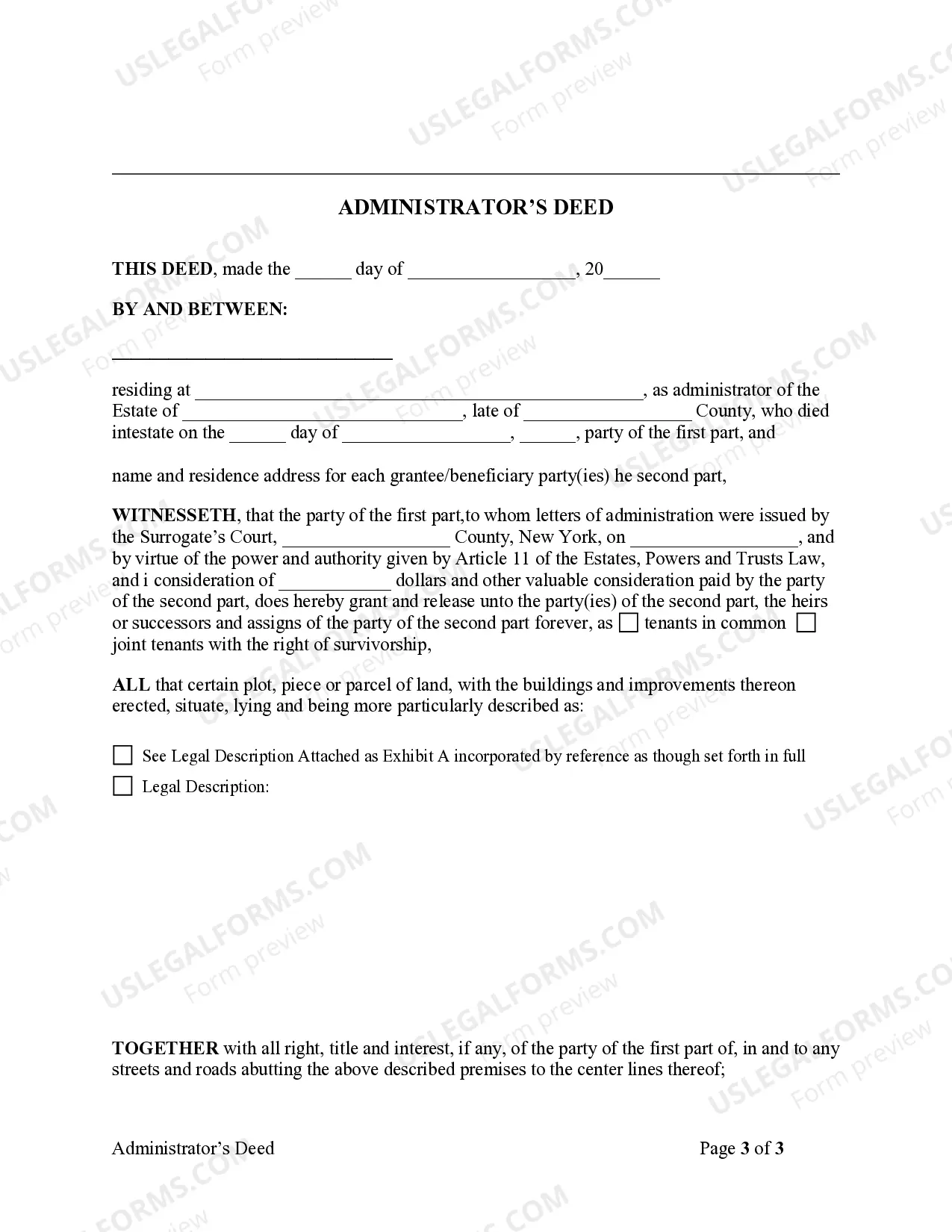
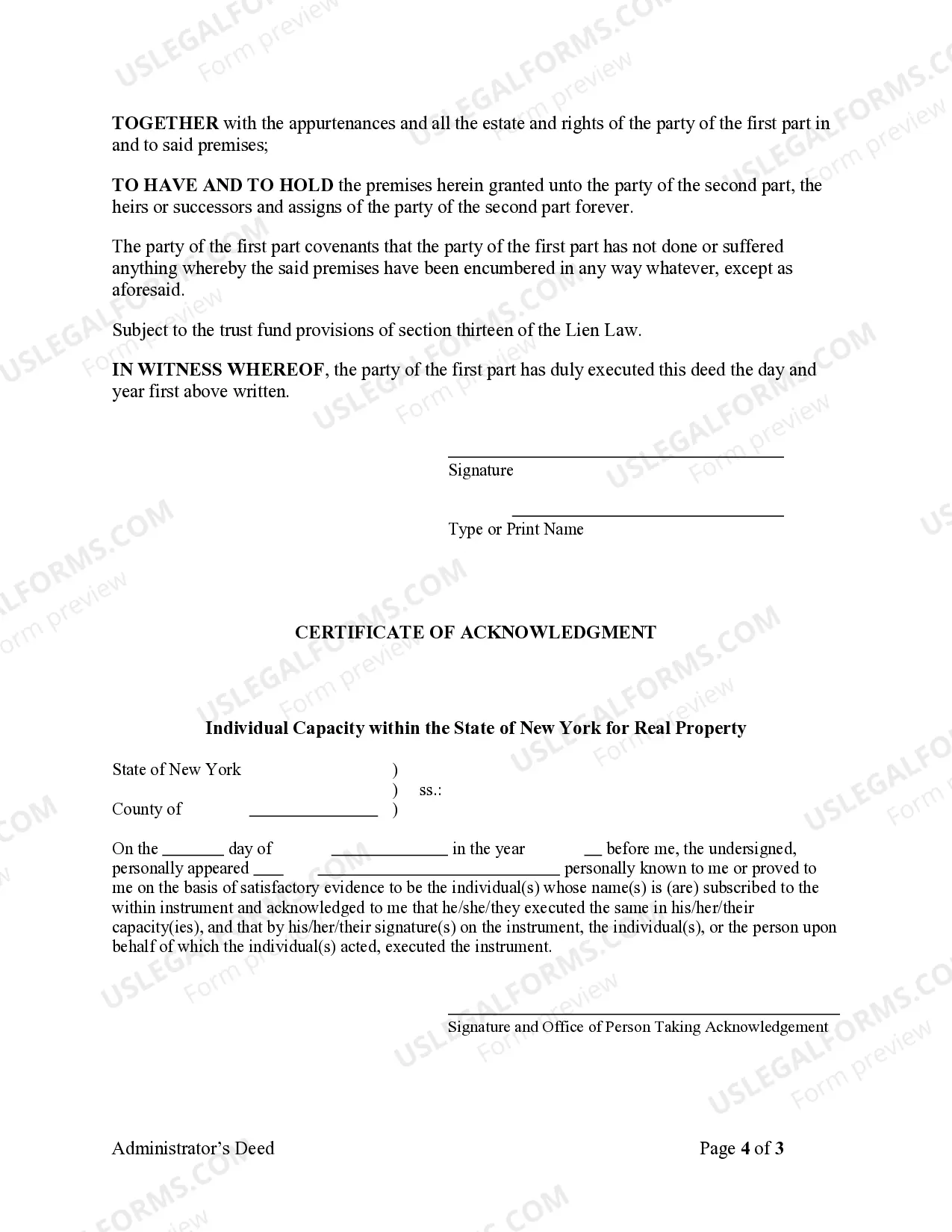
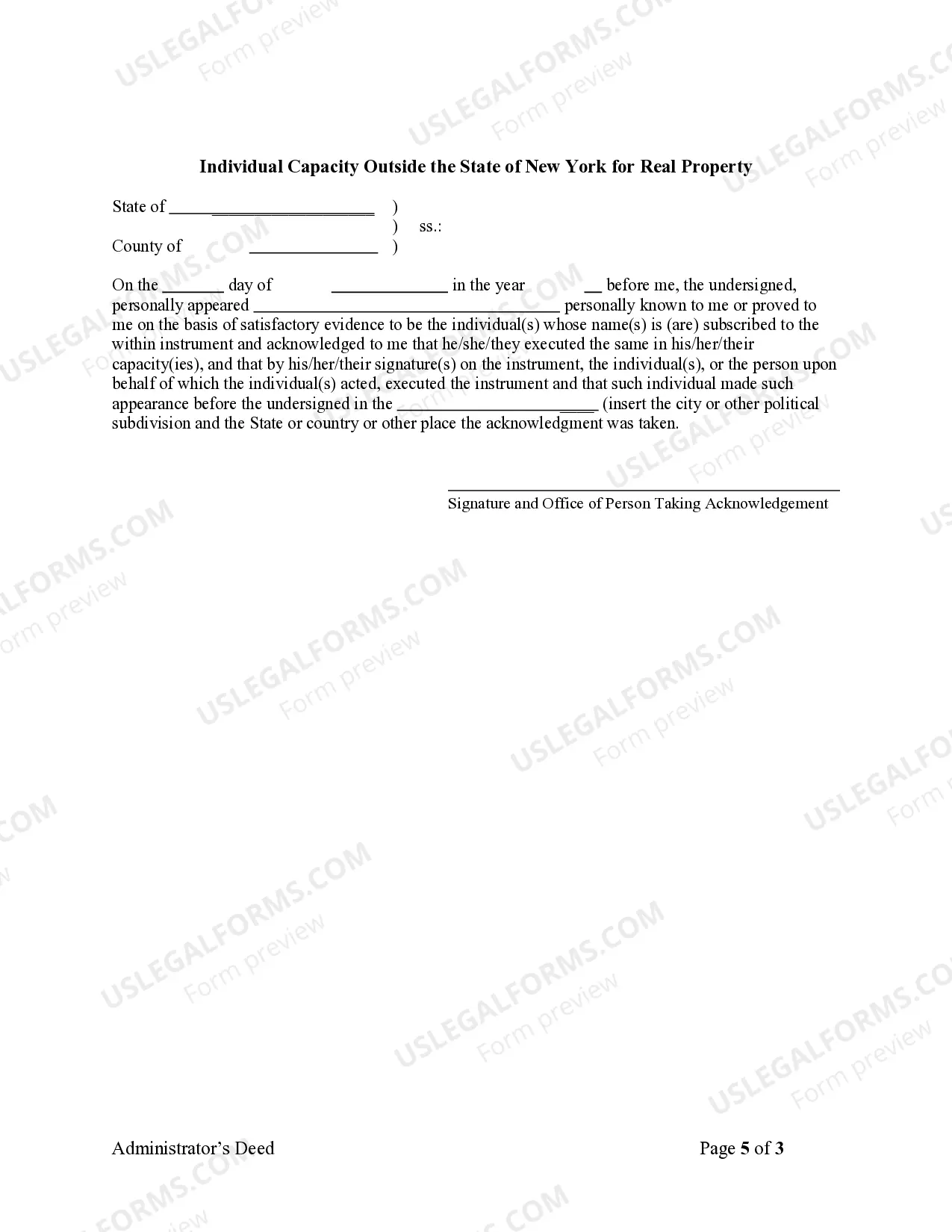
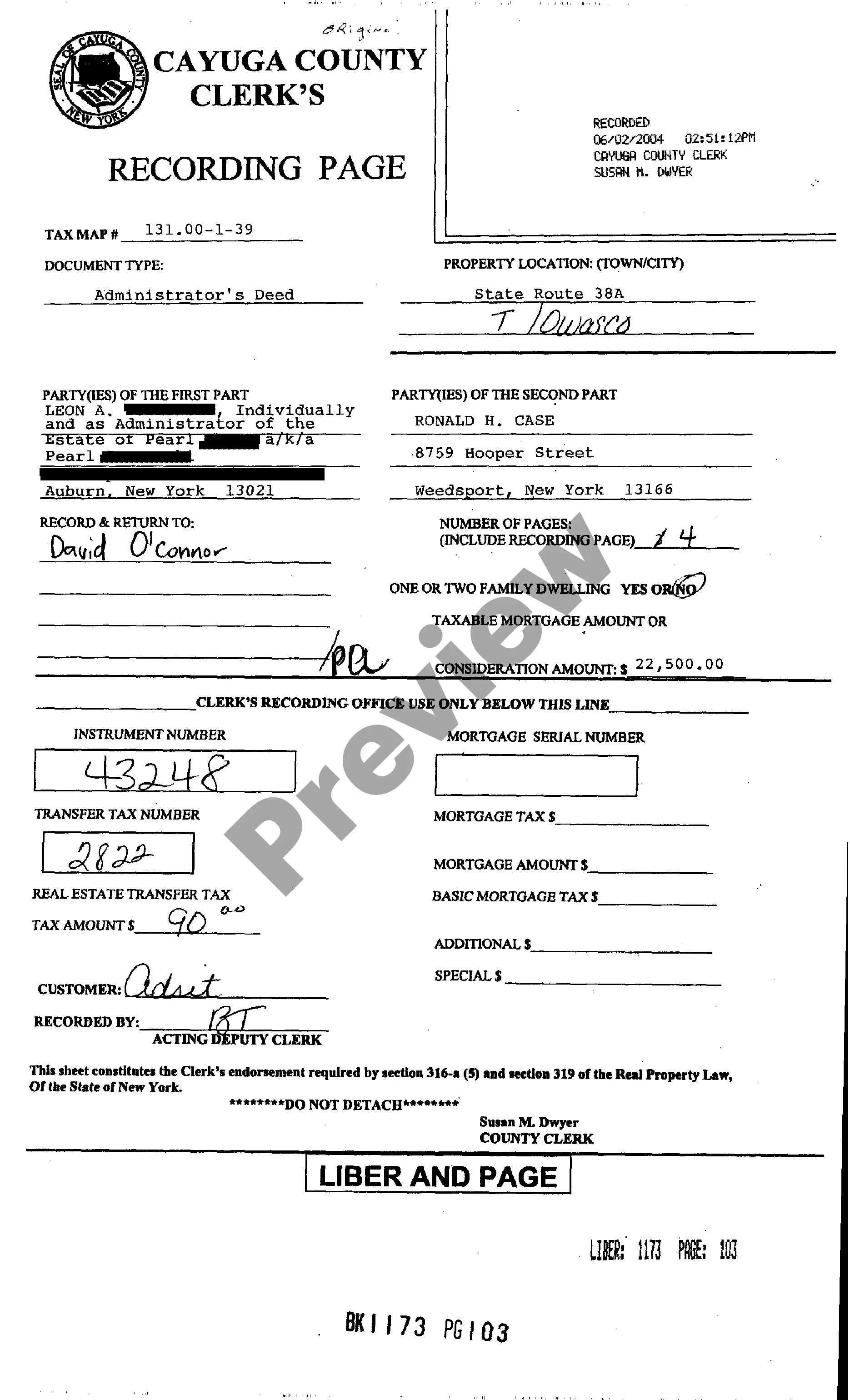
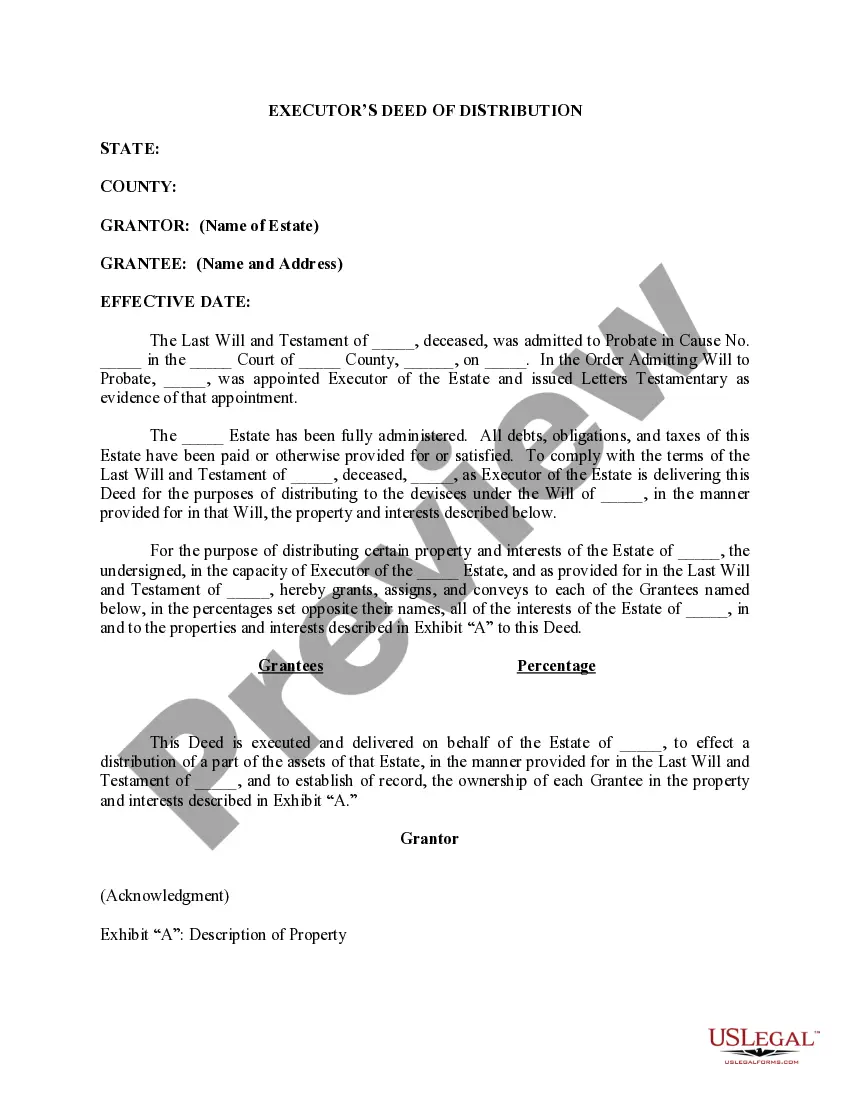
An Administrator's Deed is a legal document used to transfer property from an estate managed by an administrator to the beneficiaries or purchasers designated under intestate law. This form is specifically tailored for situations where a person has died without a will, and the appointed administrator, empowered by the court, conveys the property. Unlike other deeds, the Administrator's Deed provides only limited guarantees, primarily confirming that the transfer is authorized by the court and that no encumbrances were added by the administrator during their service.
Key components of this form
- Identification of the grantor (administrator) and the grantee (beneficiary or buyer).
- Description of the property being transferred.
- Details about the intestate estate and the court's authority.
- Consideration amount paid for the property, if applicable.
- Warranties regarding the encumbrance status of the property.
- Signatures of involved parties to affirm the transfer.

Common use cases
This form is used when an individual has died without a will (intestacy) and an administrator has been appointed by the court to manage the deceased's estate. It is necessary when the administrator is ready to transfer real property to the designated beneficiaries or to a buyer from the estate. Scenarios may include selling inherited property, consolidating ownership among heirs, or finalizing estate settlements.
Who needs this form
- Administrators appointed by the court to manage intestate estates.
- Beneficiaries of an intestate estate receiving a property transfer.
- Purchasers acquiring property from an intestate estate.
How to complete this form
- Identify and enter the names and addresses of the administrator (grantor) and the beneficiaries or buyers (grantee).
- Clearly describe the property being transferred, including any relevant details such as parcel number and address.
- Fill in the date of the signed deed and the date of death of the decedent.
- Specify the consideration amount being provided for the property, if applicable.
- Ensure that the appropriate parties sign the document to execute the transfer effectively.
- Review the filled form for completeness and accuracy before submission to the court or relevant authority.
Is notarization required?
This form needs to be notarized to ensure legal validity. US Legal Forms provides secure online notarization powered by Notarize, allowing you to complete the process through a verified video call, available anytime.
Get your form ready online
Our built-in tools help you complete, sign, share, and store your documents in one place.
Make edits, fill in missing information, and update formatting in US Legal Forms—just like you would in MS Word.
Download a copy, print it, send it by email, or mail it via USPS—whatever works best for your next step.
Sign and collect signatures with our SignNow integration. Send to multiple recipients, set reminders, and more. Go Premium to unlock E-Sign.
If this form requires notarization, complete it online through a secure video call—no need to meet a notary in person or wait for an appointment.
We protect your documents and personal data by following strict security and privacy standards.

Make edits, fill in missing information, and update formatting in US Legal Forms—just like you would in MS Word.

Download a copy, print it, send it by email, or mail it via USPS—whatever works best for your next step.

Sign and collect signatures with our SignNow integration. Send to multiple recipients, set reminders, and more. Go Premium to unlock E-Sign.

If this form requires notarization, complete it online through a secure video call—no need to meet a notary in person or wait for an appointment.

We protect your documents and personal data by following strict security and privacy standards.
Avoid these common issues
- Failing to include all parties' names and addresses accurately.
- Omitting necessary legal descriptions of the property.
- Not providing dates related to the administrator's appointment and the decedent's death.
- Neglecting to have all required signatures on the form.
Benefits of using this form online
- Convenient download from your location without the need for in-person visits.
- Edit and fill out the form at your own pace, ensuring accuracy.
- Access to templates created by licensed attorneys, promoting legal validity.
- Secure storage of your completed document for future reference.
Summary of main points
- An Administrator's Deed is crucial for transferring property from intestate estates.
- Ensure all information is accurately provided to avoid legal complications.
- Review local laws for any specific notarization requirements relevant to the deed.
Looking for another form?


Form popularity
FAQ
Fill in the deed form. Print it out. Have the grantor(s) sign and get the signature(s) notarized. Complete a transfer tax form, Form TP-584. Complete and print out Form RP-5217 (or, if you are in New York City, Form RP-5217NYC).
An administrator's deed is a legal document that transfers the property of an intestate individual, who is a person who passes away without a will. In such cases, the property is transferred to descendents or next-of-kin with the use of an administrator's deed since the deceased individual did not have a will.
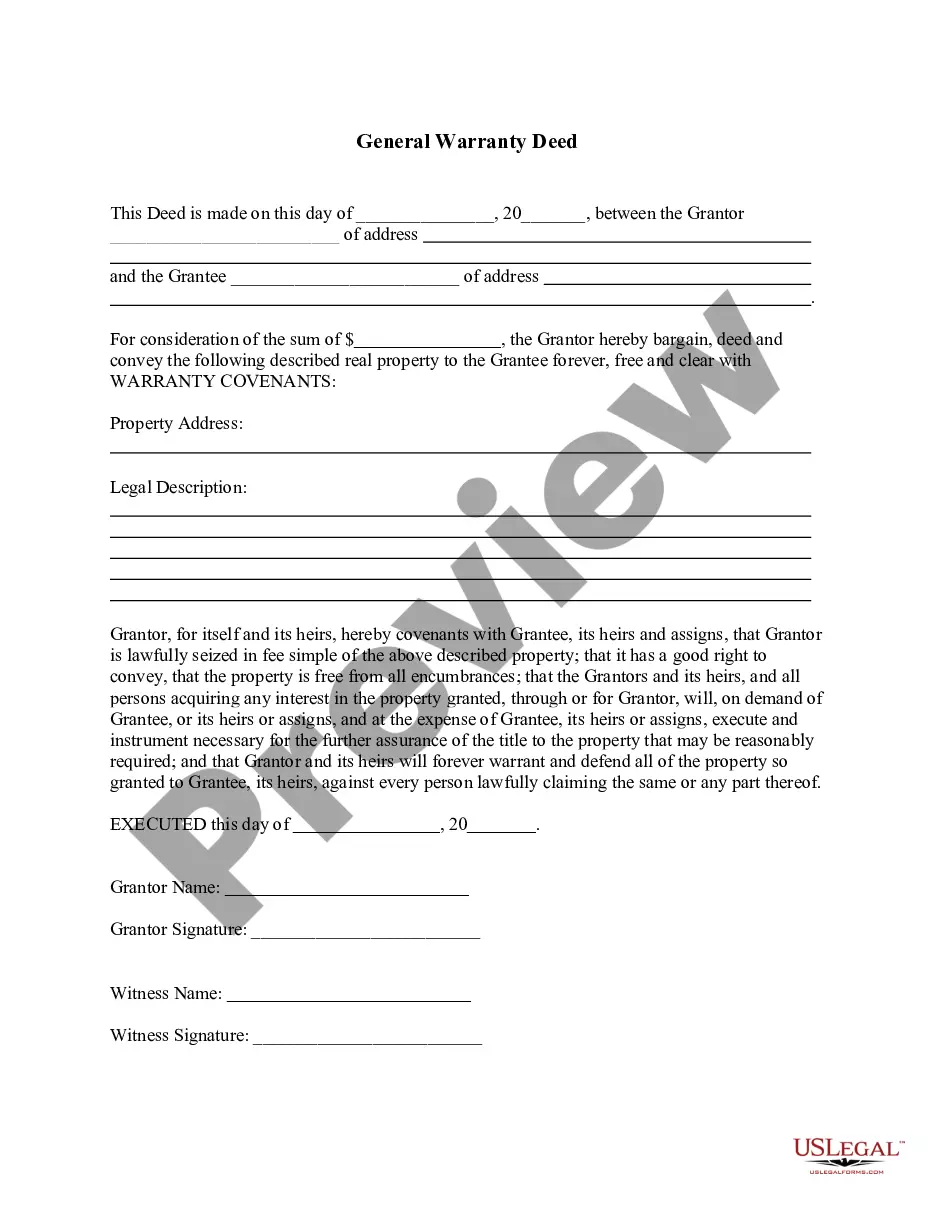
Three basic types of deeds commonly used are the grant deed, the quitclaim deed, and the warranty deed. A sample grant deed. the property he or she is transferring is implied from such language.
Quitclaim Deed. Deed of Trust. Warranty Deed. Grant Deed. Bargain and Sale Deed. Mortgage Deed.
Letters of Administration will need to be obtained which requires filing a petition and many other documents with the Court. The petition for Letters of Administration is filed in the Surrogate's Court in the county where the decedent lived.
California mainly uses two types of deeds: the grant deed and the quitclaim deed. Most other deeds you will see, such as the common interspousal transfer deed, are versions of grant or quitclaim deeds customized for specific circumstances.
To become appointed Executor or Administrator, you need to have standing to Petition. If there is a Will, then typically the nominated Executor, or successor Executor will file the Petition. If there are no executors willing and able to act, then a residuary beneficiary will file the Petition.
When you own a home, you own both the deed and title for that property. In real estate, title means you have ownership and a right to use the property.The deed is the physical legal document that transfers ownership. It shows who you bought your house from, and when you sell it, it shows who you sold it to.
Brothers or sisters; Any other distributee, aka heir, (preference given to the person entitled to the largest share in the estate. However, if the distributees are issue of grandparents, other than aunts or uncles, on only one side, then Letters of Administration will be granted to the Public Administrator.