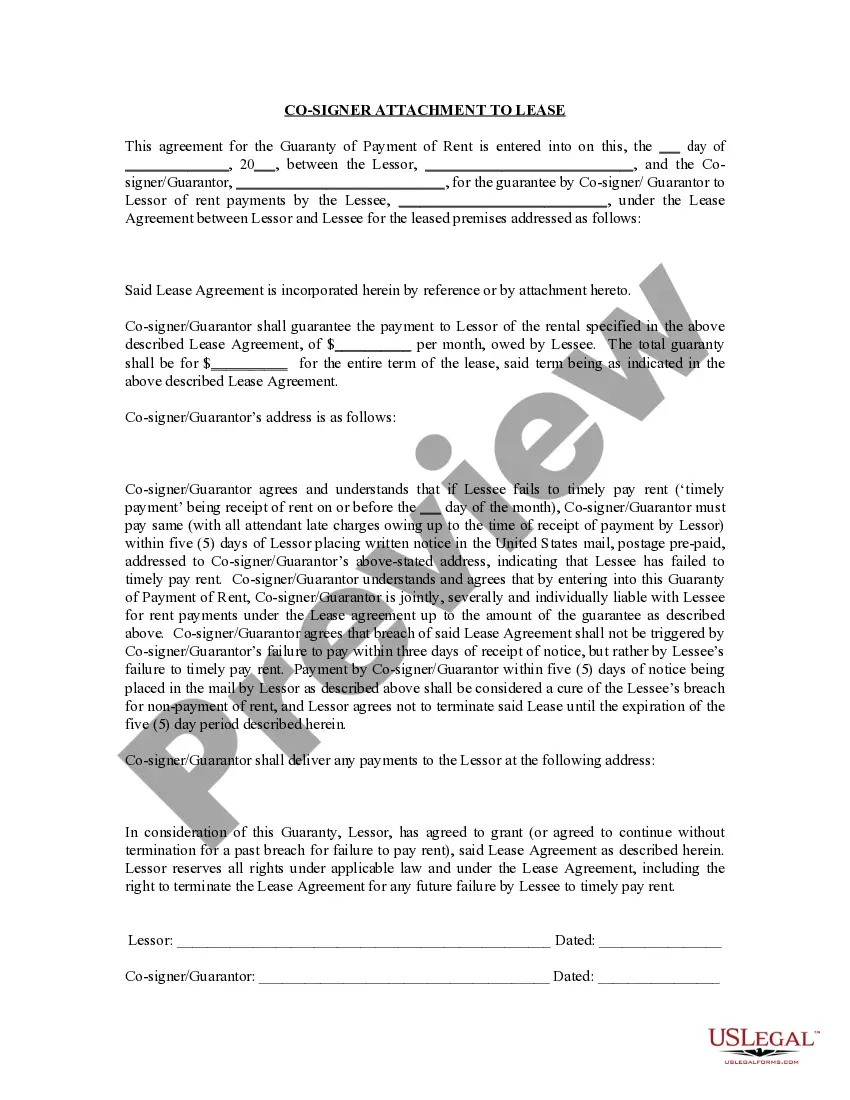
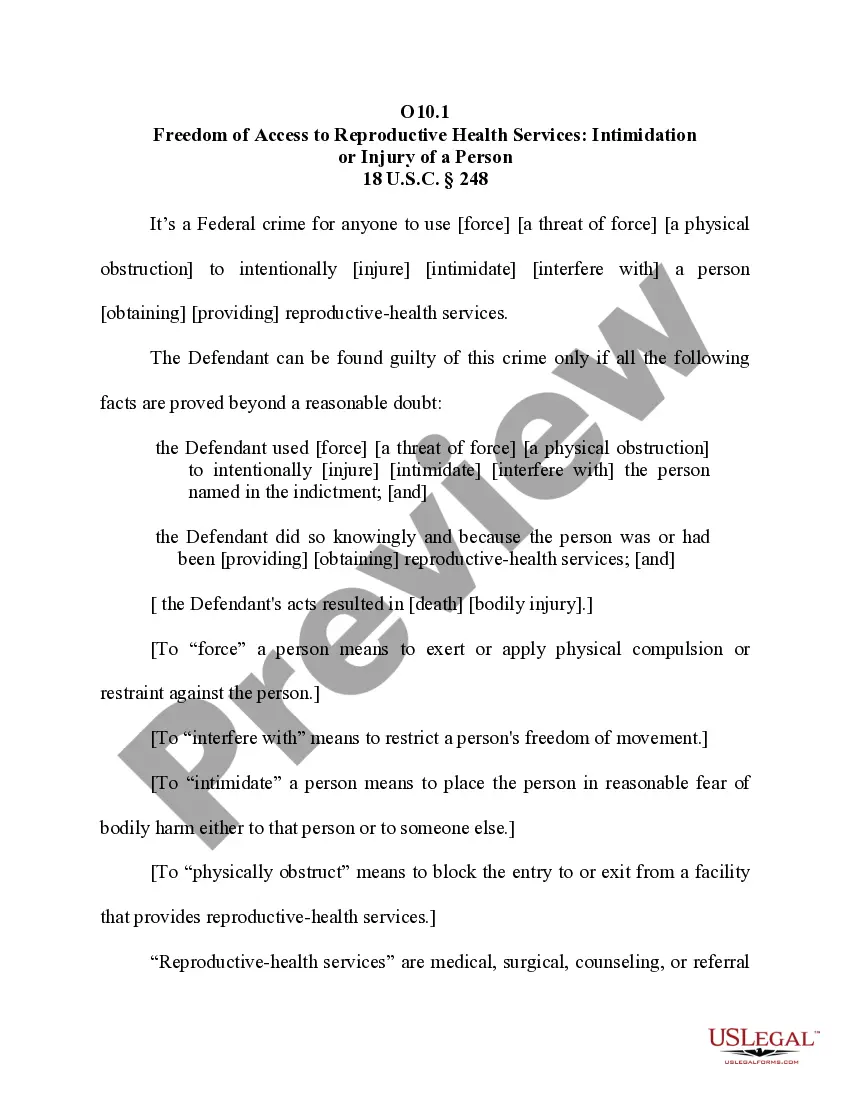
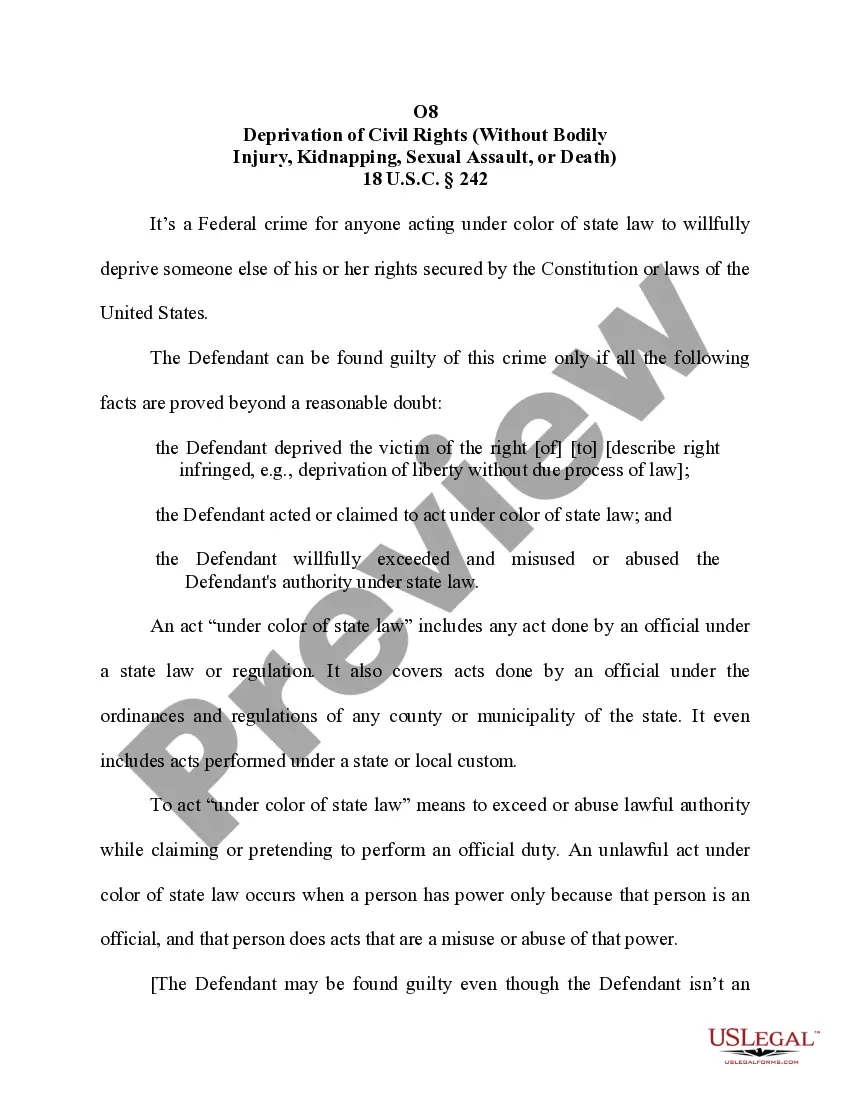
Forceful Intimidation Because of Race: Occupancy of Dwelling (No Bodily Injury) is a type of hate crime where a person or group of people use fear or threats of violence to intimidate someone because of their race or ethnicity. This type of hate crime is often done to prevent or discourage someone from entering or living in a certain space. Examples of forceful intimidation because of race can include verbal or written threats, physical threats, or vandalism directed at a person or their property. The crime does not involve bodily injury, but is still considered a hate crime. There are two types of forceful intimidation because of race: residential occupancy and public accommodation. Residential occupancy includes any attempts to limit or prevent someone from owning, occupying, or renting a dwelling, while public accommodation includes any attempts to limit or prevent someone from entering public places, such as schools, restaurants, or stores.
Forceful Intimidation Because of Race: Occupancy of Dwelling (No Bodily Injury)
Description
How to fill out Forceful Intimidation Because Of Race: Occupancy Of Dwelling (No Bodily Injury)?
Coping with official paperwork requires attention, precision, and using well-drafted templates. US Legal Forms has been helping people across the country do just that for 25 years, so when you pick your Forceful Intimidation Because of Race: Occupancy of Dwelling (No Bodily Injury) template from our service, you can be sure it meets federal and state regulations.
Working with our service is easy and fast. To obtain the required document, all you’ll need is an account with a valid subscription. Here’s a quick guide for you to find your Forceful Intimidation Because of Race: Occupancy of Dwelling (No Bodily Injury) within minutes:
- Make sure to carefully look through the form content and its correspondence with general and law requirements by previewing it or reading its description.
- Look for an alternative formal blank if the previously opened one doesn’t suit your situation or state regulations (the tab for that is on the top page corner).
- Log in to your account and save the Forceful Intimidation Because of Race: Occupancy of Dwelling (No Bodily Injury) in the format you need. If it’s your first experience with our website, click Buy now to continue.
- Register for an account, decide on your subscription plan, and pay with your credit card or PayPal account.
- Choose in what format you want to obtain your form and click Download. Print the blank or upload it to a professional PDF editor to submit it paper-free.
All documents are created for multi-usage, like the Forceful Intimidation Because of Race: Occupancy of Dwelling (No Bodily Injury) you see on this page. If you need them in the future, you can fill them out without re-payment - just open the My Forms tab in your profile and complete your document whenever you need it. Try US Legal Forms and accomplish your business and personal paperwork quickly and in total legal compliance!
Form popularity
FAQ
Virginia's Fair Housing Law makes it illegal to discriminate in residential housing on the basis of race, color, religion, national origin, sex, elderliness, familial status, disability, source of funds, sexual orientation, gender identity, or military status.
Complaints involving such issues should be directed to the Virginia Fair Housing Office at 888.551. 3247 or 804.367. 8530.
Quid pro quo harassment refers to an unwelcome request or demand to engage in conduct where submission to the request or demand, either explicitly or implicitly, is made a condition related to: The sale, rental or availability of a dwelling; the terms, conditions, or privileges of the sale or rental, or the provision
You can speak with an FHEO intake specialist by calling 1-800-669-9777 or TTY: 1-800-877-8339.
Harassment: The Fair Housing Act makes it illegal to harass persons because of race, color, religion, sex (including gender identity and sexual orientation), disability, familial status, or national origin. Among other things, this forbids sexual harassment. Learn more about sexual harassment here.
Housing providers who refuse to rent or sell homes to people based on race, color, national origin, religion, sex, familial status, or disability are violating federal law, and HUD will vigorously pursue enforcement actions against them.
You can speak with an FHEO intake specialist by calling 1-800-669-9777 or TTY: 1-800-877-8339. You can also call your regional FHEO office at the phone numbers on this list.
The Department of Housing and Urban Development is the Federal agency responsible for national policy and programs that address America's housing needs, that improve and develop the Nation's communities, and enforce fair housing laws.