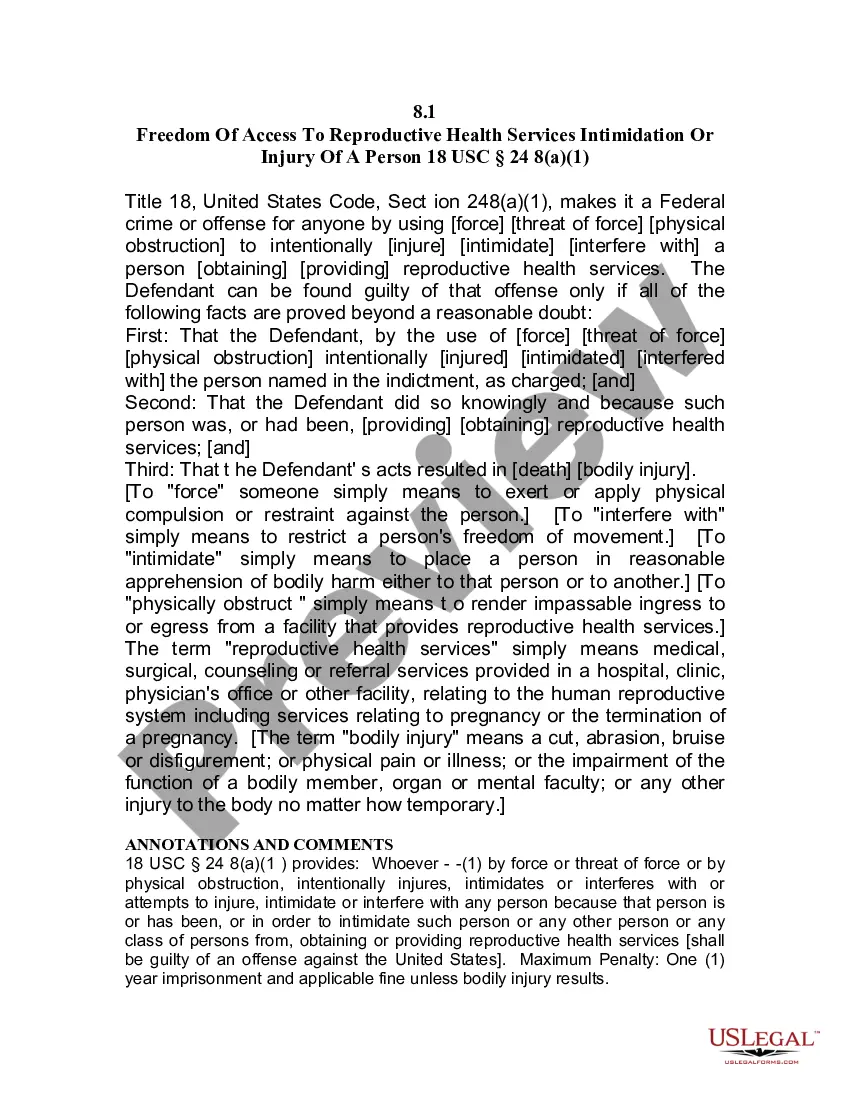
Freedom of Access to Reproductive Health Services: Intimidation or Injury of a Person is a legal term that encompasses a variety of actions taken to interfere with or threaten someone’s access to reproductive health services. These services can range from contraception, abortion, and prenatal care to screening for sexually transmitted infections and family planning counseling. Types of Freedom of Access to Reproductive Health Services: Intimidation or Injury of a Person include: physical assault: This type of intimidation or injury of a person occurs when someone is physically attacked in order to prevent them from accessing reproductive health services. Threats ts of violence: This type of intimidation or injury of a person occurs when someone is threatened with physical harm in order to prevent them from accessing reproductive health services. Harassment: This type of intimidation or injury of a person occurs when someone is subjected to verbal abuse, stalking, or other forms of intimidation in order to prevent them from accessing reproductive health services. Discrimination on: This type of intimidation or injury of a person occurs when someone is denied access to reproductive health services due to their gender, sexual orientation, or other protected characteristics. Restrictiveve laws: This type of intimidation or injury of a person occurs when laws are passed that restrict access to reproductive health services.
Freedom of Access to Reproductive Health Services: Intimidation or Injury of a Person
Description
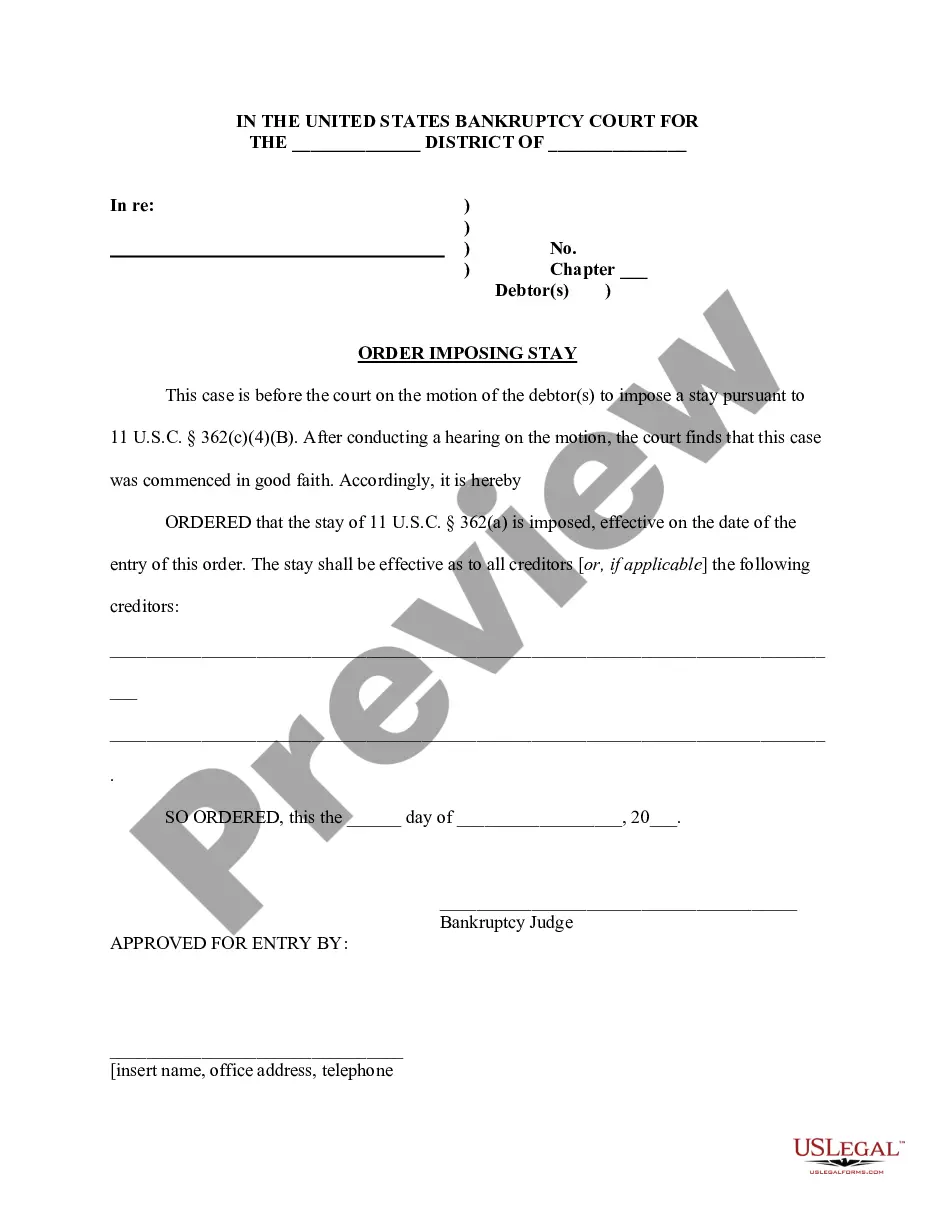
How to fill out Freedom Of Access To Reproductive Health Services: Intimidation Or Injury Of A Person?
How much time and resources do you normally spend on drafting formal documentation? There’s a greater opportunity to get such forms than hiring legal specialists or spending hours searching the web for an appropriate template. US Legal Forms is the top online library that provides professionally drafted and verified state-specific legal documents for any purpose, including the Freedom of Access to Reproductive Health Services: Intimidation or Injury of a Person.
To acquire and complete an appropriate Freedom of Access to Reproductive Health Services: Intimidation or Injury of a Person template, adhere to these simple instructions:
- Examine the form content to ensure it meets your state requirements. To do so, check the form description or take advantage of the Preview option.
- If your legal template doesn’t meet your requirements, locate another one using the search bar at the top of the page.
- If you already have an account with us, log in and download the Freedom of Access to Reproductive Health Services: Intimidation or Injury of a Person. Otherwise, proceed to the next steps.
- Click Buy now once you find the correct document. Opt for the subscription plan that suits you best to access our library’s full opportunities.
- Register for an account and pay for your subscription. You can make a transaction with your credit card or via PayPal - our service is absolutely secure for that.
- Download your Freedom of Access to Reproductive Health Services: Intimidation or Injury of a Person on your device and complete it on a printed-out hard copy or electronically.
Another advantage of our library is that you can access previously purchased documents that you safely store in your profile in the My Forms tab. Obtain them at any moment and re-complete your paperwork as often as you need.
Save time and effort preparing formal paperwork with US Legal Forms, one of the most trusted web services. Sign up for us today!
Form popularity
FAQ
The Freedom of Access to Clinic Entrances Act of 1994 (FACE) makes it a federal crime to physically obstruct the entrance to a clinic or to use force, the threat of force, or physical obstruction, such as a sit-in, to interfere with, injure, or intimidate clinic workers or women seeking abortions or other reproductive
In 1994, in response to an increase in violence toward providers and patients of reproductive health services, Congress enacted the Freedom of Access to Clinic Entrances Act, commonly referred to as "FACE" or the "Access Act." FACE prohibits violent, threatening, damaging and obstructive conduct intended to injure,
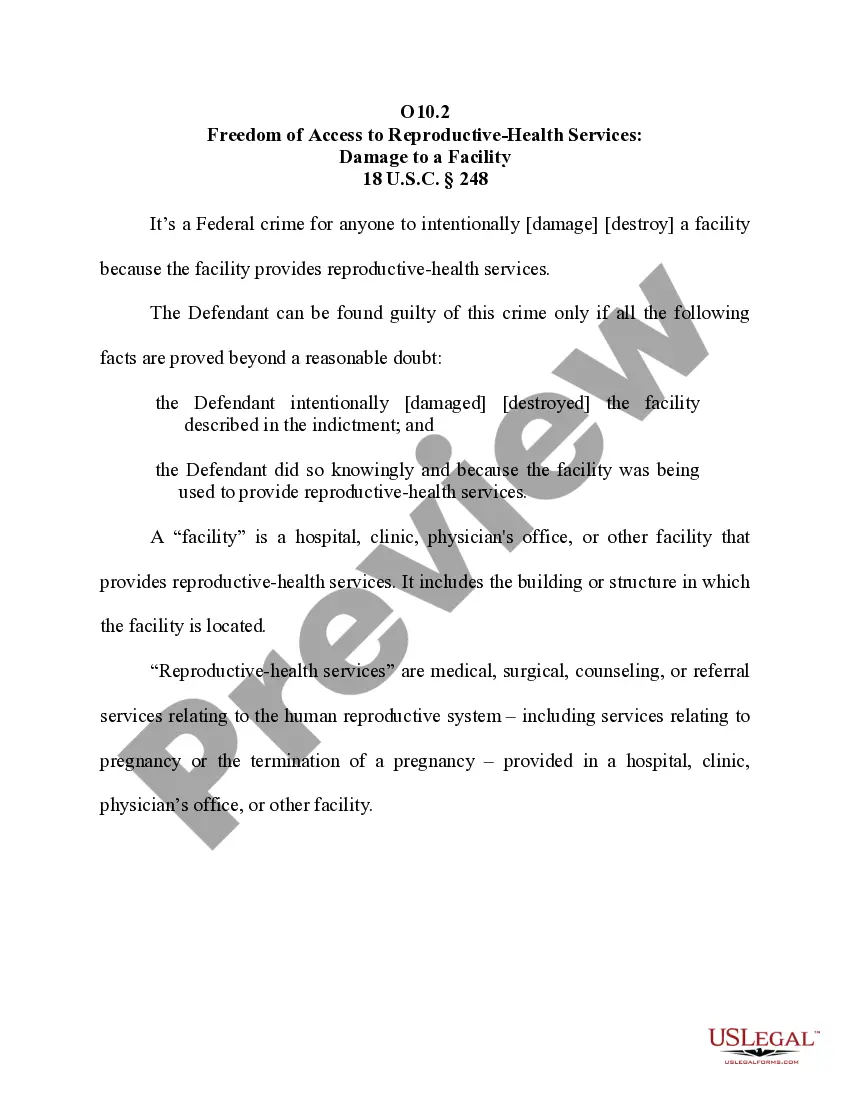
The Section has served a pivotal role in enforcing the Freedom of Access to Clinic Entrances Act (FACE), 18 U.S.C. § 248, to protect patients and health care providers against threats of force and physical obstruction of reproductive health facilities.
The Freedom of Access to Clinic Entrances Act of 1994 (FACE) makes it a federal crime to physically obstruct the entrance to a clinic or to use force, the threat of force, or physical obstruction, such as a sit-in, to interfere with, injure, or intimidate clinic workers or women seeking abortions or other reproductive
18 U.S.C. § 248 Section 248 makes it unlawful for a person to use force, the threat of force, or physical obstruction to intentionally injure or intimidate a person because he or she is or has been obtaining or providing reproductive health services.