Non-Disclosure Agreement for Video Production
Overview of this form
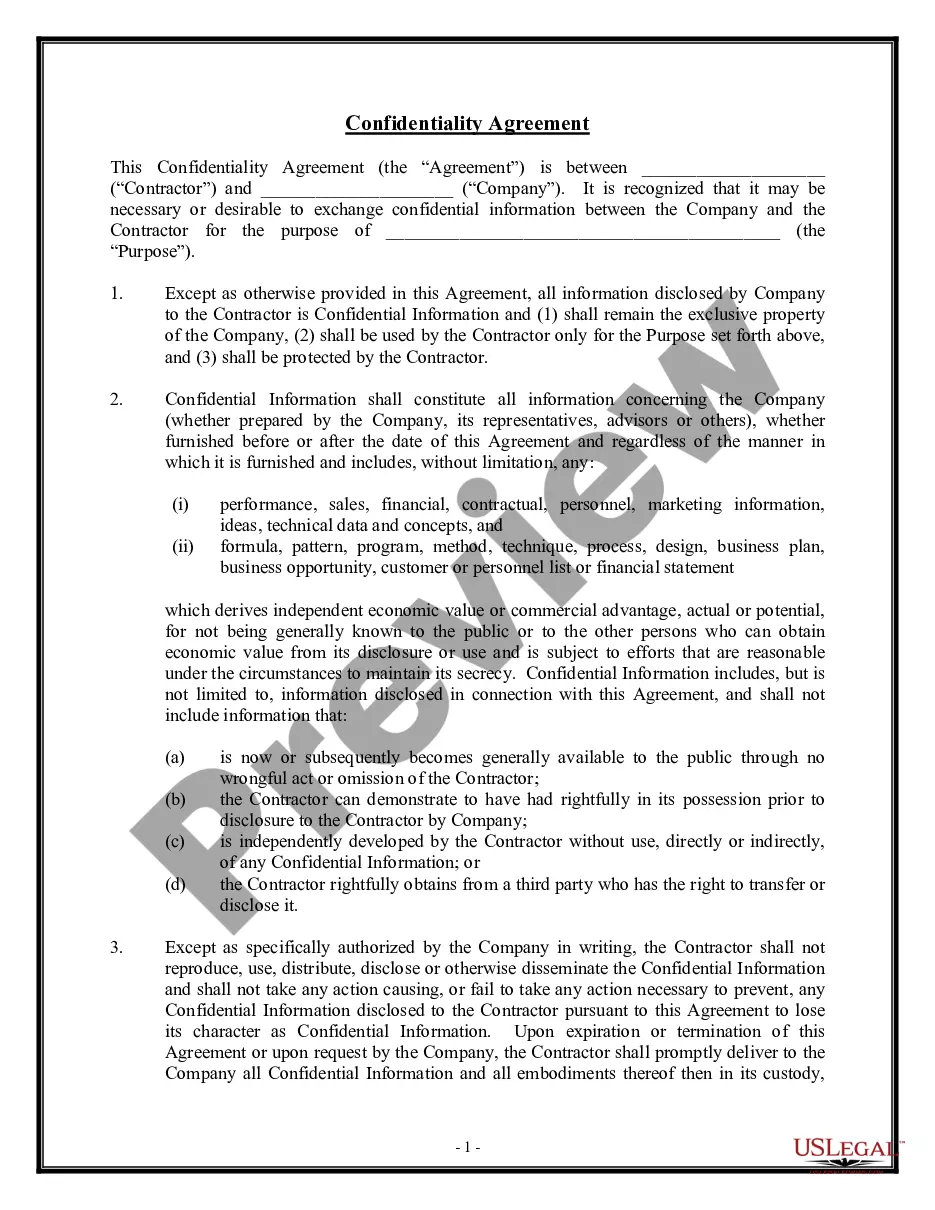
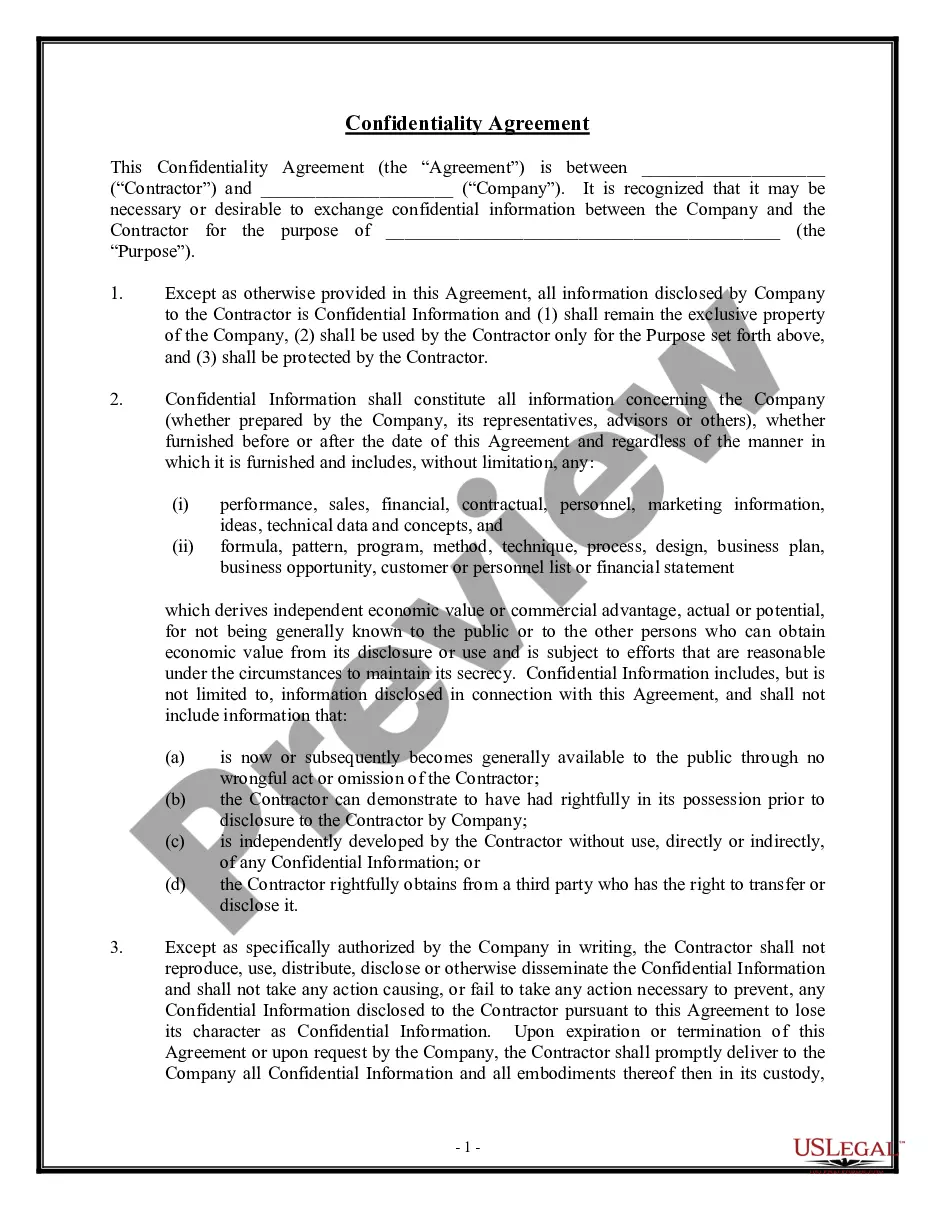
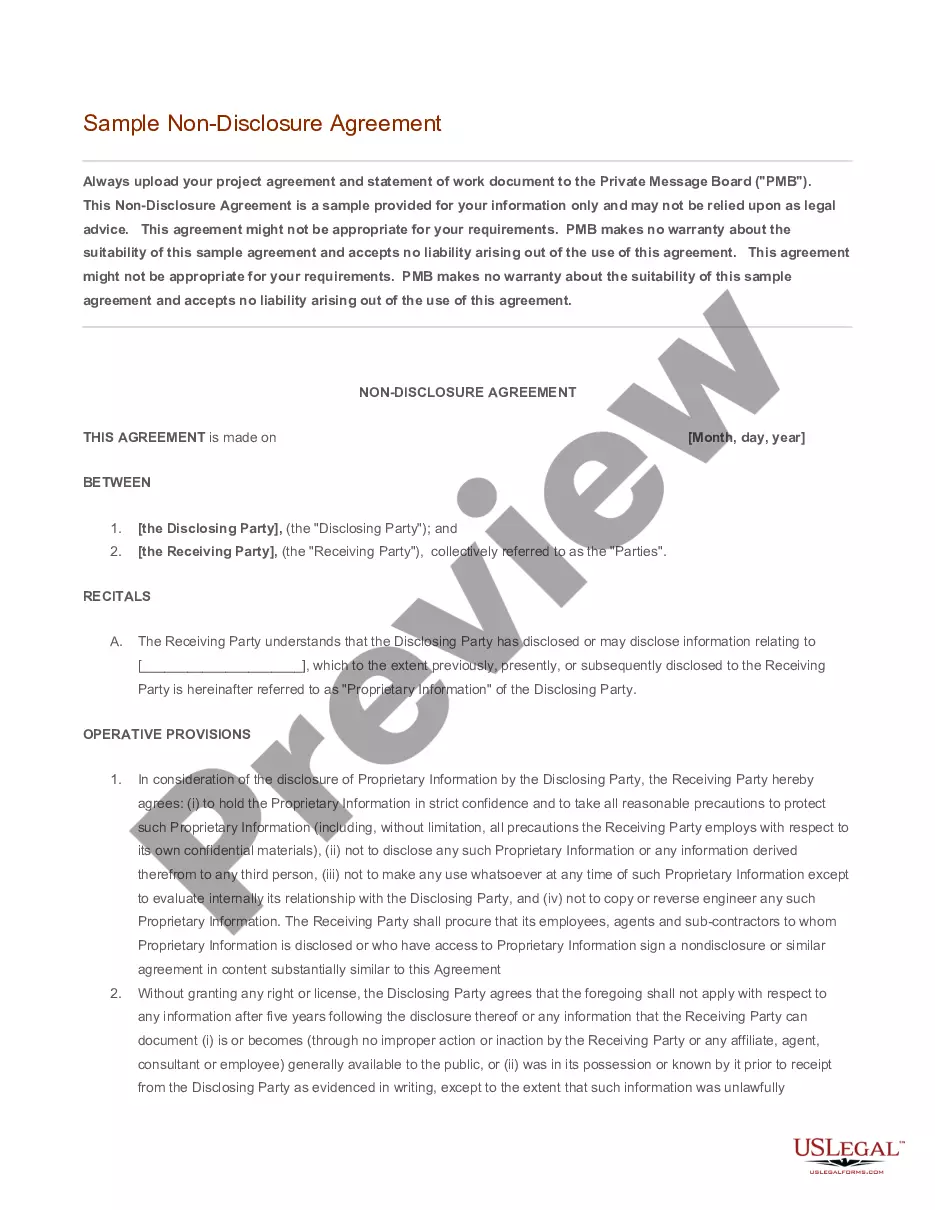
The Non-Disclosure Agreement for Video Production is a legal document designed to protect confidential information exchanged between a contractor and a company during the production of video content. This agreement ensures that any sensitive information shared remains confidential and is used solely for the specified purpose. This form differs from other types of non-disclosure agreements by explicitly addressing the context of video production, making it suitable for professionals in this specific industry.
Key parts of this document
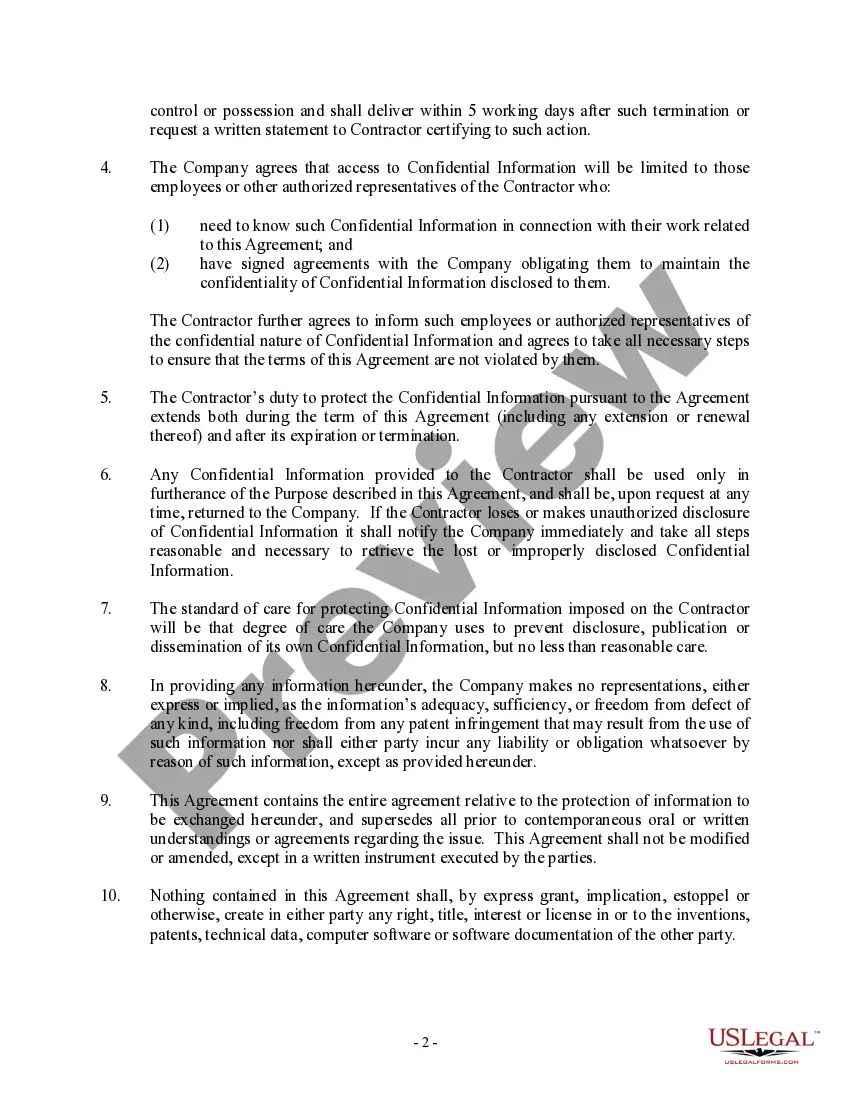
- Parties involved: Identification of the contractor and the company.
- Definition of confidential information: Details what constitutes confidential information and its exclusions.
- Obligations of the contractor: Responsibilities regarding the protection and use of confidential information.
- Access restrictions: Limitations on who within the contractor's organization can access confidential information.
- Return of information: Requirements for returning all confidential information upon termination of the agreement.
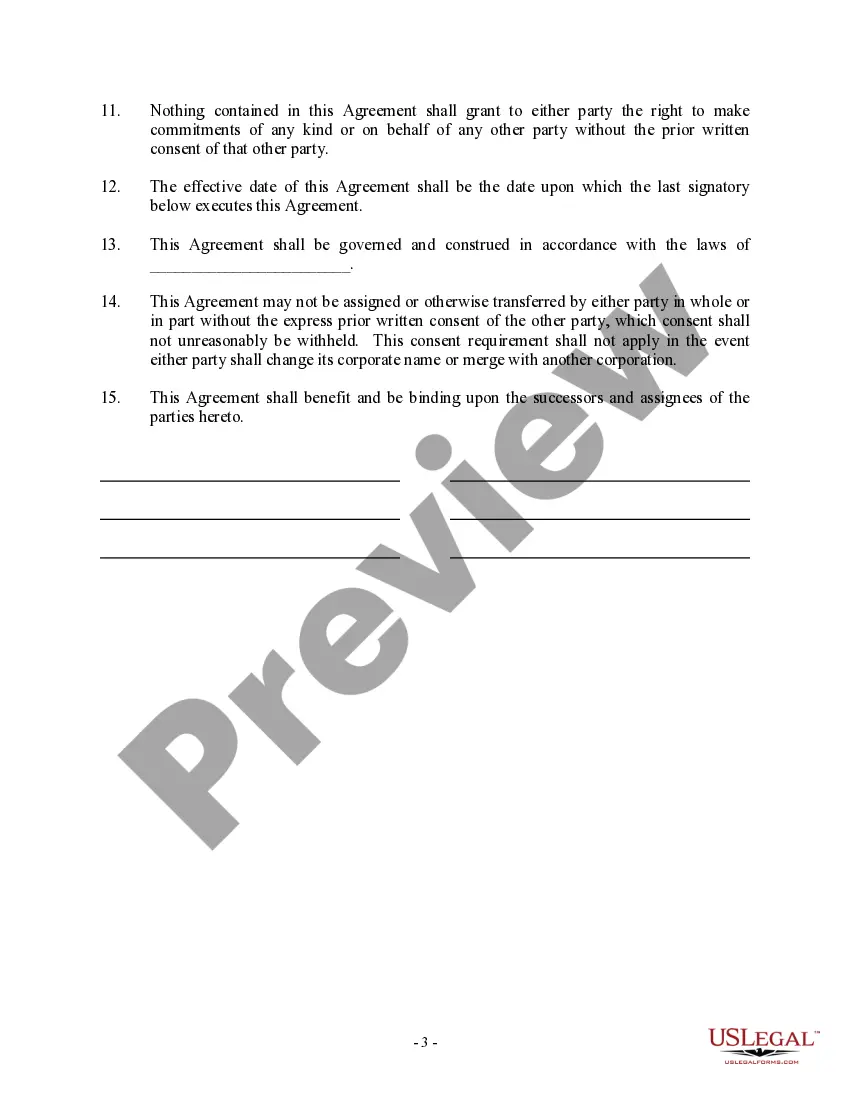
- Governing law: Specification of the jurisdiction under which the agreement is governed.
Common use cases
This Non-Disclosure Agreement should be used when a contractor, such as a videographer or editor, needs to access confidential information from a company for video production purposes. Scenarios include collaborative projects, script sharing, or discussions around proprietary content where assurance is needed that sensitive details will not be disclosed to unauthorized parties.
Intended users of this form
- Video production contractors and freelancers.
- Companies hiring video production services.
- Individuals involved in creative projects requiring confidentiality protection.
Instructions for completing this form
- Identify the parties by filling in the names of the contractor and the company.
- Specify the purpose for which confidential information will be exchanged.
- Ensure the definition of confidential information is comprehensive by including relevant examples.
- Fill in the effective date of the agreement and the governing law.
- Obtain signatures from both parties to finalize the agreement.
Does this form need to be notarized?
This form does not typically require notarization unless specified by local law. However, it is advisable to check local requirements to ensure enforceability.
Get your form ready online
Our built-in tools help you complete, sign, share, and store your documents in one place.
Make edits, fill in missing information, and update formatting in US Legal Forms—just like you would in MS Word.
Download a copy, print it, send it by email, or mail it via USPS—whatever works best for your next step.
Sign and collect signatures with our SignNow integration. Send to multiple recipients, set reminders, and more. Go Premium to unlock E-Sign.
If this form requires notarization, complete it online through a secure video call—no need to meet a notary in person or wait for an appointment.
We protect your documents and personal data by following strict security and privacy standards.

Make edits, fill in missing information, and update formatting in US Legal Forms—just like you would in MS Word.

Download a copy, print it, send it by email, or mail it via USPS—whatever works best for your next step.

Sign and collect signatures with our SignNow integration. Send to multiple recipients, set reminders, and more. Go Premium to unlock E-Sign.

If this form requires notarization, complete it online through a secure video call—no need to meet a notary in person or wait for an appointment.

We protect your documents and personal data by following strict security and privacy standards.
Avoid these common issues
- Failing to include all parties involved in the agreement.
- Not clearly defining what constitutes confidential information.
- Omitting the expiration date of confidentiality obligations.
- Neglecting to secure signatures from both parties.
Advantages of online completion
- Convenience of immediate download and customization.
- Easy access to legal support for questions during completion.
- Reduced time and cost compared to traditional legal drafting.
Looking for another form?
Form popularity
FAQ
The cold hard truth is that most NDAs do not hold up in court. Non-Disclosure Agreements are most effective in establishing a paper trail of confidential information as it relates to partnerships, and discouraging partners from misappropriating proprietary information.
For an NDA to be enforceable in California, it must not be too generic or too open-ended (no time limit established), or the courts will likely throw it out.An enforceable NDA in California must include: A statement of the purpose of the NDA and the parties involved.
NDAs are legally enforceable contracts, but they're now coming under increased scrutiny from lawmakers, attorneys and legal experts.Companies often use them as part of an employment contract or settlement agreement to protect sensitive information like trade secrets.
Non-disclosure agreements are an important legal framework used to protect sensitive and confidential information from being made available by the recipient of that information. Companies and startups use these documents to ensure that their good ideas won't be stolen by people they are negotiating with.
An NDA is a legally binding contract that requires parties to keep confidentiality for a defined period of time. It's up to the parties to decide what would be considered confidential and what is not.
Don't Release Information Before the Agreement Is Signed. Work With a Professional. Use a Unilateral NDA, if Possible. Choose an End Date. Define the Confidential Information. Provide Extra Protection for Trade Secrets. Define How the Information Will Be Used. Require Return of the Information.
NDAs are legally enforceable contracts, but they're now coming under increased scrutiny from lawmakers, attorneys and legal experts.Companies often use them as part of an employment contract or settlement agreement to protect sensitive information like trade secrets.
The cold hard truth is that most NDAs do not hold up in court. Non-Disclosure Agreements are most effective in establishing a paper trail of confidential information as it relates to partnerships, and discouraging partners from misappropriating proprietary information.
Confidentiality Issues: A court will not enforce a non-disclosure agreement if the information sought to be protected, including trade secrets or client lists, is not actually confidential.This rule also applies where another entity could develop the information without use of the confidential material.