Audio, Video, and Photography Recording Consent for Research Only Form
About this form
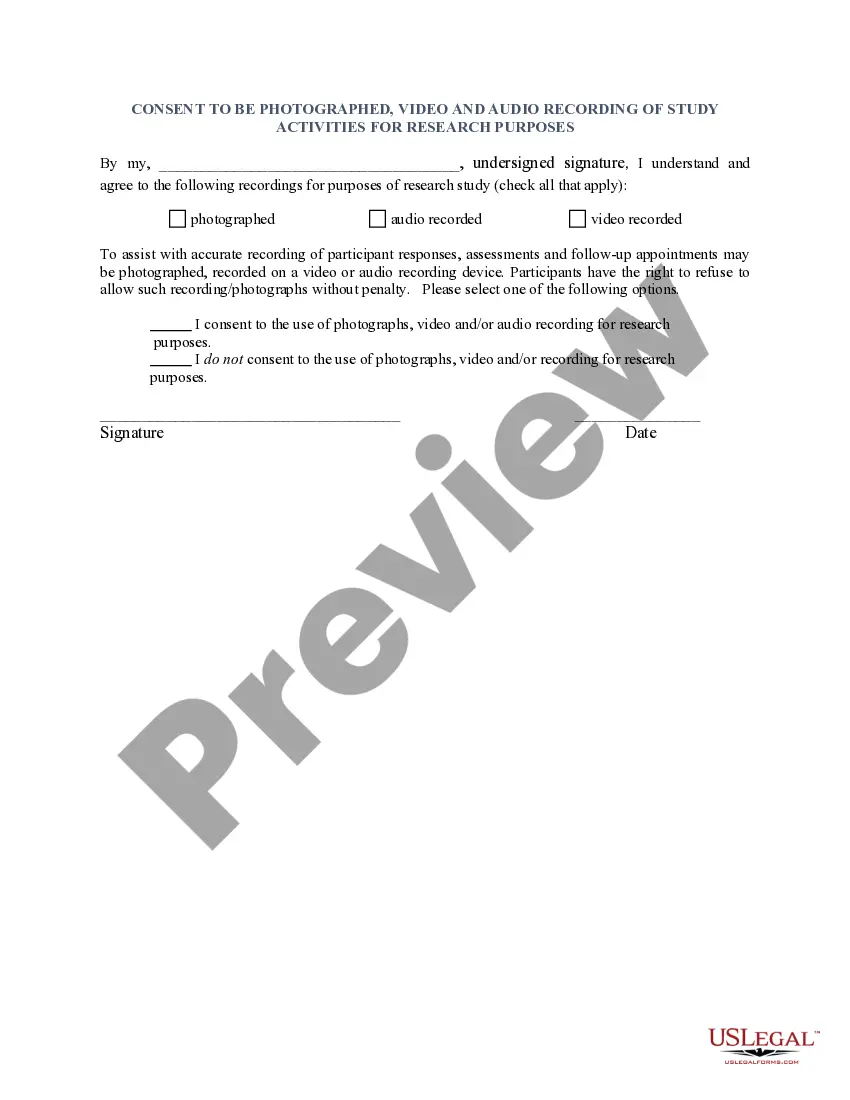
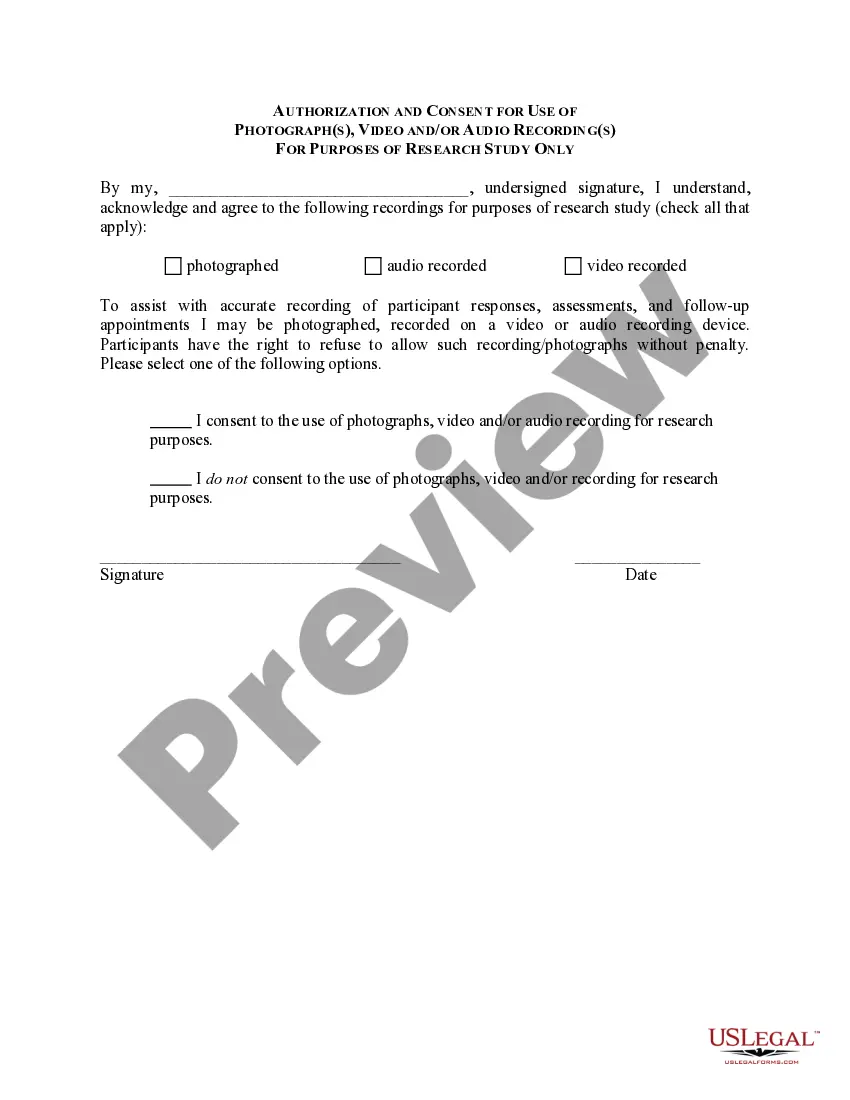
The Audio, Video, and Photography Recording Consent for Research Only Form is designed to obtain consent from participants for the recording of their images and voices in a research study. This form specifically addresses the rights of participants regarding recordings made during the study and differentiates itself from general consent forms by focusing on audio, video, and photographic recordings exclusively for research purposes.
Key parts of this document
- Participant's name and signature to confirm understanding and agreement.
- Options to consent or decline the use of photographs, audio recordings, and video recordings.
- Clear explanation of participants' rights to refuse recording without penalty.
- Date of signing for record-keeping purposes.
Situations where this form applies
This form should be used when conducting a research study that involves capturing participantsâ images, voices, or video footage. It is particularly important in cases where the data collected may contribute to academic research, case studies, or other scientific inquiries. Situations might include focus groups, interviews, or observational studies where documentation is necessary for the accuracy of findings.
Who should use this form
This form is intended for:
- Researchers conducting studies involving human subjects.
- Institutions requiring consent for media recording in research contexts.
- Participants in research studies who need to provide or refuse consent for their data being recorded.
Completing this form step by step
- Print the form and clearly write your name at the top where indicated.
- Review the options provided regarding your consent for photographs, audio, and video recordings.
- Check the box next to your choice of consent to indicate your agreement or disapproval.
- Sign the form to validate your consent.
- Write the date of signing to document when consent was given.
Is notarization required?
This form does not typically require notarization unless specified by local law. It is advisable to check local regulations regarding consent forms in research studies to confirm any notarization requirements.
Get your form ready online
Our built-in tools help you complete, sign, share, and store your documents in one place.
Make edits, fill in missing information, and update formatting in US Legal Forms—just like you would in MS Word.
Download a copy, print it, send it by email, or mail it via USPS—whatever works best for your next step.
Sign and collect signatures with our SignNow integration. Send to multiple recipients, set reminders, and more. Go Premium to unlock E-Sign.
If this form requires notarization, complete it online through a secure video call—no need to meet a notary in person or wait for an appointment.
We protect your documents and personal data by following strict security and privacy standards.

Make edits, fill in missing information, and update formatting in US Legal Forms—just like you would in MS Word.

Download a copy, print it, send it by email, or mail it via USPS—whatever works best for your next step.

Sign and collect signatures with our SignNow integration. Send to multiple recipients, set reminders, and more. Go Premium to unlock E-Sign.

If this form requires notarization, complete it online through a secure video call—no need to meet a notary in person or wait for an appointment.

We protect your documents and personal data by following strict security and privacy standards.
Mistakes to watch out for
- Not reading the options thoroughly before signing.
- Failing to sign or date the form, which could invalidate consent.
- Overlooking the right to refuse consent, which can impact participation.
Why complete this form online
- Easy access to download and complete the form at your convenience.
- Editable fields allow you to fill in your information quickly and accurately.
- Access to professionally drafted forms ensures compliance with legal standards.
Looking for another form?
Form popularity
FAQ
Such a form typically includes information about the requirements of participation, risks and benefits, and the intended use of the data. In this case, the signature of the participant indicates consent for both participation and data usage.
Recruitment and Consent Process The consent process must explain the use of the recording technology; why the recording technology is being used; the type and extent of identifiable information that will be captured and retained; and how the recorded data will be stored, secured, used, and destroyed.
Organisation's name: I hereby consent to XX (organisation's name) using images of my above-named child in video recordings and/or photographs (Y/N). I also consent to them being used for marketing and publicity-related purposes to promote the (project name) on: Social media (Y/N)
Video recording. core definition. Video recording is a generic term for the analog or digital capture of images for research purposes, whether they be new first-hand material or recordings of existing outputs from television, cinema or other media.
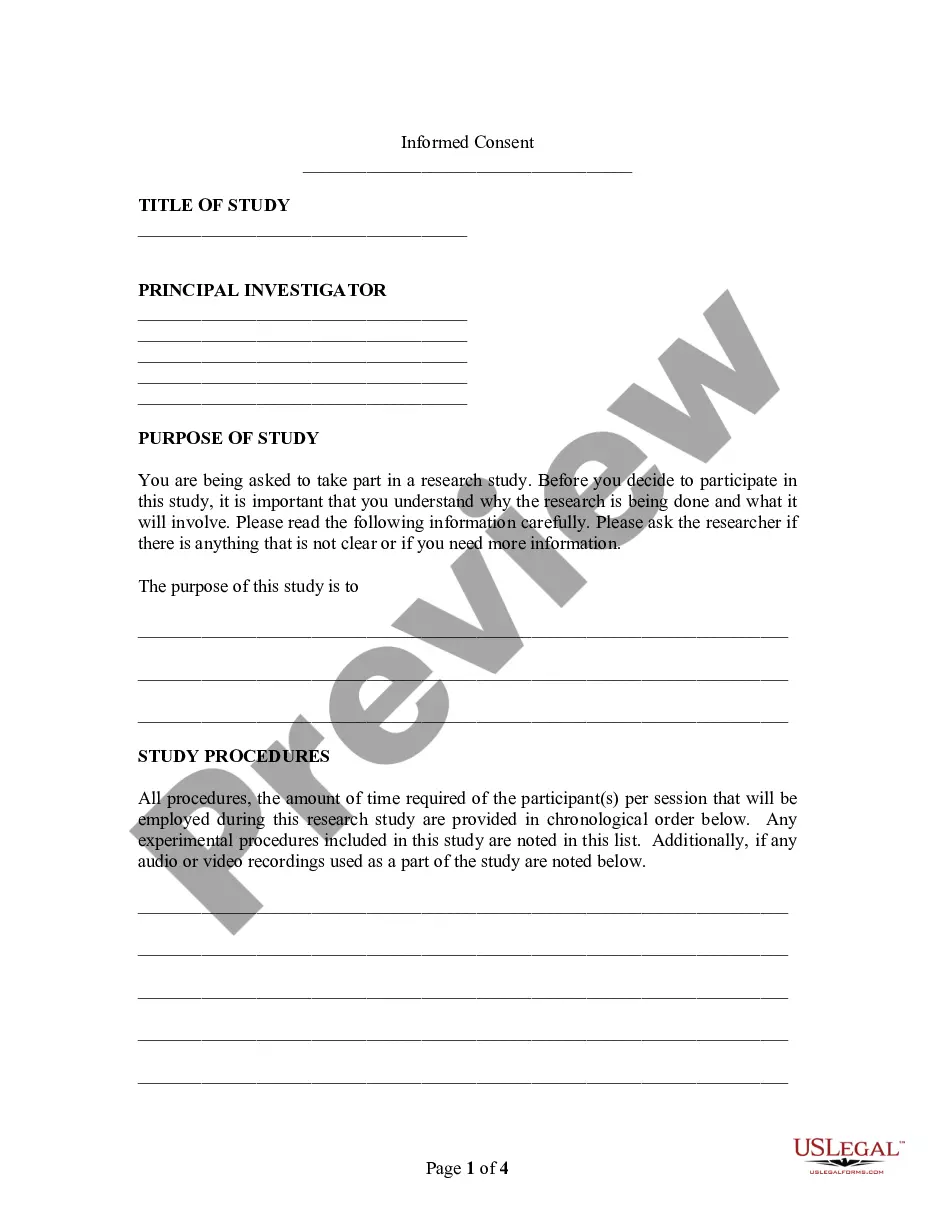
When conducting clinical research, the obtaining of informed consent is required. Informed consent is a procedure through which a competent subject, after having received and understood all the research-related information, can voluntarily provide his or her willingness to participate in a clinical trial.
I, (recorded person's full name), do hereby consent to the use by (entrant's full name) of my image, video, voice, or all three of them, in the item described above. In addition, I waive any right to inspect or approve the finished video recording.
The consent form must identify the subject's alternatives to participation in the protocol and should offer a discussion of their relative advantages and disadvantages. It is usually not necessary to provide a full account of the risks and benefits of alternative treatments in the research consent form.