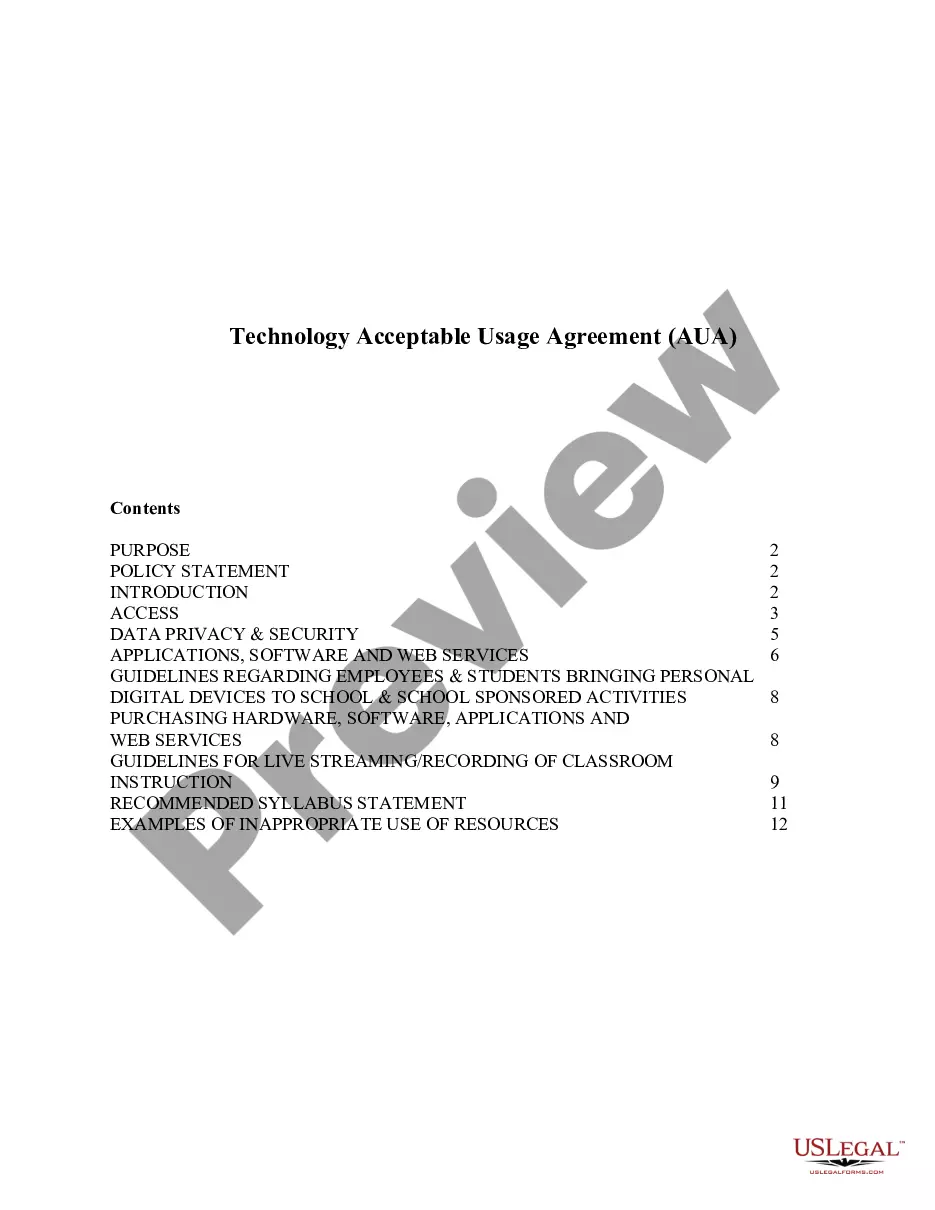
Internet Use Policy
What is this form?
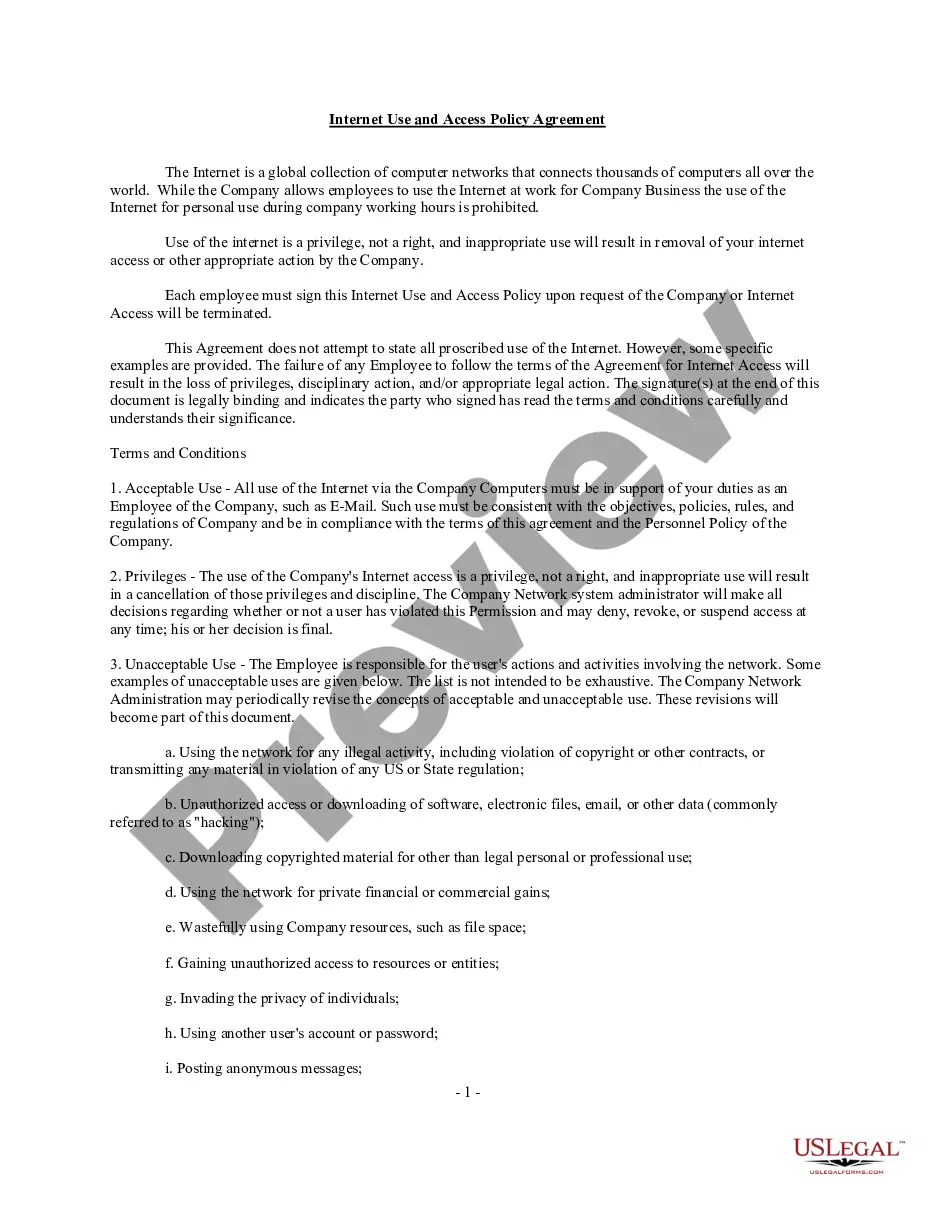
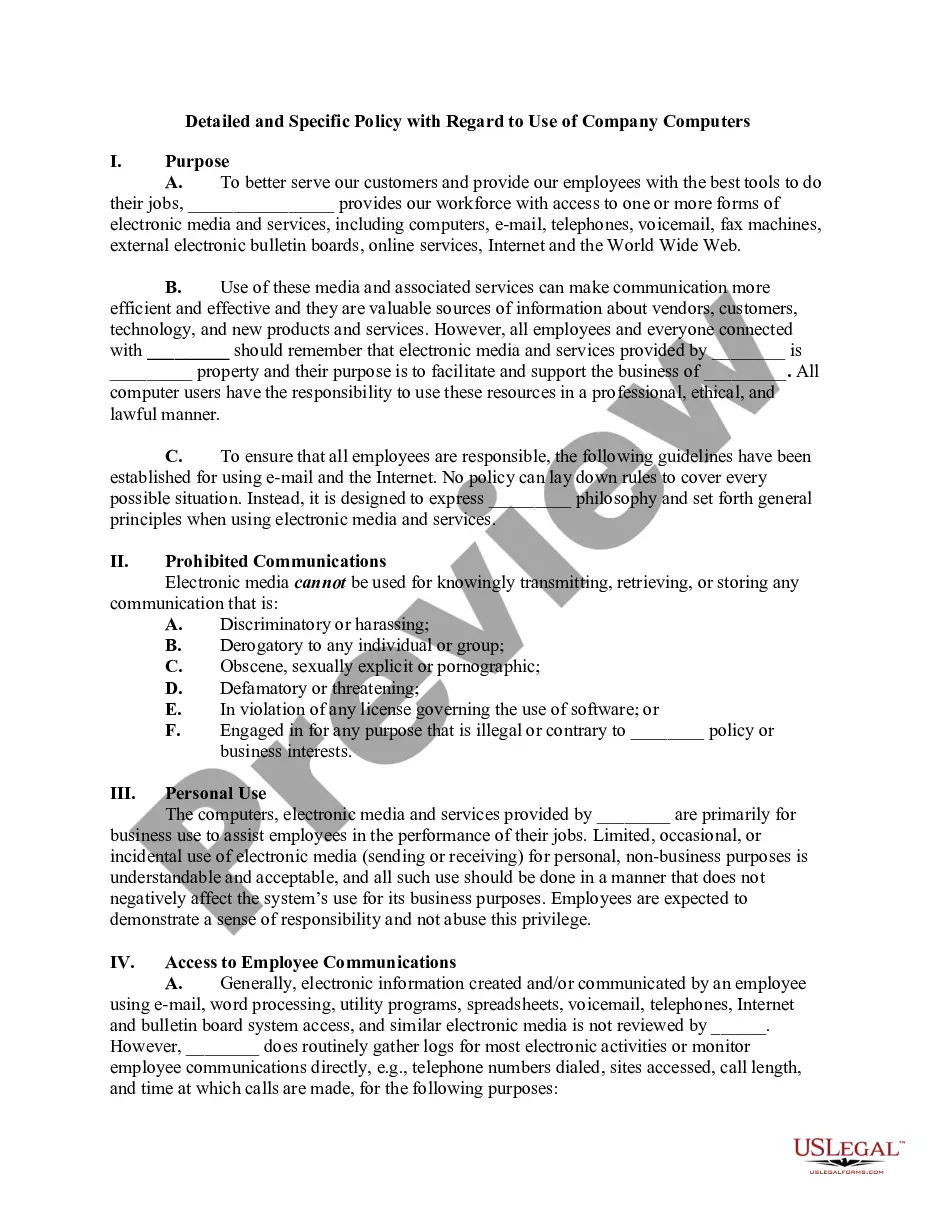
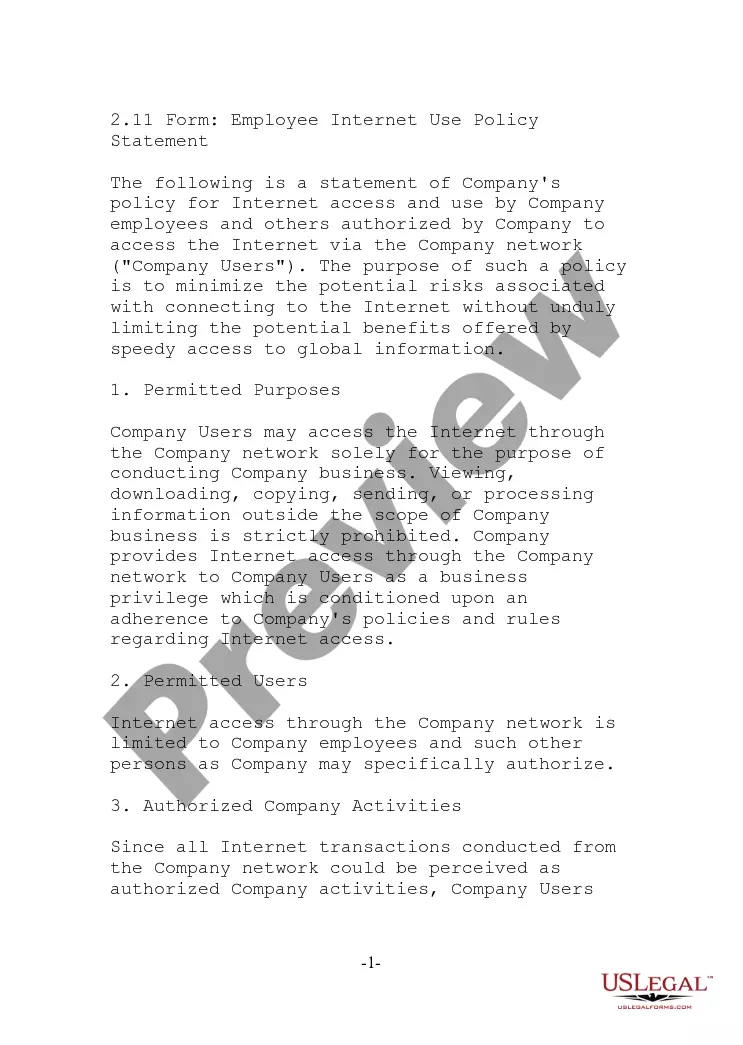
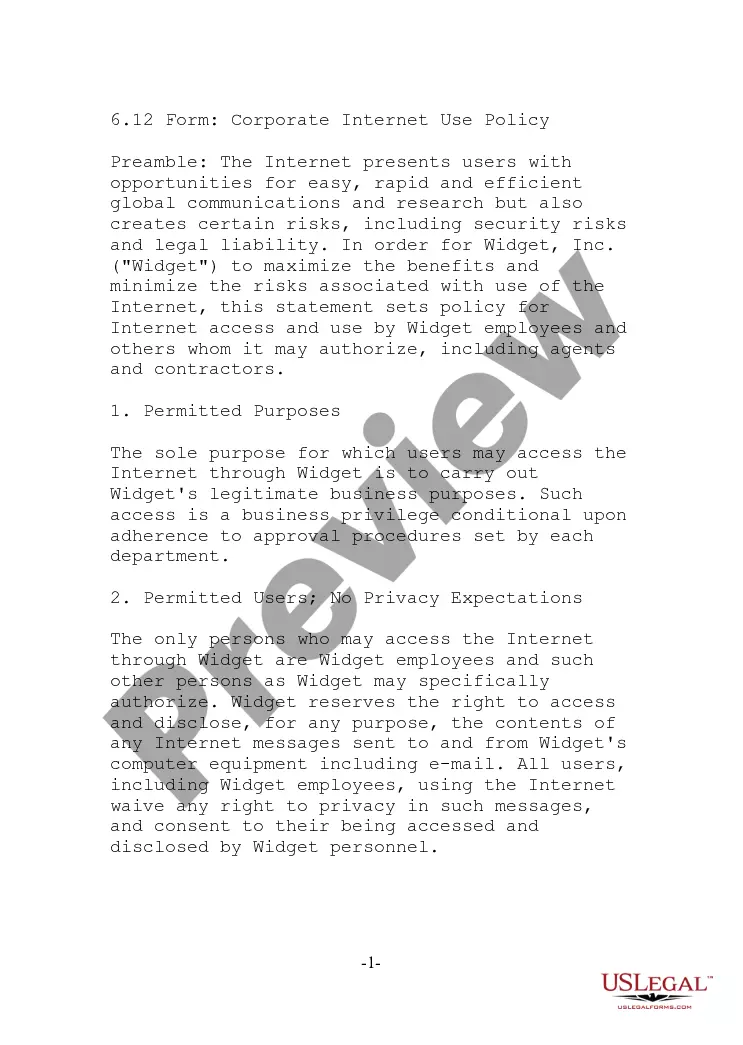
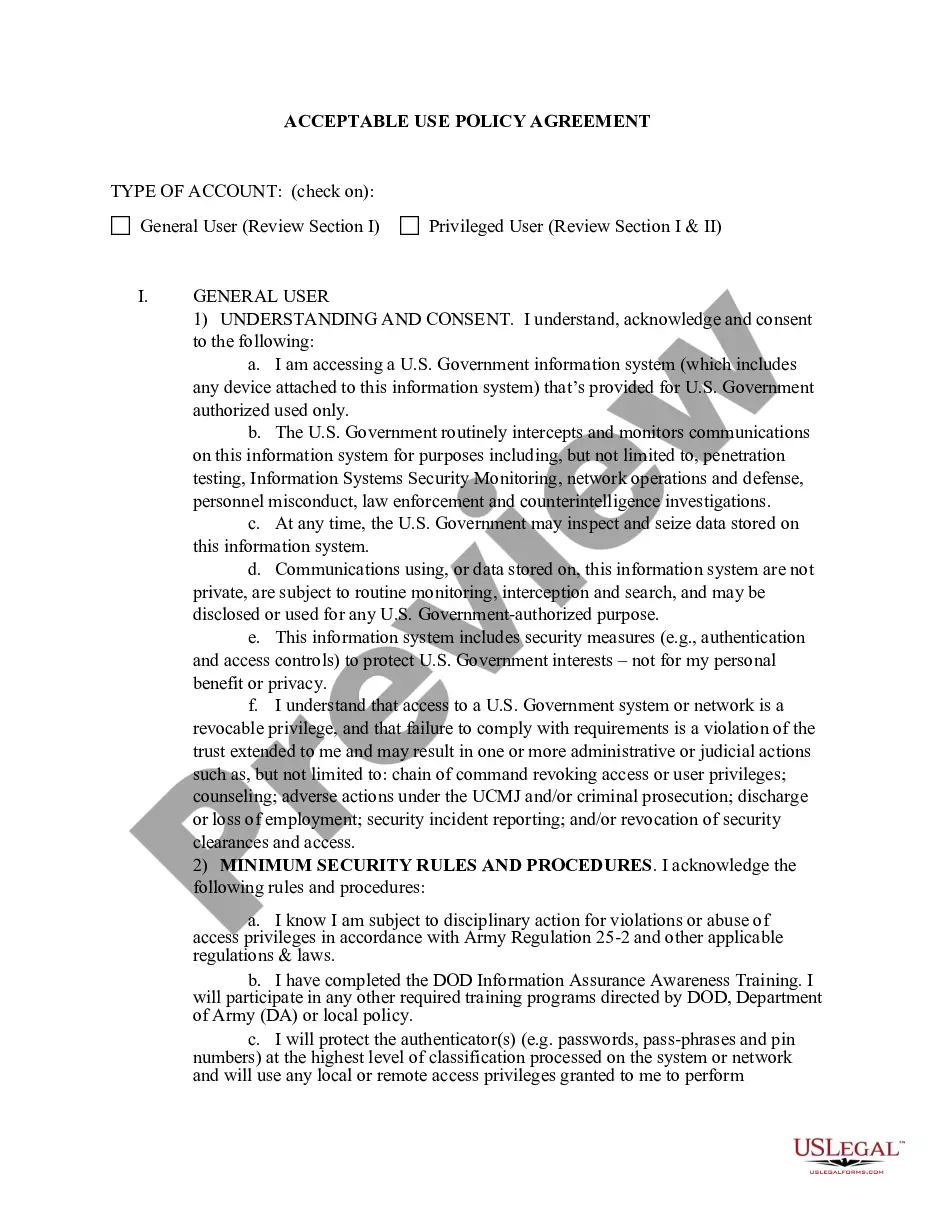
The Internet Use Policy is a legal document outlining acceptable and unacceptable uses of the internet by employees within a company. This form serves as a formal agreement that employees must sign to acknowledge their understanding of internet usage rules at work. It differs from general employment agreements by specifically addressing online behavior and responsibilities associated with company internet access.
Main sections of this form
- Acceptable use clause detailing appropriate internet activities related to work duties.
- Privileges section clarifying that internet access is a privilege, not a right.
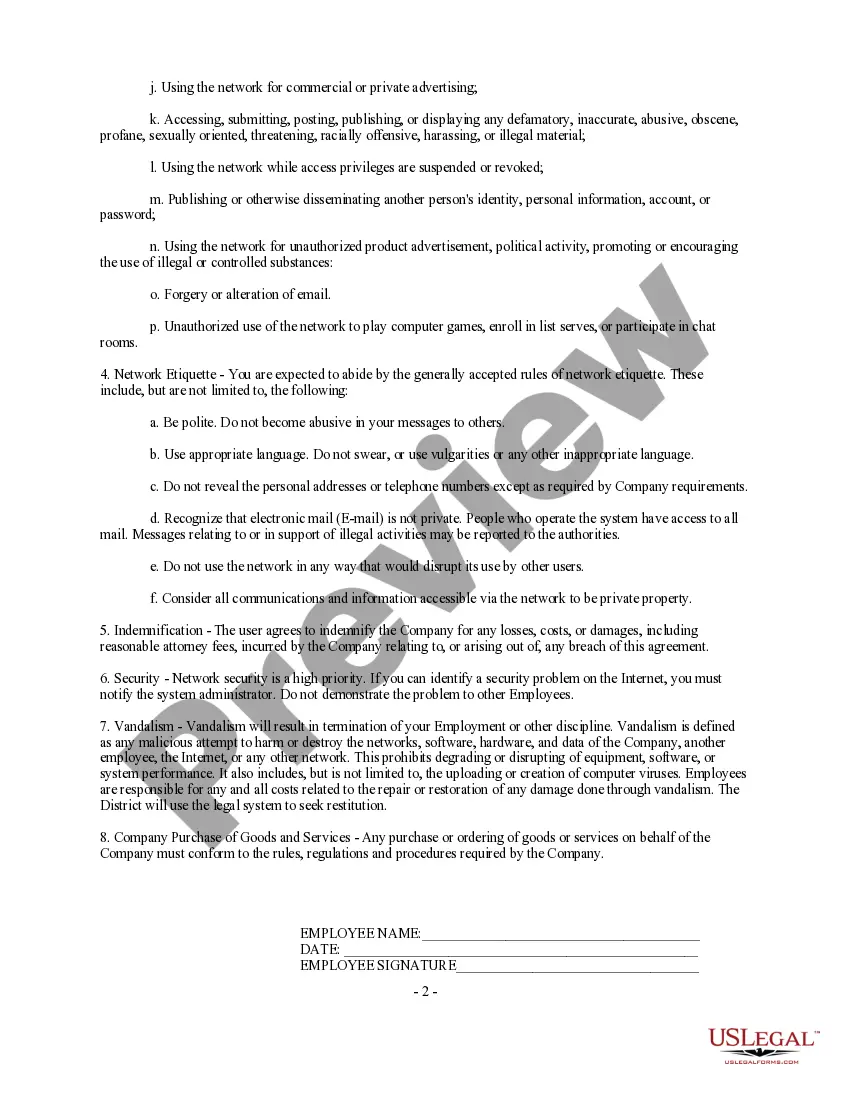
- Examples of unacceptable use, including illegal activities and misuse of company resources.
- Network etiquette guidelines to promote respectful and responsible online behavior.
- Indemnification clause, which outlines responsibilities for damages related to policy breaches.
- Security and vandalism stipulations addressing the importance of network integrity.

Situations where this form applies
This Internet Use Policy should be used when a company wishes to establish clear guidelines for internet use among its employees. It is applicable during onboarding processes or whenever updates to internet usage policies are implemented. Additionally, it may be used in disciplinary proceedings related to internet misuse.
Who this form is for
- Employers looking to implement a formal internet usage policy.
- Human resources departments managing employee compliance with a company's internet rules.
- Employees required to acknowledge their understanding of acceptable internet use at work.
Instructions for completing this form
- Read the entire policy thoroughly to understand the expectations and rules.
- Fill in your full name and the date in the designated spaces.
- Sign the document to indicate your agreement to the policy terms.
- Submit the signed policy to your supervisor or the human resources department.
Does this document require notarization?
This form does not typically require notarization unless specified by local law. Ensure compliance with state regulations, but most companies simply collect signed copies for their records.
Get your form ready online
Our built-in tools help you complete, sign, share, and store your documents in one place.
Make edits, fill in missing information, and update formatting in US Legal Forms—just like you would in MS Word.
Download a copy, print it, send it by email, or mail it via USPS—whatever works best for your next step.
Sign and collect signatures with our SignNow integration. Send to multiple recipients, set reminders, and more. Go Premium to unlock E-Sign.
If this form requires notarization, complete it online through a secure video call—no need to meet a notary in person or wait for an appointment.
We protect your documents and personal data by following strict security and privacy standards.

Make edits, fill in missing information, and update formatting in US Legal Forms—just like you would in MS Word.

Download a copy, print it, send it by email, or mail it via USPS—whatever works best for your next step.

Sign and collect signatures with our SignNow integration. Send to multiple recipients, set reminders, and more. Go Premium to unlock E-Sign.

If this form requires notarization, complete it online through a secure video call—no need to meet a notary in person or wait for an appointment.

We protect your documents and personal data by following strict security and privacy standards.
Common mistakes
- Not reading the entire policy before signing.
- Failing to provide correct personal information.
- Assuming the policy only applies to company-related activities.
Advantages of online completion
- Convenient access for employees to review and sign the policy digitally.
- Editable templates allow customization to fit specific company needs.
- Reliable and secure storage of signed documents online.
Legal use & context
- This form serves as a legal agreement that can be referenced in case of policy violations.
- It provides clear guidelines to protect both the employer and the employee from misunderstandings related to internet usage.
- Non-compliance with this policy can lead to disciplinary action, including loss of internet access or termination.
Key takeaways
- The Internet Use Policy is essential for defining acceptable internet use in the workplace.
- This form protects the company by setting clear guidelines and consequences for violations.
- All employees must acknowledge this policy to maintain internet access and fulfill their responsibilities.
Looking for another form?
Form popularity
FAQ
A computer usage policy is a document that provides employees with guidelines on how to appropriately use company equipment and the internet on your work computer network.This kind of policy can minimize the risk of computer misuse whether in the university library or a business office.
Home User. In an increasing number of homes, the computer is a basic necessity. Small Office/Home Office User. Computer assist small business and home office users in managing their resources effectively. Mobile User. Power User. Enterprise User.
A computer security policy defines the goals and elements of an organization's computer systems.Security policies are enforced by organizational policies or security mechanisms. A technical implementation defines whether a computer system is secure or insecure.
An acceptable use policy (AUP) is a document stipulating constraints and practices that a user must agree to for access to a corporate network or the Internet. Many businesses and educational facilities require that employees or students sign an acceptable use policy before being granted a network ID.
A preamble, a definition section, a policy statement, an acceptable uses section, an unacceptable uses section, and. a violations/sanctions section.
An acceptable use policy (AUP) is a document stipulating constraints and practices that a user must agree to for access to a corporate network or the Internet.Not attempting to break the security of any computer network or user. Not posting commercial messages to Usenet groups without prior permission.
An Acceptable Use Policy is a series of rules that define what end users may or may not do with their technology. Usually, this policy requires some kind of acknowledgment that the rules are well understood, including potential consequences of violation, before issuing any kind of log into the system.
Encryption policies not be part of an acceptable use policy.