Training Expense Agreement
What this document covers
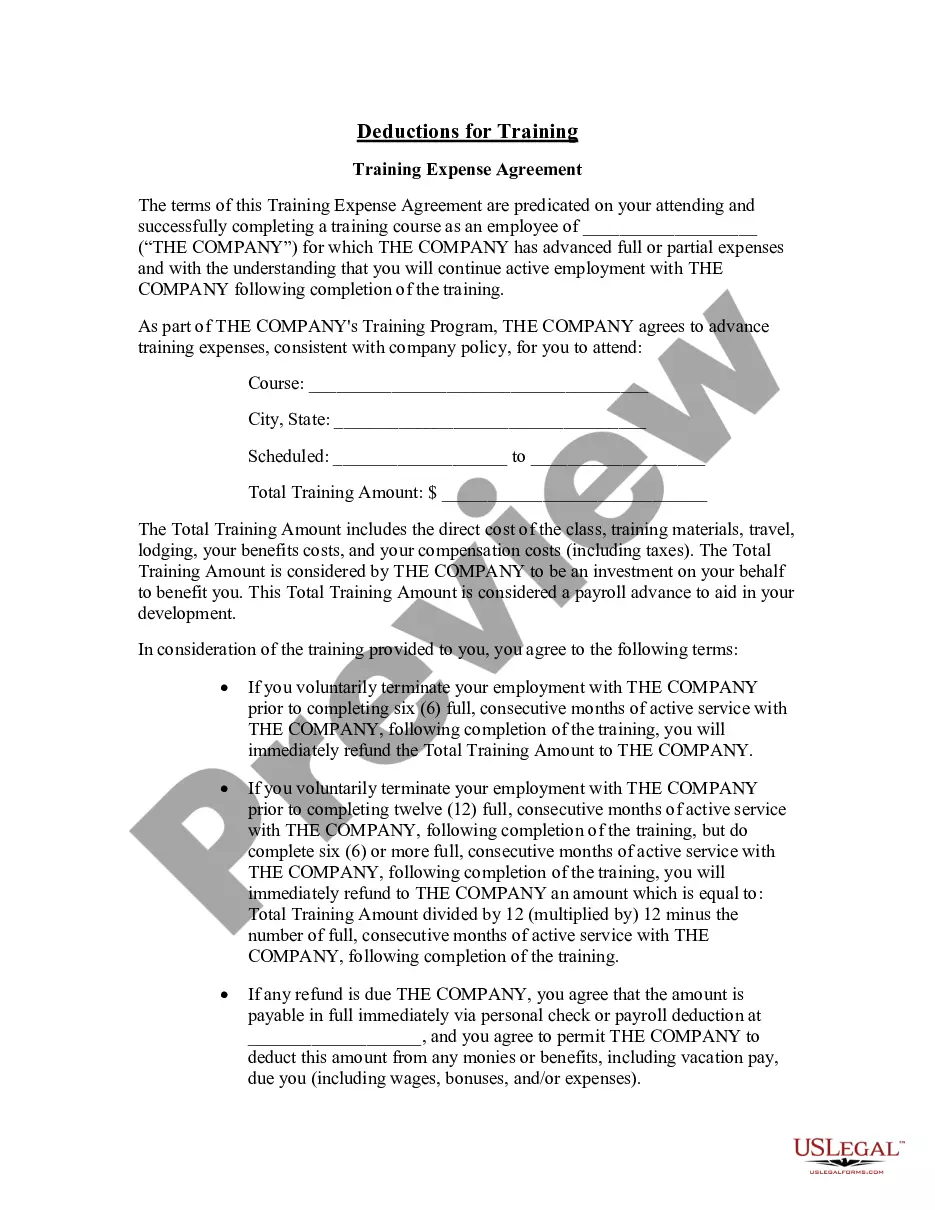
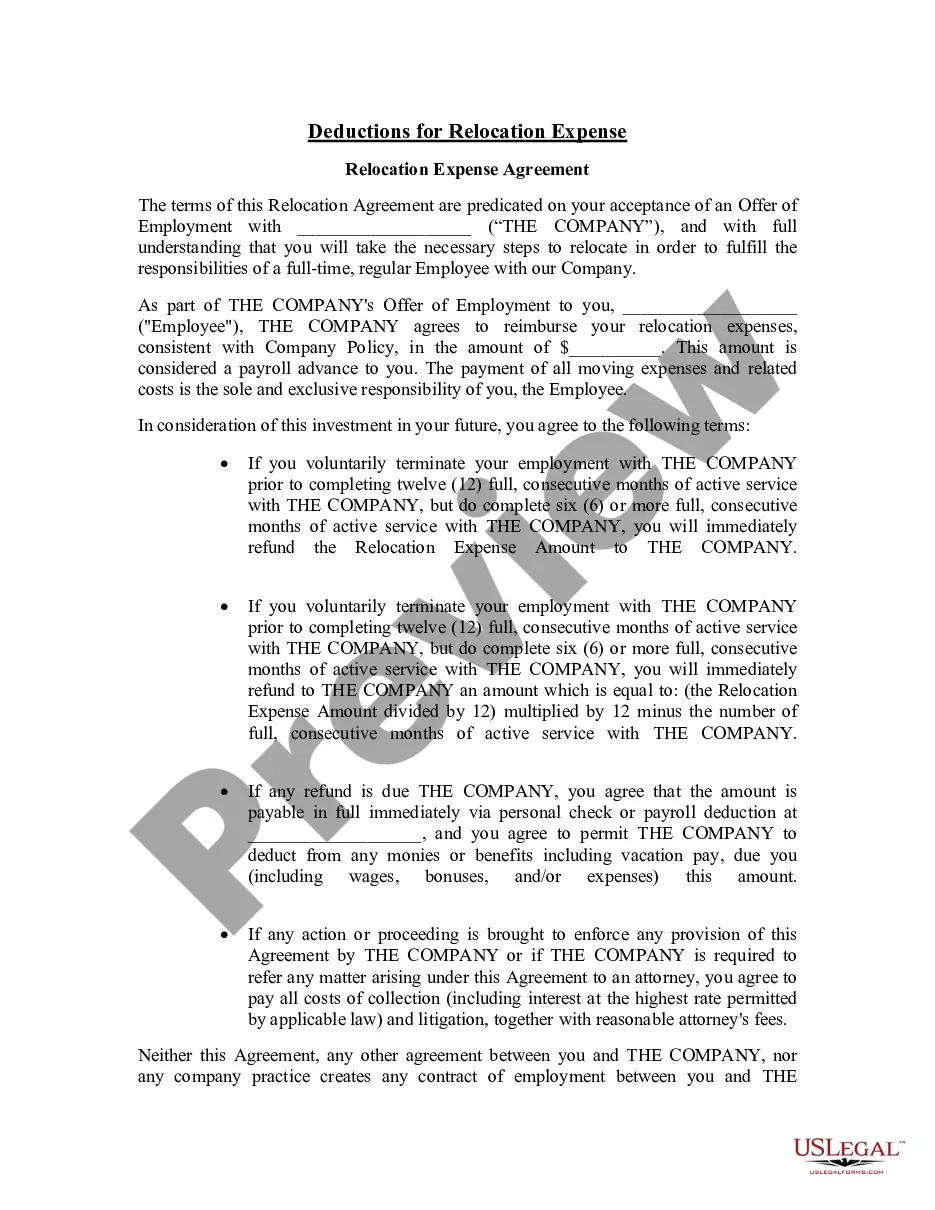
The Training Expense Agreement is a legal document that outlines the terms under which a company finances training expenses for its employees. This agreement ensures that employees who receive funding for training commit to continuing their employment with the company for a specified period following their training. Unlike other employment agreements, this form specifically addresses the reimbursement of training costs, ensuring clarity and protection for both the employee and employer.
Key components of this form
- Employee and Company Details: Identifies the participating parties.
- Training Course Information: Specifies the course name, location, and schedule.
- Total Training Amount: Outlines all costs covered by the employer.
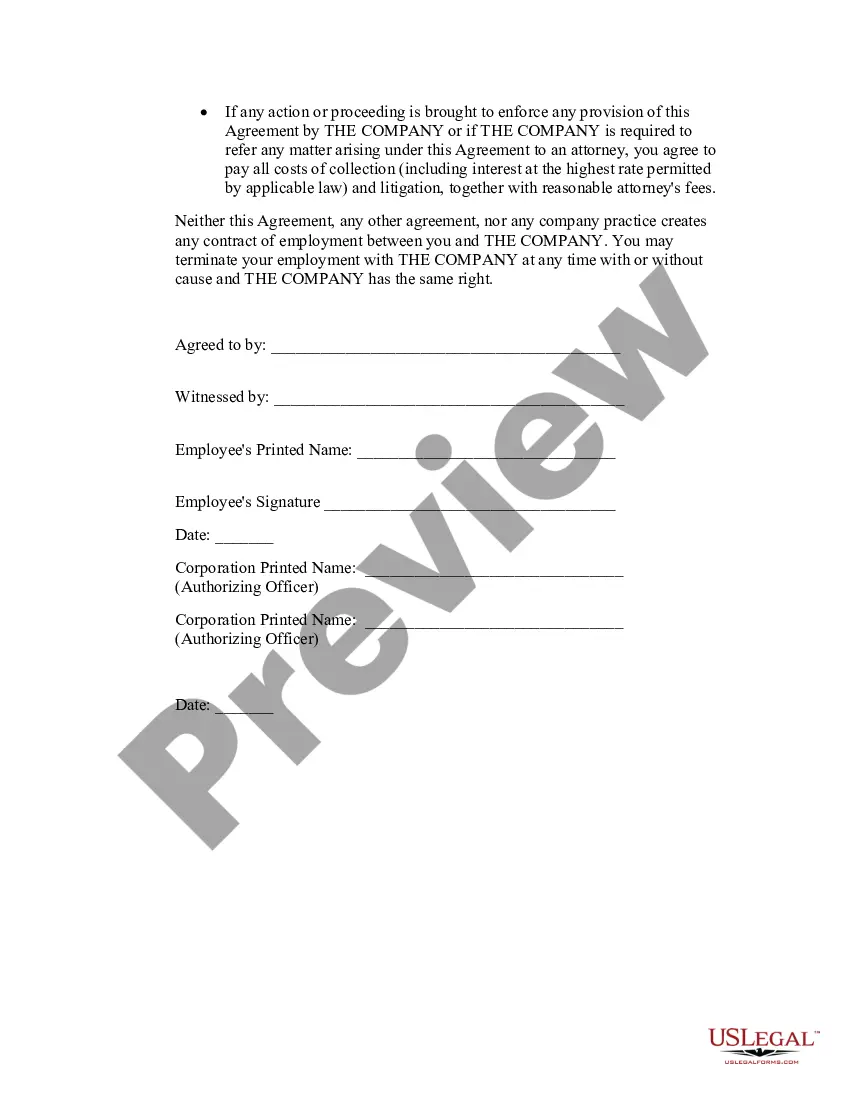
- Refund Obligations: Describes refund conditions if the employee terminates employment early.
- Authorization Signatures: Requires signatures from the employee and authorized company officers.

Situations where this form applies
This form is essential when a company invests in training its employees. It should be used whenever a company advances full or partial expenses for training, ensuring that both parties agree on the conditions surrounding the training funding. This agreement helps mitigate risks associated with employee turnover shortly after training has been funded.
Who should use this form
- Employers looking to fund employee training programs.
- Employees receiving advanced training expenses from their employers.
- Human resources departments responsible for managing employee training agreements.
Steps to complete this form
- Identify and enter the name of the company and the employee.
- Specify the course name, location, and its scheduled dates.
- Fill in the total training expenses that the company is advancing.
- Detail the terms of employment commitment and refund conditions.
- Ensure all parties sign the agreement dated appropriately.
Is notarization required?
Notarization is generally not required for this form. However, certain states or situations might demand it. You can complete notarization online through US Legal Forms, powered by Notarize, using a verified video call available anytime.
Get your form ready online
Our built-in tools help you complete, sign, share, and store your documents in one place.
Make edits, fill in missing information, and update formatting in US Legal Forms—just like you would in MS Word.
Download a copy, print it, send it by email, or mail it via USPS—whatever works best for your next step.
Sign and collect signatures with our SignNow integration. Send to multiple recipients, set reminders, and more. Go Premium to unlock E-Sign.
If this form requires notarization, complete it online through a secure video call—no need to meet a notary in person or wait for an appointment.
We protect your documents and personal data by following strict security and privacy standards.

Make edits, fill in missing information, and update formatting in US Legal Forms—just like you would in MS Word.

Download a copy, print it, send it by email, or mail it via USPS—whatever works best for your next step.

Sign and collect signatures with our SignNow integration. Send to multiple recipients, set reminders, and more. Go Premium to unlock E-Sign.

If this form requires notarization, complete it online through a secure video call—no need to meet a notary in person or wait for an appointment.

We protect your documents and personal data by following strict security and privacy standards.
Common mistakes to avoid
- Failing to specify the training course details clearly.
- Not including total expense amounts or miscalculating them.
- Neglecting to obtain all necessary signatures before finalizing the agreement.
- Overlooking any state-specific legal requirements related to damages or refunds.
Why use this form online
- Convenient and easy to complete from any location.
- Editable to match specific company policies and training conditions.
- Reliably drafted by licensed attorneys to ensure legal compliance.
Summary of main points
- The Training Expense Agreement outlines financial obligations for employer-sponsored training.
- Clear repayment terms protect the company's training investment.
- Both the employer and employee benefit from a structured agreement that enhances professional development.
Looking for another form?


Form popularity
FAQ
An agreement between a postgraduate dean and a trainee which defines, in terms of education and training, the relationship, duties and obligations of each party. A commitment to providing an educational plan.2022 A commitment to regular tuition by consultants.
It is not that unusual for employers to require employees to repay their costs of training or other professional fees that the employer has incurred on their behalf if they leave their employment. Occasionally, an employee will argue that this type of clause is a penalty clause and therefore unenforceable.
Agreements to repay your employer for training costs are valid and enforceable.That means that if there is a contract to repay your employer any training costs they paid for you in the event you quit, then if you do quit, you must repay them.
Yes, according to a California Court of Appeal.
Final pay when someone leaves a job Employers can only deduct money for training courses if it was agreed in the contract or in writing beforehand. For example, an employer could ask someone to agree in writing before a training course to pay back costs if they leave within 6 months.
Bonding Agreement means any agreement evidencing or relating to any performance bonds, construction bonds or similar obligations issued by a surety or other bonding party (or any designee on its behalf) for the benefit of customers of any Group Company and/or their Subsidiaries between such surety or other bonding
A standard bond agreement: A training course is funded by the Company, costs are a known value, the Employee is paid to attend and is bonded for either 12 or 18 months with a diminishing repayment value through time.With the option for the Company to fund it all or the Employee to self fund but paid time to undertake.
Can employers deduct your pay for training? If the employer is relying on a contract provision or written consent from the employee, the answer is Yes. If the deduction for training occurred without such authority, then the deduction would be illegal and the employee may have a potential employment claim.
In the UK they are any bond is un-enforceable in law after the Bosman ruling in football. This made any employer unable to restrict the movement of employees to better and other employment or career changes.