Job Acceptance Letter for Judge
About this form
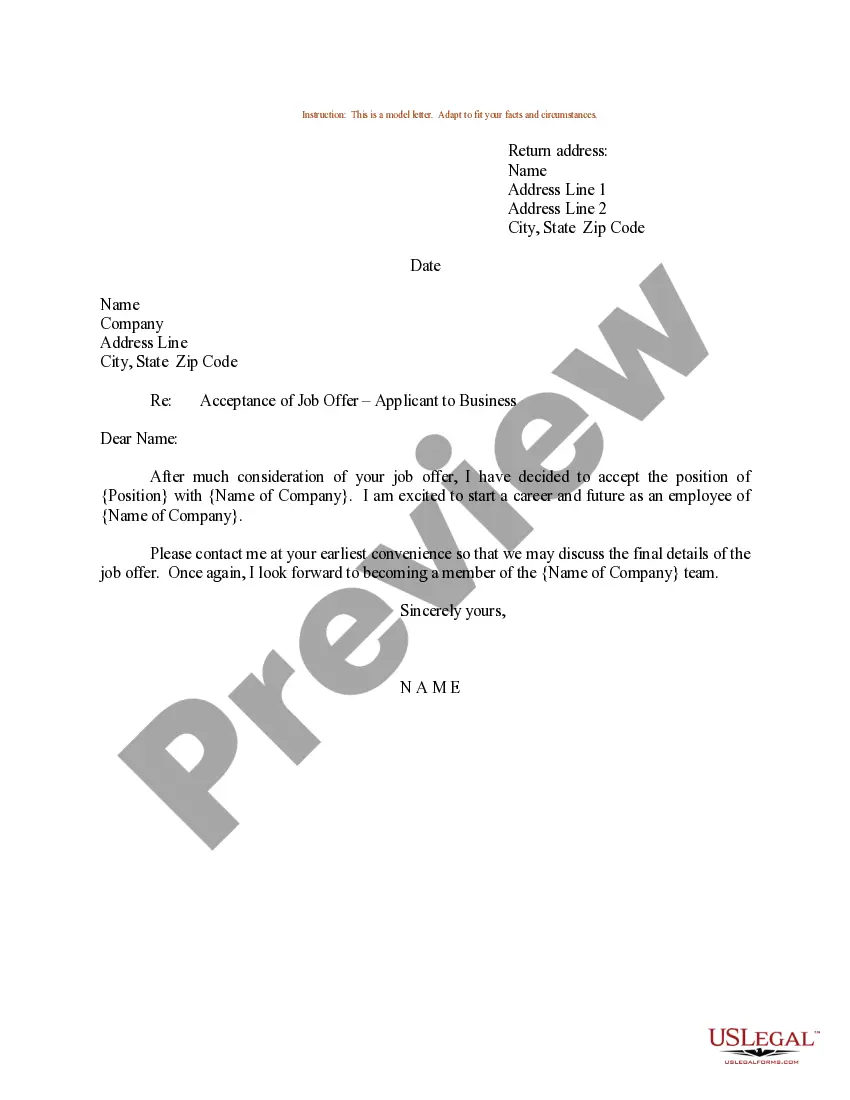
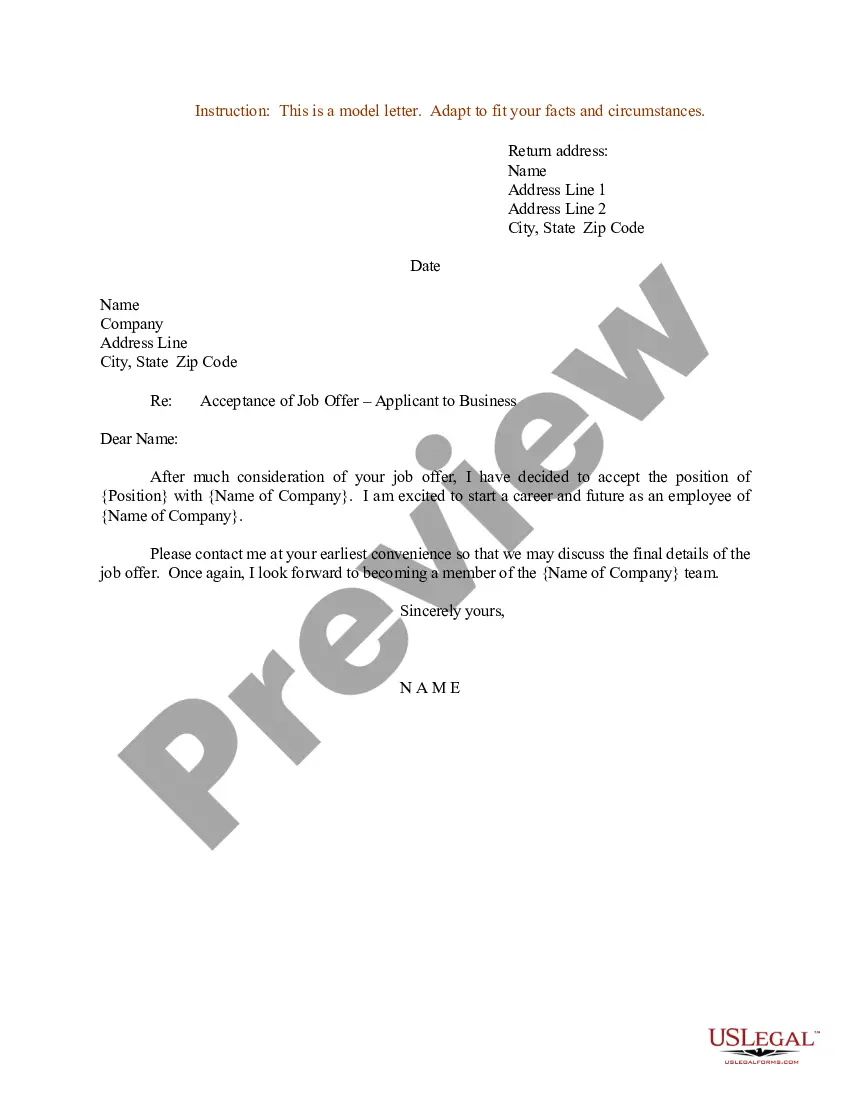
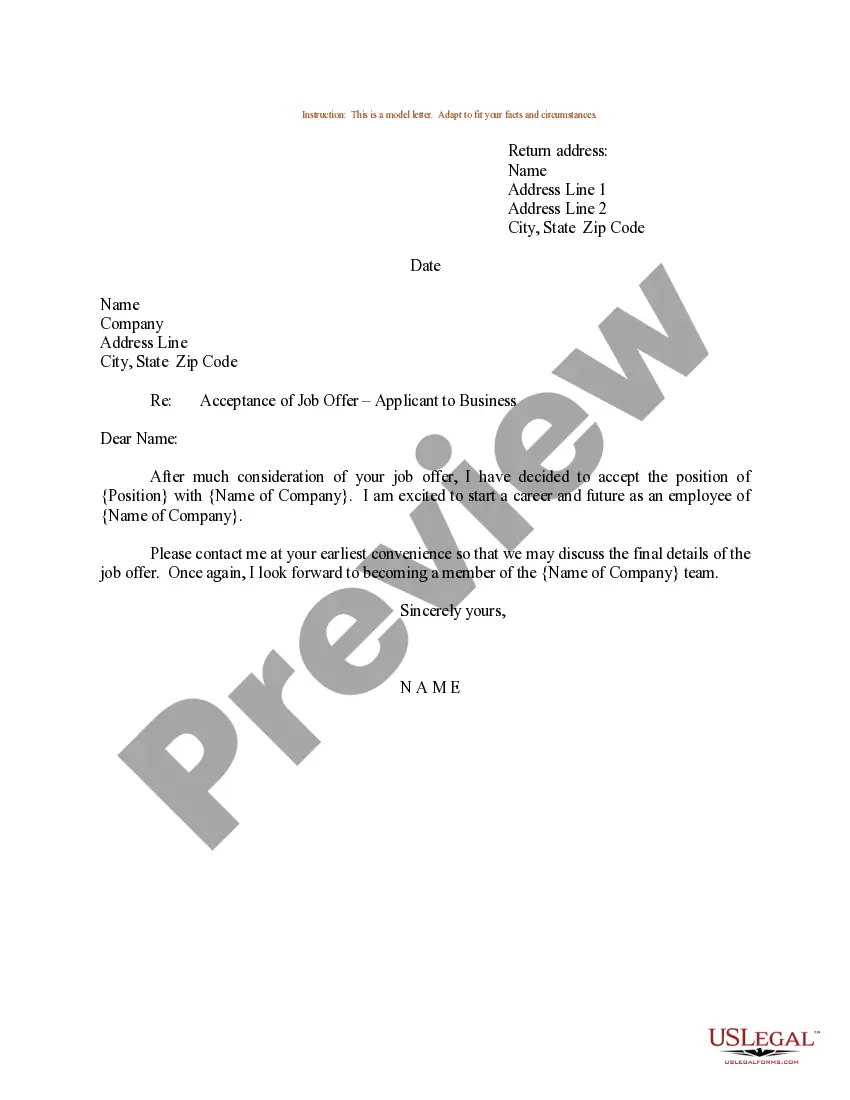
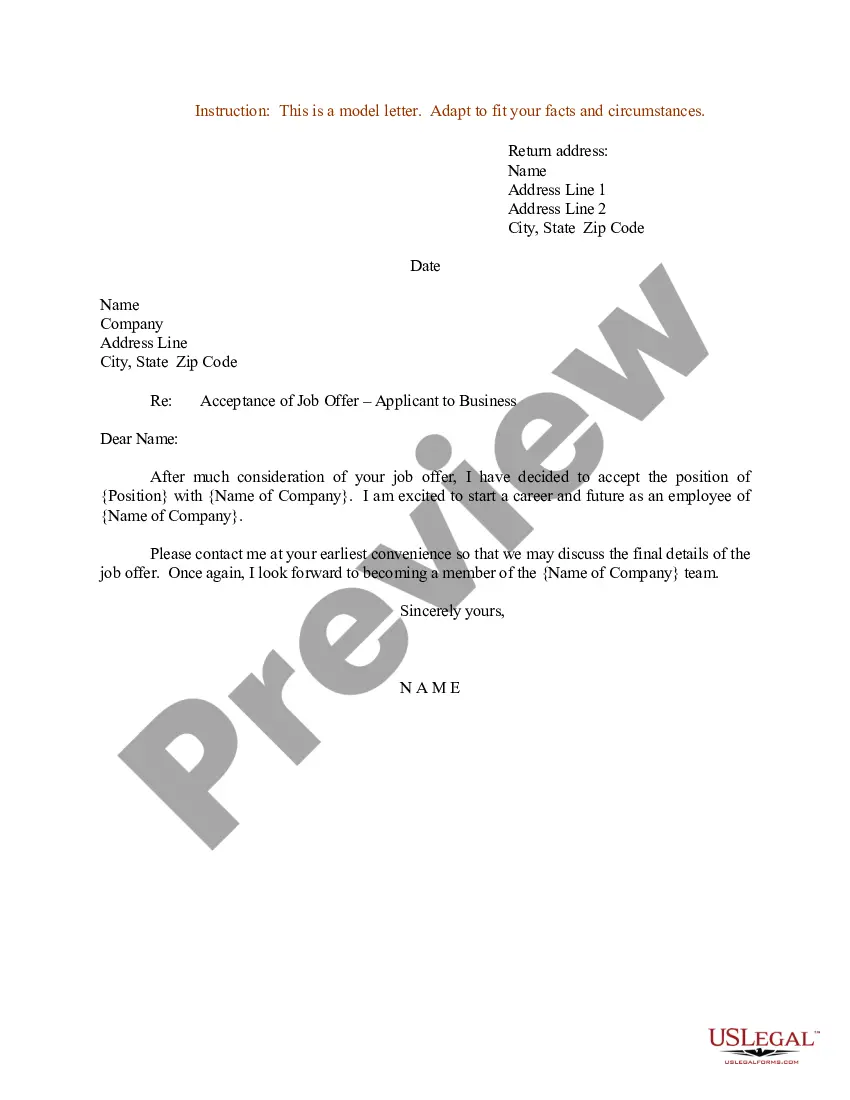
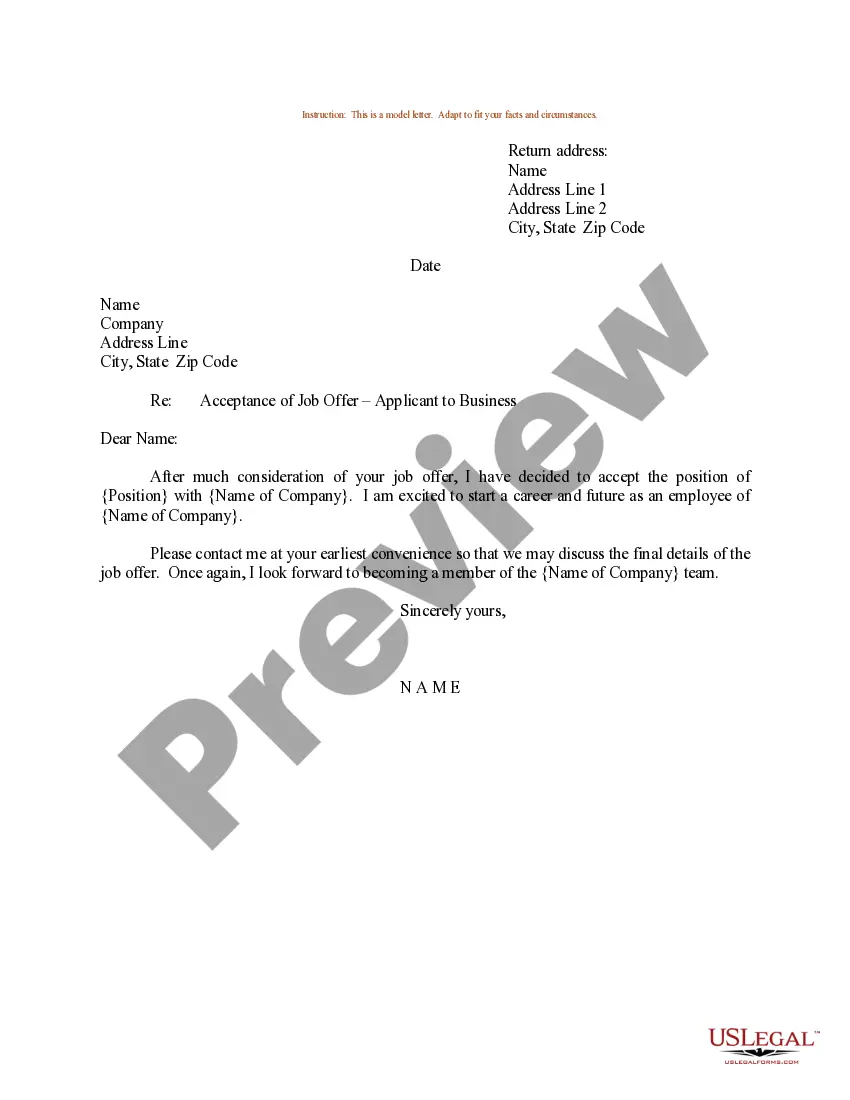
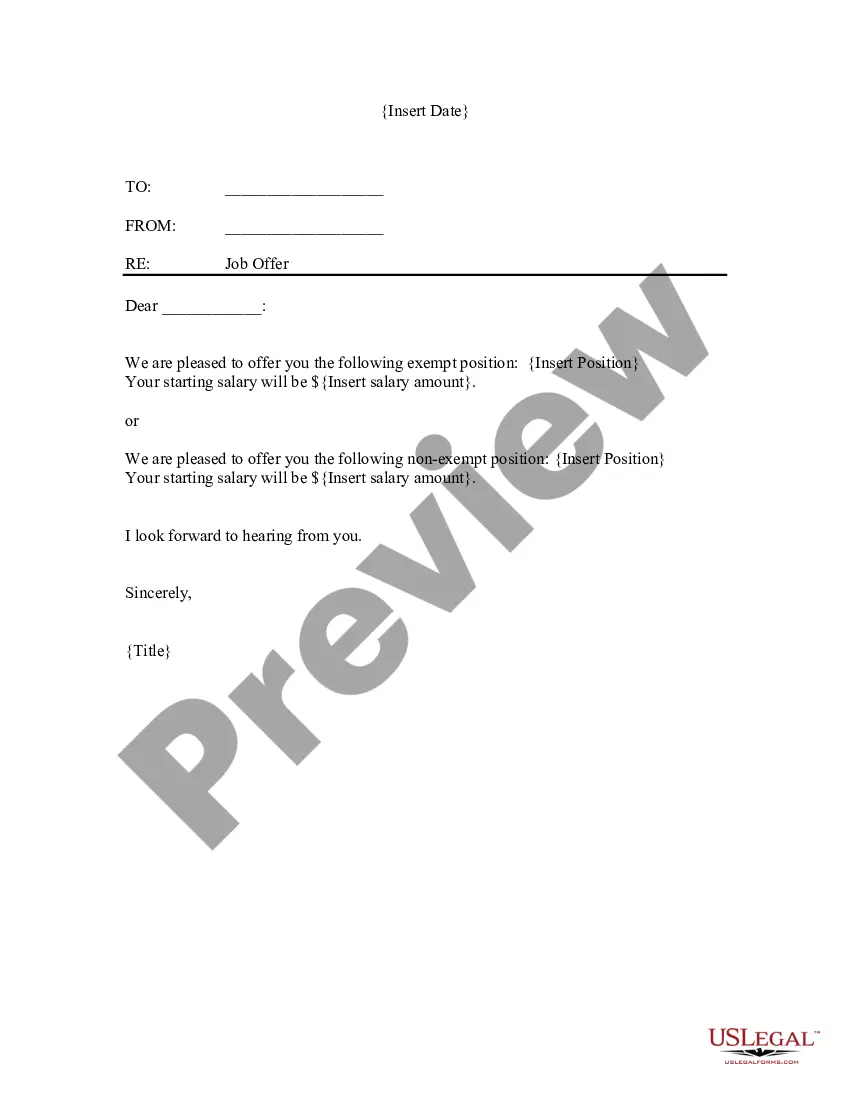
The Job Acceptance Letter for Judge is a formal communication from a prospective employee to an employer, specifically tailored for positions within the judicial or legal field. This letter confirms the acceptance of a job offer, outlining the key position details and expressing enthusiasm about joining the team. Unlike other job acceptance letters, this template is specifically designed to suit the unique roles and responsibilities associated with judicial employment.
Key components of this form
- Return address: Your personal address for correspondence.
- Date: The date on which the letter is being sent.
- Employer's address: Name and address of the hiring organization.
- Job acceptance statement: A clear statement of your acceptance of the job offer.
- Expression of excitement: A note of enthusiasm about joining the company.
- Request to discuss details: A prompt to discuss any final job offer details.
When this form is needed
Use the Job Acceptance Letter for Judge when you've received a job offer for a judicial position and are ready to formally accept it. This form is ideal for confirming your acceptance, ensuring clear communication with your new employer, and setting the stage for future discussions about your role and responsibilities.
Who this form is for
- Individuals who have received a job offer for a judicial position.
- Those wanting to maintain professionalism in their job acceptance communication.
- Applicants who are excited to begin a career in the legal or judicial field.
Completing this form step by step
- Identify your return address and include it at the top.
- Insert the current date below your address.
- Add the employer's name and address in the designated section.
- Clearly state your acceptance of the job offer and the position title.
- Express your enthusiasm about joining the company.
- Sign the letter with your name at the bottom.
Does this form need to be notarized?
This form does not typically require notarization unless specified by local law. Ensure you verify any jurisdictional requirements prior to finalizing the document.
Get your form ready online
Our built-in tools help you complete, sign, share, and store your documents in one place.
Make edits, fill in missing information, and update formatting in US Legal Forms—just like you would in MS Word.
Download a copy, print it, send it by email, or mail it via USPS—whatever works best for your next step.
Sign and collect signatures with our SignNow integration. Send to multiple recipients, set reminders, and more. Go Premium to unlock E-Sign.
If this form requires notarization, complete it online through a secure video call—no need to meet a notary in person or wait for an appointment.
We protect your documents and personal data by following strict security and privacy standards.

Make edits, fill in missing information, and update formatting in US Legal Forms—just like you would in MS Word.

Download a copy, print it, send it by email, or mail it via USPS—whatever works best for your next step.

Sign and collect signatures with our SignNow integration. Send to multiple recipients, set reminders, and more. Go Premium to unlock E-Sign.

If this form requires notarization, complete it online through a secure video call—no need to meet a notary in person or wait for an appointment.

We protect your documents and personal data by following strict security and privacy standards.
Common mistakes
- Failing to include the date of the letter.
- Not addressing the letter to the appropriate person.
- Neglecting to proofread for spelling and grammar errors.
- Omitting a clear statement of acceptance.
Why use this form online
- Convenient access to editable templates at any time.
- Reliability, as forms are drafted by licensed attorneys.
- Instant download options for quick delivery.
Looking for another form?
Form popularity
FAQ
Formally accept the job. Directly state that you agree to the terms of the position at the beginning of your email. Express your thanks. Confirm employment details. Ask about final steps. Notify other employers. Formally decline the job. Consider providing a reason. Thank the employer.
Use "Re:" (an abbreviation for "regarding" or "with reference to"), followed by a brief identifying phrase. Begin with a salutation. Write "Dear Judge (last name)," to start the message of your letter. Note that you should use "the Honorable" when referring to the judge, but use "Judge" addressing him or her directly.
You can address most judges at the start of a letter as "Dear Judge" (or "Dear Justice" if they serve in a U.S. state or federal Supreme Court, or in certain courts of other countries). When addressing the envelope, it is best to use the judge's full title, along with the full name of the court in which he/she serves.
Think it through carefully. Before rejecting the job offer, be 100% certain you do not want (or cannot take) the job. Read your contract. Don't wait. Be honest, but tactful. Be concise. Express gratitude. Know your bottom line. Choose the right form of communication.
An acceptance letter lets you document key points about your new job.
However, when a person is awaiting trial, writing a letter to the judge will not help. At best, the letter will go unread by the judge, and will be of no help. In a worst-case scenario, the letter will end up being used by the prosecution as evidence against that person.
Thank the employer for the job offer stating the full job title. formally accept the job offer. discuss the terms and conditions of employment - salary, benefits, work schedule, starting date. highlight your appreciation and enthusiasm for this opportunity.
Thanks and appreciation for the opportunity. Written acceptance of the job offer. The terms and conditions of employment (salary, benefits, job title, etc.) Starting date of employment.
Character letters should include your name, mailing address, phone number and email address so that the court can verify your information. They should be addressed either to the Honorable FIRST NAME LAST NAME or Judge FIRST NAME LAST NAME.