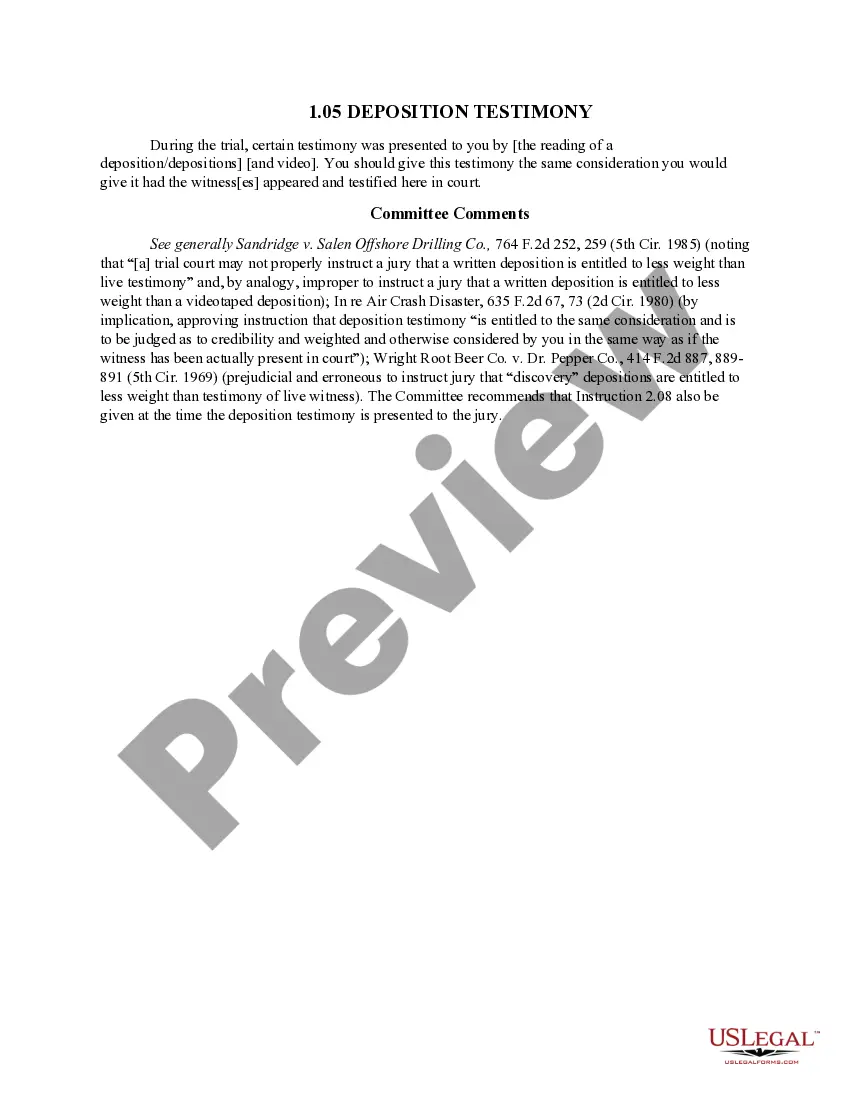
1.05 Deposition Testimony
What this document covers
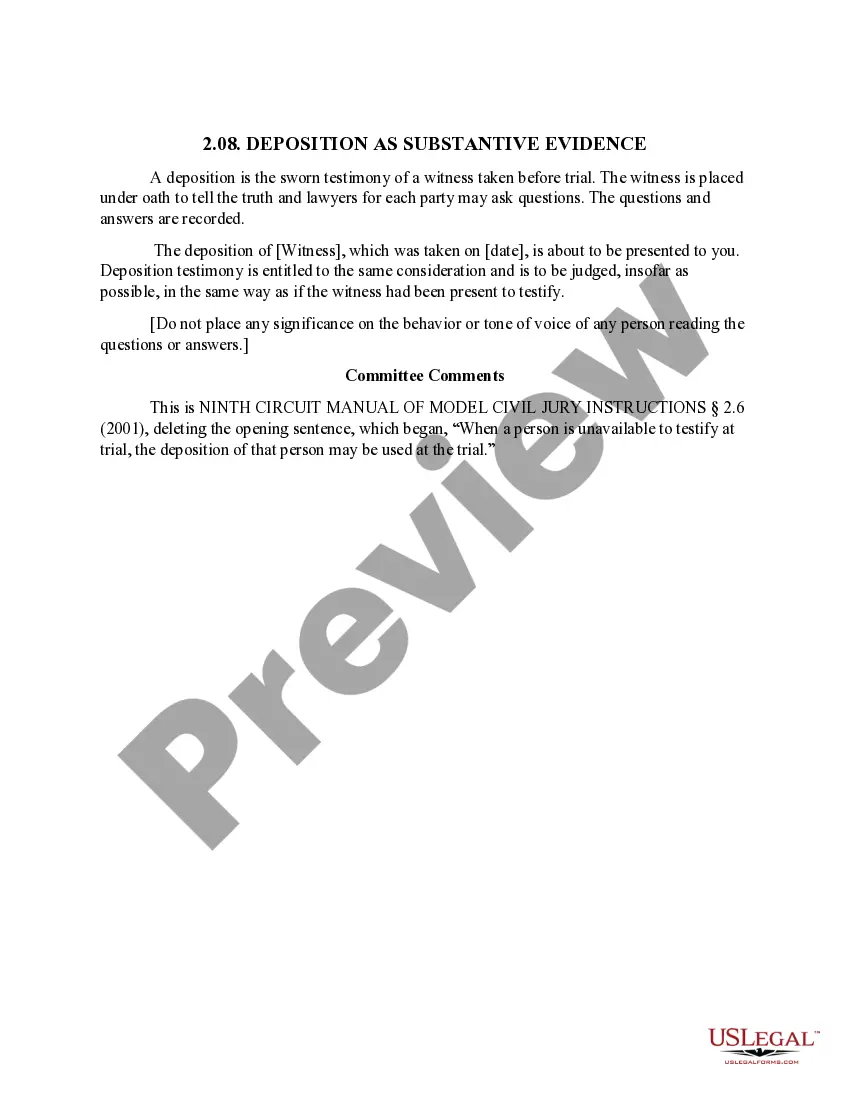
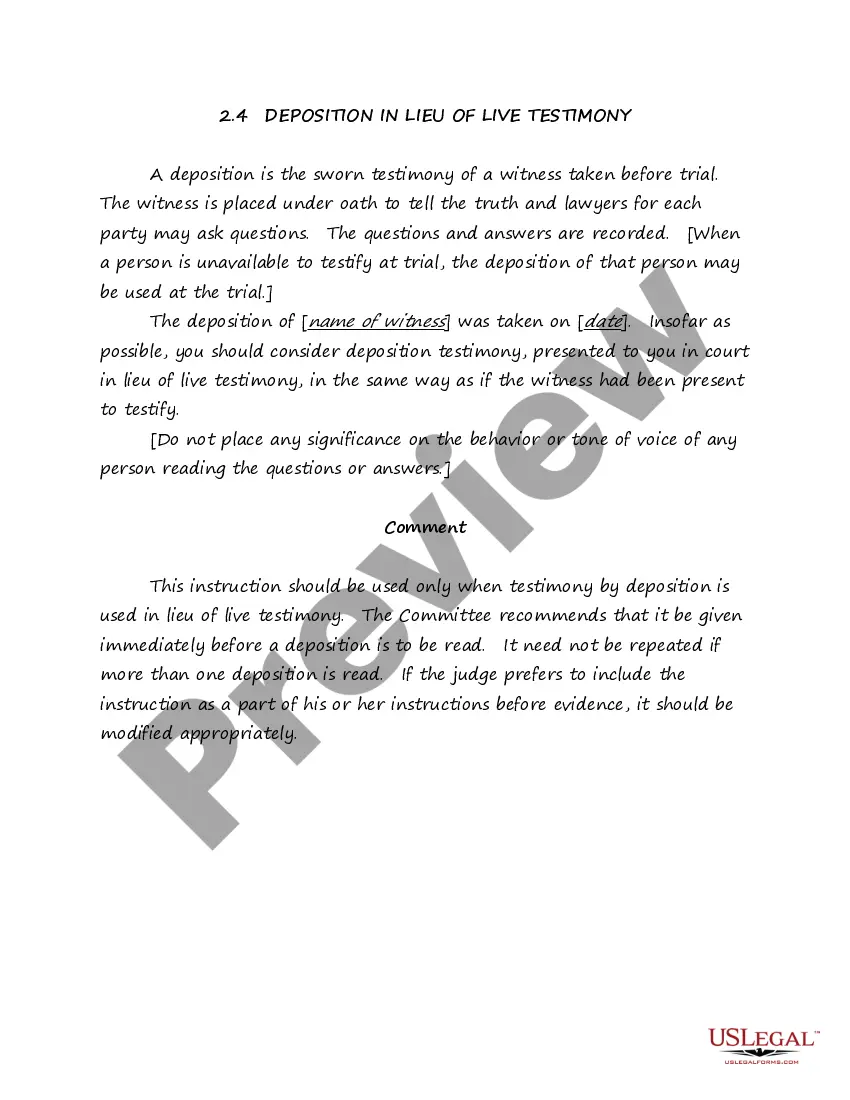
The 1.05 Deposition Testimony form provides guidelines on how jury members should regard deposition testimony during a trial. This legal form emphasizes that deposition testimony, whether read in the court or presented via video, should be treated with the same weight and consideration as live witness testimony. It helps ensure that jurors understand the importance of all testimony, irrespective of their presentation format, reinforcing the integrity of the judicial process.
What’s included in this form
- Instructions on how to consider deposition testimony presented during trial.
- Guidelines for treating both written and video depositions equally to live testimony.
- Legal precedents supporting the inclusion of deposition testimony in jury deliberations.
- Recommendations for related instructions during the presentation of deposition testimony.
When to use this document
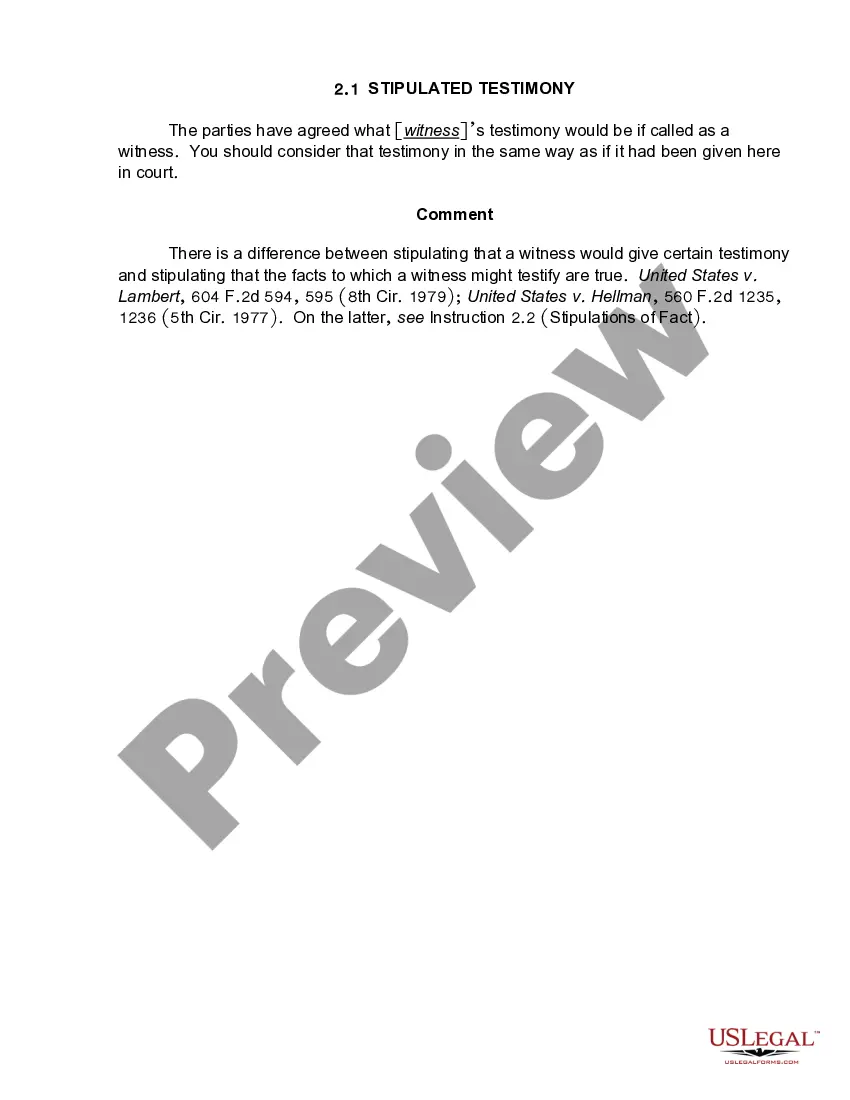
This form is essential during legal trials when deposition testimony is introduced. It is particularly useful in situations where a witness cannot be present in court, yet their testimony needs to be considered by the jury. Use this form to clarify how jurors should approach depositions in relation to live witness testimony, ensuring a fair evaluation of all evidence presented.
Who needs this form
- Attorneys representing clients in a trial.
- Judges instructing juries on how to assess testimony.
- Legal professionals involved in the preparation and presentation of deposition evidence.
- Jurors who need to understand their responsibilities regarding deposition testimony.
How to prepare this document
- Review the deposition testimony given at trial.
- Consider the issues addressed in the deposition just as you would for live testimony.
- Take notes on key points from the deposition for reference during deliberations.
- Apply the same standards of credibility when evaluating deposition witnesses.
Notarization guidance
Notarization is generally not required for this form. However, certain states or situations might demand it. You can complete notarization online through US Legal Forms, powered by Notarize, using a verified video call available anytime.
Get your form ready online
Our built-in tools help you complete, sign, share, and store your documents in one place.
Make edits, fill in missing information, and update formatting in US Legal Forms—just like you would in MS Word.
Download a copy, print it, send it by email, or mail it via USPS—whatever works best for your next step.
Sign and collect signatures with our SignNow integration. Send to multiple recipients, set reminders, and more. Go Premium to unlock E-Sign.
If this form requires notarization, complete it online through a secure video call—no need to meet a notary in person or wait for an appointment.
We protect your documents and personal data by following strict security and privacy standards.

Make edits, fill in missing information, and update formatting in US Legal Forms—just like you would in MS Word.

Download a copy, print it, send it by email, or mail it via USPS—whatever works best for your next step.

Sign and collect signatures with our SignNow integration. Send to multiple recipients, set reminders, and more. Go Premium to unlock E-Sign.

If this form requires notarization, complete it online through a secure video call—no need to meet a notary in person or wait for an appointment.

We protect your documents and personal data by following strict security and privacy standards.
Typical mistakes to avoid
- Failing to give proper weight to deposition testimony as compared to live testimony.
- Misunderstanding the requirements for juror consideration of video versus written depositions.
- Neglecting to apply the same credibility assessment criteria for all types of testimony.
Why use this form online
- Convenient access to legal templates from any location.
- Edit and personalize the document to suit specific case requirements.
- Secure and reliable storage options for your legal forms.
- Easy to follow instructions that enhance understanding of legal procedures.
Looking for another form?
Form popularity
FAQ
All in all, your legal team and the team of the opposing party may reach a settlement several weeks or months after deposition. However, deposition can also sometimes lead to a lawsuit; it all depends on the specifics of your case.
JF: A deposition is an opportunity for parties in a civil lawsuit to obtain testimony from a witness under oath prior to trial. It's part of the discovery process by which parties gather facts and information so they can be better prepared at trial to present their claims and defenses.
All in all, your legal team and the team of the opposing party may reach a settlement several weeks or months after deposition. However, deposition can also sometimes lead to a lawsuit; it all depends on the specifics of your case.
How do you know if your deposition went well? Your attorney will give you a good indication. Listen to their feedback and take their advice to heart. Although you may have felt nervous and unsure about the process, your attorney can offer you an objective perspective on your performance.
10 Things Not to do in a Deposition Lie. There is no way to stress this too much.Guess or speculate.Engage in casual conversations with the court reporter or other people present.Volunteer unnecessary information.Fail to carefully review documents.Answer leading questions.Lose your temper.Fail to take breaks.
Testifying at a deposition is similar to giving testimony at a trial, except that no judge or jury is present, and objections to questions are less common. The lawyers representing each party to the case will be present at the deposition along with a court reporter hired to make a transcript of the proceedings.
9 Tips for a Successful Deposition Prepare.Tell the Truth.Be Mindful of the Transcript.Answer Only the Question Presented.Answer Only as to What You Know.Stay Calm.Ask to See Exhibits.Don't Be Bullied.
You know your deposition is going well if you are answering questions to the best of your ability ing to the advice of counsel. Your lawyers are there to protect your interests and object to questions you should not answer.