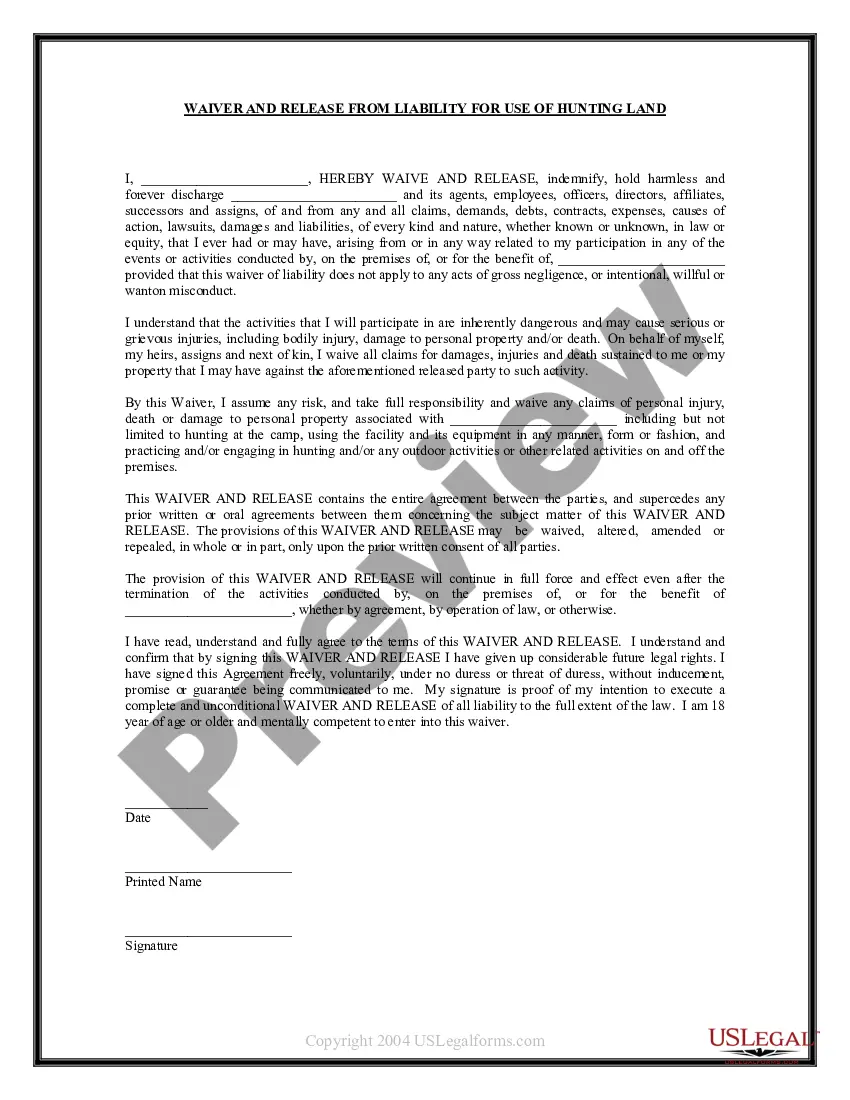
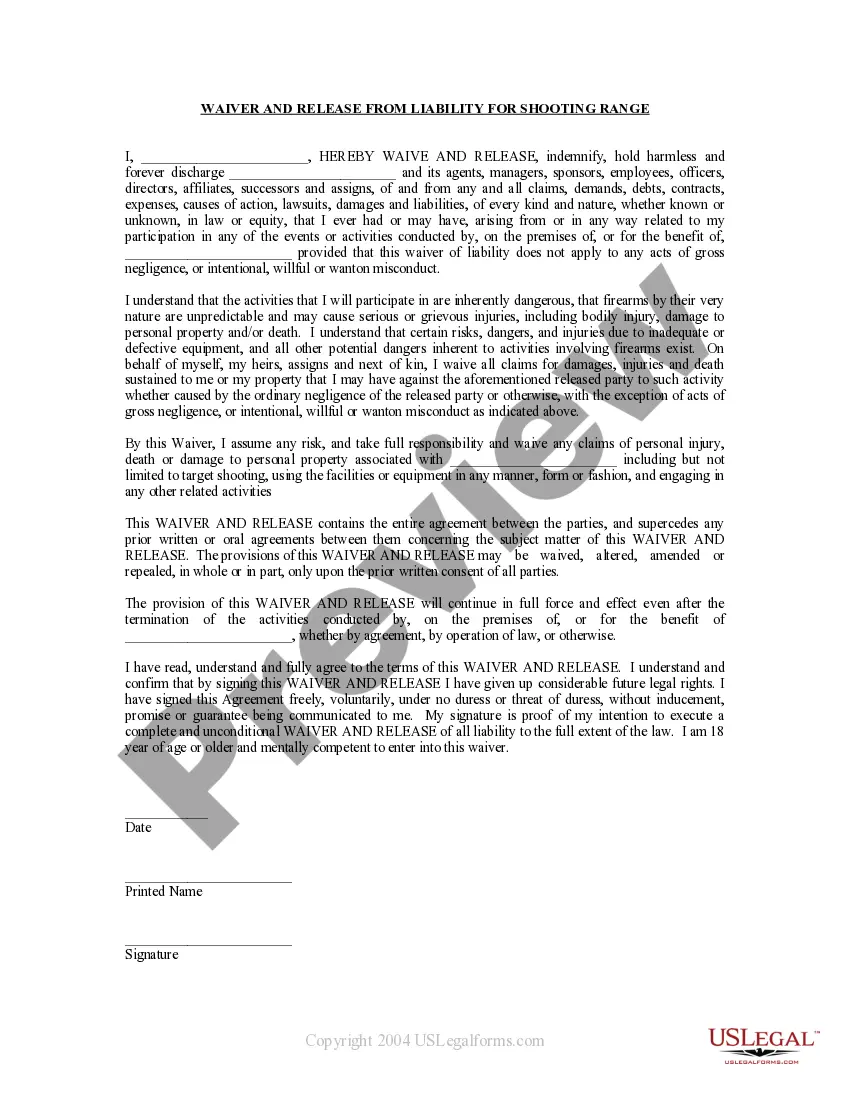
Courts vary in their approach to enforcing releases depending on the particular facts of each case, the effect of the release on other statutes and laws, and the view of the court of the benefits of releases as a matter of public policy. Courts do not permit persons to waive their responsibility when they have exercised gross negligence or misconduct that is intentional or criminal in nature. Such an agreement would be deemed to be against public policy because it would encourage dangerous and illegal behavior.
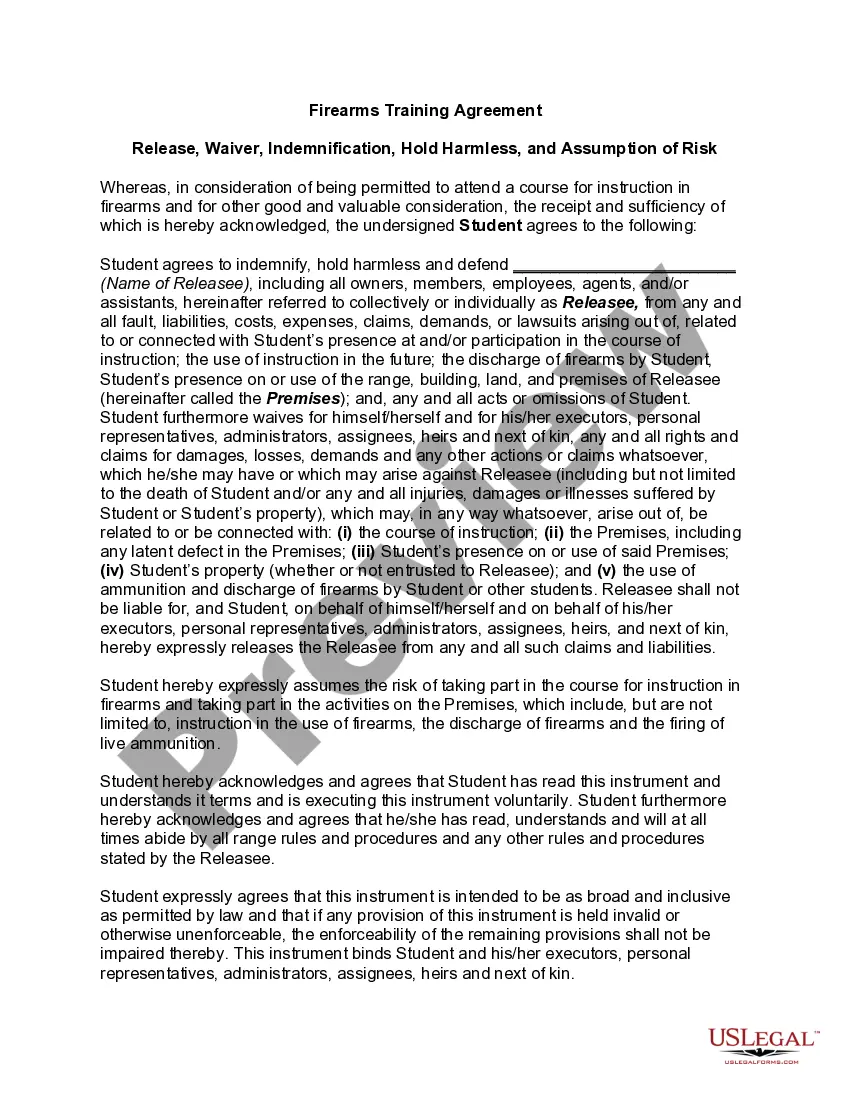
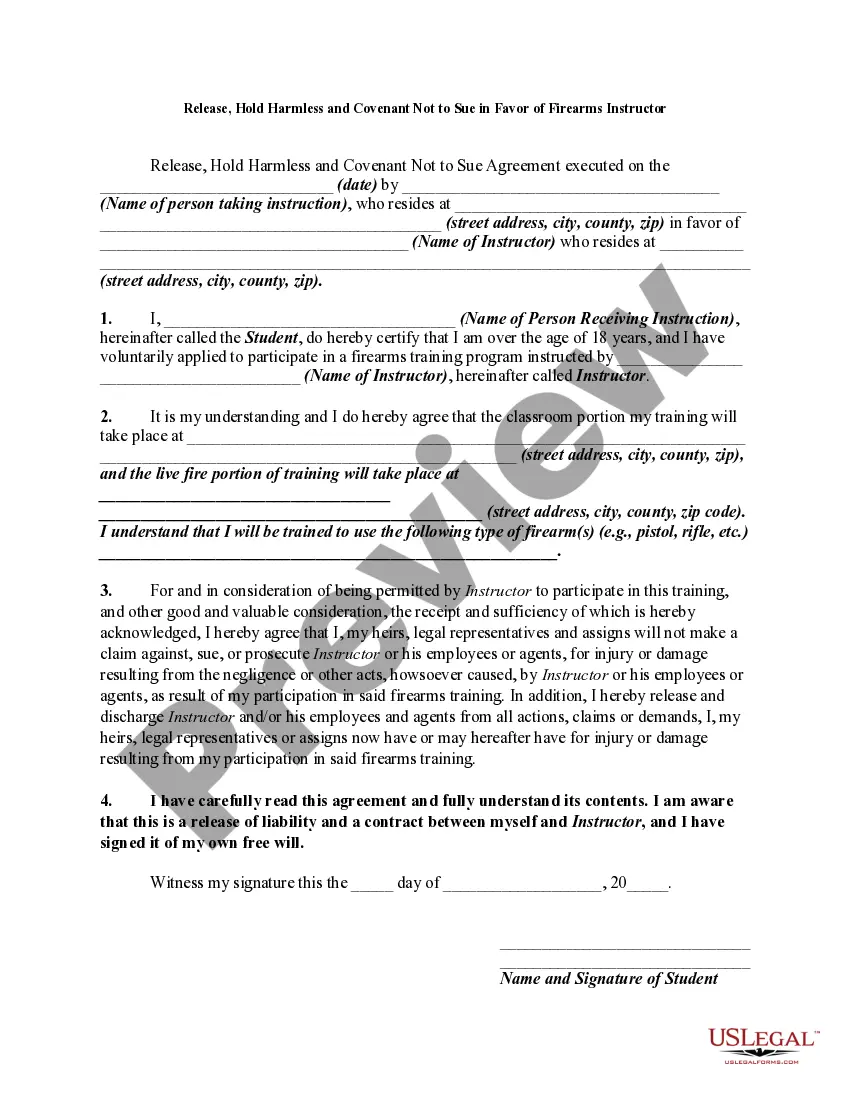
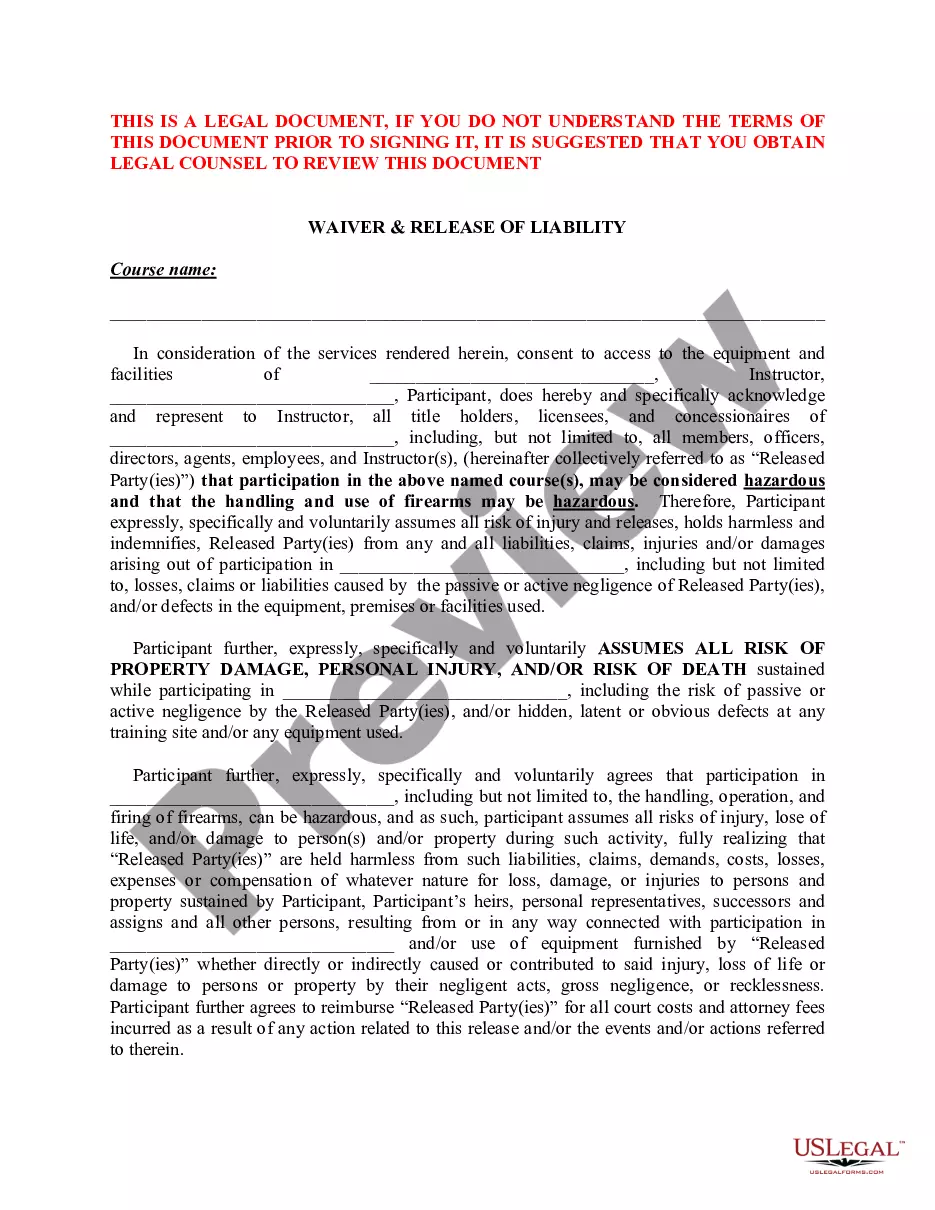
A Firearms Training Agreement Release, Waiver, Indemnification, Hold Harmless, and Assumption of Risk is a document that outlines the responsibilities and liabilities of a firearms training instructor and a participant. It releases the instructor from any liability for injuries or damages that may result from the firearms training course. It also outlines the participant’s acceptance of the risks associated with the firearms training course. The agreement typically consists of five different components: 1. Release — The participant releases the instructor from any liability for injuries or damages that may result from the firearms training course. 2. Waiver — The participant waives any claims or legal action against the instructor for any injuries or damages that may result from the firearms training course. 3. Indemnification — The participant agrees to indemnify the instructor for any claims or legal action brought against the instructor for any injuries or damages that may result from the firearms training course. 4. Hold Harmless — The participant agrees to hold the instructor harmless from any claims or legal action brought against the instructor for any injuries or damages that may result from the firearms training course. 5. Assumption of Risk — The participant acknowledges that they are aware of the risks associated with firearms training and agrees to assume full responsibility for any injuries or damages that may result from the firearms training course.