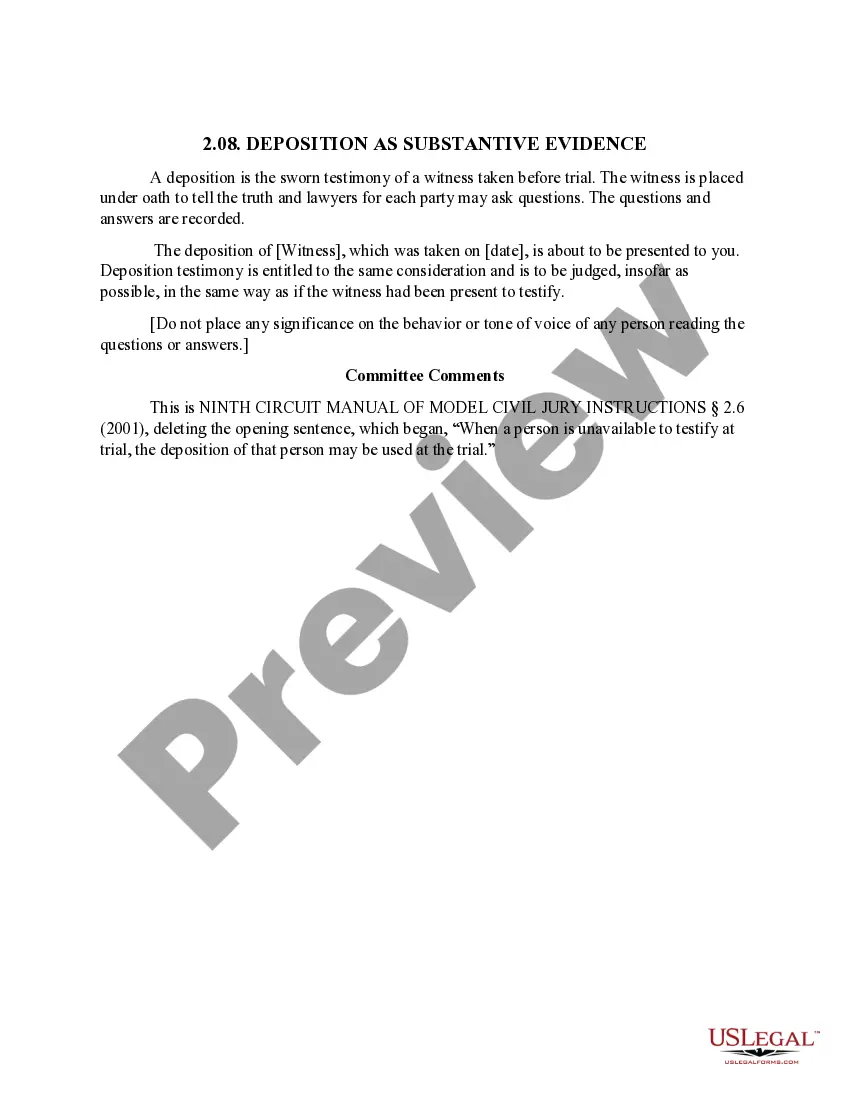
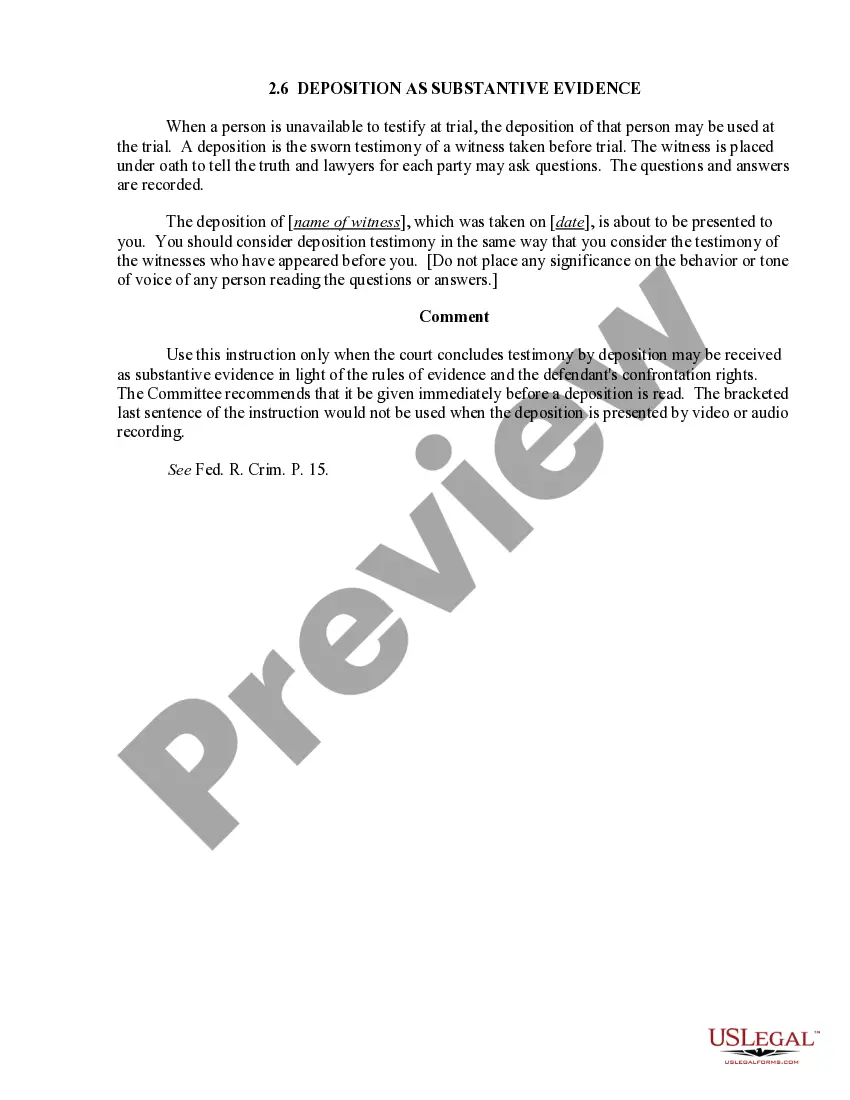
2.08 Deposition as Substantive Evidence
About this form
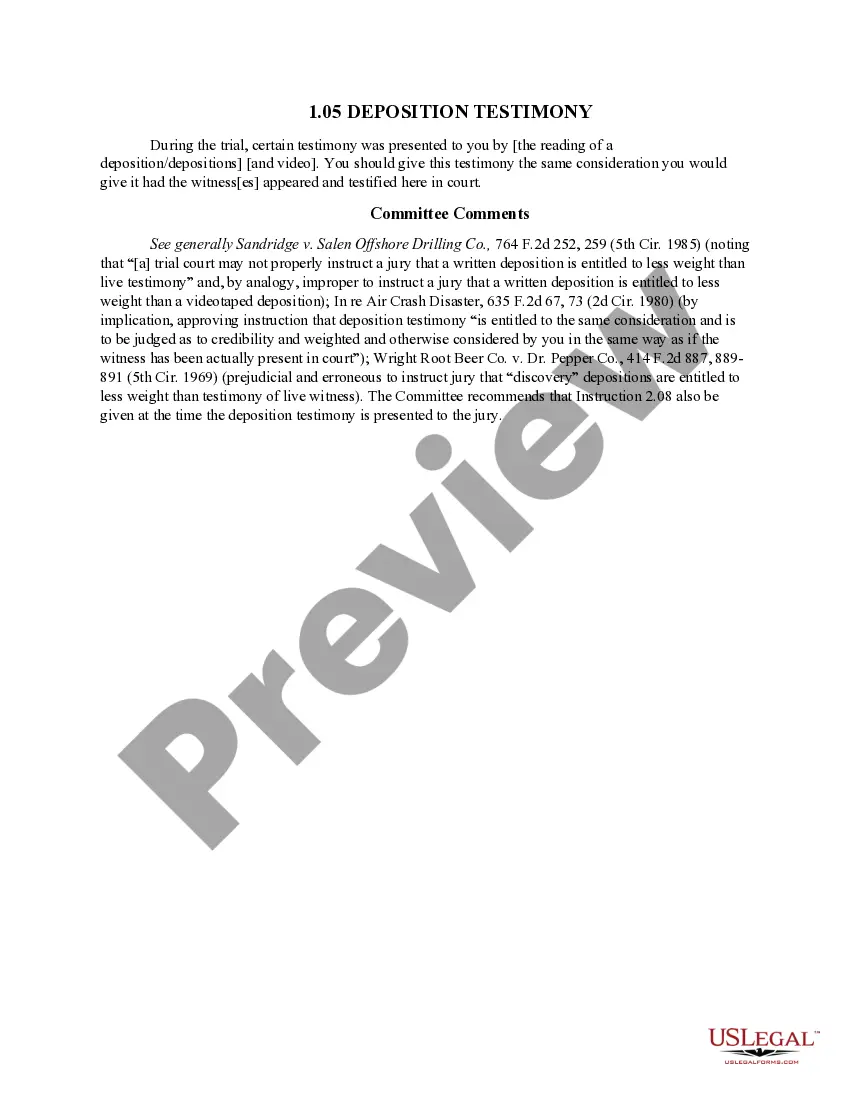
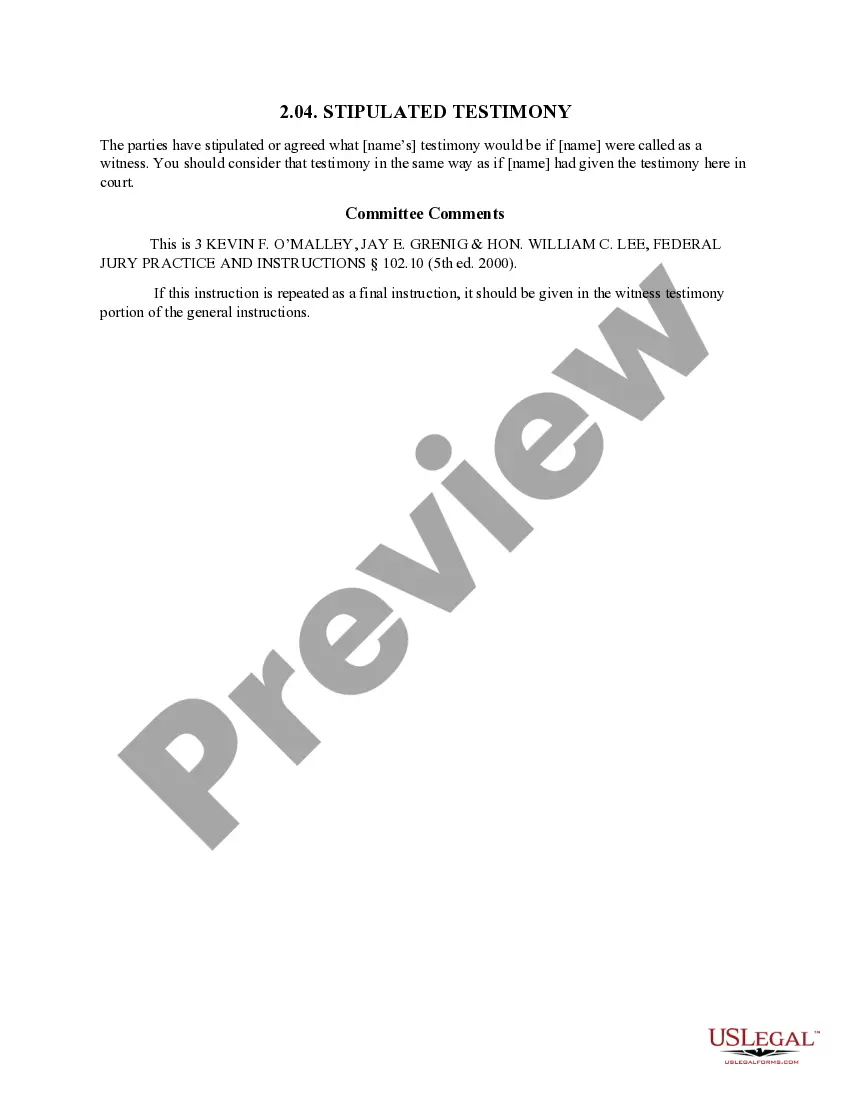
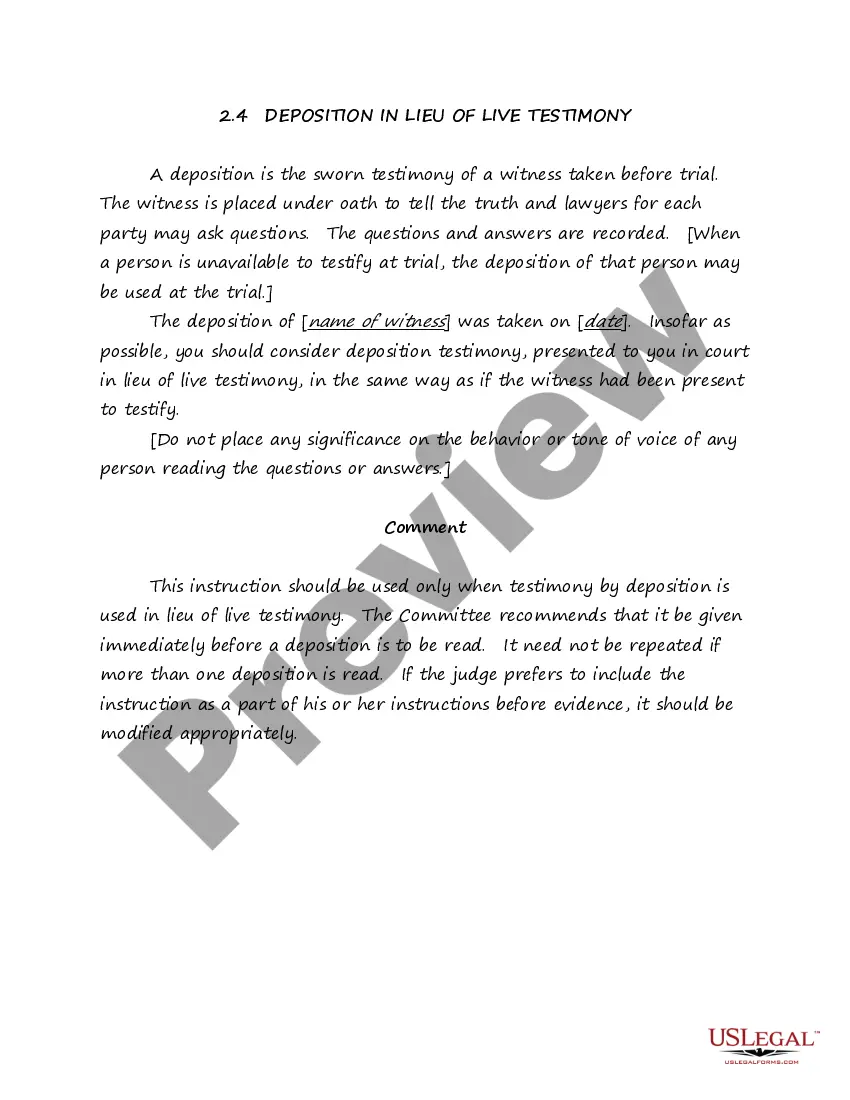
The 2.08 deposition as substantive evidence form allows for the inclusion of a witness's sworn testimony in court without their physical presence. This legal form captures depositions, which serve as a significant piece of evidence in trials. Unlike other forms that may simply collect witness statements, this form is specifically designed to present recorded testimony that is treated as if the witness were testifying live before the jury.
Main sections of this form
- Witness identification: Names the individual whose deposition is being presented.
- Date of deposition: Specifies when the testimony was taken.
- Instructions for jurors: Guidance on interpreting the deposition as if the witness were present.
- Behavior note: Advises jurors not to consider the tone or demeanor of the reader.
Common use cases
This form is essential in situations where a witness is unable to attend the trial due to illness, absence, or other constraints. It allows attorneys to present critical testimony that could influence the case outcomes. Utilizing this form ensures that key witness insights are not lost and can still be examined by the jury.
Who this form is for
- Attorneys preparing for trial who require testimonial evidence from witnesses unable to attend.
- Parties involved in civil litigation needing to present previously recorded witness statements.
- Legal representatives seeking to enhance the reliability of their case with substantive evidence.
Completing this form step by step
- Identify the witness by entering their name in the designated section.
- Specify the date when the deposition was taken.
- Include relevant details about the deposition, such as the context of the witness's testimony.
- Ensure that jurors are instructed clearly on how to interpret the deposition as substantive evidence.
- Review all entries for accuracy before submitting in court.
Does this document require notarization?
In most cases, this form does not require notarization. However, some jurisdictions or signing circumstances might. US Legal Forms offers online notarization powered by Notarize, accessible 24/7 for a quick, remote process.
Get your form ready online
Our built-in tools help you complete, sign, share, and store your documents in one place.
Make edits, fill in missing information, and update formatting in US Legal Forms—just like you would in MS Word.
Download a copy, print it, send it by email, or mail it via USPS—whatever works best for your next step.
Sign and collect signatures with our SignNow integration. Send to multiple recipients, set reminders, and more. Go Premium to unlock E-Sign.
If this form requires notarization, complete it online through a secure video call—no need to meet a notary in person or wait for an appointment.
We protect your documents and personal data by following strict security and privacy standards.

Make edits, fill in missing information, and update formatting in US Legal Forms—just like you would in MS Word.

Download a copy, print it, send it by email, or mail it via USPS—whatever works best for your next step.

Sign and collect signatures with our SignNow integration. Send to multiple recipients, set reminders, and more. Go Premium to unlock E-Sign.

If this form requires notarization, complete it online through a secure video call—no need to meet a notary in person or wait for an appointment.

We protect your documents and personal data by following strict security and privacy standards.
Avoid these common issues
- Failing to enter the exact date of the deposition, which may create confusion.
- Not specifying the witness's name clearly, leading to potential misidentification.
- Omitting instructions for jurors on how to handle the deposition evidence.
Benefits of using this form online
- Convenient access: Downloadable form allows instant retrieval and use.
- Editability: Users can customize the form to fit their specific needs seamlessly.
- Reliability: Drafted by licensed attorneys, ensuring legal compliance and proper wording.
Legal use & context
- Depositions are legally recognized as admissible evidence in court when the witness is unavailable.
- The format and wording must align with local legal standards to prevent challenges to admissibility.
- Each jurisdiction may have different rules on how depositions are presented and should be carefully reviewed.
Main things to remember
- The deposition as substantive evidence form is vital for presenting witness testimony in court.
- Proper completion of the form is crucial for the admissibility of the deposition.
- This form is suitable for multi-state use, following federal guidelines.
Looking for another form?
Form popularity
FAQ
Deposition testimony may be used at trial as substantive evidence and for impeachment purposes. The use of such testimony is governed by various civil rules, evidentiary rules, and statutes and case law.
Generally, a deposition transcript and exhibits are part of the record of a case and may be disclosed ingly. Absent a stipulation and protective order, testimony will automatically become part of the public record when the deposition transcript is lodged or filed with the court.
Deposition Transcript An alternative method of authentication for deposition excerpts is simply to include the court reporter's signed certification page. (Greenspan, supra at 523.) Once the deposition testimony is authenticated, it can be considered by the Court as evidence.
Unlike most trial transcripts, a deposition transcript and the audio or video of deposition testimony are not public records. All parties to a case in which a deposition is taken, as well as a deponent are entitled to obtain a copy of a deposition transcript.
The deposition is admissible under the Federal Rules of Evidence if the deponent is present and testifying.
California Evidence Code Section 1291 states that former deposition testimony is admissible in the event the party against whom it is offered ?had the right and opportunity to cross-examine the declarant with an interest and motive similar to that which he has at the hearing.? (Cal. Evid.
You should lay some basic foundation, i.e., you asked the witness, ?Do you recall your deposition was taken on such date, you were sworn to tell the truth, you were given an opportunity to review and make corrections,? etc. You then read the portion of the deposition containing the inconsistent statement.
(1) Any deposition may be used by any party for the purpose of contradicting or impeaching the testimony of deponent as a witness, or for any other purpose permitted by the Federal Rules of Evidence.