Kansas Notice of Suit
What is this form?
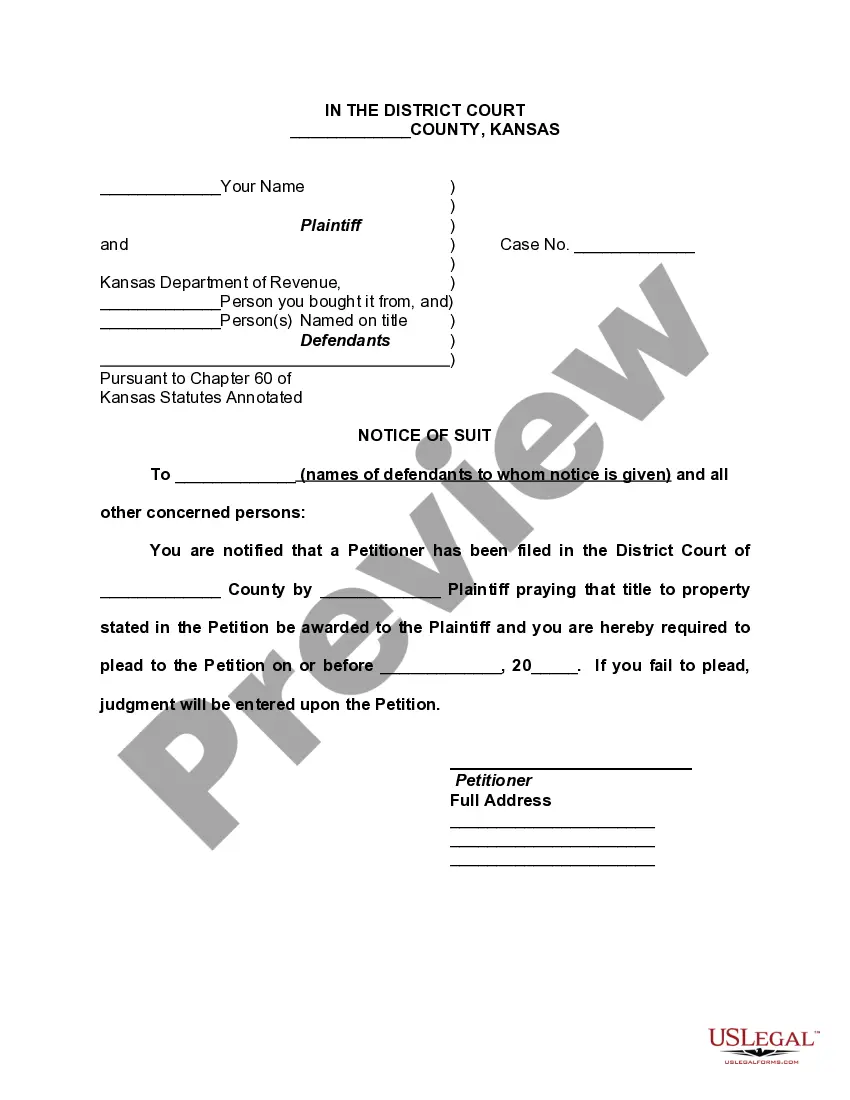
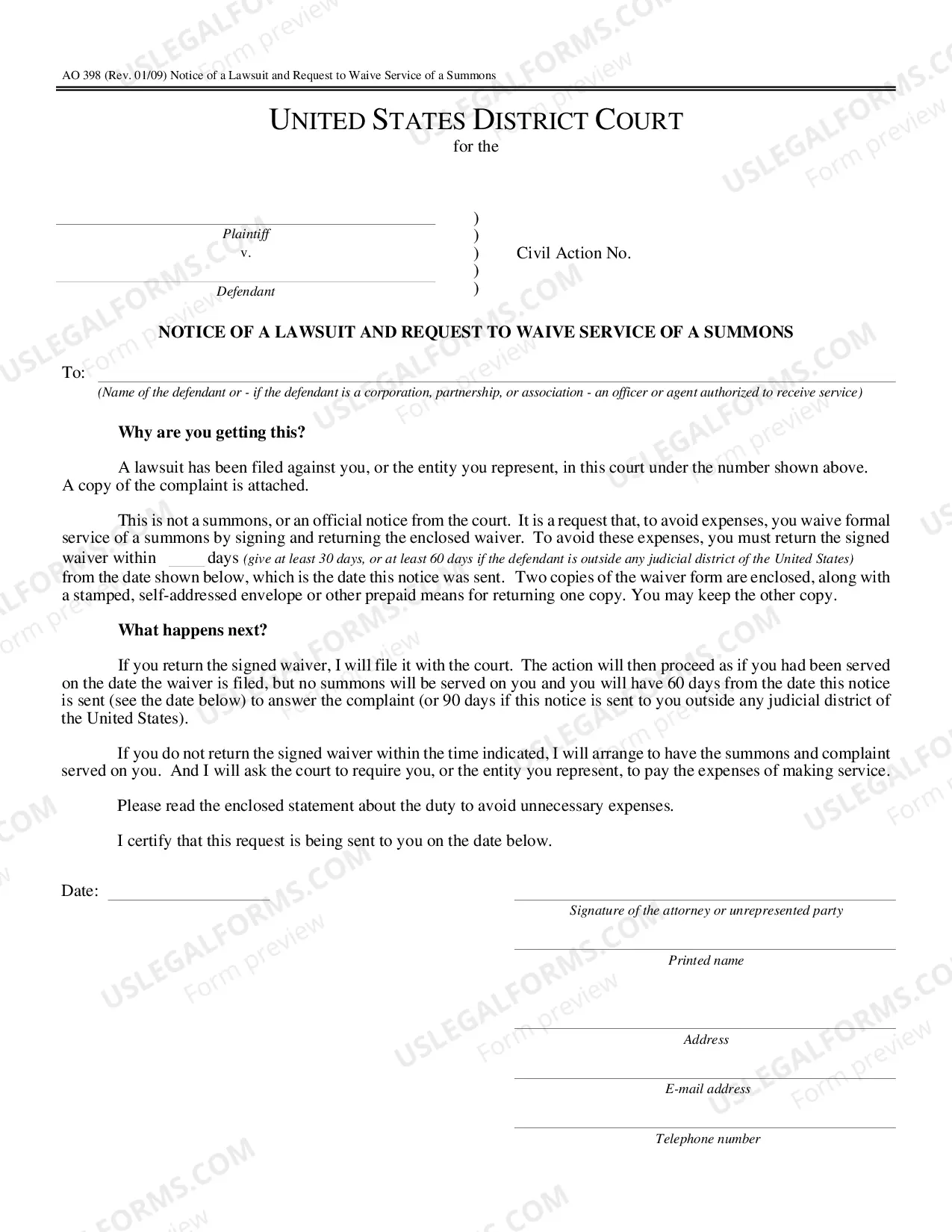
The Notice of Suit is a legal document that informs the other party in a court action that a petition has been filed. It is the initial filing necessary to initiate a case and sets the stage for legal proceedings where the plaintiff seeks a court judgment. Unlike other legal forms, this notice specifically serves to notify defendants about the claims being made against them, allowing them an opportunity to respond.
Key components of this form
- Caption: Includes the court's name and case number.
- Parties involved: Lists the plaintiff and defendants by name.
- Notification clause: Details that a petition has been filed and describes the basis of the suit.
- Response deadline: Specifies the date by which defendants must respond to the petition.
- Petitioner's contact information: Provides the full address of the petitioner for further communication.
When to use this document
This form should be used when you are initiating a lawsuit and need to formally notify the other party or parties involved. It is necessary in situations where you are seeking legal resolution regarding property rights, contractual disputes, or other civil matters that require court intervention. If you do not serve a Notice of Suit, the legal action may not proceed as required.
Who can use this document
This form is intended for:
- Individuals or entities acting as plaintiffs in court cases.
- Legal representatives who are filing a suit on behalf of a party.
- Those involved in disputes requiring formal legal notification to other parties.
Steps to complete this form
- Identify the parties: Enter the names of the plaintiff and defendants in the appropriate sections of the form.
- Specify the court: Fill in the name of the district court and the county where the suit is filed.
- Complete the petition description: Briefly describe the nature of the petition being filed.
- Enter the response deadline: Fill in the due date by which the defendants must respond to the notice.
- Add your contact information: Include the petitioner's full address for communication.
Notarization requirements for this form
This form does not typically require notarization unless specified by local law. Always check with your court for specific requirements regarding notarization.
Get your form ready online
Our built-in tools help you complete, sign, share, and store your documents in one place.
Make edits, fill in missing information, and update formatting in US Legal Forms—just like you would in MS Word.
Download a copy, print it, send it by email, or mail it via USPS—whatever works best for your next step.
Sign and collect signatures with our SignNow integration. Send to multiple recipients, set reminders, and more. Go Premium to unlock E-Sign.
If this form requires notarization, complete it online through a secure video call—no need to meet a notary in person or wait for an appointment.
We protect your documents and personal data by following strict security and privacy standards.

Make edits, fill in missing information, and update formatting in US Legal Forms—just like you would in MS Word.

Download a copy, print it, send it by email, or mail it via USPS—whatever works best for your next step.

Sign and collect signatures with our SignNow integration. Send to multiple recipients, set reminders, and more. Go Premium to unlock E-Sign.

If this form requires notarization, complete it online through a secure video call—no need to meet a notary in person or wait for an appointment.

We protect your documents and personal data by following strict security and privacy standards.
Typical mistakes to avoid
- Failing to properly identify all parties involved in the lawsuit.
- Not including the correct court and case number.
- Leaving out the response deadline, which can lead to default judgments.
- Providing incomplete or incorrect contact information for the petitioner.
Benefits of using this form online
- Convenience of immediate access and downloading from anywhere.
- Editability allows users to customize the form to fit their specific situation.
- Reliability of forms drafted by licensed attorneys in compliance with the law.
What to keep in mind
- The Notice of Suit is essential for notifying defendants about legal actions.
- Proper completion ensures that legal procedures are followed correctly.
- Being aware of common mistakes can help avoid complications in legal proceedings.
Looking for another form?
Form popularity
FAQ
To collect on a judgment in Kansas, you may need to file a motion for garnishment or request a lien against the debtor’s property. It’s essential to keep accurate records of all your conversations and attempts to collect. Utilizing the Kansas Notice of Suit can make the process clearer for the debtor. USLegalForms provides tools and templates that simplify these actions and ensure you are fully prepared.
To get a divorce fast and easy in Kansas, both spouses must agree on the major issues, such as property division and child custody. Utilizing online platforms like USLegalForms allows you to prepare necessary paperwork quickly. This can significantly expedite the process and help ensure your Kansas Notice of Suit is filed correctly, keeping everything on track.
Requesting forms Fill out forms completely. File your petition with the clerk of the court office in your county. Answer all questions on forms with specific information. Include dates, times, and a clear description of events.
You can get a petition online at .kscourts.org. You may then fill out the petition at the clerk's office and file it or you may take it home to complete and file later. The petition must be notarized or signed in front of the clerk of the court. Once you have filed your claim, you will be notified of a hearing date.
Go to the Clerk of the District Court office in the County where the defendant resides. Have with you the name and address of the person being sued. The Clerk will provide you with a small claims filing packet. You may fill out the petition in the office or take it home to complete.
Filing Deadline in Kansas's Small Claims Courts The statute of limitations for Kansas cases is three years for oral contracts, five years for written contracts, and two years for personal injury and property damage cases.
(a) Entry of Appearance. An attorney who enters an appeal or action after the case has been docketed must file with the clerk of the appellate courts an entry of appearance and proof of service on all parties. (3) a justice or judge of the appellate courts issues an order approving the withdrawal.
There are two different filing fees required to file or begin a proceeding in small claims court: The filing fee for a claim of up to and including $500.00 is $47.50. The filing fee for filing a claim from $500.01 to $4000.00 is $67.50.
Clerk's Office Fees FILING FEE for any civil action, suit or proceeding$402.00PETITION TO QUASH ADMINISTRATIVE SUMMONS$49.00PETITION TO QUASH IRS SUMMONS$49.00PETITION FOR REMOVAL$402.00POWER OF ATTORNEY$49.0022 more rows