2.6 Deposition as Substantive Evidence

Does this document require notarization?
Notarization is generally not required for this form. However, certain states or situations might demand it. You can complete notarization online through US Legal Forms, powered by Notarize, using a verified video call available anytime.
Get your form ready online
Our built-in tools help you complete, sign, share, and store your documents in one place.
Make edits, fill in missing information, and update formatting in US Legal Forms—just like you would in MS Word.
Download a copy, print it, send it by email, or mail it via USPS—whatever works best for your next step.
Sign and collect signatures with our SignNow integration. Send to multiple recipients, set reminders, and more. Go Premium to unlock E-Sign.
If this form requires notarization, complete it online through a secure video call—no need to meet a notary in person or wait for an appointment.
We protect your documents and personal data by following strict security and privacy standards.

Make edits, fill in missing information, and update formatting in US Legal Forms—just like you would in MS Word.

Download a copy, print it, send it by email, or mail it via USPS—whatever works best for your next step.

Sign and collect signatures with our SignNow integration. Send to multiple recipients, set reminders, and more. Go Premium to unlock E-Sign.

If this form requires notarization, complete it online through a secure video call—no need to meet a notary in person or wait for an appointment.

We protect your documents and personal data by following strict security and privacy standards.
Looking for another form?

Form popularity
FAQ
California Evidence Code Section 1291 states that former deposition testimony is admissible in the event the party against whom it is offered ?had the right and opportunity to cross-examine the declarant with an interest and motive similar to that which he has at the hearing.? (Cal. Evid.
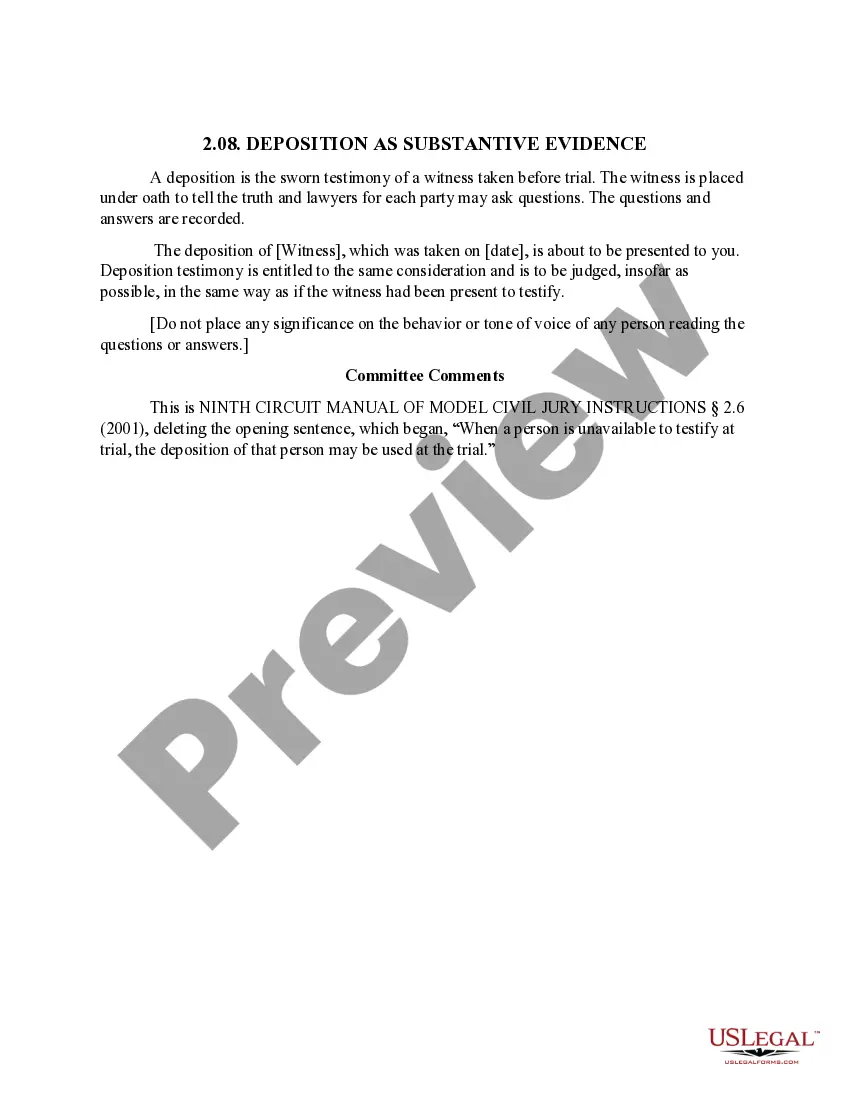
A deposition is a witness's sworn out-of-court testimony. It is used to gather information as part of the discovery process and, in limited circumstances, may be used at trial. The witness being deposed is called the "deponent."
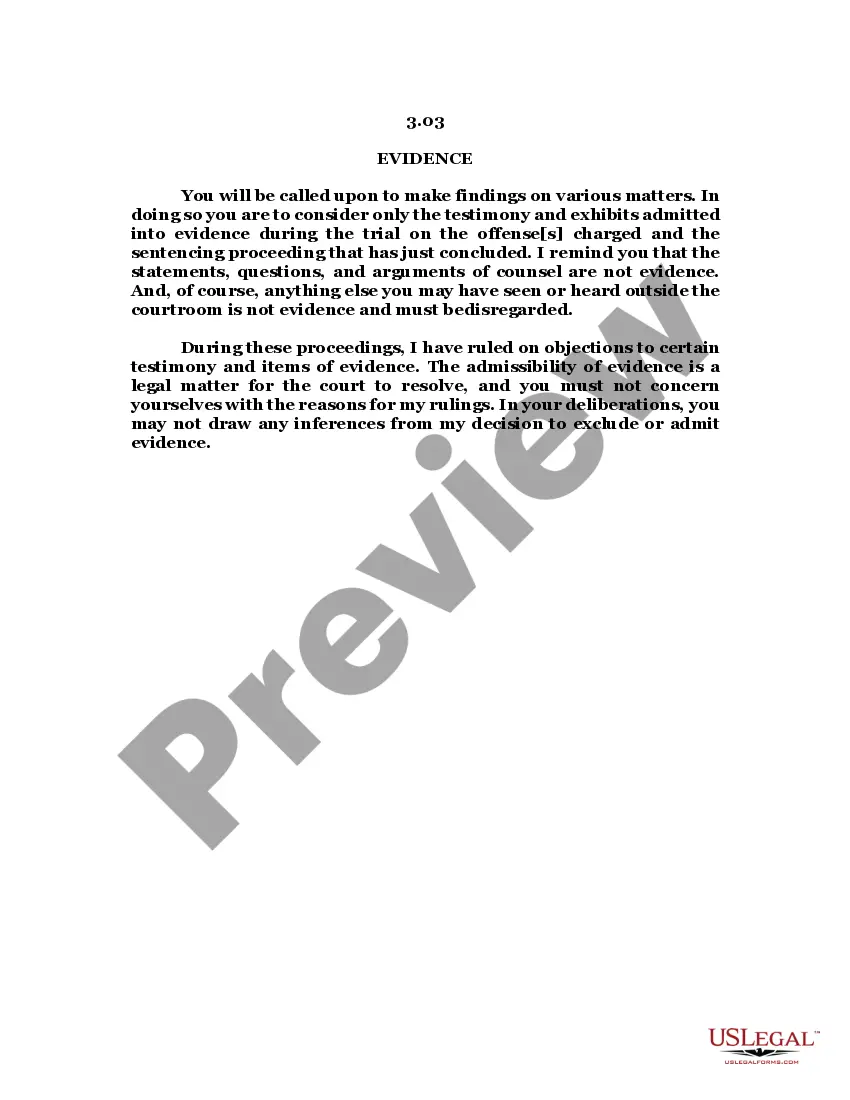
Deposition testimony may be used at trial as substantive evidence and for impeachment purposes. The use of such testimony is governed by various civil rules, evidentiary rules, and statutes and case law.
However, testimony at trial should not bring any new information to light. Unlike a deposition, which allows for a more probing inquiry and compels you to answer, your attorney can object to inappropriate questions if you are testifying. When an objection is raised, the judge will decide whether you must answer.
Rule 15 of the Federal Rules of Criminal Procedure provides for the taking of depositions. The present rule permits only the defendant to move that a deposition of a prospective witness be taken.
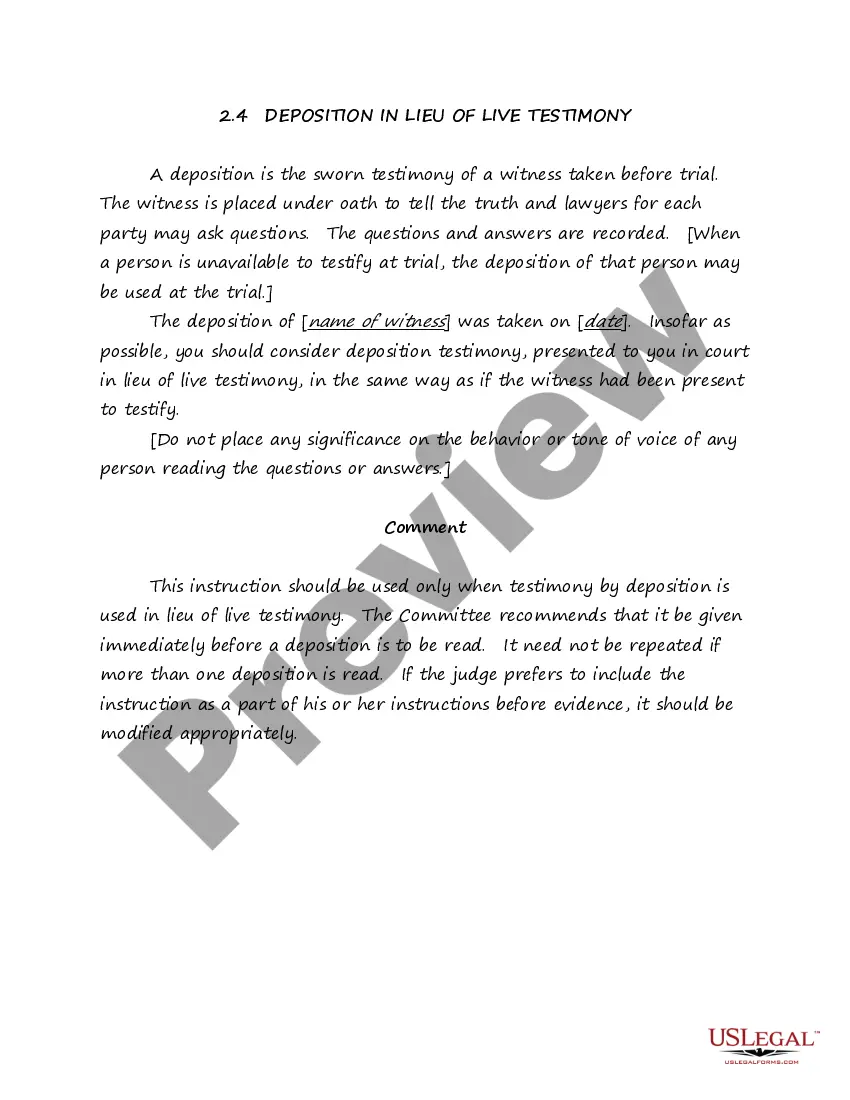
A deposition is the sworn testimony of a witness taken before trial. The witness is placed under oath to tell the truth and lawyers for each party may ask questions. The questions and answers are recorded. When a person is unavailable to testify at trial, the deposition of that person may be used at the trial.
What Should You Not Say During a Deposition? Guessing or Speculating on Things.Saying Things Out of Anger.Rambling.Speaking in Absolutes.Stick to the Facts.Take Your Time When Answering Questions.Use ?Yes? or ?No? Answers Whenever Possible.Get Through Each Question on Its Own.
All in all, your legal team and the team of the opposing party may reach a settlement several weeks or months after deposition. However, deposition can also sometimes lead to a lawsuit; it all depends on the specifics of your case.