Texas Certification of Durable Power of Attorney
Overview of this form
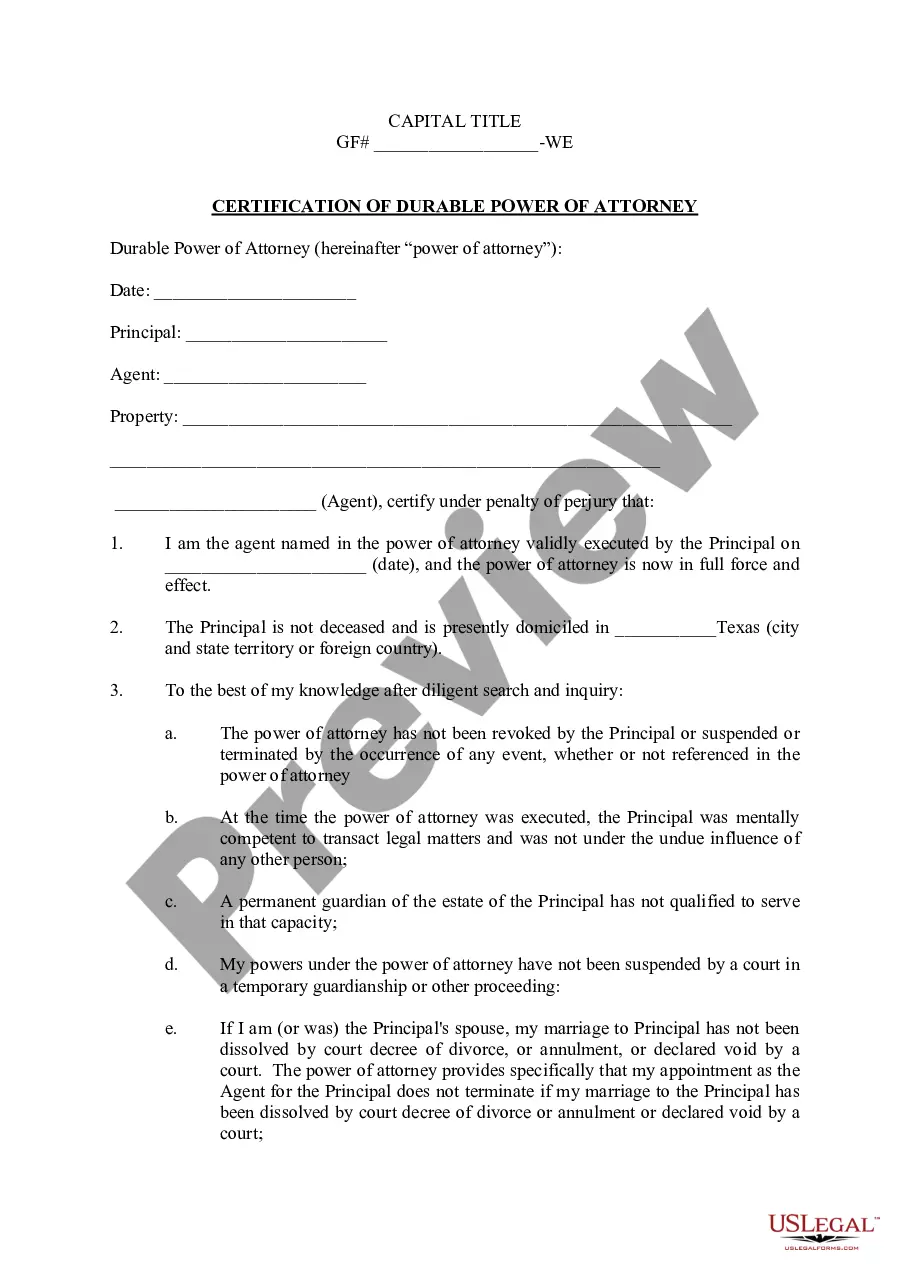
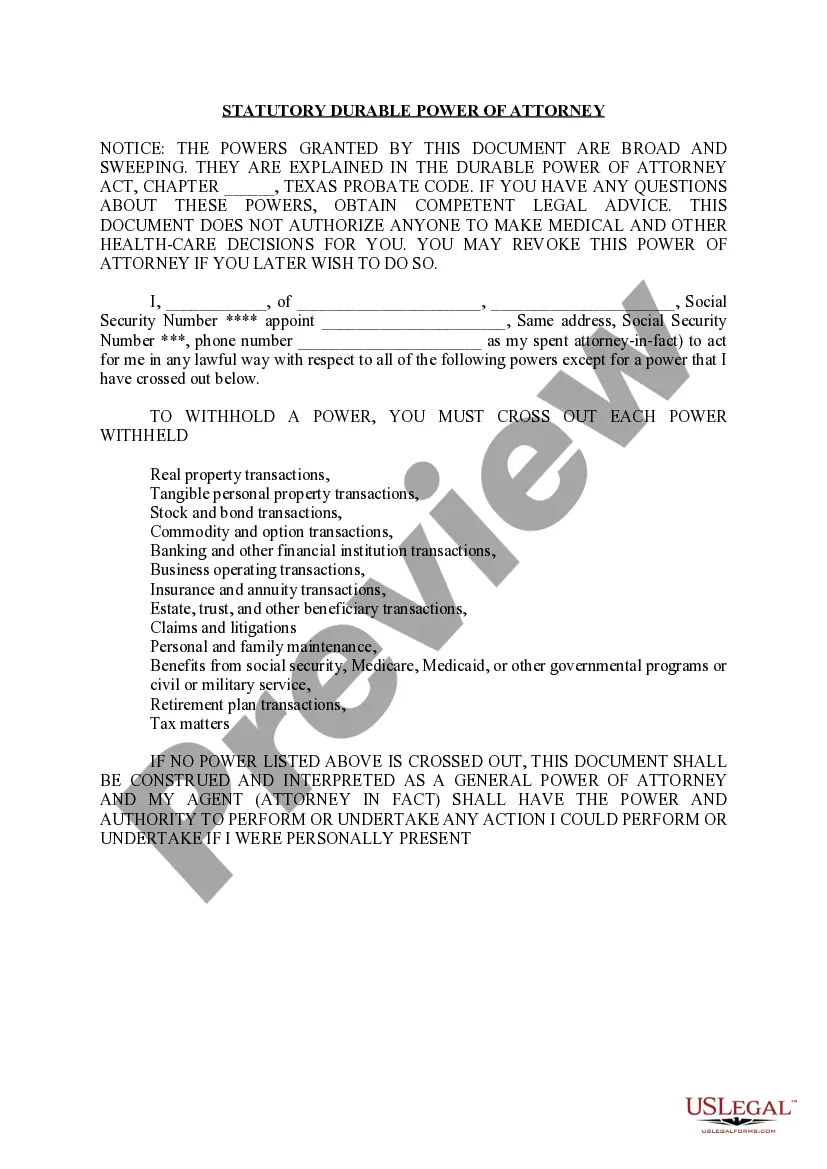
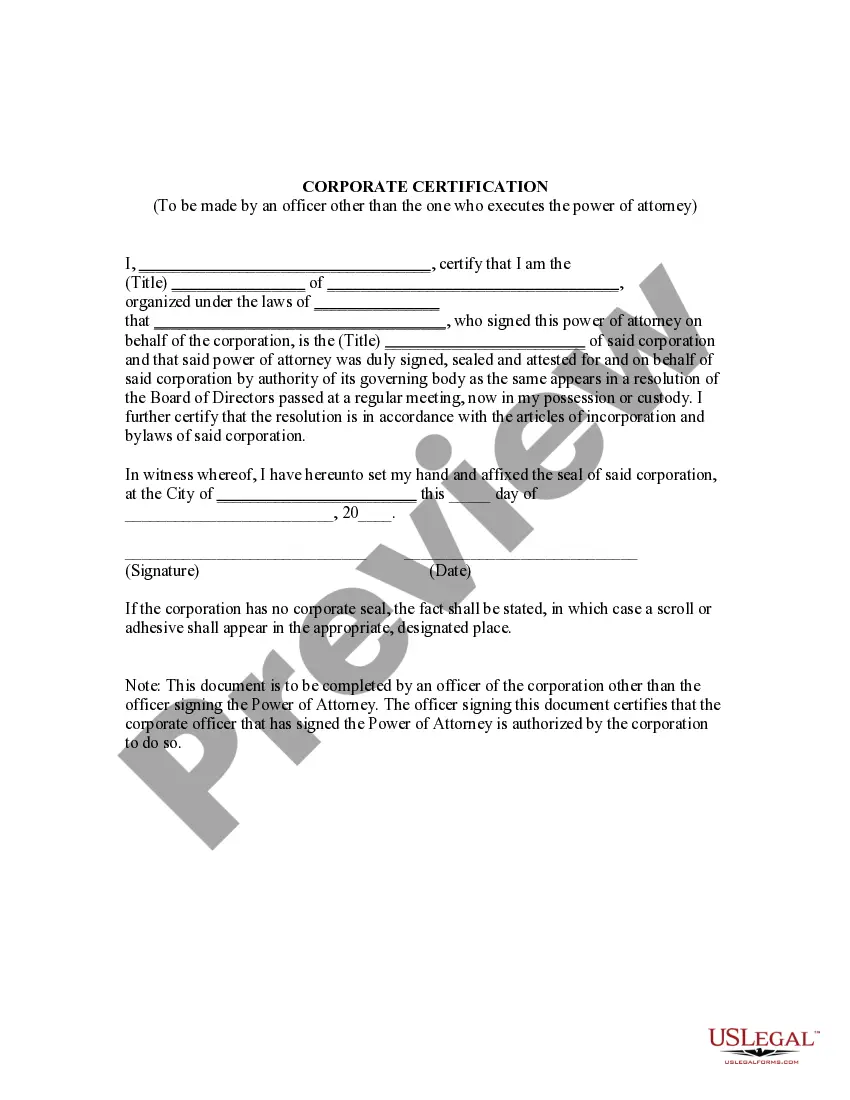
The Certification of Durable Power of Attorney is a legal document that certifies the validity of a Durable Power of Attorney (Durable POA). This form remains in effect even if the principal becomes incapacitated, allowing the designated agent to manage the principal's affairs. Unlike a regular Power of Attorney, the Durable POA is specifically designed to remain functional during times when the principal is unable to make decisions on their own due to mental or physical incapacity.
What’s included in this form
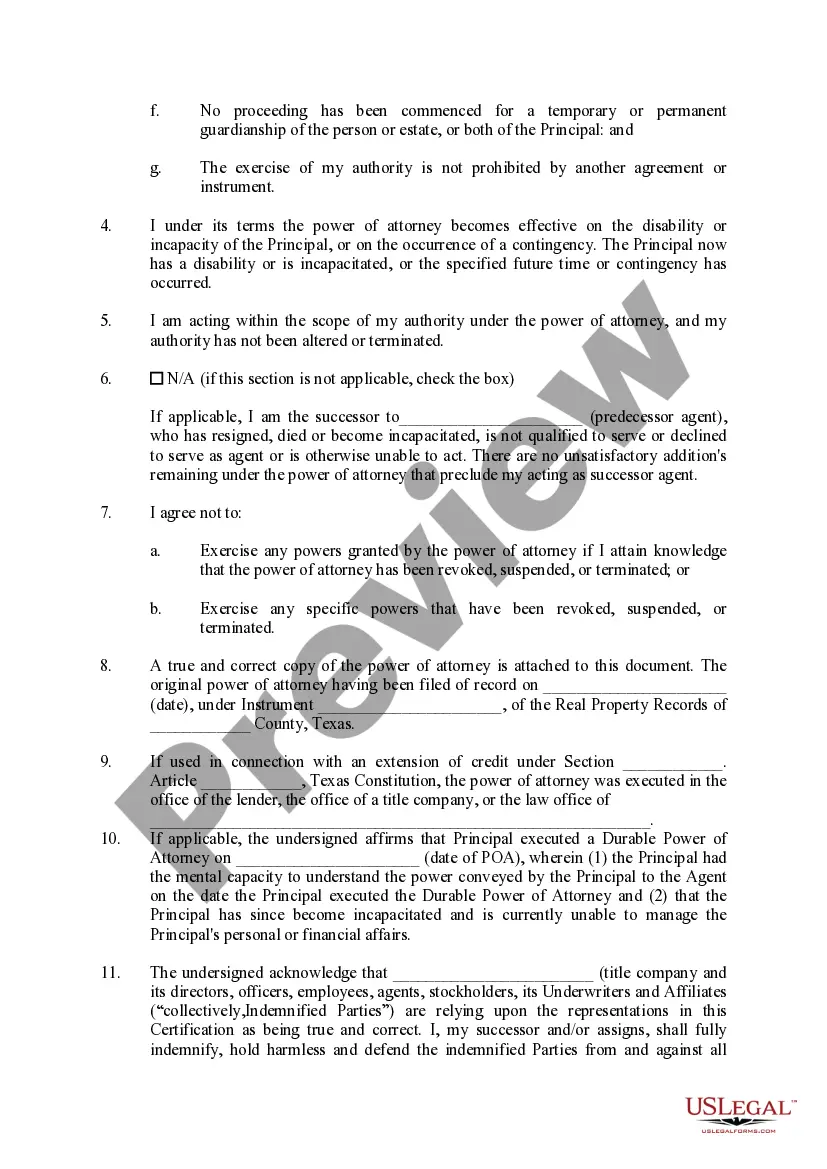
- Principal and agent identification: Names and addresses of the individuals involved.
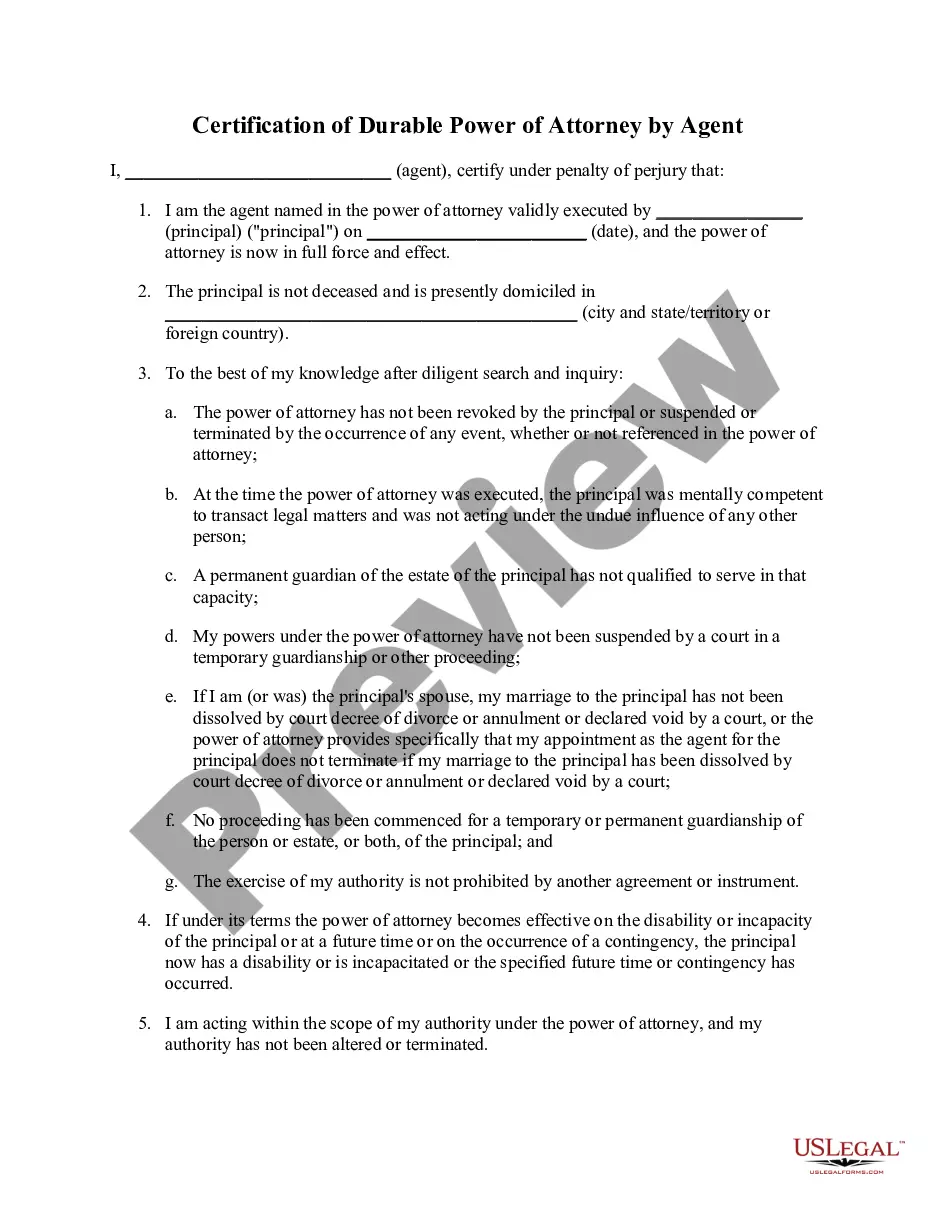
- Statement of authority: Acknowledges the agent's ability to act on behalf of the principal.
- Certification of validity: Confirms the power of attorney is effective and has not been revoked.
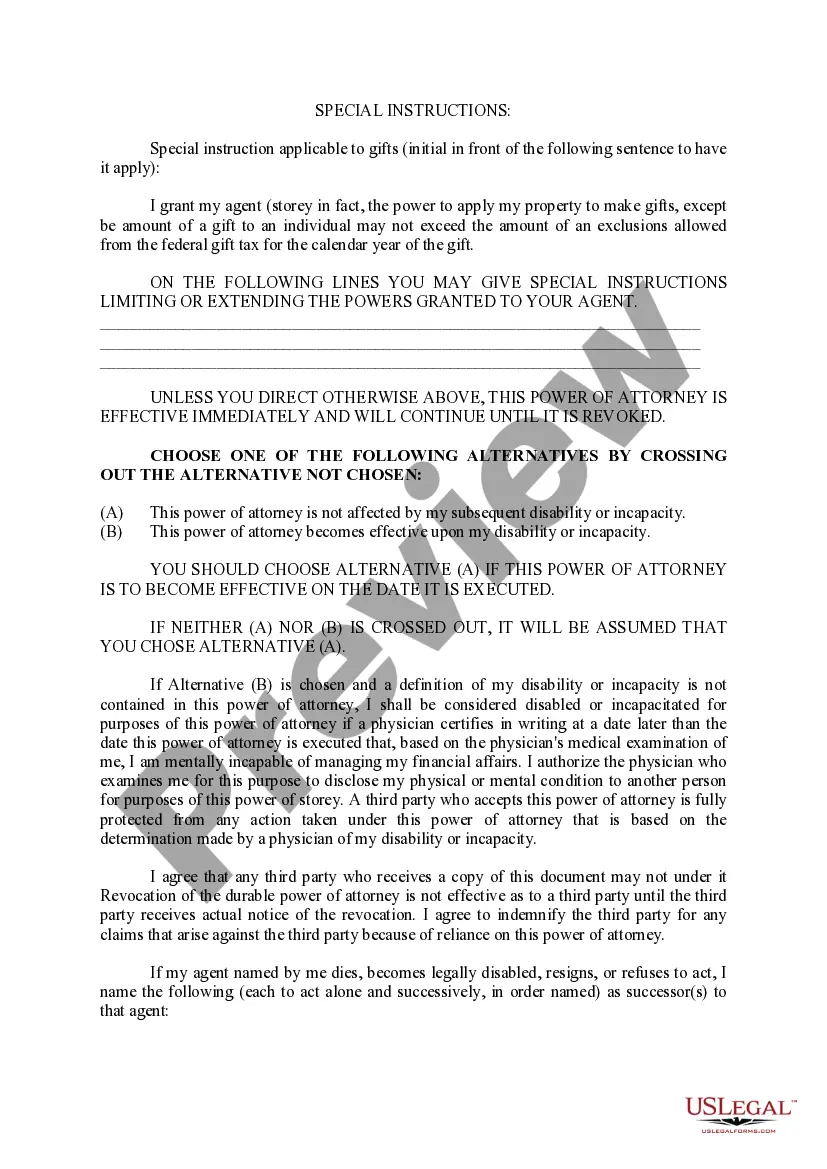
- Scope of authority: Details what actions the agent is permitted to take, including financial transactions and property management.
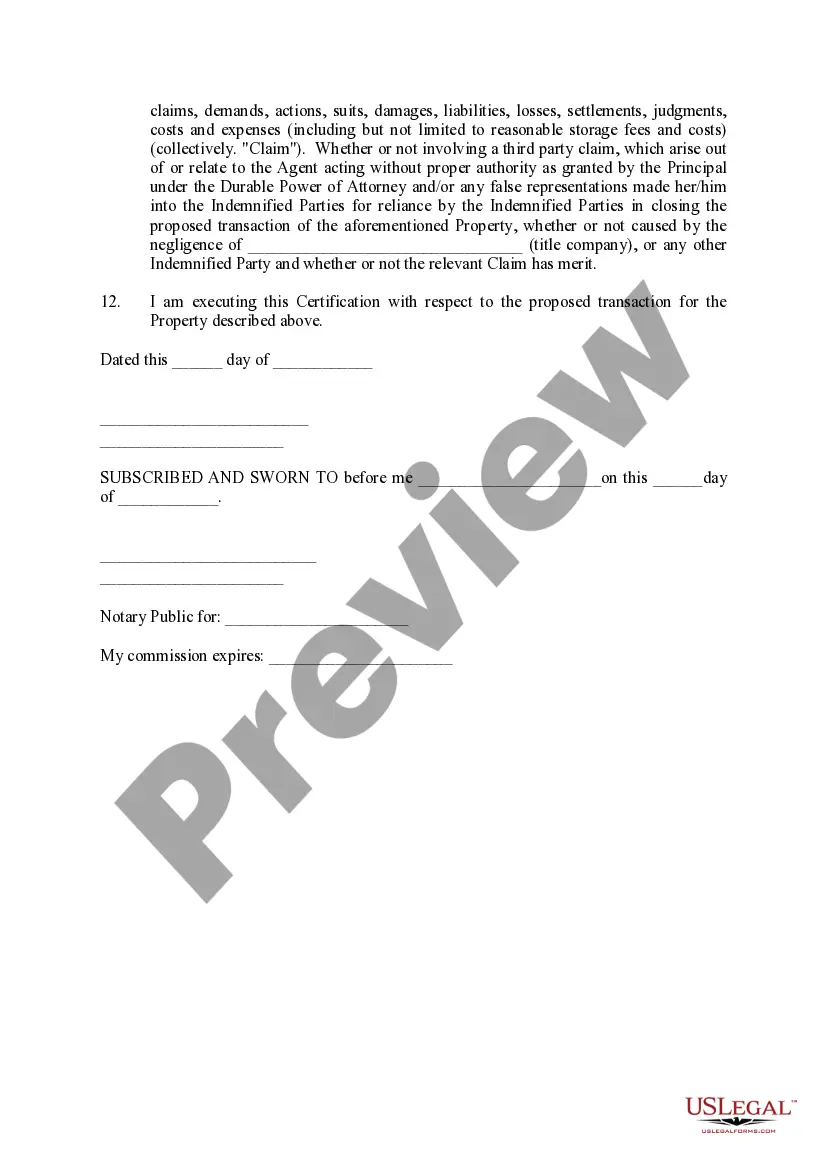
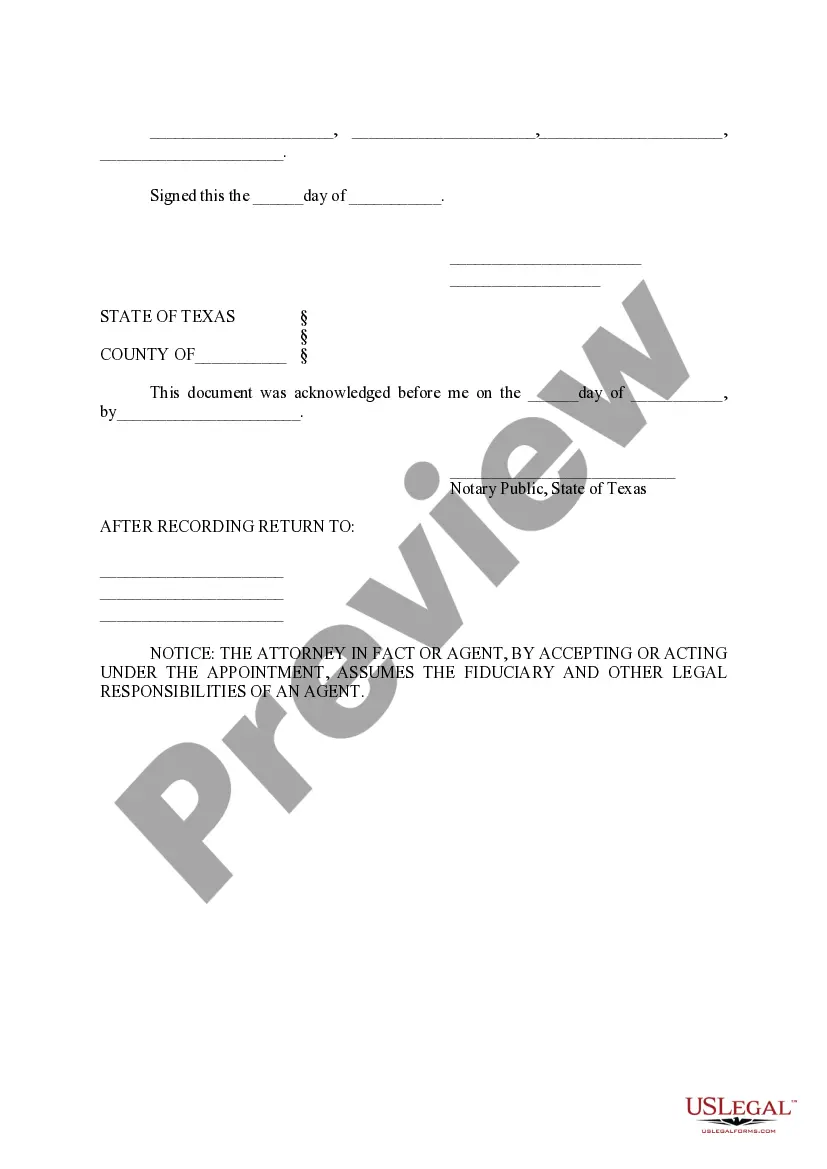
- Notarization section: For authenticating the certification as required by law.
Common use cases
This form is essential when a principal wishes to establish a Durable Power of Attorney to ensure that their financial and legal matters can be managed by a trusted agent in the event they become incapacitated. It is particularly useful for individuals who want to plan for potential future disabilities, such as those facing serious medical issues or aging-related challenges.
Who should use this form
- Individuals over the age of 18 who want to designate someone to manage their affairs.
- People concerned about future disability or incapacity.
- Those needing to empower an agent to handle specific financial or legal decisions on their behalf.
How to complete this form
- Identify the principal and agent by entering their names and addresses in the appropriate fields.
- Specify the date on which the Durable Power of Attorney became effective.
- Complete the sections that detail the principalâs property and the powers granted to the agent.
- Sign and date the document in the presence of a notary public where required.
- Attach a copy of the original Durable Power of Attorney for reference.
Is notarization required?
Yes, this form must be notarized to be legally valid. US Legal Forms offers integrated online notarization services, allowing you to complete your notarization via a secure video call 24/7, ensuring the process is straightforward without requiring travel.
Get your form ready online
Our built-in tools help you complete, sign, share, and store your documents in one place.
Make edits, fill in missing information, and update formatting in US Legal Forms—just like you would in MS Word.
Download a copy, print it, send it by email, or mail it via USPS—whatever works best for your next step.
Sign and collect signatures with our SignNow integration. Send to multiple recipients, set reminders, and more. Go Premium to unlock E-Sign.
If this form requires notarization, complete it online through a secure video call—no need to meet a notary in person or wait for an appointment.
We protect your documents and personal data by following strict security and privacy standards.

Make edits, fill in missing information, and update formatting in US Legal Forms—just like you would in MS Word.

Download a copy, print it, send it by email, or mail it via USPS—whatever works best for your next step.

Sign and collect signatures with our SignNow integration. Send to multiple recipients, set reminders, and more. Go Premium to unlock E-Sign.

If this form requires notarization, complete it online through a secure video call—no need to meet a notary in person or wait for an appointment.

We protect your documents and personal data by following strict security and privacy standards.
Avoid these common issues
- Failing to notarize the document, which may affect its legality.
- Not specifying the correct powers granted to the agent, leading to a lack of clarity.
- Forgetting to update the form if the principal's situation changes, such as a new agent being designated.
Benefits of using this form online
- Convenience of downloading the form from home at any time.
- Editability allows you to fill in the necessary information easily.
- Access to attorney-drafted forms ensures legal accuracy and compliance.
Key takeaways
- The Certification of Durable Power of Attorney is vital for managing affairs in case of incapacity.
- This form must be notarized for legal validity.
- Properly completing the form minimizes the risk of disputes regarding the agent's authority.
Looking for another form?
Form popularity
FAQ
It must be in writing, It must name the person that you want to be your agent, and. It must say how the power of attorney is to be used. For example: If you want a financial durable power of attorney to continue even if you become disabled, it must say: It must be signed and notarized.
You can draft a durable power of attorney by writing out or typing the document, which should include the date, your full name, and speech that clearly identifies the document as a durable power of attorney that applies even in the case of your incapacitation.
Section 489 of the TEXAS PROBATE CODE actually requires recording of the Power of Attorney when it is durable and the durability feature is being relied on in the transaction.
A Texas statutory durable power of attorney only needs to be signed by the person giving the power and notarized.
A statutory or durable power of attorney gives an agent permission to access bank accounts, sell property and make other important decisions when the principal becomes incapacitated or unable to make decisions. It stays in effect until revoked or until the principal dies.
To be valid in Texas, a medical power of attorney must either be: signed by you in the presence of two witnesses, who also sign the document; or. signed by you in the presence of a notary public.
Do I need to file a power of attorney in Texas in order for it to be valid?You do not need to file a power of attorney at the courthouse unless you want your agent to be able to act on your behalf in regards to a real estate transaction.
Texas's statutory form of durable power of attorney is found in Section 752.051 of the Texas Estates Code. It is a financial durable power of attorney - this means that it only allows the agent to handle financial matters. It does not permit the agent to make decisions about the principal's health care.