Rhode Island Divorce Worksheet and Law Summary for Contested or Uncontested Case of over 25 pages - Ideal Client Interview Form
What is this form?
The Divorce Worksheet and Law Summary for Contested or Uncontested Cases is a comprehensive tool that assists individuals contemplating divorce. This form includes crucial information about divorce procedures, definitions of key terms, and worksheets that cover financial details, child support, custody, and visitation arrangements. It is designed to prepare clients for discussions with their attorney, potentially saving time and costs during the legal process.
Main sections of this form
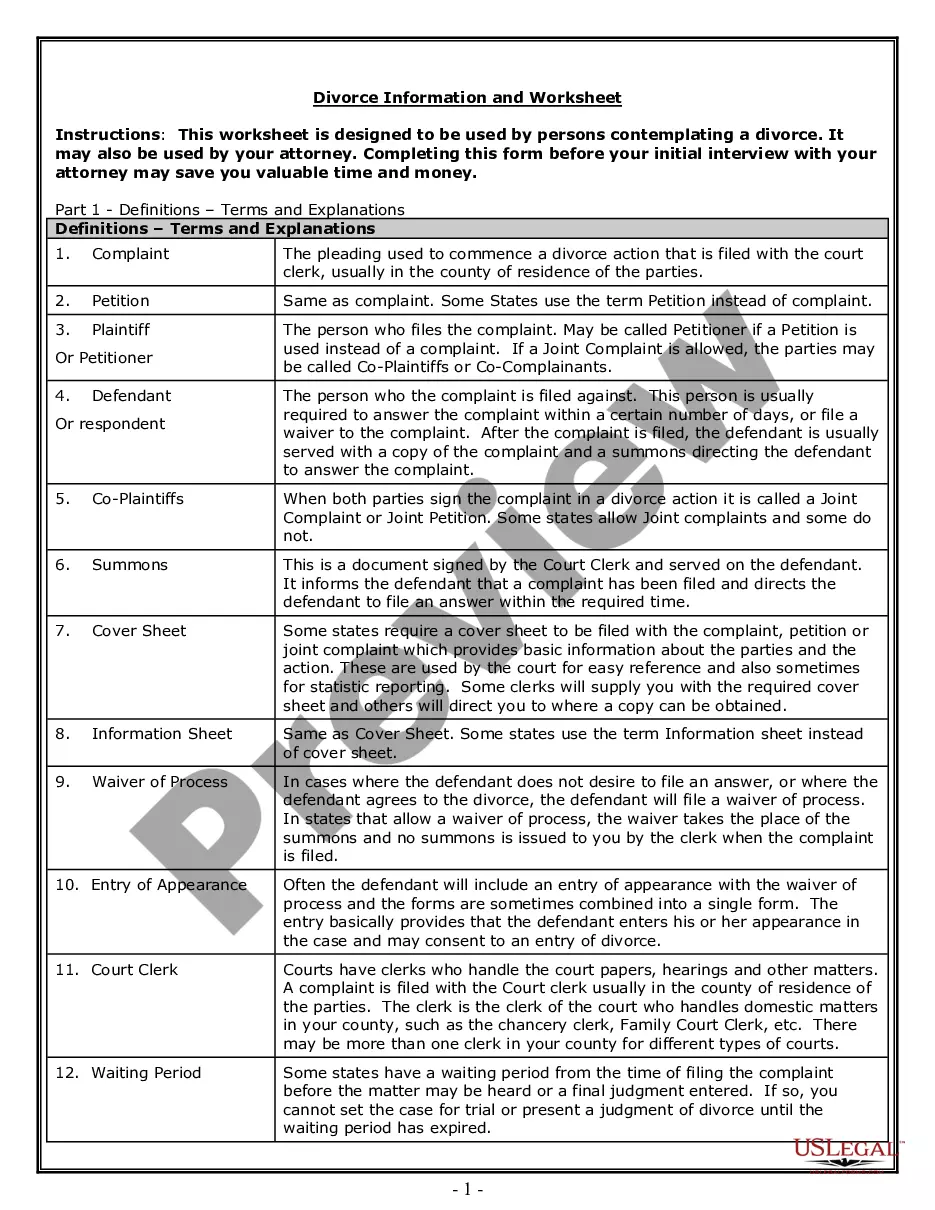
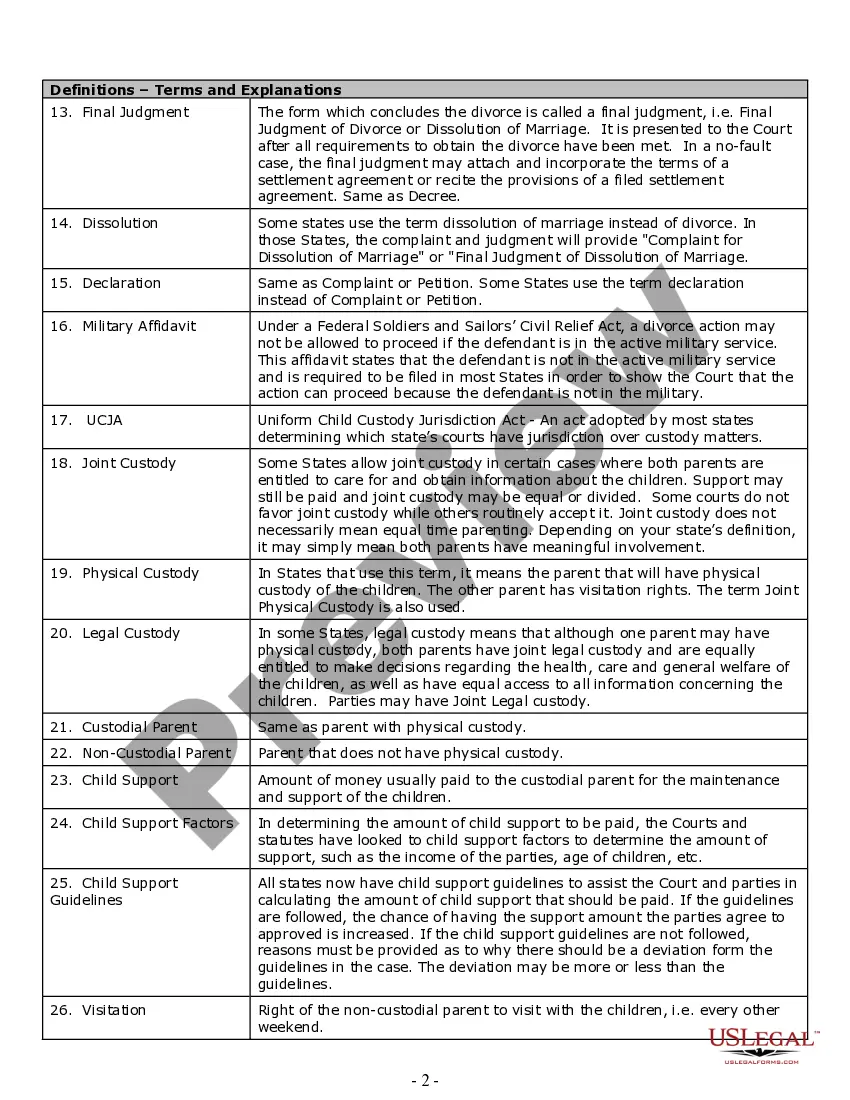
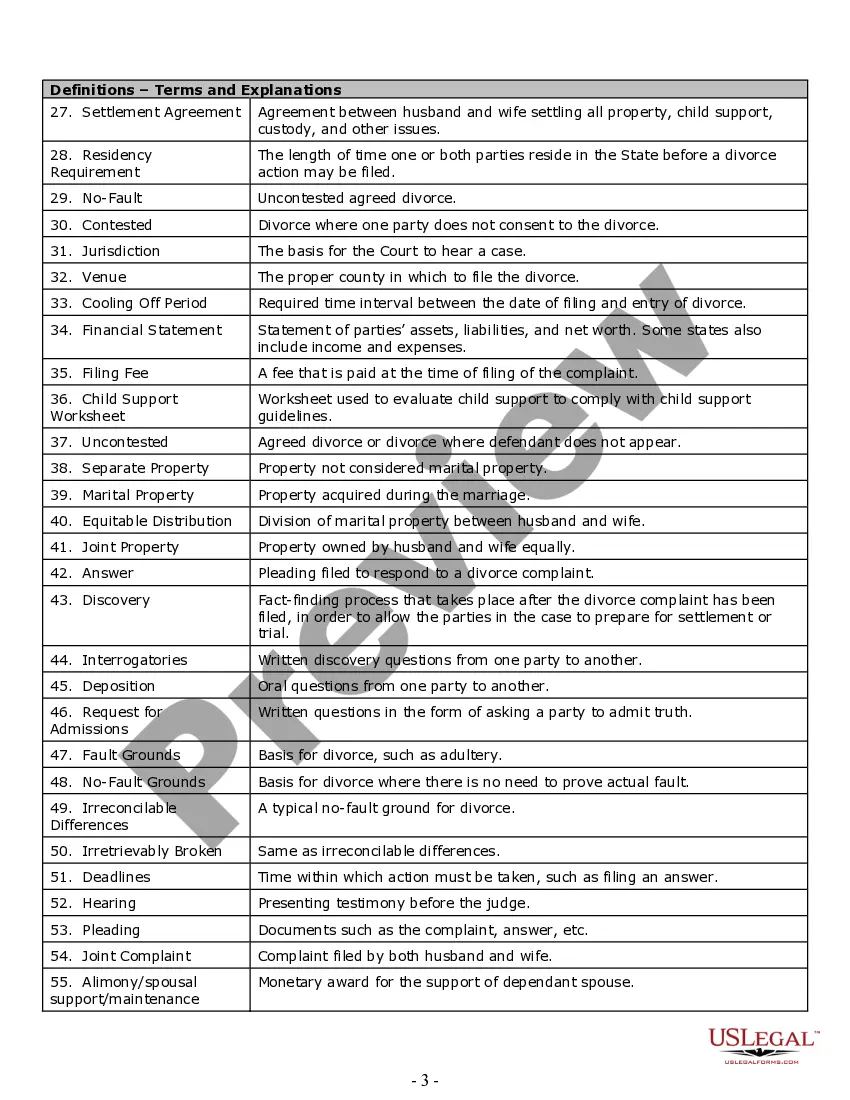
- Definitions and explanations of legal terms related to divorce.
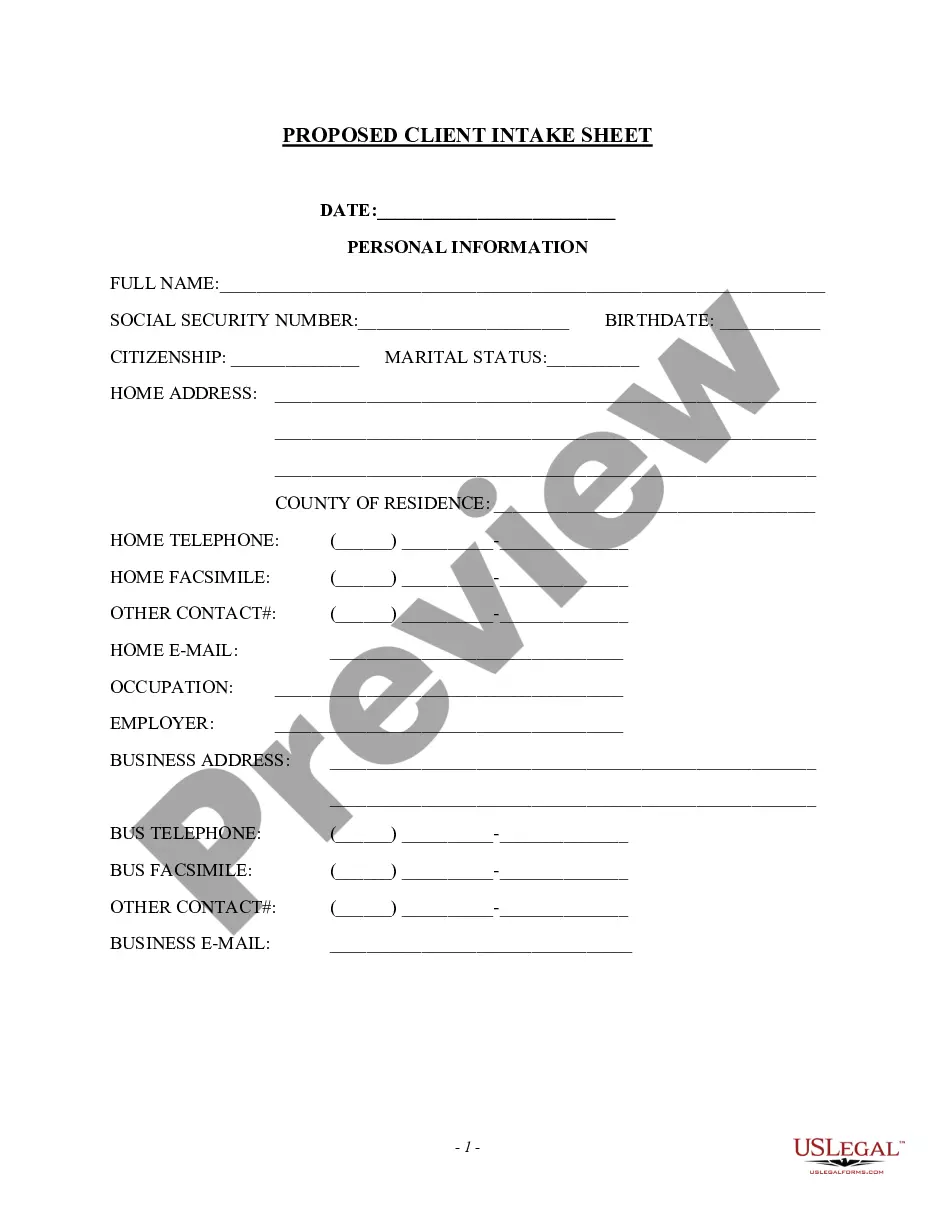
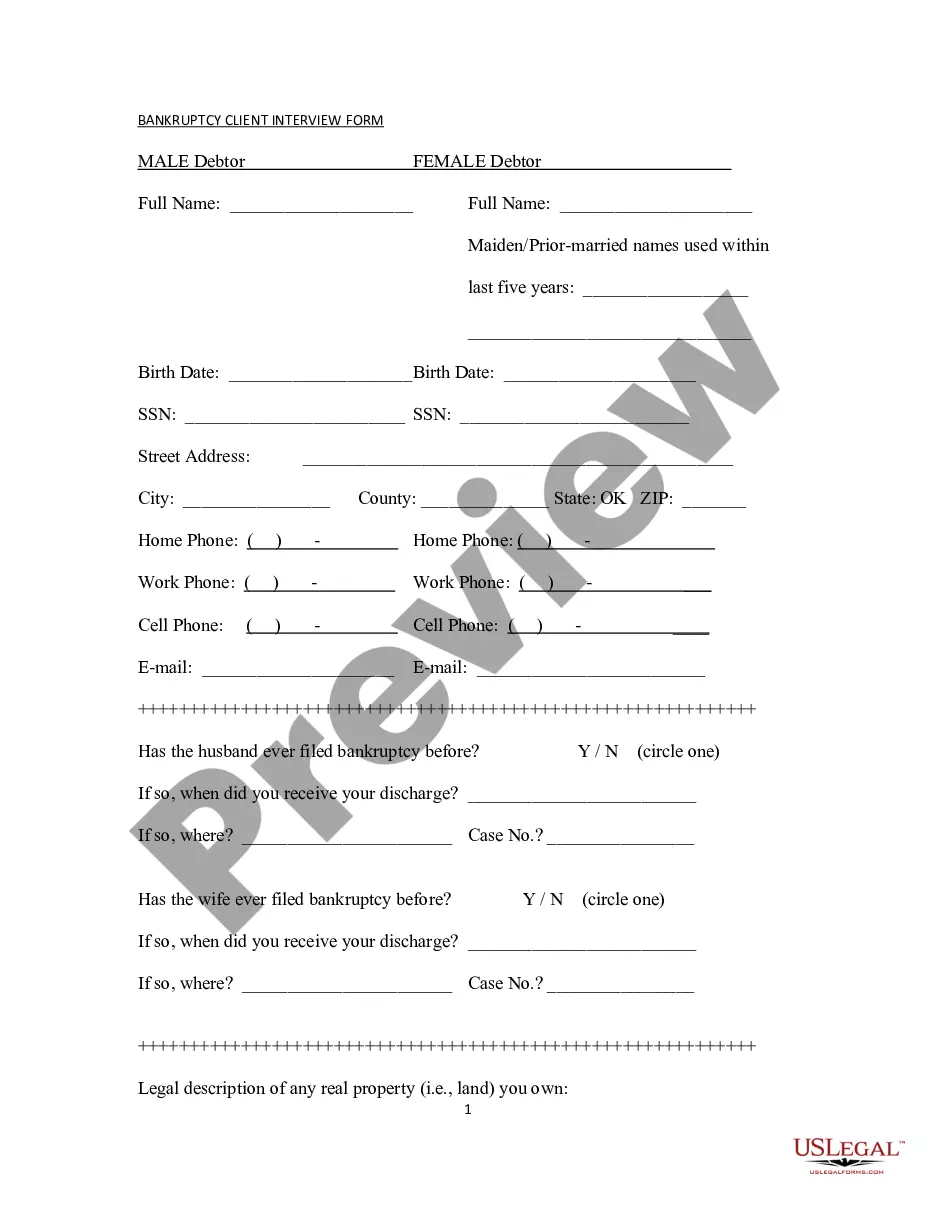
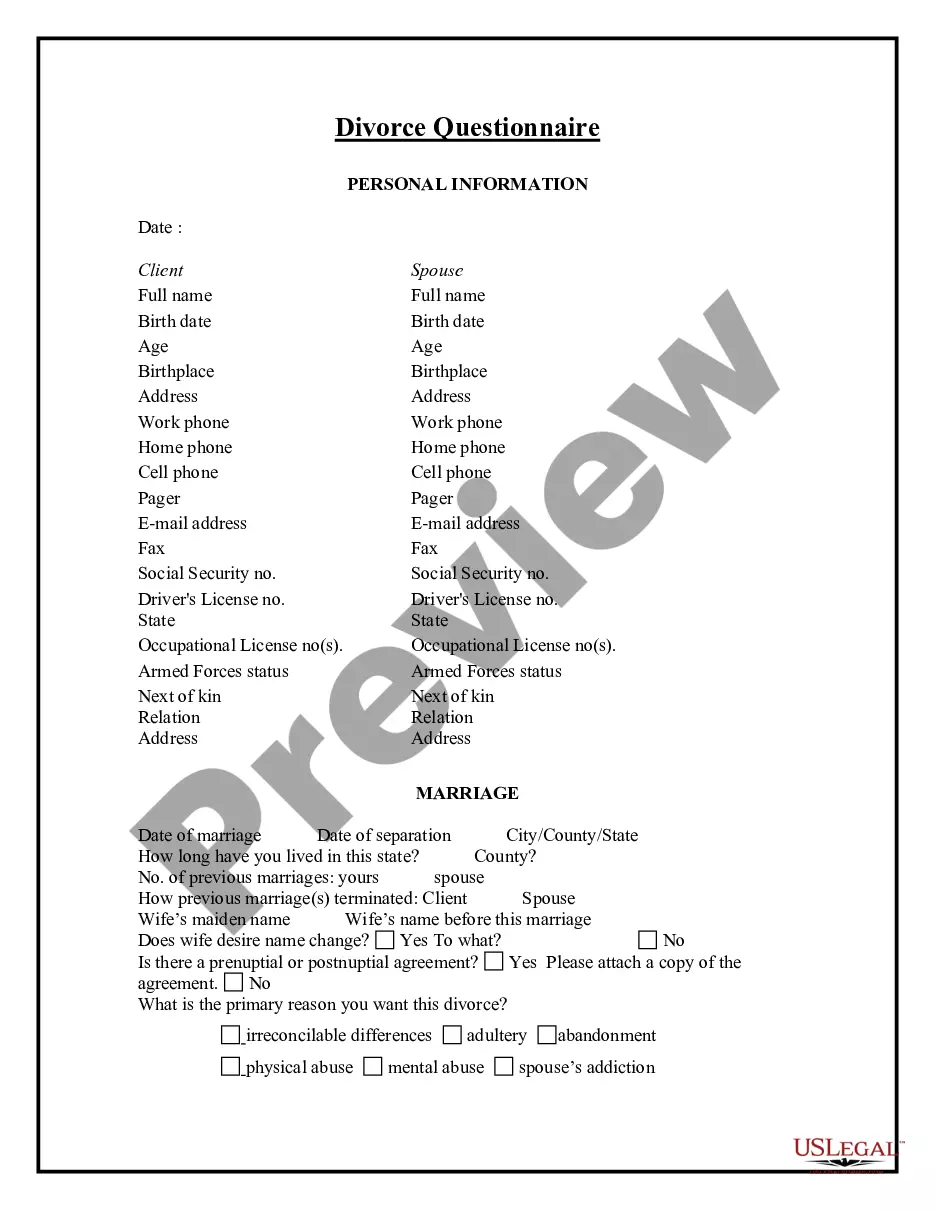
- Personal information sections for both spouses.
- Details regarding children, custody, and support considerations.
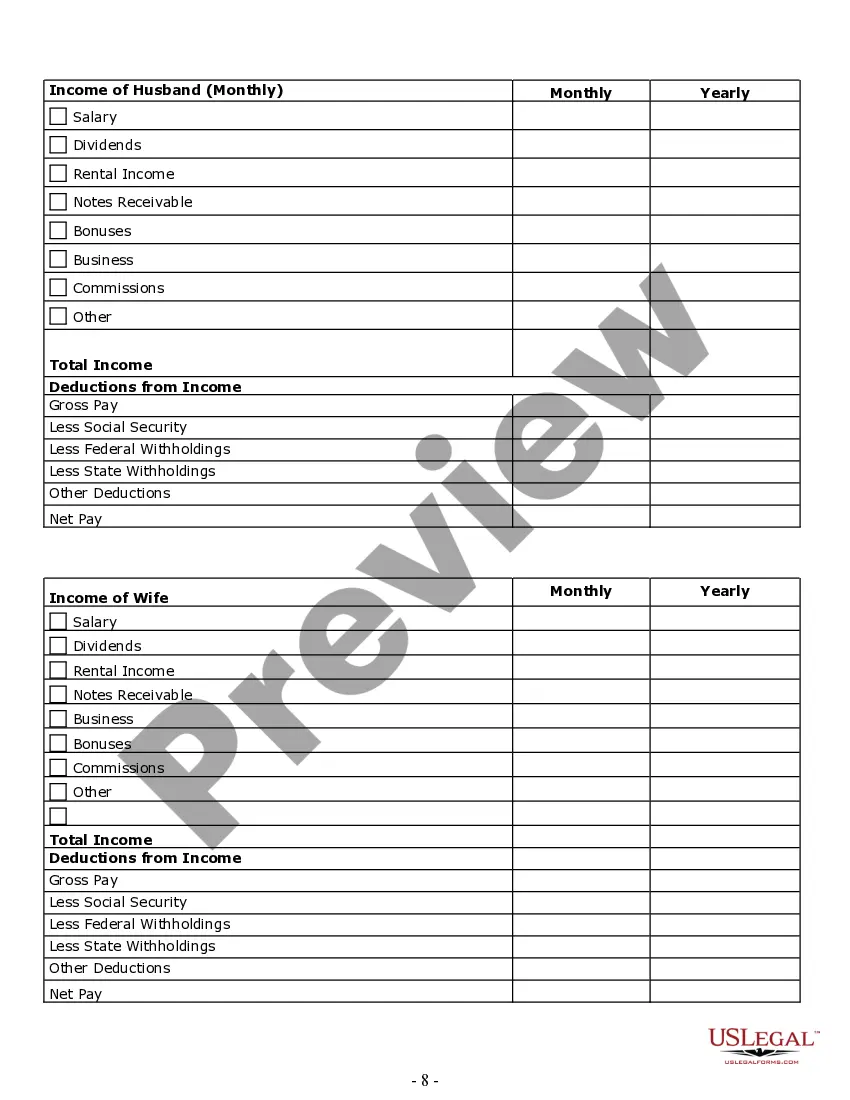
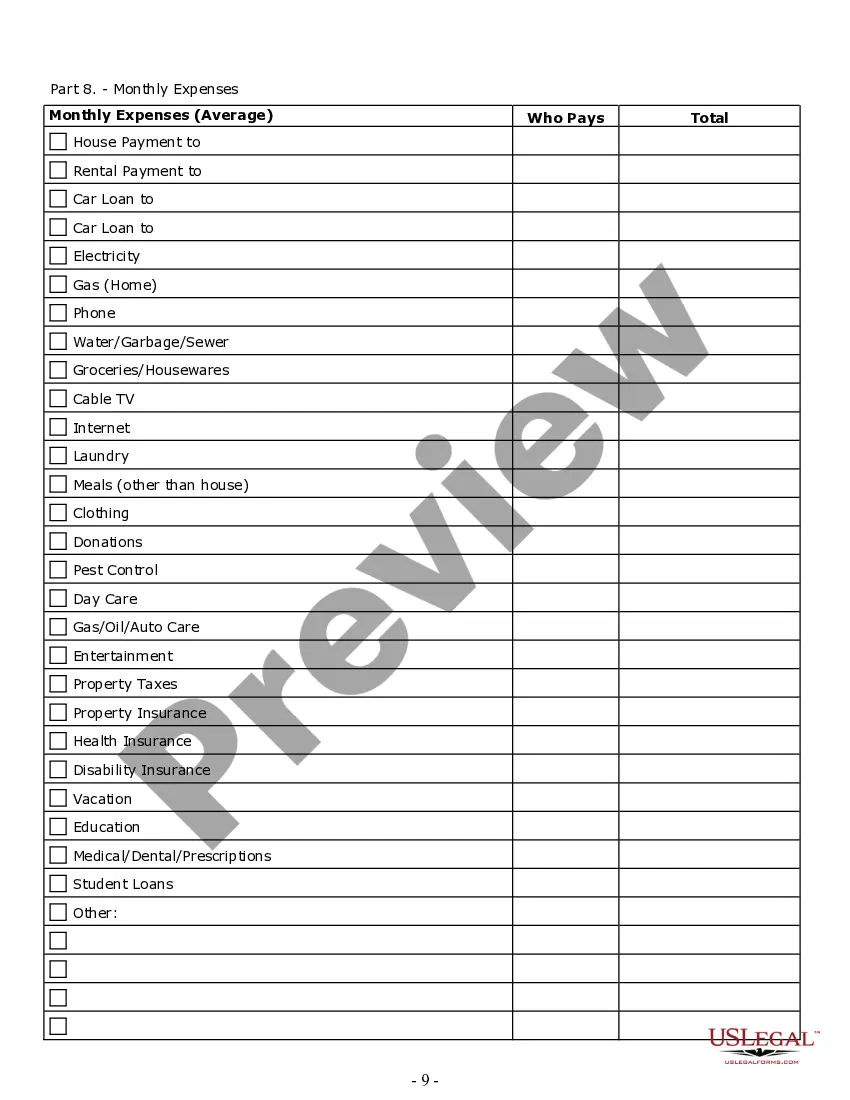
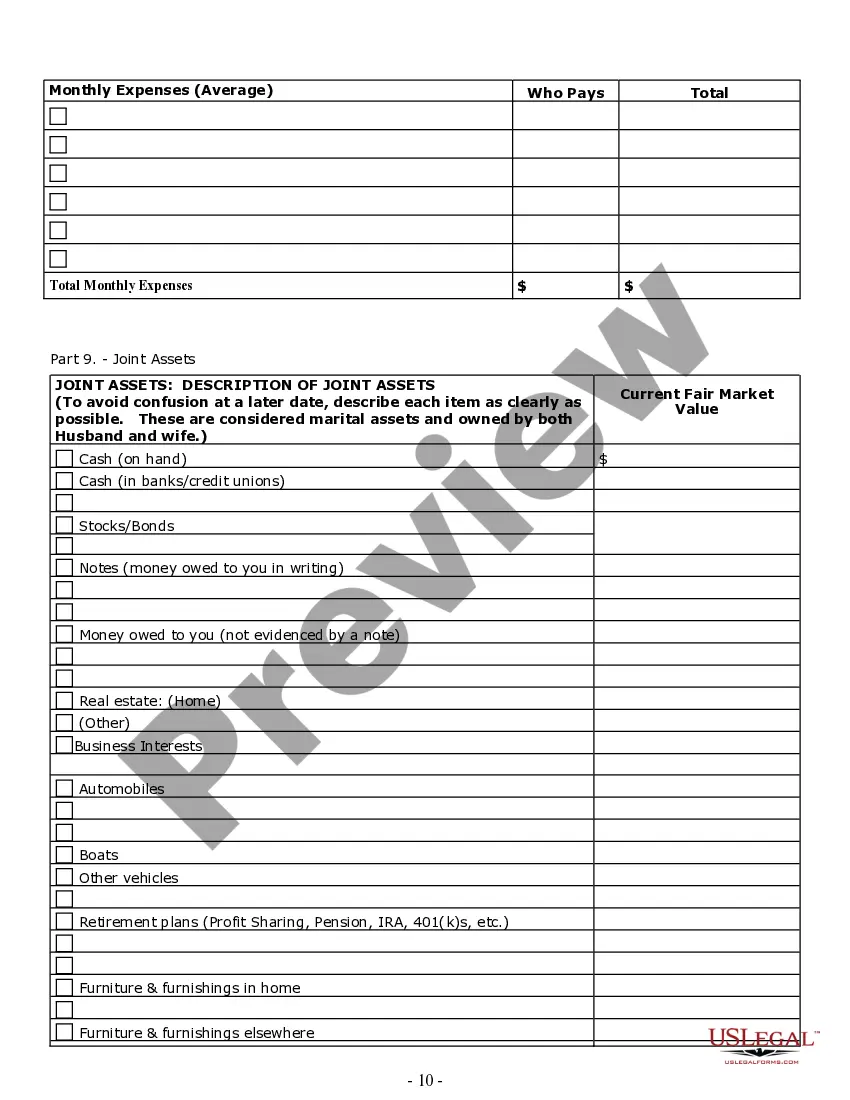
- Financial summary including income, expenses, and assets.
- Settlement worksheet to outline property and support agreements.
- Guidance on typical no-fault divorce procedures in your state.
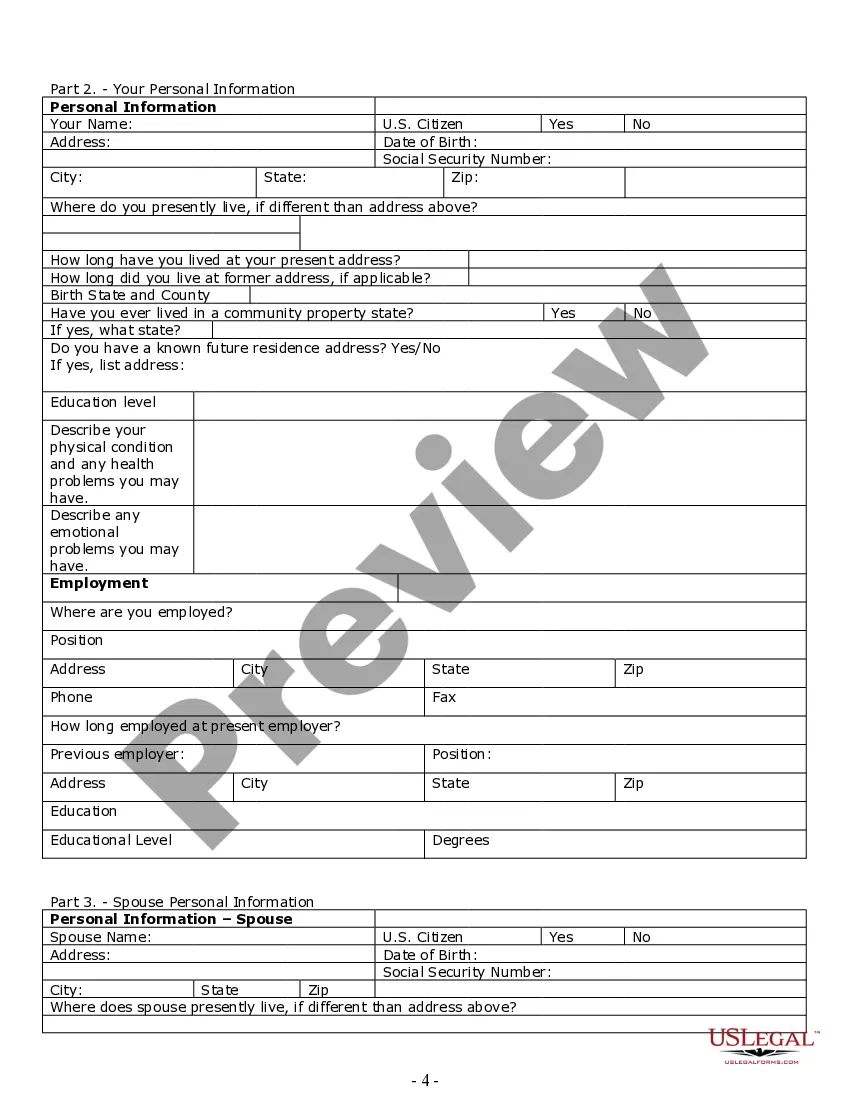
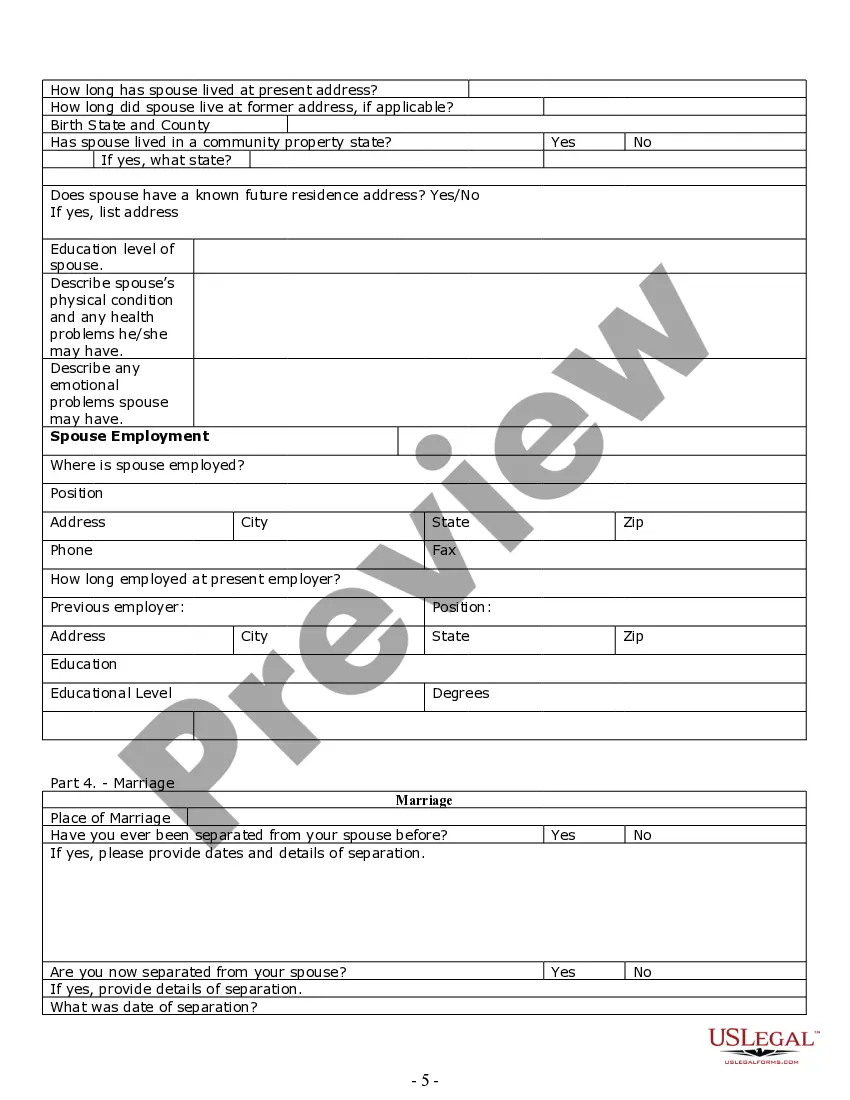
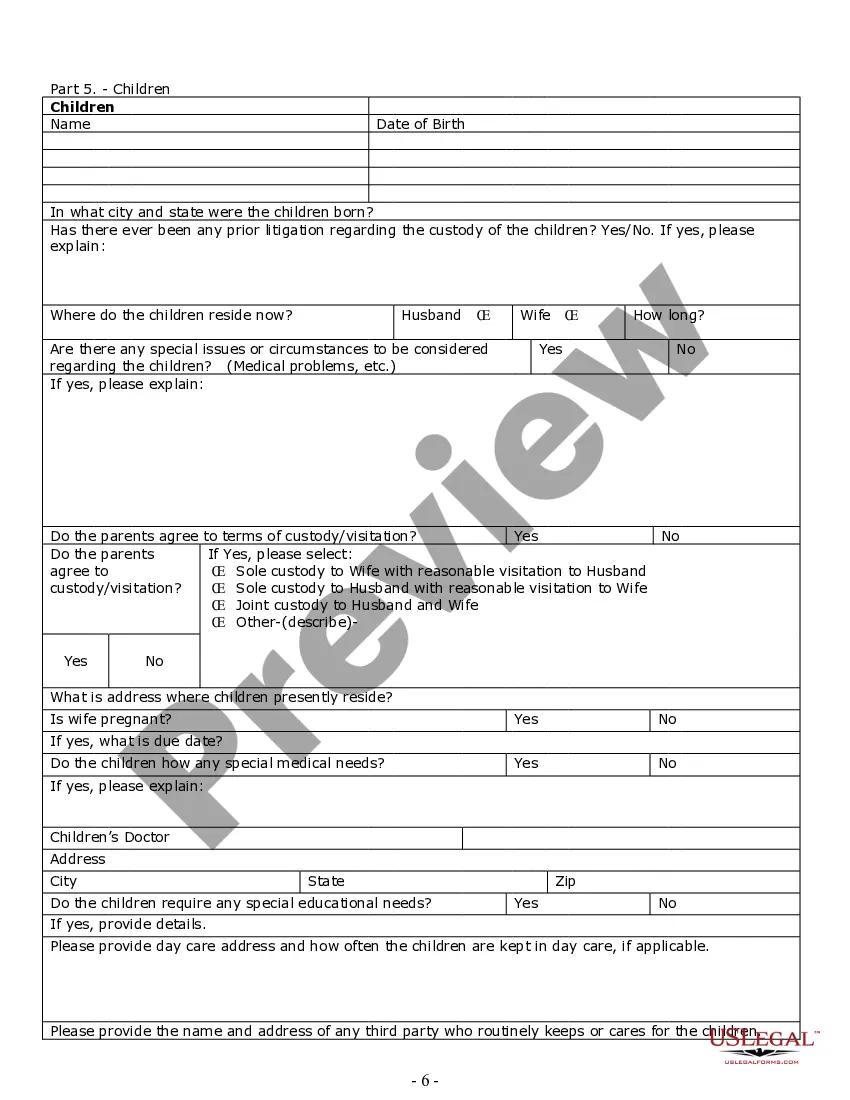
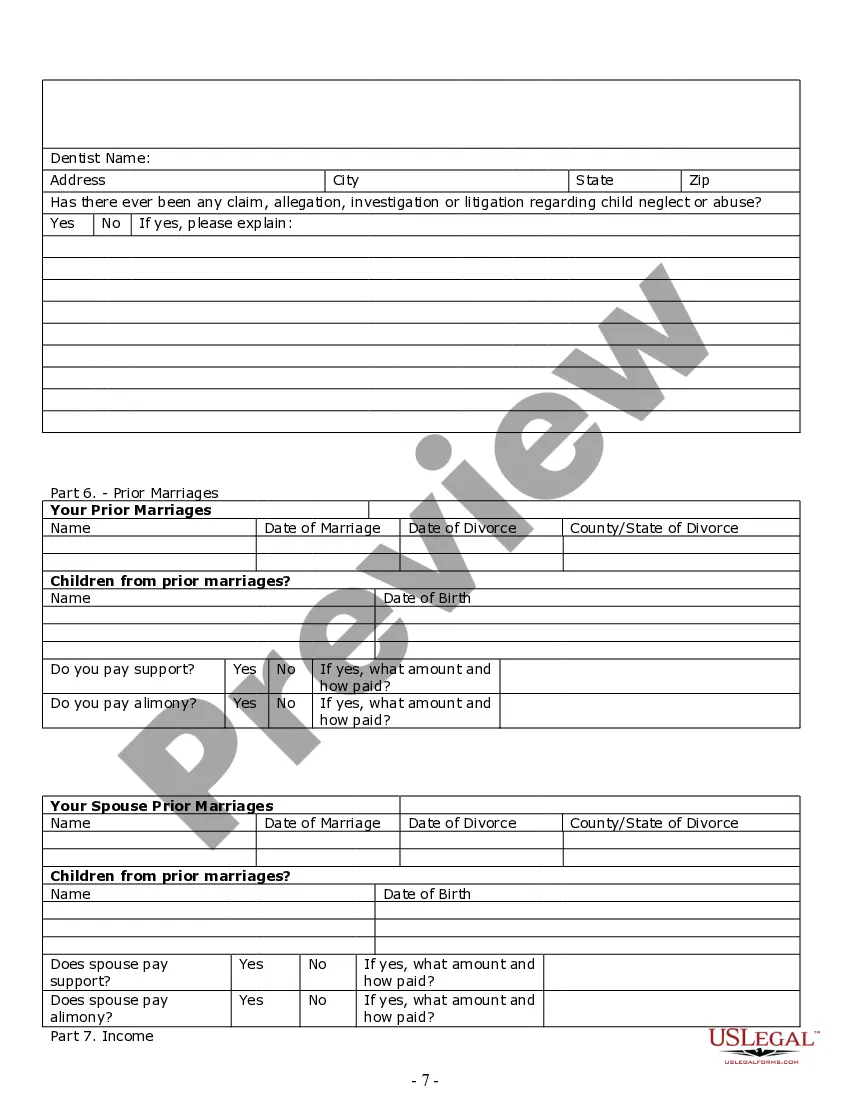


Common use cases
This form should be used when facing a divorce, whether contested or uncontested. It is ideal for individuals seeking clarity on legal definitions, necessary documentation, and financial obligations. Use this worksheet to organize your thoughts before meeting with an attorney, to ensure a thorough understanding of the divorce process, and to facilitate essential discussions on child custody and support.
Who can use this document
Eligibility includes:
- Individuals considering divorce, whether contested or uncontested.
- Couples wanting to clarify child custody and support matters.
- Clients intending to provide their attorney with detailed financial and personal information.
- Those looking to self-represent in divorce proceedings.
How to complete this form
To successfully complete this form, follow these steps:
- Gather personal information for both spouses, including names, addresses, and birth dates.
- Provide detailed information about children, including custody preferences and current living arrangements.
- List all income, monthly expenses, and assets to create a financial overview.
- Complete the settlement worksheet to outline how property and debts will be divided.
- Review the definitions section to ensure understanding of legal terms that will be pertinent in court.
Notarization requirements for this form
This form does not typically require notarization unless specified by local law.
Get your form ready online
Our built-in tools help you complete, sign, share, and store your documents in one place.
Make edits, fill in missing information, and update formatting in US Legal Forms—just like you would in MS Word.
Download a copy, print it, send it by email, or mail it via USPS—whatever works best for your next step.
Sign and collect signatures with our SignNow integration. Send to multiple recipients, set reminders, and more. Go Premium to unlock E-Sign.
If this form requires notarization, complete it online through a secure video call—no need to meet a notary in person or wait for an appointment.
We protect your documents and personal data by following strict security and privacy standards.

Make edits, fill in missing information, and update formatting in US Legal Forms—just like you would in MS Word.

Download a copy, print it, send it by email, or mail it via USPS—whatever works best for your next step.

Sign and collect signatures with our SignNow integration. Send to multiple recipients, set reminders, and more. Go Premium to unlock E-Sign.

If this form requires notarization, complete it online through a secure video call—no need to meet a notary in person or wait for an appointment.

We protect your documents and personal data by following strict security and privacy standards.
Avoid these common issues
- Failing to provide complete and accurate financial information.
- Not understanding legal terms or definitions included in the form.
- Omitting important details about children and custody arrangements.
- Neglecting to discuss the completed worksheet with the attorney prior to the consultation.
Benefits of using this form online
- Convenience of filling out forms at your own pace, on your own schedule.
- Editability allows for adjustments as circumstances change.
- Reliability of forms drafted by licensed attorneys, ensuring legal compliance.
Legal use & context
- This worksheet can serve as a foundational document for divorce proceedings.
- It is intended to aid in gathering necessary information, which may be required in court.
- While it presents helpful legal insights, it does not replace personalized legal advice from a qualified attorney.
Quick recap
- The Divorce Worksheet provides essential information and preparation for divorce proceedings.
- It includes financial summaries, custody options, and settlement discussions.
- Using this form before meeting with an attorney can enhance the efficiency of legal consultations.
Definitions you should know
- Complaint: The document filed to initiate divorce proceedings.
- Petition: Another term for the complaint, depending on the state.
- Custodial Parent: The parent with primary physical custody of the children.
- Alimony: Financial support awarded to a dependent spouse during or after divorce.
Looking for another form?





Form popularity
FAQ
For unpaid child support, however, up to 50% of your net wages can be garnished, and up to 60% if you're not currently supporting another dependent.
They must first sue you, win the lawsuit, and get the court to issue a wage garnishment order against you. Once they jump through all of these hoops, the amount they can garnish is limited to a maximum of 25% of your disposable income.
Meanwhile, the State of Massachusetts, which awards the most significant child support payment for every family, has the seventh-highest standard of living in the United States. Virginia has a similar cost of living (12th highest in the U.S.), yet awards the least child support payment.
Under Rhode Island law, the obligation to pay child support should end when a child turns 18 and graduates high school, whichever is later, but in no event beyond age 19. No motion to terminate child support is necessary if the support is for an only child and there is no garnishment of the support.
Calculate Child Support. The State of Rhode Island has adopted the income shares model to determine the weekly child support order. It is based upon the philosophy that children are entitled to the standard of living based upon both parents monthly income.Living expenses are generally not deducted from gross income.
Any parent or guardian of a child may complete an application for child support services for a fee of $20.00. The Office of Child Support Services will assist in the location of a parent, establishing paternity, establishing a child support or medical order and enforcement of all orders.
In determining a parent's income for child support purposes, courts typically look at the parent's gross income from all sources. They then subtract certain obligatory deductions, like income taxes, Social Security, health care, and mandatory union dues.
Assets are generally excluded from the computation of child support since what the CSA needs is the taxable income of the parents. Assets will only come into the picture if the parent has no other source of income or has insufficient income and he cannot meet his child support obligations.
If you have amassed arrears with the CSA, as most claims seem to result in, the CSA will also demand arrears payments at the same time. The maximum by law they say they can take from someone is 40% of their pay, after tax.