Employee Evaluation Form for Construction
What this document covers
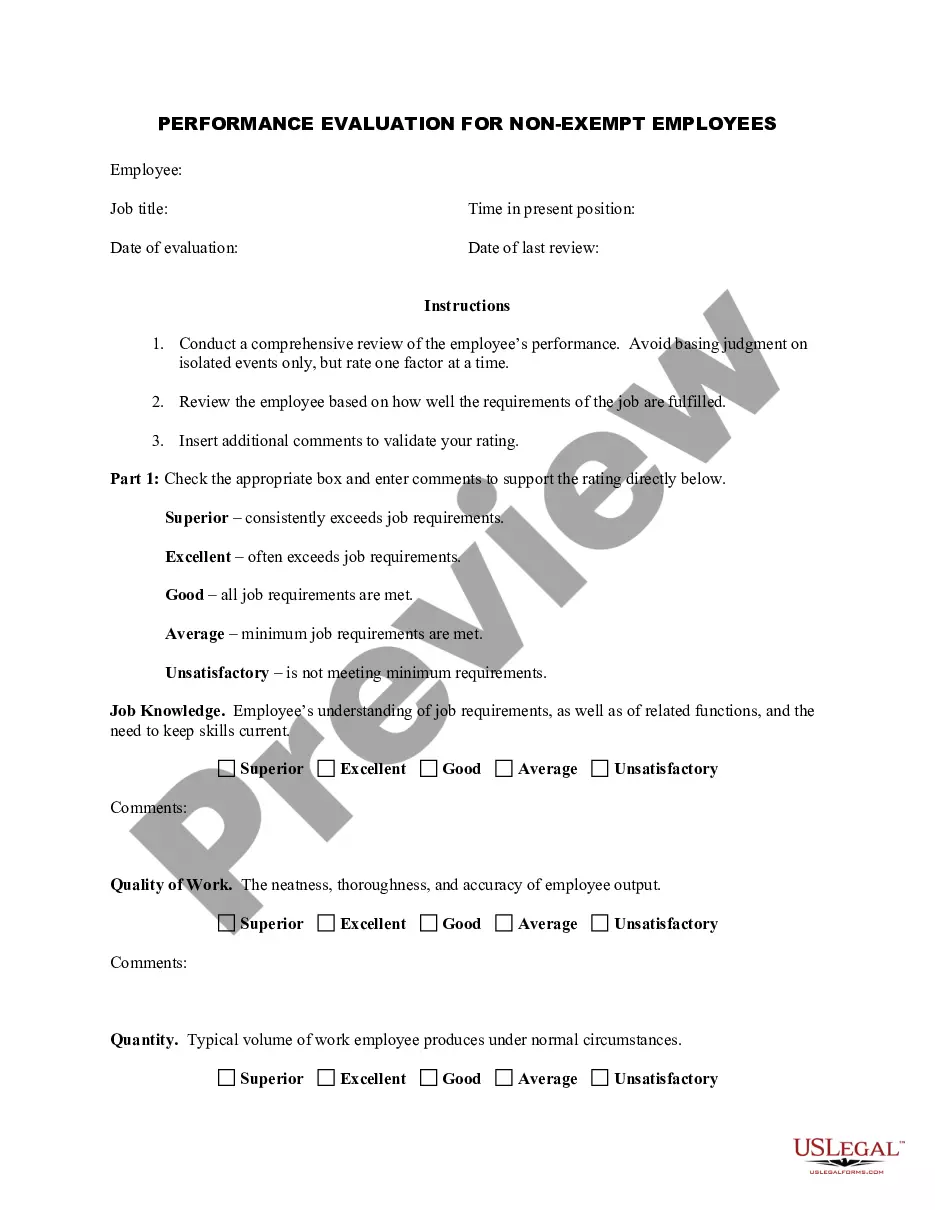
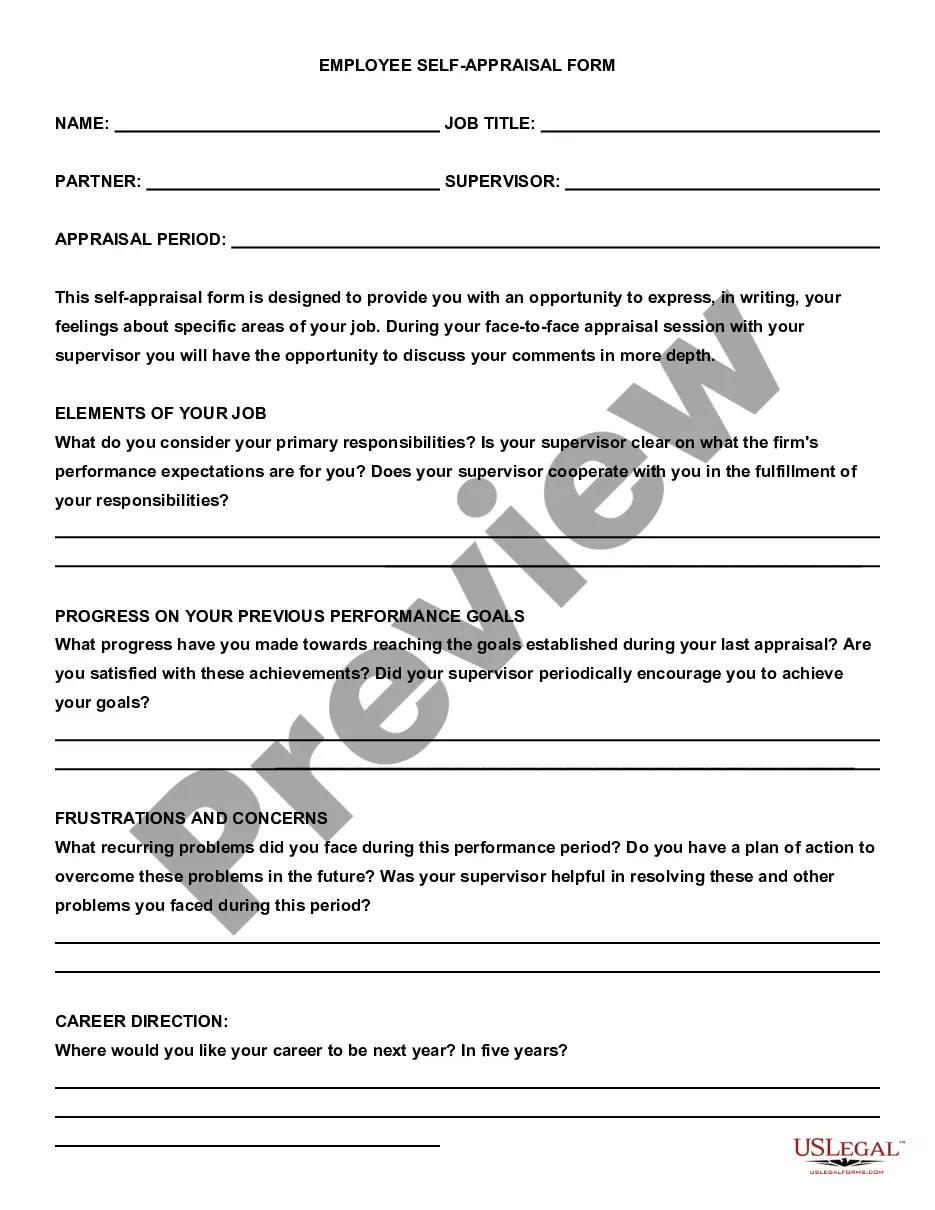
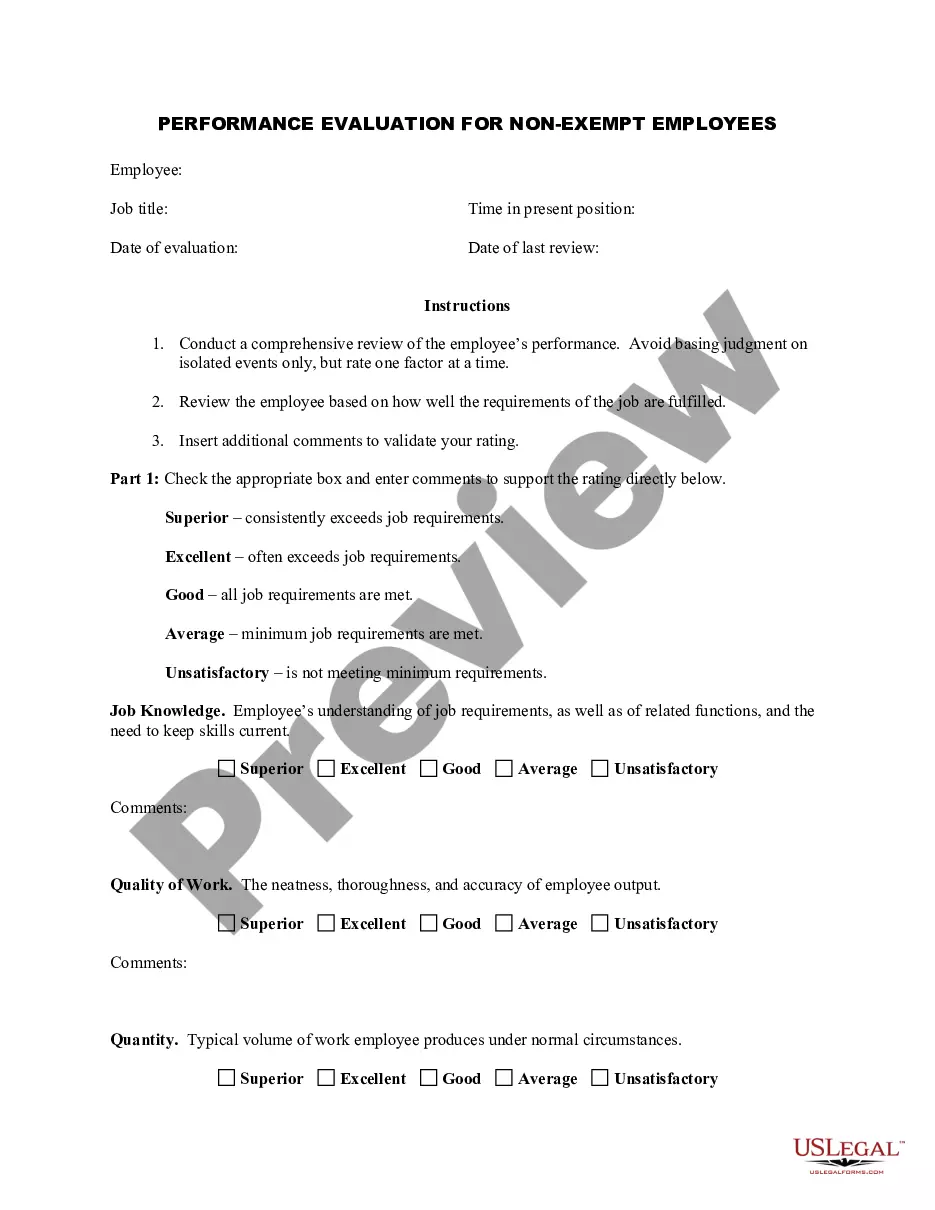
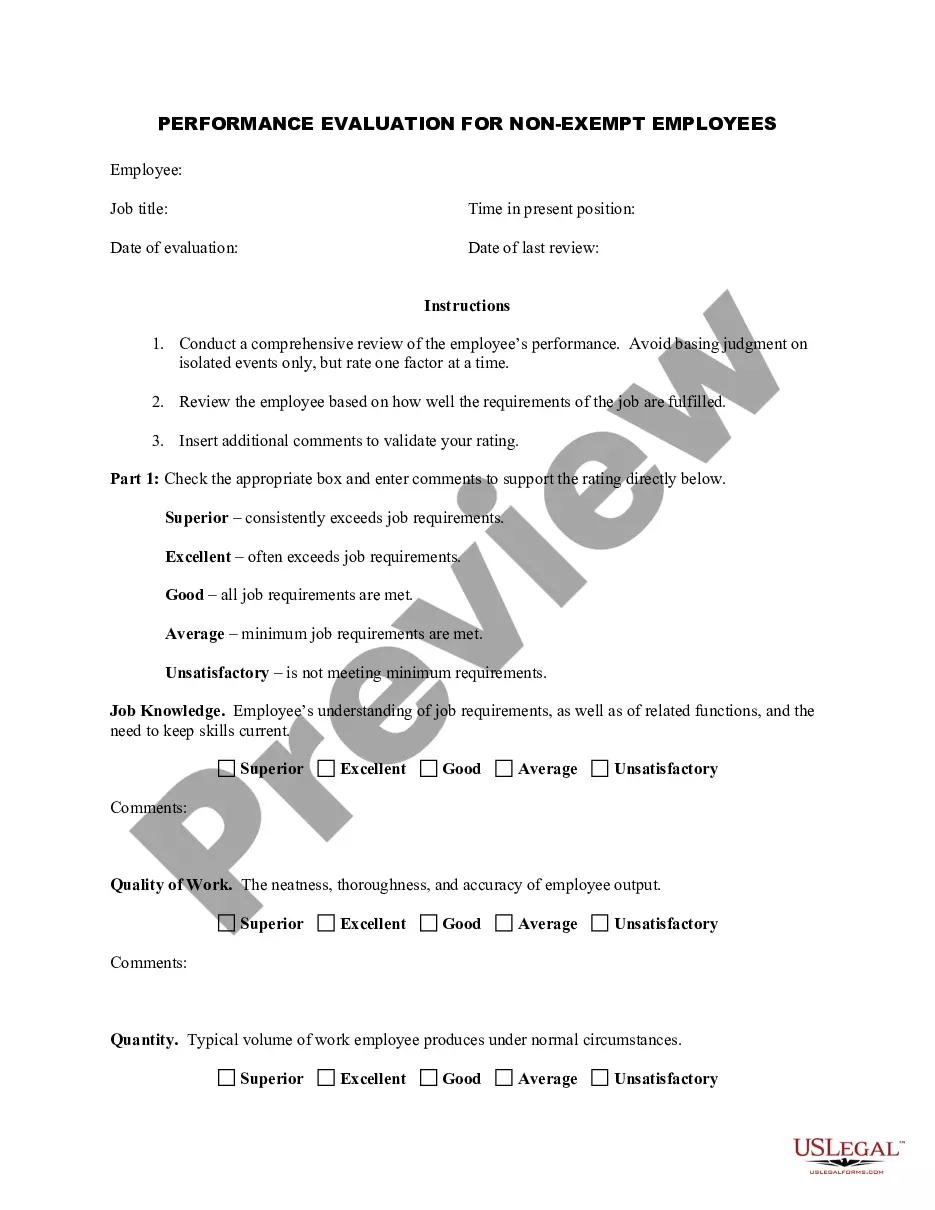
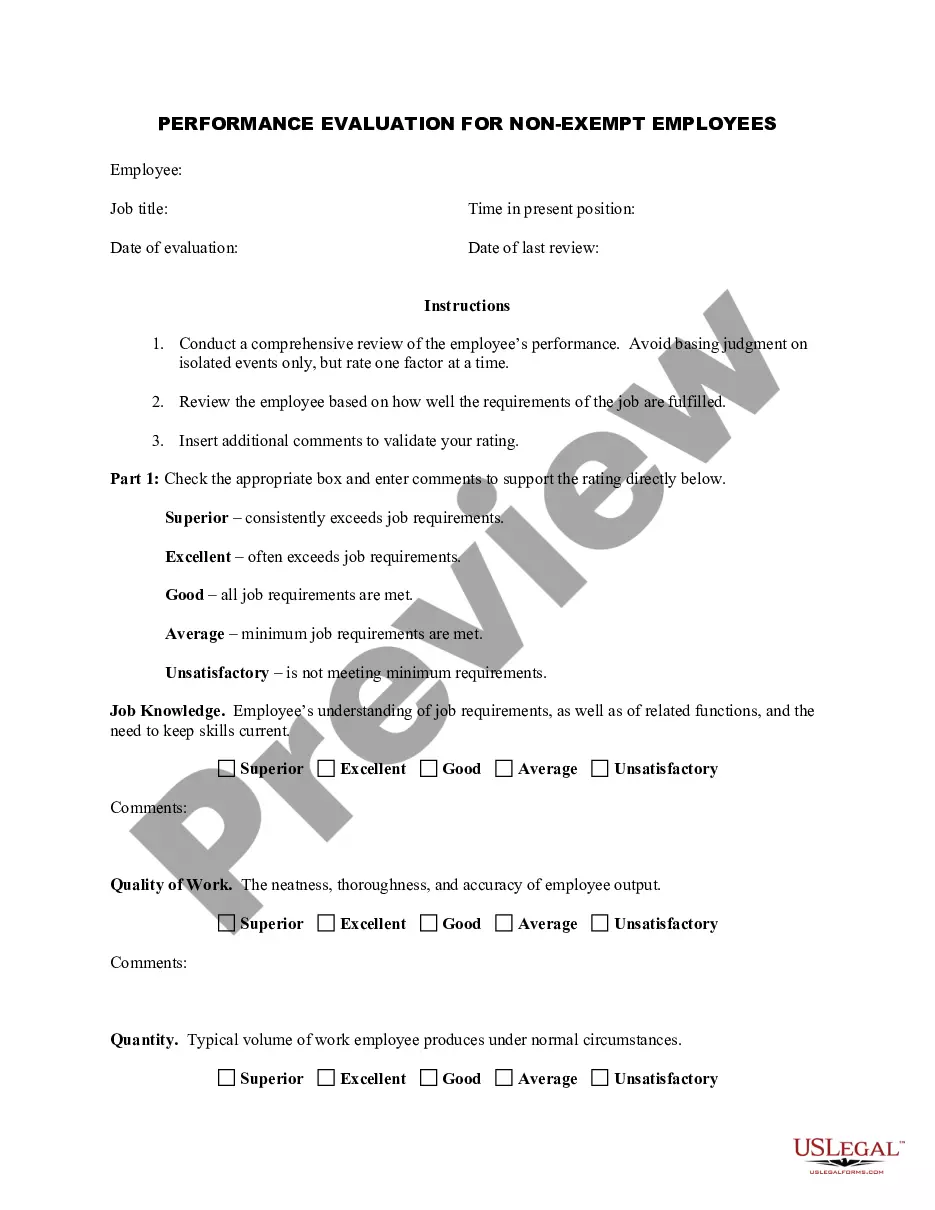
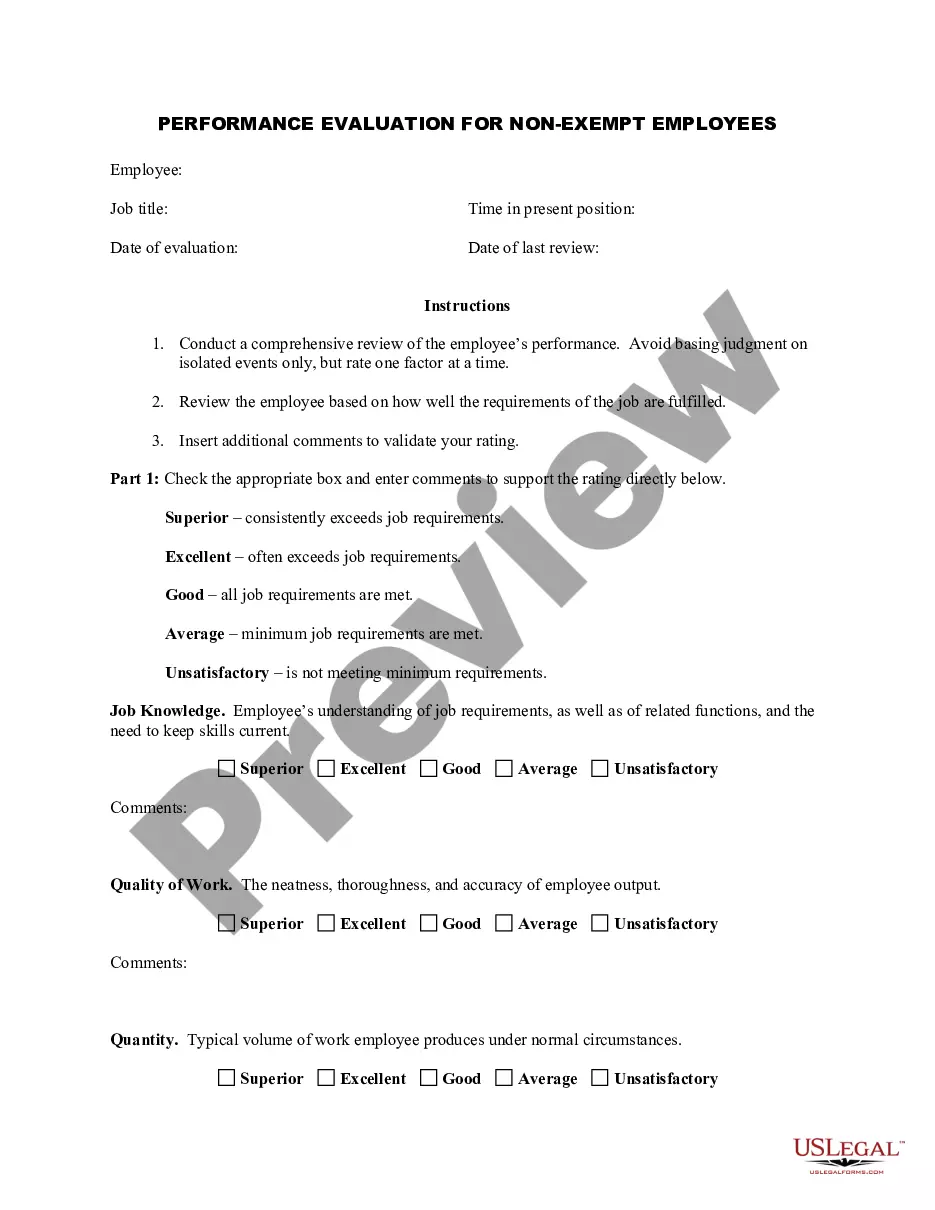
The Employee Evaluation Form for Construction is a structured document designed to assess the performance of non-exempt employees in the construction industry. It enables managers to provide feedback on various aspects of an employee's work, including job knowledge, quality of work, and other performance factors. This form allows for a comprehensive review, contributing to employee development and overall workplace efficiency, distinguishing it from more general performance review forms.
What’s included in this form
- Employee's information section for job title and evaluation date.
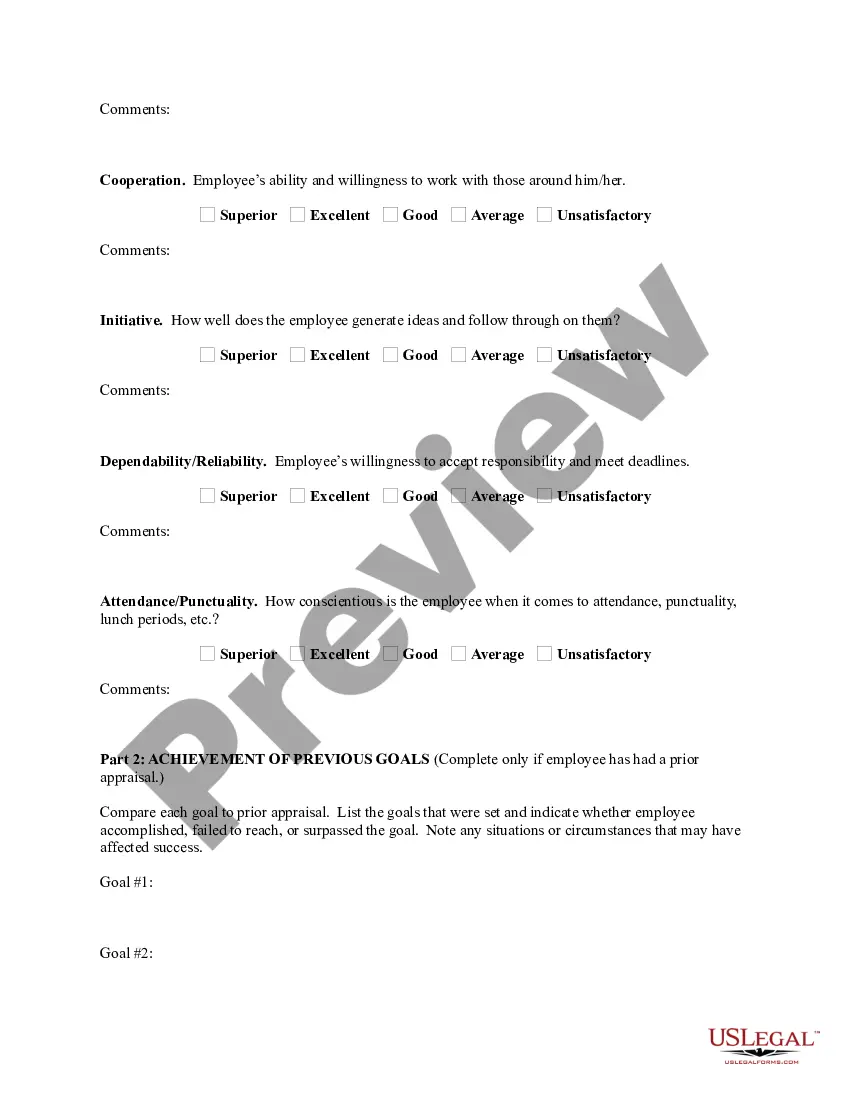
- Performance ratings for various criteria including job knowledge, quality of work, and attendance.
- Sections for comments providing qualitative feedback supporting ratings.
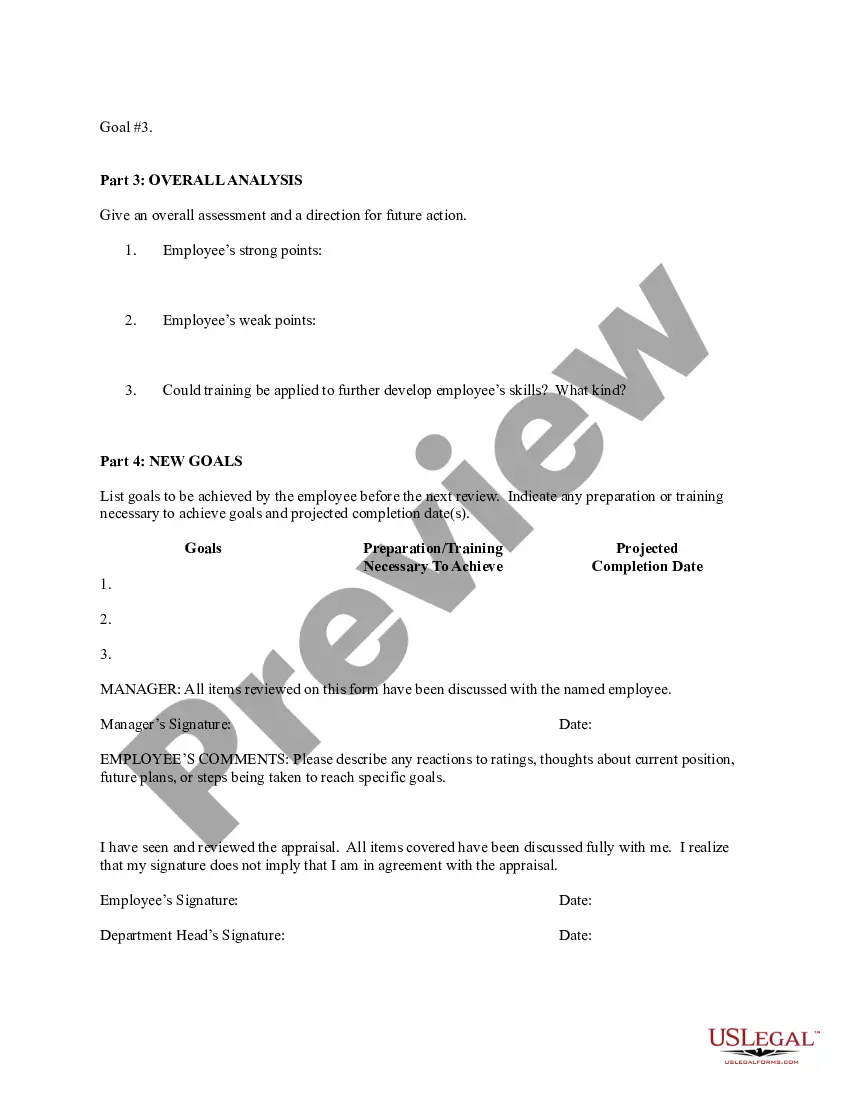
- Goals from the previous appraisal and plans for future achievement.
- Overall assessment with a summary of strengths and areas for improvement.
- Final signatures for both the evaluator and employee to acknowledge the evaluation discussion.
Common use cases
This form should be used during regular performance evaluations, typically at the end of the fiscal year or after project completions. It is ideal for assessing workplace competencies in construction roles, aiming to recognize employee contributions, identify areas needing improvement, and set new goals for future performance.
Who this form is for
- Managers and supervisors in the construction industry responsible for employee evaluations.
- Human resources professionals overseeing employee performance reviews.
- Team leaders who require an organized method for providing constructive feedback.
How to complete this form
- Identify the employee's job title and fill in personal information at the top of the form.
- Evaluate the employee's performance based on specified criteria by selecting appropriate ratings.
- Provide comments for each rating to justify your evaluations, focusing on specific examples.
- Discuss previous goals from the last appraisal and record whether they were achieved or surpassed.
- Complete the section for new goals to establish future expectations.
- Sign and date the form to confirm that the evaluation has been discussed with the employee.
Is notarization required?
This form does not typically require notarization unless specified by local law.
Get your form ready online
Our built-in tools help you complete, sign, share, and store your documents in one place.
Make edits, fill in missing information, and update formatting in US Legal Forms—just like you would in MS Word.
Download a copy, print it, send it by email, or mail it via USPS—whatever works best for your next step.
Sign and collect signatures with our SignNow integration. Send to multiple recipients, set reminders, and more. Go Premium to unlock E-Sign.
If this form requires notarization, complete it online through a secure video call—no need to meet a notary in person or wait for an appointment.
We protect your documents and personal data by following strict security and privacy standards.

Make edits, fill in missing information, and update formatting in US Legal Forms—just like you would in MS Word.

Download a copy, print it, send it by email, or mail it via USPS—whatever works best for your next step.

Sign and collect signatures with our SignNow integration. Send to multiple recipients, set reminders, and more. Go Premium to unlock E-Sign.

If this form requires notarization, complete it online through a secure video call—no need to meet a notary in person or wait for an appointment.

We protect your documents and personal data by following strict security and privacy standards.
Common mistakes
- Providing generic comments instead of specific examples during evaluations.
- Failing to allow the employee to review and discuss their evaluation thoroughly.
- Neglecting to set measurable goals for future performance.
Why complete this form online
- Convenience of accessing and completing the form anywhere, any time.
- Ability to edit and update performance evaluations without the hassle of paperwork.
- Secure storage and management of employee evaluation records.
Legal use & context
- The Employee Evaluation Form is crucial for maintaining a documented performance review process.
- Using this form can help protect employers against claims of unfair evaluations or termination.
Quick recap
- This form facilitates constructive feedback and employee development in the construction field.
- Utilizing structured evaluations contributes to better employee performance and morale.
- Setting clear goals is vital for guiding future employee achievements and assessments.
Looking for another form?
Form popularity
FAQ
Reflect on feedback. Make a list of your top accomplishments and identify areas for improvements. Gather analytics to show impact. Make a commitment to improve. Set a SMART goal for yourself. Create a plan of action. Communication. Job Performance.
1 Know how the self-evaluation is going to be used. 2 Write out a list of your accomplishments. 3 Gather analytics if you can. 4 Write out a list of your struggles. 5 Narrow your accomplishments list down. 6 Don't forget to align your review with your manager's or team's goals.
Reflect on feedback. Make a list of your top accomplishments and identify areas for improvements. Gather analytics to show impact. Make a commitment to improve. Set a SMART goal for yourself. Create a plan of action. Communication. Job Performance.
Be proud. One major goal of the self-evaluation is to highlight your accomplishments and recollect milestones in your professional development. Be honest and critical. Continuously strive for growth. Track your accomplishments. Be professional.
Communication. Collaboration and teamwork. Problem-solving. Quality and accuracy of work. Attendance, punctuality and reliability. The ability to accomplish goals and meet deadlines.
Use numbers to your advantage. Include figures that add value to your work, if possible. Mention results. Take the company's objectives into account. Record your achievements in real-time. Take your time.
Employee and reviewer information. The form must have basic information about both parties involved. Review period. An easy-to-understand rating system. Evaluation points. Goals. Extra space for comments. Signatures. Scorecard.
Gather information. List employee responsibilities. Use objective language. Use action verbs. Compare performance ratings. Ask open-ended questions. Use a point system.