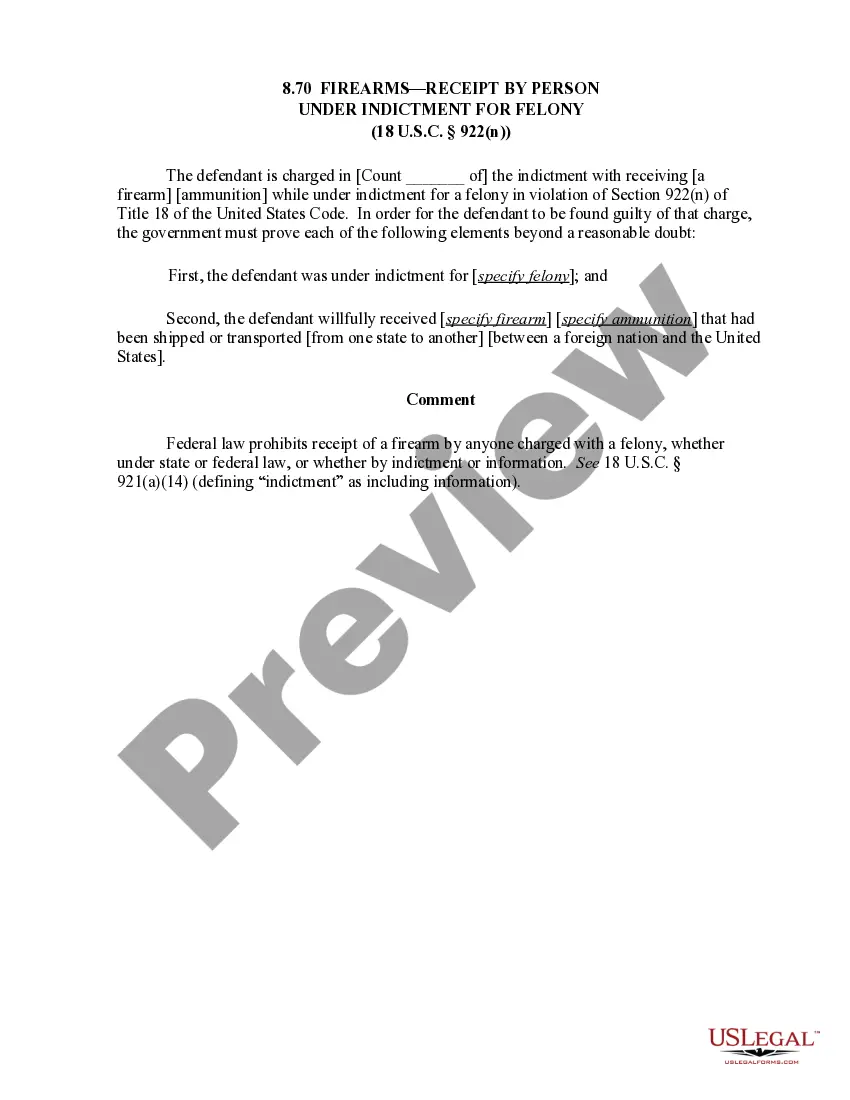
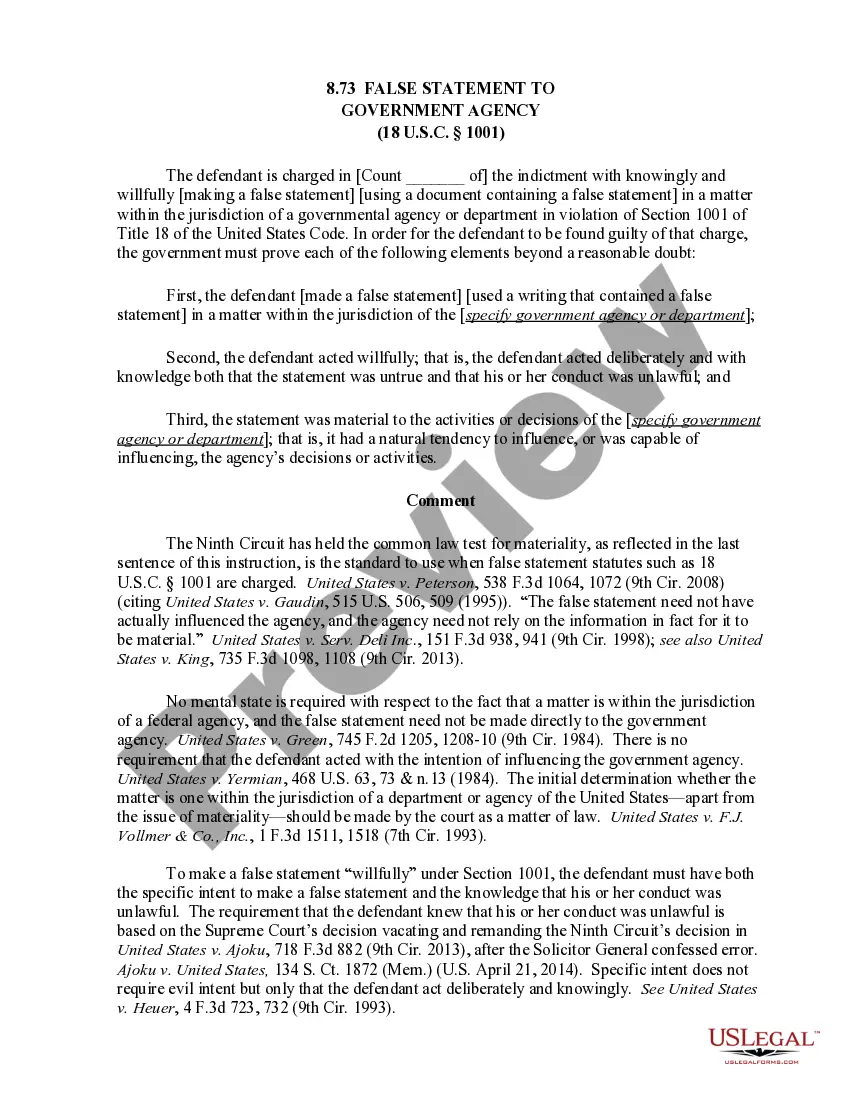
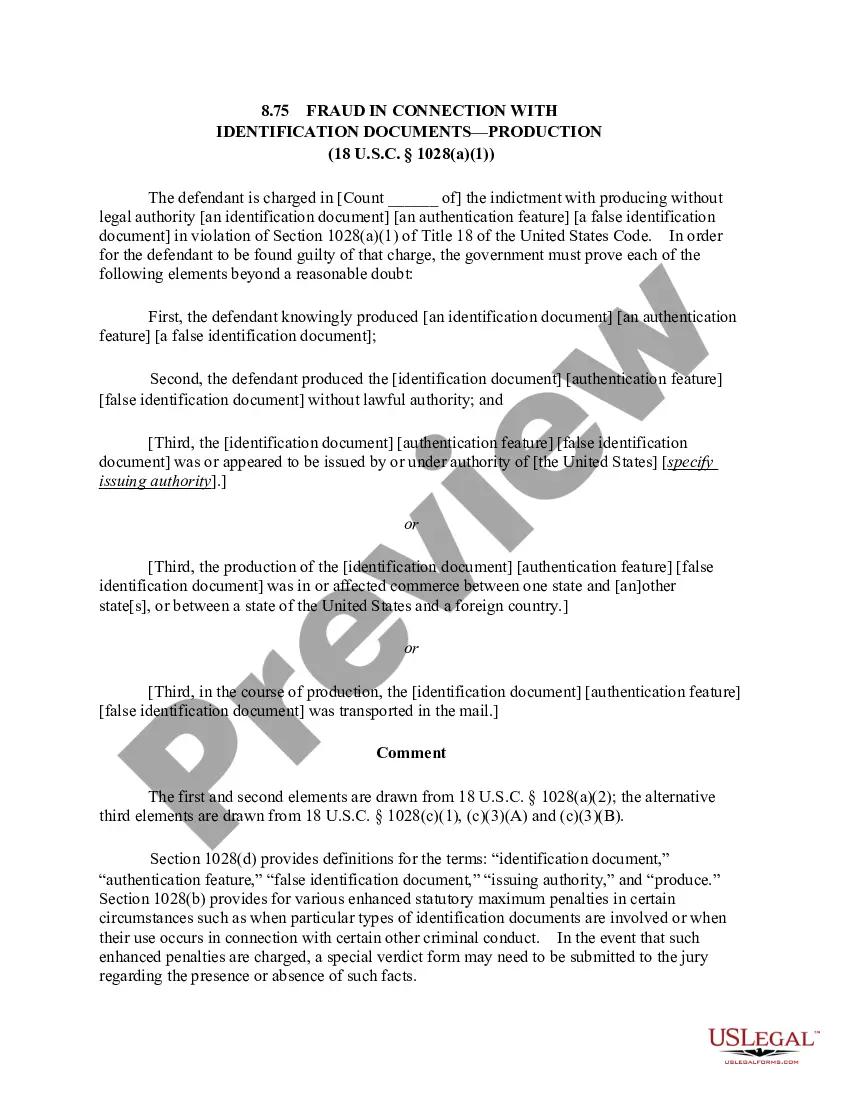
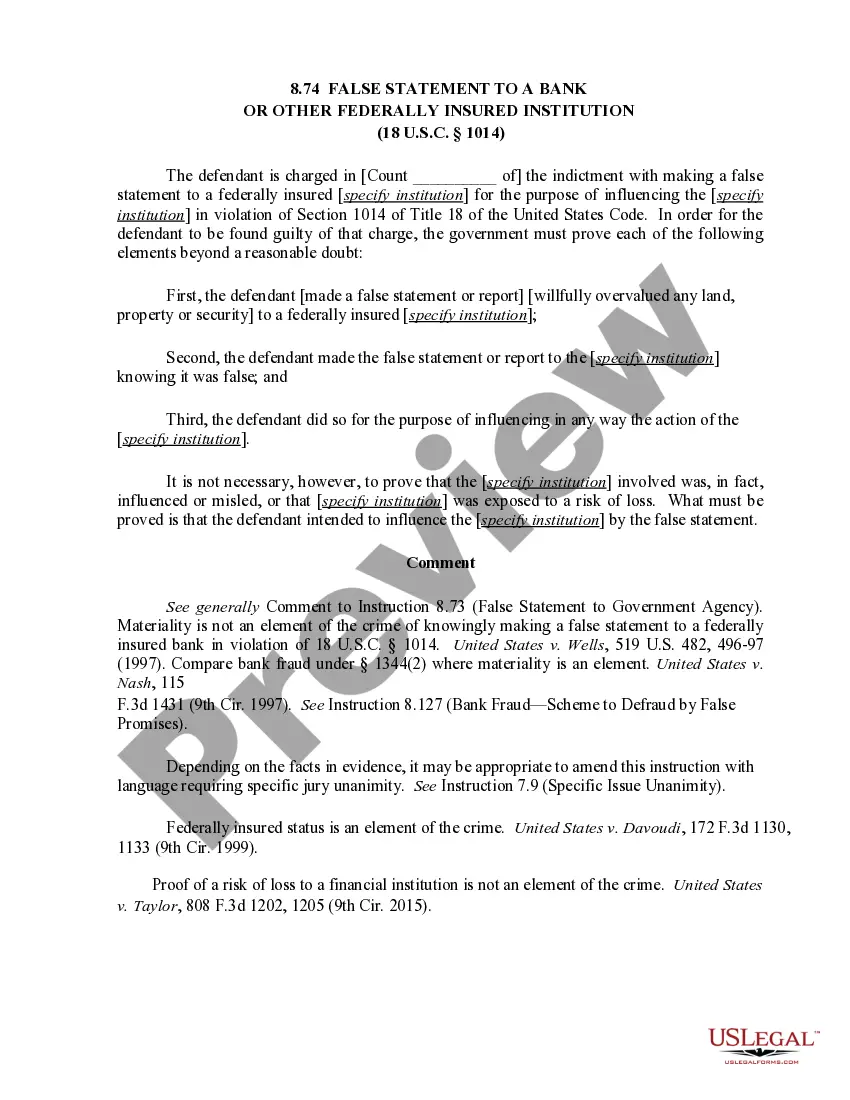
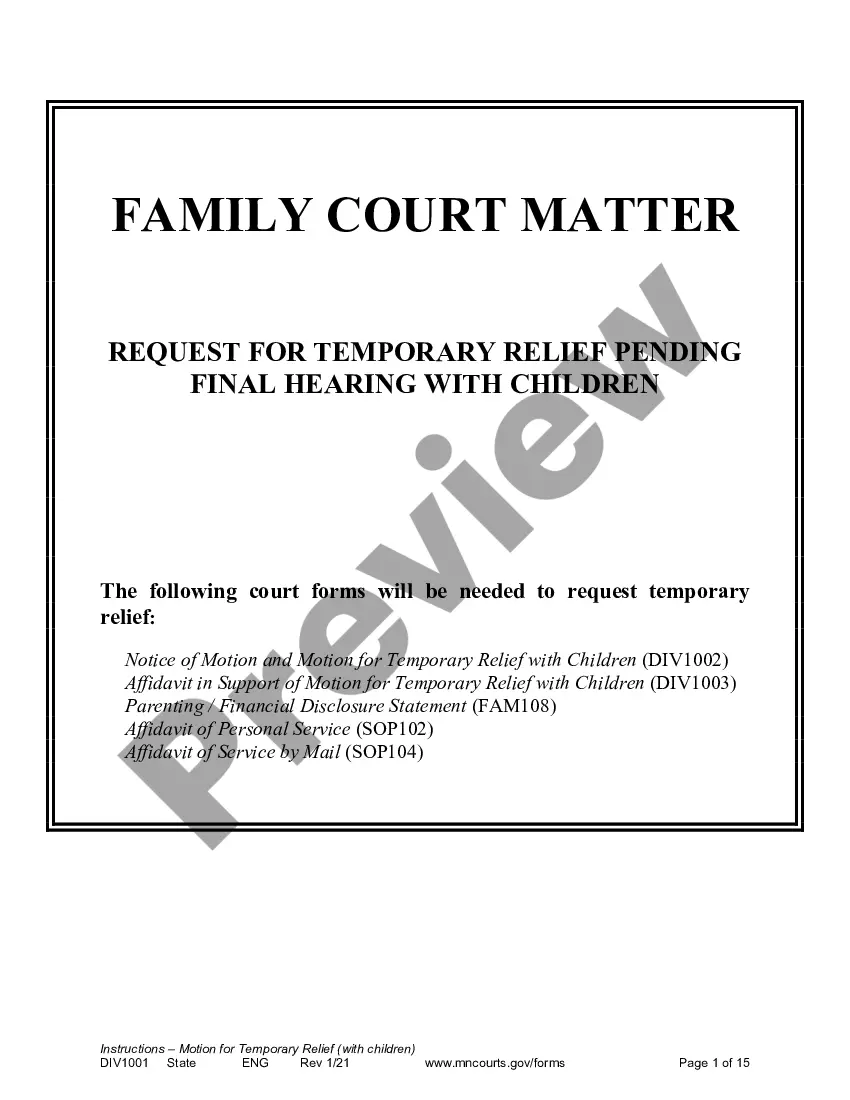
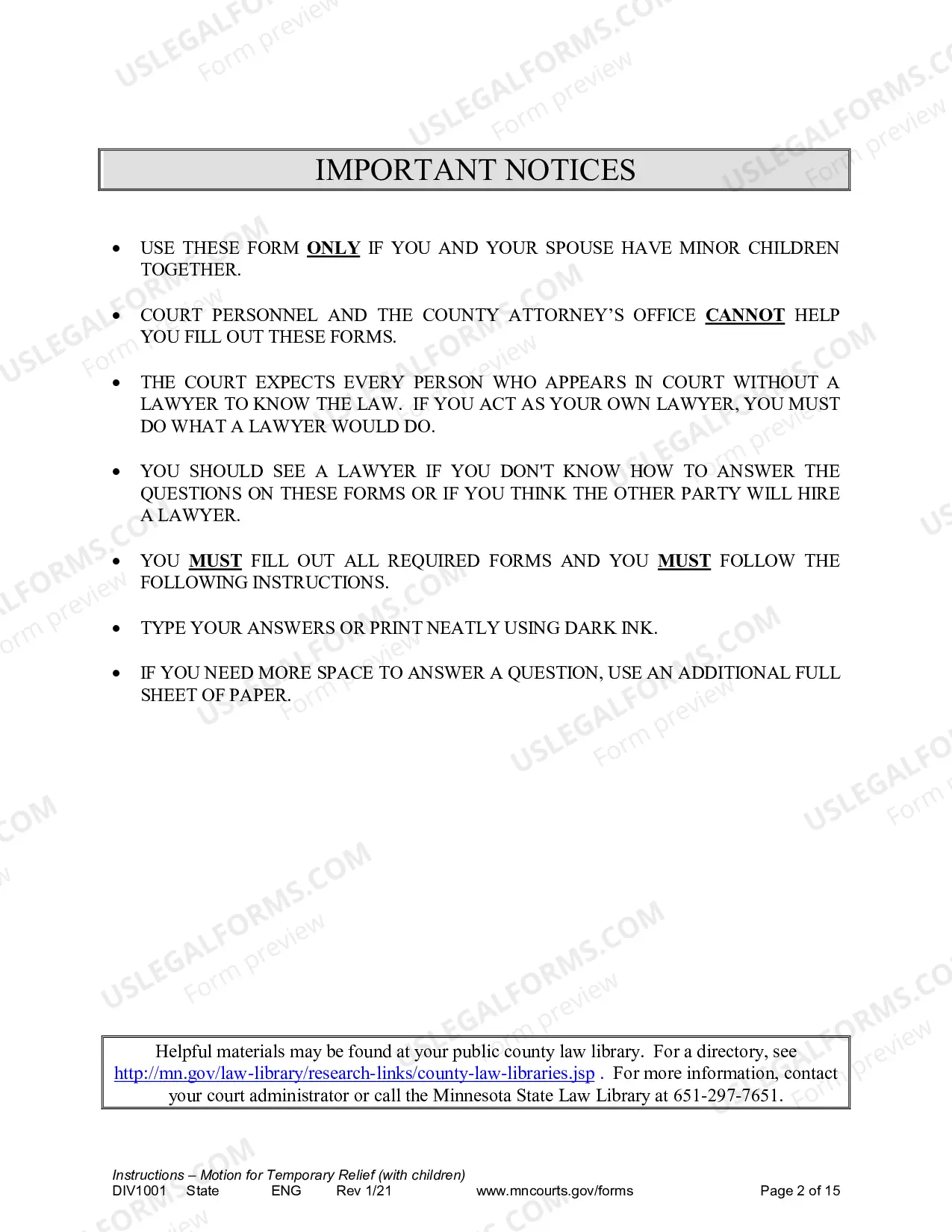
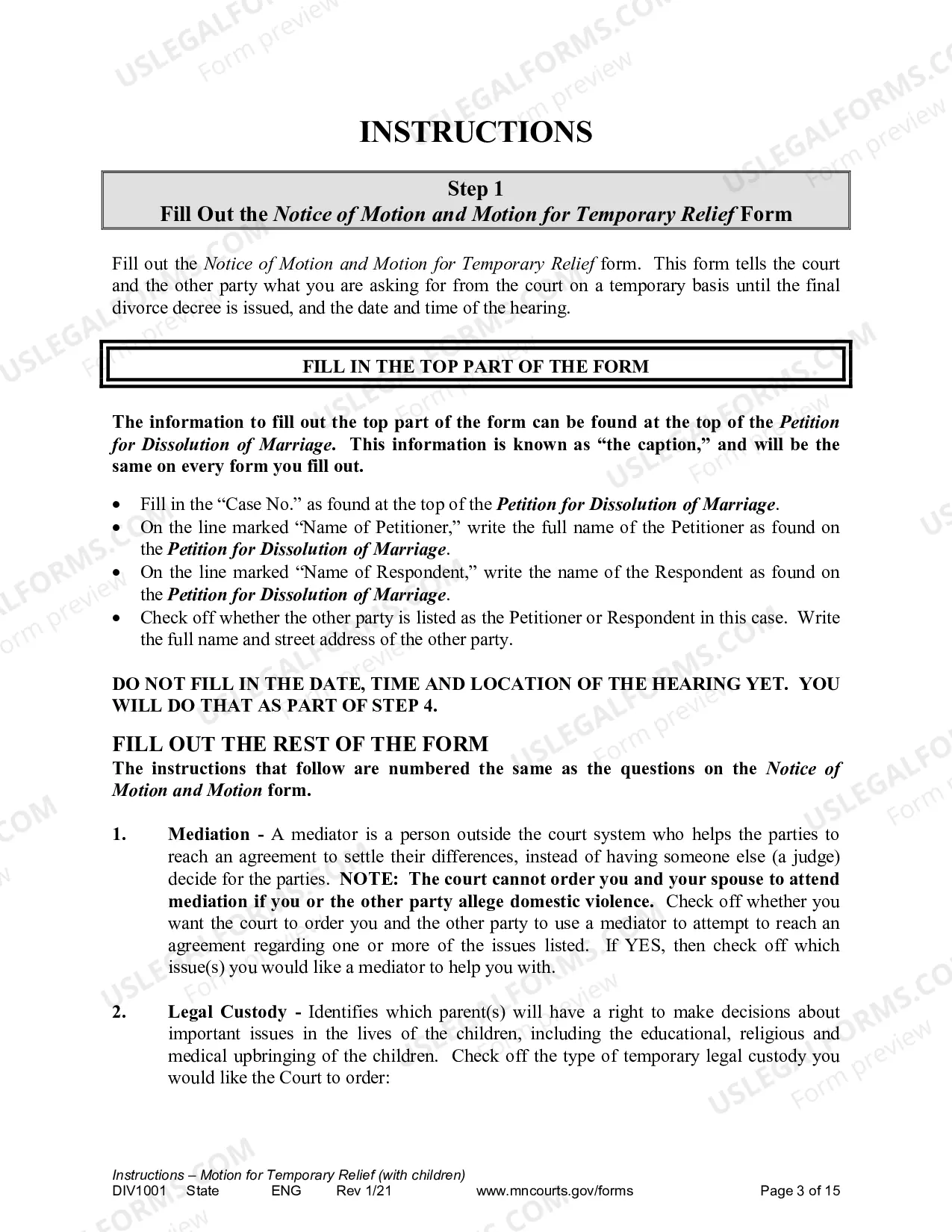
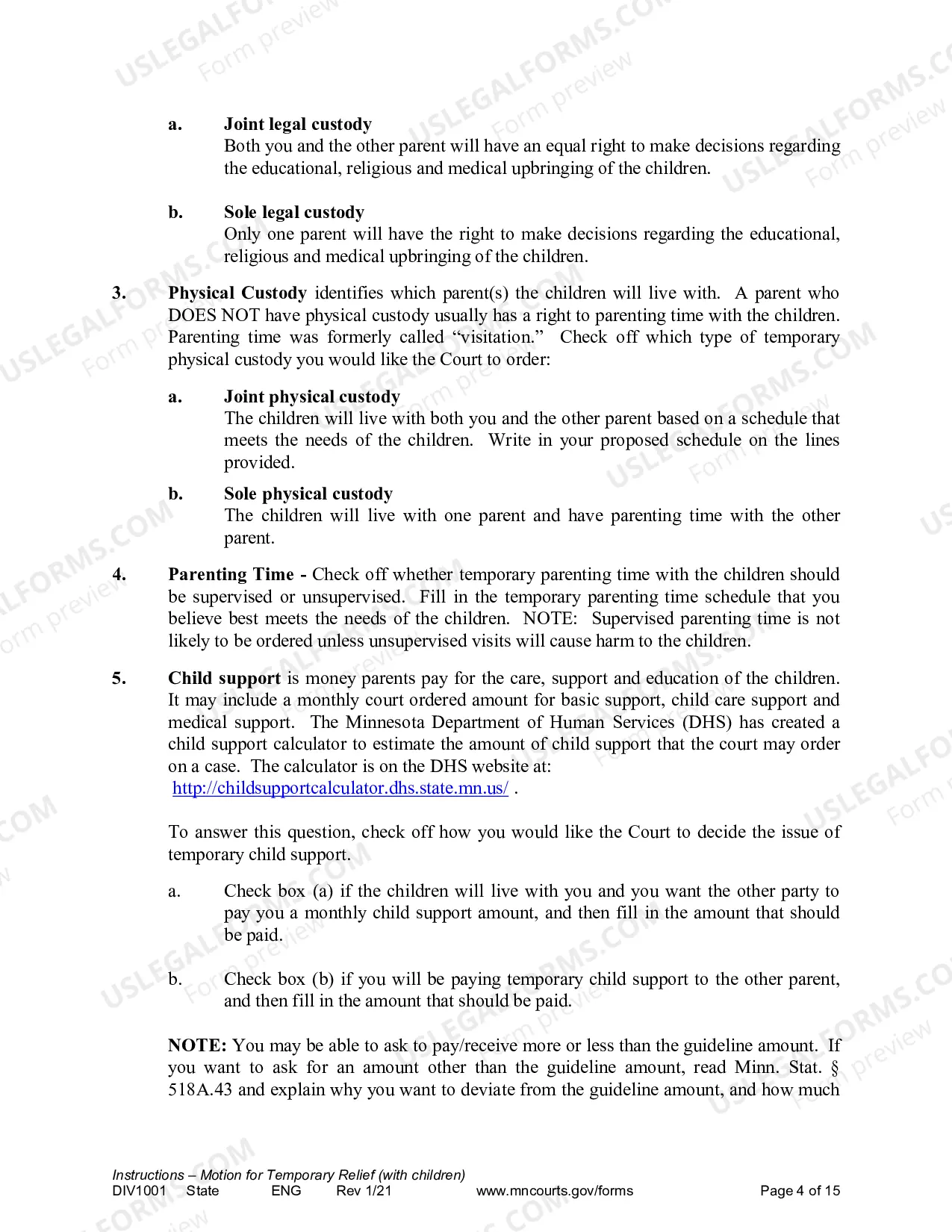
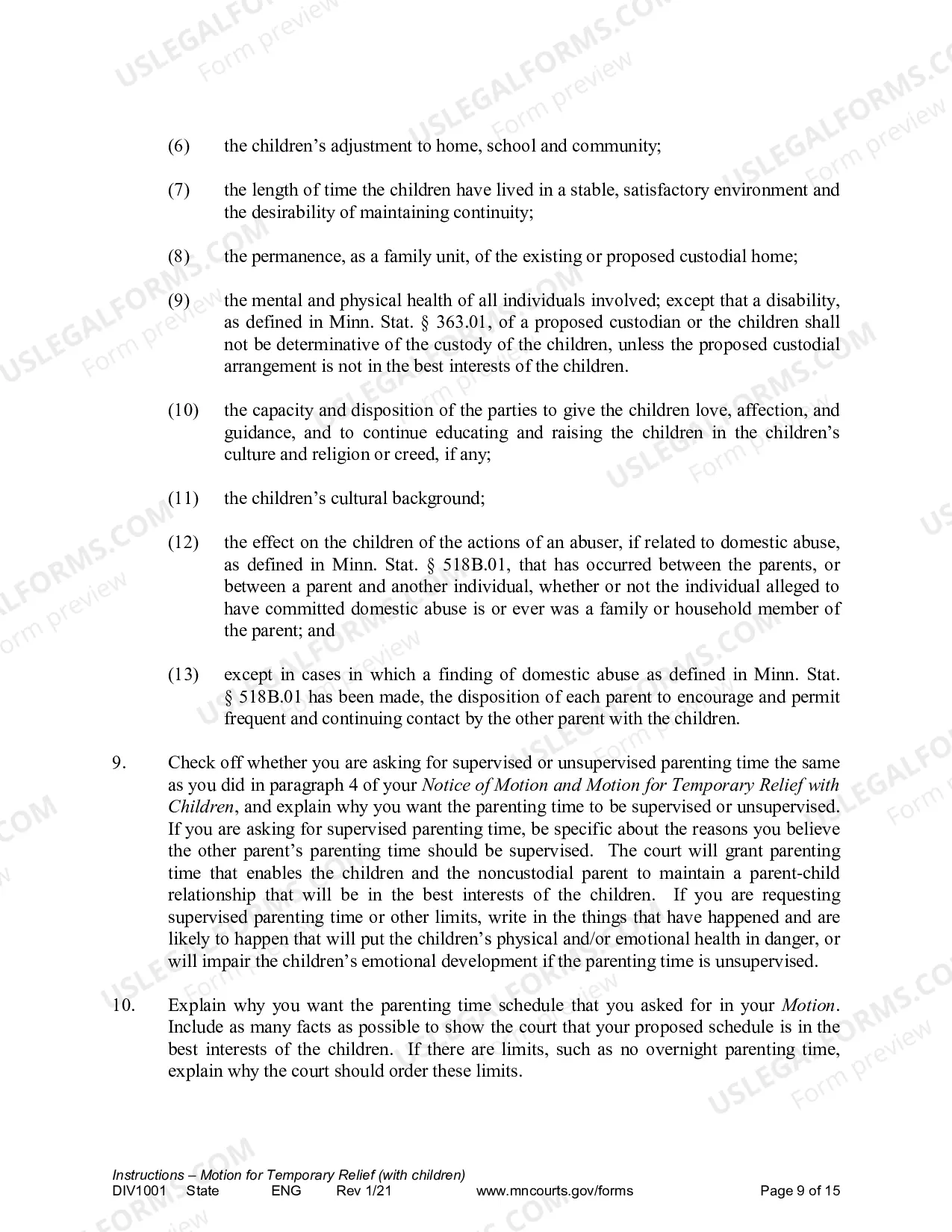
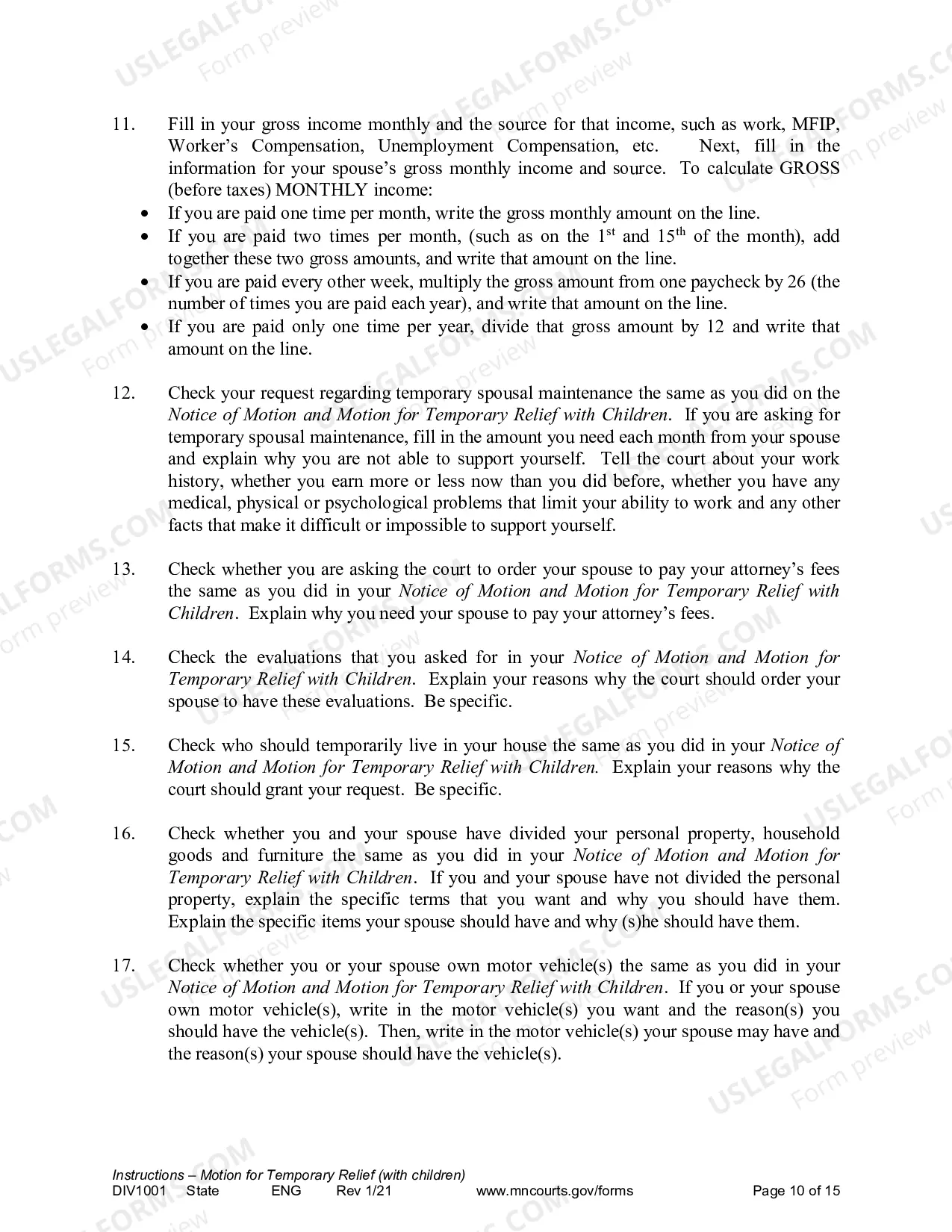
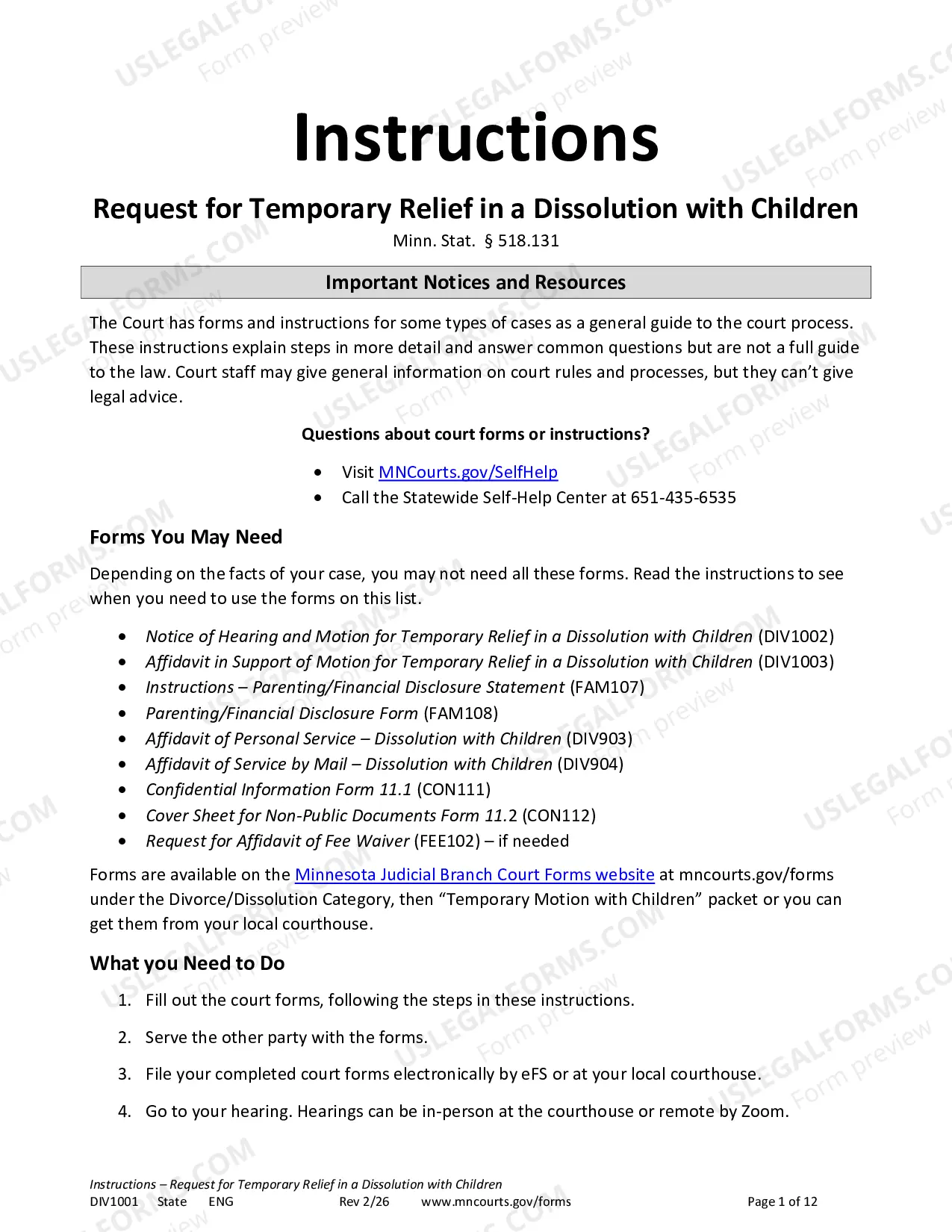
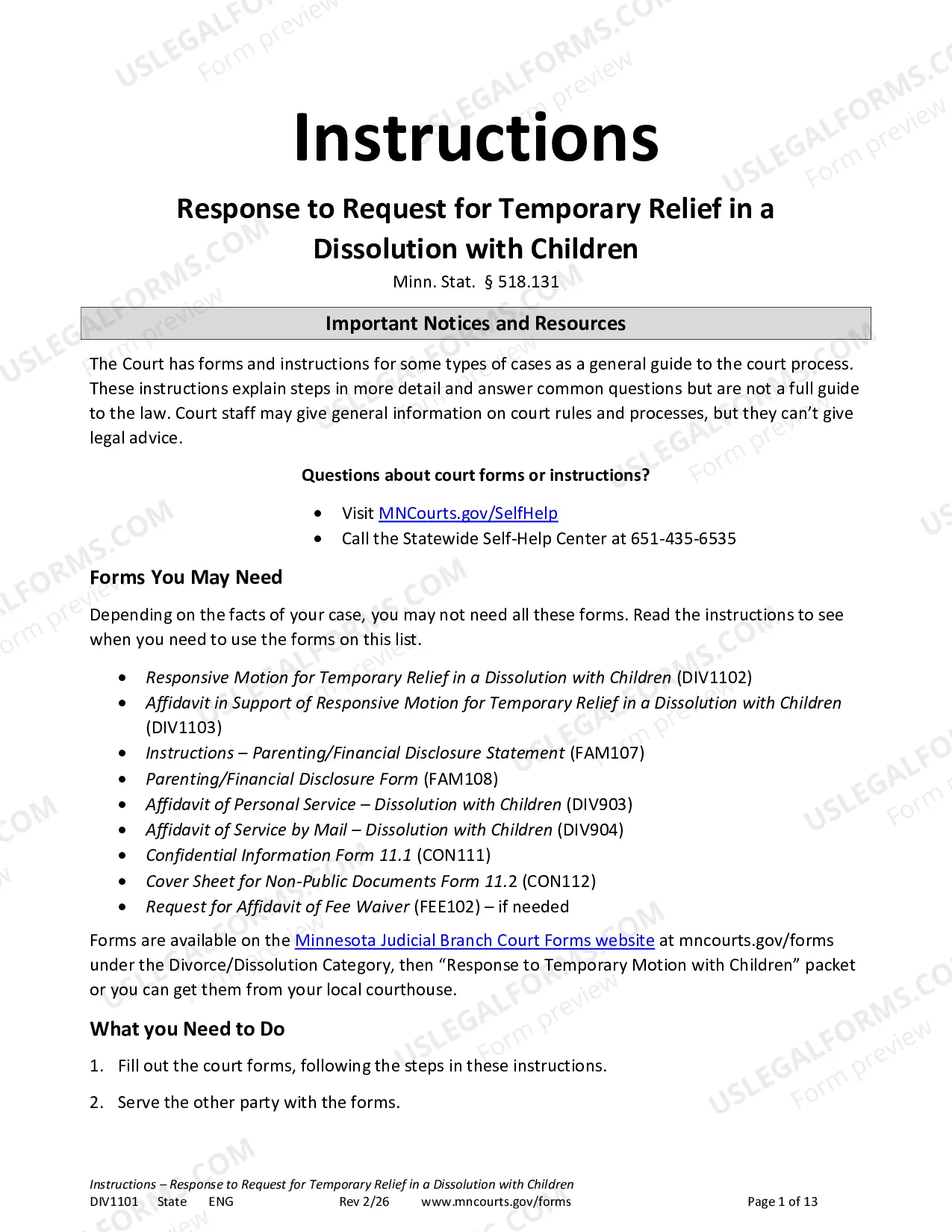
This is an official Minnesota court form for use in a divorce case, Instructions for Temporary Relief with Children. USLF amends and updates these forms as is required by Minnesota Statutes and Law.
Minnesota Instructions for Temporary Relief with Children
Instant download
This website is not affiliated with any governmental entity
Public form
Description
Free preview

Get your form ready online
Our built-in tools help you complete, sign, share, and store your documents in one place.
Built-in online Word editor
Make edits, fill in missing information, and update formatting in US Legal Forms—just like you would in MS Word.
Export easily
Download a copy, print it, send it by email, or mail it via USPS—whatever works best for your next step.
E-sign your document
Sign and collect signatures with our SignNow integration. Send to multiple recipients, set reminders, and more. Go Premium to unlock E-Sign.
Notarize online 24/7
If this form requires notarization, complete it online through a secure video call—no need to meet a notary in person or wait for an appointment.
Store your document securely
We protect your documents and personal data by following strict security and privacy standards.

Make edits, fill in missing information, and update formatting in US Legal Forms—just like you would in MS Word.

Download a copy, print it, send it by email, or mail it via USPS—whatever works best for your next step.

Sign and collect signatures with our SignNow integration. Send to multiple recipients, set reminders, and more. Go Premium to unlock E-Sign.

If this form requires notarization, complete it online through a secure video call—no need to meet a notary in person or wait for an appointment.

We protect your documents and personal data by following strict security and privacy standards.
Looking for another form?


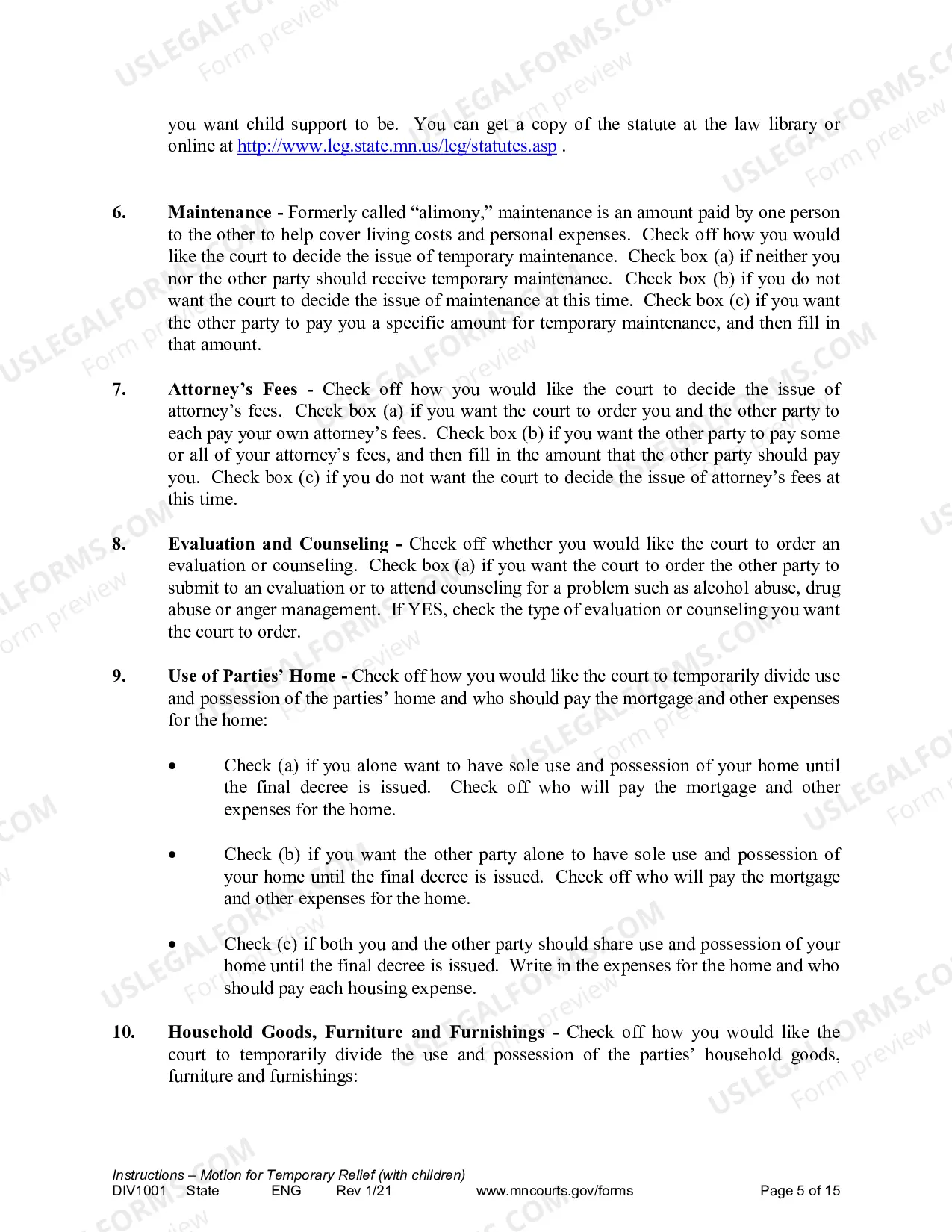
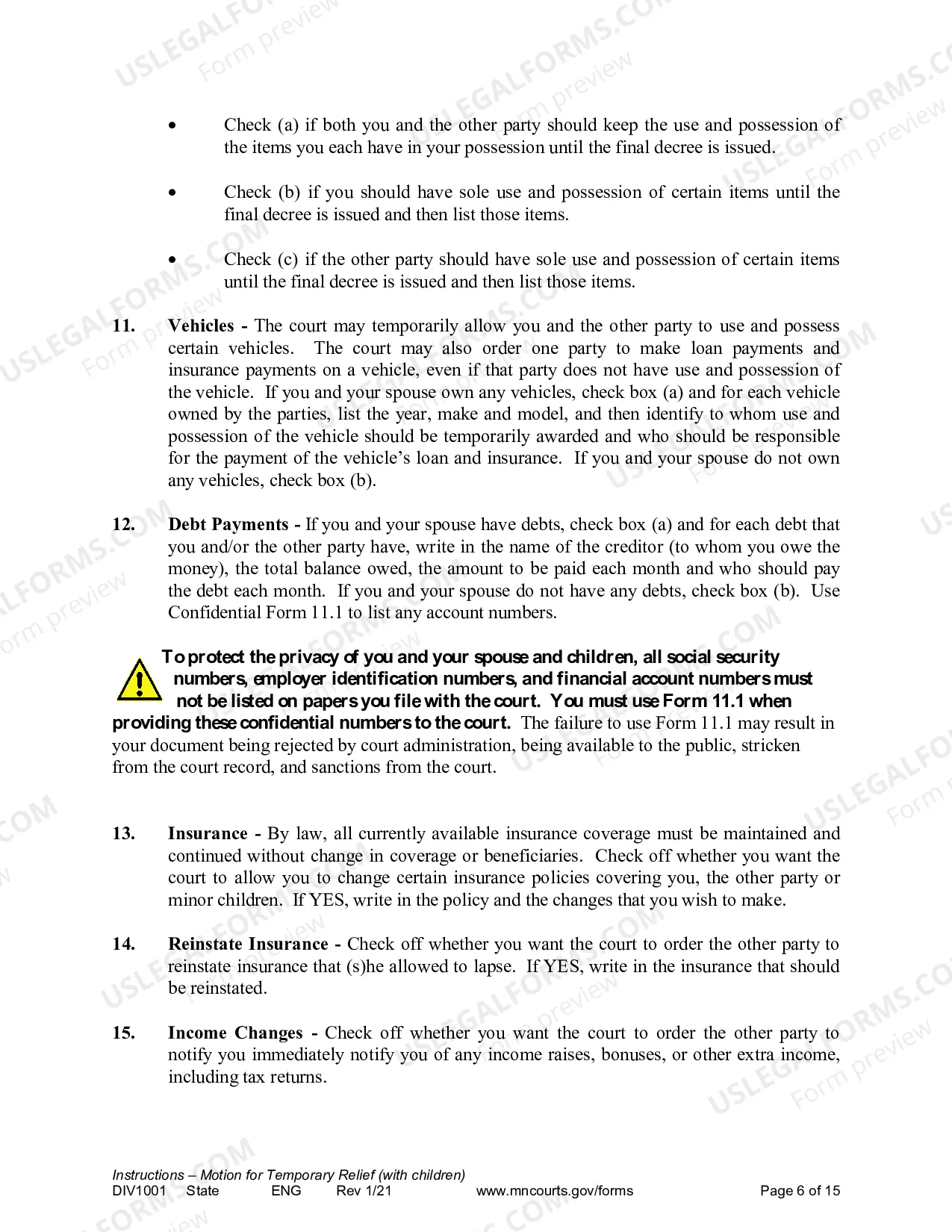
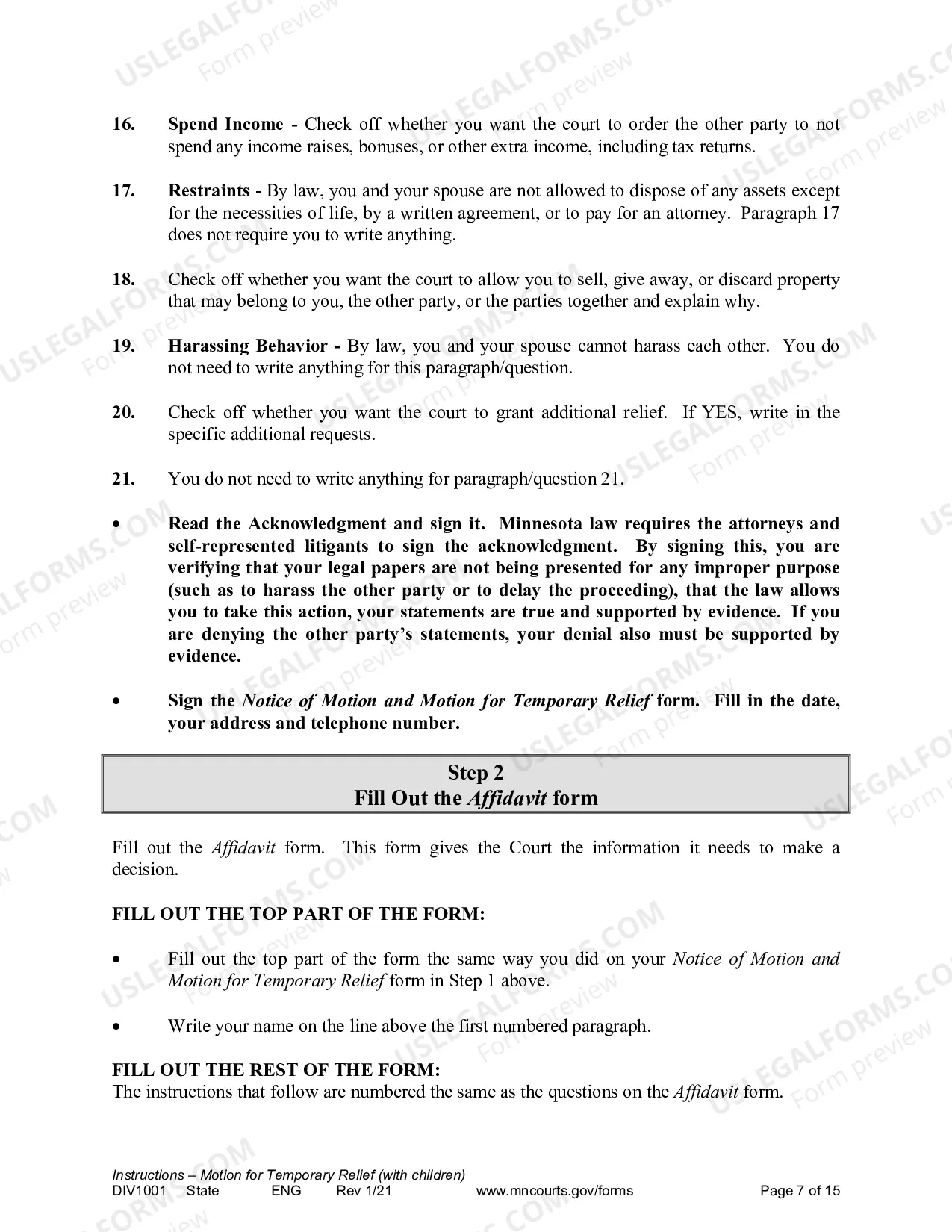
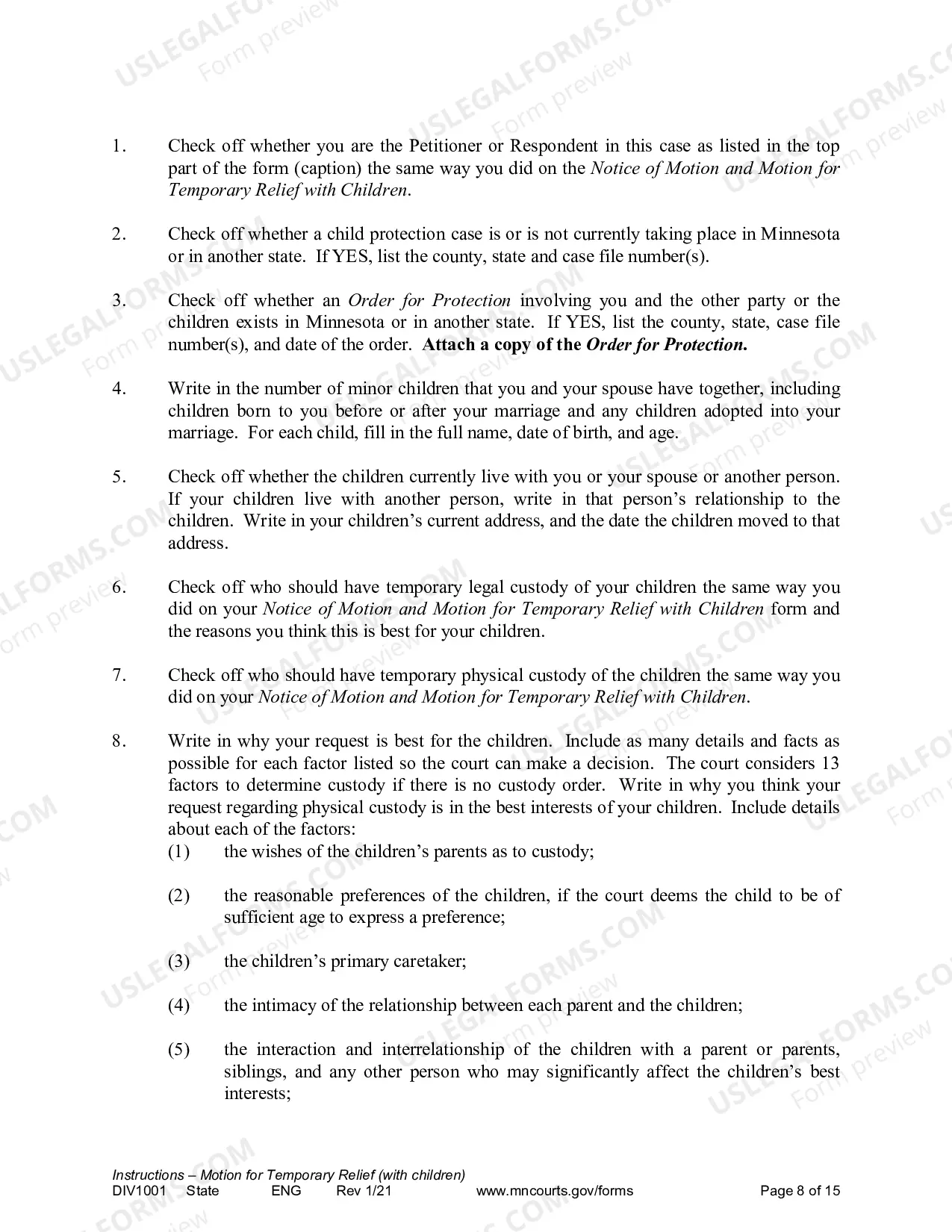
How to fill out Minnesota Instructions For Temporary Relief With Children?
Access any version from 85,000 legal documents, including Minnesota Guidelines for Temporary Assistance with Children, online through US Legal Forms. Each template is crafted and refreshed by state-authorized attorneys.
If you already hold a subscription, sign in. When on the form’s page, click the Download button and navigate to My documents to retrieve it.
If you have not yet subscribed, follow these steps.
With US Legal Forms, you will always have immediate access to the suitable downloadable template. The service provides access to forms and organizes them into categories to streamline your search. Utilize US Legal Forms to acquire your Minnesota Guidelines for Temporary Assistance with Children quickly and effortlessly.
- Verify the state-specific criteria for the Minnesota Guidelines for Temporary Assistance with Children you wish to utilize.
- Examine the description and view the template.
- Once you are sure the template meets your needs, click Buy Now.
- Choose a subscription plan that aligns with your financial situation.
- Establish a personal account.
- Make payment using one of two convenient methods: credit card or PayPal.
- Select a format for downloading the file; two options are available (PDF or Word).
- Download the document to the My documents section.
- As soon as your reusable template is prepared, print it out or save it to your device.
Form popularity
FAQ
A motion for temporary relief in Minnesota is a legal request for temporary orders during a divorce or custody case. This can include temporary child support, custody, or spousal maintenance. Filing this motion can provide stability for you and your children while the case is ongoing. You can find detailed Minnesota Instructions for Temporary Relief with Children on our platform to assist you in navigating this process.
A motion for temporary relief child custody is a request made to the court for immediate custody arrangements while a case is pending. This motion allows parents to establish temporary living arrangements and parenting time until a final custody decision is made. Our platform provides comprehensive Minnesota Instructions for Temporary Relief with Children to help you understand how to file and what to include in your motion.
In Minnesota, a child can express their preference regarding which parent to live with once they reach the age of 14. However, the court will consider various factors, including the child's best interests, when making a final decision. It's important to note that the child's preference is not the sole determining factor. For guidance on this topic, refer to the Minnesota Instructions for Temporary Relief with Children available on our site.
To file for temporary child support in Minnesota, you need to complete the necessary forms and submit them to the court. You will find detailed Minnesota Instructions for Temporary Relief with Children on our platform, which guide you through this process. Make sure to provide relevant financial information to support your request. Once filed, the court will schedule a hearing to determine the temporary support amount.
In divorce cases "general relief" can mean the Petitioner is asking the court for other relief he requested plus the option to get anything else which he is entitled to under the law.
Relief in a divorce is everything that you request in your divorce complaint. You are permitted to ask the court for a number of different types of relief. For example, you can request to divide up your personal property, real property (like your house), and your debts through equitable distribution.
As their name suggests, whatever a judge orders in these hearings is a temporary, short-term solution until the parties can agree on a long-term plan in their divorce settlement.Usually, initial hearings on temporary relief order cover issues like child support, parenting time, or spousal support.
What Is Temporary Relief? After a case is filed, but before it is resolved, sometimes it is necessary to ask the court for an award of temporary relief. This usually happens when the parties have a dispute about payment of ongoing bills, support, or issues involving children.
Motions for temporary relief are granted (or denied) after a hearing. In order to give all parties adequate notice of a hearing, the hearing cannot take place until at least fourteen days after the motion is filed. As a practical matter, it may take even longer to get on the docket to be heard.
Typically, a temporary orders hearing will be handled in one of two ways, either by calling witnesses (including the parties) to the stand and asking them questions aimed at eliciting direct testimony from them (referred to as an evidentiary hearing) or by your attorney offering summaries of what witnesses would say,