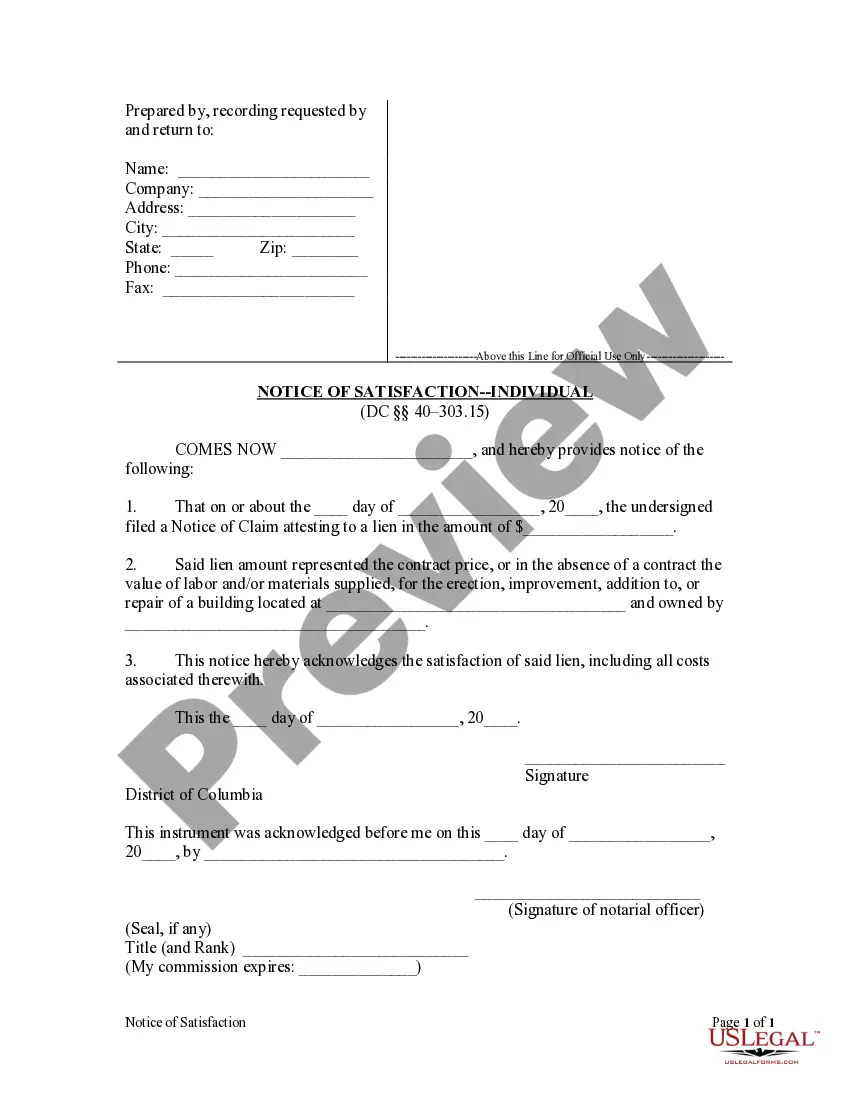
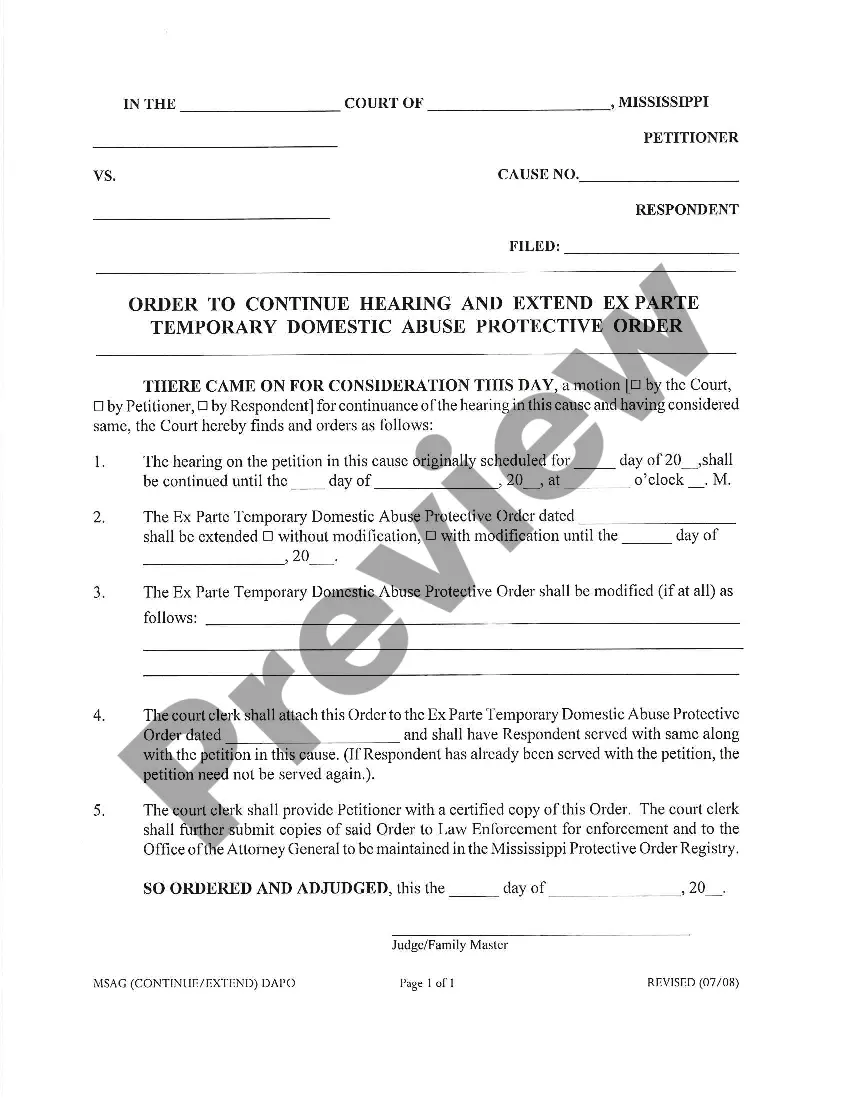
Mississippi Order to Continue Hearing and Extend Temporary Ex Parte Domestic Abuse Protective Order
About this form
The Order to Continue Hearing and Extend Temporary Ex Parte Domestic Abuse Protective Order is a legal document used when a temporary protective order has been issued, but the scheduled hearing cannot take place for any reason. This form serves to reschedule the hearing and extend the protective order until the new date, ensuring continued legal protection for individuals facing domestic abuse situations.
Main sections of this form
- Case number: Identification of the ongoing legal proceedings.
- New hearing date: Specifies the rescheduled date of the hearing.
- Parties involved: Details the names of individuals involved in the protective order.
- Signature section: Includes areas for the necessary parties to sign and date.
- Court information: Provides details about the court where the case is filed.
When to use this form
This form is typically used when a scheduled hearing regarding a temporary ex parte domestic abuse protective order cannot be held. Reasons may include but are not limited to court delays, emergencies, or unforeseen circumstances affecting either party's ability to attend. By completing this form, you can ensure that the protective order remains in effect until the new hearing date is established.
Who should use this form
- Individuals currently under a temporary ex parte domestic abuse protective order.
- Victims of domestic abuse seeking to extend their protection.
- Legal representatives assisting clients with domestic abuse cases.
- Any party involved in a legal case related to domestic abuse protective orders.
Steps to complete this form
- Identify the parties involved by entering their full names and contact information.
- Locate and enter the case number associated with the ongoing legal proceedings.
- Specify the new hearing date in the designated section.
- Review all entered information for accuracy before submission.
- Sign and date the form where required.
Does this form need to be notarized?
This form does not typically require notarization unless specified by local law. Always check your local regulations to confirm notarization requirements for protective orders.
Get your form ready online
Our built-in tools help you complete, sign, share, and store your documents in one place.
Make edits, fill in missing information, and update formatting in US Legal Forms—just like you would in MS Word.
Download a copy, print it, send it by email, or mail it via USPS—whatever works best for your next step.
Sign and collect signatures with our SignNow integration. Send to multiple recipients, set reminders, and more. Go Premium to unlock E-Sign.
If this form requires notarization, complete it online through a secure video call—no need to meet a notary in person or wait for an appointment.
We protect your documents and personal data by following strict security and privacy standards.

Make edits, fill in missing information, and update formatting in US Legal Forms—just like you would in MS Word.

Download a copy, print it, send it by email, or mail it via USPS—whatever works best for your next step.

Sign and collect signatures with our SignNow integration. Send to multiple recipients, set reminders, and more. Go Premium to unlock E-Sign.

If this form requires notarization, complete it online through a secure video call—no need to meet a notary in person or wait for an appointment.

We protect your documents and personal data by following strict security and privacy standards.
Common mistakes to avoid
- Failing to provide the correct case number.
- Not entering a new hearing date or submitting an unrealistic date.
- Inaccurate details regarding the parties involved.
- Omitting signatures or dates where required.
Benefits of using this form online
- Convenience: Access the form anytime and from anywhere.
- Editability: Easily make changes as needed before finalizing.
- Reliability: Forms are drafted by licensed attorneys to ensure legal compliance.
Looking for another form?

Form popularity
FAQ
An order that is issued ex parte means that it is issued without prior notice to the other parent, based only on your affidavit/testimony. If the judge issues an emergency ex parte order, the judge will schedule a hearing within 14 days2 and the respondent but be served at least 5 days before that hearing.
A temporary restraining order (TRO) is an emergency (ex parte) court order prohibiting the defendant from taking some action. An ex parte order is only granted when: 1. Irreparable harm or immediate danger will occur before a.
The temporary restraining order in California does not go into the CLETS database and will not come up on a background check. It will also generally not impact the restrained parties' ability to possess a firearm.
The court is looking for a description of your relationship to the respondent, when, where, what happened, and who did what to whom. Using the facts of the incident only, keep your statement brief and to the point. Briefly describe the most recent incident of abuse and/or threats of abuse or other behaviors.
In civil procedure, ex parte is used to refer to motions for orders that can be granted without waiting for a response from the other side. Generally, these are orders that are only in place until further hearings can be held, such as a temporary restraining order.
An ex parte order of protection is a temporary measure that can be filed quickly. A full protection order, or restraining order, is granted after a court hearing and lasts for a longer period of time than the ex parte order.
Stay Away Provision: Ordering the abuser to stay at least a certain number of yards or feet away from the victim, his or her home, job, school, and car. The stay-away distance can vary by state, judge or the lethality of the situation, but is often at least 100 yards or 300 feet.
Temporary restraining orders usually last between 20 and 25 days, until the court hearing date. When you go to court for the hearing that was scheduled for your TRO, the judge may issue a permanent restraining order. They are not really permanent because they usually last up to 5 years.