Web Site Development Agreement
What is this form?
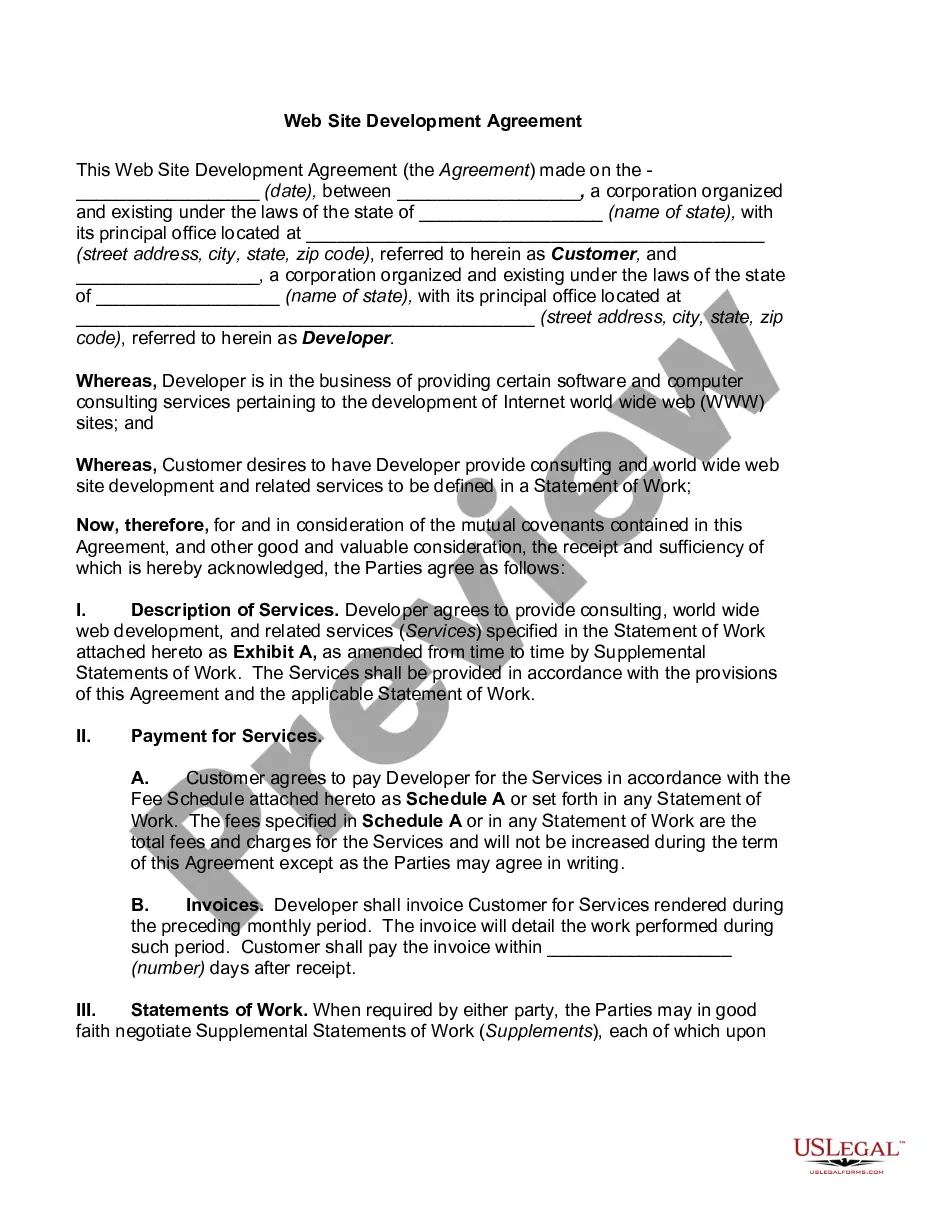
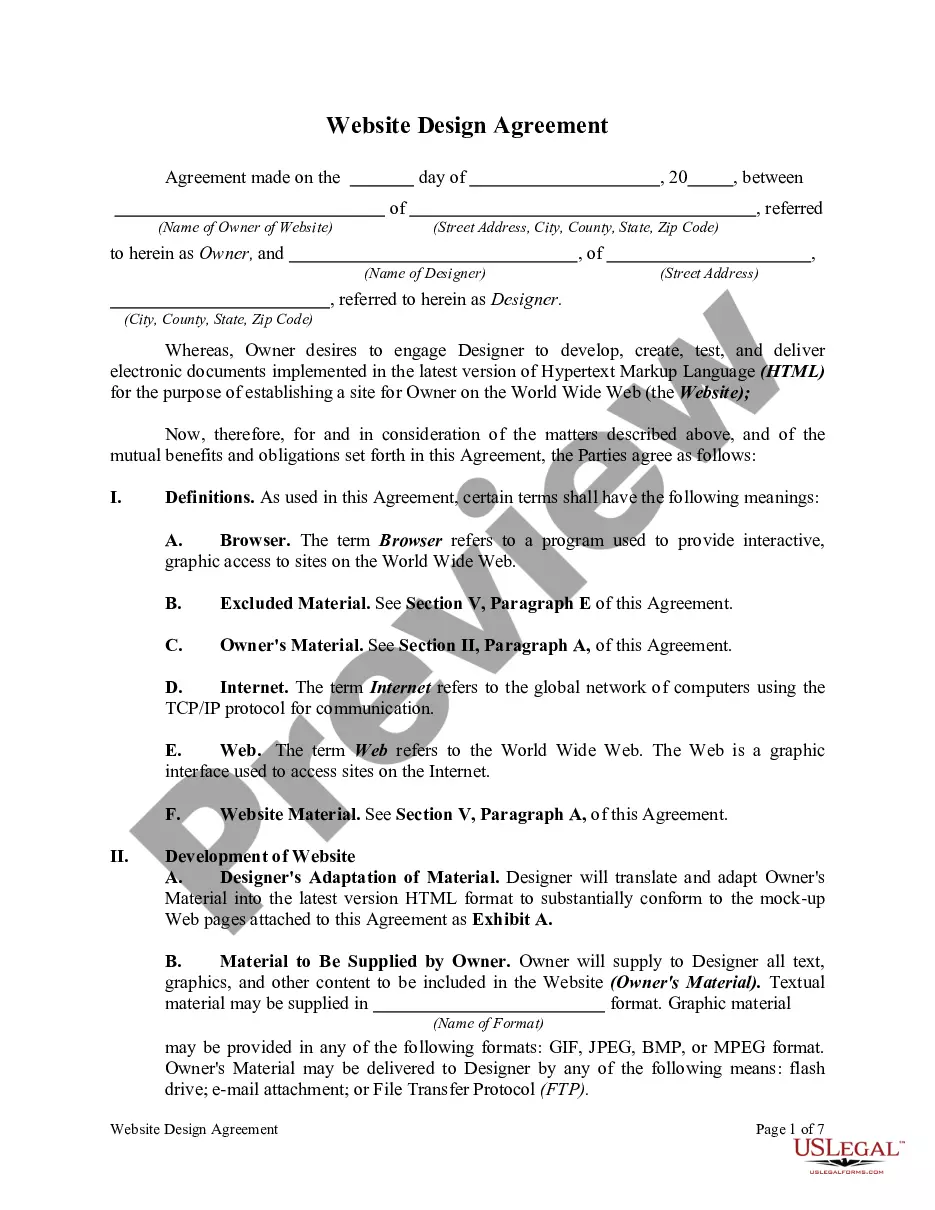
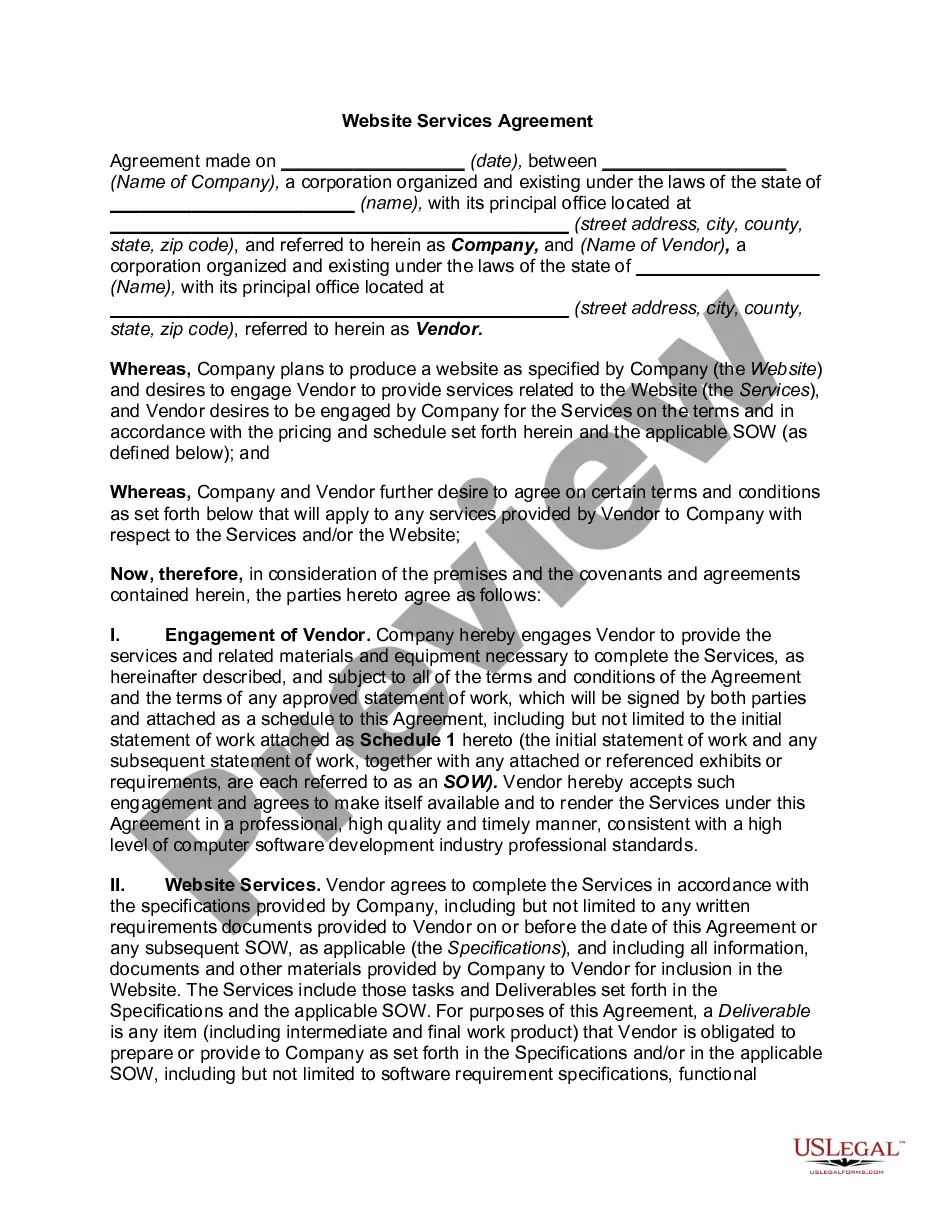
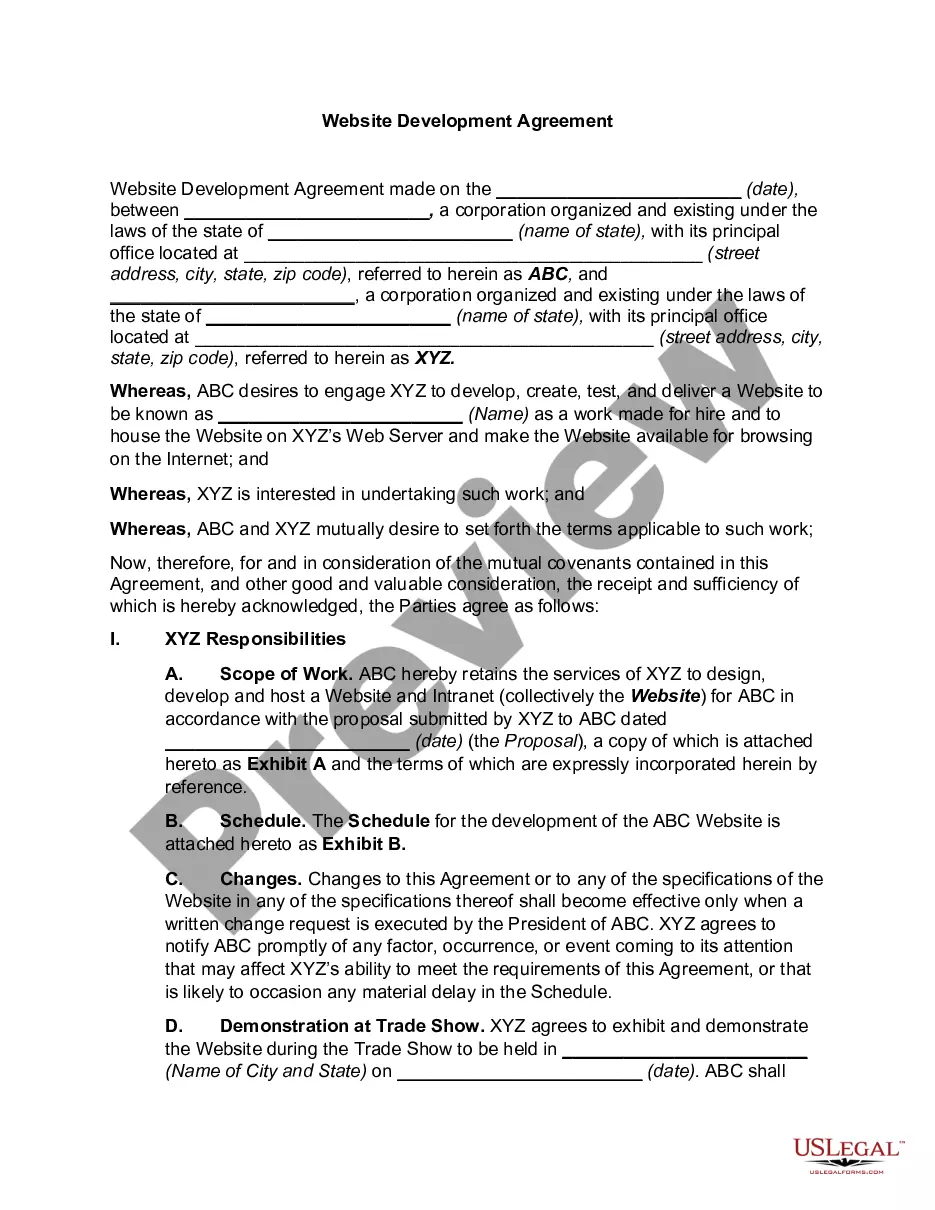
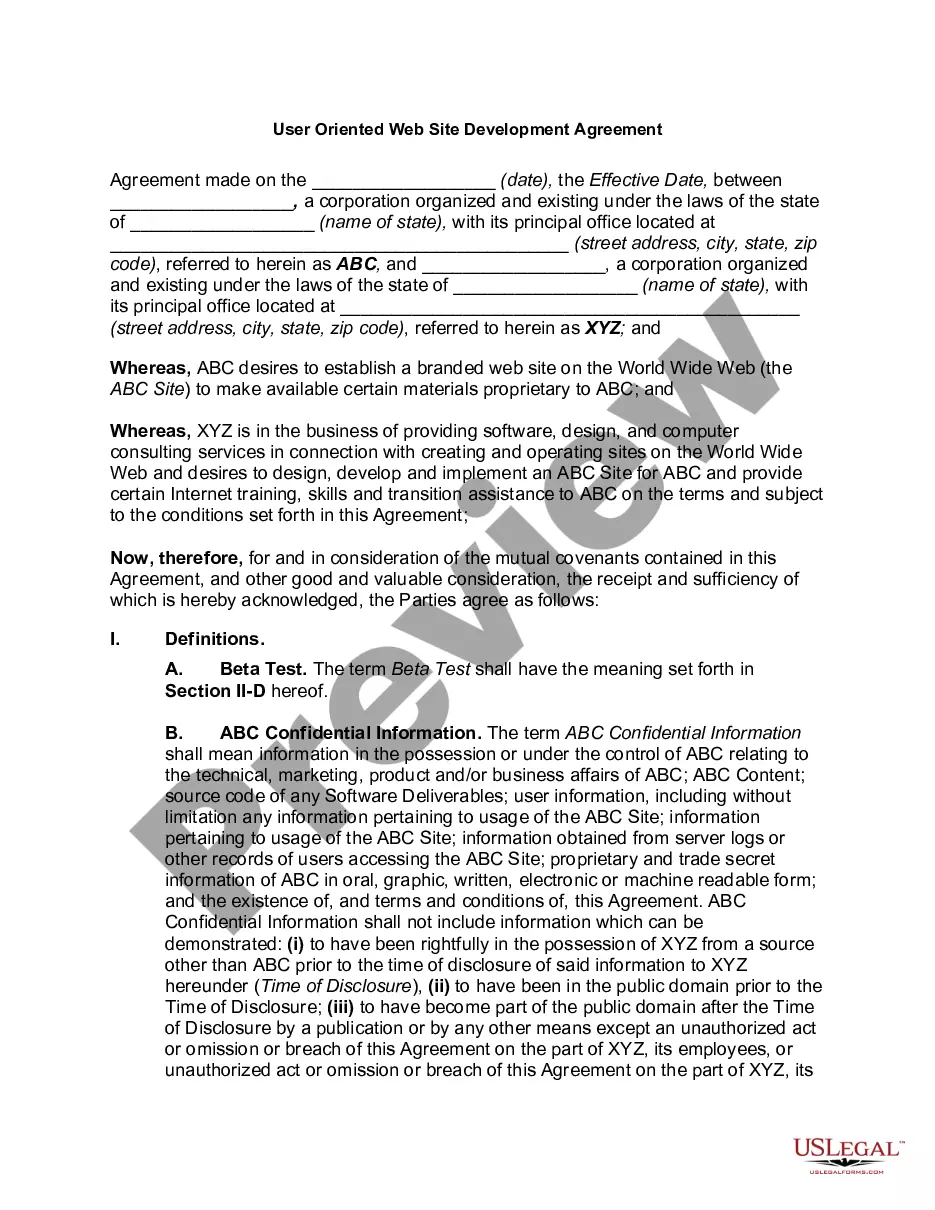
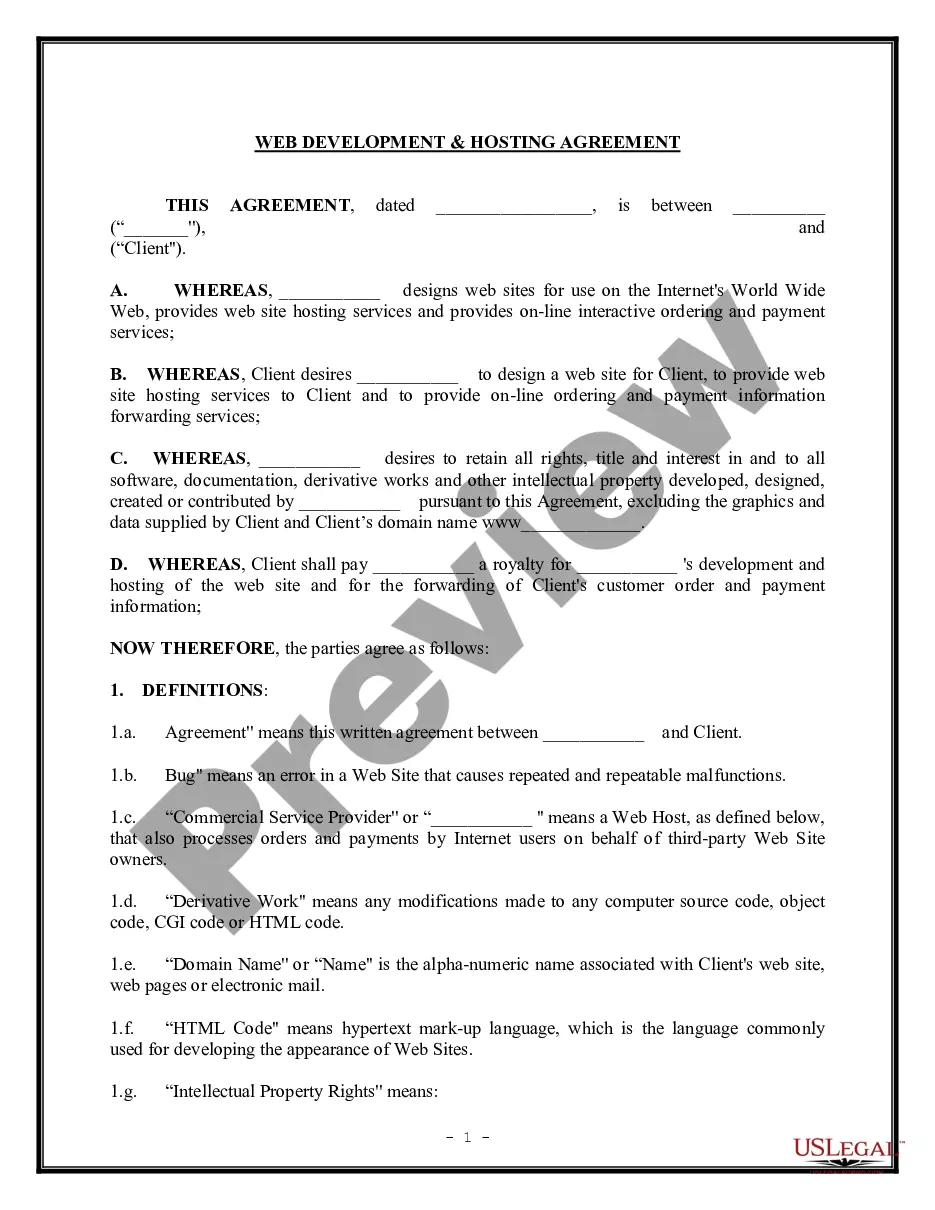
The Web Site Development Agreement is a legal document that outlines the terms and conditions between a customer and a developer for the development of a website. This agreement helps protect the interests of both parties by specifying the scope of work, timelines, warranties, and indemnities. Unlike generic contracts, this form is tailored to the unique aspects of web development, ensuring clarity in responsibilities and expectations.
Form components explained
- Description of Services: Details the specific services the developer will provide.
- Payment for Services: Outlines the payment schedule and invoicing process.
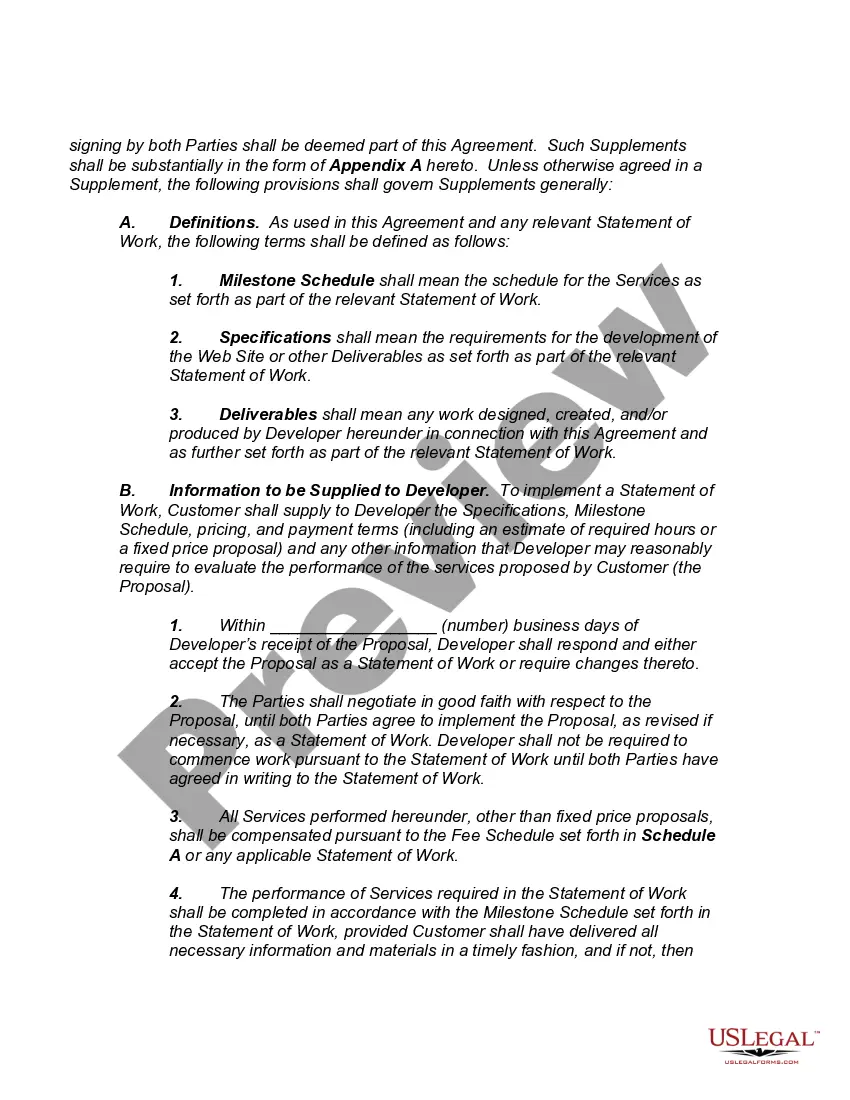
- Statements of Work: Provides a framework for additional tasks and adjustments during the project.
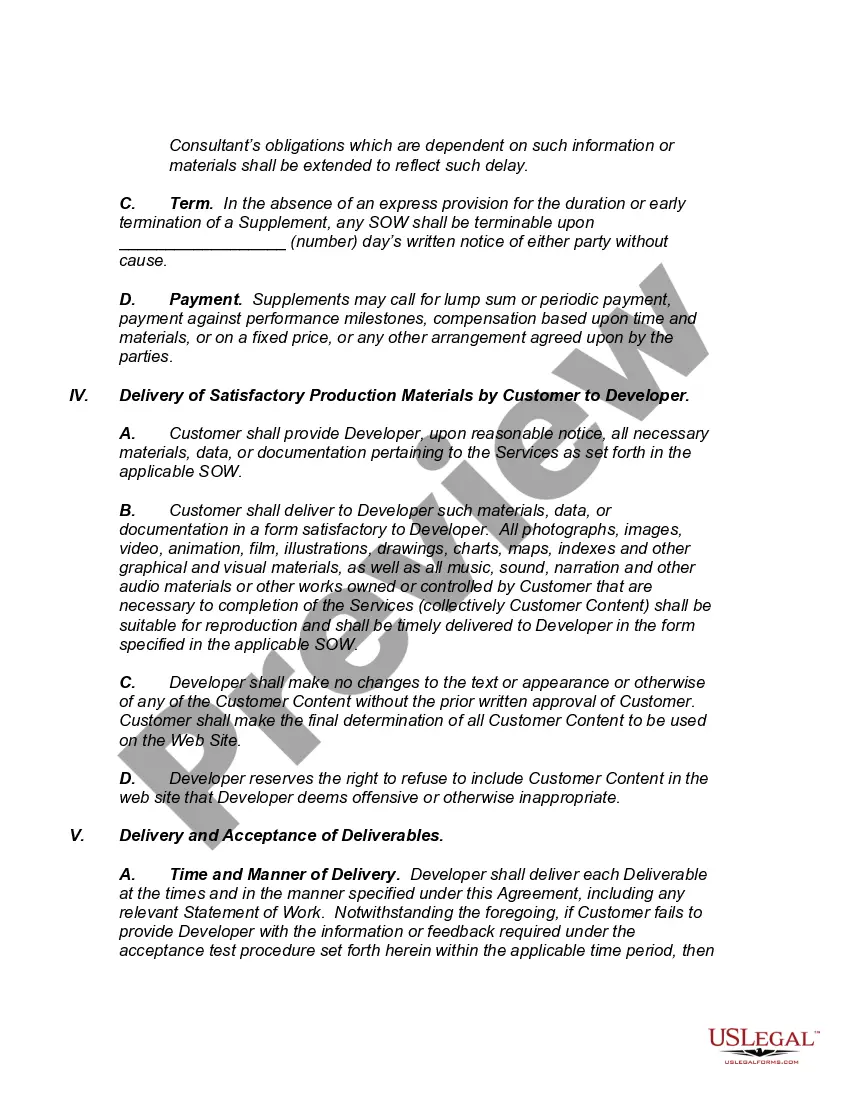
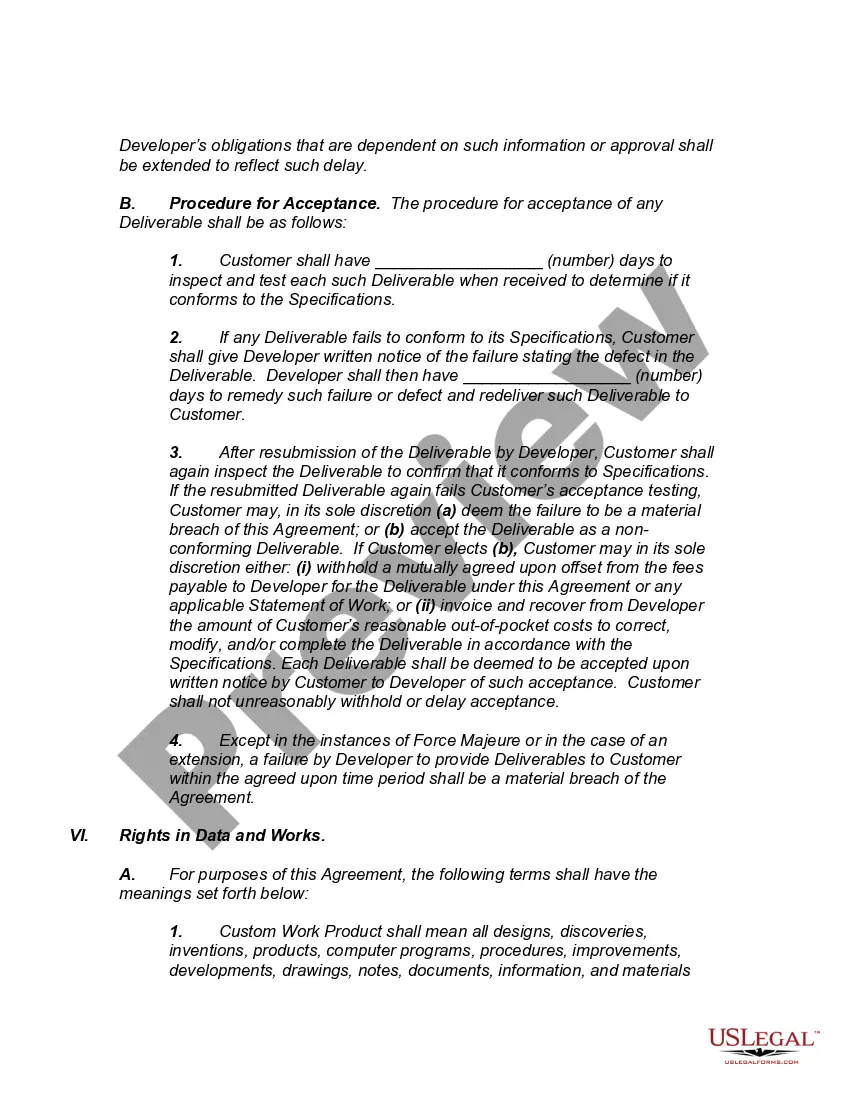
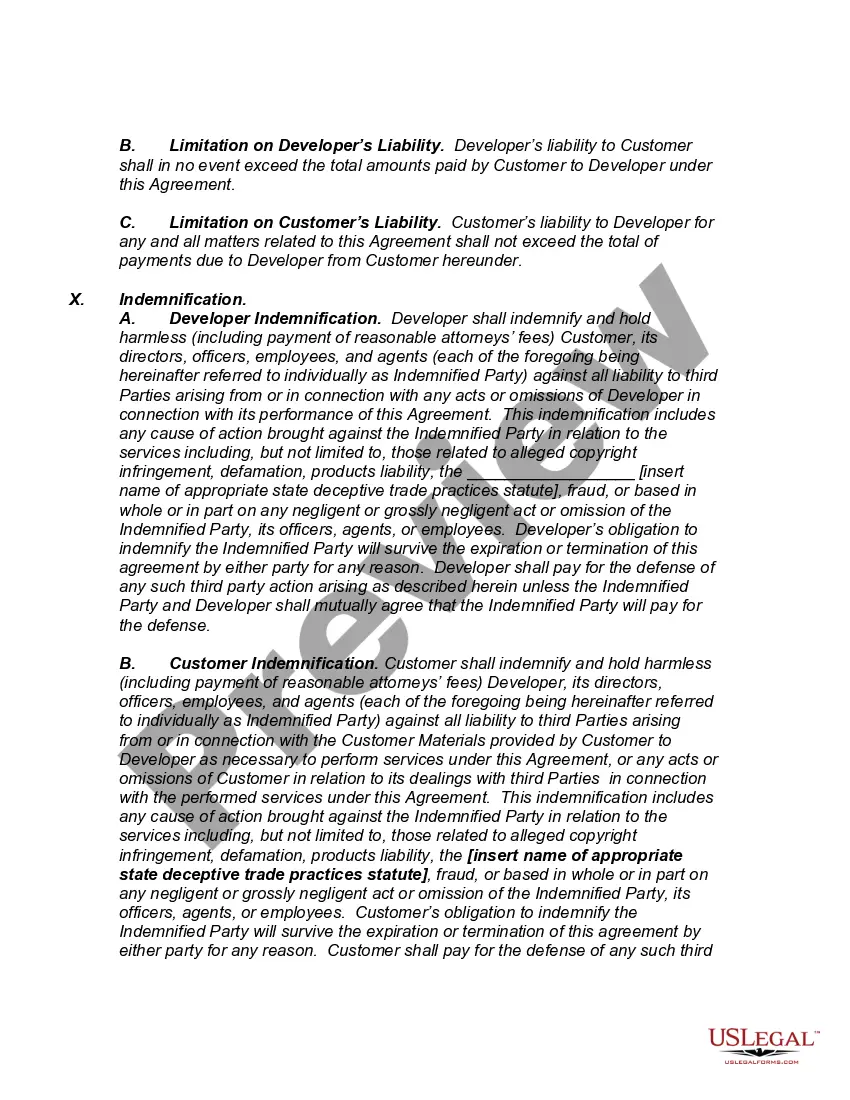
- Delivery and Acceptance: Specifies the procedures for delivering completed work and customer acceptance.
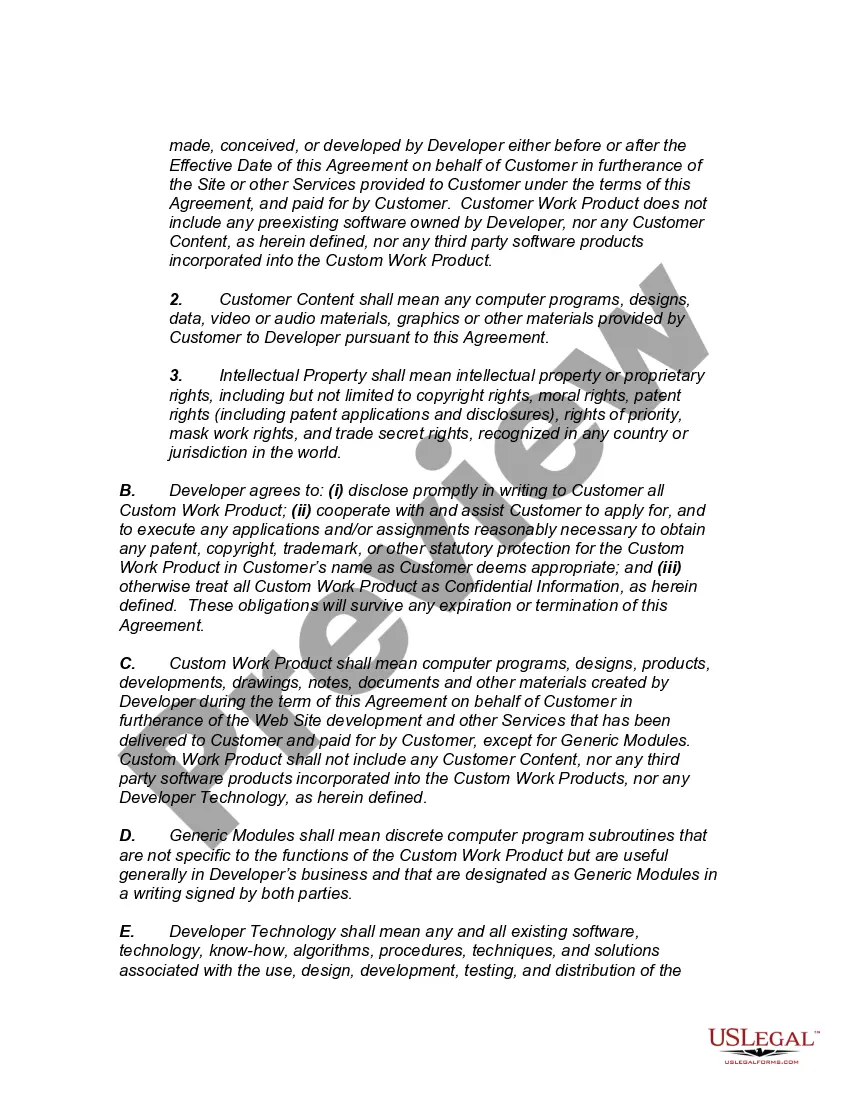
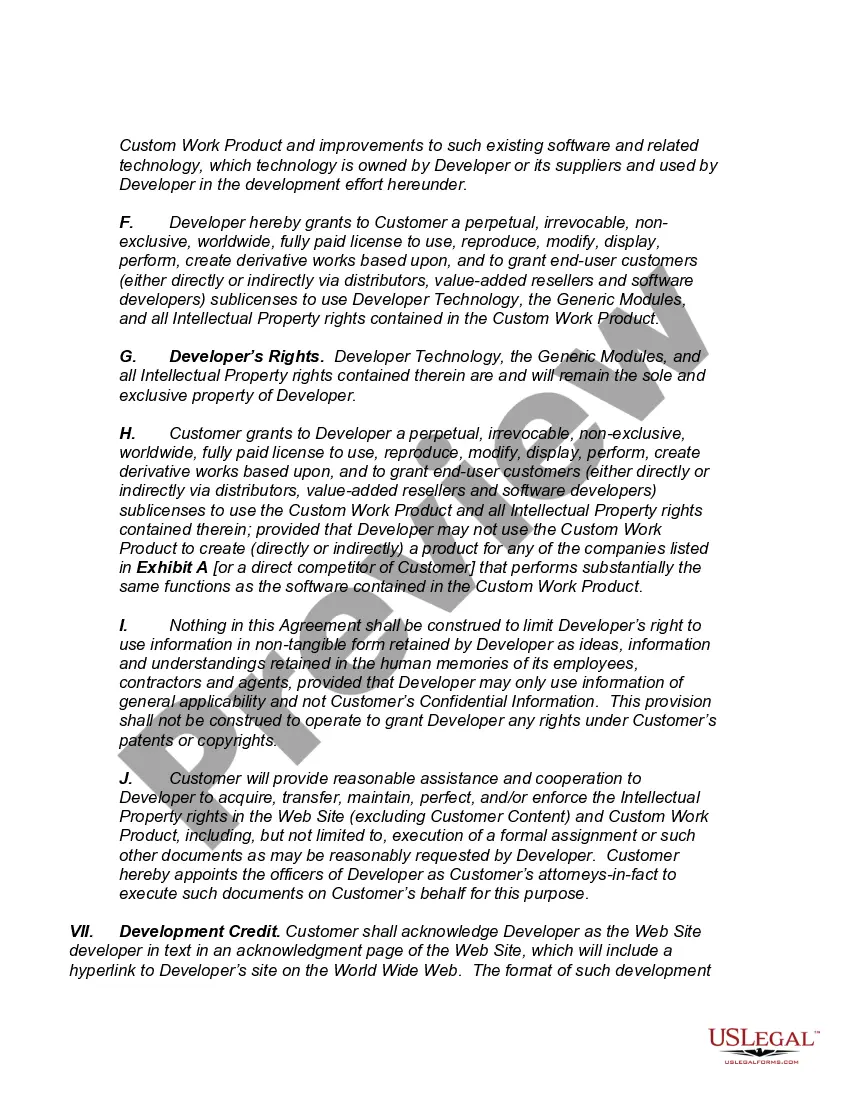
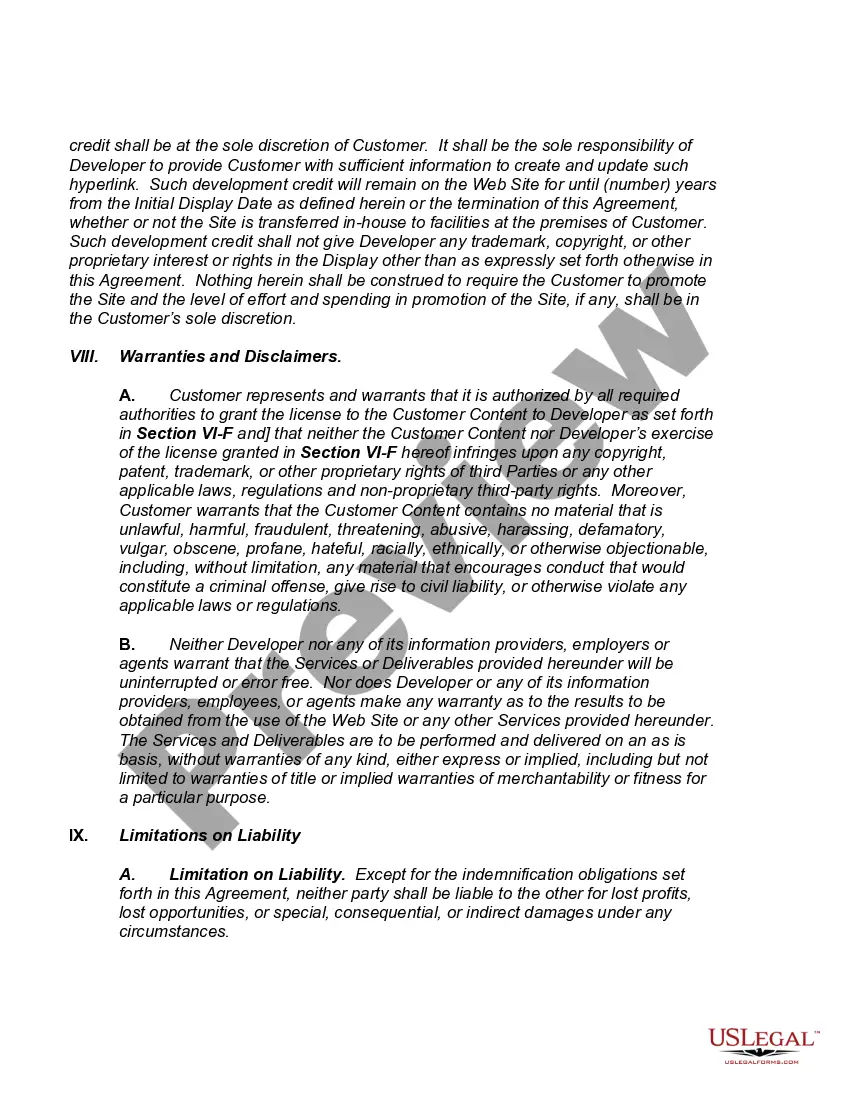
- Warranties and Indemnification: Lists the guarantees provided by the developer and conditions for liability protection.
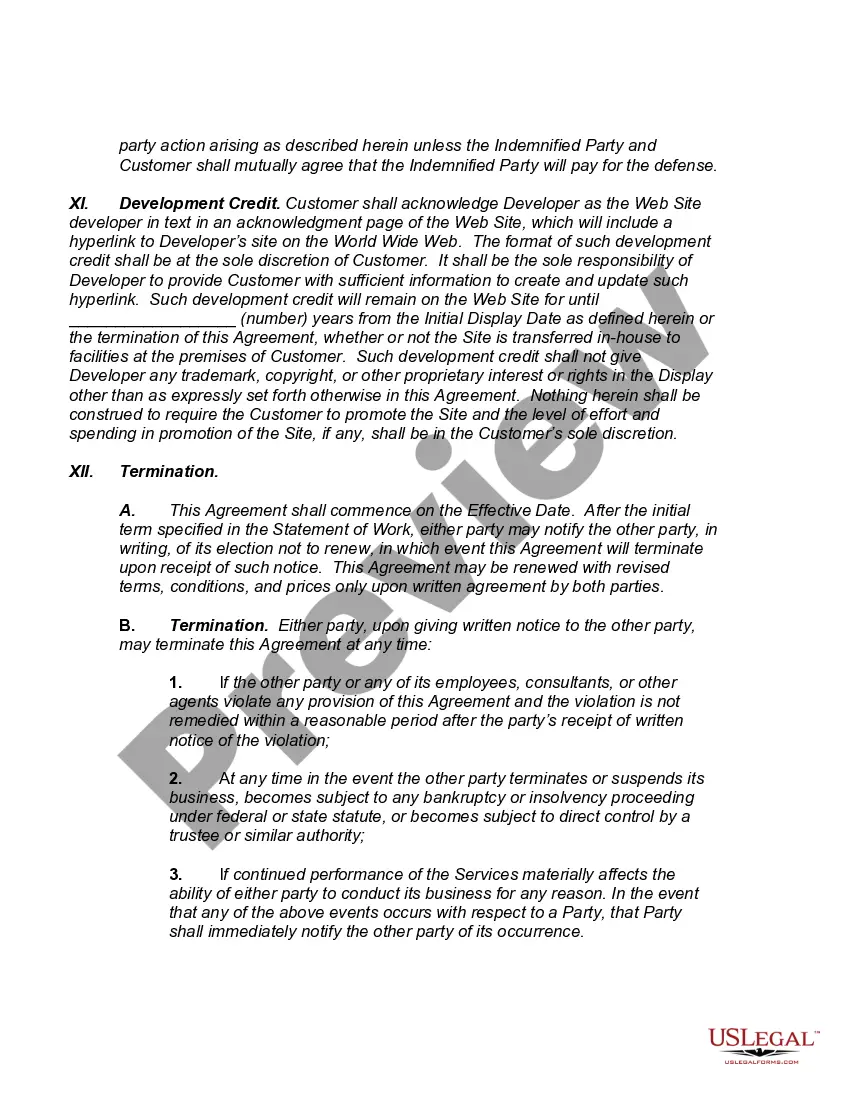
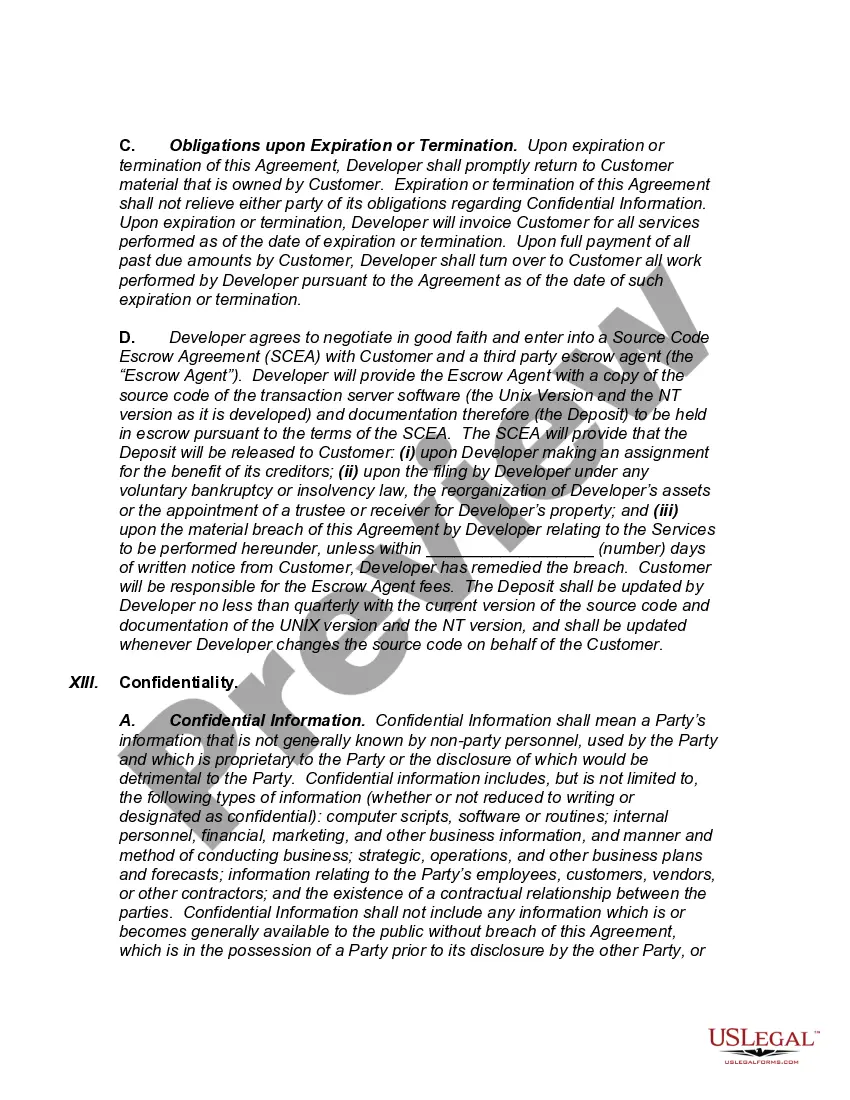
- Termination: Describes how either party can end the agreement and the obligations post-termination.

When to use this form
This form is essential when a business or individual hires a developer to create a website. It is applicable in scenarios such as launching a new company website, developing a promotional site, or redesigning an existing online platform. Using this agreement ensures that both parties have a mutual understanding of expectations, deliverables, and deadlines, minimizing the risk of disputes.
Who should use this form
This agreement is intended for:
- Businesses looking to hire a web developer for site creation or enhancement.
- Freelance developers requiring a structured contract when taking on web projects.
- Organizations needing to formalize the working relationship with their web development team.
- Any entity that seeks clarity on deliverables, payment conditions, and legal protections in web development.
How to prepare this document
- Identify the parties: Fill in the names and addresses of the customer and the developer.
- Specify the services: Clearly define the services to be provided in the attached Statement of Work.
- Enter payment details: Complete the Fee Schedule indicating how payments will be made.
- Outline timelines: Include specific milestones and deadlines for deliverables.
- Sign the agreement: Obtain signatures from authorized representatives of both parties.
Is notarization required?
This form does not typically require notarization unless specified by local law. It is recommended to consult with legal counsel if there are any concerns regarding the need for notarization in your jurisdiction.
Get your form ready online
Our built-in tools help you complete, sign, share, and store your documents in one place.
Make edits, fill in missing information, and update formatting in US Legal Forms—just like you would in MS Word.
Download a copy, print it, send it by email, or mail it via USPS—whatever works best for your next step.
Sign and collect signatures with our SignNow integration. Send to multiple recipients, set reminders, and more. Go Premium to unlock E-Sign.
If this form requires notarization, complete it online through a secure video call—no need to meet a notary in person or wait for an appointment.
We protect your documents and personal data by following strict security and privacy standards.

Make edits, fill in missing information, and update formatting in US Legal Forms—just like you would in MS Word.

Download a copy, print it, send it by email, or mail it via USPS—whatever works best for your next step.

Sign and collect signatures with our SignNow integration. Send to multiple recipients, set reminders, and more. Go Premium to unlock E-Sign.

If this form requires notarization, complete it online through a secure video call—no need to meet a notary in person or wait for an appointment.

We protect your documents and personal data by following strict security and privacy standards.
Mistakes to watch out for
- Not clearly defining the scope of work which can lead to misunderstandings.
- Failing to establish payment timelines or terms, resulting in payment delays.
- Missing signatures, rendering the agreement unenforceable.
- Overlooking the importance of regular updates on project milestones.
Why complete this form online
- Convenience: Easily download and complete the form from anywhere.
- Editability: Customize the document to fit specific project needs.
- Reliability: Use a legally vetted document created by licensed attorneys.
- Time efficiency: Save time by accessing pre-drafted agreements tailored for web development.
Looking for another form?
Form popularity
FAQ
7 ways to get more web development projects. Once you get working experience of a few years, new clients will come more easily. Create your own website. Social media marketing. Check out freelancing websites. Do enough of networking. Collaborate with those in related industry. Referrals work like charm. Reach out.
Detailed descriptions of the work you'll be doing. Timeline for deliverables (including dates to aim for so you can create a work-back schedule) Payment details (overall cost, down payment, method of payment, due dates for payments, including late fees)
Define the project. Setup project tasks. Prepare the information architecture. Figure the times and costs per task. Obtain team review & approvals. Request client or stakeholder approval. Get started on your project!
Project Development Agreements (PDAs) are often used in urban regeneration and other development projects; they allow the government landowner to keep control of the precinct development and allow the developer to defer payment and land acquisition.
FreeCodeCamp (Free) FreeCodeCamp is probably one of the best free resources on the internet to learn web development. Udemy (Paid) Coursera (Free) Treehouse (Paid) Codecademy (Free and Paid Version) W3Schools (Free) HTMLDog (Free) Traversy Media (Free)
Have a Clearly Defined Statement of Work. Streamline the Review and Approval Process. Protect Yourself in the Case of Project Termination. Protect Yourself Against Copyright Infringement. Make Sure the Agreement Designates a Legal Jurisdiction Near You.
Development agreements are contracts approved by the Planning Commission and Board of Supervisors entered into by the City and a developer to expressly define a development project's rules, regulations, commitments, and policies for a specific period of time.
Get it in writing. Keep it simple. Deal with the right person. Identify each party correctly. Spell out all of the details. Specify payment obligations. Agree on circumstances that terminate the contract. Agree on a way to resolve disputes.