Indiana Revocable Living Trust for Husband and Wife with No Children
Overview of this form
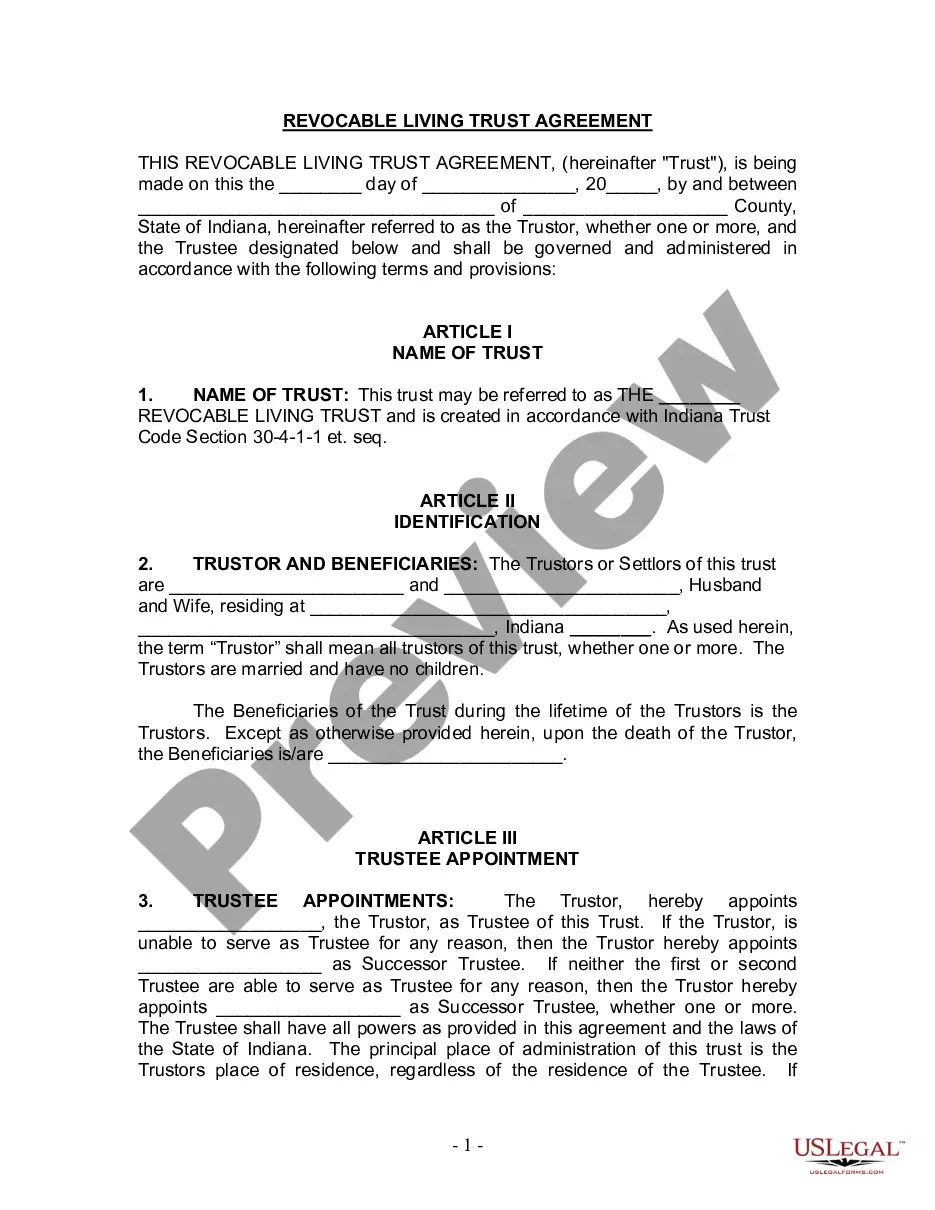
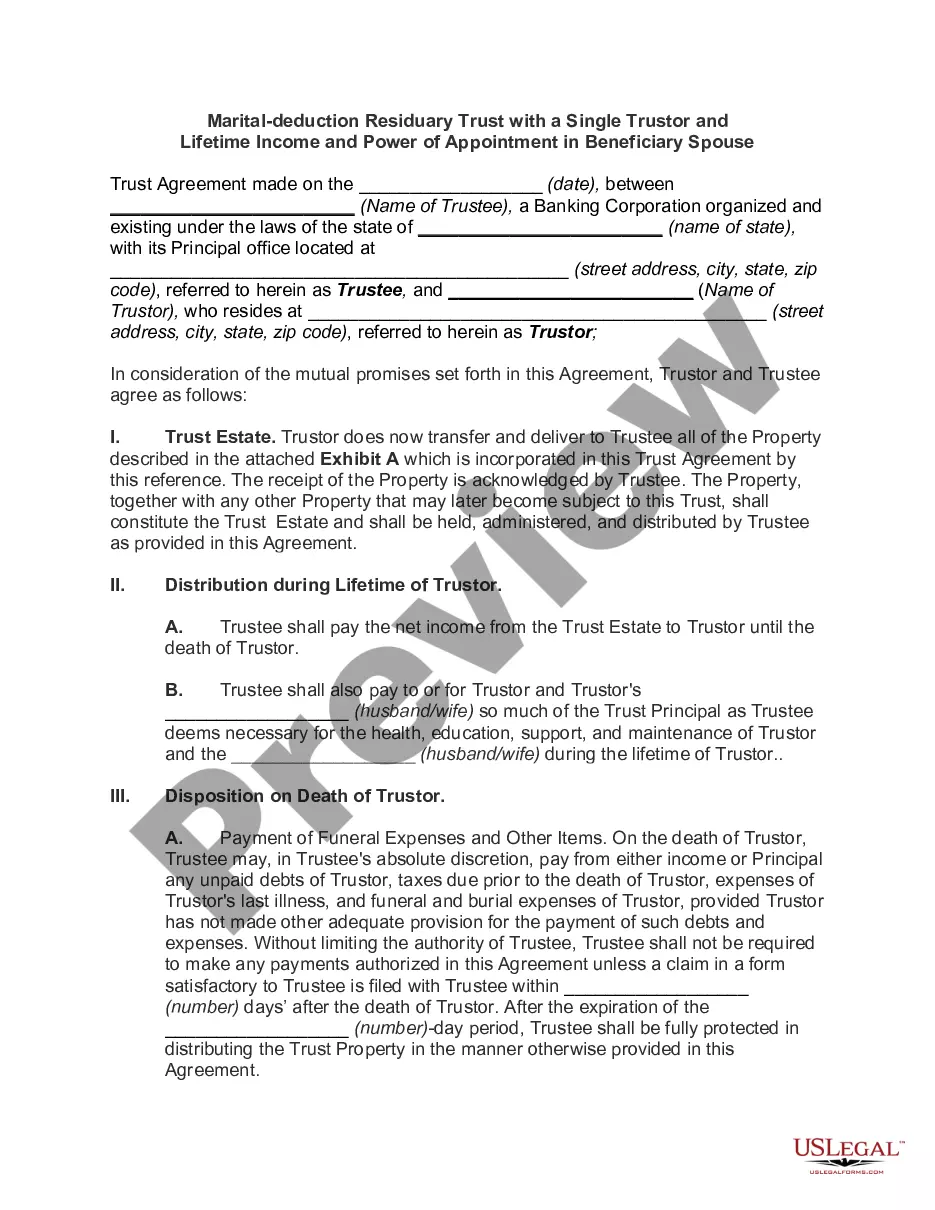
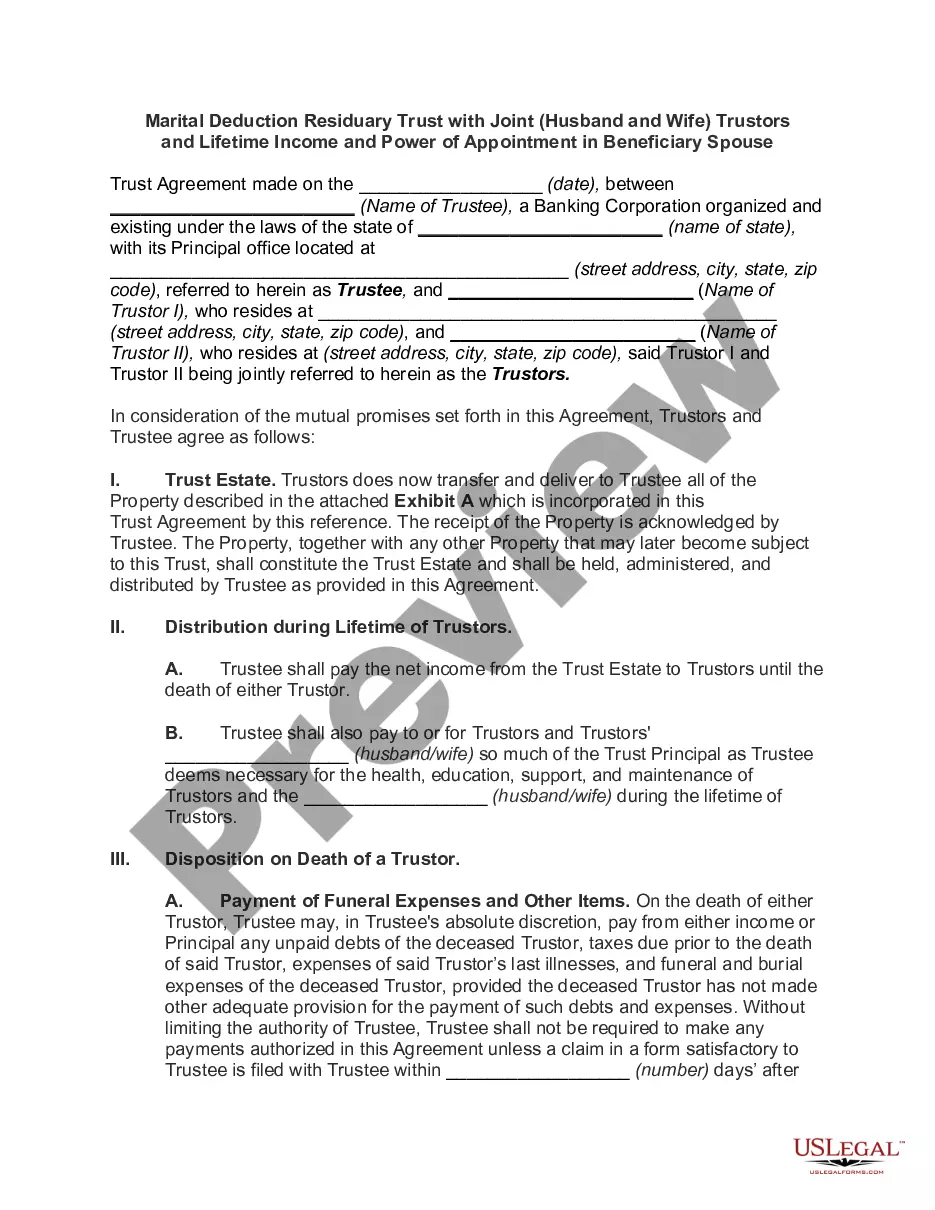
The Revocable Living Trust for Husband and Wife with No Children is a legal document that allows both spouses to create a trust during their lifetime. This form is specifically designed for couples without children, enabling them to manage and protect their assets efficiently while retaining complete control over their property. Unlike a will, a living trust does not go through the probate process, allowing for a smoother transition of assets after the death of one or both spouses. This form differs from similar legal documents by providing a structured way for both spouses to jointly plan their estate without needing specific provisions for children.
Form components explained
- Identification of the Trustors (Husband and Wife) and designation of the Trustee.
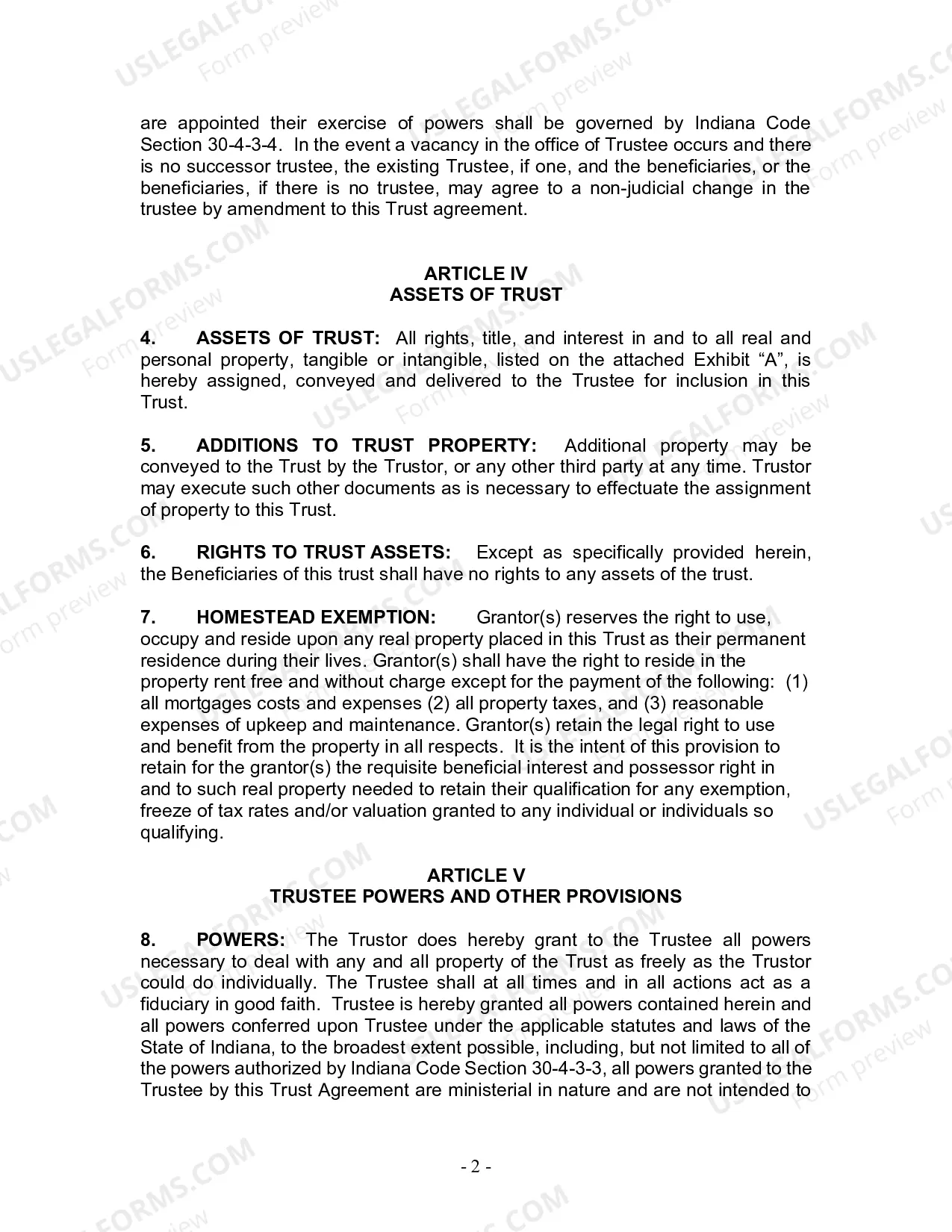
- Details about the assets included in the trust and the ability to add additional property.
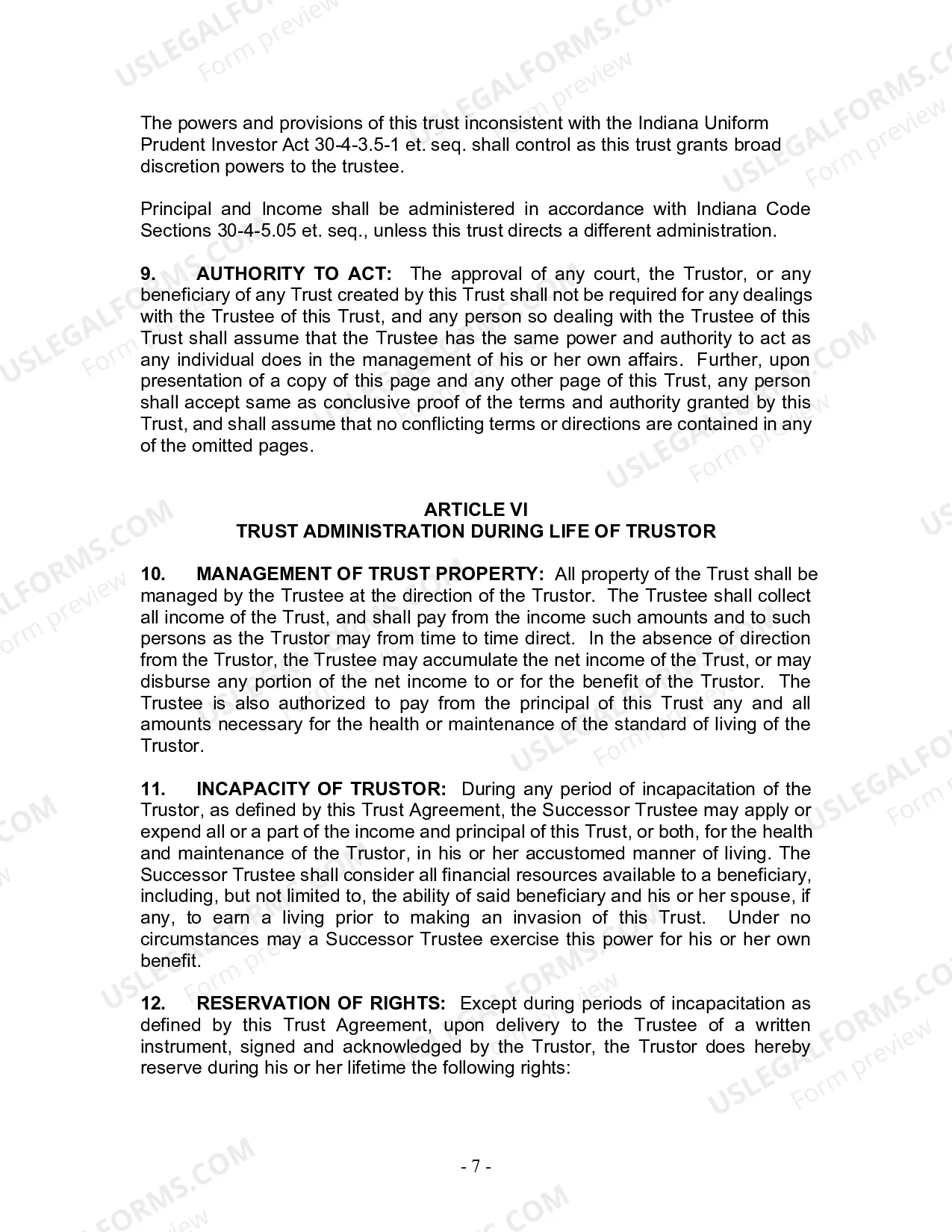
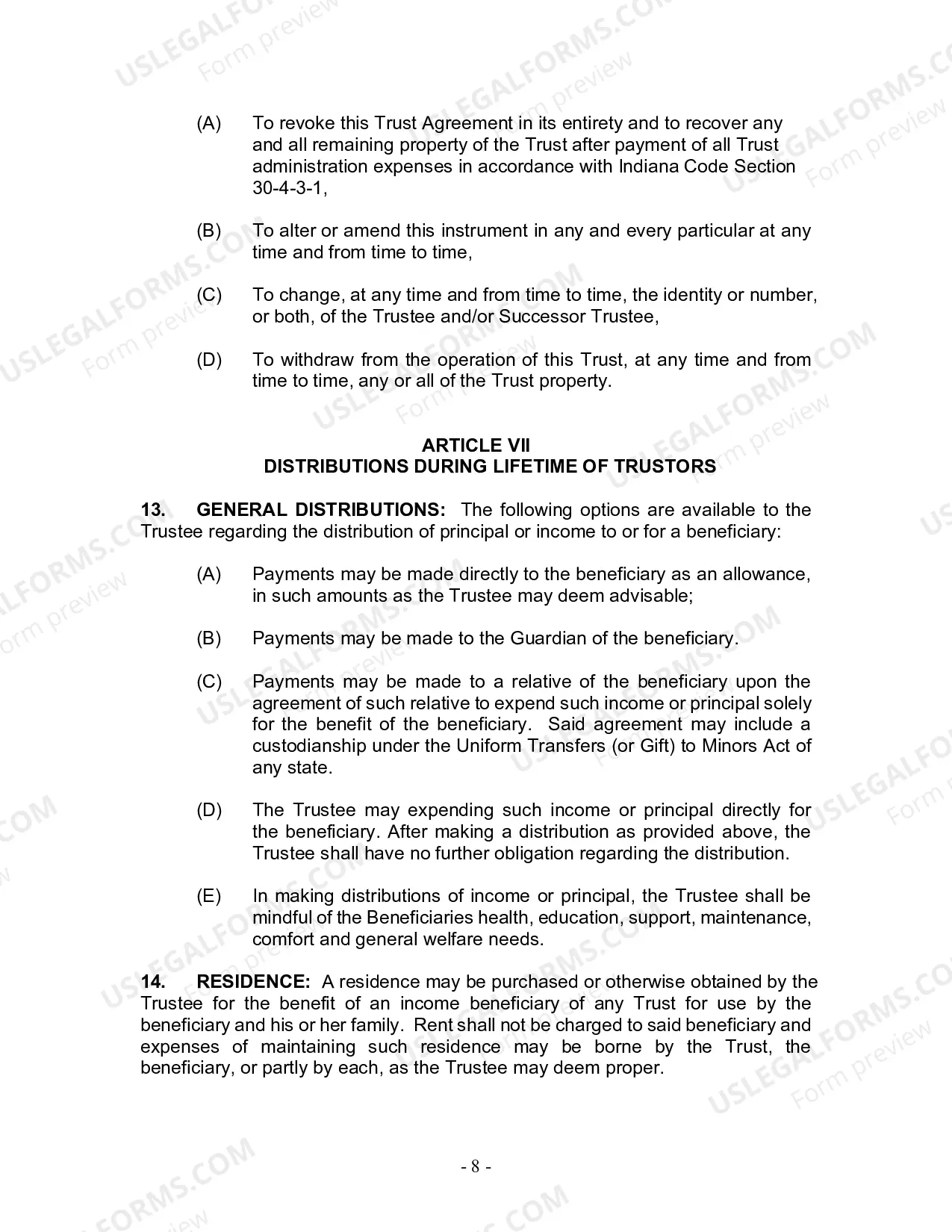
- Provisions for management of trust property during the Trustors' lifetime.
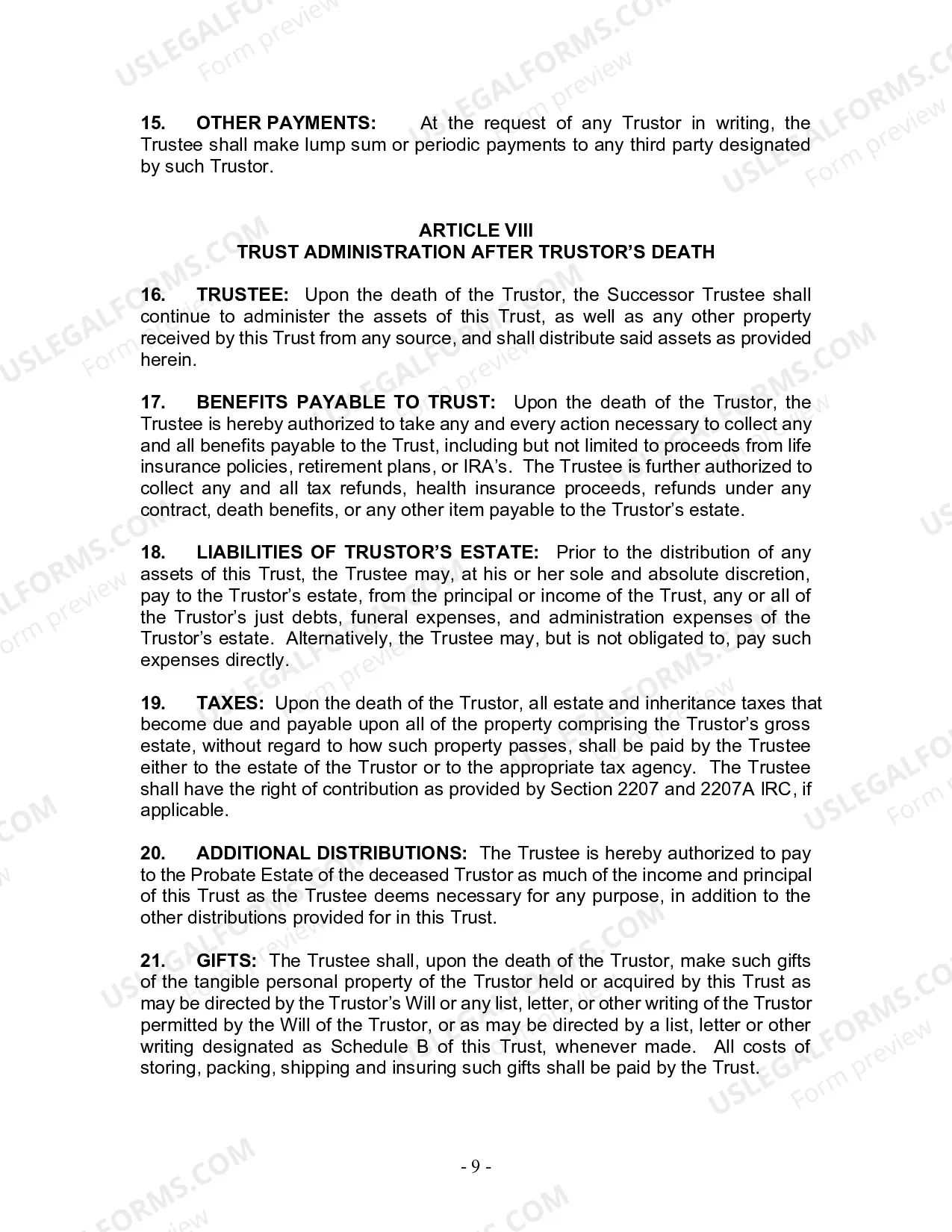
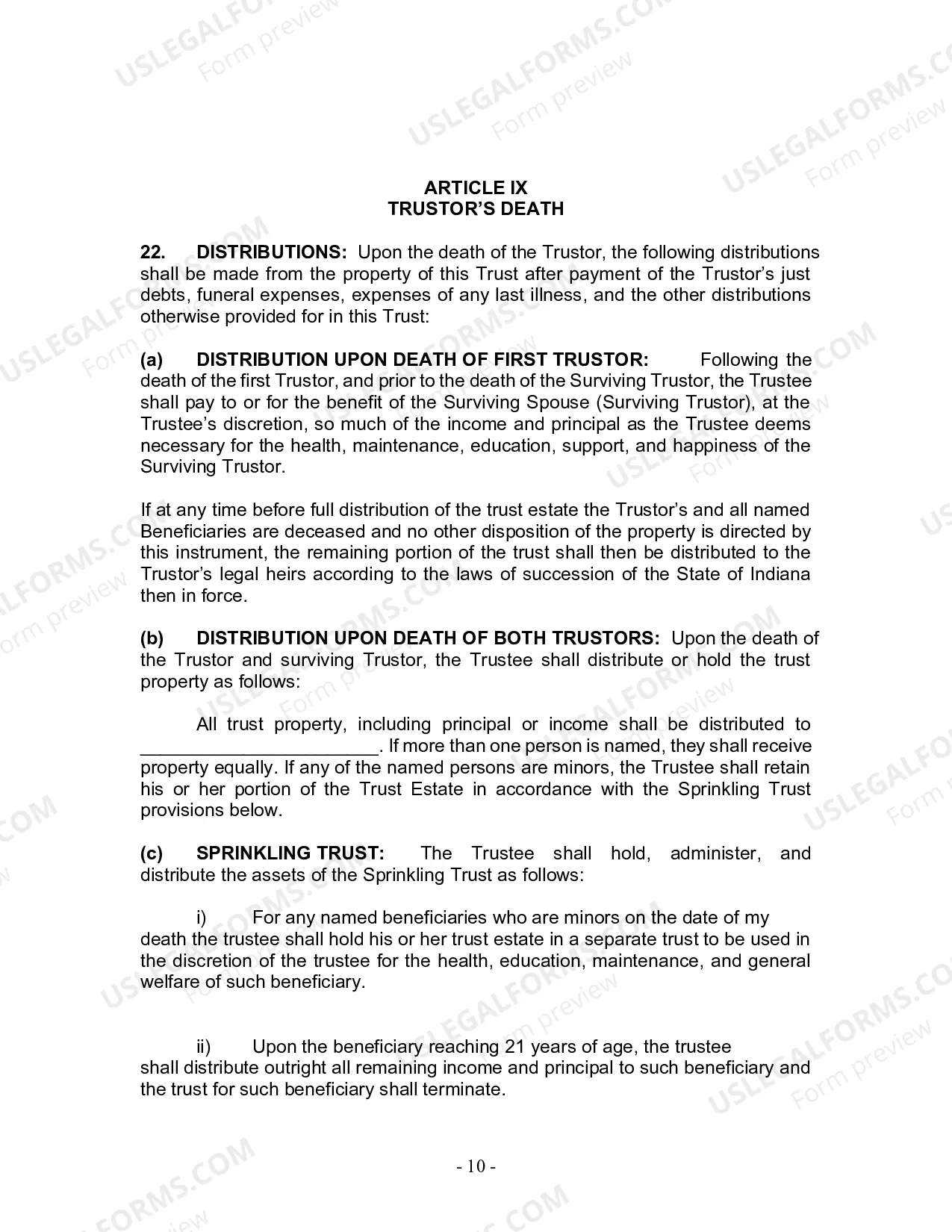
- Instructions on distributions upon the death of the Trustors.
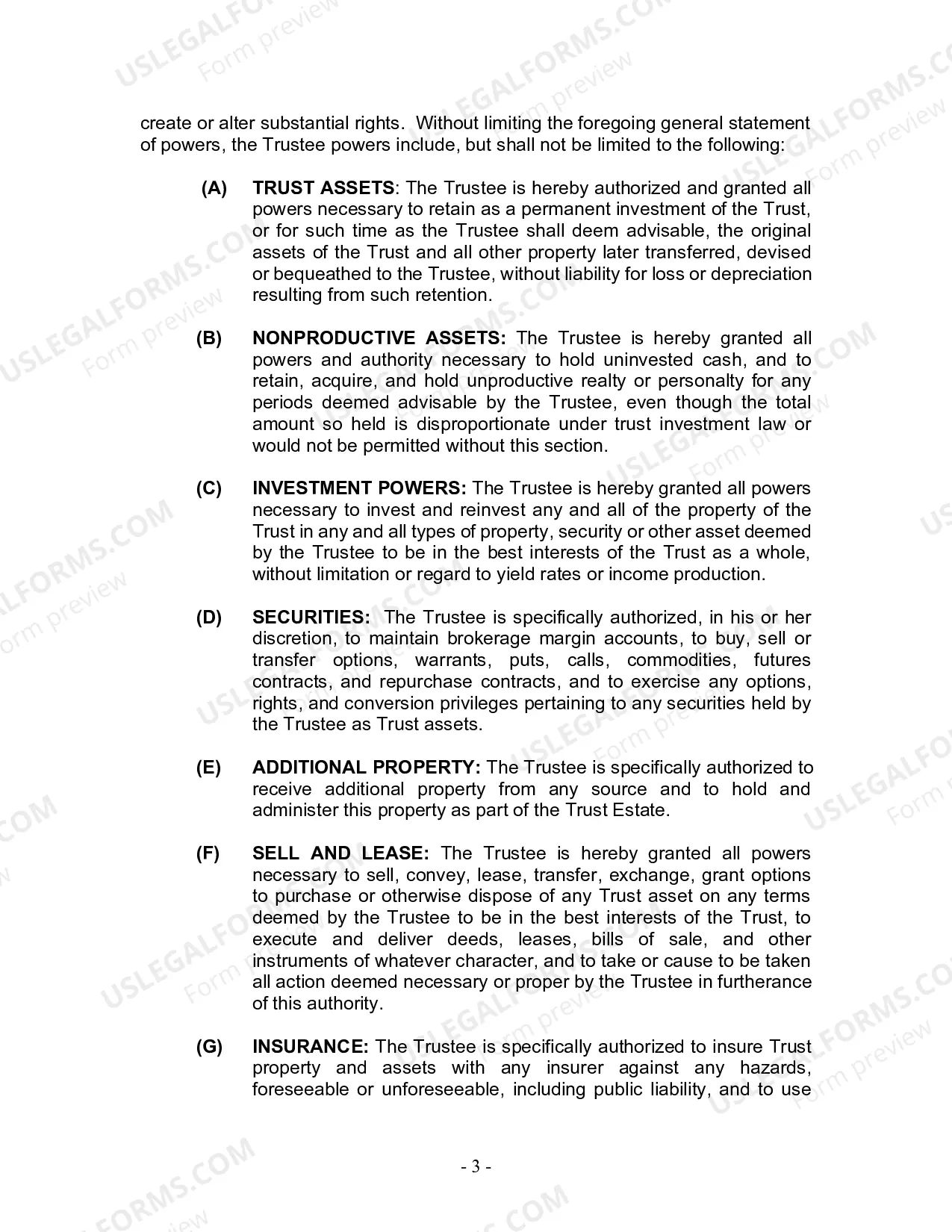
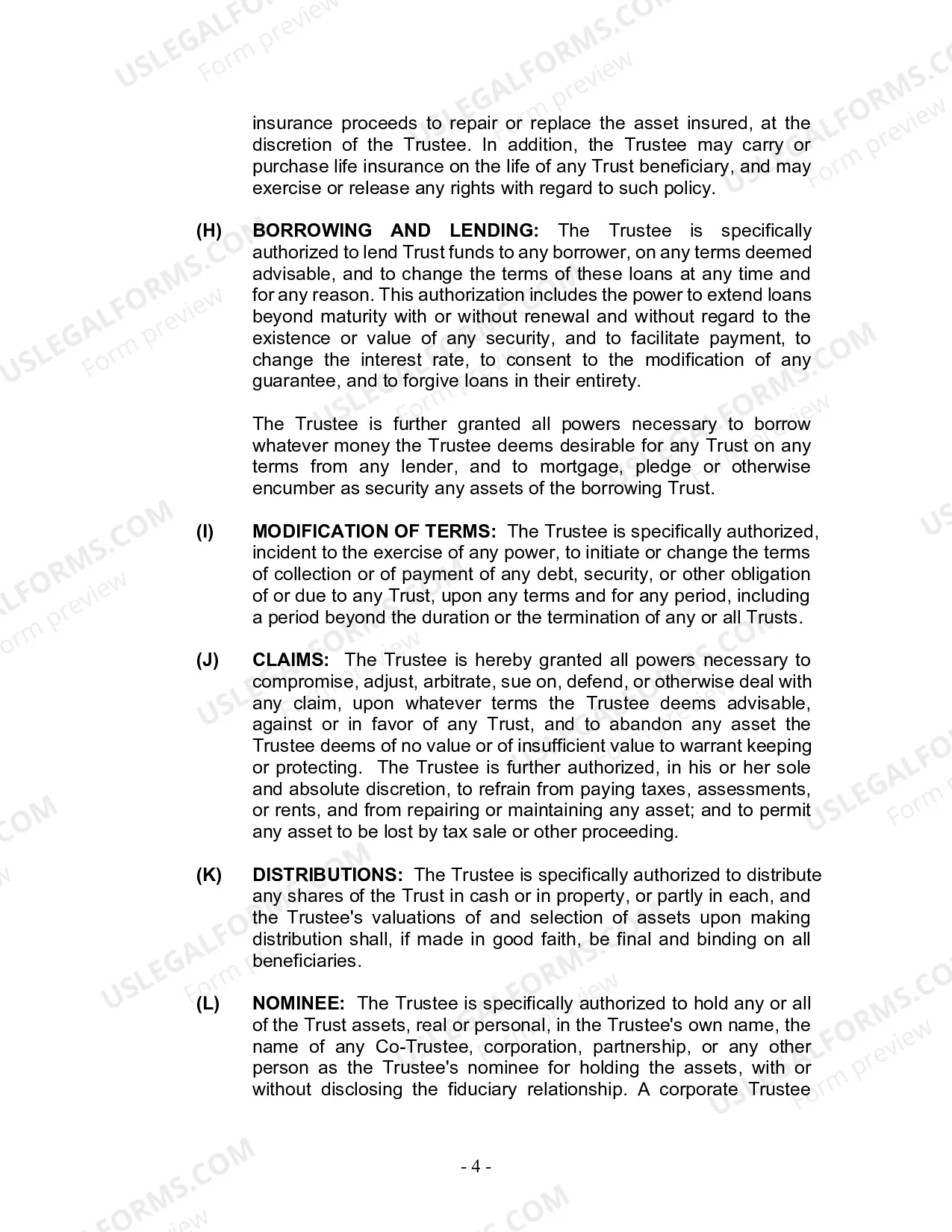
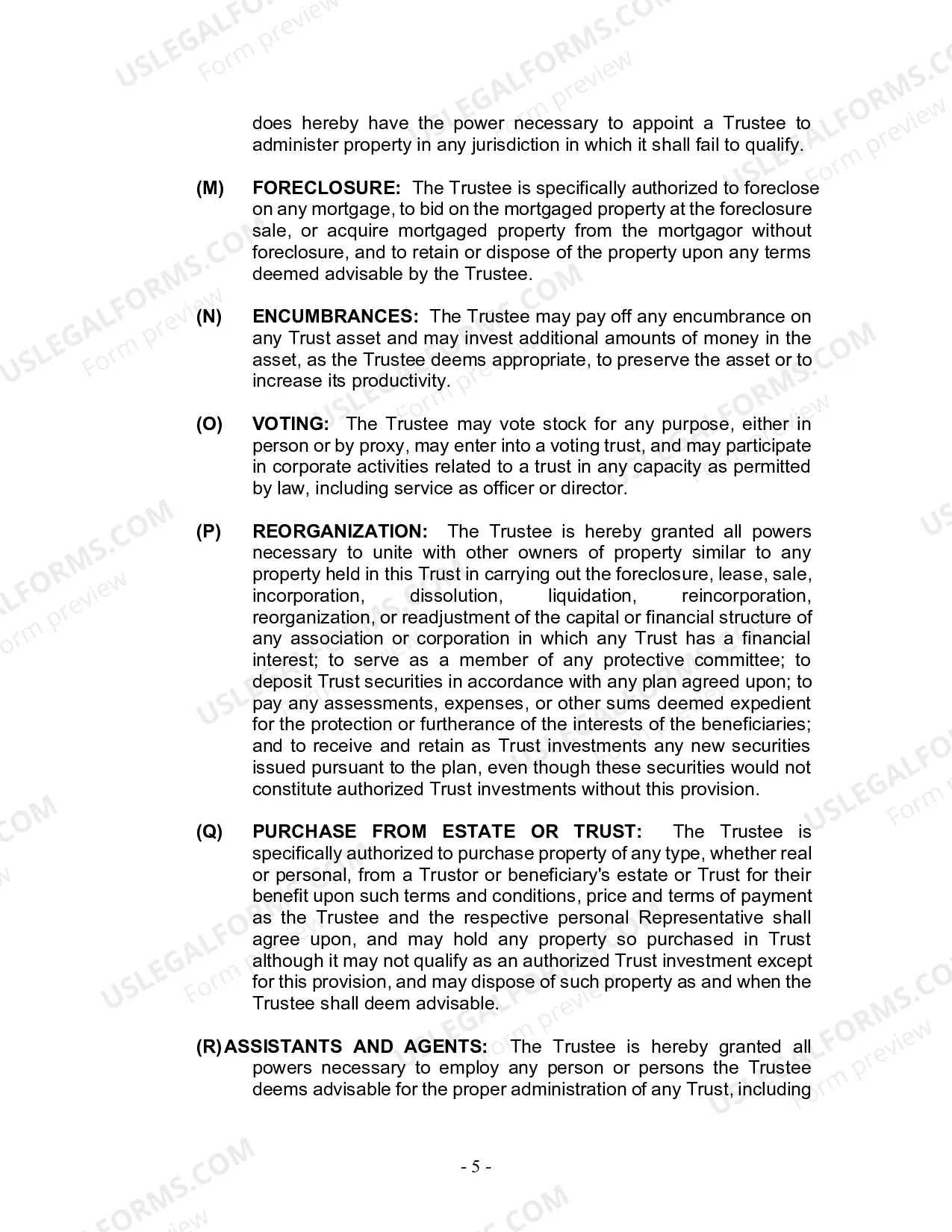
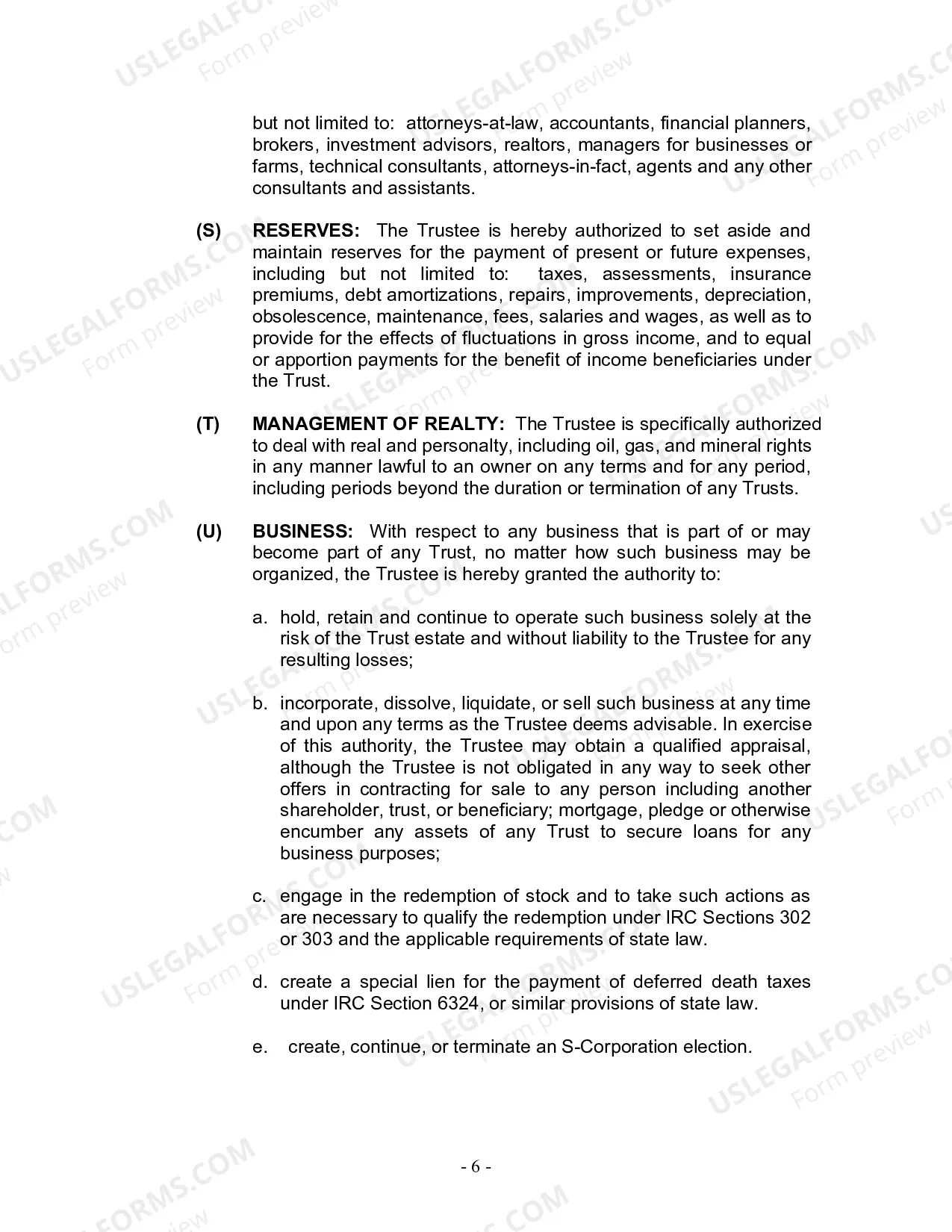
- Specification of the rights and responsibilities of the Trustee.




Common use cases
This form is ideal for couples who wish to plan their estate together but do not have children. It allows them to organize their assets, such as real estate, savings, and personal belongings, in a way that efficiently transfers them to their chosen beneficiaries upon their passing. This trust can also be useful for couples looking to avoid probate, manage incapacity, and ensure assets are protected during their lifetime.
Who needs this form
- Married couples in Indiana with no children.
- Individuals seeking to control asset distribution after death.
- Couples interested in simplifying the estate planning process.
- Individuals looking to manage their assets collaboratively.
Completing this form step by step
- Identify the Trustors by entering names and addresses of both spouses.
- Name the Trustee, who will manage the trust, and any Successor Trustees as needed.
- List the assets to be included in the trust, specifying any additional property later.
- Enter provisions regarding management and distribution of trust property during and after the Trustors' lifetime.
- Sign and date the document in the presence of a notary public to finalize the trust.
Does this document require notarization?
This document requires notarization to meet legal standards. US Legal Forms provides secure online notarization powered by Notarize, allowing you to complete the process through a verified video call, available 24/7.
Get your form ready online
Our built-in tools help you complete, sign, share, and store your documents in one place.
Make edits, fill in missing information, and update formatting in US Legal Forms—just like you would in MS Word.
Download a copy, print it, send it by email, or mail it via USPS—whatever works best for your next step.
Sign and collect signatures with our SignNow integration. Send to multiple recipients, set reminders, and more. Go Premium to unlock E-Sign.
If this form requires notarization, complete it online through a secure video call—no need to meet a notary in person or wait for an appointment.
We protect your documents and personal data by following strict security and privacy standards.

Make edits, fill in missing information, and update formatting in US Legal Forms—just like you would in MS Word.

Download a copy, print it, send it by email, or mail it via USPS—whatever works best for your next step.

Sign and collect signatures with our SignNow integration. Send to multiple recipients, set reminders, and more. Go Premium to unlock E-Sign.

If this form requires notarization, complete it online through a secure video call—no need to meet a notary in person or wait for an appointment.

We protect your documents and personal data by following strict security and privacy standards.
Typical mistakes to avoid
- Not including all relevant assets in the trust.
- Failing to name a Successor Trustee.
- Neglecting to sign and notarize the trust agreement.
- Not updating the trust after significant life events (e.g., moving or changes in asset ownership).
Benefits of completing this form online
- Convenience of downloading and completing the form at your own pace.
- Editability to customize specific terms as your circumstances change.
- Access to reliable templates created by licensed attorneys.
- Instant access to the necessary legal documents without scheduling appointments.
Summary of main points
- The Revocable Living Trust allows married couples without children to manage their assets effectively.
- It eliminates the need for probate, ensuring a smoother asset transfer process upon death.
- Complete the form accurately and ensure it's signed and notarized in accordance with Indiana laws.
- Regularly review and update the trust to reflect changes in personal circumstances.
Legal terms and meanings
- Trustor: The person(s) creating the trust, in this case, the married couple.
- Trustee: The individual or entity responsible for managing the trust assets.
- Successor Trustee: A person designated to take over trust management if the primary Trustee is unable to serve.
- Probate: The legal process through which a deceased person's will is validated, and their estate is administered.
Looking for another form?
Form popularity
FAQ
You should still have a durable power of attorney for finances.You may even want to empower your attorney-in-fact to transfer into your living trust any property that becomes yours after you become incapacitated. Only a durable power of attorney for finances can grant that authority.
Houses and other real estate (even if they're mortgaged) stock, bond, and other security accounts held by brokerages (but think about naming a TOD beneficiary instead) small business interests (stock in a closely held corporation, partnership interests, or limited liability company shares)
Choose whether to make an individual or shared trust. Decide what property to include in the trust. Choose a successor trustee. Decide who will be the trust's beneficiaries who will get the trust property. Create the trust document. Sign the document in front of a notary public.
Houses and other real estate (even if they're mortgaged) stock, bond, and other security accounts held by brokerages (but think about naming a TOD beneficiary instead) small business interests (stock in a closely held corporation, partnership interests, or limited liability company shares)
A living trust is an important part of your estate plan. Most people can create a living trust without an attorney using software or an online service.
Pick a type of living trust. If you're married, you'll first need to decide whether you want a single or joint trust. Take stock of your property. Choose a trustee. Draw up the trust document. Sign the trust. Transfer your property to the trust.
Separate trusts provide more flexibility in the event of a death in the marriage. Since the trust property is already divided, separate trusts preserve the surviving spouse's ability to amend or revoke assets held within their own trust, while ensuring that the deceased spouse's trust cannot be amended after death.
Sure you can write your own revocable living trust.The discussion of your need for a revocable living trust is in another of my articles, but it is safe to say that if you own real property and have a significant estate (over about $50,000), then you could use a trust and it would help your loved ones.
Sure you can write your own revocable living trust.The discussion of your need for a revocable living trust is in another of my articles, but it is safe to say that if you own real property and have a significant estate (over about $50,000), then you could use a trust and it would help your loved ones.