Indiana Living Trust for Individual Who is Single, Divorced or Widow or Widower with No Children

Understanding this form
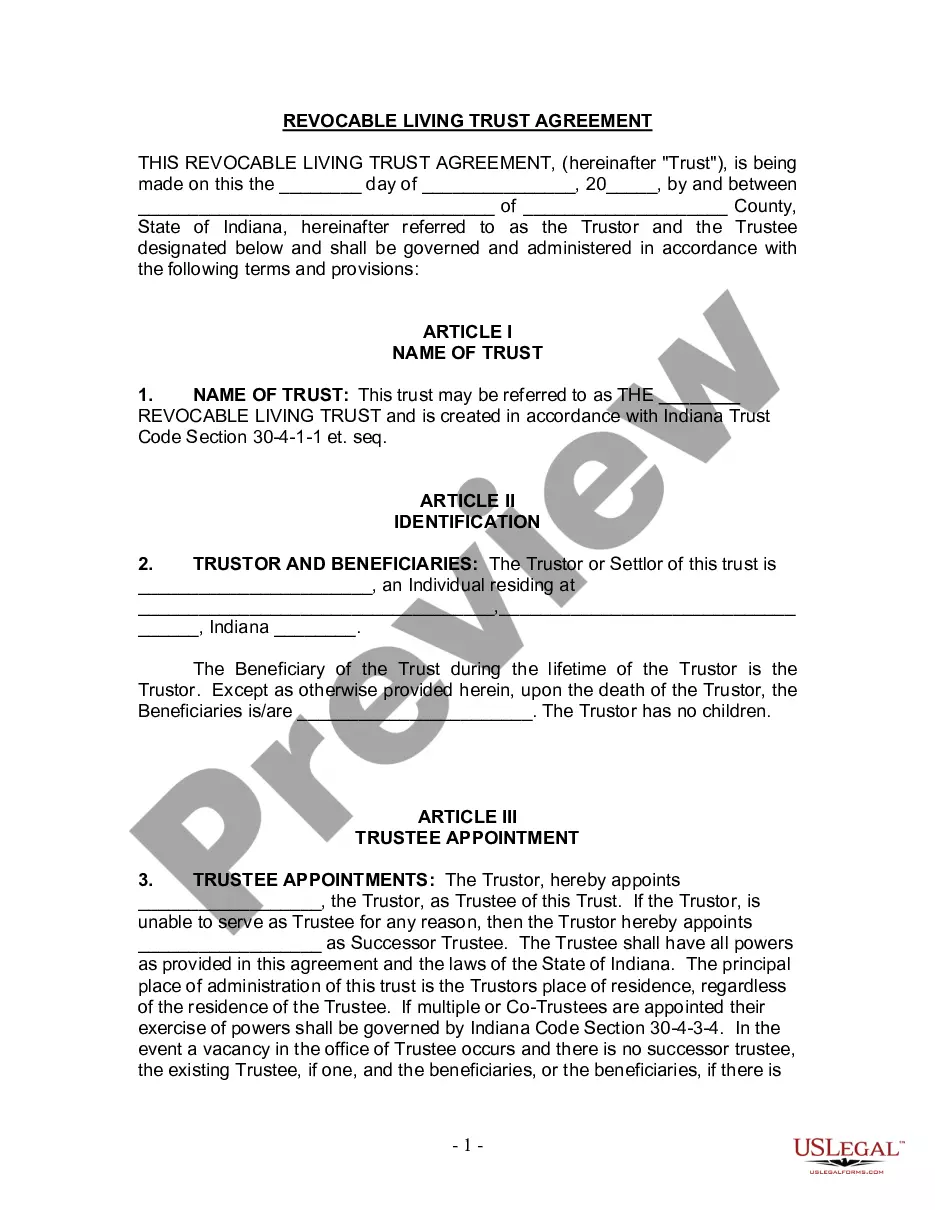
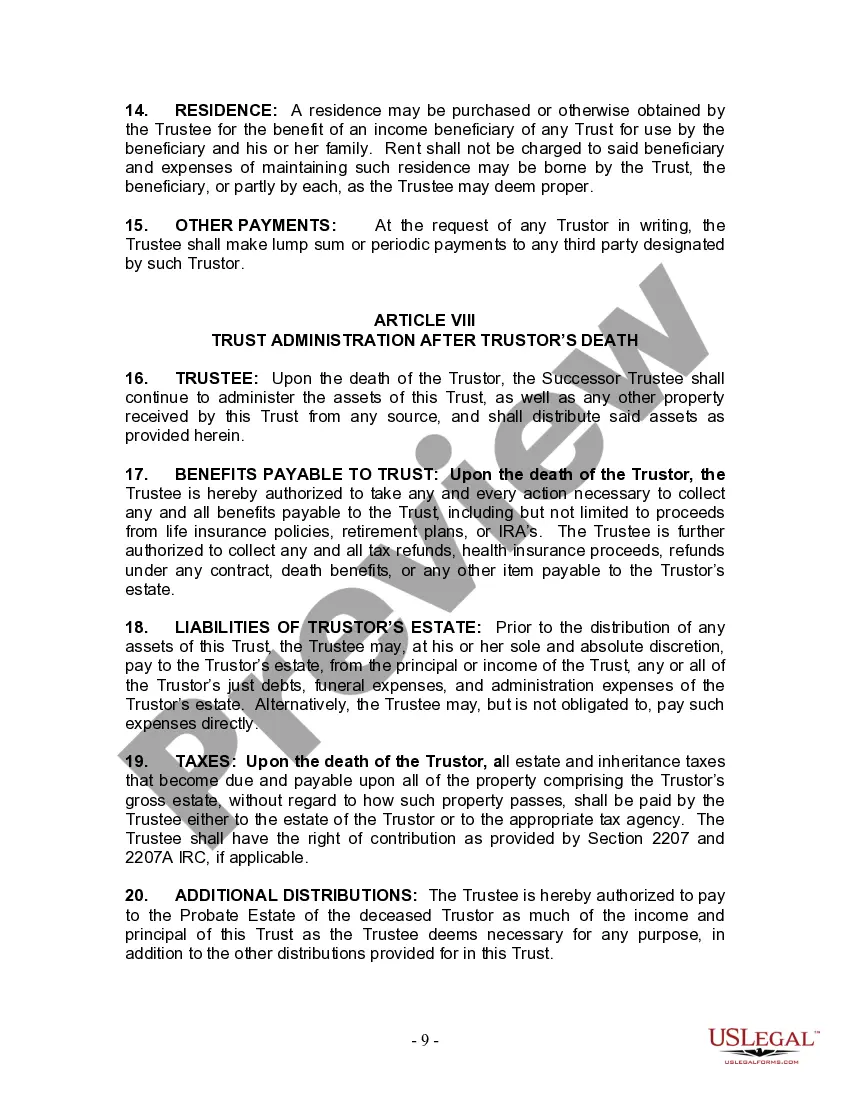
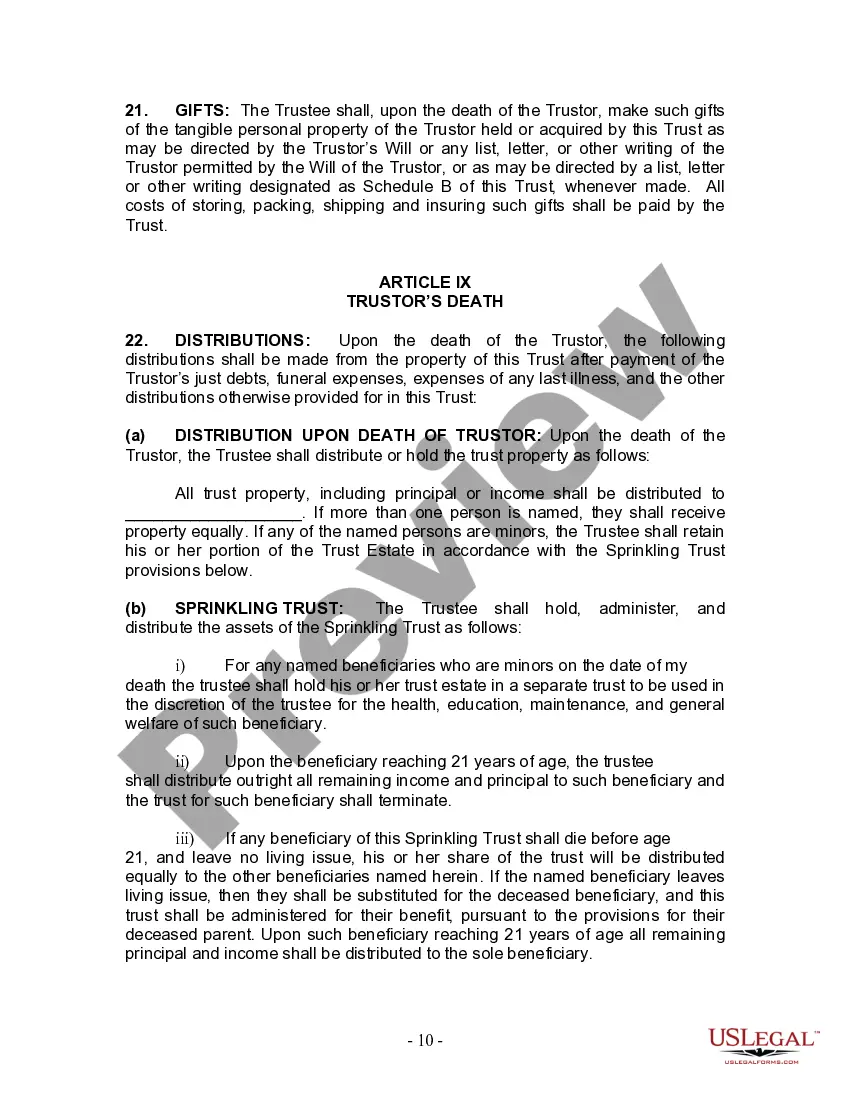
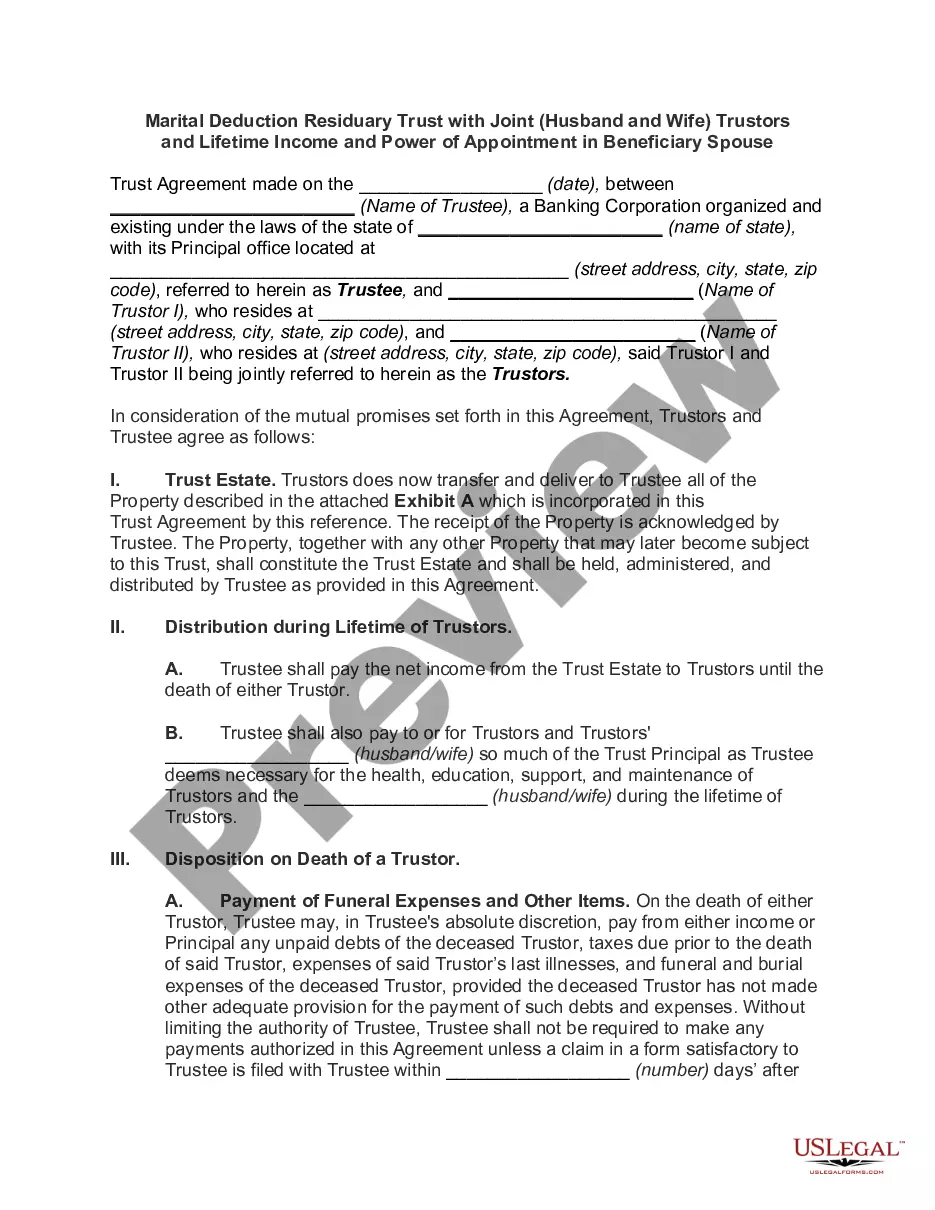
This Living Trust for Individuals who are Single, Divorced, or Widowed with No Children is a legally binding document that allows you to manage and distribute your assets during your lifetime and after your death. Unlike a Last Will and Testament, this trust helps your estate avoid probate, ensuring that your assets are transferred to your beneficiaries as per your wishes without court intervention. This form is specifically designed for individuals without children, making it ideal for your unique circumstances.
Key components of this form
- Name of Trust: Establishes the official name for the Living Trust.
- Identification: Designates the Trustor, Trustee, and beneficiaries.
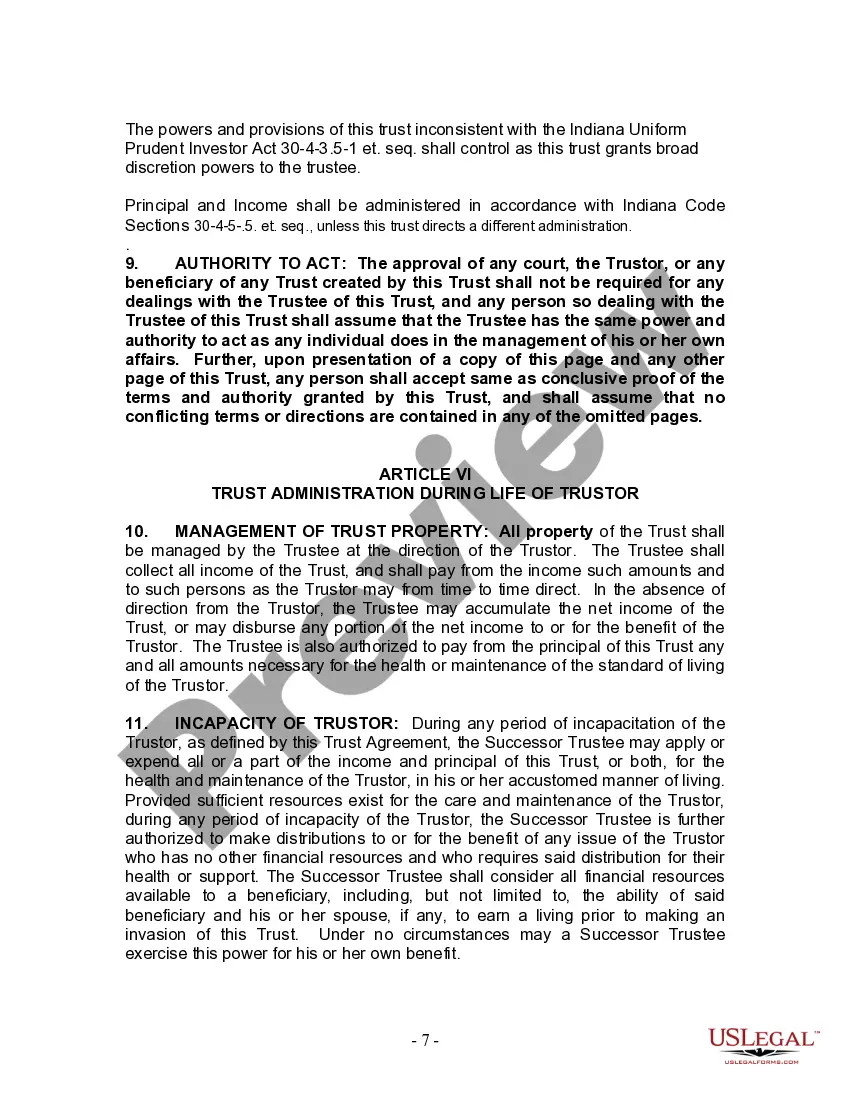
- Trustee Appointment: Details the appointment of the Trustee and any Successor Trustees.
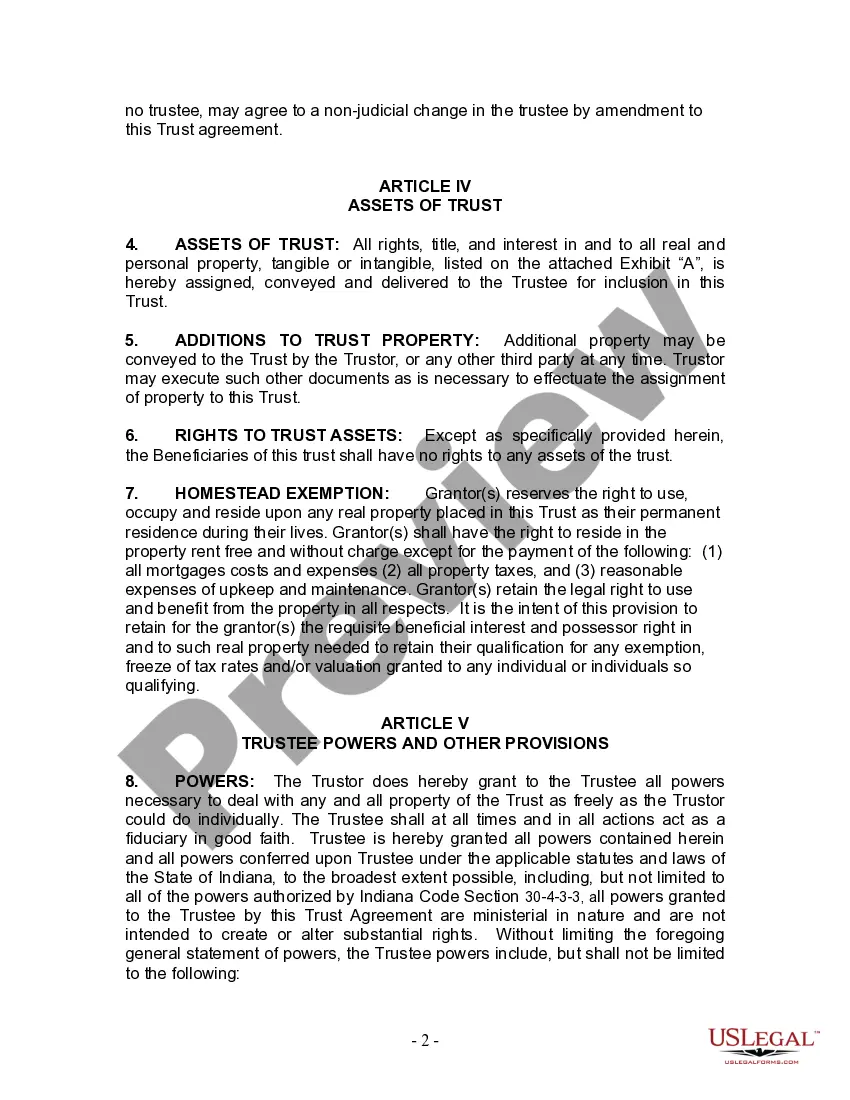
- Assets of Trust: Outlines how assets are transferred into the trust and how they can be managed.
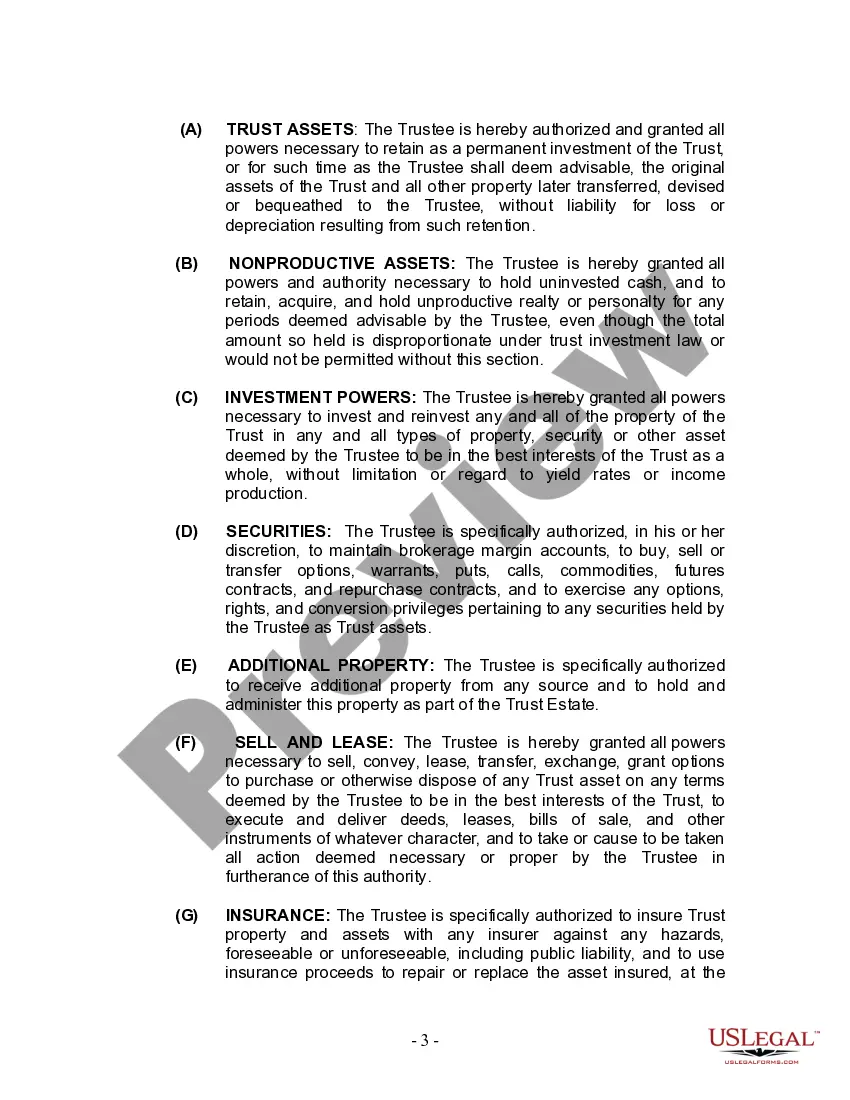
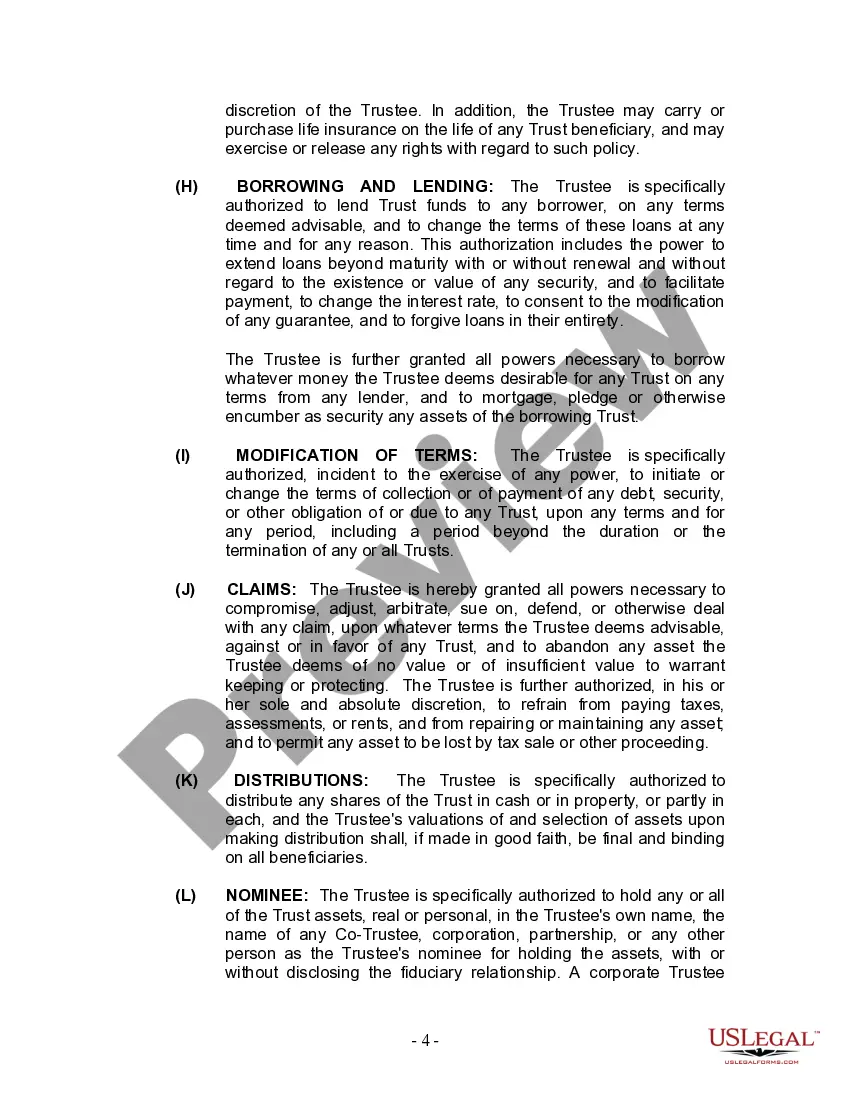
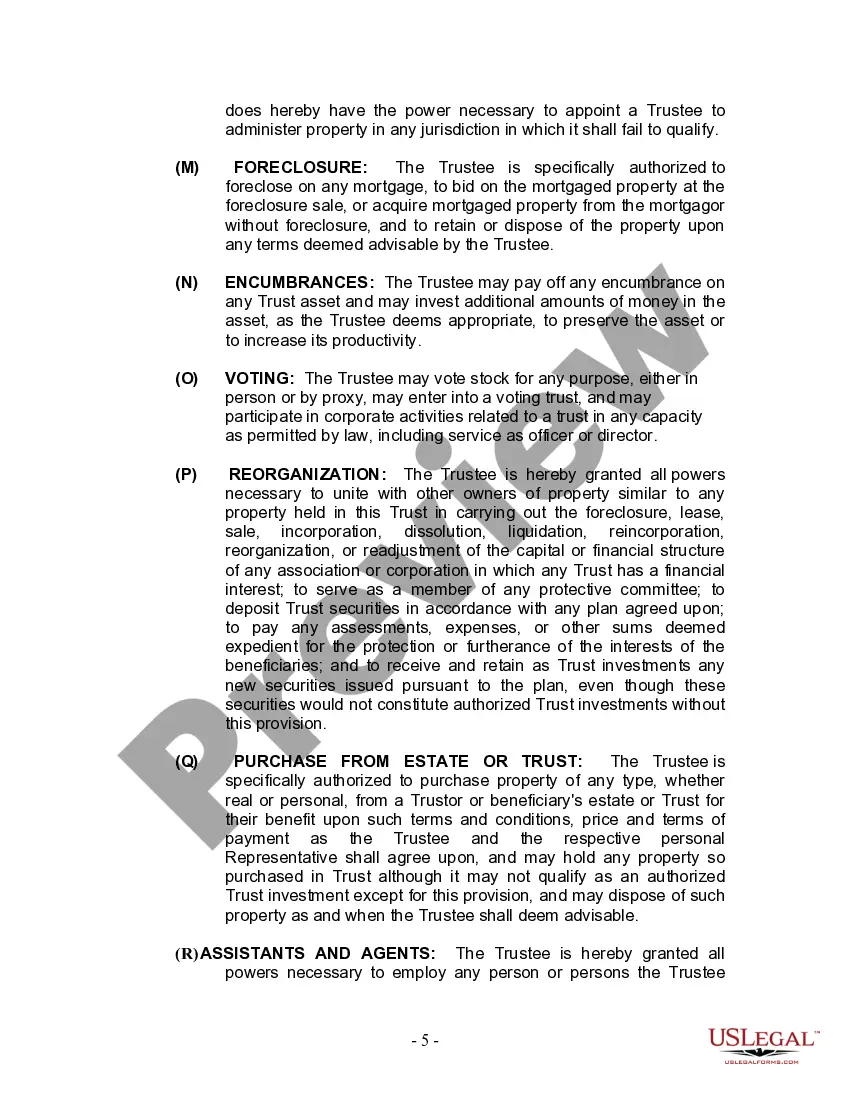
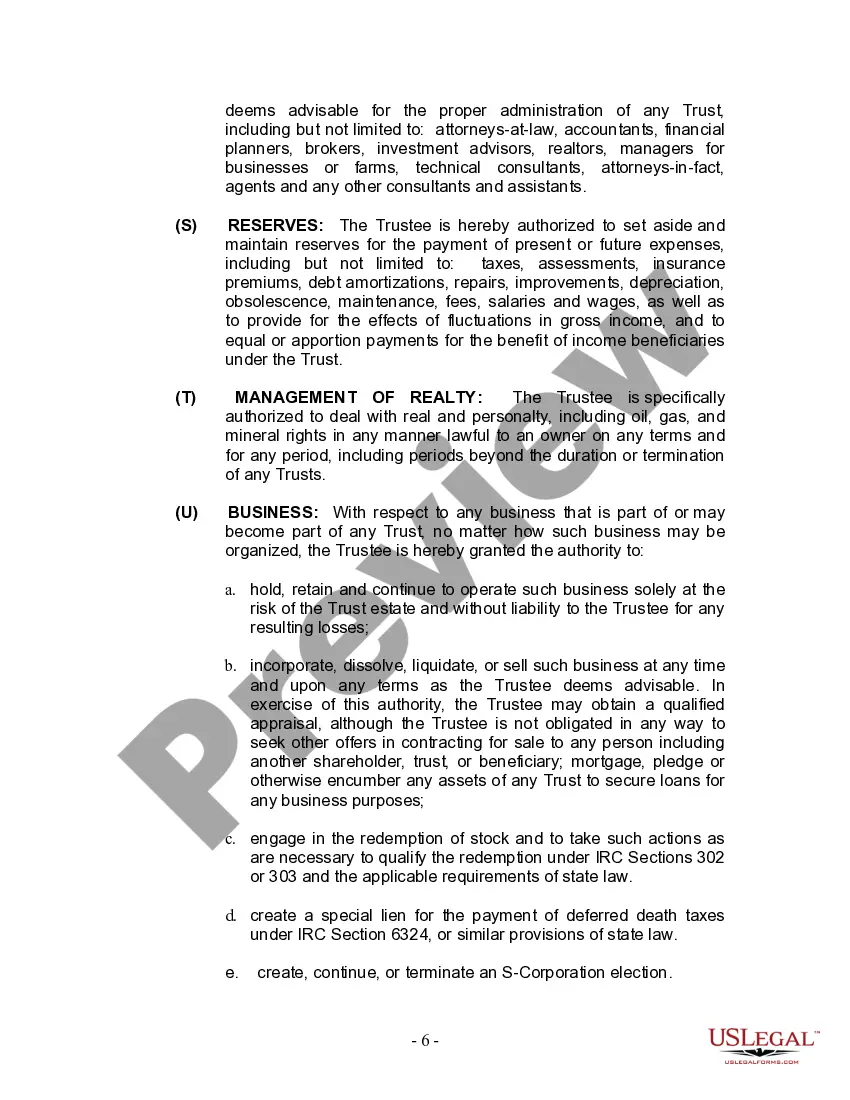
- Powers of Trustee: Lists the authority granted to the Trustee regarding asset management and distributions.
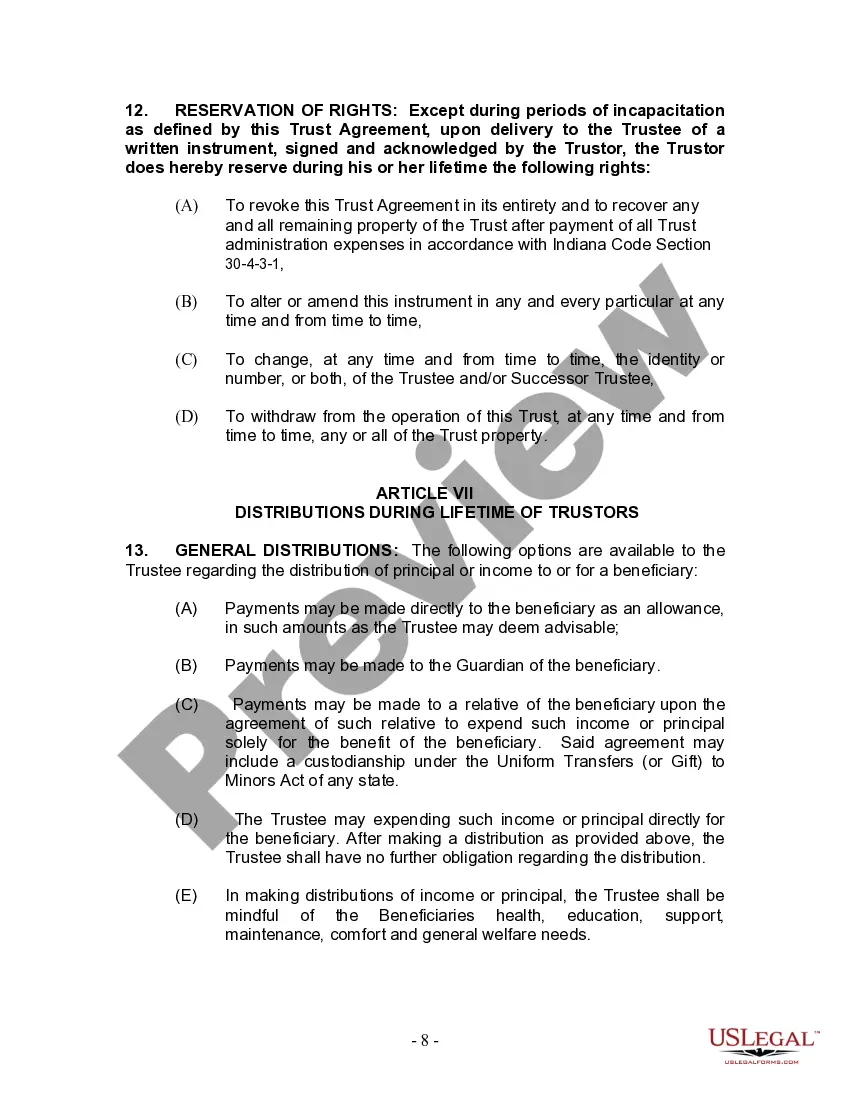
- Distribution of Assets: Specifies how and when assets are distributed to beneficiaries after the Trustorâs death.





When to use this document
This form is beneficial when an individual who is single, divorced, or a widow/widower with no children wishes to create a legal framework for managing their assets. You may want to use this living trust if you wish to simplify the transfer of your property to your chosen beneficiaries after your death and avoid the lengthy and costly probate process.
Who should use this form
- Individuals who are single, divorced, or widowed.
- People without children who want to designate beneficiaries for their assets.
- Those looking to streamline their estate planning process.
Steps to complete this form
- Identify the parties involved: Include the names and addresses of the Trustor and Trustee.
- Name your trust: Choose a unique name for the trust.
- List the assets: Detail all the properties and assets to be included in the trust on the attached Exhibit A.
- Specify the successor trustee: Appoint a successor trustee in case the original trustee is unable to serve.
- Sign and notarize: Ensure the document is signed by all relevant parties and notarized for legal validity, if required.
Does this document require notarization?
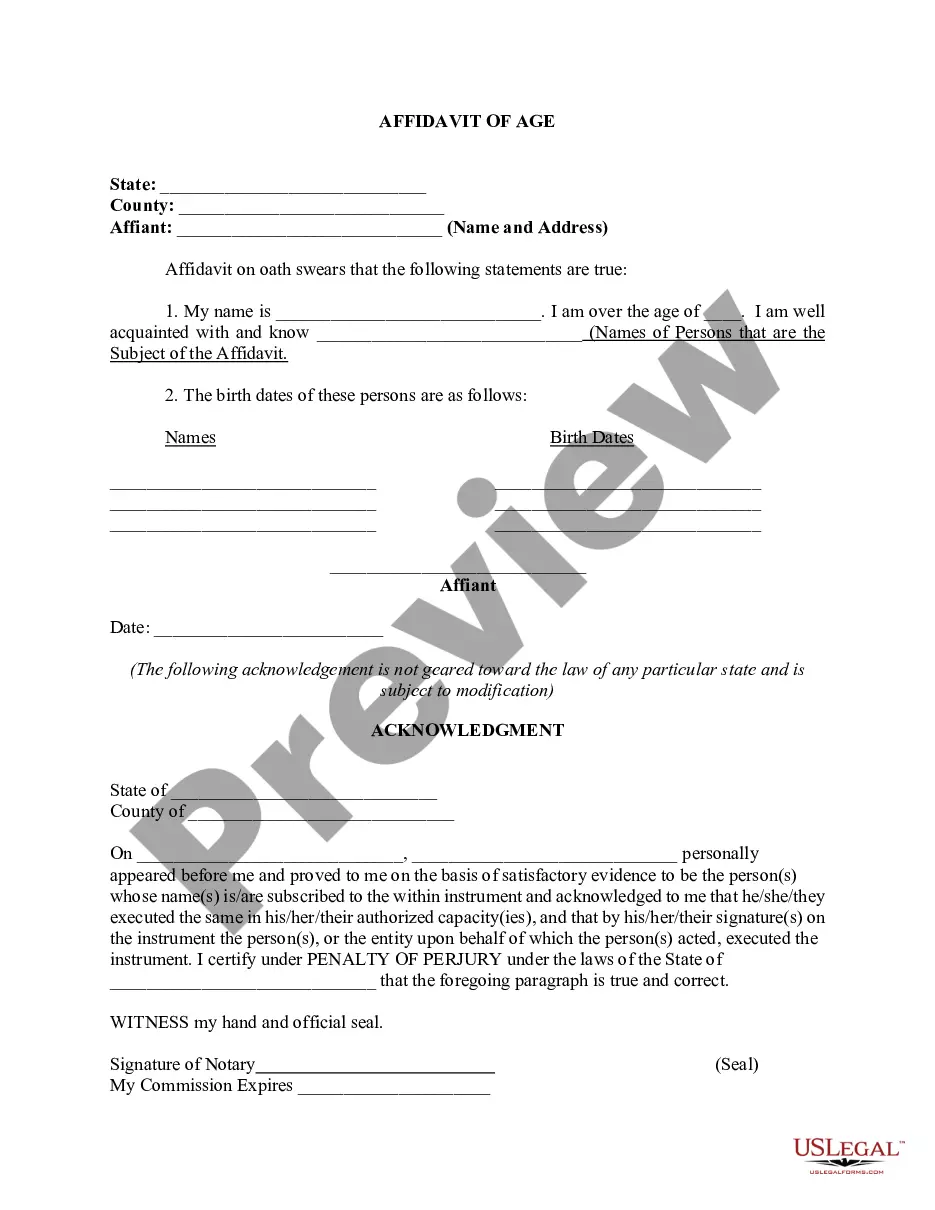
Yes, this form must be notarized to be legally valid. You can complete the notarization process online with US Legal Forms, which offers a secure video call service with a notary public available 24/7, ensuring that you can complete your documents without travel and in a timely manner.
Get your form ready online
Our built-in tools help you complete, sign, share, and store your documents in one place.
Make edits, fill in missing information, and update formatting in US Legal Forms—just like you would in MS Word.
Download a copy, print it, send it by email, or mail it via USPS—whatever works best for your next step.
Sign and collect signatures with our SignNow integration. Send to multiple recipients, set reminders, and more. Go Premium to unlock E-Sign.
If this form requires notarization, complete it online through a secure video call—no need to meet a notary in person or wait for an appointment.
We protect your documents and personal data by following strict security and privacy standards.

Make edits, fill in missing information, and update formatting in US Legal Forms—just like you would in MS Word.

Download a copy, print it, send it by email, or mail it via USPS—whatever works best for your next step.

Sign and collect signatures with our SignNow integration. Send to multiple recipients, set reminders, and more. Go Premium to unlock E-Sign.

If this form requires notarization, complete it online through a secure video call—no need to meet a notary in person or wait for an appointment.

We protect your documents and personal data by following strict security and privacy standards.
Mistakes to watch out for
- Failing to transfer assets into the trust after creation.
- Not specifying a successor trustee.
- Leaving out a detailed list of assets intended for the trust.
- Neglecting to update beneficiaries after life changes, like marriage or divorce.
Advantages of online completion
- Convenience: Access and complete legal forms from the comfort of your home.
- Editability: Easily modify the form to fit your unique needs.
- Trustworthiness: Forms are prepared by licensed attorneys, ensuring reliability and accuracy.
Summary of main points
- This form helps individuals manage their assets during their lifetime and streamline the transfer of assets upon death.
- It is specifically designed for those who are single, divorced, or widowed without children.
- Proper completion and notarization of the form are essential for legal validity.
Looking for another form?



Form popularity
FAQ
The four main types of trusts include revocable living trusts, irrevocable trusts, testamentary trusts, and special needs trusts. Each type serves different purposes, such as managing assets during someone’s lifetime or providing for beneficiaries after death. When considering an Indiana Living Trust for Individual Who is Single, Divorced or Widow or Widower with No Children, understanding these trust types can empower you to choose the best fit for your financial and personal circumstances.
The main difference lies in the purpose and beneficiaries of each type of trust. A survivor's trust typically benefits the surviving spouse after the death of one partner, while a marital trust is designed to provide for both partners during their lifetimes. In the context of an Indiana Living Trust for Individual Who is Single, Divorced or Widow or Widower with No Children, recognizing these differences can help you tailor your estate planning effectively.
Yes. It does not matter who files for divorce; the wife can get her maiden or former name back as part of the final divorce as long as she asks the court to do this. She does not have to get her maiden or former name back; she can keep her married name after the divorce if she wants to.
How and where is a divorce complaint filed in Indiana? A divorce complaint (or Petition for Dissolution) is filed in the county of your residence (for at least three months) in the state in which you have lived for at least six months.
Indiana is a one-pot property division state, so the court will begin with a presumption that all property is marital property and that it should be divided equally. But this can be overcome and will not necessarily mean that the final division will be equal.
Ironically, however, Indiana law does not recognize alimony or spousal support.If a spouse is physically or mentally incapacitated, a court may order maintenance is necessary during the period of incapacitation if that incapacitation materially affects that spouse's ability to support him or herself.