Lien on Real Property Regarding Judgment in a Federal Court
Understanding this form
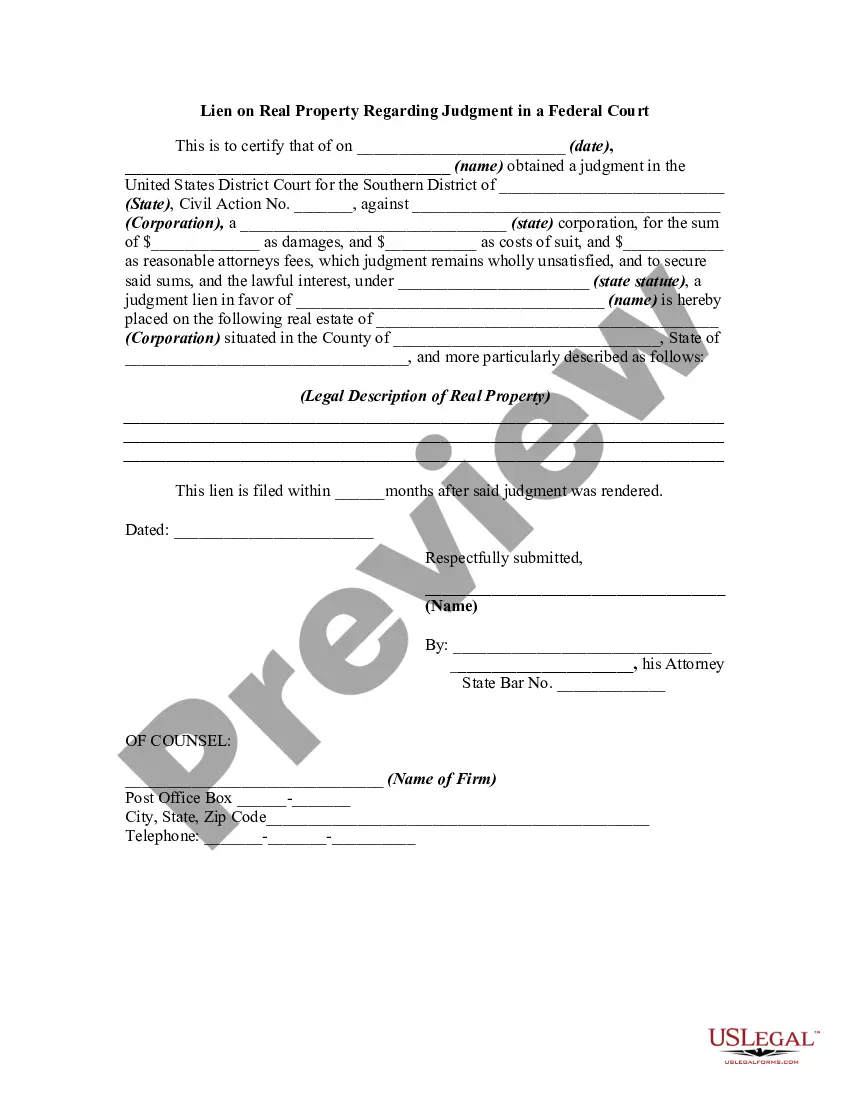
The Lien on Real Property Regarding Judgment in a Federal Court is a legal document that establishes a lien against the property of a debtor following a judgment by a federal court. This form allows the judgment creditor to secure their interest in the debtor's property, ensuring that they can collect the awarded sums in the event of non-payment. Unlike similar forms, this specific lien applies to judgments obtained in federal court, providing a clear legal pathway to enforce monetary awards against the debtor's real estate assets.
Main sections of this form
- Date of judgment issuance
- Name of the judgment creditor
- Name of the judgment debtor (corporation)
- Civil Action Number and details of the federal court
- Amount awarded as damages, costs, and attorney fees
- Legal description of the real property
- Filing date of the lien
- Signature of the attorney and state bar number
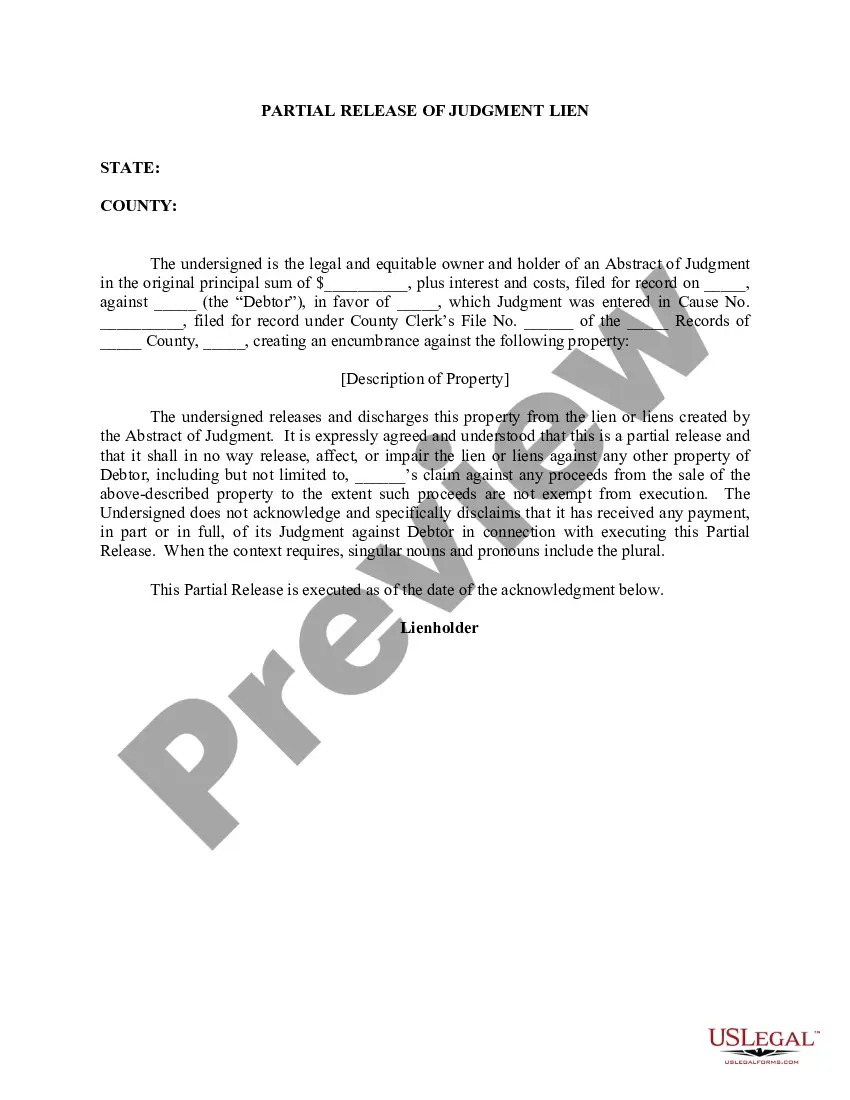
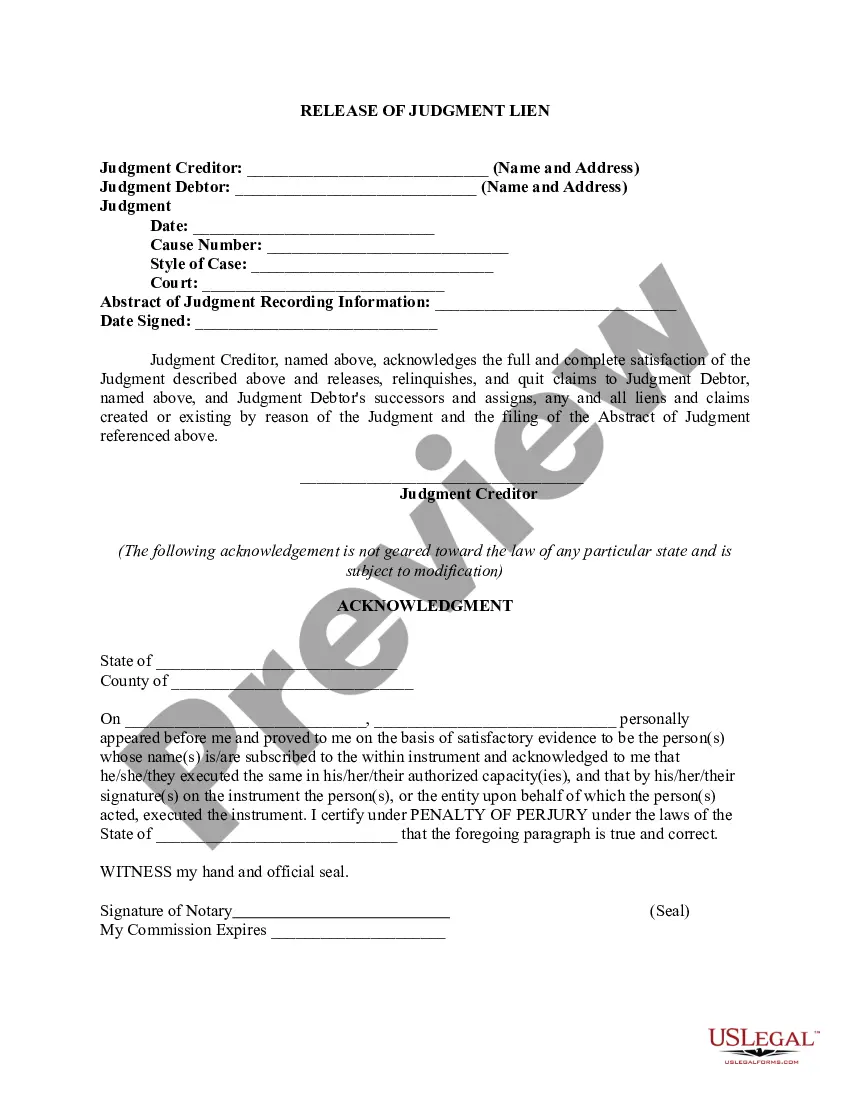
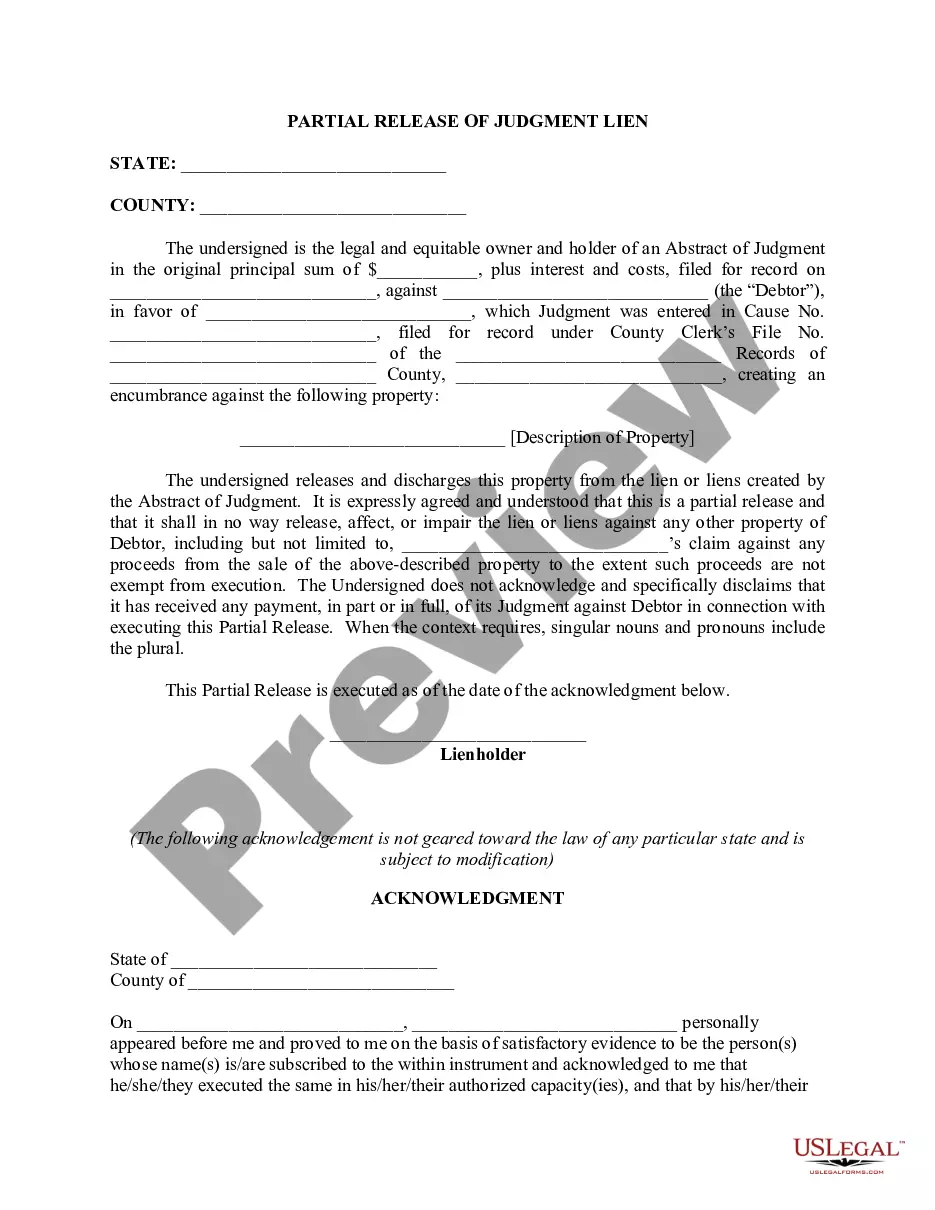
When to use this form
This form should be used when a creditor successfully obtains a monetary judgment against a debtor in a federal court and wishes to establish a lien on the debtor's real property. It is necessary when the creditor needs to ensure their ability to recover the judgment amount through the sale or encumbrance of the debtor's property. Situations may include unpaid loans, breach of contract cases, or other financial disputes that have ended in a judgment.
Who needs this form
This form is intended for:
- Creditors who have obtained a monetary judgment against a corporation in federal court
- Attorneys representing creditors in securing their interests in real property
- Individuals seeking to understand their rights related to judgment liens
Steps to complete this form
- Identify the date of the court's judgment and enter it in the designated field.
- Provide the full name of the judgment creditor and judgment debtor.
- Fill in the Civil Action Number and specify the United States District Court involved.
- Detail the monetary amounts awarded for damages, costs, and attorney fees.
- Describe the real property on which the lien is being placed, ensuring the legal description is accurate.
- Enter the filing date and sign the form, including the attorney's details and bar number.
Does this document require notarization?
This form does not typically require notarization unless specified by local law. Always verify whether any additional notarization requirements are imposed by your jurisdiction.
Get your form ready online
Our built-in tools help you complete, sign, share, and store your documents in one place.
Make edits, fill in missing information, and update formatting in US Legal Forms—just like you would in MS Word.
Download a copy, print it, send it by email, or mail it via USPS—whatever works best for your next step.
Sign and collect signatures with our SignNow integration. Send to multiple recipients, set reminders, and more. Go Premium to unlock E-Sign.
If this form requires notarization, complete it online through a secure video call—no need to meet a notary in person or wait for an appointment.
We protect your documents and personal data by following strict security and privacy standards.

Make edits, fill in missing information, and update formatting in US Legal Forms—just like you would in MS Word.

Download a copy, print it, send it by email, or mail it via USPS—whatever works best for your next step.

Sign and collect signatures with our SignNow integration. Send to multiple recipients, set reminders, and more. Go Premium to unlock E-Sign.

If this form requires notarization, complete it online through a secure video call—no need to meet a notary in person or wait for an appointment.

We protect your documents and personal data by following strict security and privacy standards.
Mistakes to watch out for
- Failing to accurately describe the real property or including incomplete information.
- Not filing the lien within the required timeframe following the judgment.
- Incorrectly entering the monetary amounts or details of the judgment.
Benefits of completing this form online
- Convenient access to templates that can be customized for your specific legal needs.
- Ability to edit and save forms easily before final submission.
- Drafted by licensed attorneys, ensuring reliability and legal compliance.
Looking for another form?



Form popularity
FAQ
All states have designated certain types of property as exempt, or free from seizure, by judgment creditors. For example, clothing, basic household furnishings, your house, and your car are commonly exempt, as long as they're not worth too much.
A judgment is a court order. A lien is a claim of interest in a property right. A judgment can turn into a lien when the law allows this. For example, if a creditor records a court judgment, it can affect the right of an owner of real property to sell the...
Many mortgage companies will not lend to borrowers who have open or recently paid judgments. Judgments also keep credit scores low and can make them so low that you will not qualify for a mortgage even if it has been paid off. The effect a judgment has on your credit lessens over time.
A judgment lien is a court ruling that gives a creditor the right to take possession of a debtor's real or personal property if the debtor fails to fulfill his or her contractual obligations.A plaintiff who obtains a monetary judgment is described as a judgment creditor, while the defendant becomes a judgment debtor.
Judgments usually show up under the public records section of your credit report. There was a time when judgments could show up on your credit report at any time, but recent legislation has made it more difficult for them to be reported.
The short answer is, yes, selling a house with a judgment can be done. But most homebuyers expect the title report to come back clean. So you'll need to be upfront about the property lien and have a plan for how you'll address it. You have options for satisfying the judgment creditors.
A general lien affects all of a debtor's property, b lien affects only a particular property.
In California, a judgment lien can be attached to the debtor's real estate -- meaning a house, condo, land, or similar kind of property interest -- or to the debtor's personal property -- things like jewelry, art, antiques, and other valuables. (In some states, judgment liens can be attached to personal property only.)
The answer is judgment. A judgment is a general, involuntary, equitable lien on both real and personal property owned by the debtor. The answer is order in which liens will be paid if property is sold to satisfy a debt.The answer is they take priority over mechanics' liens.