Pennsylvania Living Wills and Health Care Package
Overview of this form package
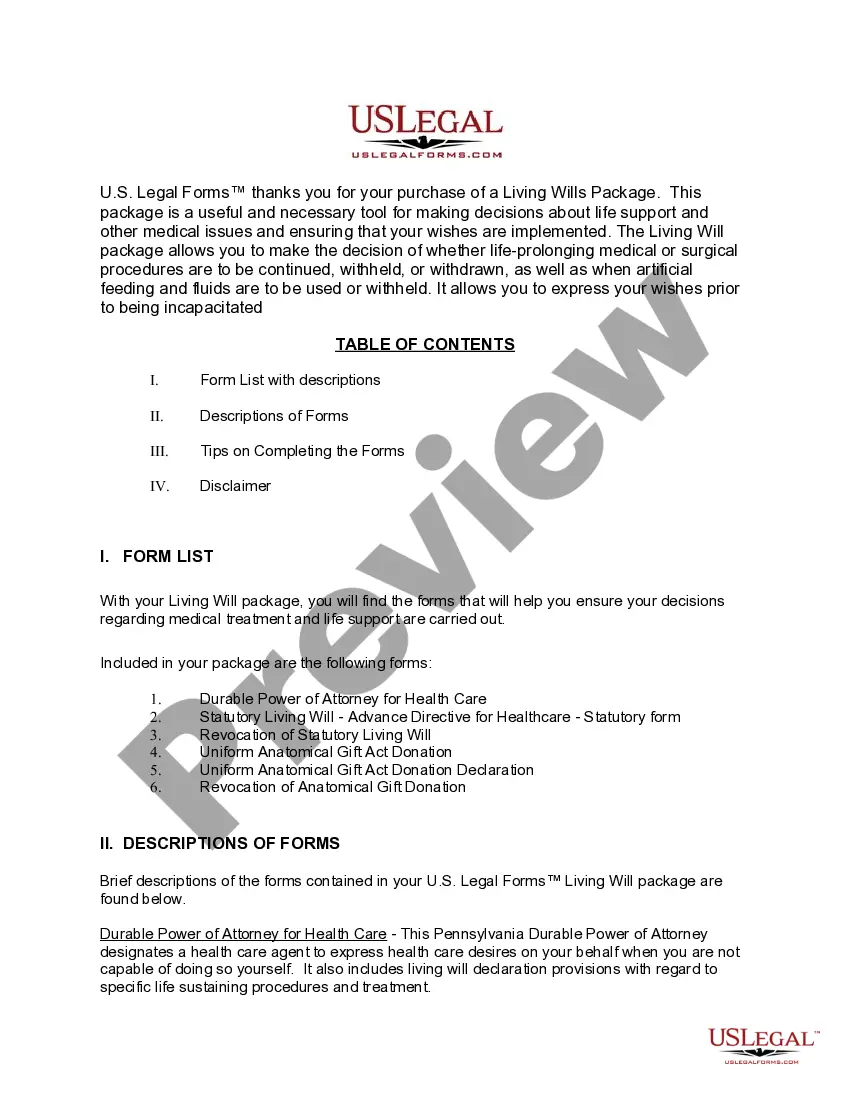
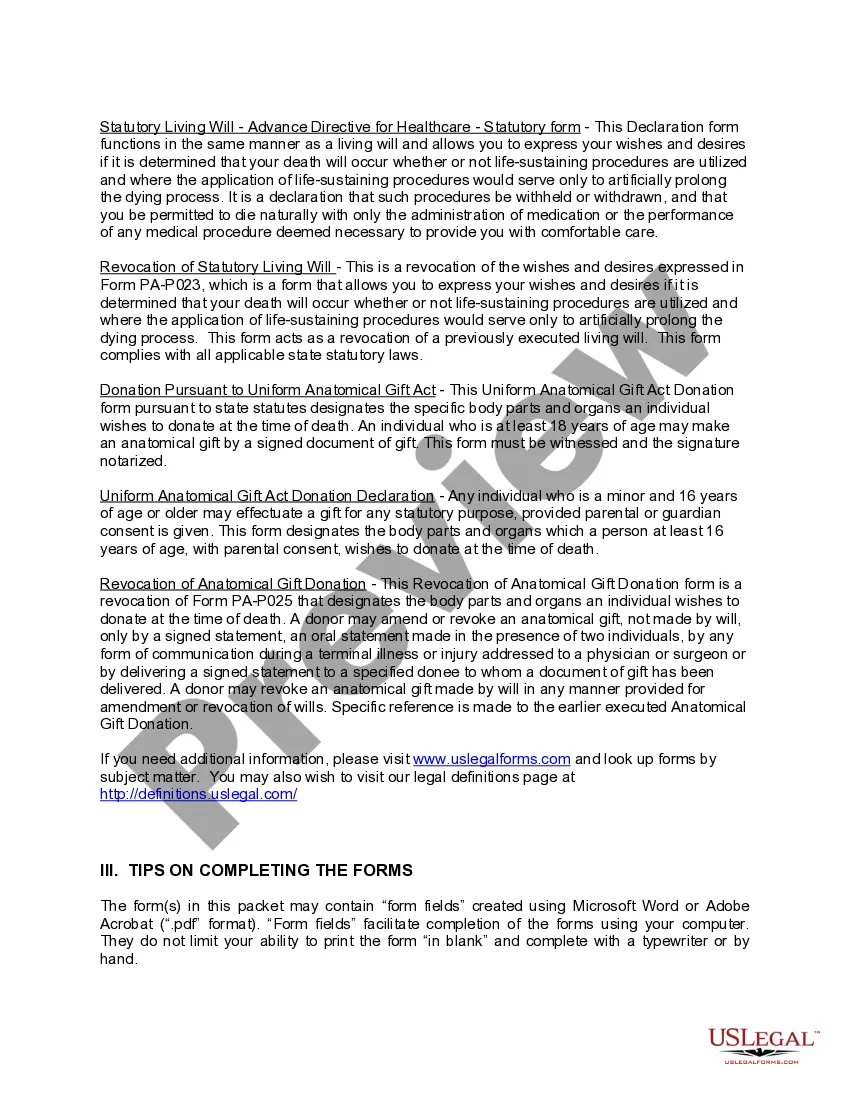
The Pennsylvania Living Wills and Health Care Package is a collection of essential legal forms designed to help you express your medical treatment preferences and designate someone to make healthcare decisions on your behalf. This package includes documents that clarify your wishes regarding life-sustaining procedures during a terminal illness, ensuring that your choices are respected. Unlike other legal documents, this package specifically addresses issues related to healthcare directives and organ donation, giving you comprehensive control over your medical treatment decisions.
Forms provided in this package
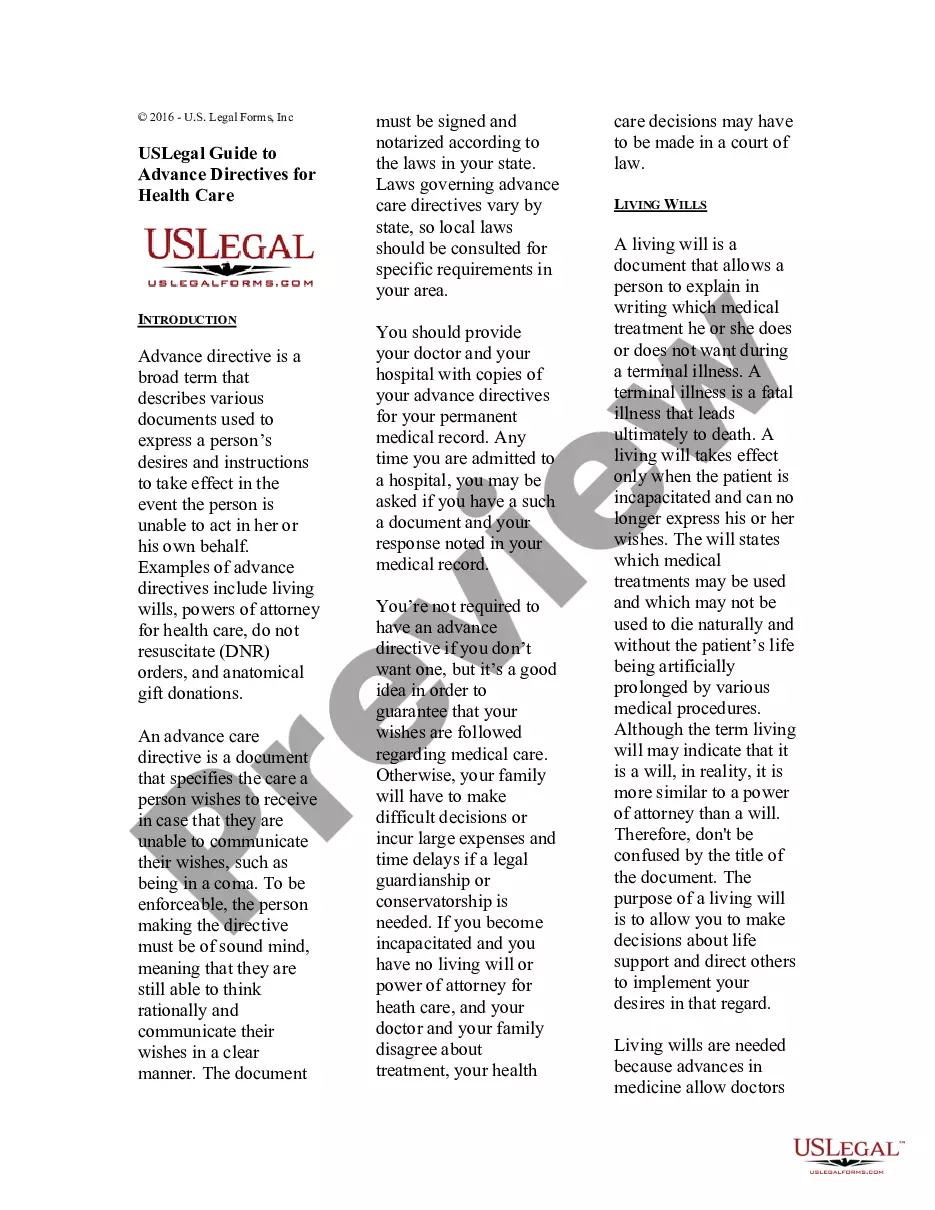
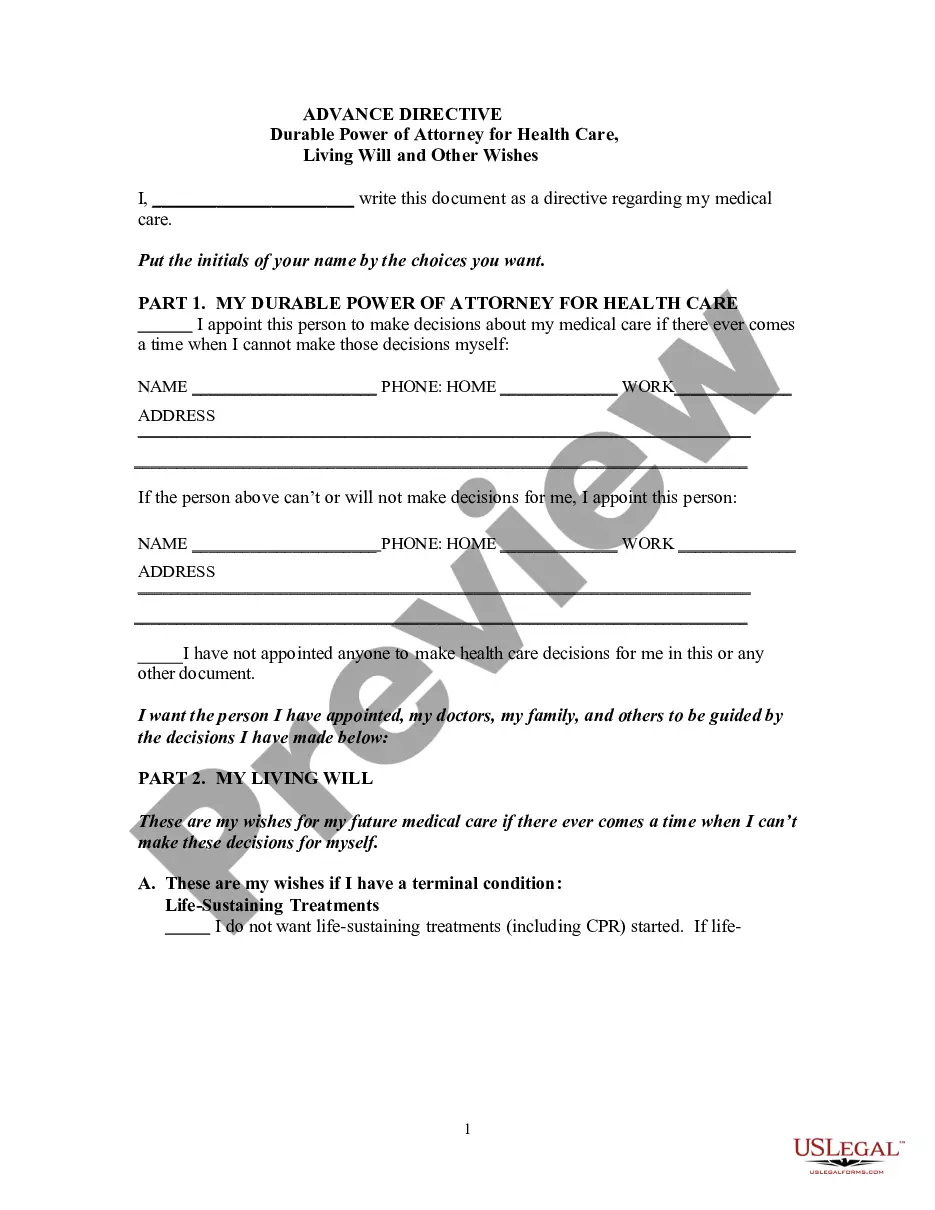
- Durable Power of Attorney for Health Care with Advance Health Care Provisions
- Statutory Living Will - Advance Directive for Healthcare - Statutory form
- Revocation of Statutory Living Will
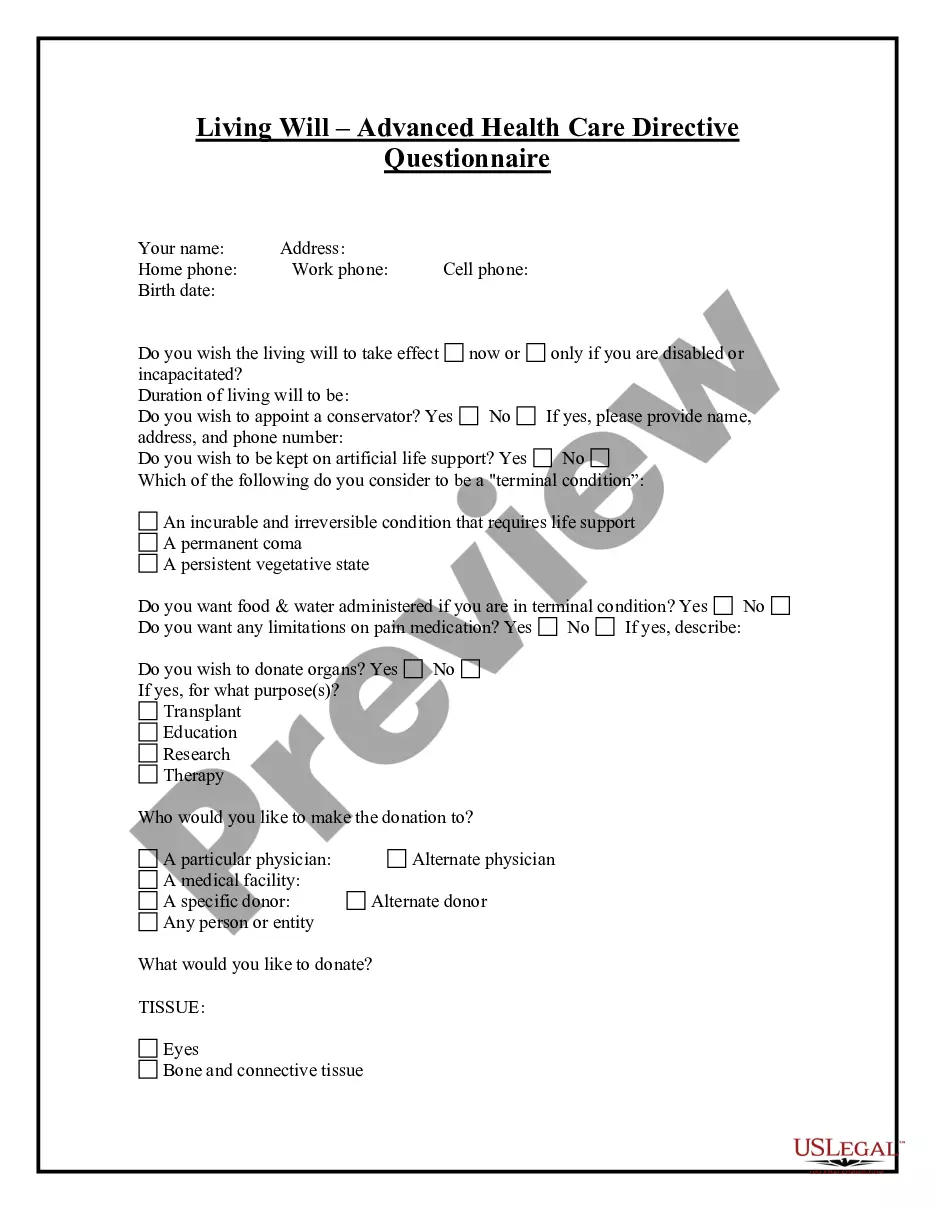
- Uniform Anatomical Gift Act Donation
- Uniform Anatomical Gift Act Donation Declaration
- Revocation of Anatomical Gift Donation

State-specific requirements
This form package is tailored to comply with Pennsylvania state laws regarding living wills and healthcare directives. It includes forms that meet the statutory requirements necessary to ensure their legal enforceability in Pennsylvania. Each document is designed following state guidelines for healthcare decisions, providing you peace of mind that your wishes will be honored in medical situations specific to Pennsylvania.
When this form package is needed
This form package is ideal for individuals facing serious health conditions or those who want to prepare for future medical situations. Use it when you wish to:
- Express your preferences regarding life support and medical treatment in the event of a terminal illness.
- Designate a trusted person to make healthcare decisions if you are unable to do so.
- Formalize your organ donation wishes or revoke previous declarations.
Who should use this form package
- Individuals with serious health concerns or chronic illnesses.
- Adults wanting to plan ahead for potential medical emergencies.
- People interested in designating a healthcare power of attorney.
- Individuals wishing to make their organ donation preferences known.
How to prepare this document
- Review all included forms carefully to understand your options.
- Fill in your personal information and preferences in the designated fields of the forms.
- Designate a trusted individual as your healthcare proxy on the Durable Power of Attorney for Health Care form.
- Ensure any required witnesses sign the forms where applicable.
- Keep a copy of the completed forms for your records and give copies to your healthcare proxy and medical providers.
Do forms in this package need to be notarized?
Some forms in this package require notarization to be legally valid. US Legal Forms provides secure online notarization powered by Notarize, allowing you to complete the process through a verified video call, available 24/7.

Common mistakes to avoid
- Not signing the forms in the presence of required witnesses or notary if necessary.
- Failing to provide clear instructions regarding medical treatment preferences.
- Not updating the forms after major life changes, such as marriage or divorce.
Benefits of using this package online
- Access forms instantly and download them at your convenience.
- Editable forms allow you to customize your preferences easily.
- Drafted by licensed attorneys, ensuring they meet legal standards.
- Secure storage options for your completed documents and peace of mind.
Legal use & context
- These forms can be legally binding documents that ensure your healthcare wishes are followed.
- It is important to review Pennsylvania laws on living wills and healthcare proxies to guarantee compliance.
- Consult an attorney for personalized legal advice regarding healthcare directives.
Quick recap
- The Pennsylvania Living Wills and Health Care Package empowers you to make informed decisions regarding your medical treatment.
- This package includes critical forms needed to communicate your healthcare wishes effectively.
- Ensure that the forms are completed accurately and stored safely for easy access by your healthcare providers.

Form popularity
FAQ
You do not need a lawyer to make a living will, although you can get one from a lawyer if you prefer to. Every state has its own requirements for making a living will, so if you make one on your own, make sure you find a form that meets your state's requirements.
What is an advanced health care directive? What are the components? How are they used? When do they become effective? What happens if I don't have one? Can I change my mind? If I have a living will, does that mean I won't get treatment? Where do I get these forms?
Step 1 Download Your Living Will. Download in Adobe PDF, Microsoft Word (. Step 2 Health Care Directive. Step 3 Life Support. Step 4 Life-Sustaining Treatment. Step 5 End of Life Wishes. Step 6 Medical Power of Attorney. Step 7 Witness Acknowledgment. Step 8 Notary Acknowledgment.
Living will. A living will is a written, legal document that spells out medical treatments you would and would not want to be used to keep you alive, as well as your preferences for other medical decisions, such as pain management or organ donation. In determining your wishes, think about your values.
A living will becomes effective when your primary physician decides that you can no longer make your own healthcare decisions. If you are ill or injured and cannot express your healthcare wishes, and your doctor certifies this fact in writing, your living will takes effect.
The cost of setting up a living will varies from state to state, depending on whether it must be witnessed by a notary. Costs typically fall between $250-$500 to hire a lawyer to draft the living will, while forms can be self-completed for between $45 and $75.
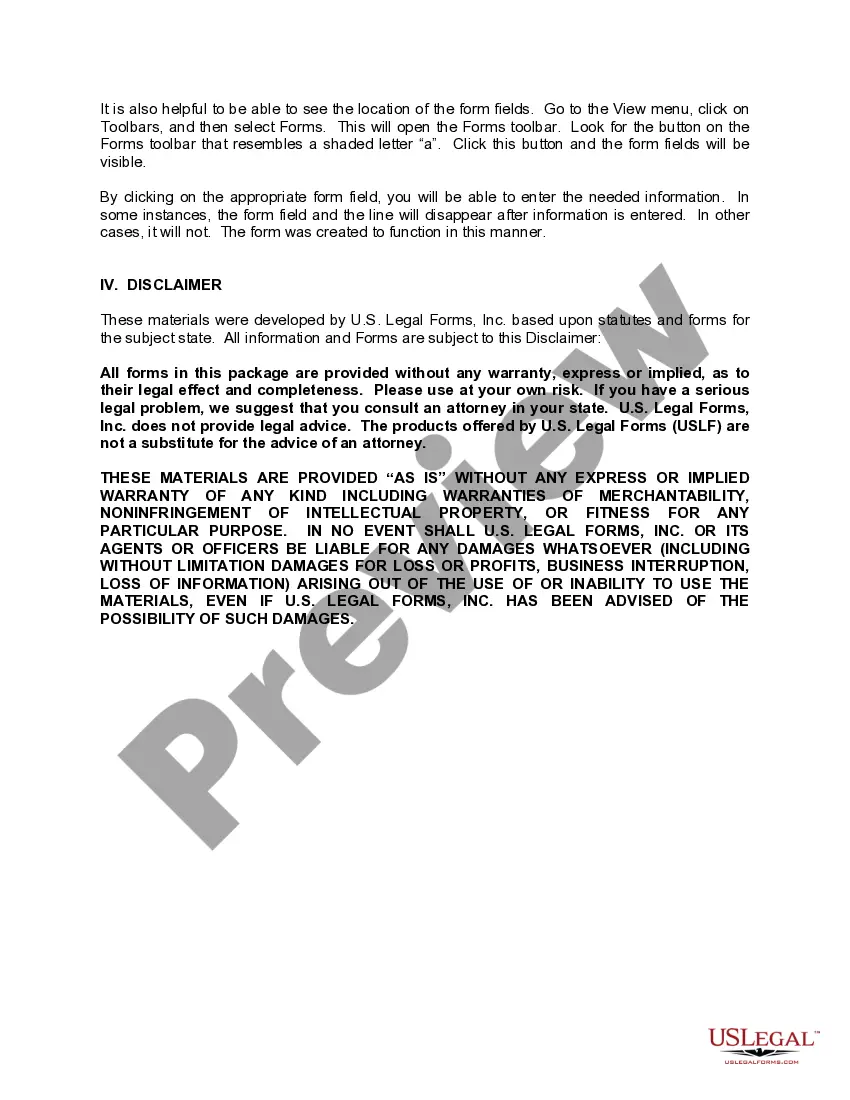
In Pennsylvania, you are not required to have your living will notarized, however, if you are contemplating using the document in another state you should find out if the other state requires notarization.
A living will is a legal document that contains a person's medical care and treatment instructions. The purpose of a living will is to allow a person to express health care decisions while he or she is mentally able to do so.