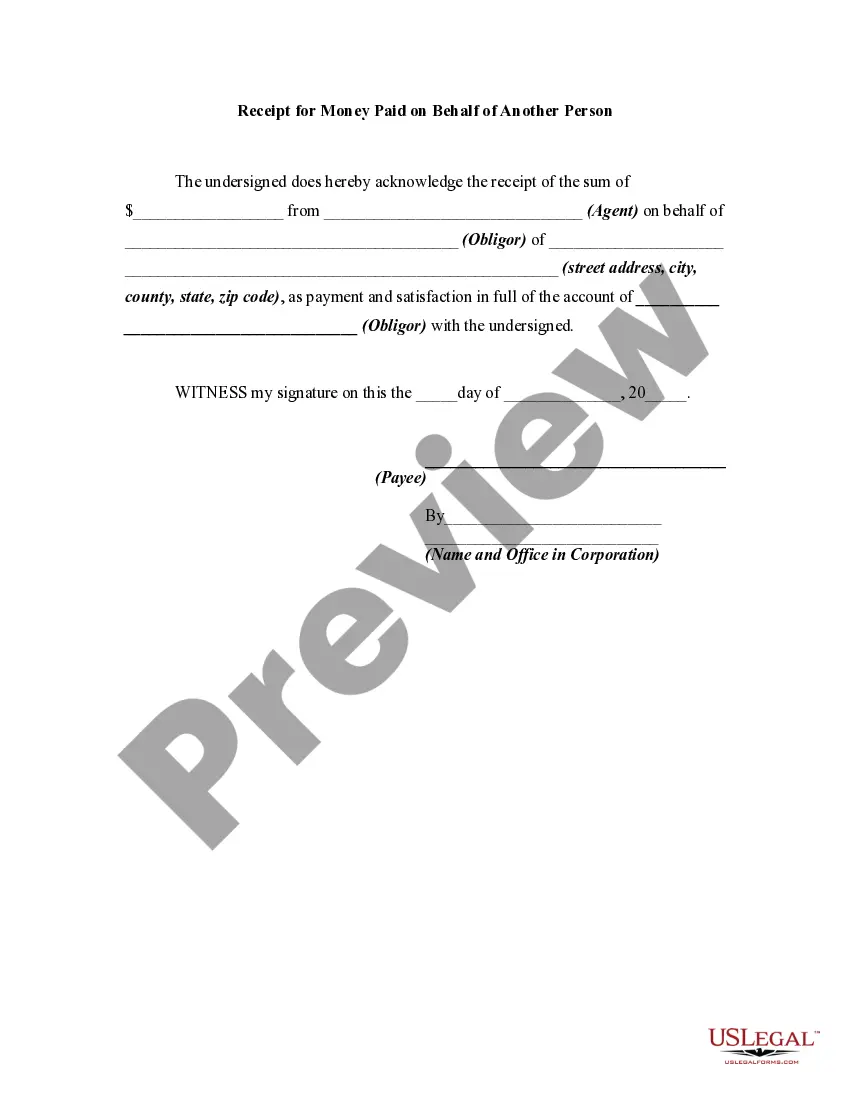
Receipt for Money Paid on Behalf of Another Person
Description
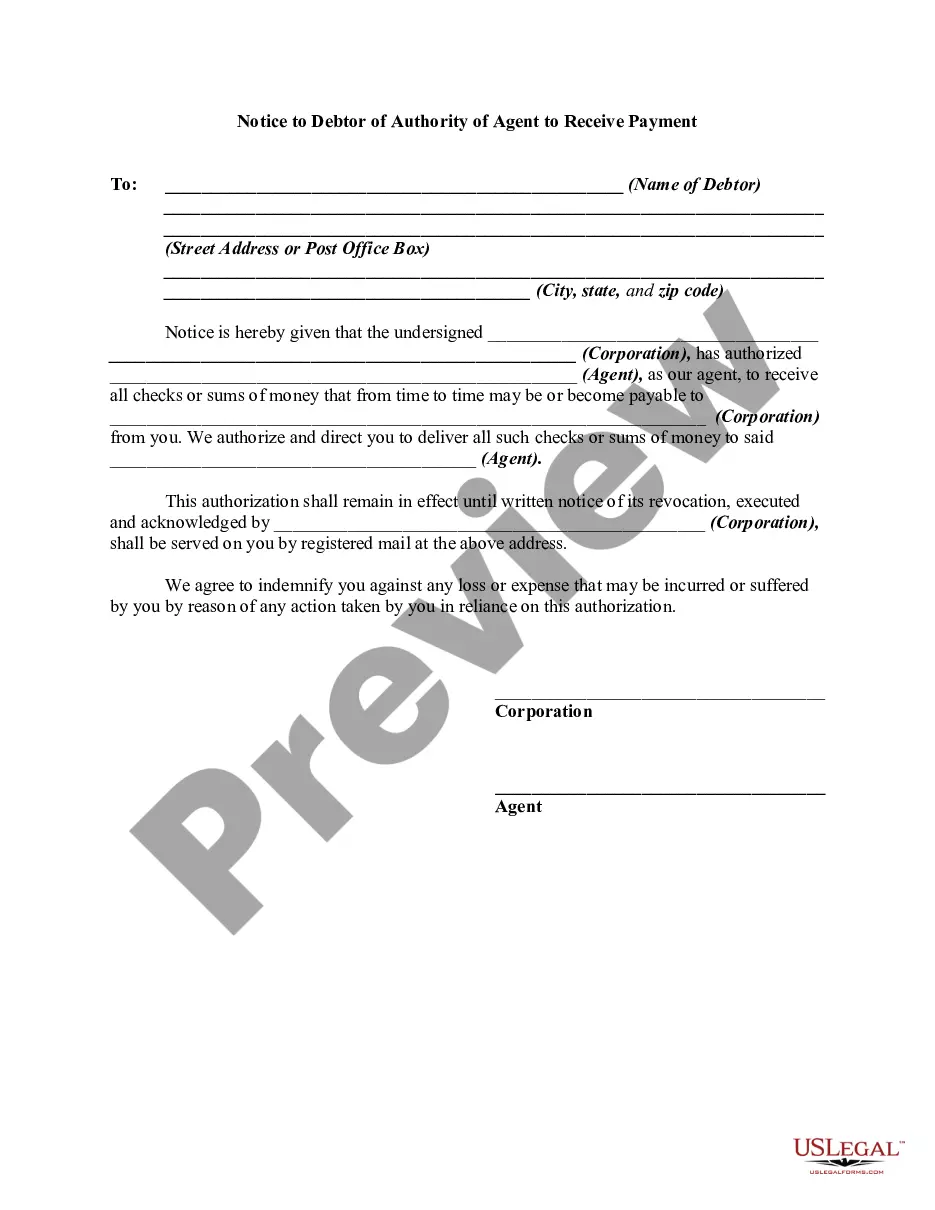
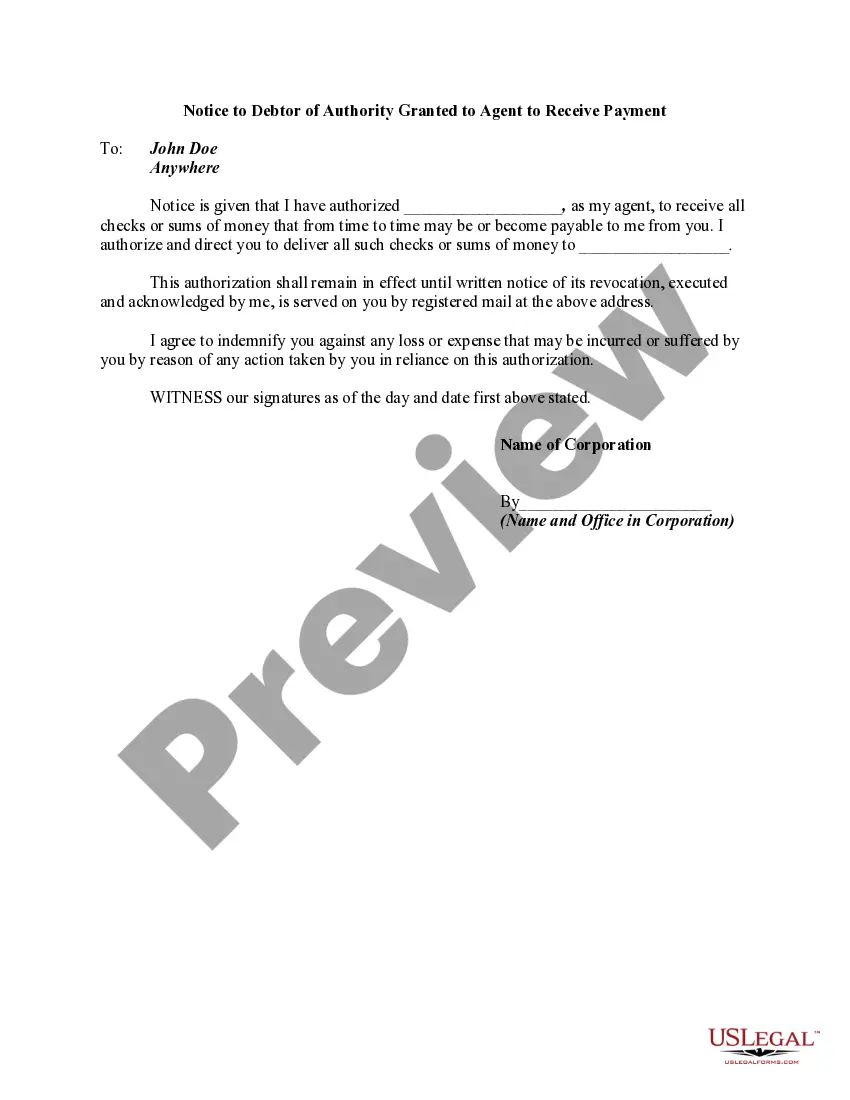
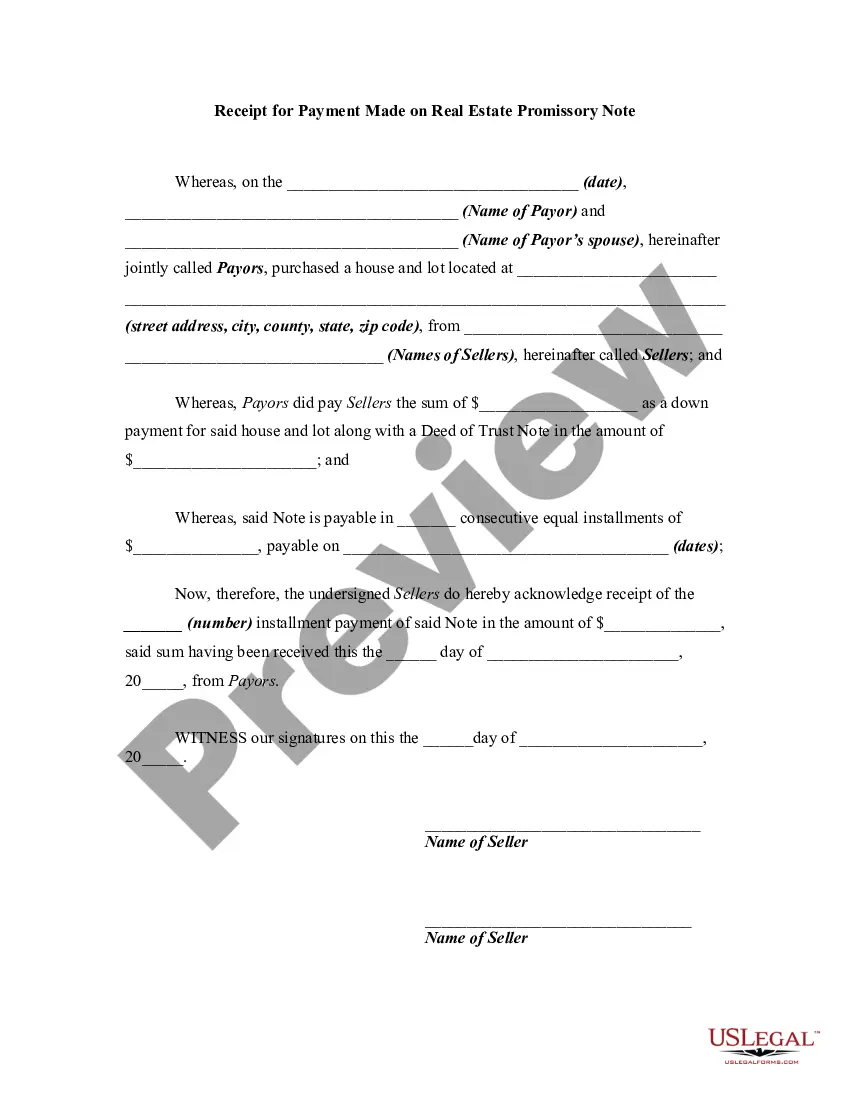
Key Concepts & Definitions
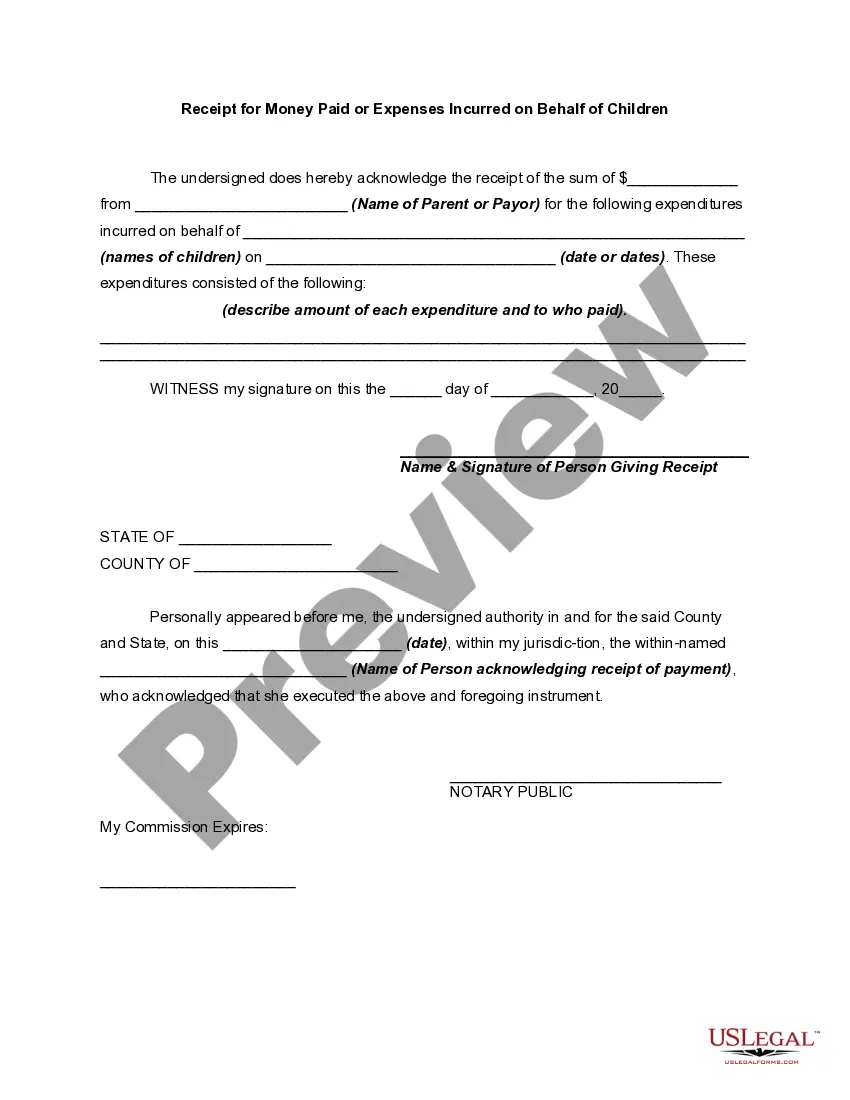
When discussing the phrase 'receipt for money paid on behalf of another person', it is important to understand that this refers to a document acknowledging receipt of funds that one party (the payer) pays to a second party (receiver) for the benefit of a third party (the beneficiary). Such receipts are common in situations where individuals or businesses handle transactions or obligations on behalf of others.
Step-by-Step Guide
- Identify the Parties Involved: Clearly state the name of the payer, the receiver, and the beneficiary.
- Specify the Amount: Indicate the exact amount that was paid on behalf of the beneficiary.
- Detail the Purpose: Describe the reason for the payment. This could be for services rendered, goods bought, a debt paid, etc.
- Date the Transaction: Include the date when the payment was made.
- Collect Signatures: Ensure all relevant parties sign the receipt to affirm the validity of the transaction.
- Keep Copies: Distribute copies of the receipt to all parties involved and keep one for record keeping.
Risk Analysis
- Miscommunication: Inadequate details on the receipt can lead to misunderstandings about who paid, how much, and for what purpose.
- Disputes: Without a clear, signed document, disagreements can arise over whether payments were made or received correctly.
- Legal Implications: Incorrectly handled receipts could lead to legal issues, especially if large sums or critical payments are involved.
Best Practices
- Clarity: Use clear, concise language in the receipt to avoid ambiguities.
- Comprehensive Details: Include all pertinent information such as the date, full names, amount, and purpose of the transaction.
- Legality: Consult legal advice to ensure the receipt meets all local legal requirements.
- Verification: Double-check that all figures and facts on the receipt are accurate.
Common Mistakes & How to Avoid Them
- Forgetting to Sign: Always ensure that all parties involved sign the receipt to avoid disputes.
- Omitting Details: Do not skip over details such as the payment reason or date as these are crucial for record-keeping.
- Lack of Backup Copies: Always keep multiple copies of the receipt in case one is lost or becomes unreadable.
How to fill out Receipt For Money Paid On Behalf Of Another Person?
Aren't you sick and tired of choosing from hundreds of templates every time you need to create a Receipt for Money Paid on Behalf of Another Person? US Legal Forms eliminates the lost time numerous American citizens spend searching the internet for suitable tax and legal forms. Our skilled crew of attorneys is constantly updating the state-specific Samples collection, so it always provides the proper documents for your scenarion.
If you’re a US Legal Forms subscriber, simply log in to your account and click on the Download button. After that, the form may be found in the My Forms tab.
Users who don't have a subscription need to complete a few simple steps before having the capability to get access to their Receipt for Money Paid on Behalf of Another Person:
- Utilize the Preview function and read the form description (if available) to make sure that it’s the correct document for what you’re trying to find.
- Pay attention to the applicability of the sample, meaning make sure it's the proper sample for the state and situation.
- Make use of the Search field on top of the site if you have to look for another file.
- Click Buy Now and choose an ideal pricing plan.
- Create an account and pay for the services using a credit card or a PayPal.
- Download your document in a convenient format to finish, print, and sign the document.
When you’ve followed the step-by-step guidelines above, you'll always have the capacity to sign in and download whatever document you require for whatever state you require it in. With US Legal Forms, completing Receipt for Money Paid on Behalf of Another Person samples or other official documents is not hard. Get started now, and don't forget to recheck your examples with accredited attorneys!
Form popularity
FAQ
Fill in the name of the recipient. Write the name of the recipient of the money order in the pay to or pay to the order of field. Include your address in the purchaser section. Write the account or order number in the memo field. Sign your name in the purchaser's signature section.
No, you cannot make changes to a completed money order. Any form of alteration or correction will result in ineligibility for cashing.
Plan Before Endorsing a Check to Someone Else. Confirm the Person/Entity Will Accept a Signed-Over Check. Ensure the Person's/Entity's Bank Will Accept the Check. Sign the Back of the Check in the Top Section of the Endorsement Area. Write Pay to the Order of and the Third Party's Name Below Your Signature.
Legally, a purchaser's signature is not required for a money order to be negotiable since it has been already paid for in cash. The named payee must sign in order to receive the cash.
You are the purchaser and so you should write your current mailing address. Some money orders may use the words From, Sender, Issuer, Remitter, or Drawer. Putting your address allows the recipient (wherever they deposit the money order) to contact you if they want to confirm that it's real or if there is an issue.
To cash a money order, you'll need to first endorse it by signing your name on the back. You will also need to provide identification no matter where you're cashing your money order. If you don't have any ID, you can endorse the money order to someone else, like a sibling or friend, who does have an ID.
Banks will usually allow you to deposit checks or money orders into someone else's account for example, if you're giving a gift, helping a friend or family member cover bills, or paying someone back.You can also sign a money order over to another person so they can deposit the money order themselves.
Step 1: Fill in recipient's name. This is the name of the payee: the person or company receiving the payment. Step 2: Write your address on the purchaser line. Step 3: Add a memo or account number. Step 4: Sign the front of the money order. Keep the money order receipt. Drawbacks of money orders.
Money orders are made out to individuals or companies for a specific amount.Money orders can be purchased from such places as the U.S. Post Office, Western Union, Money Gram and even Wal-Mart. When you receive a money order, you must endorse it before turning it in for cash.