Confidentiality Agreement
About this form
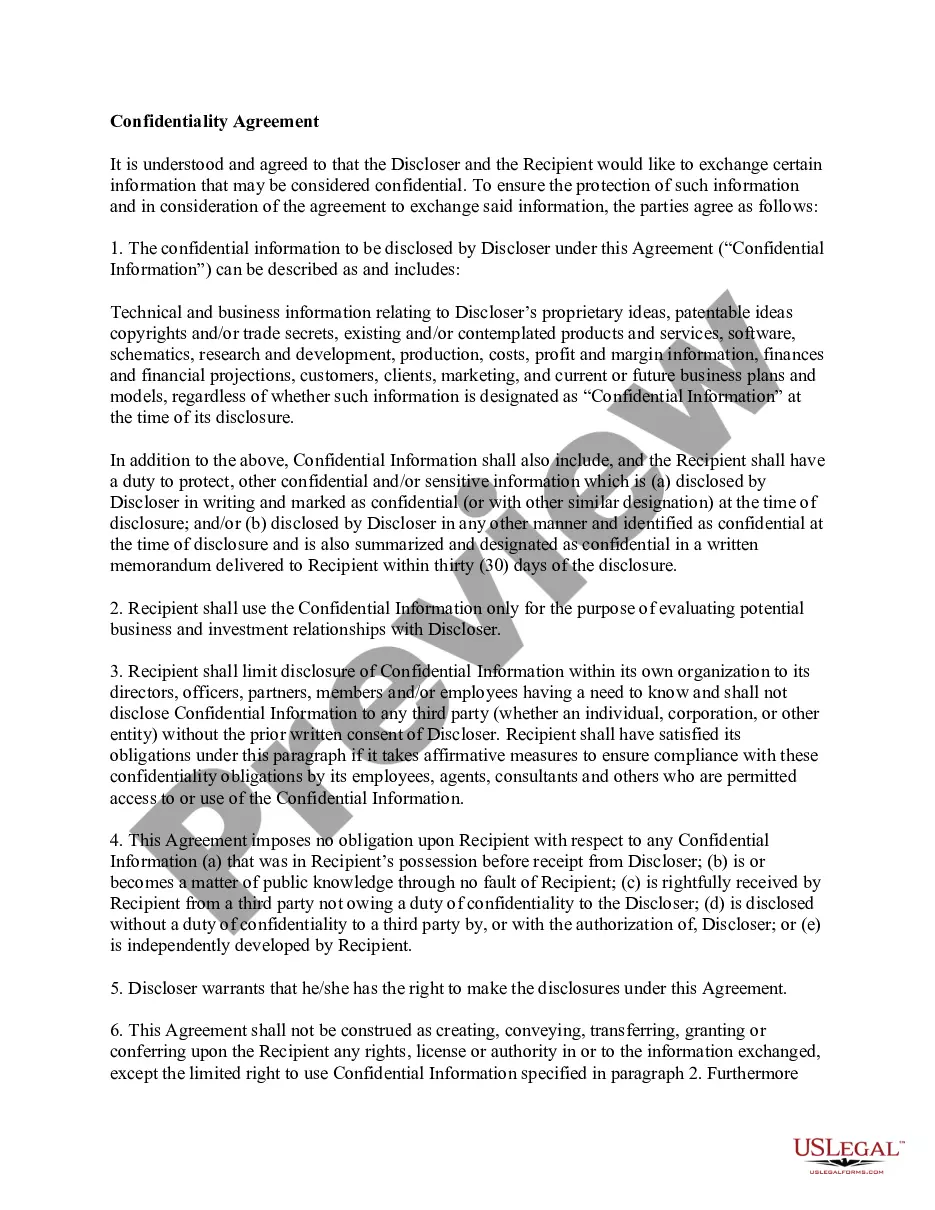
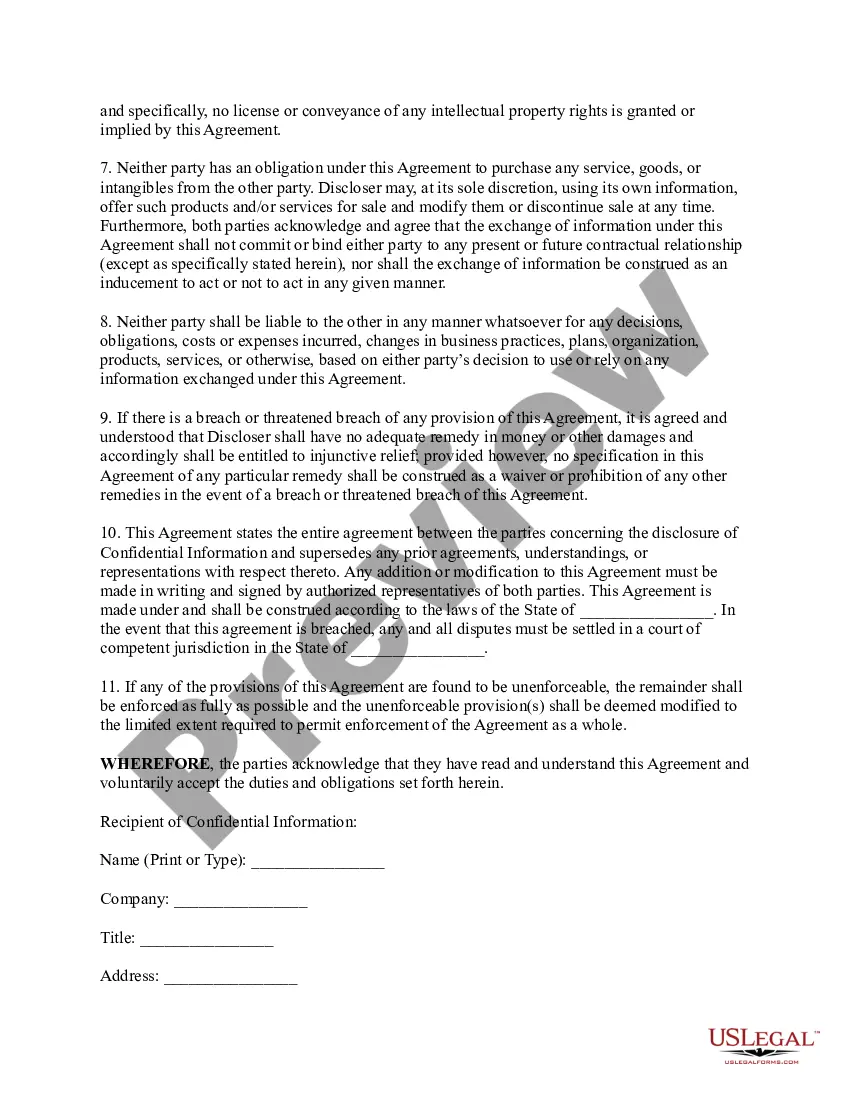
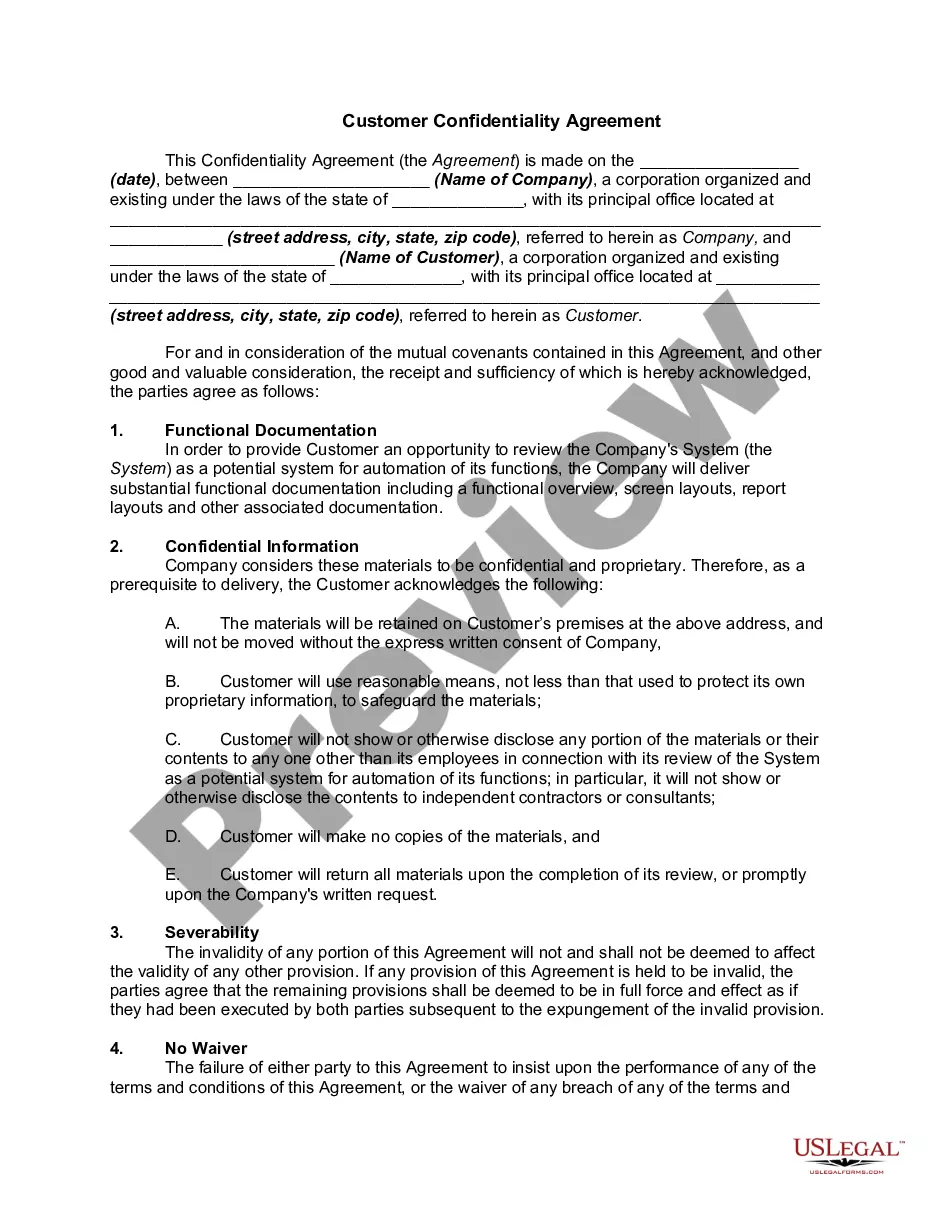
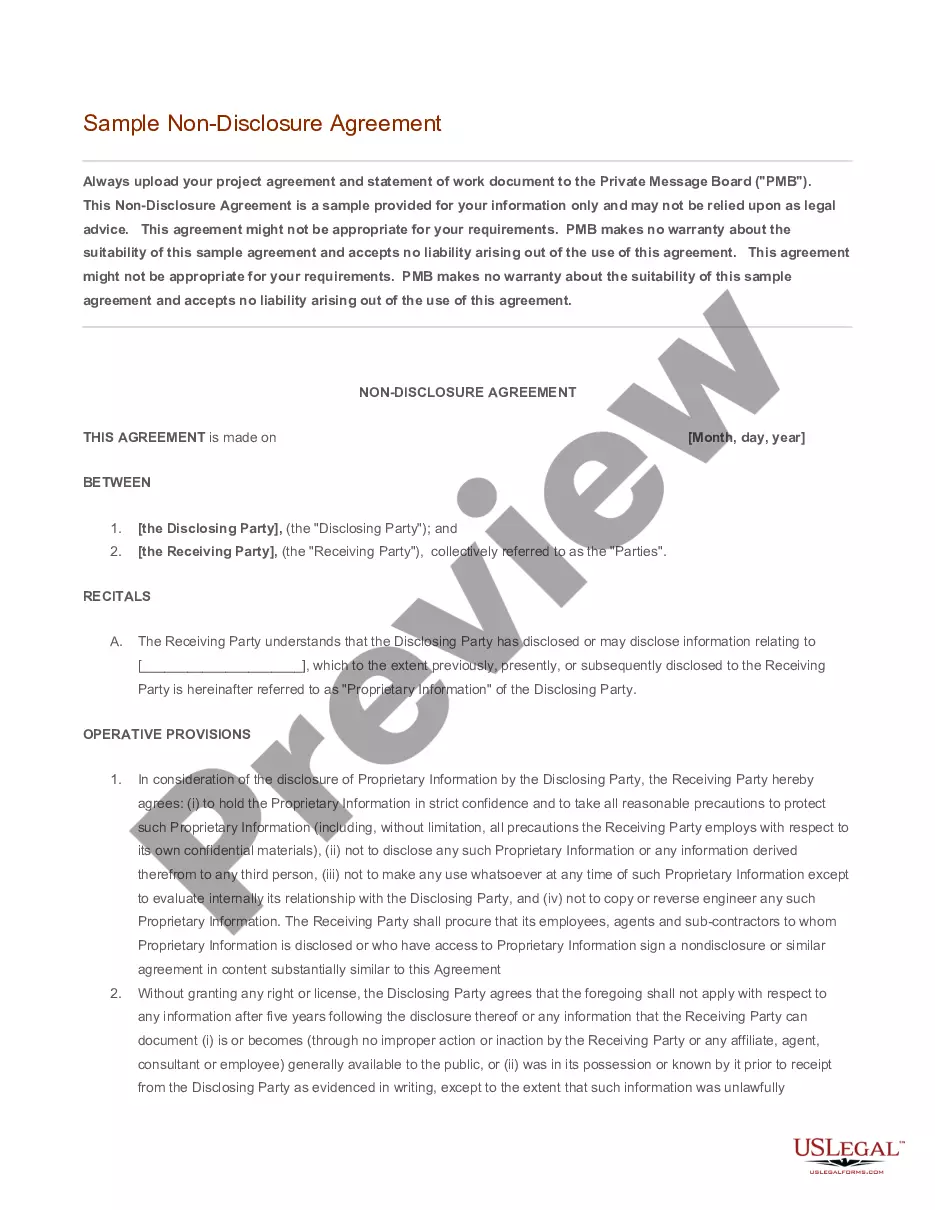
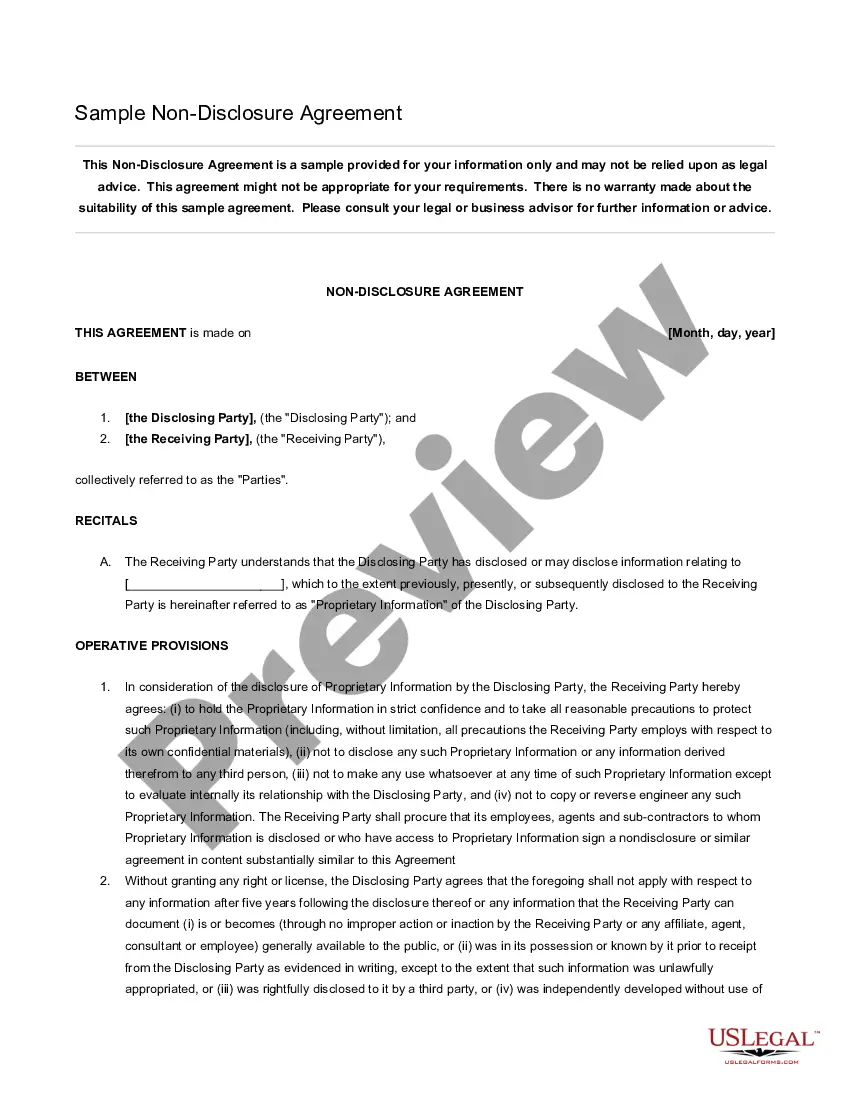
A Confidentiality Agreement is a legal document that binds one or more parties to keep sensitive information private. This agreement is essential for protecting proprietary ideas, trade secrets, and any confidential information shared during discussions or negotiations. Unlike similar forms, a Confidentiality Agreement specifically outlines the duties of parties in protecting disclosed information and limits its use strictly to agreed purposes.
Form components explained
- Definition of "Confidential Information" to clarify what is protected.
- Usage restrictions specifying that the information can only be used for evaluating business relationships.
- Disclosure limitations to ensure that only authorized personnel within the Recipient's organization access the confidential information.
- Exclusions that outline scenarios where confidentiality does not apply.
- Warranties from the Discloser confirming their right to share the information.
- Provisions for injunctive relief in case of a breach.
When to use this form
This form is useful when two or more parties intend to discuss or exchange sensitive information that is critical to their business operations. Scenarios include negotiating partnerships, sharing proprietary technology, or evaluating investment opportunities. It ensures that all parties understand their obligations to protect shared information from unauthorized disclosure.
Who needs this form
- Businesses entering into negotiations with other companies.
- Investors seeking information about potential investments.
- Startups sharing innovative ideas with potential partners.
- Consultants and independent contractors working with sensitive client information.
How to complete this form
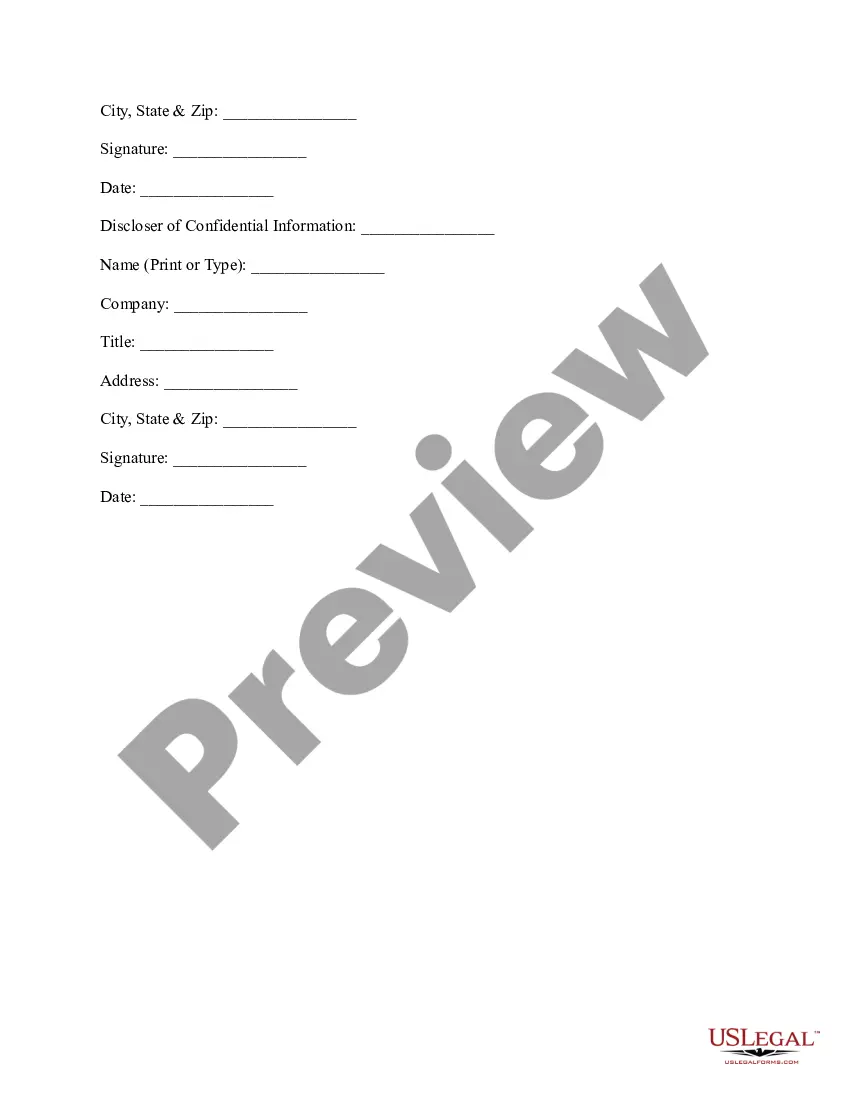
- Identify the parties involved by entering the names and addresses of the Discloser and the Recipient.
- Clearly define the information deemed confidential in the appropriate section.
- Specify the purpose for which the Confidential Information will be used.
- Ensure both parties sign and date the agreement to make it legally binding.
- Keep copies of the signed agreement for each party's records.
Is notarization required?
This form does not typically require notarization unless specified by local law. It can be effective and enforceable with the signatures of the parties involved, provided all conditions are met.
Get your form ready online
Our built-in tools help you complete, sign, share, and store your documents in one place.
Make edits, fill in missing information, and update formatting in US Legal Forms—just like you would in MS Word.
Download a copy, print it, send it by email, or mail it via USPS—whatever works best for your next step.
Sign and collect signatures with our SignNow integration. Send to multiple recipients, set reminders, and more. Go Premium to unlock E-Sign.
If this form requires notarization, complete it online through a secure video call—no need to meet a notary in person or wait for an appointment.
We protect your documents and personal data by following strict security and privacy standards.

Make edits, fill in missing information, and update formatting in US Legal Forms—just like you would in MS Word.

Download a copy, print it, send it by email, or mail it via USPS—whatever works best for your next step.

Sign and collect signatures with our SignNow integration. Send to multiple recipients, set reminders, and more. Go Premium to unlock E-Sign.

If this form requires notarization, complete it online through a secure video call—no need to meet a notary in person or wait for an appointment.

We protect your documents and personal data by following strict security and privacy standards.
Avoid these common issues
- Failing to specify all confidential information in detail.
- Overlooking the inclusion of all parties who will access the confidential information.
- Not obtaining signatures from both parties, rendering the agreement unenforceable.
- Using vague language that may lead to misinterpretation of confidentiality obligations.
Benefits of using this form online
- Convenient access to customizable templates, allowing for quick edits based on specific needs.
- Immediate download for use, speeding up the process of formalizing confidentiality.
- Reliable format created by legal professionals, ensuring comprehensive coverage of essential clauses.
Looking for another form?
Form popularity
FAQ
I agree to treat as confidential all information about clients or former clients and their families that I learn during the performance of my duties as (position title), and I understand that it would be a violation of policy to disclose such information to anyone without checking first with my
A typical confidentiality clause might say, "The phrases and circumstances of this Agreement are completely confidential between the parties and shall not be disclosed to anybody else. Any disclosure in violation shall be deemed a breach of this Agreement."
Here is a common example: CONFIDENTIALITY NOTICE: This message and any accompanying documents contain information belonging to the sender which may be confidential and legally privileged. This information is only for the use of the individual or entity to which it was intended.
In general, non-disclosure agreements are lawful, but they cannot include any provisions that prohibit the discussion of pay. Salary discussions are protected and will trump any non-disclosure agreement (even if the other portions of the NDA are perfectly lawful). Can You Tell Employees Not to Discuss Their Pay? - EmPower HR empowerhr.com ? can-you-tell-employees-not-to-... empowerhr.com ? can-you-tell-employees-not-to-...
Non-disclosure agreements are an important legal framework used to protect sensitive and confidential information from being made available by the recipient of that information. Companies and startups use these documents to ensure that their good ideas won't be stolen by people they are negotiating with. How NDAs Work and Why They're Important - Investopedia investopedia.com ? articles ? investing ? ho... investopedia.com ? articles ? investing ? ho...
How to Get Out of an NDA. One way to get out of an NDA is when the set term of the contract expires. Another way is if the contract is ended in ance with its termination clause. In some cases, however, your legal obligations to maintain confidentiality can continue for many years. How to Terminate a Non-Disclosure Agreement - LawDistrict lawdistrict.com ? articles ? how-to-terminate... lawdistrict.com ? articles ? how-to-terminate...
What are examples of Confidential Information? Examples of confidential information include a person's phone number and address, medical records, and social security. Companies also have confidential information such as financial records, trade secrets, customer information, and marketing strategies.
Starting at $1,500.00 for basic Non Disclosure Agreement. More complex matters may range from $5,000.00-$10,000.00. An NDA is a contract by which one or more parties agree not to disclose confidential information that they have shared with each other as a necessary part of doing business together. Non-Disclosure Agreement (NDA) - Personal Injury and Business Law thesterlingfirm.com ? product ? non-disclosure-ag... thesterlingfirm.com ? product ? non-disclosure-ag...