Alabama Process of Garnishment
Overview of this form
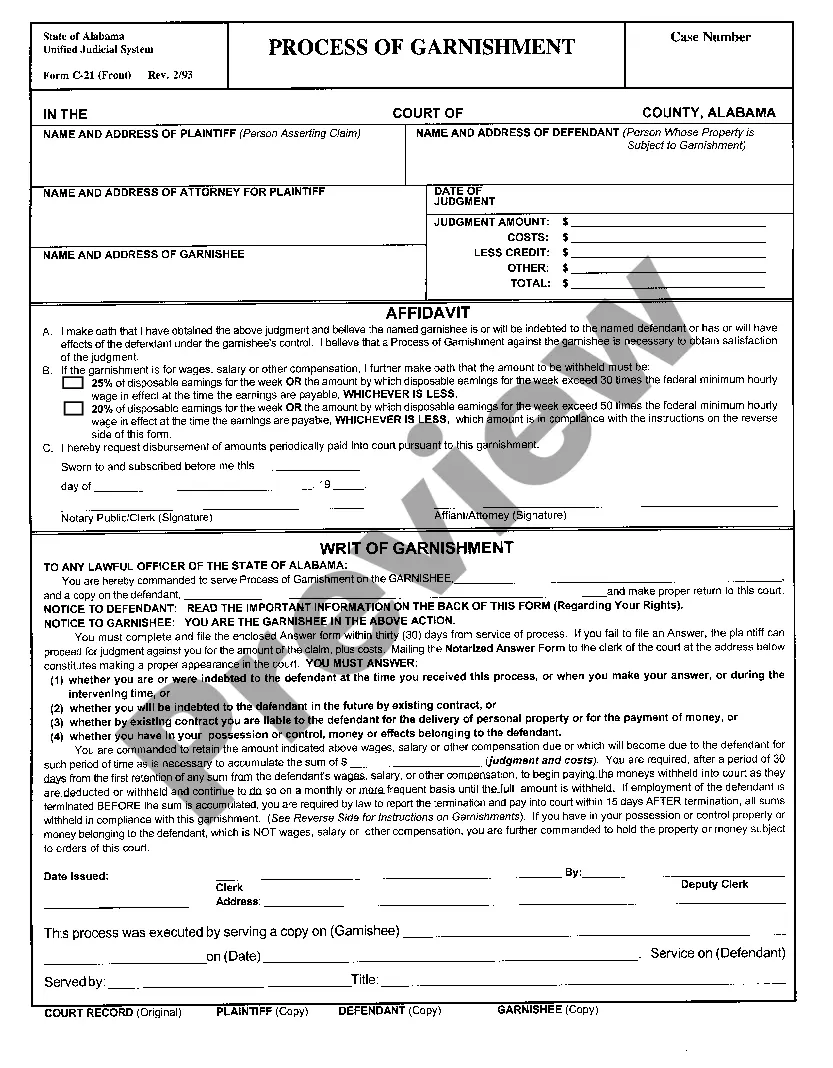
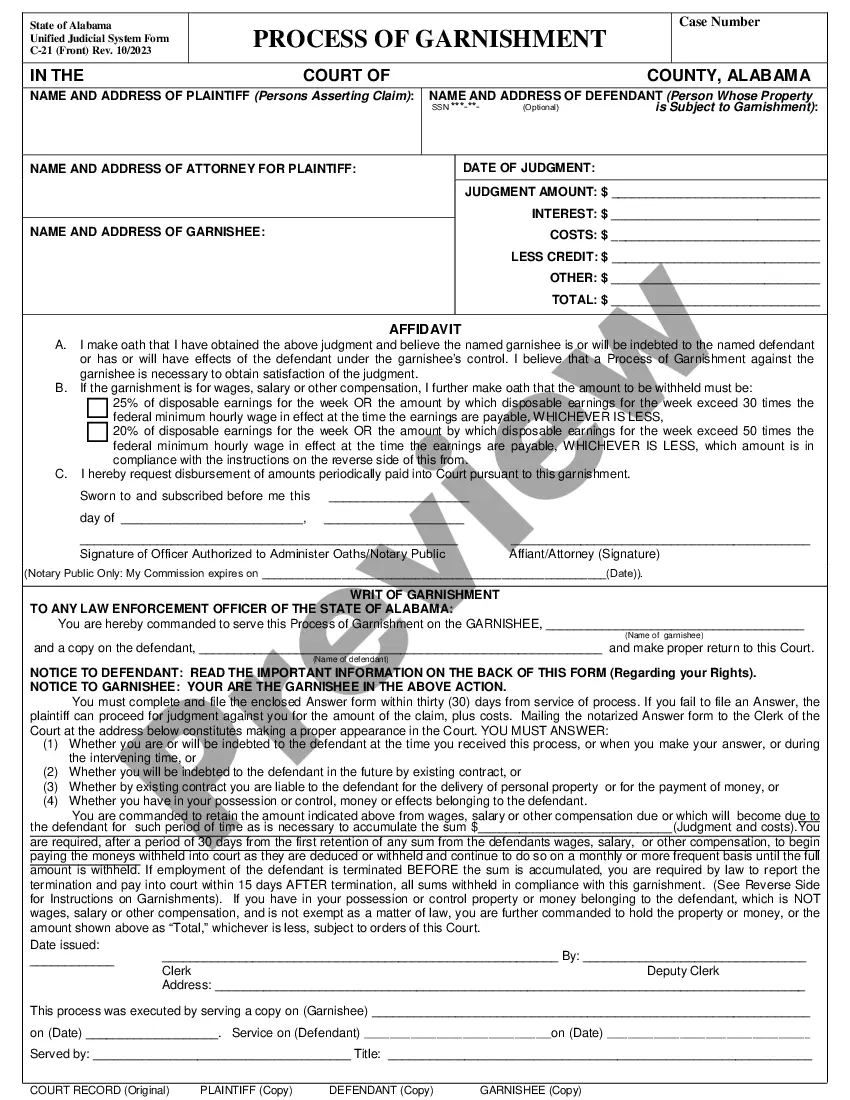
The Process of Garnishment form is a legal document used to notify a third party, known as the garnishee, that a creditor is seeking to collect a debt from a debtor's wages or bank account. This form serves as a crucial step in the garnishment process, allowing creditors to enforce collection orders and obtain payment for debts. Unlike similar documents, it specifically addresses the garnishee and outlines the obligations to respond to the garnishment request.
Form components explained
- Identification of the creditor and debtor
- Details regarding the garnishee
- Specific debt amount being collected
- Instructions for the garnishee on handling the garnishment
- Deadline for response
Situations where this form applies
This form is used when a creditor has obtained a court order to garnish wages or bank accounts of a debtor. It is necessary in situations where the creditor aims to collect owed money directly from the debtor's income or funds held by a bank. Use this form to formally notify the garnishee of their responsibilities in the garnishment process.
Who should use this form
- Creditors seeking to collect outstanding debts
- Attorneys representing creditors in garnishment actions
- Individuals involved in debt recovery processes
Steps to complete this form
- Identify the names and contact information of the creditor and debtor.
- Provide details about the garnishee, including their name and address.
- Specify the total amount owed that is to be collected through garnishment.
- Include clear instructions for the garnishee about how to respond to the form.
- Sign and date the form before serving it to the garnishee.
Notarization guidance
This form does not typically require notarization unless specified by local law.
Get your form ready online
Our built-in tools help you complete, sign, share, and store your documents in one place.
Make edits, fill in missing information, and update formatting in US Legal Forms—just like you would in MS Word.
Download a copy, print it, send it by email, or mail it via USPS—whatever works best for your next step.
Sign and collect signatures with our SignNow integration. Send to multiple recipients, set reminders, and more. Go Premium to unlock E-Sign.
If this form requires notarization, complete it online through a secure video call—no need to meet a notary in person or wait for an appointment.
We protect your documents and personal data by following strict security and privacy standards.

Make edits, fill in missing information, and update formatting in US Legal Forms—just like you would in MS Word.

Download a copy, print it, send it by email, or mail it via USPS—whatever works best for your next step.

Sign and collect signatures with our SignNow integration. Send to multiple recipients, set reminders, and more. Go Premium to unlock E-Sign.

If this form requires notarization, complete it online through a secure video call—no need to meet a notary in person or wait for an appointment.

We protect your documents and personal data by following strict security and privacy standards.
Common mistakes
- Failing to accurately identify the garnishee's contact information.
- Not detailing the correct amount owed.
- Ignoring required deadlines for garnishee responses.
Why use this form online
- Accessible for download anytime from any device.
- Editable fields allow for customization based on your specific situation.
- Drafted by licensed attorneys to ensure legal compliance.
Legal use & context
- Ensure compliance with Alabama garnishment laws to prevent legal issues.
- Understand the rights and obligations of both creditor and garnishee.
Quick recap
- The Process of Garnishment form facilitates the collection of debts through legal means.
- It is specifically tailored for use in Alabama, reflecting state law requirements.
- Accurate completion and adherence to legal guidelines are crucial for effectiveness.
Looking for another form?
Form popularity
FAQ
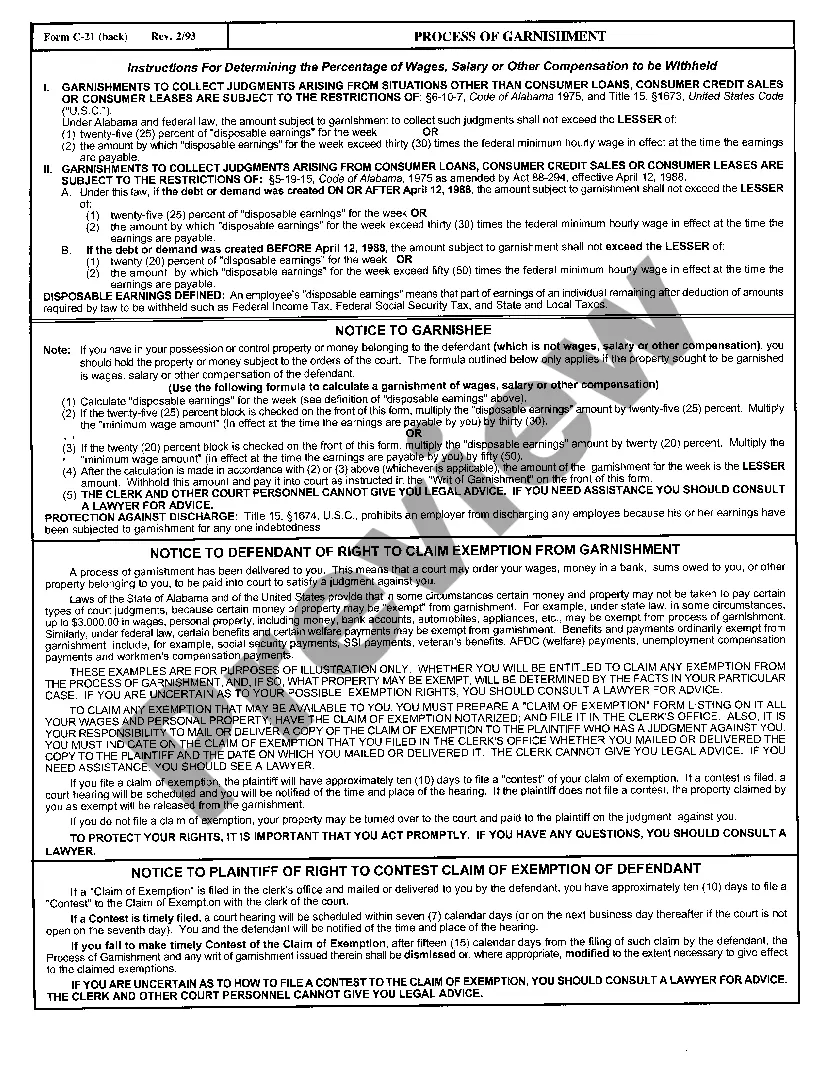
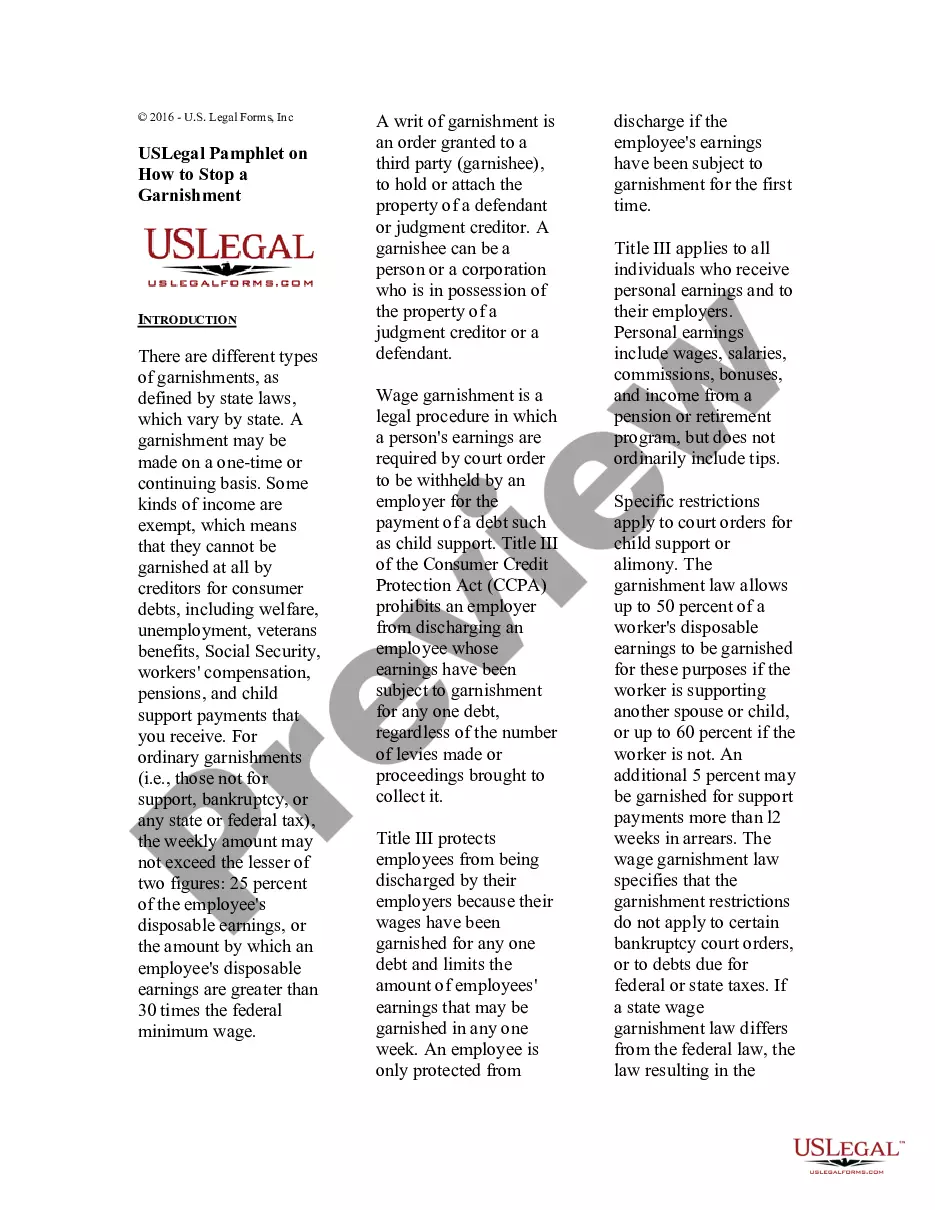
In the Alabama Process of Garnishment, the formula generally involves calculating the debtor’s disposable income and determining the allowable amount to be withheld. Disposable income refers to the earnings left after mandatory deductions, such as taxes and social security. According to federal guidelines, creditors can garnish only a specified percentage of a debtor's disposable income, ensuring that individuals retain enough funds for essential living expenses. By understanding this formula, you can navigate the garnishment process more effectively, and our platform at US Legal Forms provides resources that can assist you in managing the legal aspects involved.
Yes, you can stop a garnishment once it begins in Alabama by filing a request with the court. There are several legal grounds you can use to request the stop, such as claiming your income is exempt or identifying procedural errors. The Alabama process of garnishment allows for this recourse, so you should consider acting quickly and explore options available through platforms like US Legal Forms for guidance.
The rules for garnishments in Alabama require that creditors first obtain a court judgment. You must receive a notice of garnishment, which includes information about how much will be taken and your rights. It’s vital to understand these rules as the Alabama process of garnishment aims to ensure that both creditors and debtors follow the necessary protocols. Being well-informed can save you stress during this time.
In Alabama, once a default judgment has been entered against you, creditors can begin garnishing your wages almost immediately. Typically, they must follow the proper procedures and notify you of the garnishment. Therefore, it is essential to respond to legal notices timely during the Alabama process of garnishment to avoid complications. Staying proactive can ensure better control over your finances.
You can stop a garnishment in Alabama quickly by filing a motion in court, depending on the situation. If you have a valid reason, such as exempt income or an error in the garnishment process, the court can act promptly. Engaging with the Alabama process of garnishment swiftly can make a significant difference in your financial situation. For assistance, consider the resources provided by US Legal Forms to navigate this efficiently.
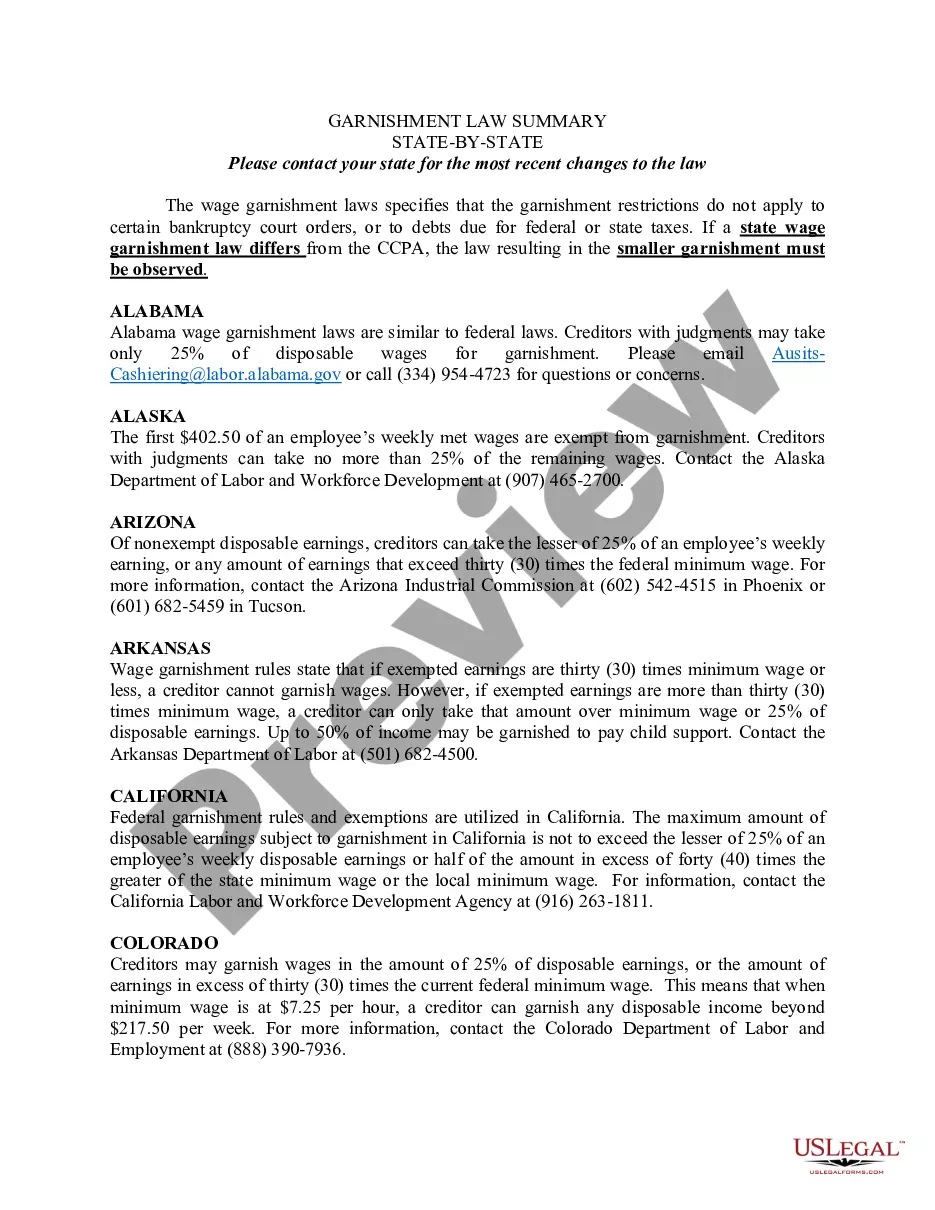
In Alabama, the maximum amount that can be garnished from your wages is 25% of your disposable earnings. Alternatively, if your disposable income is less than 30 times the federal minimum wage, no garnishment can take place. Knowing this limit is crucial when facing the Alabama process of garnishment and helps you budget your finances accordingly. Stay informed to protect your earnings.
In Alabama, the process of garnishment involves specific legal steps. Creditors must obtain a judgment against you before they can garnish your wages or bank account. It's important to notify the court if you believe the garnishment is incorrect, as Alabama law protects certain income types, such as Social Security benefits, from being garnished. Understanding the Alabama process of garnishment helps you know your rights and responsibilities.
Writing a hardship letter for wage garnishment involves clearly explaining your financial difficulties and reasons for requesting relief. Start with your personal information and state the garnishment details, followed by a description of your situation. Emphasizing how the garnishment negatively affects your finances can lead to a reconsideration, making this step in the Alabama Process of Garnishment crucial for your case.
To fill out a wage garnishment exemption form, begin by identifying your financial circumstances that may qualify you for an exemption. Include all necessary details such as income, household expenses, and any dependents. Showing a clear picture of your financial hardship is essential, and resources like UsLegalForms can guide you through this specific Alabama Process of Garnishment aspect.
Garnishing someone's wages in Alabama requires a court order, typically obtained through a civil suit or a collection process. First, file a lawsuit if you haven't done so and, upon winning, request a garnishment order. This legal mechanism allows you to collect debts effectively through the Alabama Process of Garnishment, ensuring you follow all local regulations.