Massachusetts Security Contract - Self-Employed
What this document covers
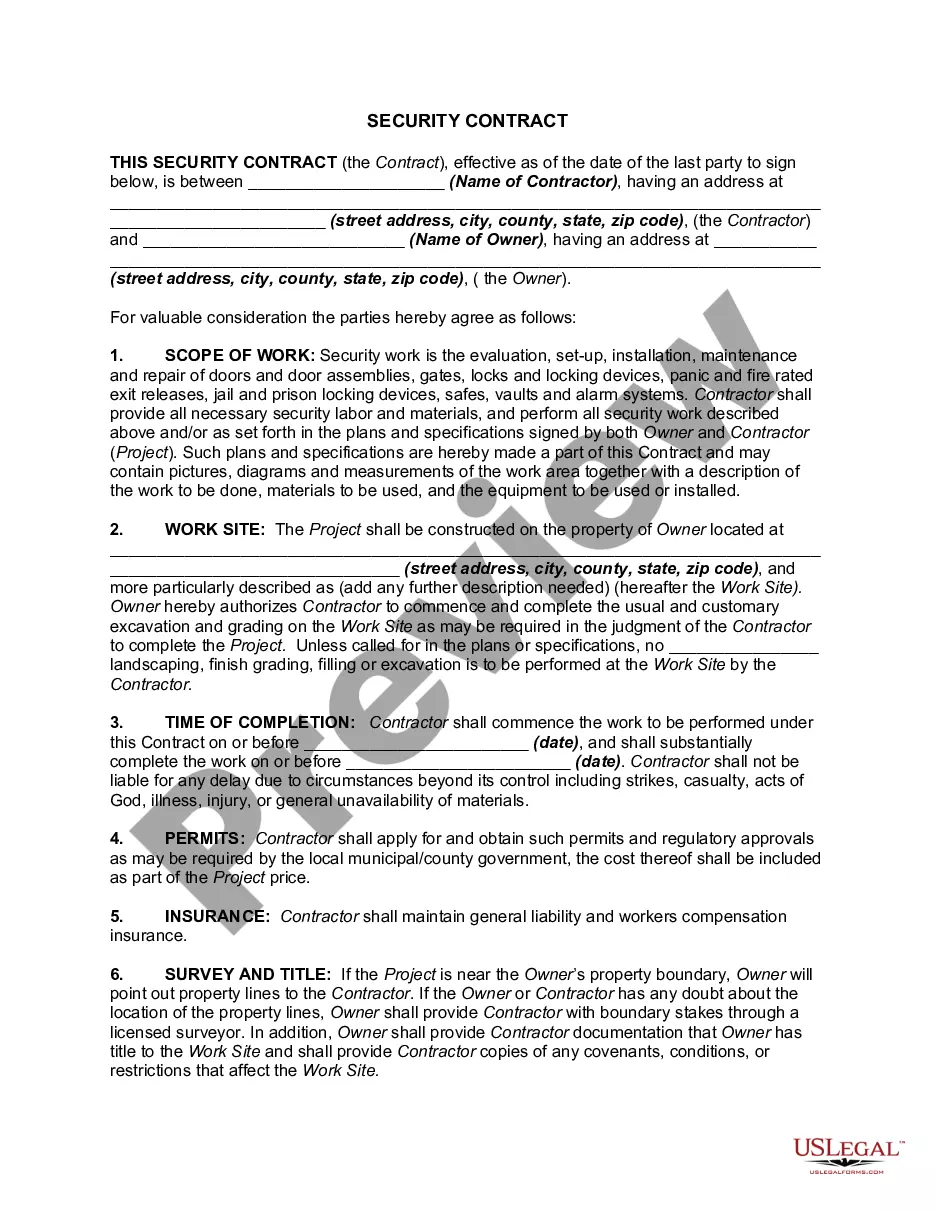
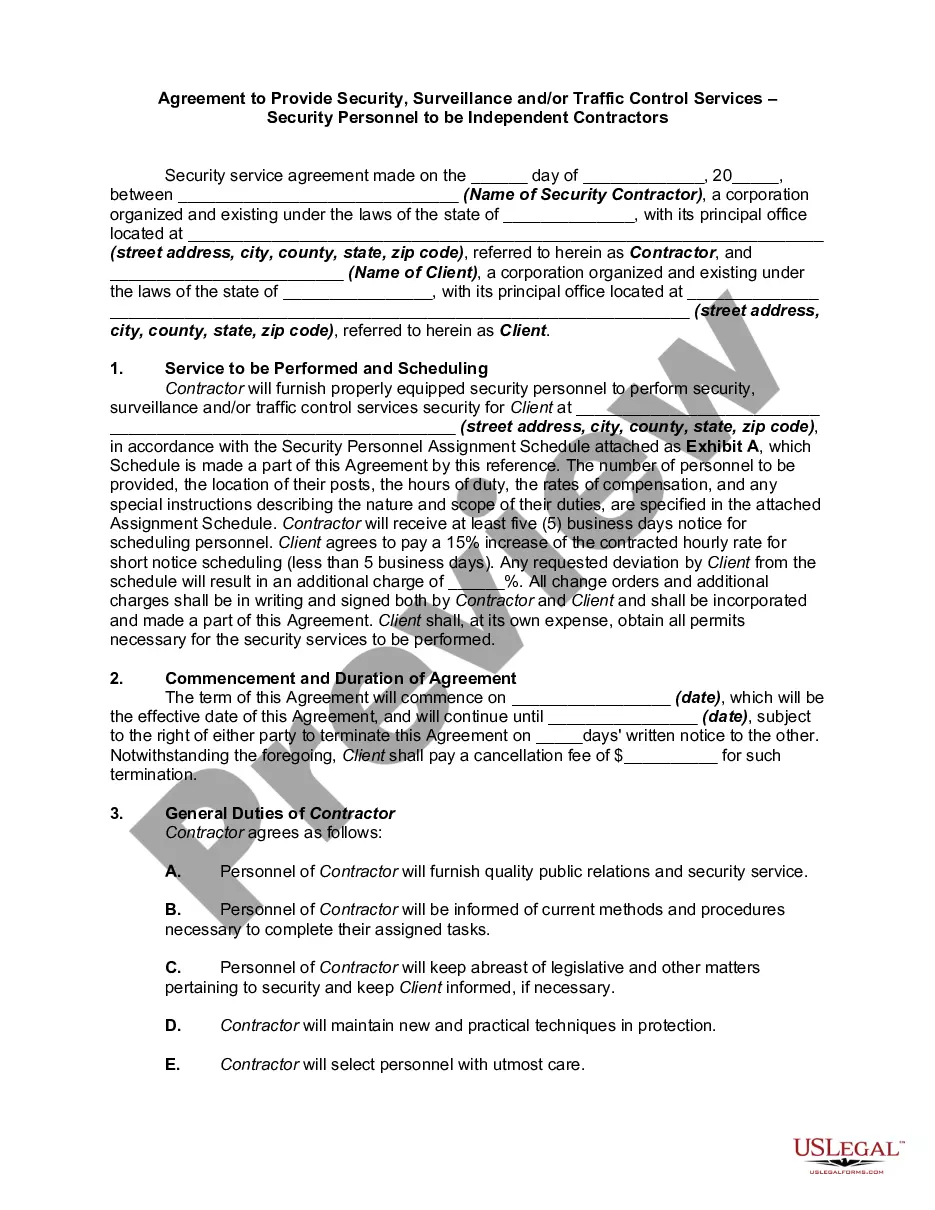
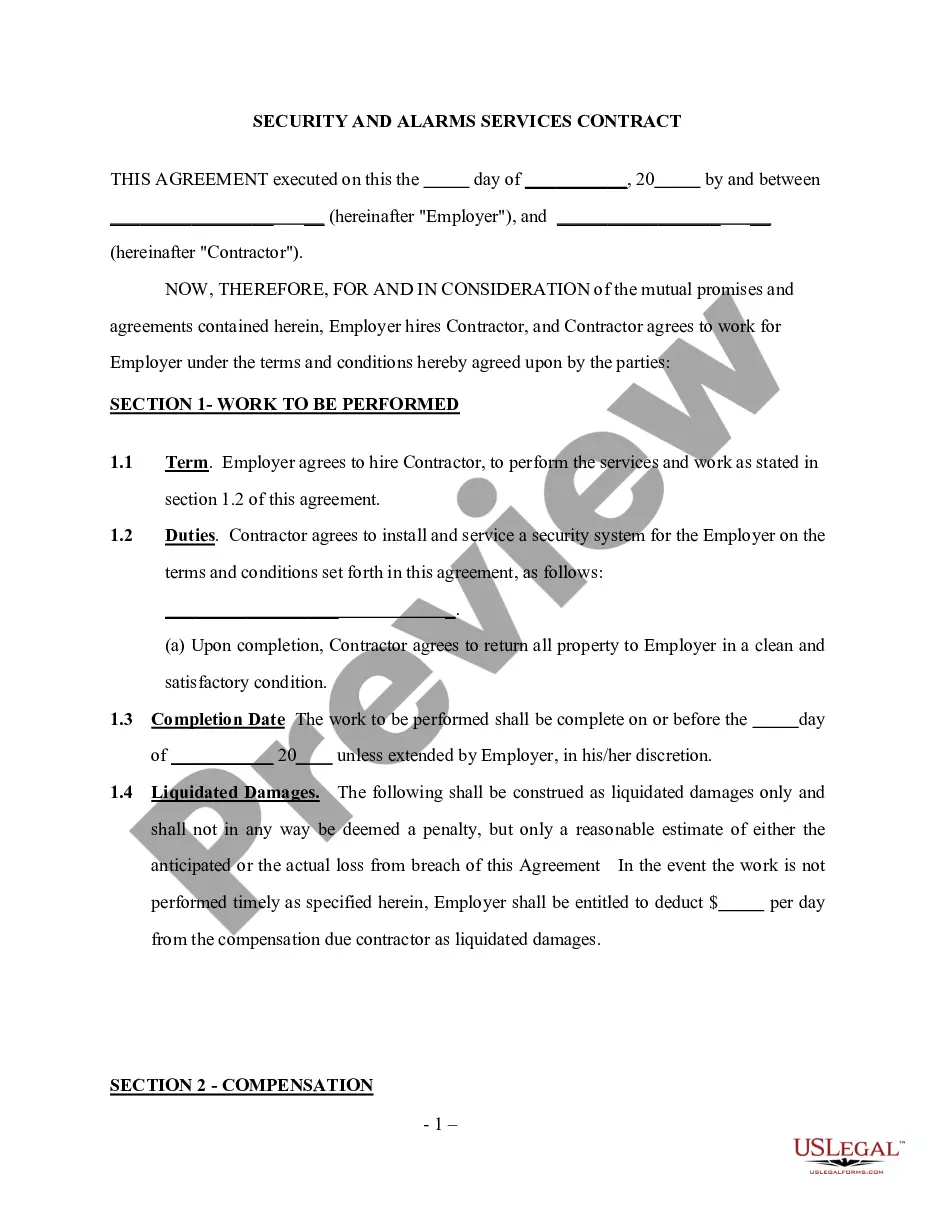
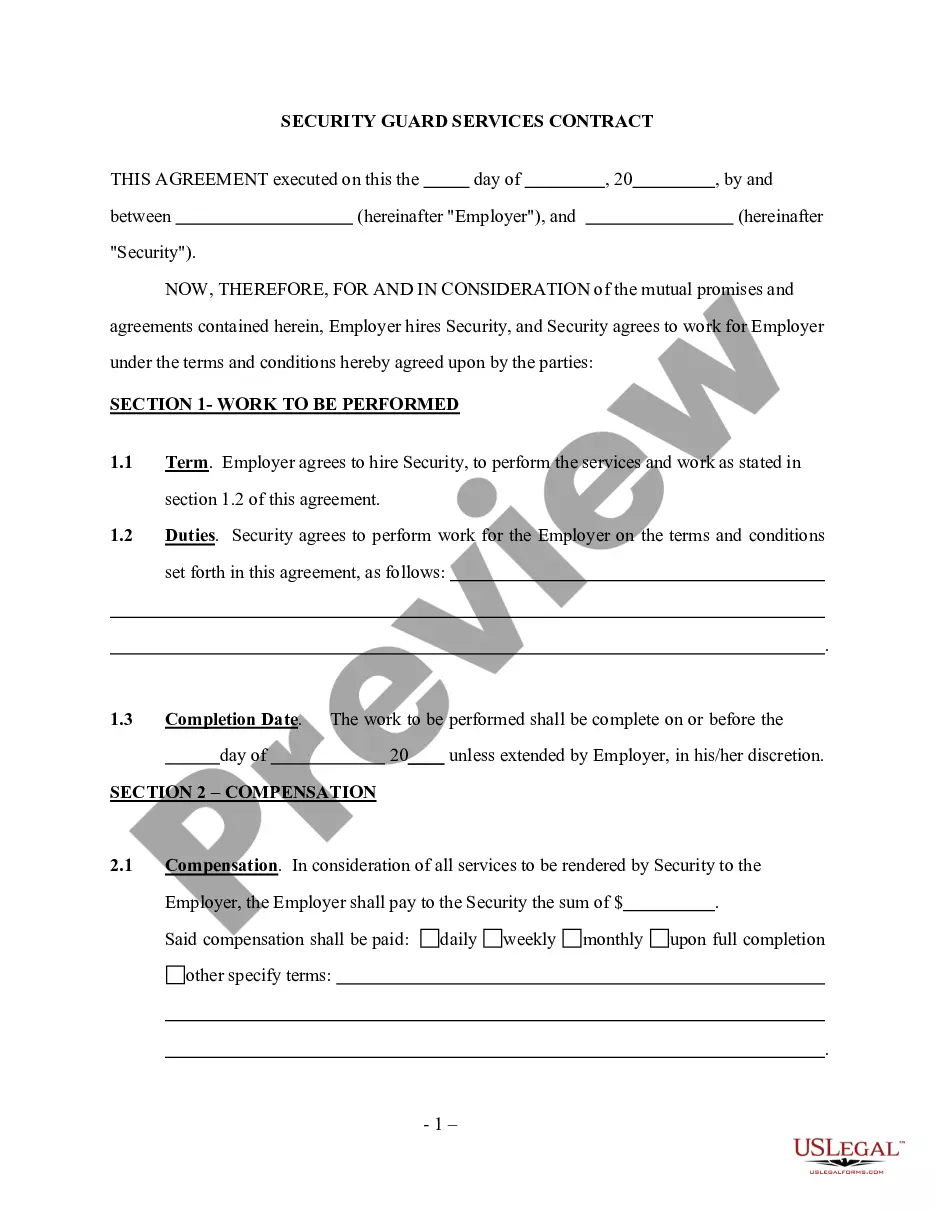
The Security Contract - Self-Employed is a legal document that outlines the agreement between a contractor and a property owner for providing security services. This form is designed to specify the scope of work, payment terms, insurance requirements, and liability limitations. Unlike general contracts, this document caters specifically to self-employed contractors in the security field, detailing the unique obligations and protections for both parties involved.
Key parts of this document
- Scope of work: Details the security services to be provided, including installation and maintenance of security systems.
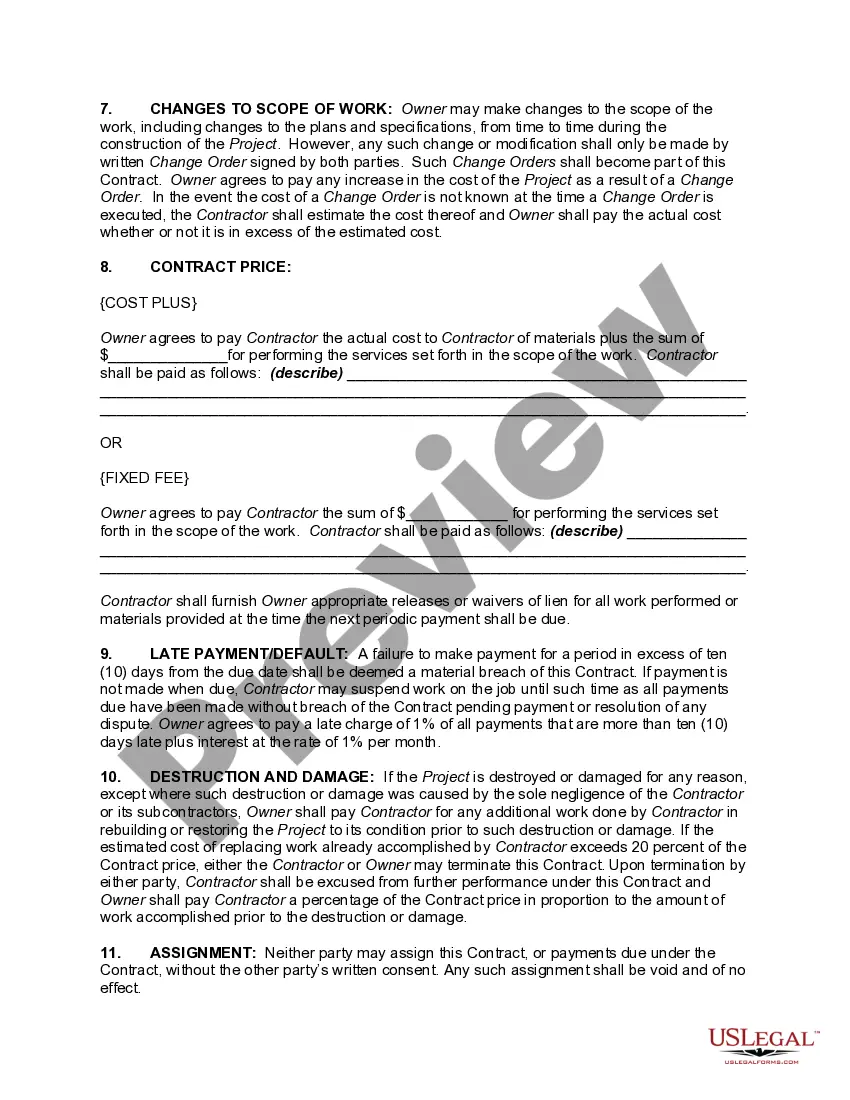
- Payment terms: Outlines whether the contractor will be paid based on actual costs or a fixed fee.
- Time of completion: Specifies the start and completion dates for the project.
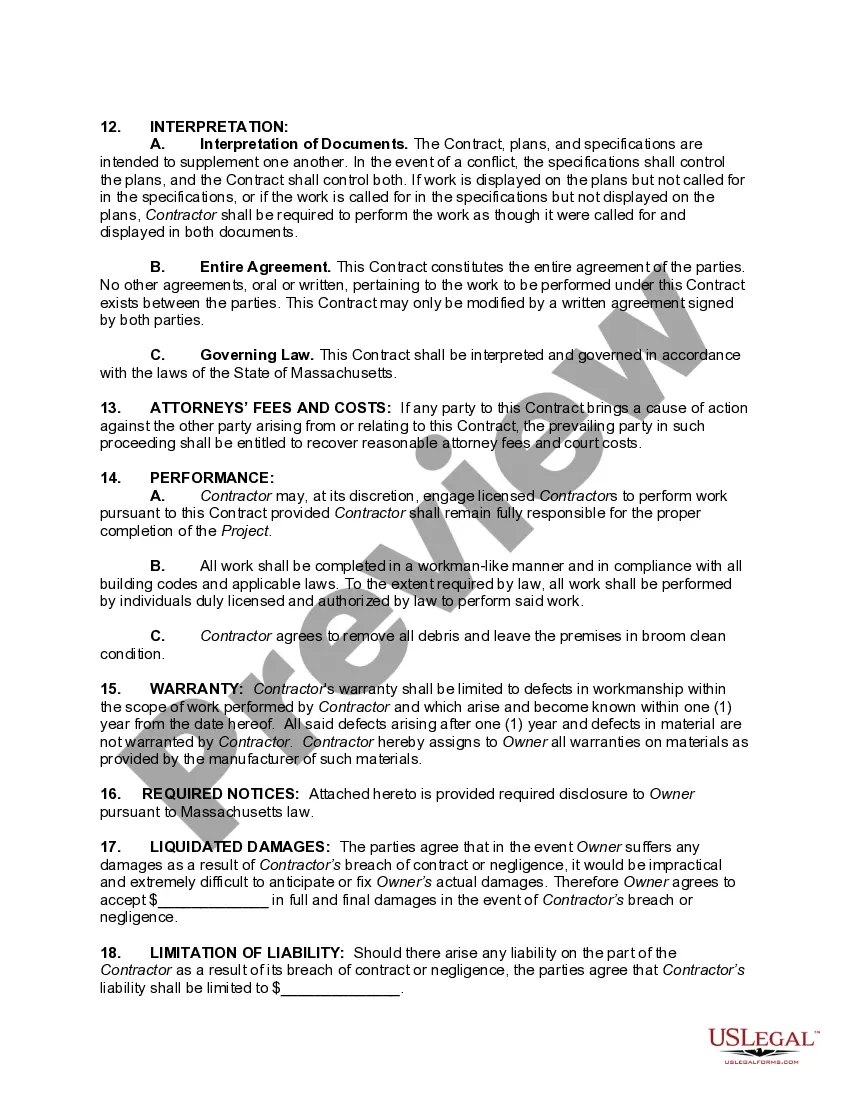
- Insurance requirements: Mandates that the contractor maintain general liability and workers' compensation insurance.
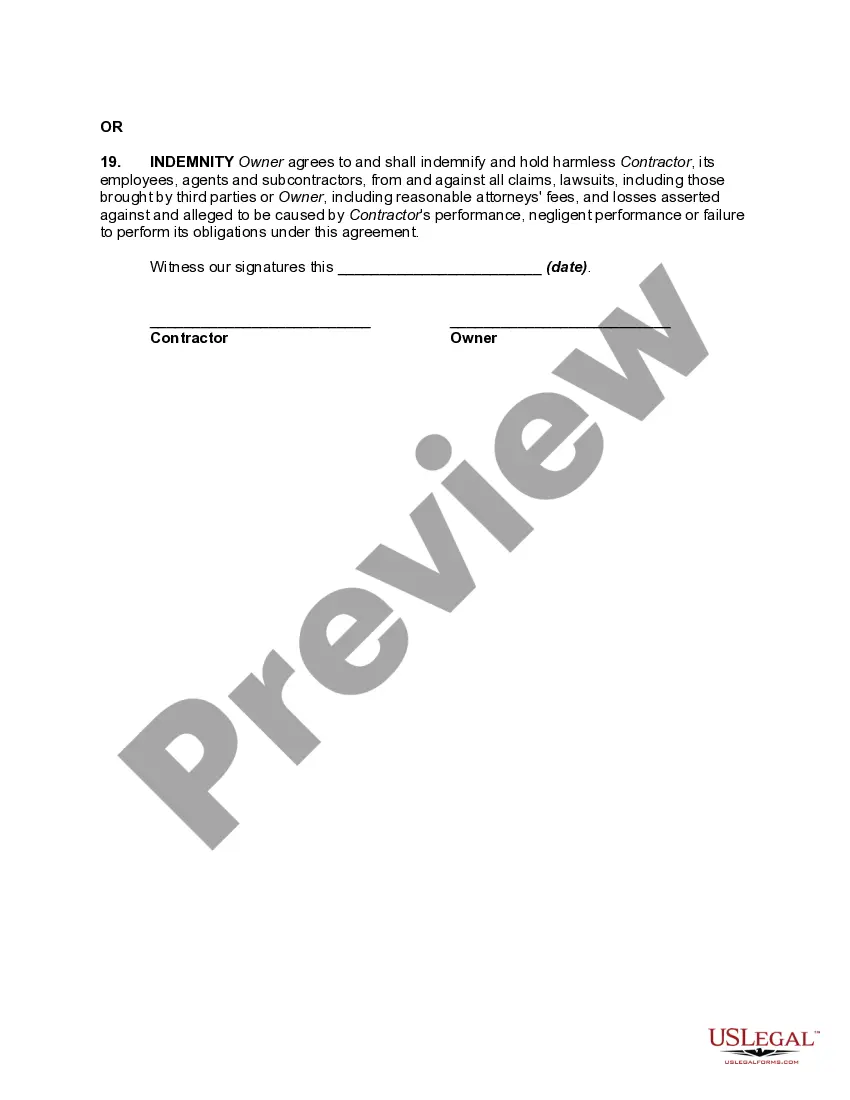
- Limitations of liability: Establishes the extent of the contractor's liability in cases of damages or breaches.
- Change orders: Provides a process for making modifications to the original scope of work, confirmed by written consent from both parties.
When to use this document
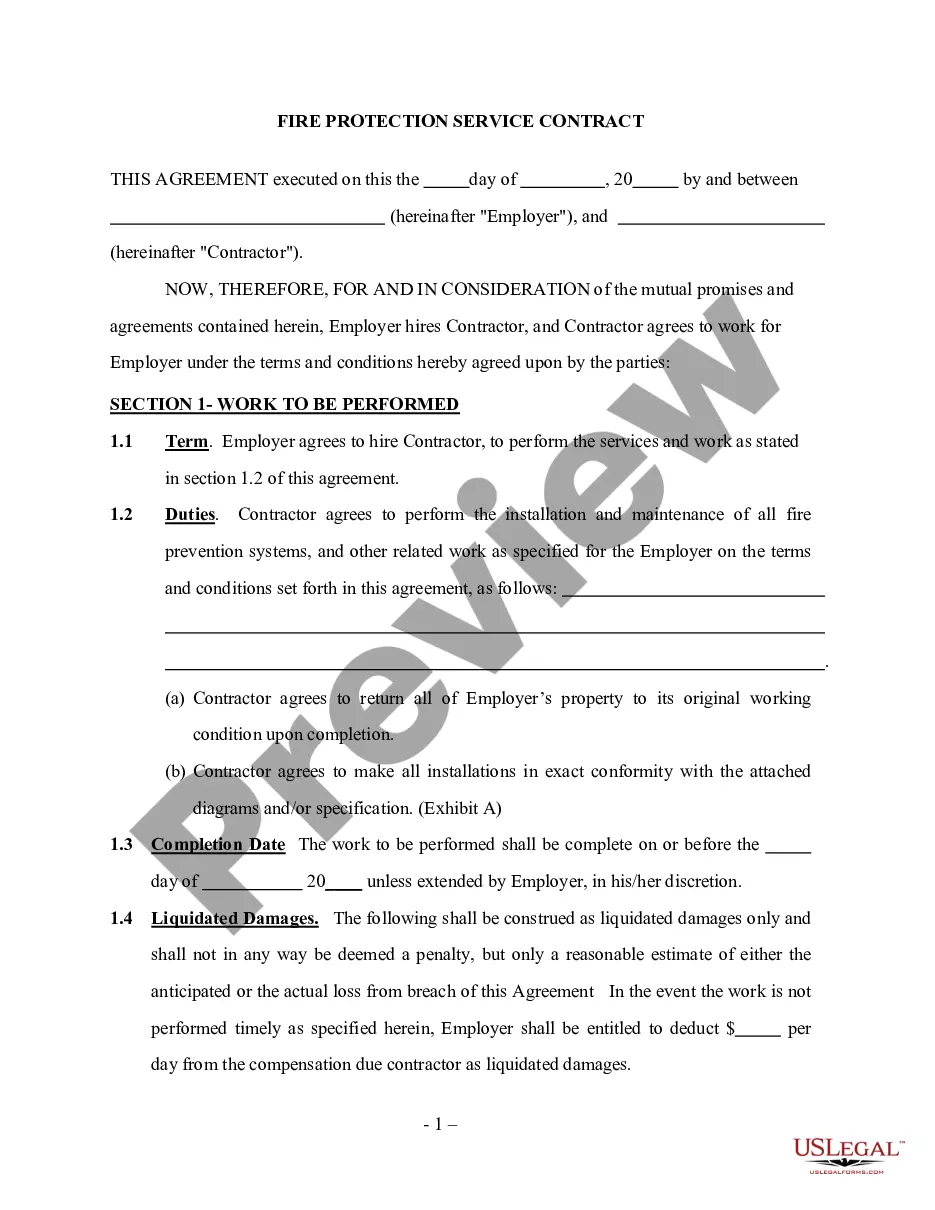
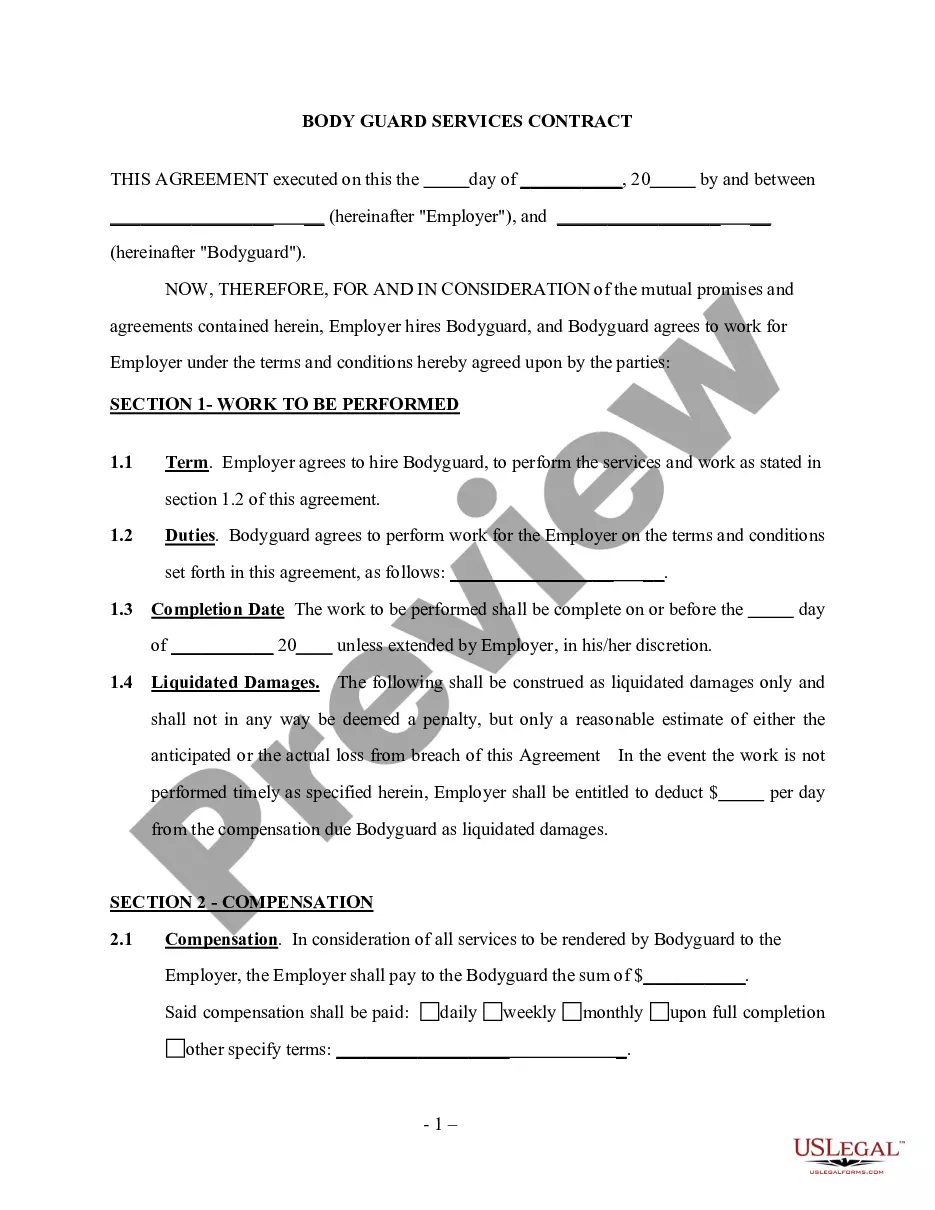
This form should be used when a self-employed contractor is hired to provide security services at a residential or commercial property. Examples include securing access points, installing alarm systems, and performing regular maintenance on security equipment. It is essential to use this contract to clarify expectations and protect both parties in case of disputes.
Who can use this document
- Self-employed security contractors looking to formalize agreements with property owners.
- Property owners seeking to hire a contractor for security services.
- Business owners in need of enhanced security measures for their premises.
Completing this form step by step
- Identify the parties by entering the names and addresses of both the contractor and the property owner.
- Specify the scope of work, detailing the security services to be provided.
- Enter the agreed start and completion dates for the project.
- Outline the payment structure (cost plus or fixed fee) and any applicable terms for late payments.
- Include any change orders required for modifications to the initial agreement.
Does this document require notarization?
This form usually doesn’t need to be notarized. However, local laws or specific transactions may require it. Our online notarization service, powered by Notarize, lets you complete it remotely through a secure video session, available 24/7.
Get your form ready online
Our built-in tools help you complete, sign, share, and store your documents in one place.
Make edits, fill in missing information, and update formatting in US Legal Forms—just like you would in MS Word.
Download a copy, print it, send it by email, or mail it via USPS—whatever works best for your next step.
Sign and collect signatures with our SignNow integration. Send to multiple recipients, set reminders, and more. Go Premium to unlock E-Sign.
If this form requires notarization, complete it online through a secure video call—no need to meet a notary in person or wait for an appointment.
We protect your documents and personal data by following strict security and privacy standards.

Make edits, fill in missing information, and update formatting in US Legal Forms—just like you would in MS Word.

Download a copy, print it, send it by email, or mail it via USPS—whatever works best for your next step.

Sign and collect signatures with our SignNow integration. Send to multiple recipients, set reminders, and more. Go Premium to unlock E-Sign.

If this form requires notarization, complete it online through a secure video call—no need to meet a notary in person or wait for an appointment.

We protect your documents and personal data by following strict security and privacy standards.
Common mistakes to avoid
- Failing to clearly define the scope of work, leading to misunderstandings.
- Not specifying payment terms, which can cause disputes over compensation.
- Overlooking state-specific regulations regarding liability and indemnity clauses.
Benefits of completing this form online
- Convenience: Download and fill out the form at your own pace.
- Editability: Easily modify the template according to specific project needs.
- Reliability: Use professionally drafted language that conforms to legal standards.
What to keep in mind
- The Security Contract - Self-Employed defines important terms for the agreement.
- It protects both parties by outlining responsibilities and liabilities.
- Using this form ensures compliance with local legal standards.
Looking for another form?


Form popularity
FAQ
As an independent contractor in Massachusetts, you need to be aware of both federal and state tax obligations. You are responsible for paying self-employment taxes, which cover Social Security and Medicare, as well as income tax on your earnings. When working under a Massachusetts Security Contract - Self-Employed, you will typically make estimated tax payments quarterly to avoid penalties. Utilizing platforms like uslegalforms can provide the necessary forms and guidance to ensure you meet all taxation requirements effectively.
In Massachusetts, you do need a license to install security cameras. This requirement ensures that professionals comply with local laws and regulations concerning safety and privacy. By obtaining the proper licenses, self-employed individuals can confidently enter into Massachusetts security contracts with clients who seek reliable installation services. It is advisable to check with local authorities for specific licensing requirements.
If you received a 1099 form instead of a W-2 , then the payer of your income did not consider you an employee and did not withhold federal income tax or Social Security and Medicare tax. A 1099-MISC or NEC means that you are classified as an independent contractor and independent contractors are self-employed.
A self employed person will not usually have a contract of employment; they will usually be hired for a certain amount of time. The contract that exists between the self employed person and the person or company supplying the work will have a number of rules or conditions set down within it.
As a CIS subcontractor you are considered self-employed but working for a contractor who haas to deduct a portion of your invoice (usually 20%) and pay it to HMRC on your behalf.Being paid as a CIS subcontractor is not the same as earning a wage either, as you are not an employee.
As an independent contractor, you have the right to market your services to other businesses and can work with more than one client at a time. Even if you have a long-term contract with a particular client, you can choose to work on additional projects as well.
Unlike contractors and subcontractors who are brought in by a client to work on a specific project, self-employed people work for their own clients and are their own bosses. The self employed aren't paid through PAYE and don't have the same employment rights and responsibilities as those who are employed.
Most workers in Massachusetts can get unemployment benefits, but some cannot. Workers who cannot get Unemployment Insurance include: employees of churches and some religious organizations; independent consultants or independent contractors (people who not work under the direction and control of an employer.
Independent contractors and subcontractors are both considered self-employed by the IRS. Both are responsible for making quarterly tax payments including self-employment tax.Additionally, you're free to hire subcontractors even if you're a subcontractor yourself.
If you're self-employed, you do not have a contract of employment with an employer.You don't have employment rights as such if you're self-employed as you are your own boss and can therefore decide how much to charge for your work and how much holiday to give yourself. You do have some legal protection.