Pennsylvania Uniform Anatomical Gift Act Donation
Understanding this form
The Uniform Anatomical Gift Act Donation form allows individuals to specify their wishes regarding the donation of body parts and organs upon their death. It provides a legal framework for making an anatomical gift and ensures that the donor's desires are respected. This form is critical for individuals looking to contribute to medical advancements through organ donation, distinguishing it from other legal forms, such as wills, which generally address the distribution of property rather than medical gifts.
What’s included in this form
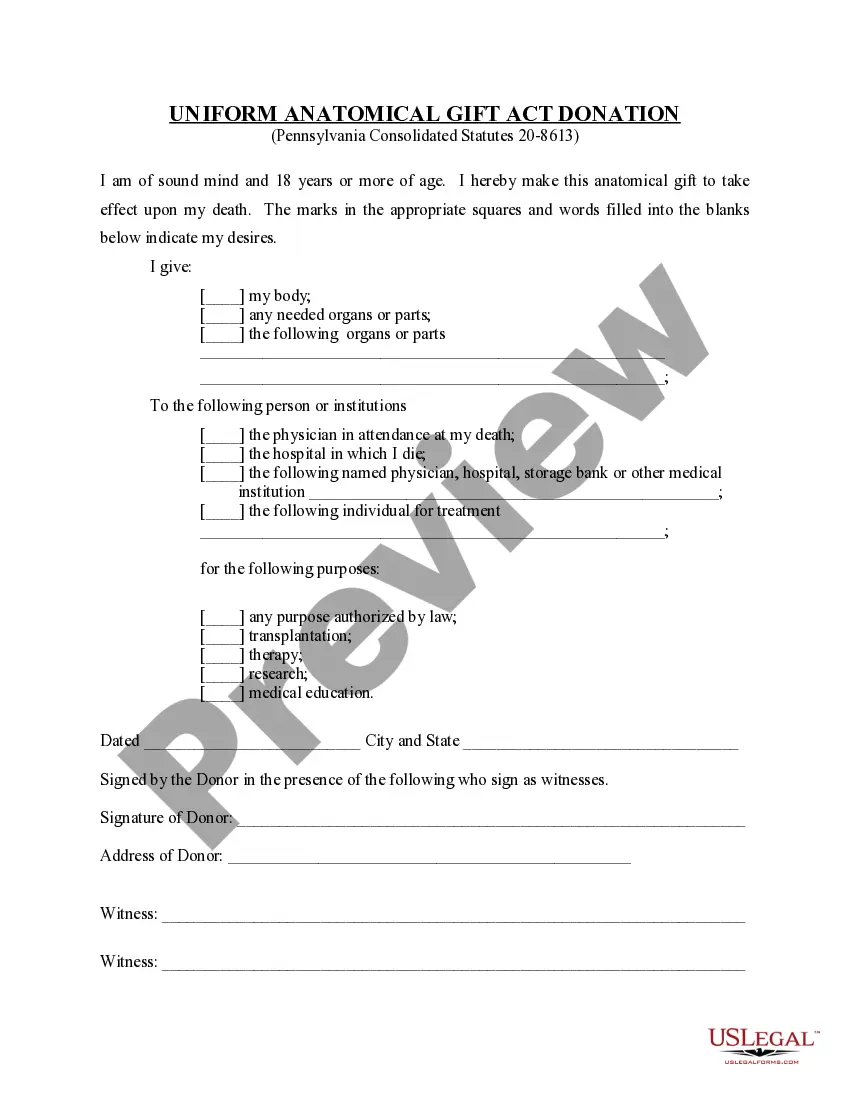
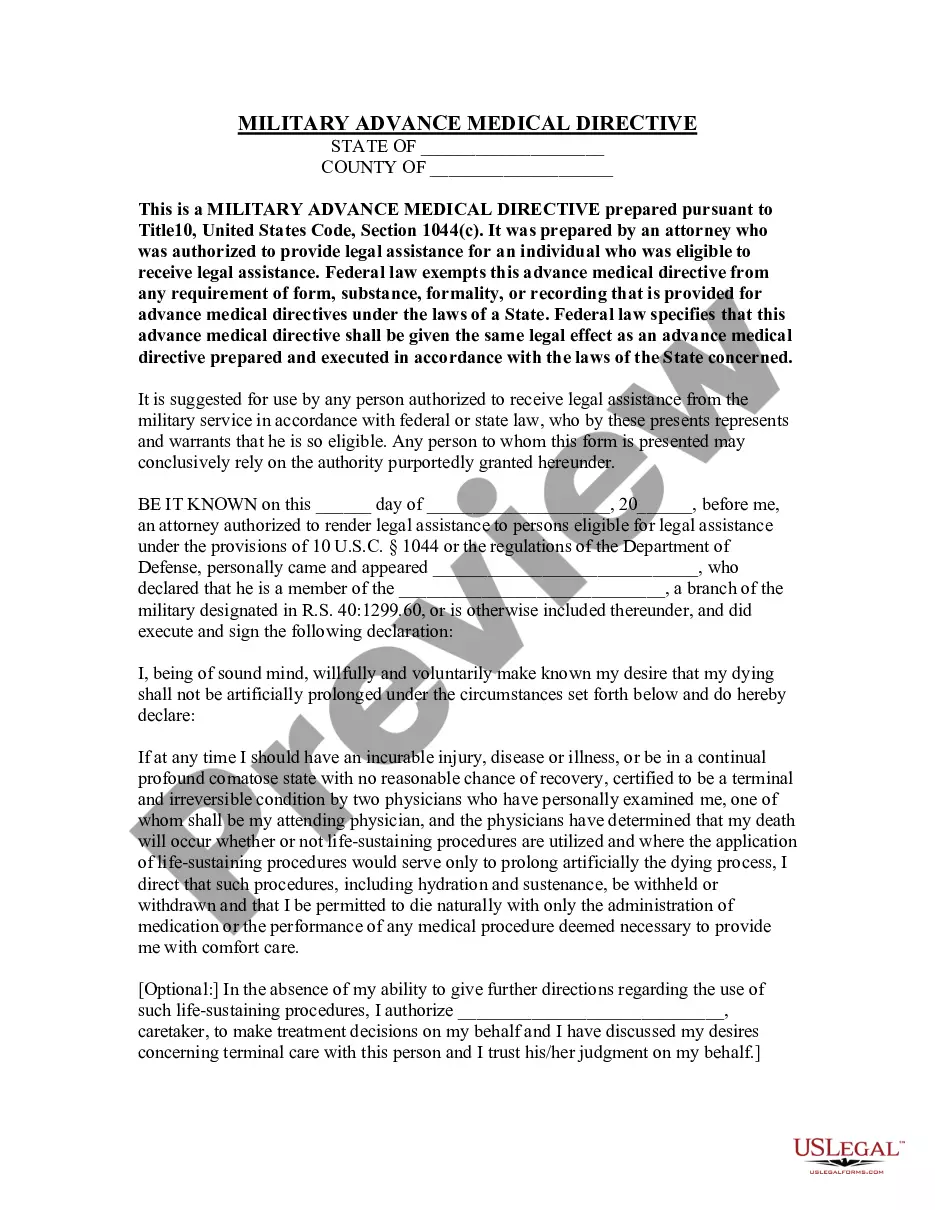
- Donor's declaration of being of sound mind and at least 18 years of age.
- Specification of which body parts or organs the donor wishes to donate.
- Designation of the recipient, which can include specific hospitals or individual physicians.
- Indication of the purposes for which the donation is intended, such as transplantation or medical education.
- Signature of the donor, with required witness signatures to validate the form.
Situations where this form applies
This form should be used when an individual wishes to make a legally binding decision about organ and tissue donation. It is suitable for use when planning for end-of-life scenarios, particularly if the individual wants to ensure that their body parts may be used for transplantation, therapy, research, or medical education after death.
Intended users of this form
- Adults who are at least 18 years of age and wish to donate their organs or body parts.
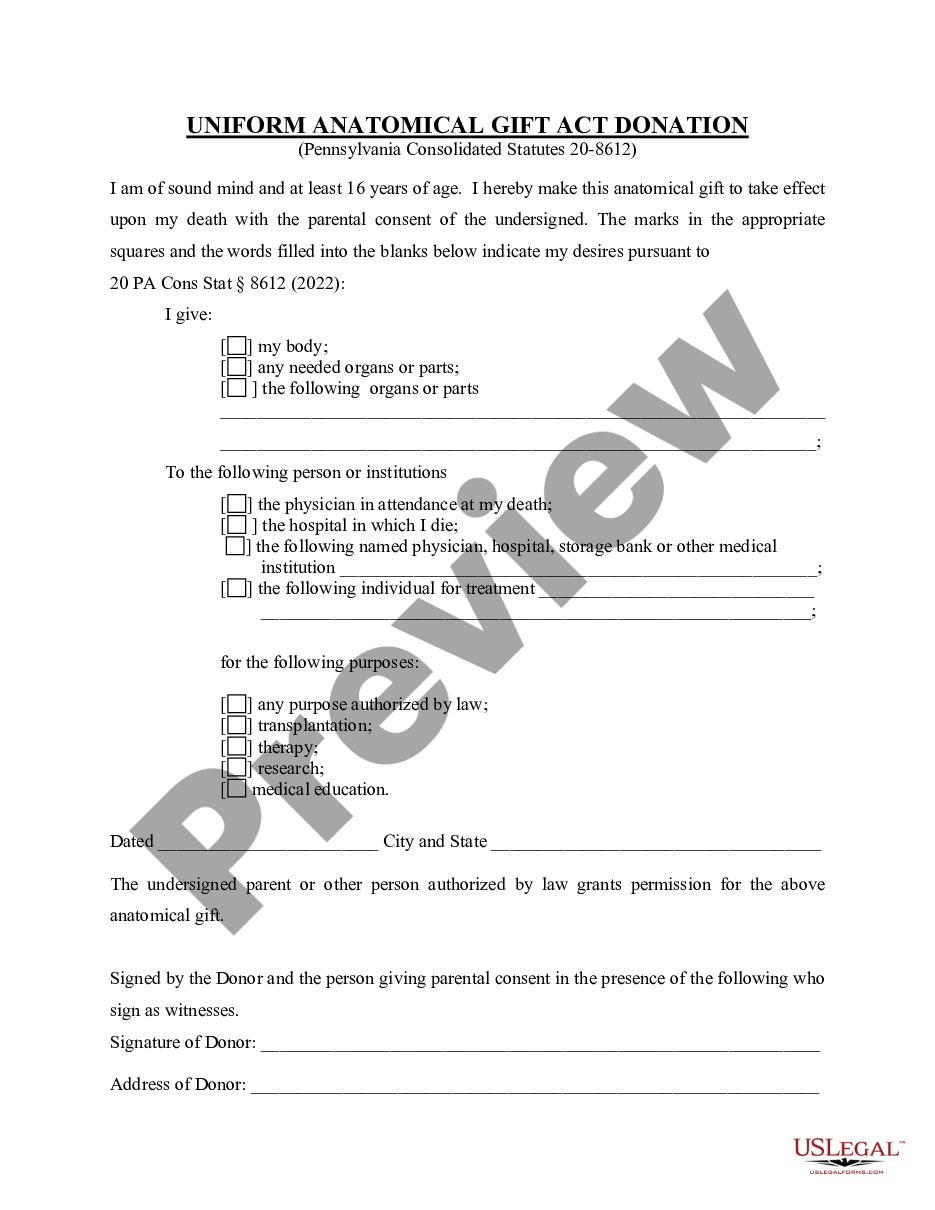
- Individuals who are 16 years of age or older, with parental or guardian consent to donate.
- Those who wish to provide clarity on their donation preferences to family and medical professionals.
How to prepare this document
- Read the form carefully to understand the legal implications of your donation.
- Indicate your preferences by checking the appropriate boxes for your body or specific organs.
- Designate the recipient of your donation, whether a specific hospital or physician.
- Choose the purposes for which your donation may be used.
- Sign the form in front of witnesses who will also need to sign to validate your gift.
Does this form need to be notarized?
In most cases, this form does not require notarization. However, some jurisdictions or signing circumstances might. US Legal Forms offers online notarization powered by Notarize, accessible 24/7 for a quick, remote process.
Get your form ready online
Our built-in tools help you complete, sign, share, and store your documents in one place.
Make edits, fill in missing information, and update formatting in US Legal Forms—just like you would in MS Word.
Download a copy, print it, send it by email, or mail it via USPS—whatever works best for your next step.
Sign and collect signatures with our SignNow integration. Send to multiple recipients, set reminders, and more. Go Premium to unlock E-Sign.
If this form requires notarization, complete it online through a secure video call—no need to meet a notary in person or wait for an appointment.
We protect your documents and personal data by following strict security and privacy standards.

Make edits, fill in missing information, and update formatting in US Legal Forms—just like you would in MS Word.

Download a copy, print it, send it by email, or mail it via USPS—whatever works best for your next step.

Sign and collect signatures with our SignNow integration. Send to multiple recipients, set reminders, and more. Go Premium to unlock E-Sign.

If this form requires notarization, complete it online through a secure video call—no need to meet a notary in person or wait for an appointment.

We protect your documents and personal data by following strict security and privacy standards.
Mistakes to watch out for
- Failing to sign the form, which renders it invalid.
- Not having the necessary witnesses present when signing.
- Leaving sections blank, which can lead to ambiguity regarding donation preferences.
- Not informing family members about your decision, which may create confusion later.
Benefits of completing this form online
- Convenient download and completion from the comfort of your home.
- Editability allows you to easily revise your preferences as needed.
- Access to reliable templates drafted by licensed attorneys ensures legal compliance.
Key takeaways
- The Uniform Anatomical Gift Act Donation form allows individuals to legally express their wishes regarding organ and body part donations.
- It is important to follow legal requirements, including notarization and witness signatures.
- Clear specifications regarding the donation can ensure that your wishes are respected.
Looking for another form?
Form popularity
FAQ
The gift must be made by a donor who is at least 18 years old is a true statement about the Uniform Anatomical Gifts Act. The gift must be made by a donor who is at least 18 years old is a true statement about the Uniform Anatomical Gifts Act. This answer has been confirmed as correct and helpful.
The Act sets a regulatory framework for the donation of organs, tissues, and other human body parts in the US. The UAGA helps regulate body donations to science, medicine, and education. The Act has been consulted in discussions about abortion, fetal tissue transplants, and Body Worlds, an anatomy exhibition.
"Anatomical gift" means a donation of all or part (an organ, an eye, or tissue) of a human body to take effect after the donor's death for the purpose of transplantation, therapy, research, or education. "
In Pennsylvania, individuals who wish to donate their remains to science must contact the Humanity Gifts Registry (HGR) of Pennsylvania. If an individual wishes to donate their body directly to Philadelphia College of Osteopathic Medicine, they must inform the Human Gifts Registry.
There's No Greater Gift than the Gift of Life. The ability to transplant organs and tissues is one of the greatest success stories in modern medicine. Thanks to organ donation, many people with life- threatening illnesses can look forward to a future and a second chance at life.
Organ donation is when an organ (e.g., heart, lung, kidney) is removed from one person and transplanted into another person. Tissue donation is when tissues in the body (e.g., skin, corneas, bone) are removed from one person and transplanted into another person.
That was a major first step. The Uniform Anatomical Gift Act was subsequently adopted by all 50 states and the District of Columbia.
The Uniform Anatomical Gift Act of 1968 In 1968, Congress approved the UAGA and recommended that all states adopt it. The Act was the first legislation enacted by all states in United States to address the donation of organs, tissues, and eyes as gifts to someone who may be in need of an organ for survival.
An act established in 1968 to standardize state laws on the donation of organs and tissues from cadavers; it is based on the premise that an individual should be able to control the disposition of his or her own body after death.