Pennsylvania General Partnership Package
Overview of this form package
The Pennsylvania General Partnership Package contains essential legal forms for individuals looking to establish, manage, or dissolve a general partnership. This package includes a variety of documents tailored to meet the specific needs of partnerships, allowing for customization to fit particular situations. With these forms, you can efficiently navigate the complexities of partnership agreements, profit-sharing, and partnership dissolution, ensuring compliance with relevant legal standards.
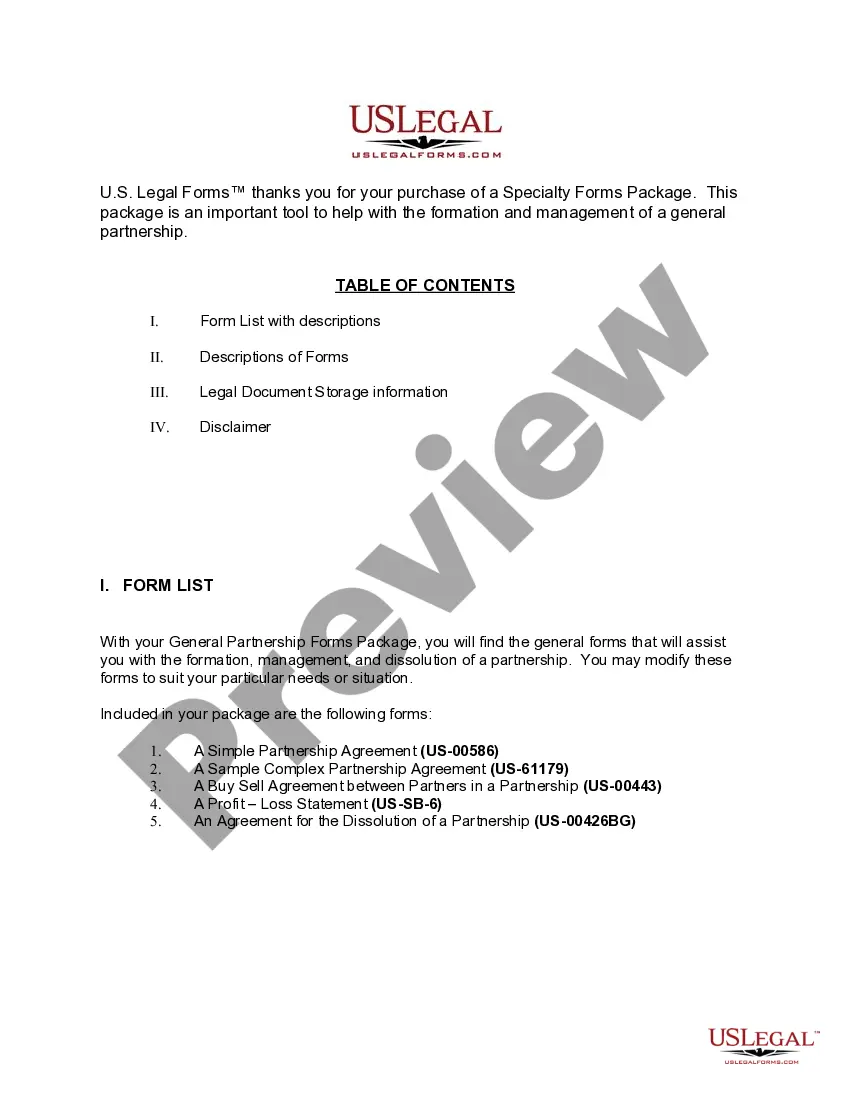
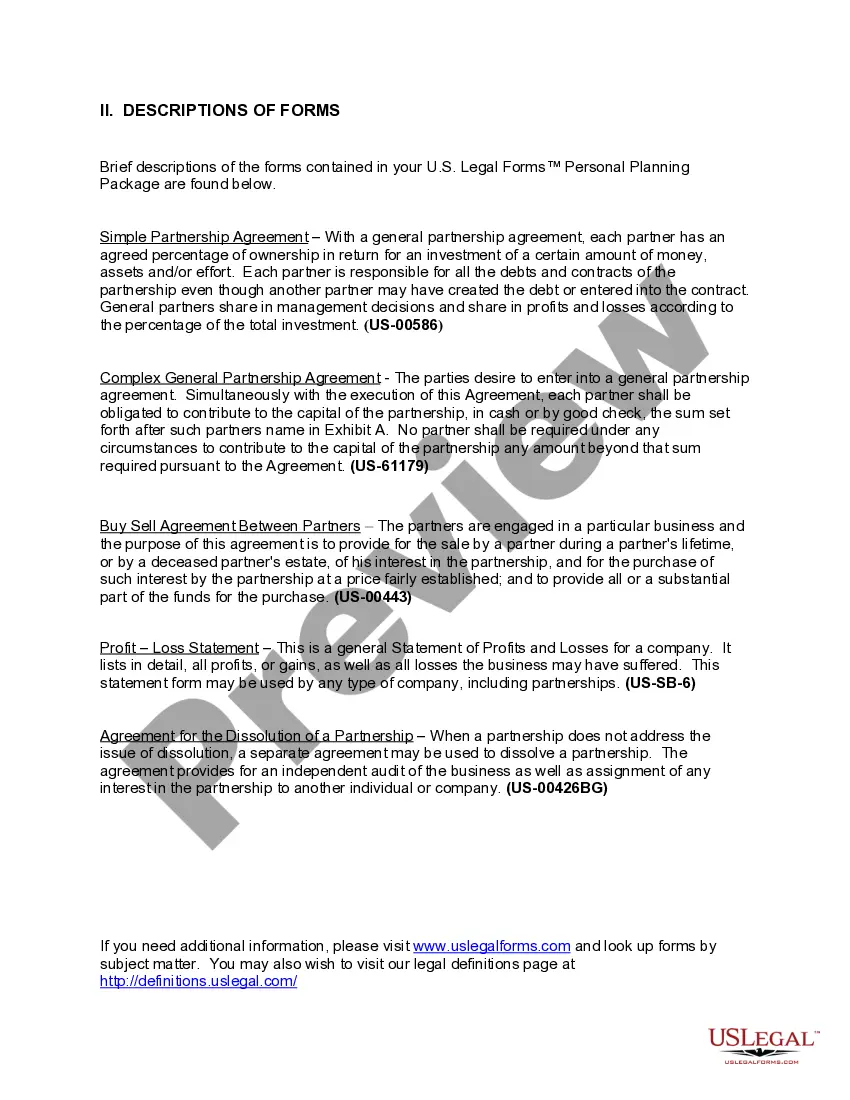
Forms you’ll find in this package
- Agreement for the Dissolution of a Partnership
- Application for Registration of Fictitious Name
- I.R.S. Form SS-4 (to obtain your federal identification number)
- Buy Sell Agreement Between Partners of a Partnership
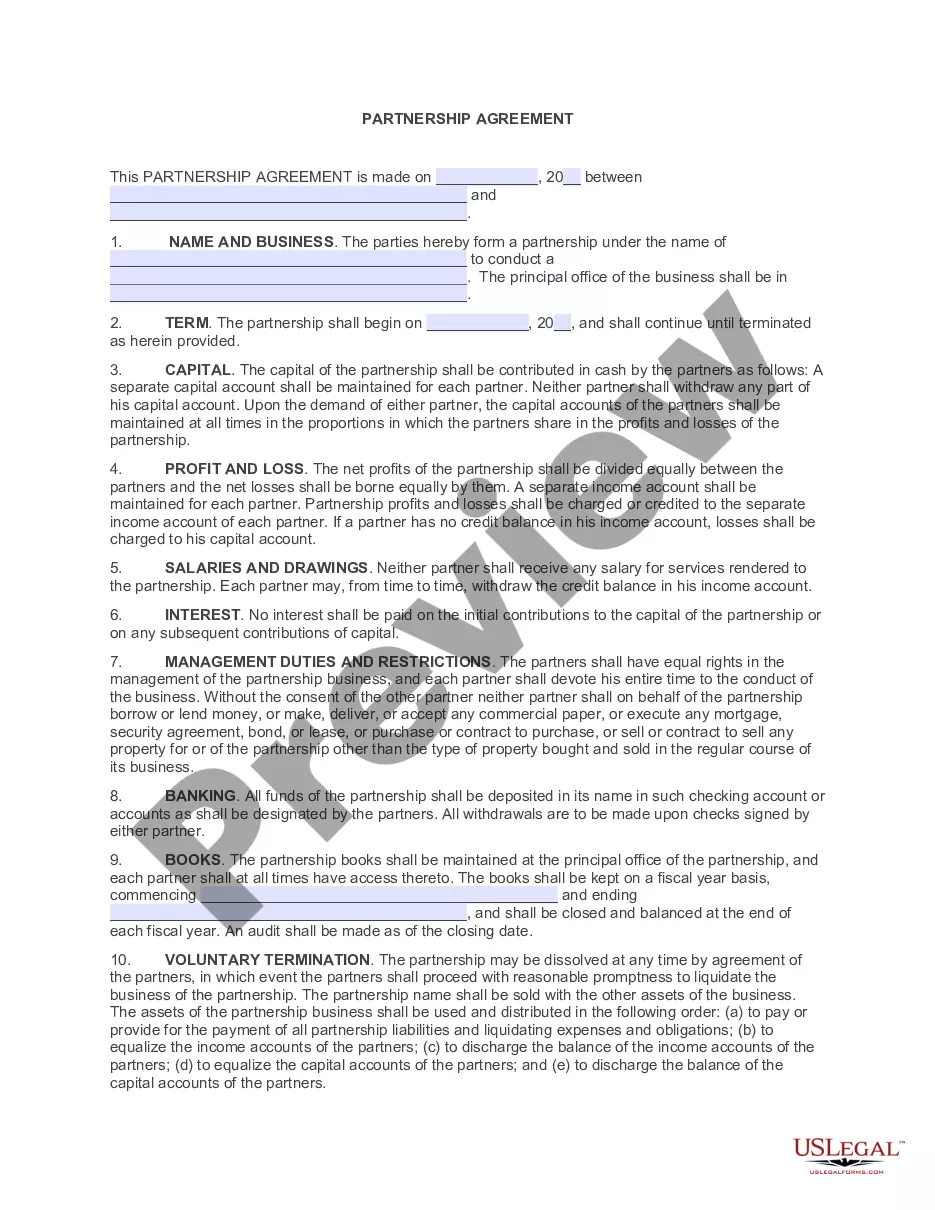
- Simple Partnership Agreement
- Sample Business Plan Template
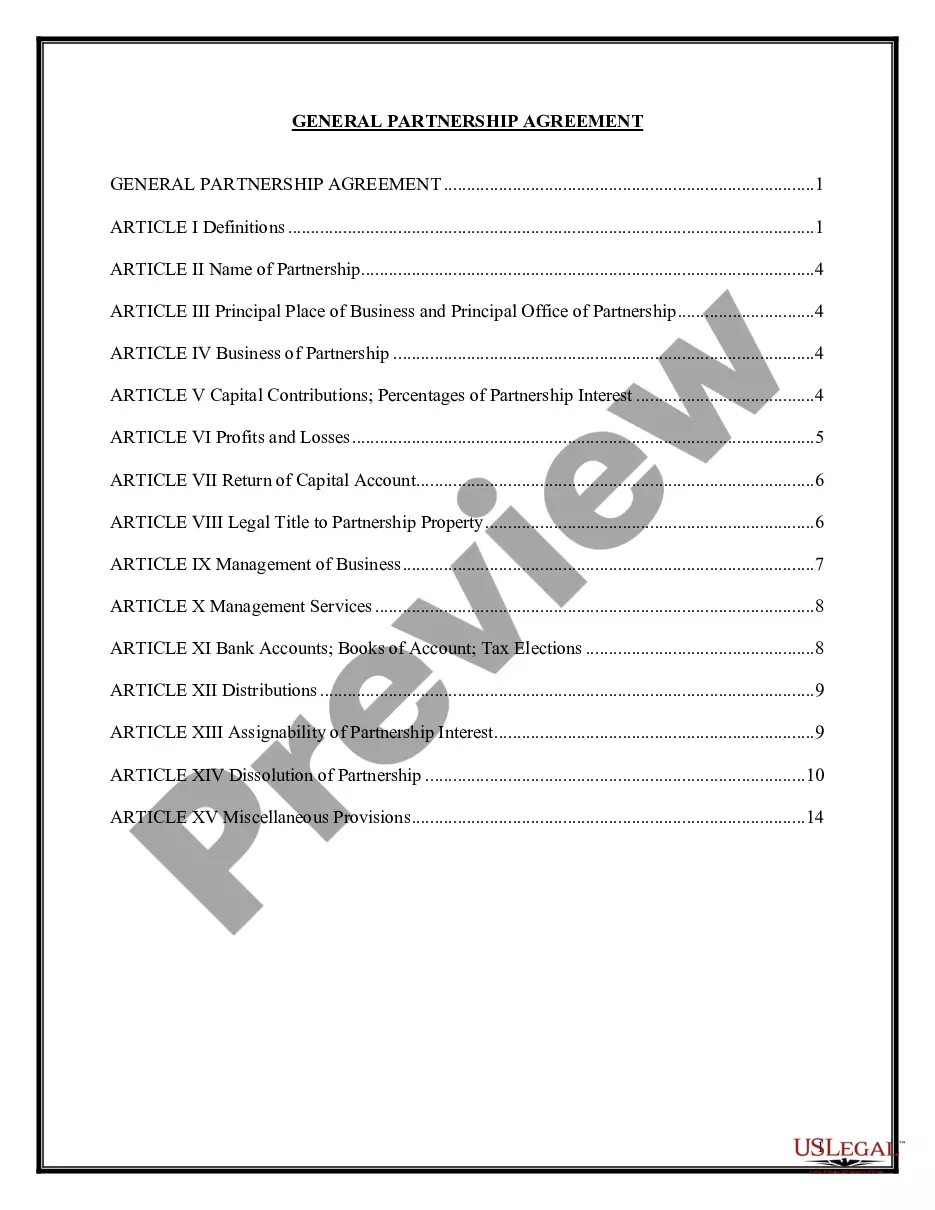
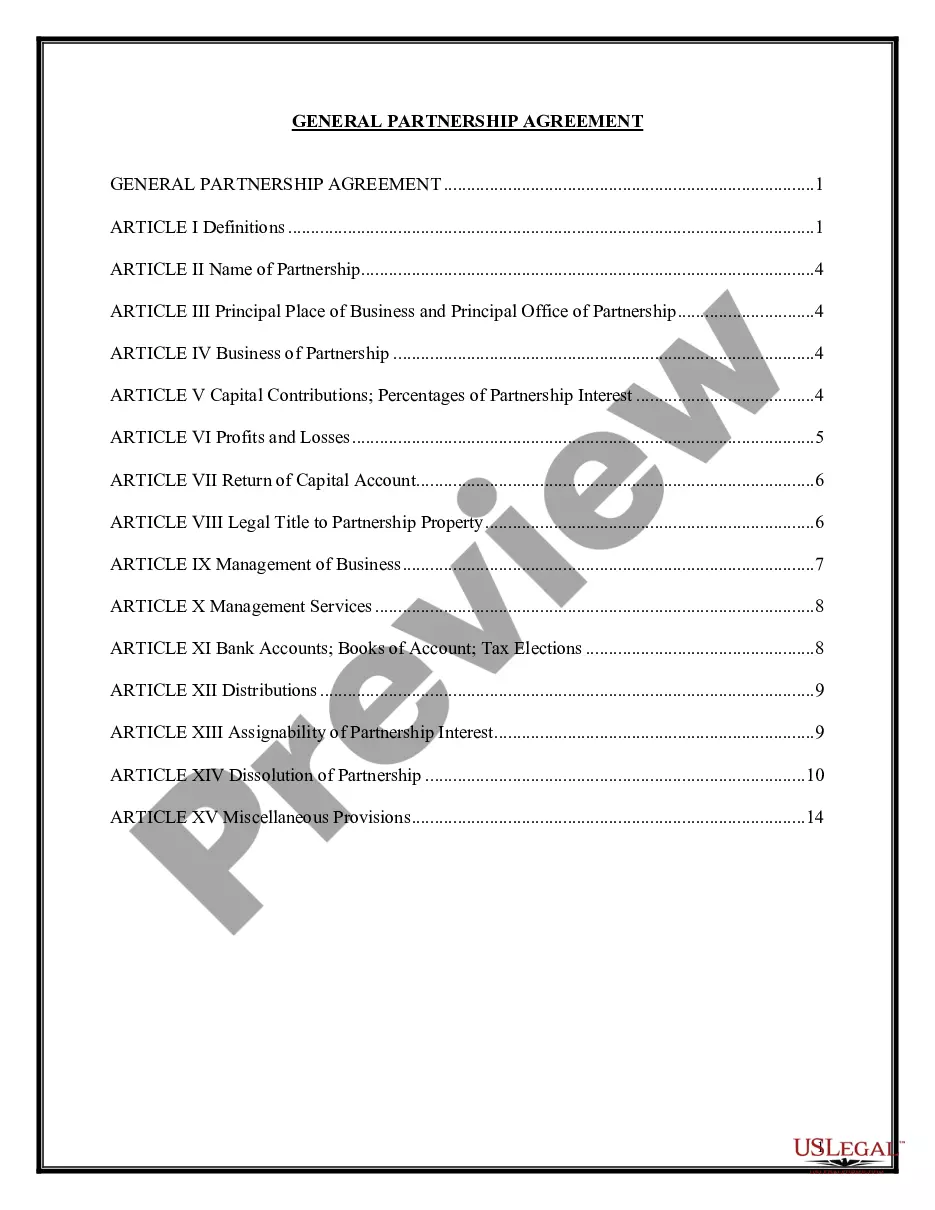
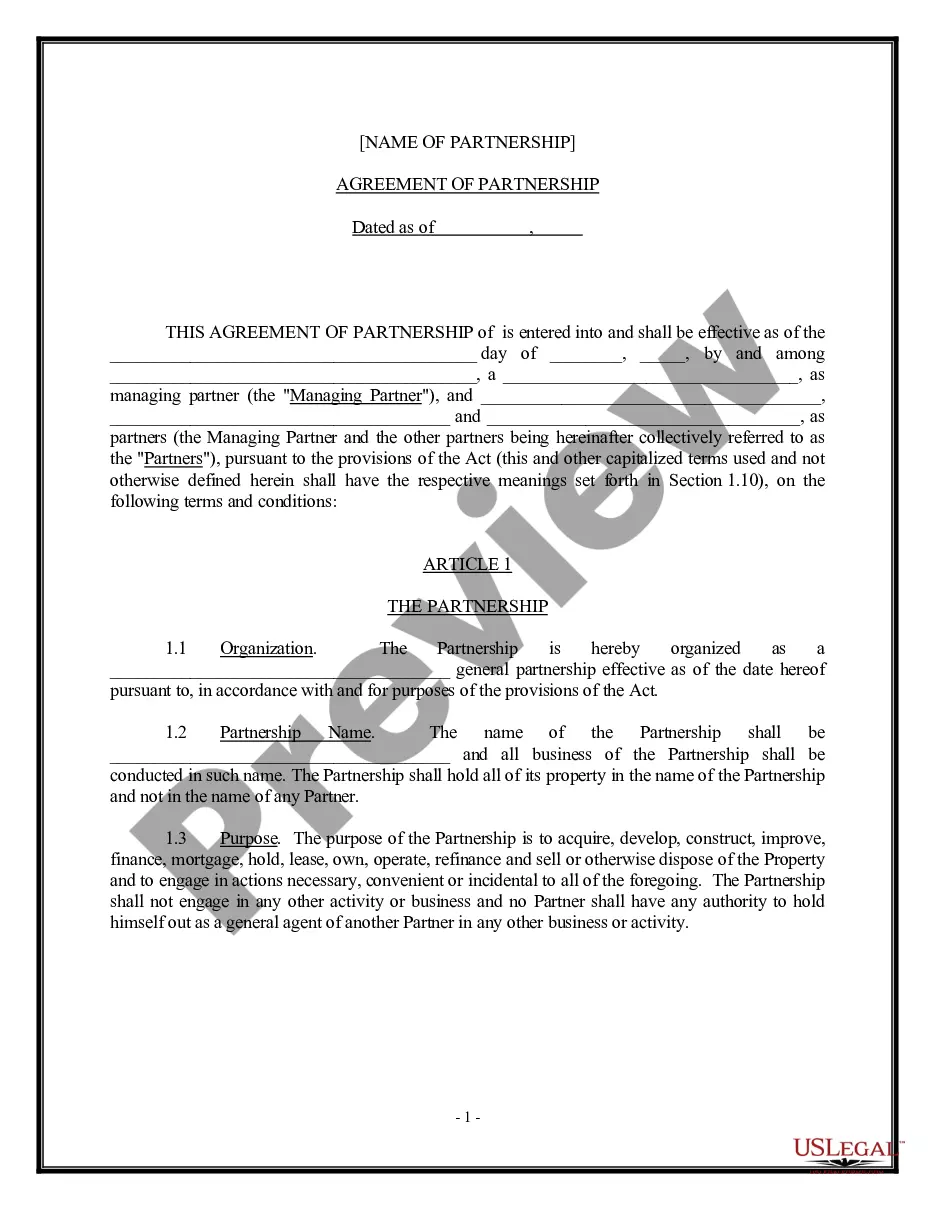
- General Partnership Agreement - Complex
- Checklist for Starting Up a New Business
- Profit and Loss Statement
- Business Startup Costs
- Employment or Work Application - General
- Stand Alone Confidentiality and Noncompetition Agreement with Employee
- Self-Employed Independent Contractor Employment Agreement - General
Common use cases
This form package is ideal for anyone who needs to:
- Establish a new general partnership with clear terms and agreements.
- Manage ongoing partnership operations, including profit and loss distribution.
- Facilitate the buyout of a partner's interest in the partnership.
- Legally dissolve a partnership when necessary.
Who should use this form package
- Business partners looking to formalize their partnership.
- Individuals involved in profit-sharing agreements.
- Partners needing to resolve the terms of a partnership buyout.
- Anyone seeking to dissolve an existing partnership amicably.
How to prepare this document
- Review the included forms to understand their purpose and requirements.
- Identify the partners involved and their respective contributions.
- Complete the Simple or Complex Partnership Agreement by entering applicable information.
- Prepare the Buy-Sell Agreement to outline the terms of partner buyouts.
- Document profit and losses using the Profit-Loss Statement.
- Fill out the Agreement for Dissolution if you need to terminate the partnership.
Notarization details for included forms
Forms in this package typically do not require notarization unless required by local law. It is advisable to check specific legal requirements for notarization based on your situation and partnership agreements.
Get your form ready online
Our built-in tools help you complete, sign, share, and store your documents in one place.
Make edits, fill in missing information, and update formatting in US Legal Forms—just like you would in MS Word.
Download a copy, print it, send it by email, or mail it via USPS—whatever works best for your next step.
Sign and collect signatures with our SignNow integration. Send to multiple recipients, set reminders, and more. Go Premium to unlock E-Sign.
If this form requires notarization, complete it online through a secure video call—no need to meet a notary in person or wait for an appointment.
We protect your documents and personal data by following strict security and privacy standards.

Make edits, fill in missing information, and update formatting in US Legal Forms—just like you would in MS Word.

Download a copy, print it, send it by email, or mail it via USPS—whatever works best for your next step.

Sign and collect signatures with our SignNow integration. Send to multiple recipients, set reminders, and more. Go Premium to unlock E-Sign.

If this form requires notarization, complete it online through a secure video call—no need to meet a notary in person or wait for an appointment.

We protect your documents and personal data by following strict security and privacy standards.
Common mistakes to avoid
- Failing to detail the contributions and responsibilities of each partner.
- Not addressing how profits and losses will be shared effectively.
- Overlooking the need to sign and date agreements appropriately.
- Neglecting to discuss and agree on a buyout procedure before it becomes necessary.
- Forgetting to revise partnership agreements when there are significant changes in partnership dynamics.
Why use this package online
- Convenience: Download and complete forms at your pace and convenience.
- Editability: Customize the forms easily to suit your partnership's specific needs.
- Access to reliable legal documentation drafted by licensed attorneys.
- Cost savings: Purchase this package and save up to 40% compared to buying forms individually.
Legal use & context
- All forms included are compliant with Pennsylvaniaâs legal standards for partnerships.
- Utilizing these forms can help ensure enforceability in legal settings.
- Failure to properly complete and execute these documents may lead to disputes or non-recognition of partnership terms.
Main things to remember
- The Pennsylvania General Partnership Package provides essential forms for forming, managing, and dissolving a partnership.
- Each form can be customized to reflect the specific needs of your partnership.
- Properly completed forms enhance legal clarity and can mitigate future disputes.
Looking for another form?
Form popularity
FAQ
The partnership files an information return on IRS Form 1065. This form is similar to other business tax forms. The first part reports the income of the partnership, including the calculation of cost of goods sold if the partnership sells products. The second part lists deductions for business expenses.
Like any contractual agreement, partnership agreements do not have to be in writing, as verbal agreements are also legally binding.In a partnership, each person is liable for the debts and actions of the other partners, so the contractual relationship and obligations need to be completely transparent.
Partnership DeedPartnership deeds, in very simple words, are an agreement between partners of a firm. This agreement defines details like the nature of the firm, duties, and rights of partners, their liabilities and the ratio in which they will divide profits or losses of the firm.
A general partner is a part-owner of a business and shares in its profits. A general partner is often a doctor, lawyer, or another professional who has joined a partnership in order to remain independent while being part of a larger business.
Choose a business name. File a fictitious business name statement with the county clerk. Draft and sign a partnership agreement. Obtain licenses, permits, and zoning clearances. Obtain an Employer Identification Number.
Name of the partnership. Contributions to the partnership. Allocation of profits, losses, and draws. Partners' authority. Partnership decision-making. Management duties. Admitting new partners. Withdrawal or death of a partner.
Name of your partnership. Contributions to the partnership and percentage of ownership. Division of profits, losses and draws. Partners' authority. Withdrawal or death of a partner.
For example, let's say that Fred and Melissa decide to open a baking store. The store is named F&M Bakery. By opening a store together, Fred and Melissa are both general partners in the business, F&M Bakery. It is important to note that each general partner must be involved in the business.