General Partnership for Business
About this form
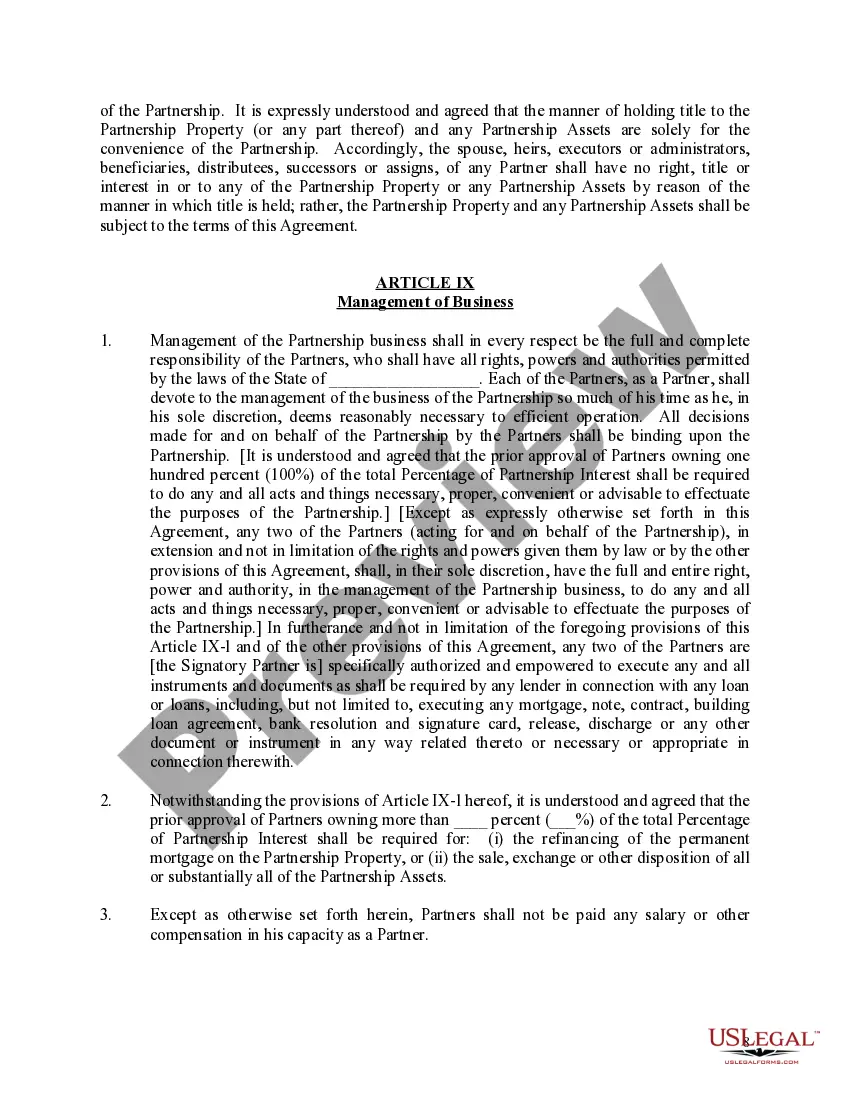
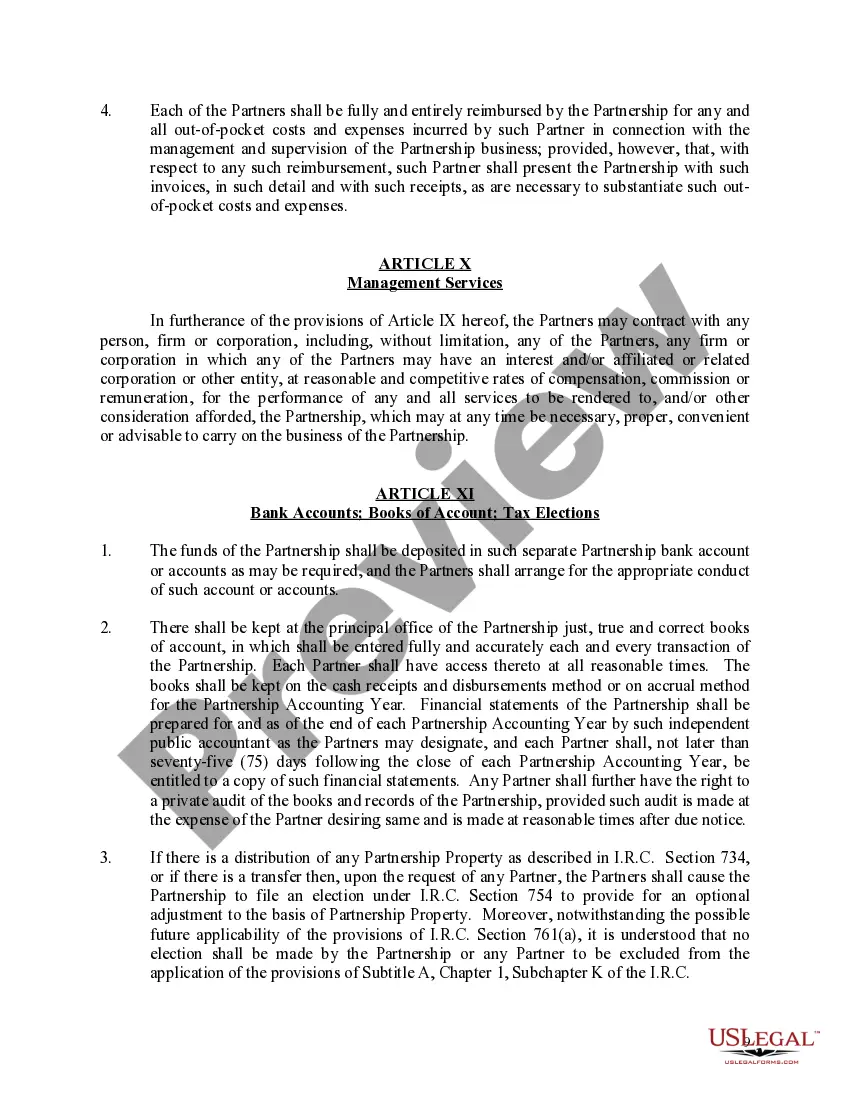
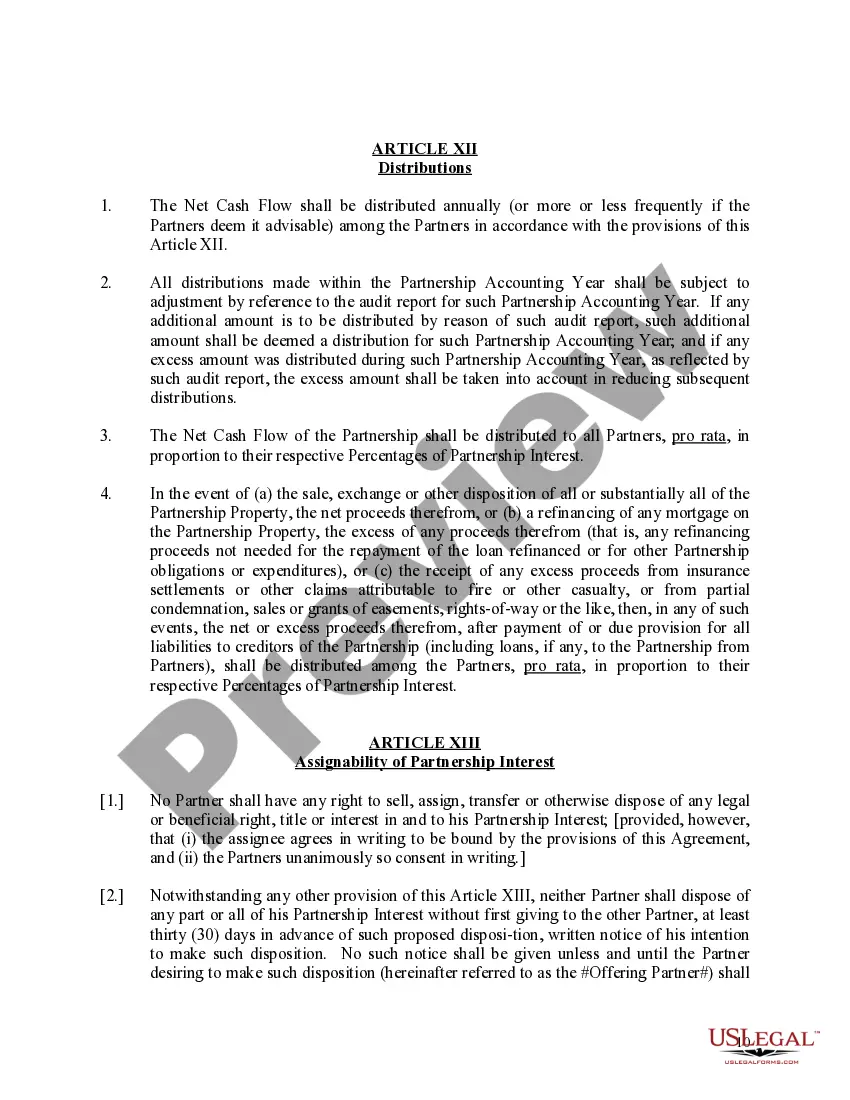
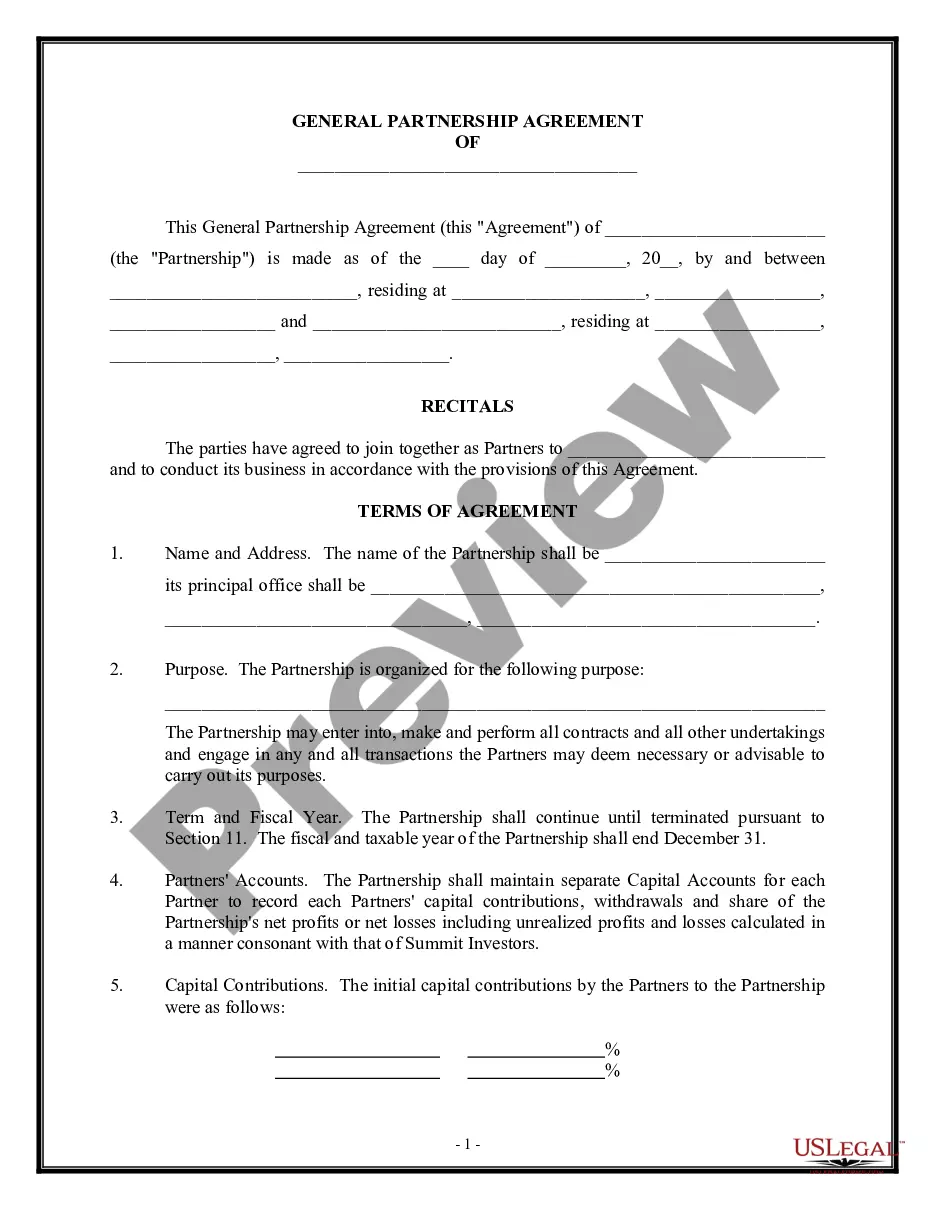
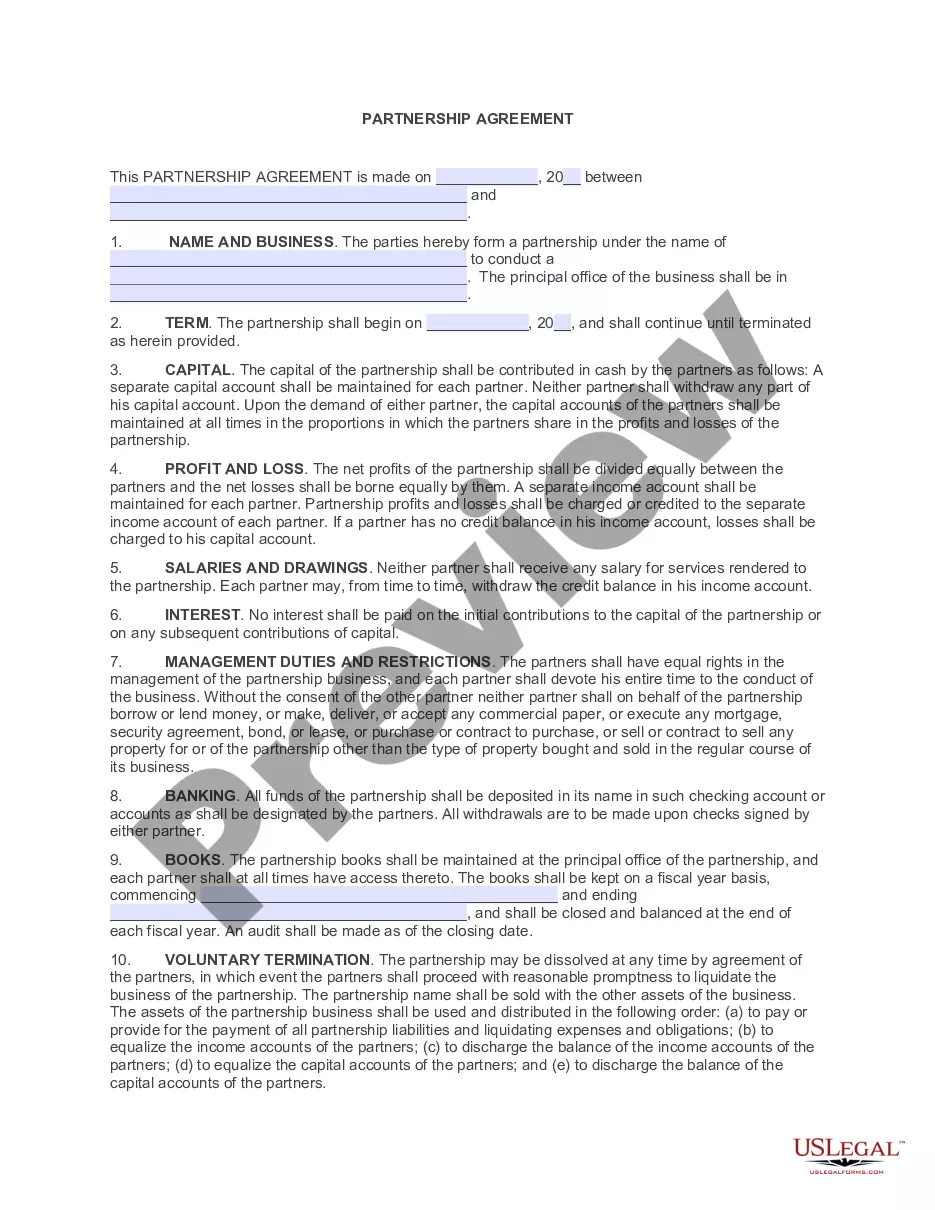
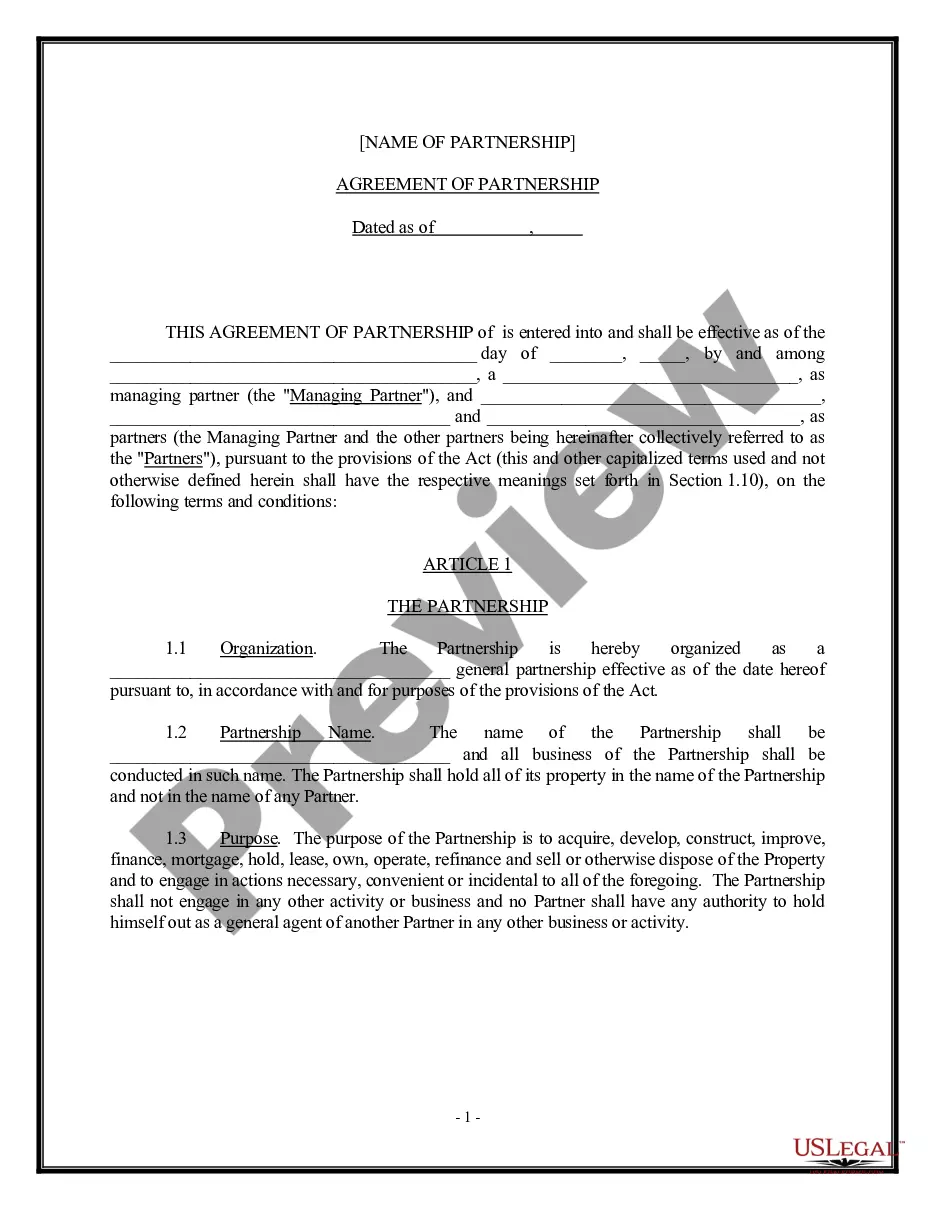
The General Partnership for Business form is a legal document used to establish a general partnership between two or more parties. This agreement outlines the terms, responsibilities, and rights of each partner, differentiating it from other business structures like limited partnerships or corporations. It sets the foundation for collaboration in business ventures, specifying capital contributions, profit-sharing, management duties, and procedures for dissolution if necessary.
Form components explained
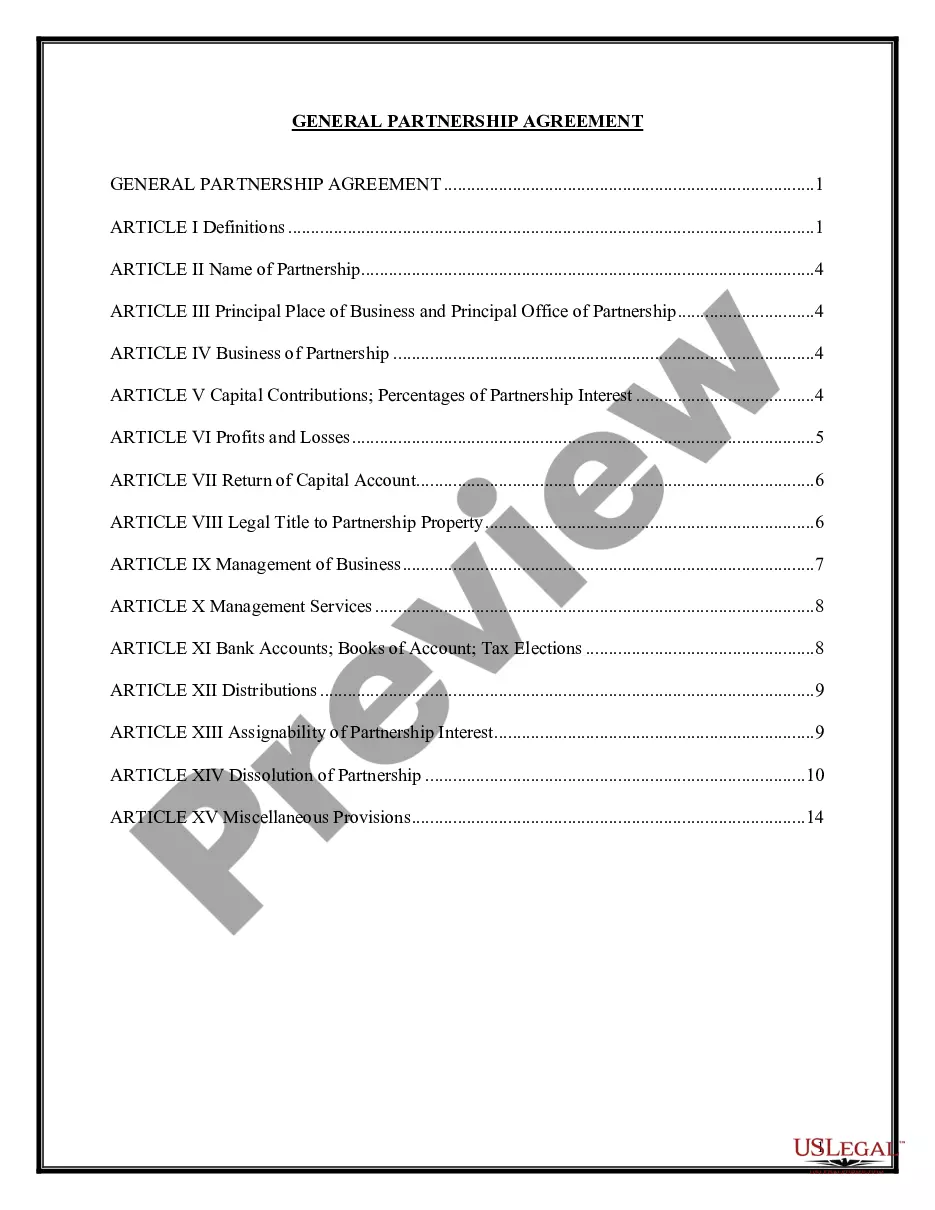
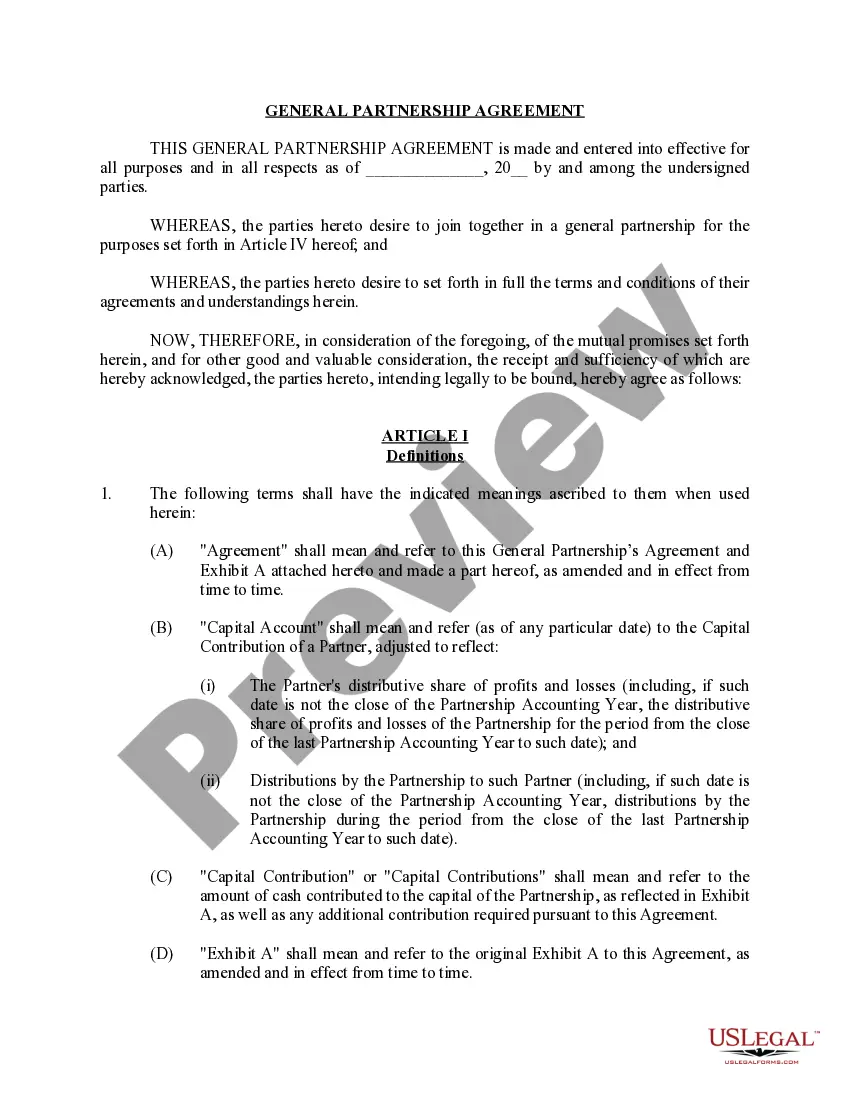
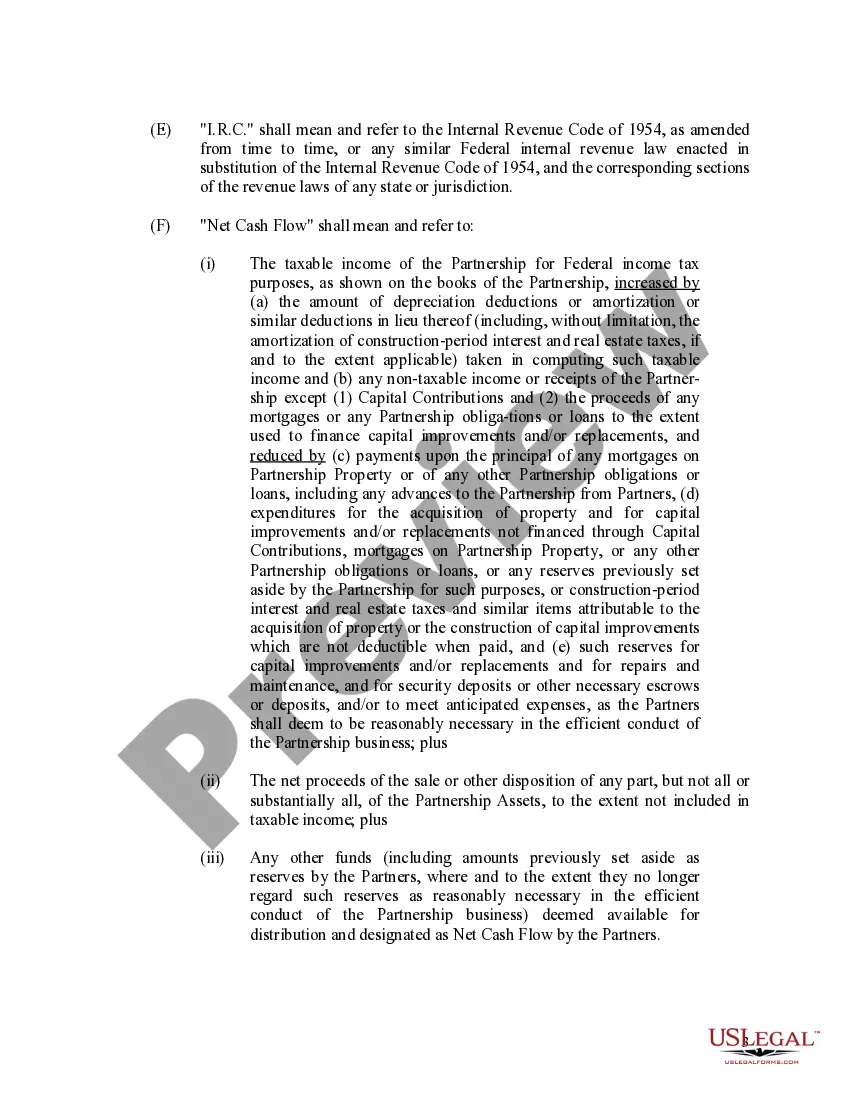
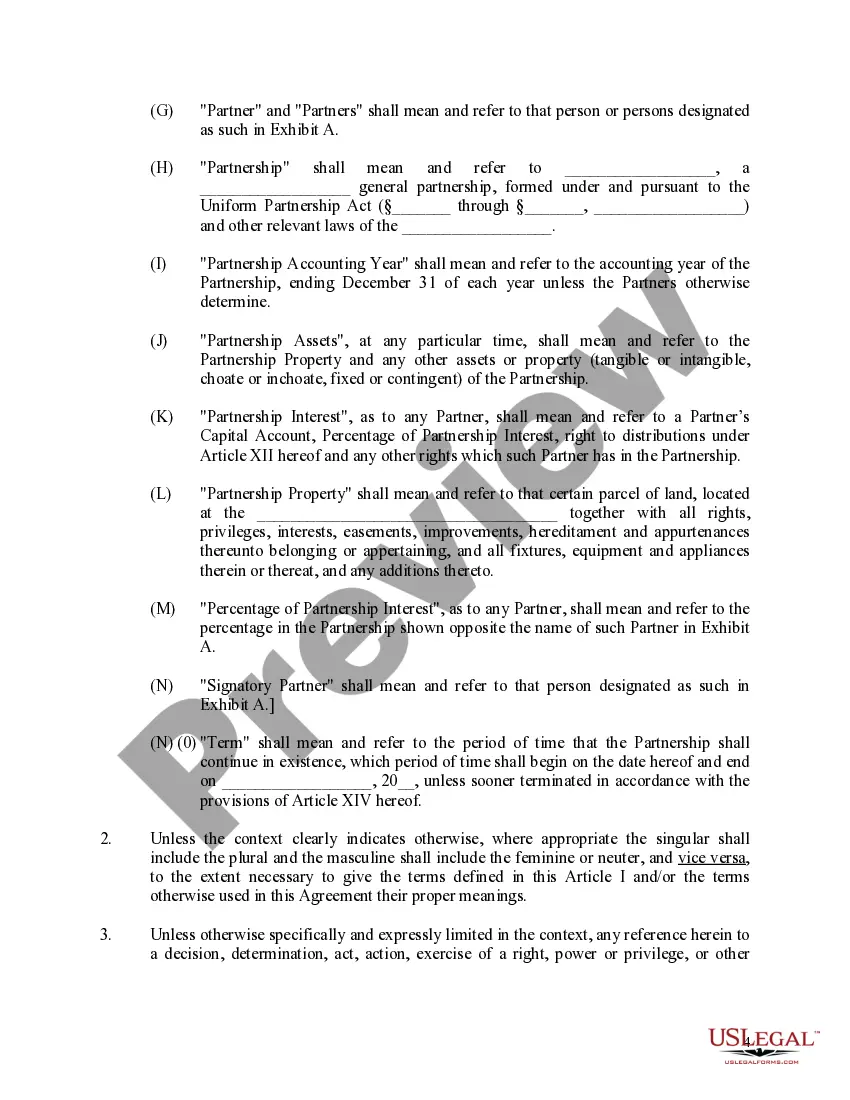
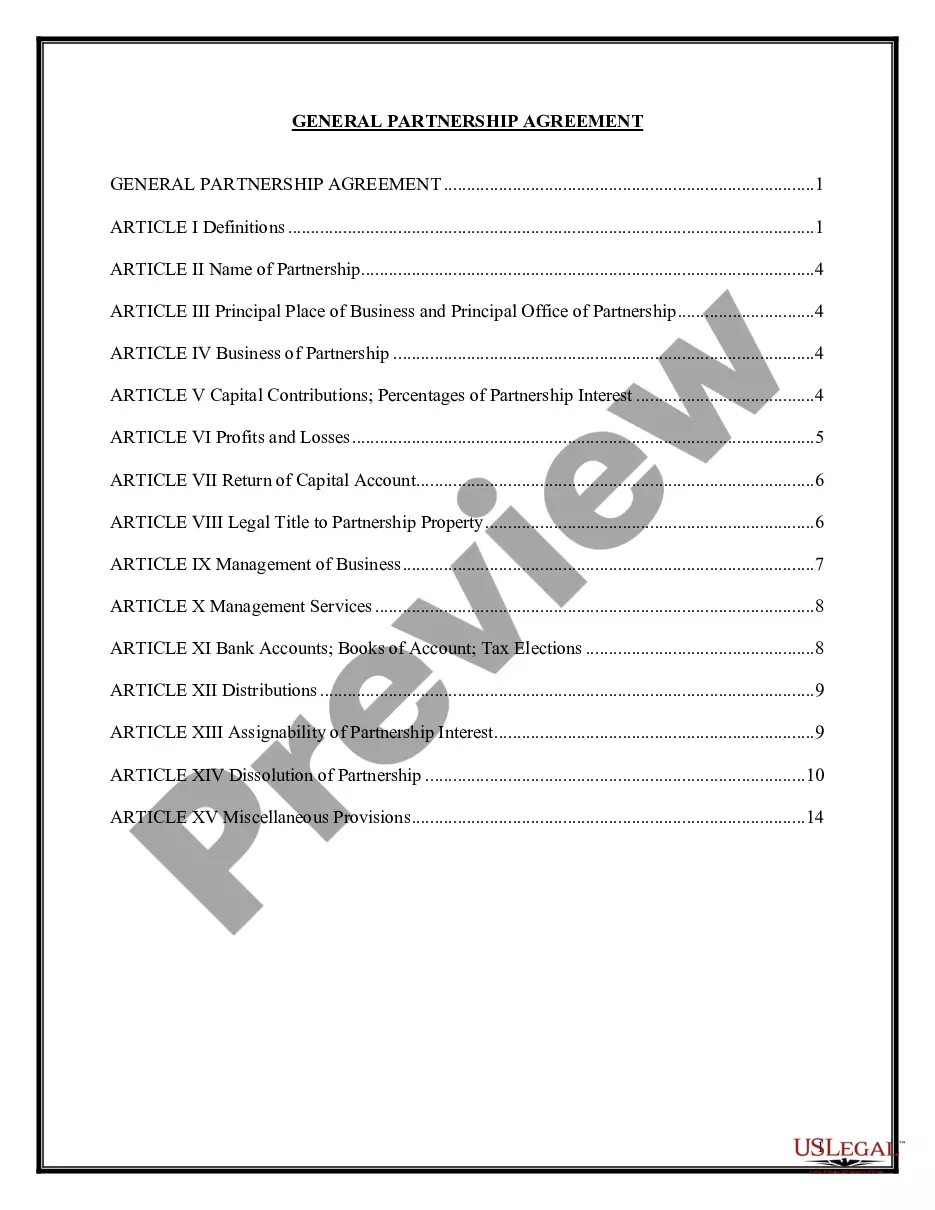
- Article I - Definitions: Clarifies key terms used throughout the agreement.
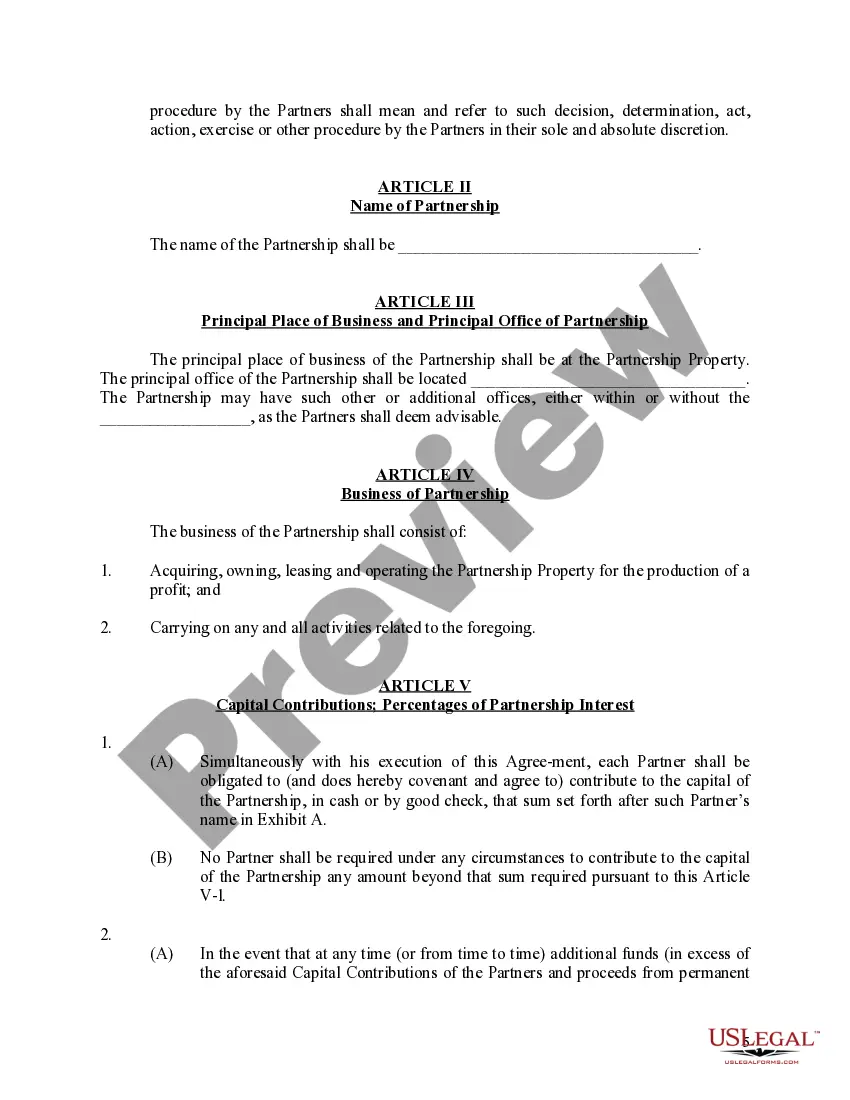
- Article II - Name of Partnership: Specifies the official name of the partnership.
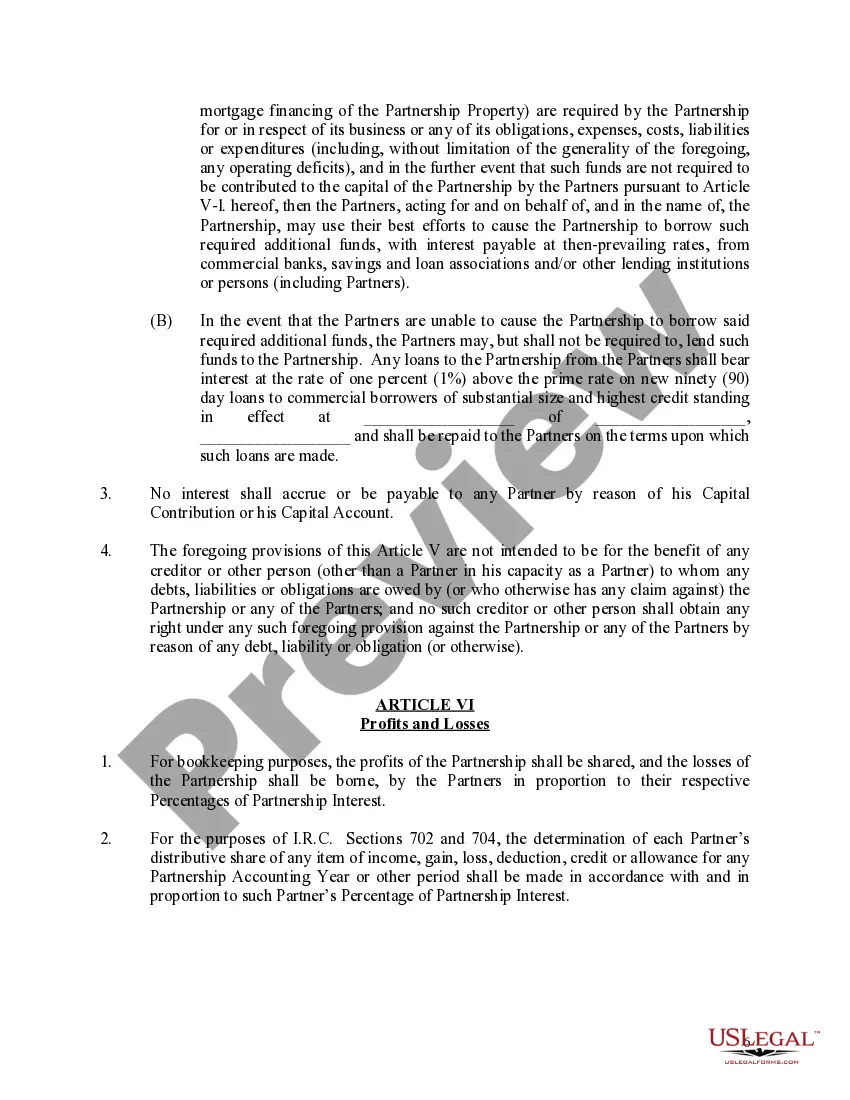
- Article V - Capital Contributions: Details each partner's required financial commitment to the partnership.
- Article VI - Profits and Losses: Outlines how profits and losses will be distributed among partners.
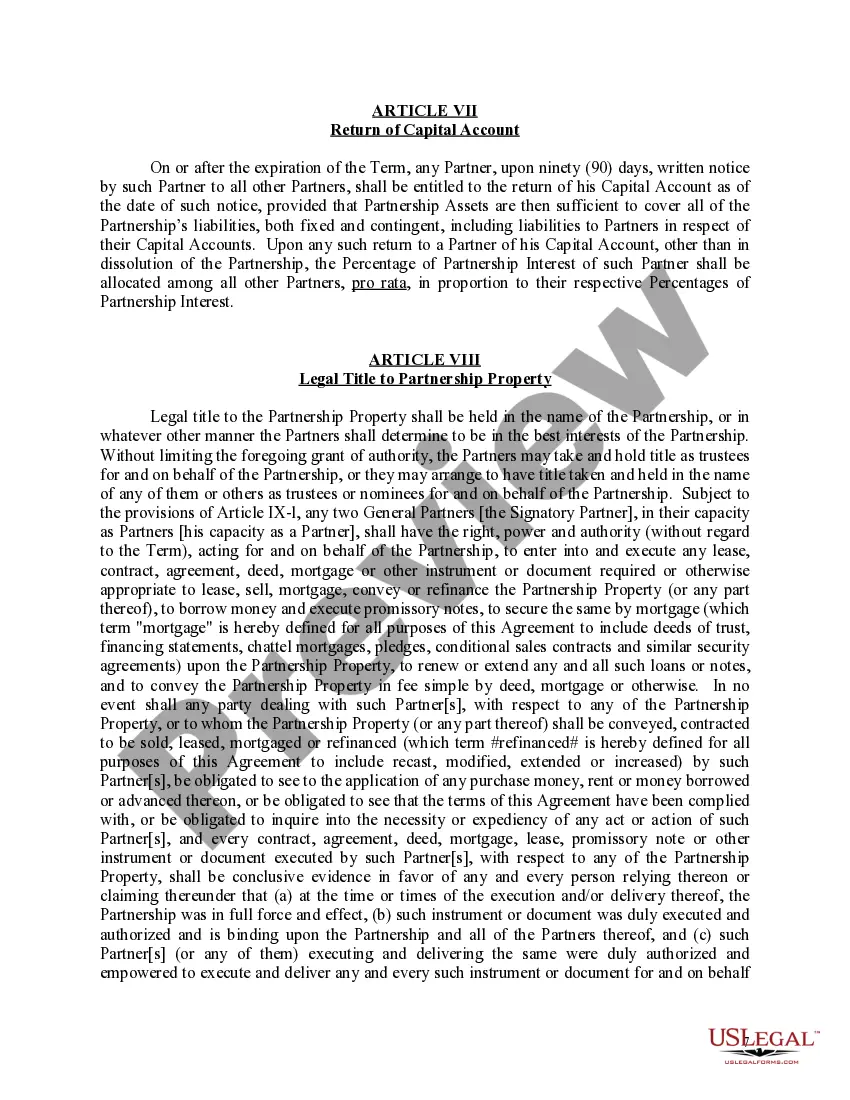
- Article XIV - Dissolution of Partnership: Describes the circumstances and procedure for dissolving the partnership.

When to use this form
This form is needed when two or more individuals or entities wish to establish a general partnership for conducting business. It is particularly useful for entrepreneurs looking to formalize their partnership structure, ensuring that all parties are aware of their rights and obligations from the outset. This agreement is essential for clearly delineating terms of partnership and preventing future disputes.
Intended users of this form
This form is suitable for:
- Entrepreneurs seeking to form a partnership for business ventures.
- Business partners who want to formally document their agreement.
- Individuals looking for clarity on their responsibilities and share of profits in a partnership.
How to complete this form
Follow these steps to complete the General Partnership for Business form:
- Identify the partners involved and enter their names where indicated.
- Specify the name of the partnership as agreed upon by the partners.
- Detail the capital contributions each partner is required to make in Exhibit A.
- Outline the terms for sharing profits and losses based on the percentage of partnership interest.
- Sign and date the agreement to make it effective.
Notarization requirements for this form
This form does not typically require notarization unless specified by local law. However, verifying signatures for added legal credibility is advisable.
Get your form ready online
Our built-in tools help you complete, sign, share, and store your documents in one place.
Make edits, fill in missing information, and update formatting in US Legal Forms—just like you would in MS Word.
Download a copy, print it, send it by email, or mail it via USPS—whatever works best for your next step.
Sign and collect signatures with our SignNow integration. Send to multiple recipients, set reminders, and more. Go Premium to unlock E-Sign.
If this form requires notarization, complete it online through a secure video call—no need to meet a notary in person or wait for an appointment.
We protect your documents and personal data by following strict security and privacy standards.

Make edits, fill in missing information, and update formatting in US Legal Forms—just like you would in MS Word.

Download a copy, print it, send it by email, or mail it via USPS—whatever works best for your next step.

Sign and collect signatures with our SignNow integration. Send to multiple recipients, set reminders, and more. Go Premium to unlock E-Sign.

If this form requires notarization, complete it online through a secure video call—no need to meet a notary in person or wait for an appointment.

We protect your documents and personal data by following strict security and privacy standards.
Common mistakes to avoid
- Failing to specify the name of the partnership correctly.
- Not clearly defining the capital contributions expected from each partner.
- Omitting key terms related to the dissolution process.
- Neglecting to update the agreement when there are changes in partnership terms or membership.
Why complete this form online
- Easy access to a professionally drafted legal document tailored for your partnership needs.
- Customization options allow you to modify terms specific to your partnership structure.
- Secures legal standing for your business agreement, reducing potential disputes.
- The agreement must comply with state laws governing partnerships to ensure enforceability.
- All partners should thoroughly understand their responsibilities under the agreement to avoid legal complications.
Main things to remember
- The General Partnership for Business form is essential for establishing a clear framework for partnership operations.
- Clearly define roles, capital contributions, profit-sharing, and dissolution processes within the agreement.
- Review and update the partnership agreement regularly to reflect any changes in partnership dynamics.
Looking for another form?
Form popularity
FAQ
A general partner is a part-owner of a business and shares in its profits. A general partner is often a doctor, lawyer, or another professional who has joined a partnership in order to remain independent while being part of a larger business.
General Partnership. A voluntary association of two or more persons to carry on business for profit. Personal liability. Liability for business debt, which extends beyond what is invested in a business to include an individual's personal assets.
A general partner is one of two or more investors who jointly own a business and assume a day-to-day role in managing it. A general partner has the authority to act on behalf of the business without the knowledge or permission of the other partners.
A general partnership is a business arrangement by which two or more individuals agree to share in all assets, profits, and financial and legal liabilities of a jointly-owned business.
For example, let's say that Fred and Melissa decide to open a baking store. The store is named F&M Bakery. By opening a store together, Fred and Melissa are both general partners in the business, F&M Bakery. It is important to note that each general partner must be involved in the business.
Compensation of General Partner The general partner earns an annual management fee of up to 2%, which is used to carry out admin duties, covering expenses to be made like overhead and salaries. GPs can also earn a proportion of the private equity fund's profits, and this fee is carried interest.
A general partnership is a business made up of two or more partners, each sharing the business's debts, liabilities, and assets. Partners assume unlimited liability, potentially subjecting their personal assets to seizure if the partnership becomes insolvent.
A limited partnership must have at least one general partner. The general partner or partners are responsible for running the business. They have control over the day-to-day management of the business and have the authority to make legally binding business decisions.
This is basically a general partnership, but with the addition of giving the partners at least some limited personal liability. Limited liability limited partnership (LLLP). This is basically a limited partnership, but with the addition of giving the general partners limited personal liability.