Michigan HVAC Contract for Contractor
What is this form?
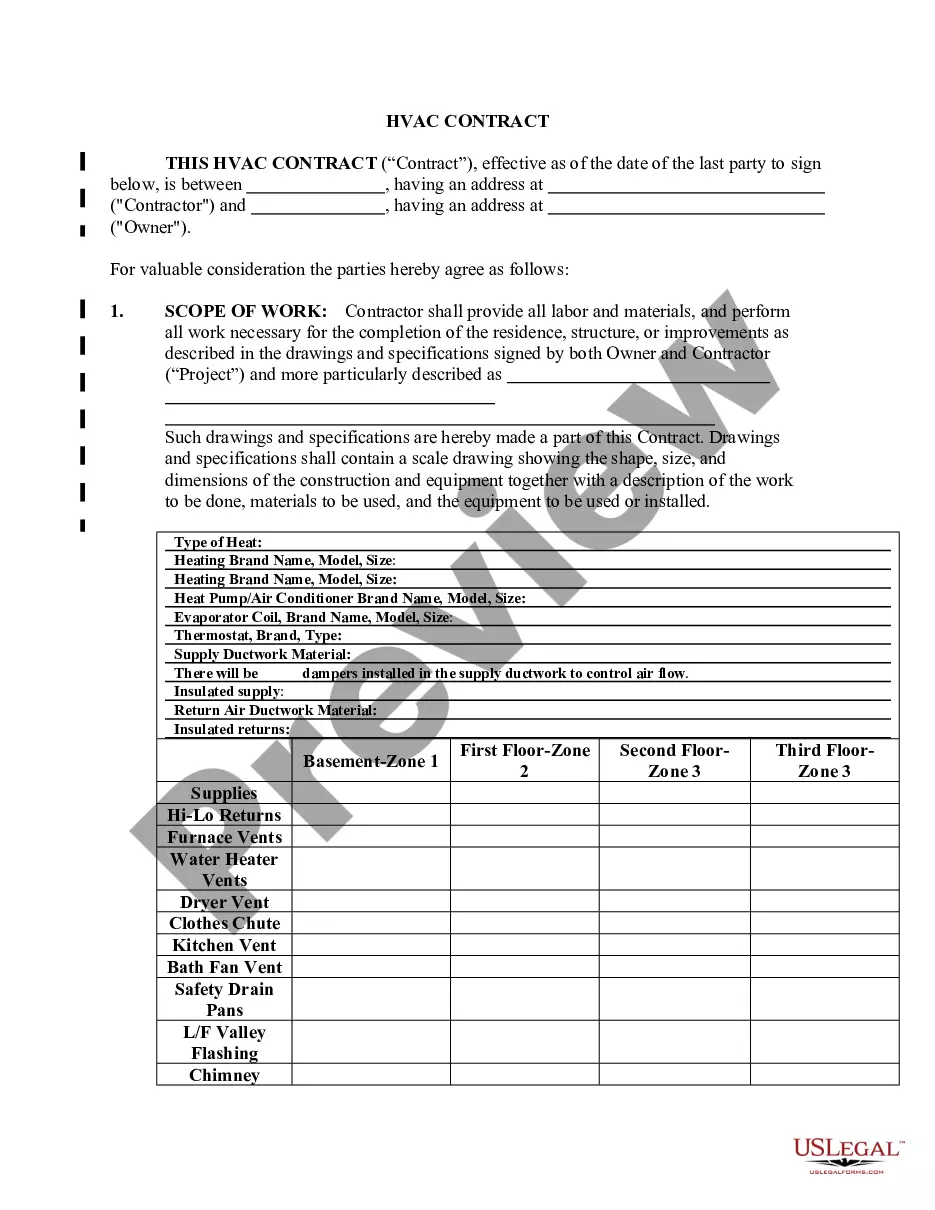
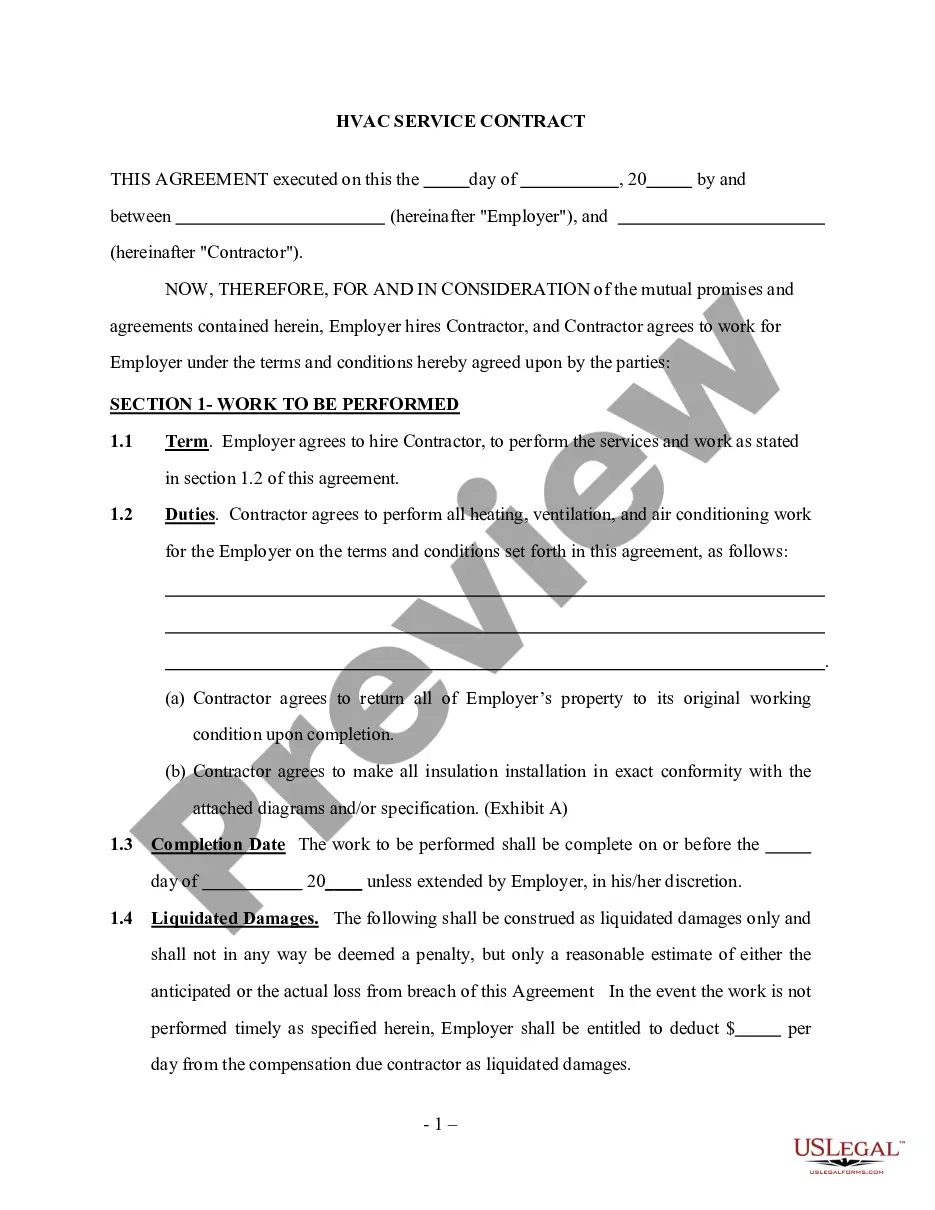
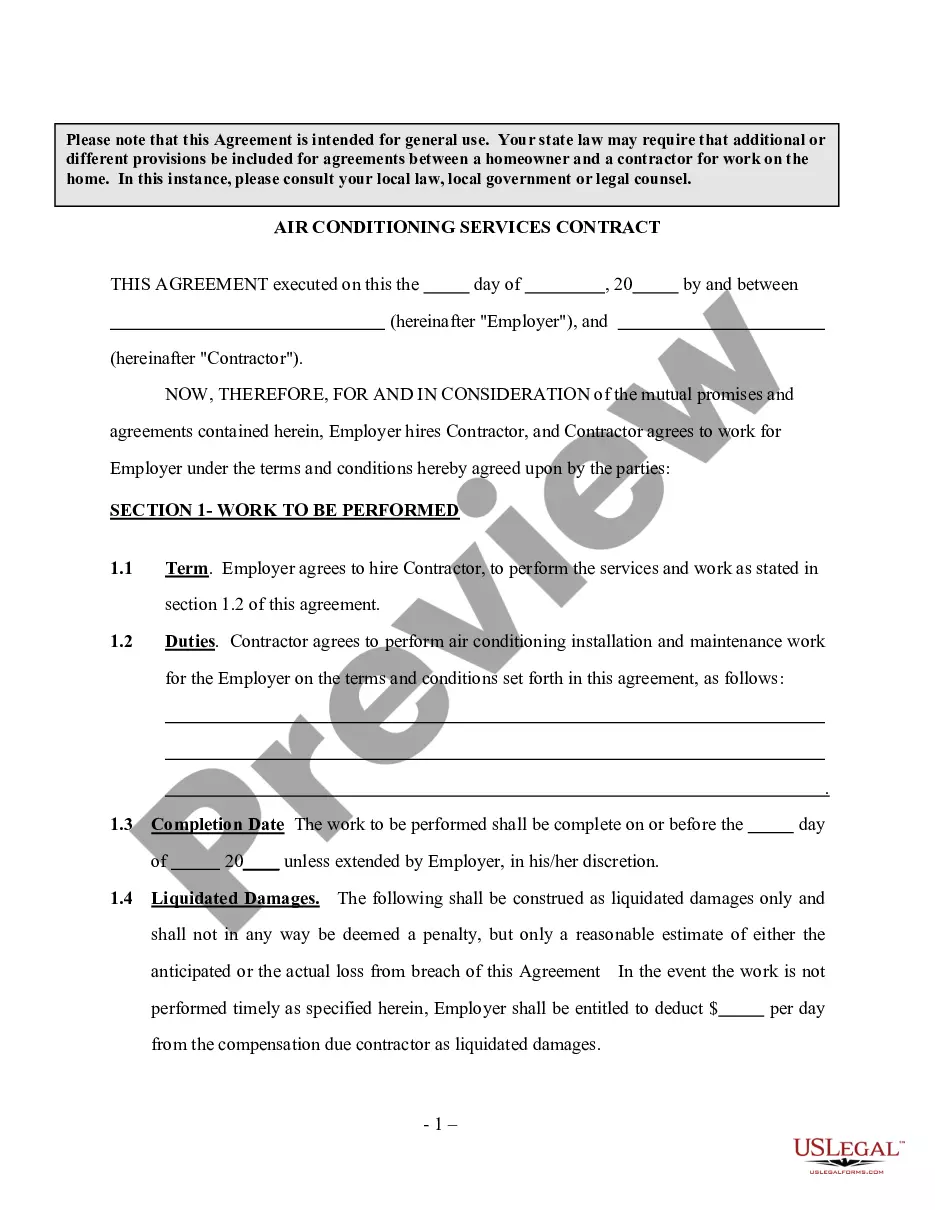
The HVAC Contract for Contractor is a legal document that governs the relationship between HVAC contractors and property owners. This form is essential for defining the terms and conditions of HVAC services, including payment arrangements, project scope, and responsibilities related to permits and insurance. It differs from other contracts by specifically addressing changes in work and contingency plans, ensuring both parties are aware of their rights and obligations under Michigan law.
Main sections of this form
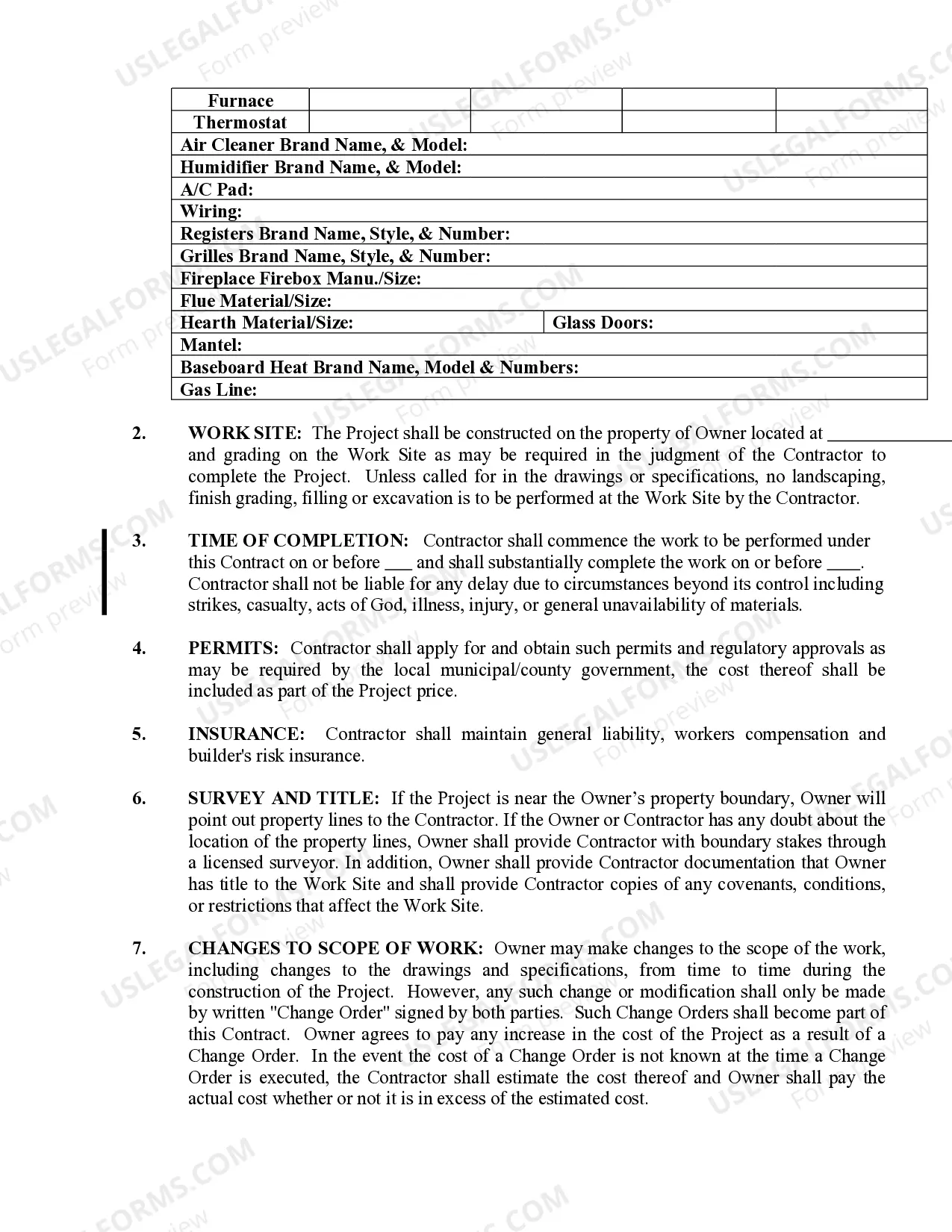
- Permits: Obligation for the contractor to obtain necessary permits.
- Insurance: Requirements for general liability and worker's compensation coverage.
- Scope of Work: Provisions for changing the project scope through written change orders.
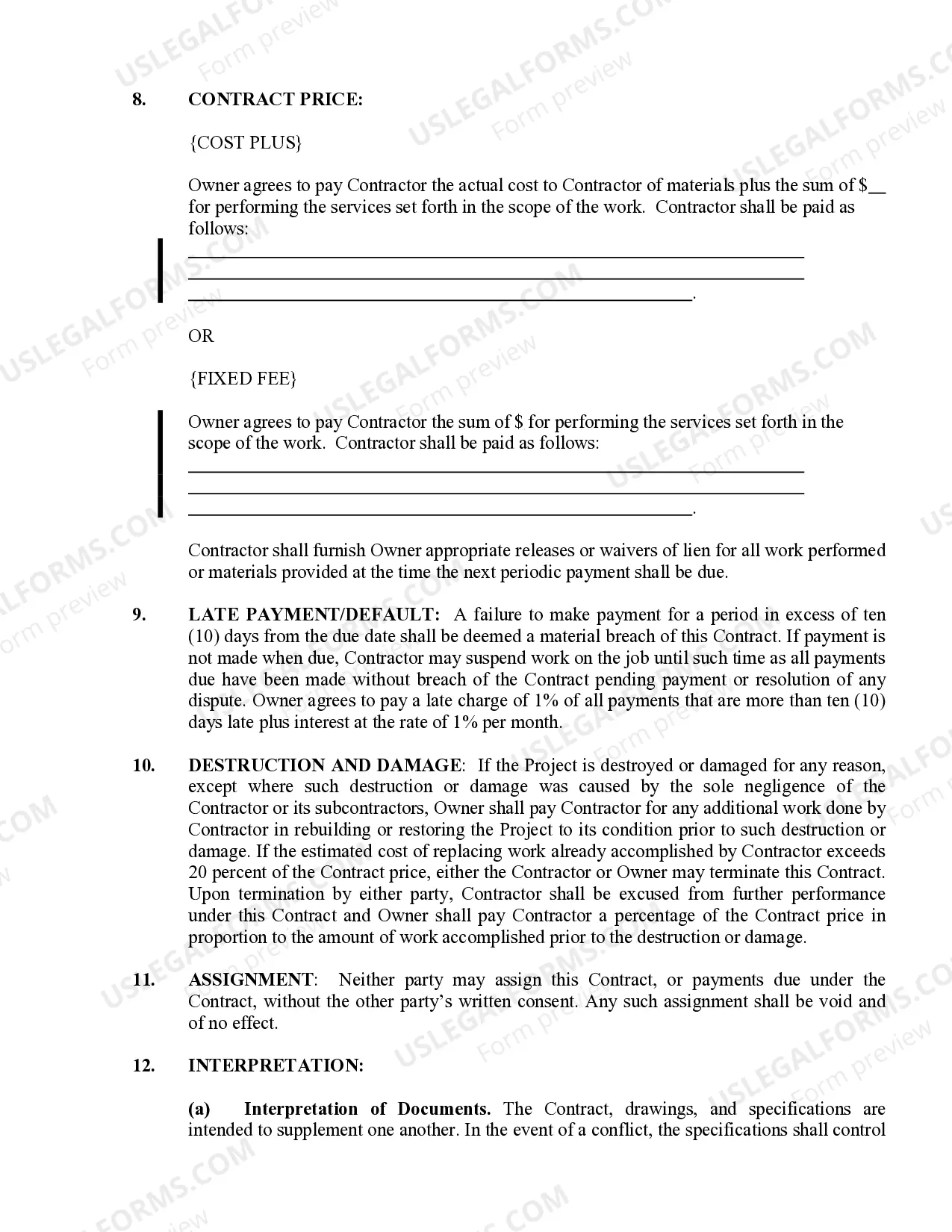
- Destruction and Damage: Guidelines on responsibilities in case of project damage.
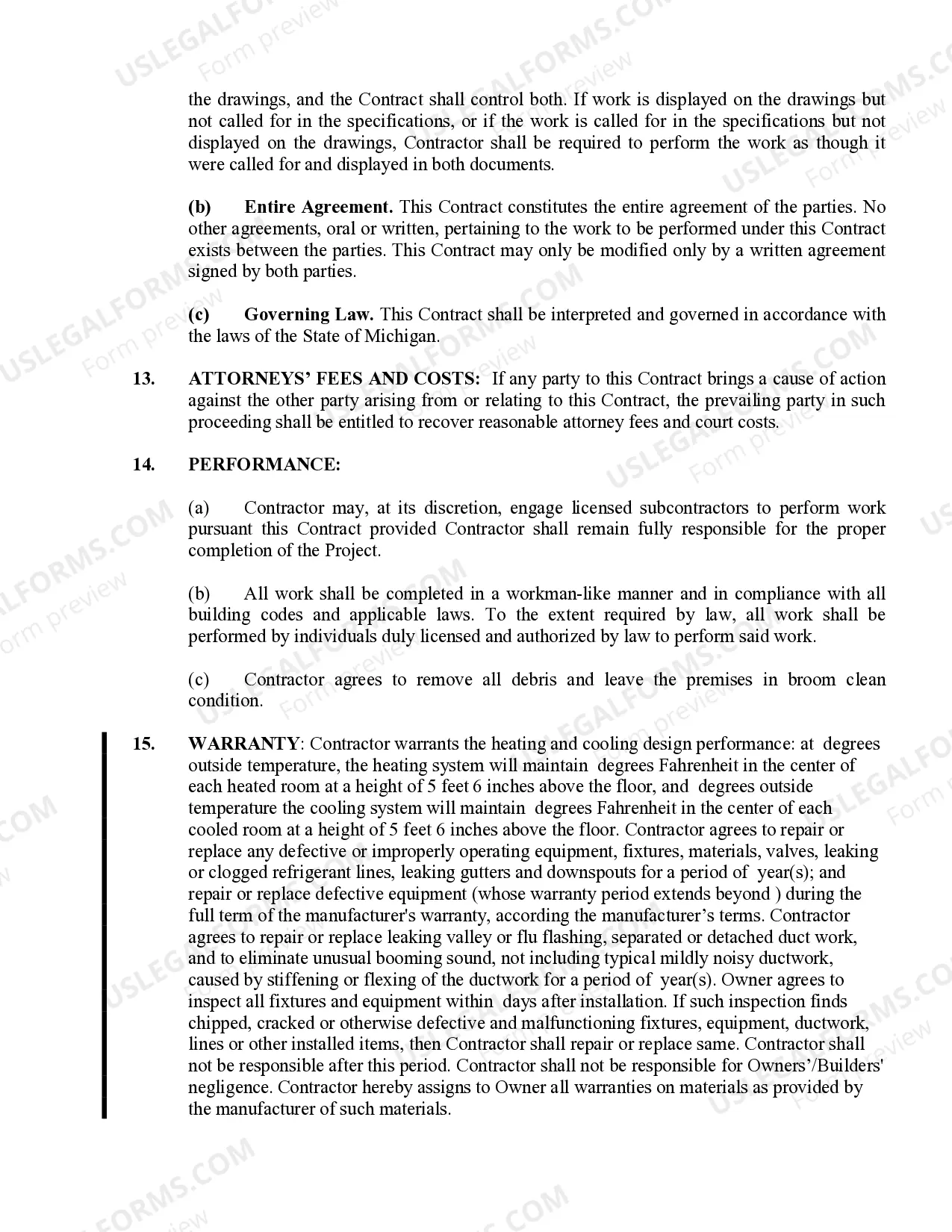
- Attorney Fees: Conditions under which the prevailing party may recover legal costs.

Situations where this form applies
This form should be used when a property owner intends to engage an HVAC contractor for installation, maintenance, or repair services. It is particularly useful in scenarios where the project might involve intricate specifications, changes in the scope of work, or when a clear understanding of insurance and liability is needed to protect both parties throughout the project's duration.
Who can use this document
- HVAC Contractors: Professionals looking to formalize agreements with property owners.
- Property Owners: Individuals or businesses seeking HVAC services and wishing to outline terms clearly.
- Legal Practitioners: Attorneys advising clients in HVAC-related contractual matters.
Completing this form step by step
- Identify the parties: Enter the names and addresses of the contractor and property owner.
- Specify the project details: Describe the HVAC services to be provided, including any specific requirements.
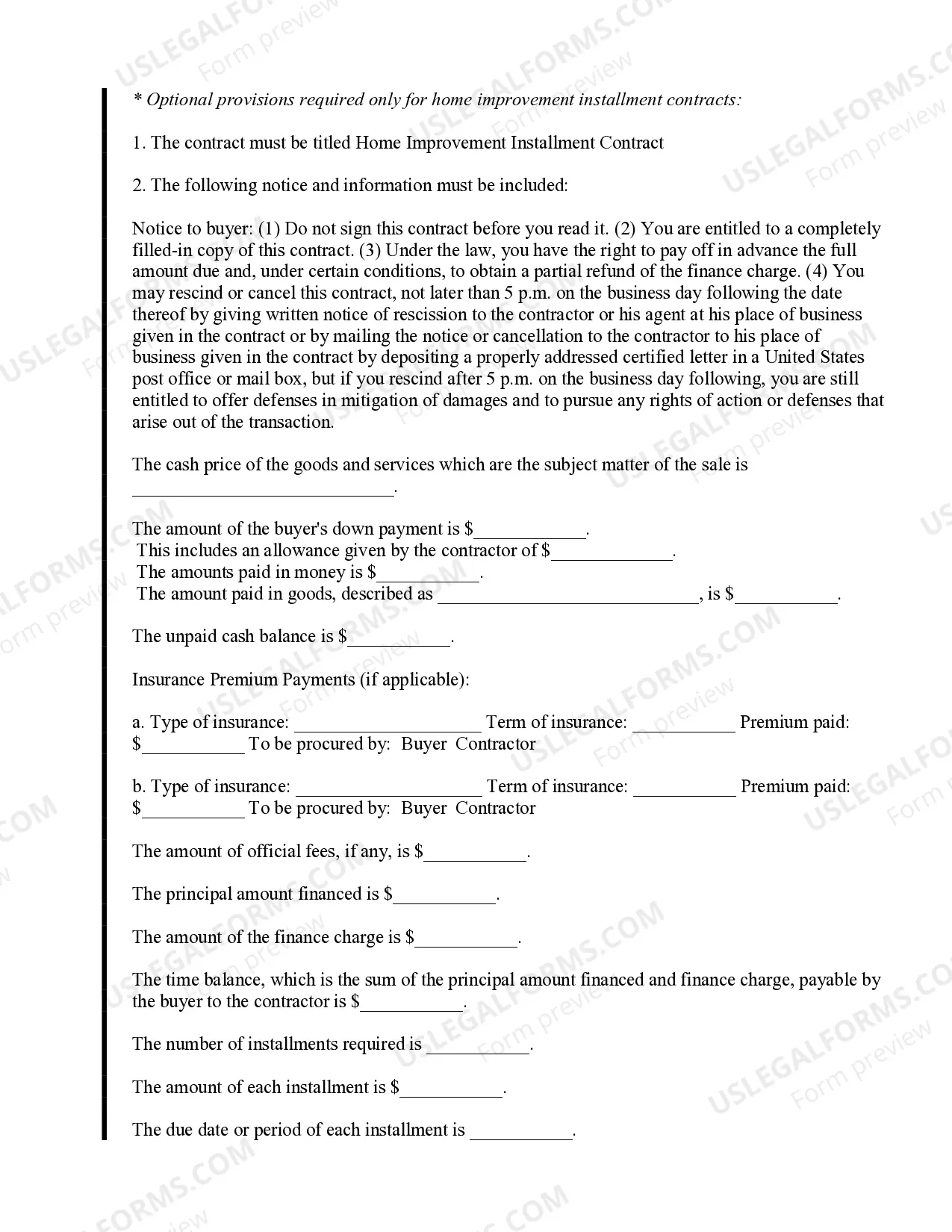
- Detail payment terms: Indicate whether the payment arrangement is a cost plus or fixed fee.
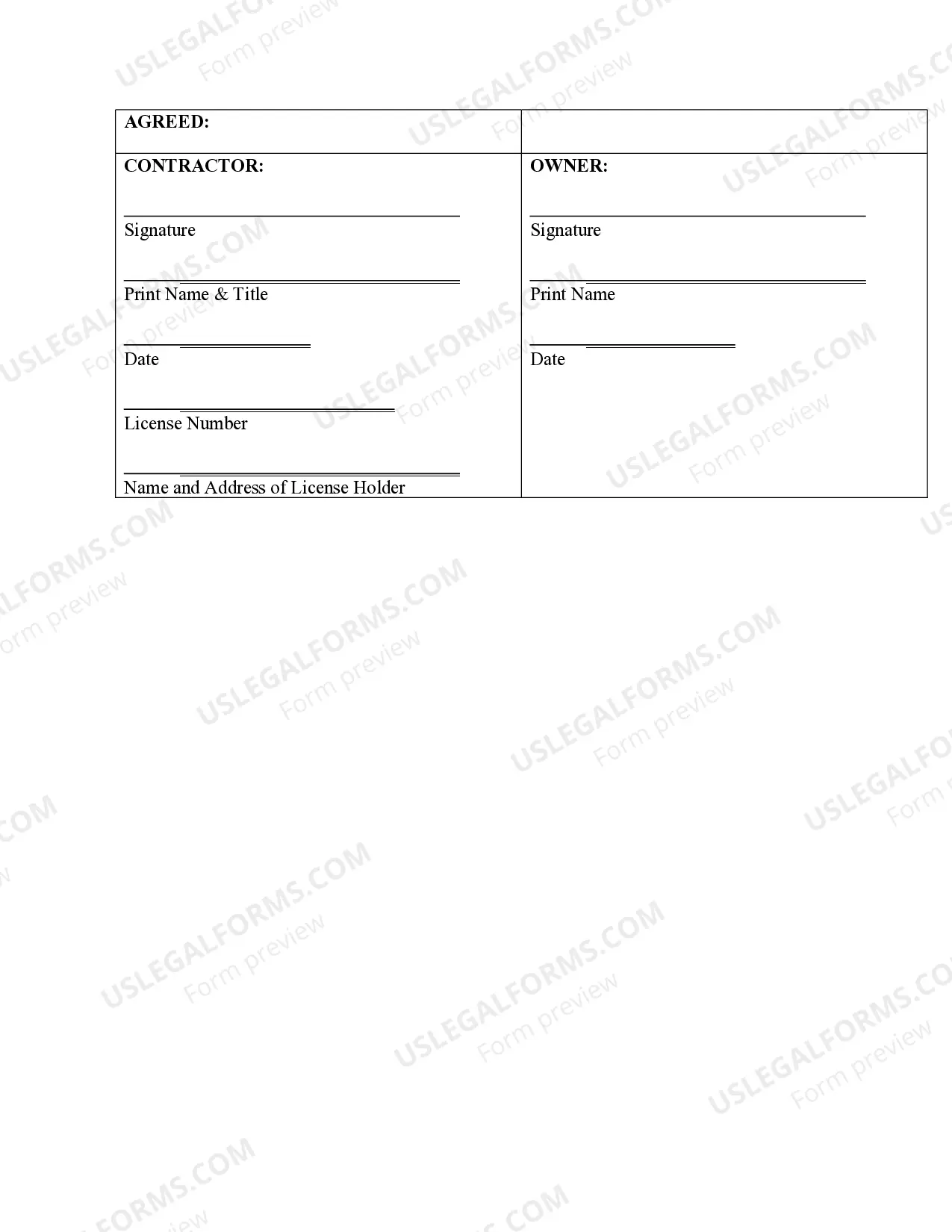
- Sign and date: Ensure both parties sign and date the contract to formalize the agreement.
- Attach necessary documents: Include any additional documents, such as insurance certificates or permits, that are stipulated in the contract.
Is notarization required?
This form does not typically require notarization to be legally valid. However, some jurisdictions or document types may still require it. US Legal Forms provides secure online notarization powered by Notarize, available 24/7 for added convenience.
Get your form ready online
Our built-in tools help you complete, sign, share, and store your documents in one place.
Make edits, fill in missing information, and update formatting in US Legal Forms—just like you would in MS Word.
Download a copy, print it, send it by email, or mail it via USPS—whatever works best for your next step.
Sign and collect signatures with our SignNow integration. Send to multiple recipients, set reminders, and more. Go Premium to unlock E-Sign.
If this form requires notarization, complete it online through a secure video call—no need to meet a notary in person or wait for an appointment.
We protect your documents and personal data by following strict security and privacy standards.

Make edits, fill in missing information, and update formatting in US Legal Forms—just like you would in MS Word.

Download a copy, print it, send it by email, or mail it via USPS—whatever works best for your next step.

Sign and collect signatures with our SignNow integration. Send to multiple recipients, set reminders, and more. Go Premium to unlock E-Sign.

If this form requires notarization, complete it online through a secure video call—no need to meet a notary in person or wait for an appointment.

We protect your documents and personal data by following strict security and privacy standards.
Mistakes to watch out for
- Failing to specify change order procedures, leading to disputes over project modifications.
- Not verifying insurance coverage details before signing, which can leave parties exposed.
- Overlooking the detail of project description, resulting in ambiguity about services to be provided.
Why complete this form online
- Convenience: Easily accessible for download and customizable to fit specific needs.
- Editability: Tailorable format allows users to adjust terms as required before signing.
- Reliability: Crafted by licensed attorneys, ensuring legality and compliance with applicable laws.
Looking for another form?



Form popularity
FAQ
In California, the statute of repose is four years for most defects, but 10 years for latent defects (those that aren't observable right away, such as a faulty foundation). In Georgia, the statute of repose is eight years for all claims related to design or construction of the building.
Contracts often don't include express references to latent defects, and asset owners and operators can pursue damages when the contractor or builder is deemed or thought to be negligent. In other scenarios, designers and contractors may be liable for latent defects for between 6 and 12 years.
A residential builders or maintenance and alteration contractors license is required when contracting to construct, repair, alter, add to, or improve a residential or combination residential and commercial structure.
In California, contractors are required to provide warranties on work done for home and business owners for between one and 10 years. The warranties California law provides are a minimum, and longer warranties can be agreed to between the parties.
The current limit is $600. Michigan licenses many different types of contractors that other states do not. The proposed law would allow people the ability to choose from a larger pool of contractors, while the burdens on people trying to work would be lessened.
Michigan. A handyman in Michigan does not need a specific handyman's license to work in the state. However, there are many jobs that a handyman may do that could require a license, including carpentry, laying concrete, painting and tiling. These all require a Maintenance and Alteration Contractor License.
A handyman, also known as a fixer, handyperson or handyworker, is a person skilled at a wide range of repairs, typically around the home. These tasks include trade skills, repair work, maintenance work, are both interior and exterior, and are sometimes described as "side work", "odd jobs" or "fix-up tasks".
You should be aware that all contractors offering to do work which totals $600 or more in labor and materials must be licensed by the Department of Licensing and Regulatory Affairs.
Most contractors do offer some kind of guarantee on their work, because doing so protects their interests as well as your own. While a contractor's warranty can protect you, the homeowner, from having to live with shoddy work, it also protects the contractor from having to return to fix things over and over again.