GNU General Public License
What is this form?
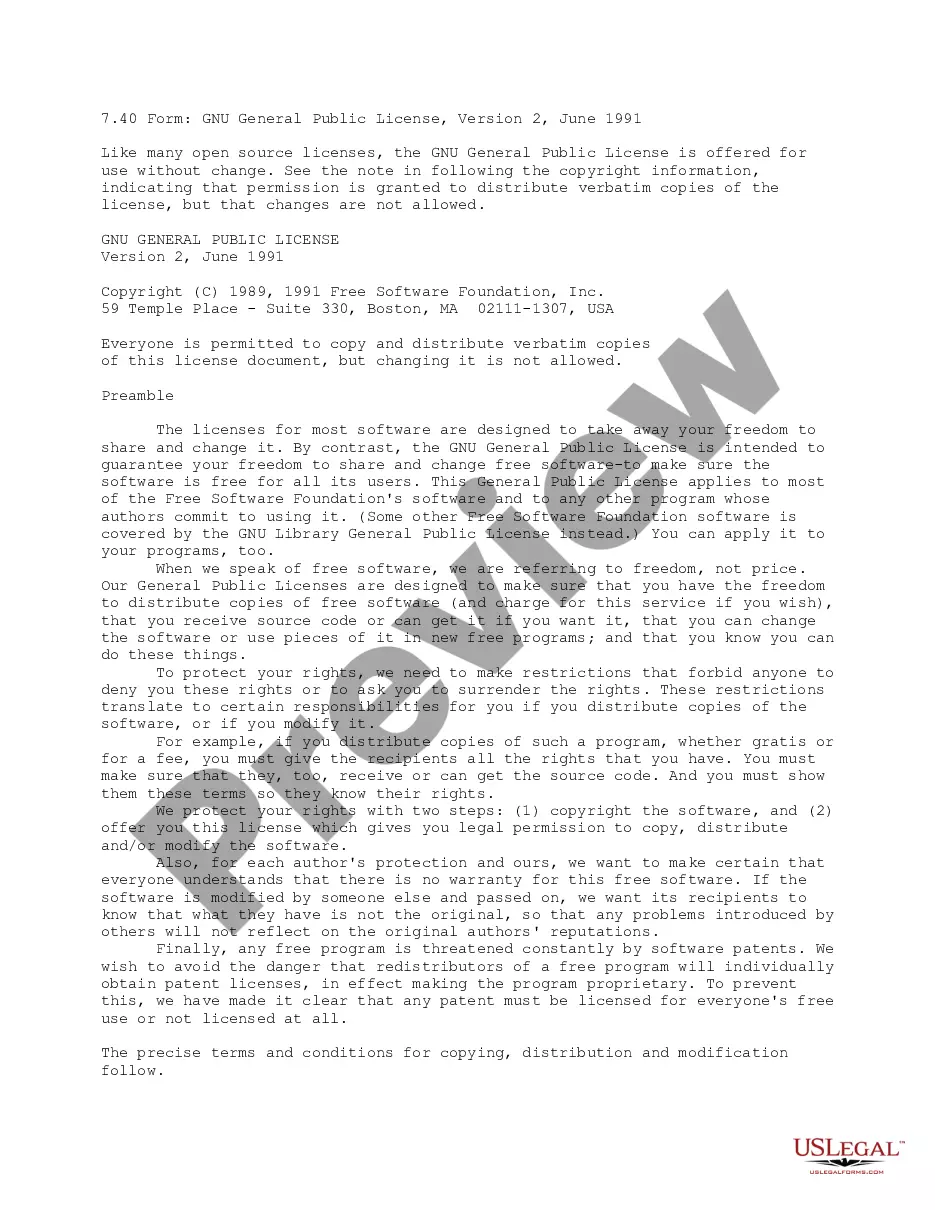
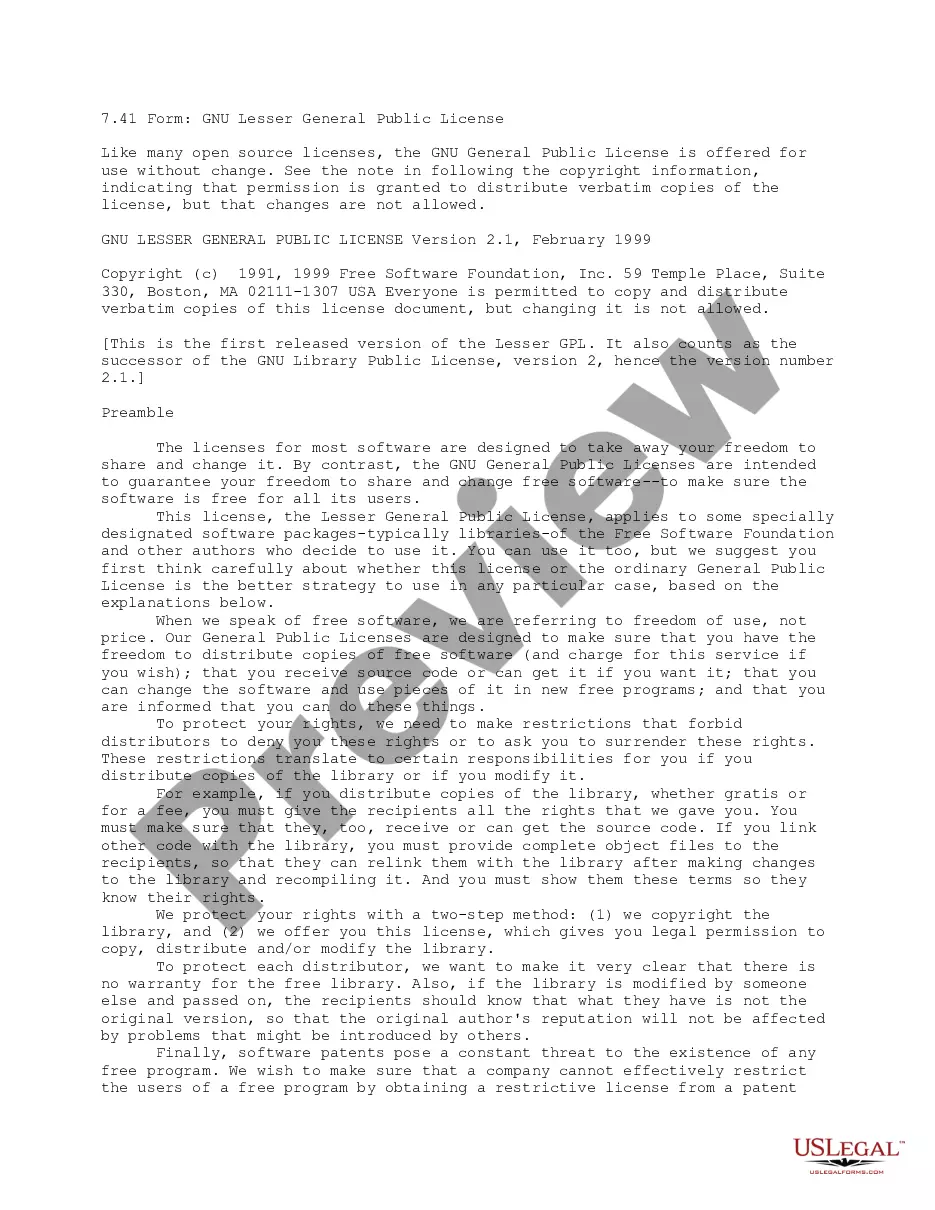
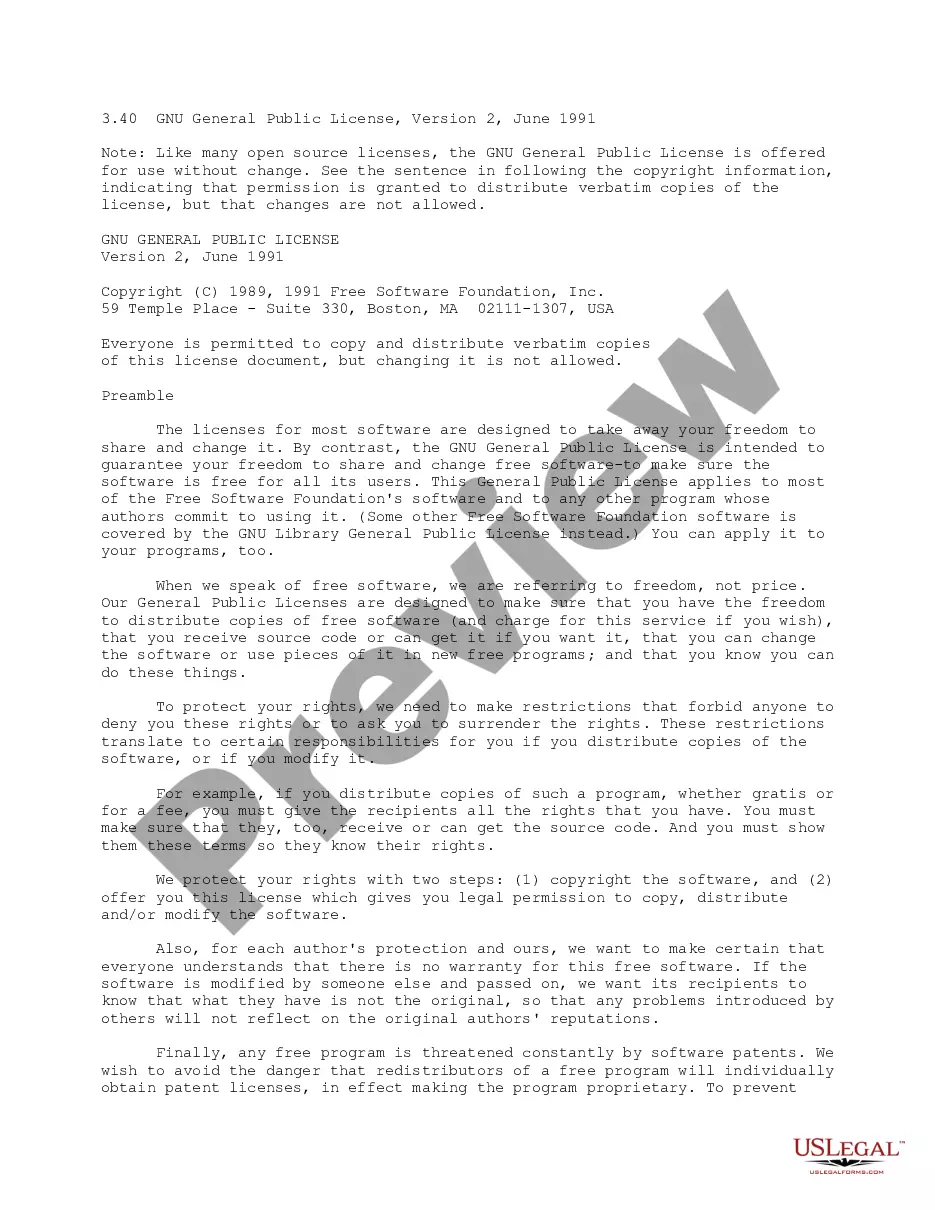
The GNU General Public License (GNU GPL) is an open-source software license that allows users the freedom to share, modify, and distribute software while ensuring that all modified versions remain free. Unlike traditional software licenses that restrict access to the source code, the GNU GPL promotes software freedom by protecting the rights of users and developers alike.
What’s included in this form
- Preamble: Highlights the philosophy behind free software and the freedom it provides.
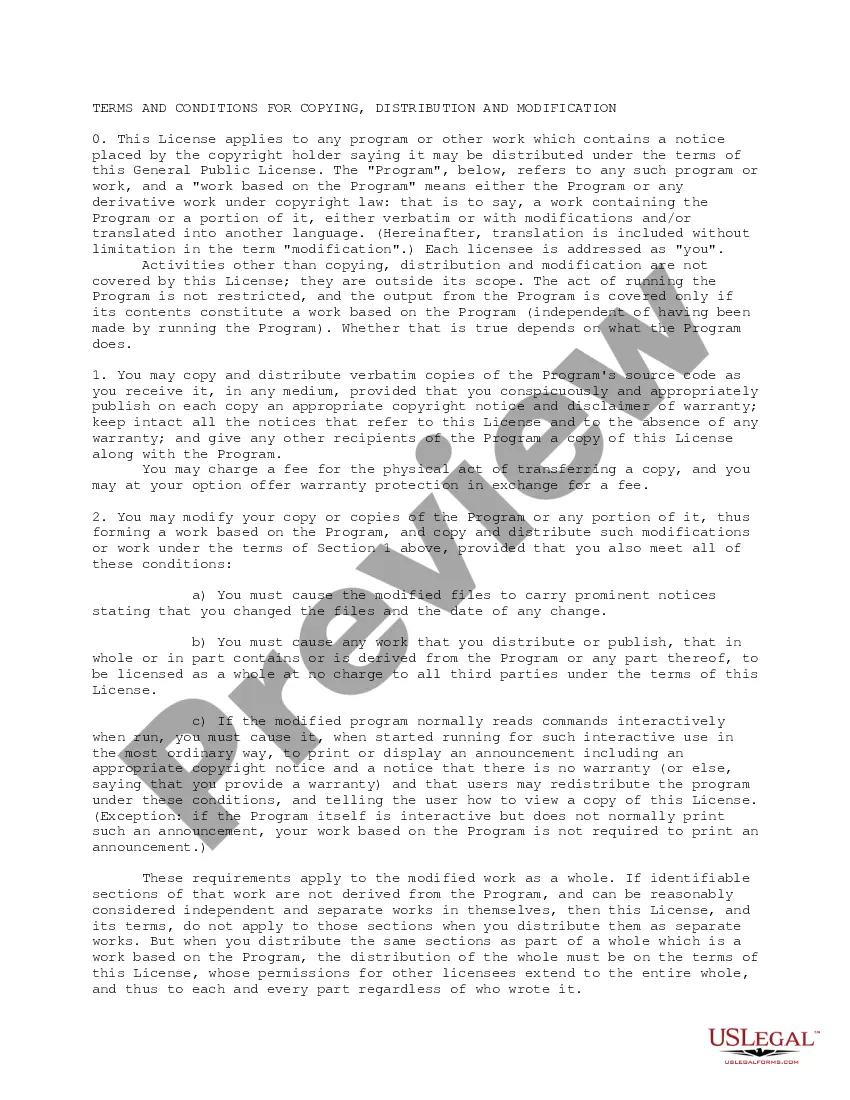
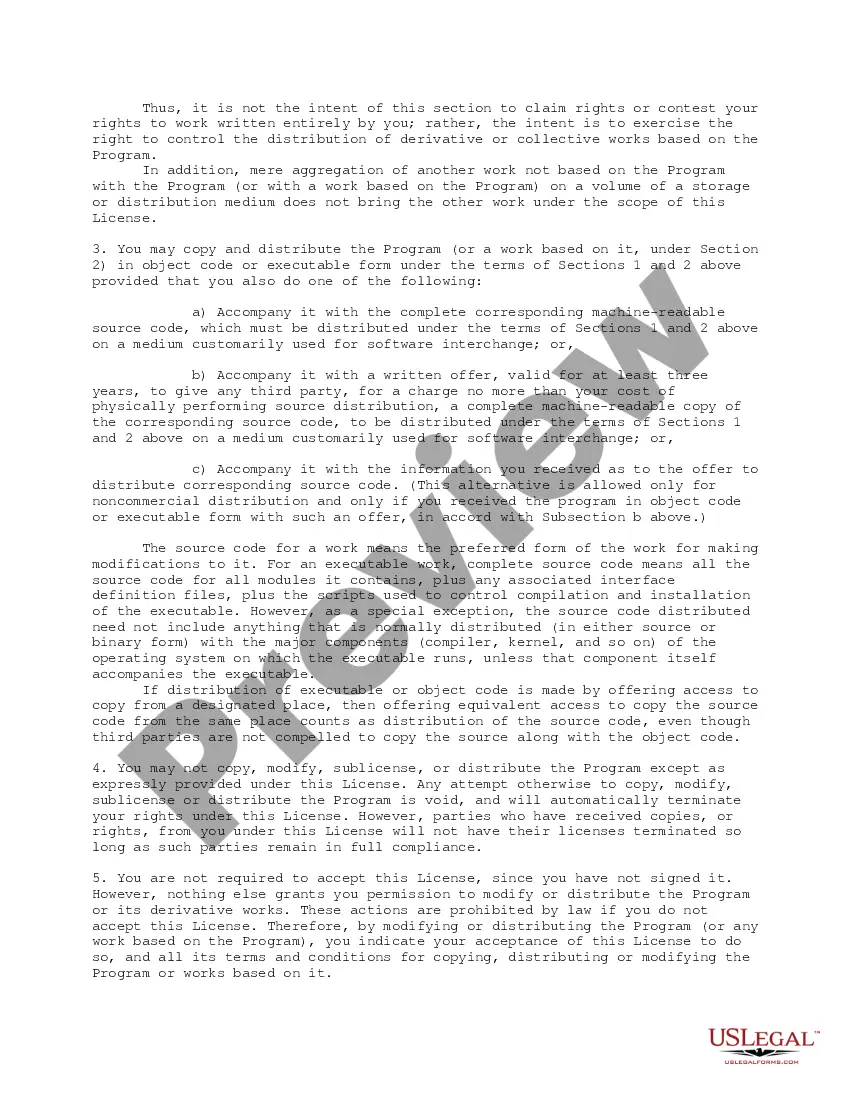
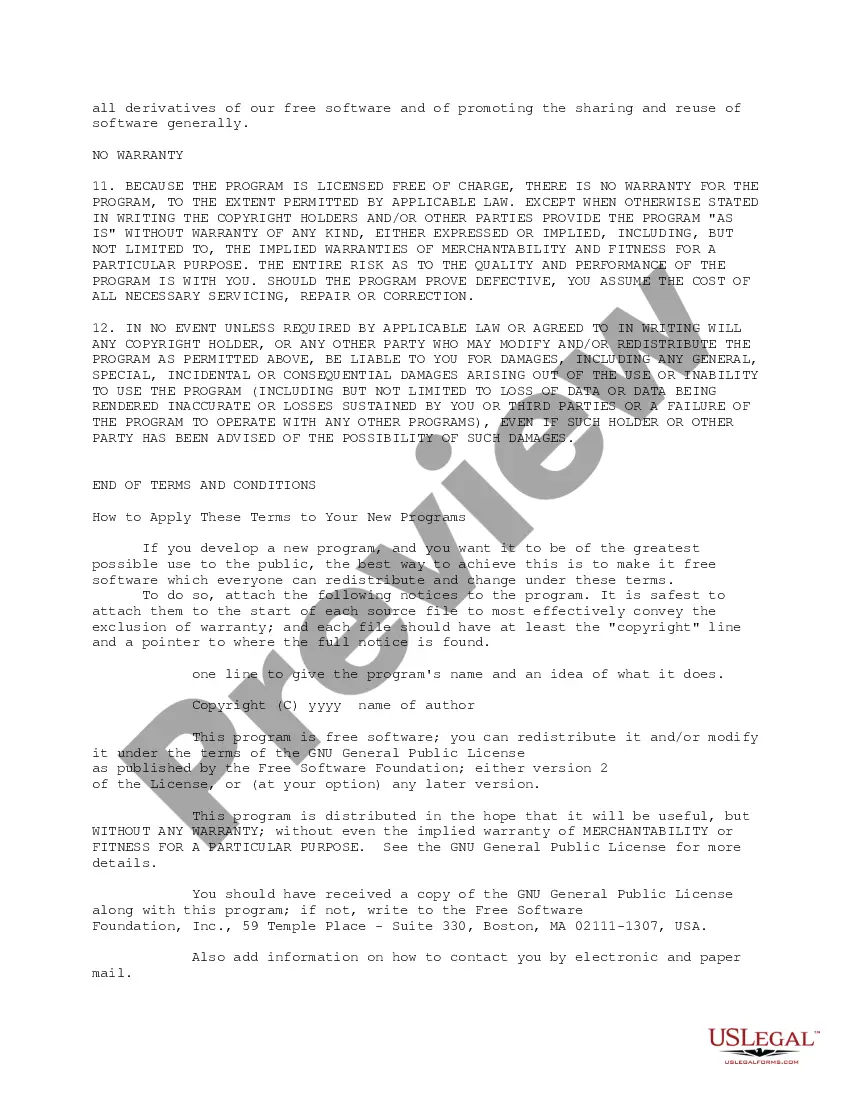
- Terms and Conditions: Outlines rules for copying, distributing, and modifying software.
- Modification Guidelines: Specifies how users can change the software and required notifications.
- Licensing of Derivative Works: States that derivative works must also be licensed under the GPL.
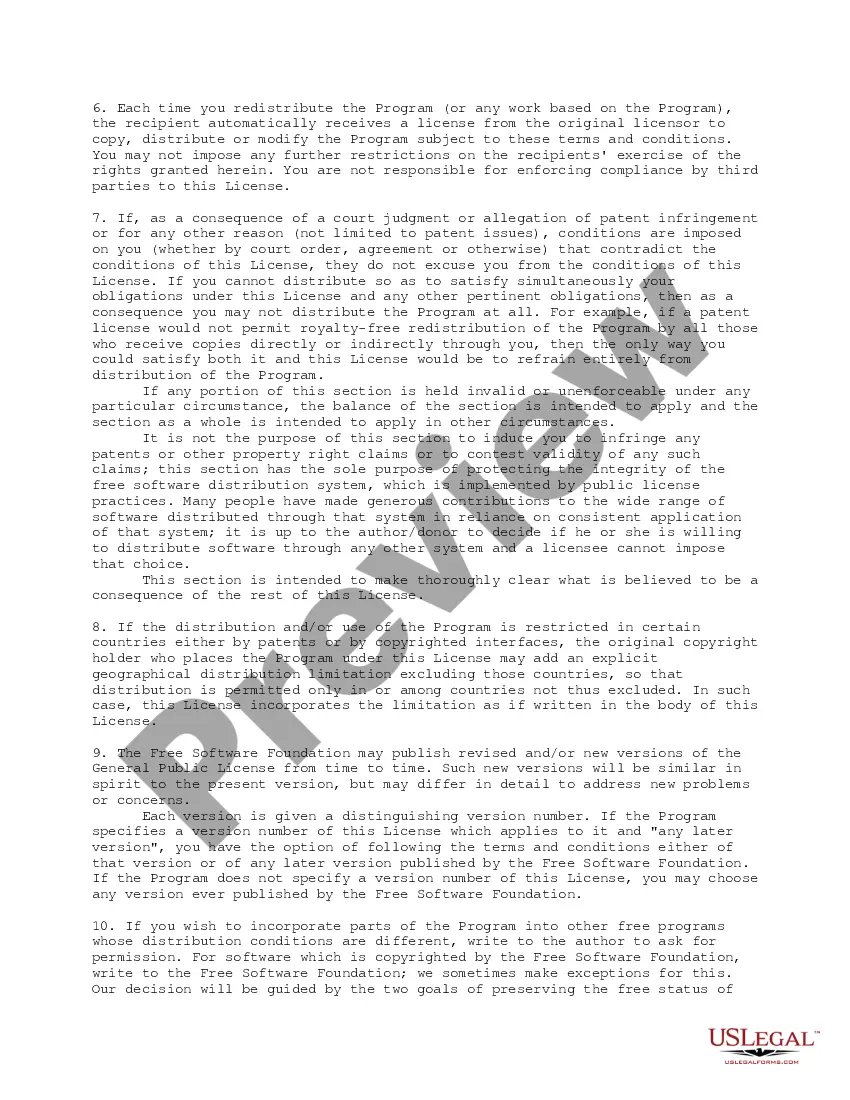
- Acceptance of License: Clarifies that modifying or redistributing the software means acceptance of the terms.
- No Warranty Clause: Indicates that the software is provided "as is" without any warranty.
Common use cases
The GNU General Public License is used when developers want to share their software while maintaining user rights to modify and distribute the software freely. It is particularly suitable for projects intended for collaborative improvement and extensive use by the public, including educational, governmental, and non-profit applications.
Who needs this form
- Software developers who want to release their work as free software.
- Individuals or organizations looking to build upon existing software while guaranteeing the same freedoms to their users.
- Educators and institutions that encourage open-source practices.
How to prepare this document
- Begin by stating the name and purpose of your software project at the top of the document.
- Include the copyright year and your name to establish ownership.
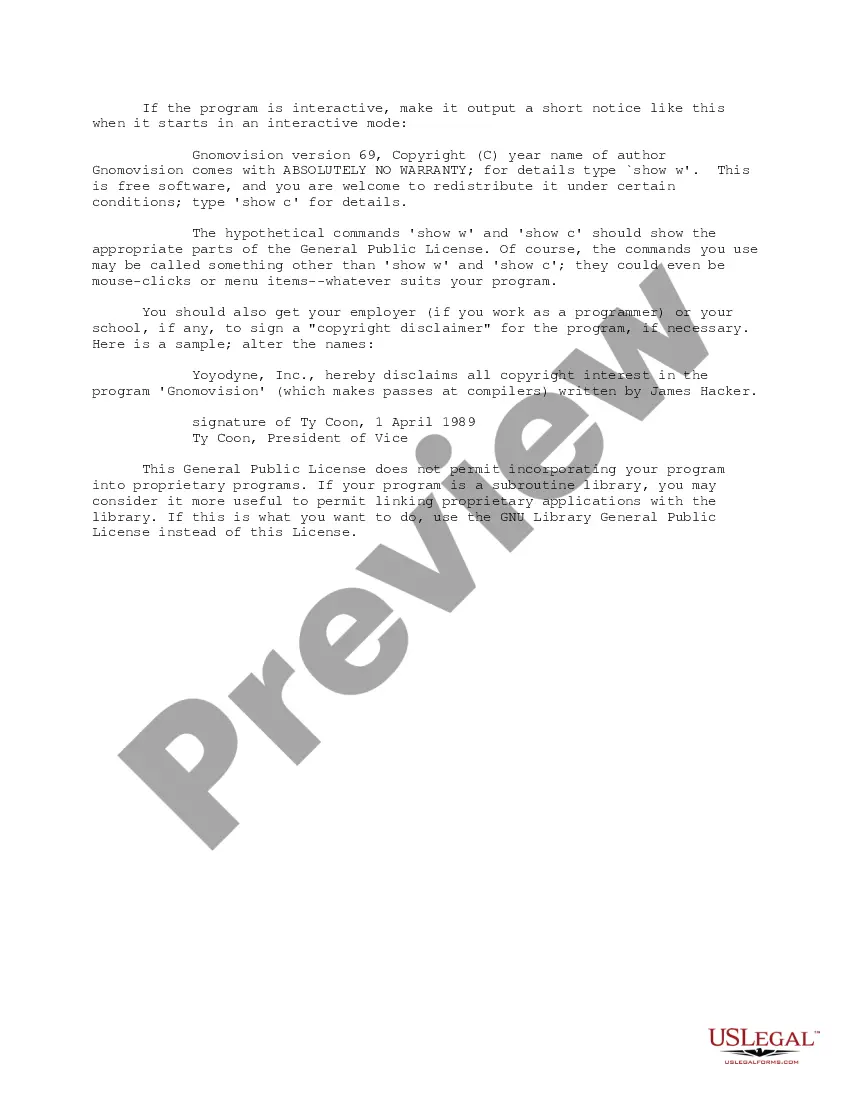
- Attach the GNU General Public License text to ensure users are aware of their rights.
- Indicate any modifications you have made by adding prominent notices about changes.
- Ensure that any distributed copies of the software include the same license.
Notarization requirements for this form
This form does not typically require notarization unless specified by local law.
Get your form ready online
Our built-in tools help you complete, sign, share, and store your documents in one place.
Make edits, fill in missing information, and update formatting in US Legal Forms—just like you would in MS Word.
Download a copy, print it, send it by email, or mail it via USPS—whatever works best for your next step.
Sign and collect signatures with our SignNow integration. Send to multiple recipients, set reminders, and more. Go Premium to unlock E-Sign.
If this form requires notarization, complete it online through a secure video call—no need to meet a notary in person or wait for an appointment.
We protect your documents and personal data by following strict security and privacy standards.

Make edits, fill in missing information, and update formatting in US Legal Forms—just like you would in MS Word.

Download a copy, print it, send it by email, or mail it via USPS—whatever works best for your next step.

Sign and collect signatures with our SignNow integration. Send to multiple recipients, set reminders, and more. Go Premium to unlock E-Sign.

If this form requires notarization, complete it online through a secure video call—no need to meet a notary in person or wait for an appointment.

We protect your documents and personal data by following strict security and privacy standards.
Typical mistakes to avoid
- Failing to include the full text of the GNU GPL when distributing software.
- Not prominently notifying users of any modifications made to the original software.
- Misunderstanding the implications of licensing derivative works, leading to non-compliance.
Benefits of completing this form online
- Easy access to a clear, legally recognized licensing framework.
- Ability to download and share the license quickly with collaborators and users.
- Ensures compliance with legal requirements without the need for legal expertise.
Legal use & context
- The GNU GPL is regarded as a legally binding contract that provides clear rights and responsibilities.
- You must comply with the license terms to avoid potential legal consequences.
- Using software under the GPL can enhance collaborative development while protecting user freedoms.
Key takeaways
- The GNU General Public License emphasizes the importance of freedom in software use and distribution.
- Understanding the terms is vital to ensure compliance when using or modifying software.
- Utilizing this form supports a community-driven approach to software development and encourages collaboration.
Looking for another form?


Form popularity
FAQ
There are two main terms to the license. Both apply to giving the program away or selling it. A copy of the source code or written instructions about how to get a copy must be included with the software. If the software is able to be downloaded from the internet, the source code must also be available for downloading.
Get a copyright disclaimer from your employer or school. Give each file the proper copyright notices. Add a COPYING file with a copy of the GNU GPL or GNU AGPL. Also add a COPYING. Put a license notice in each file. (Optionally) make the program display a startup notice.
Software under the GPL may be run for all purposes, including commercial purposes and even as a tool for creating proprietary software, such as when using GPL-licensed compilers. Users or companies who distribute GPL-licensed works (e.g. software), may charge a fee for copies or give them free of charge.
You are free to run a GPL-licensed program without having to accept the license. If the GPL'ed program is client-side JavaScript, then you are distributing the GPL'ed code and possibly derivative code to your visitors. You are only allowed to do this in accordance with the GPL.
Get a copyright disclaimer from your employer or school. Give each file the proper copyright notices. Add a COPYING file with a copy of the GNU GPL or GNU AGPL. Also add a COPYING. Put a license notice in each file. (Optionally) make the program display a startup notice.
The GNU General Public License, often shortened to GNU GPL (or simply GPL), lists terms and conditions for copying, modifying and distributing free software. The GPL was created by Richard Stallman in order to protect GNU software from being made proprietary. It is a specific implementation of his "copyleft" concept.
No, you cannot. By including GPL-code, you are including a dependency of GPL-protected code, and therefore your code is only derived work from it. The terms of GPL requires that derived work is also published under GPL.
The GNU General Public License is a free, copyleft license for software and other kinds of works. The licenses for most software and other practical works are designed to take away your freedom to share and change the works.
Software under the GPL may be run for all purposes, including commercial purposes and even as a tool for creating proprietary software, such as when using GPL-licensed compilers. Users or companies who distribute GPL-licensed works (e.g. software), may charge a fee for copies or give them free of charge.