GNU Lesser General Public License
About this form
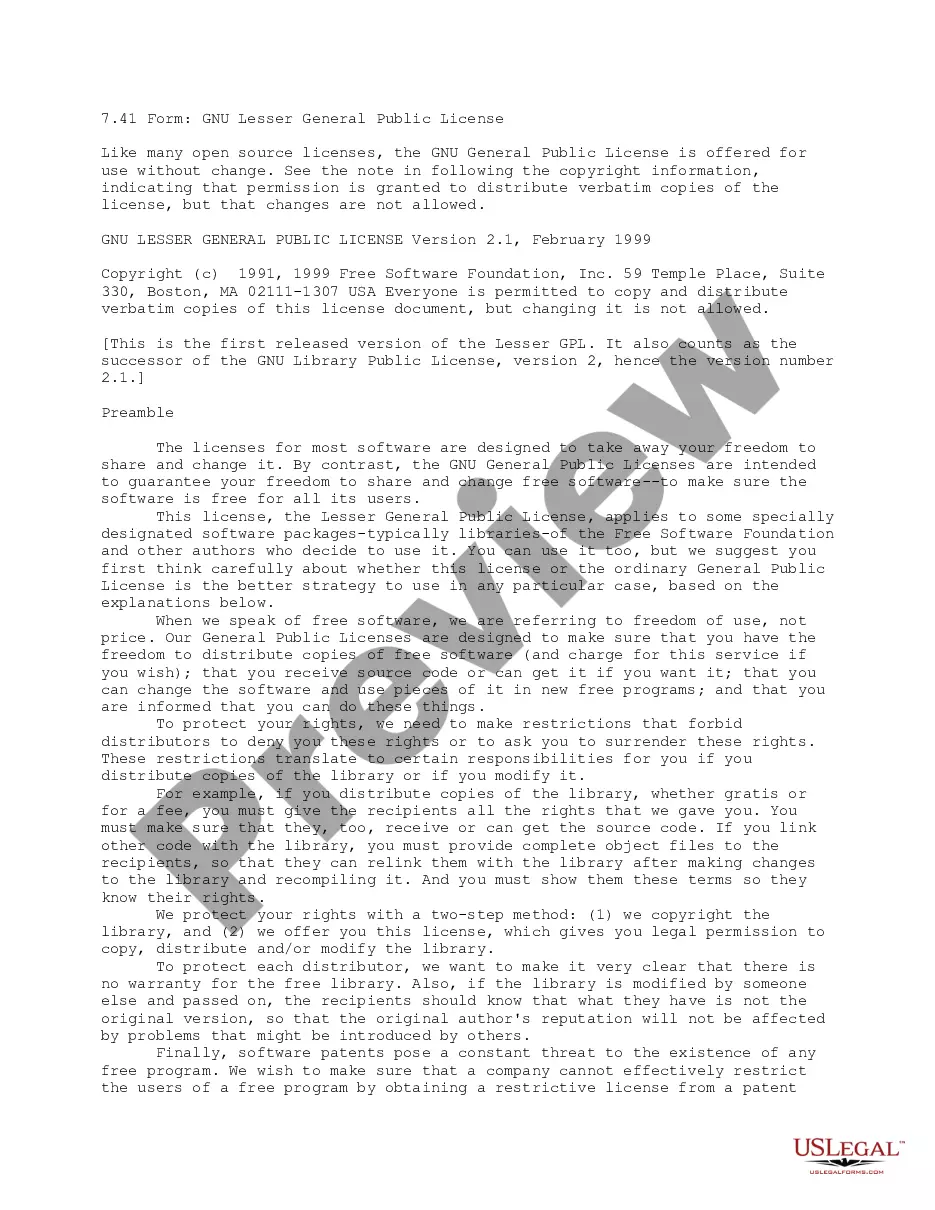
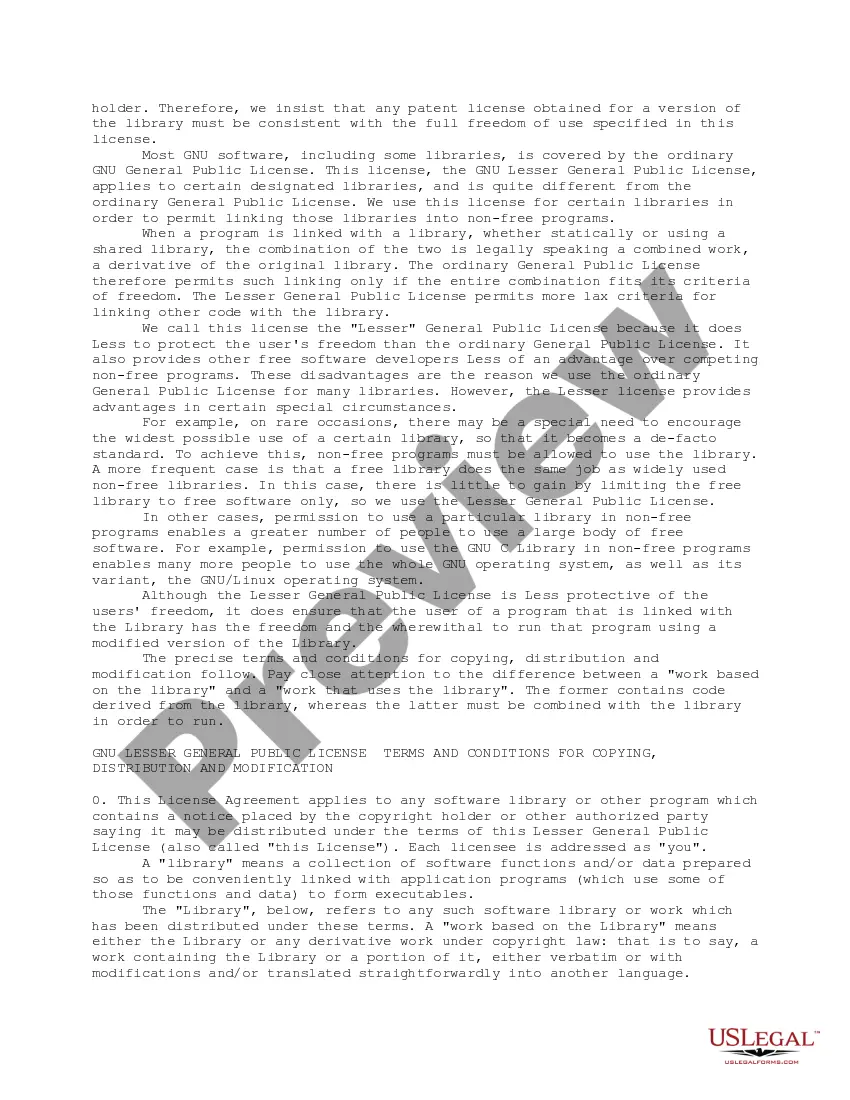
The GNU Lesser General Public License (LGPL) is a legal document that outlines the terms and conditions for utilizing free software libraries. This license allows software developers to modify and redistribute library code under specified conditions, promoting software freedom without overly restricting usage. Unlike the standard GNU General Public License, the LGPL enables these libraries to be linked with proprietary software, making it an attractive option for developers seeking flexibility in software integration.
Key components of this form
- The preamble that explains the purpose and scope of the LGPL.
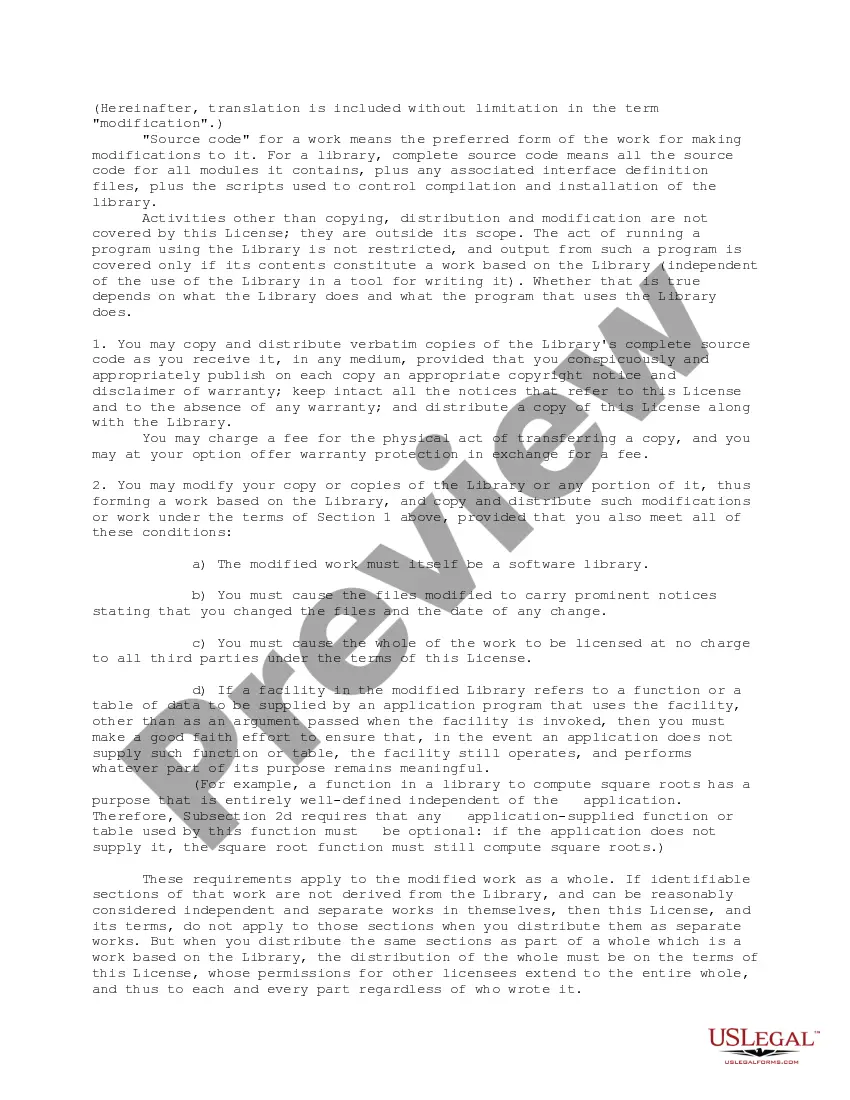
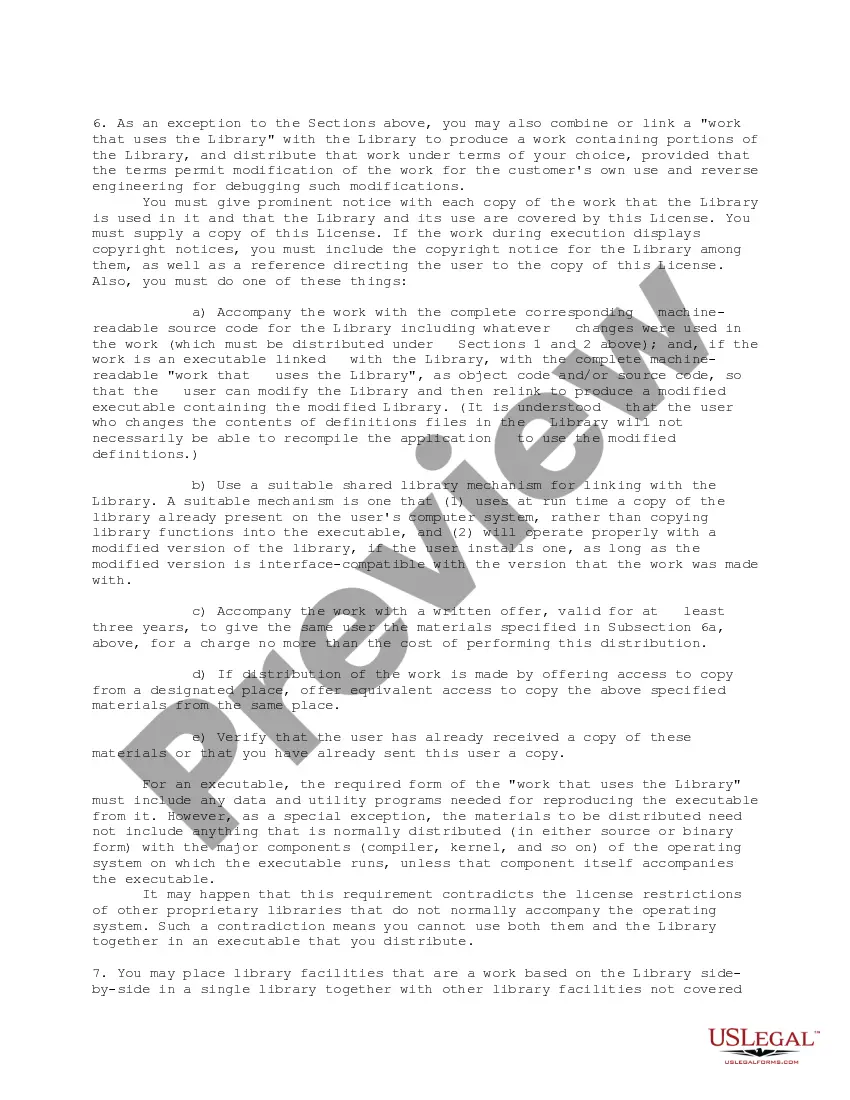
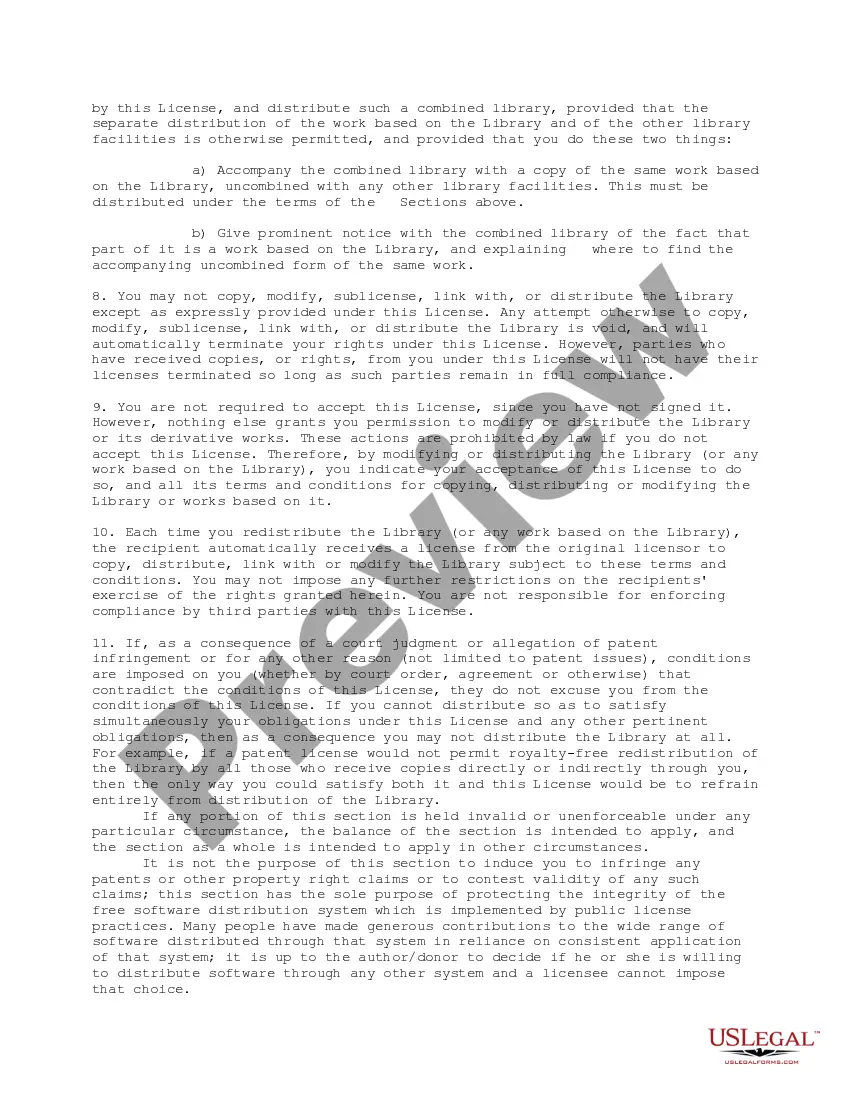
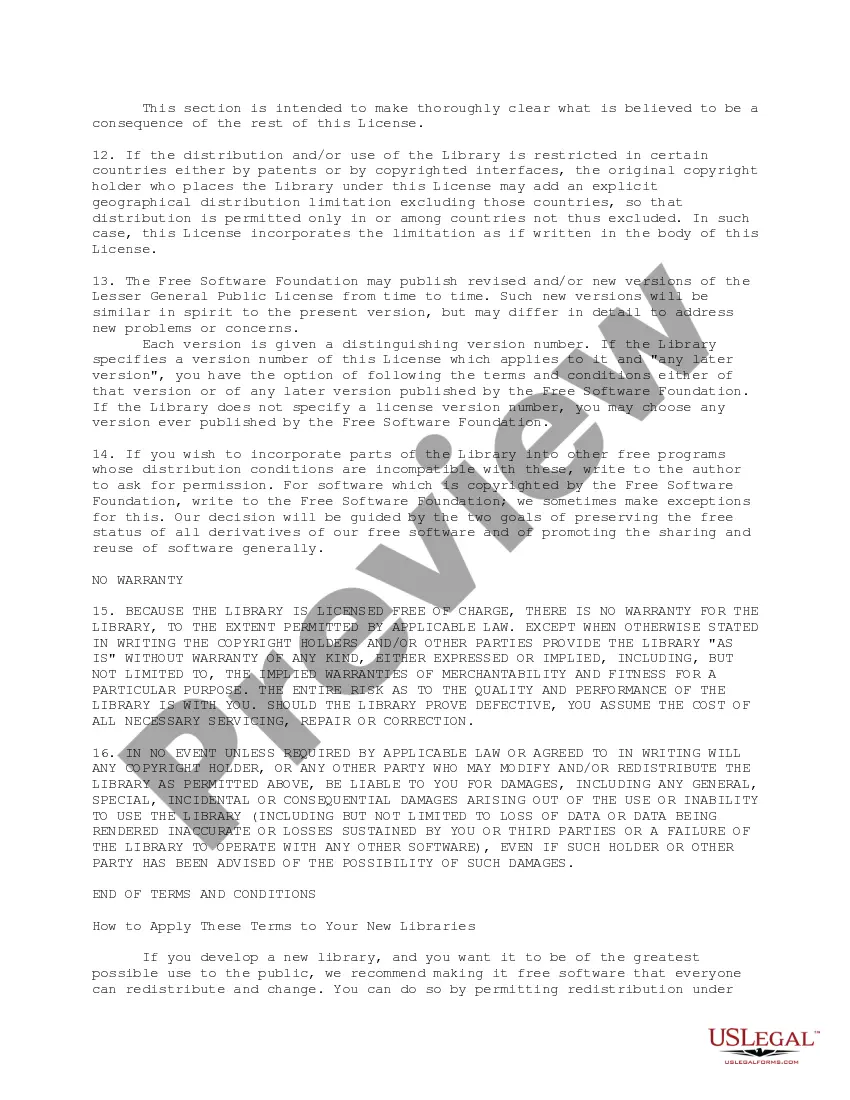
- Conditions for copying, distributing, and modifying the library.
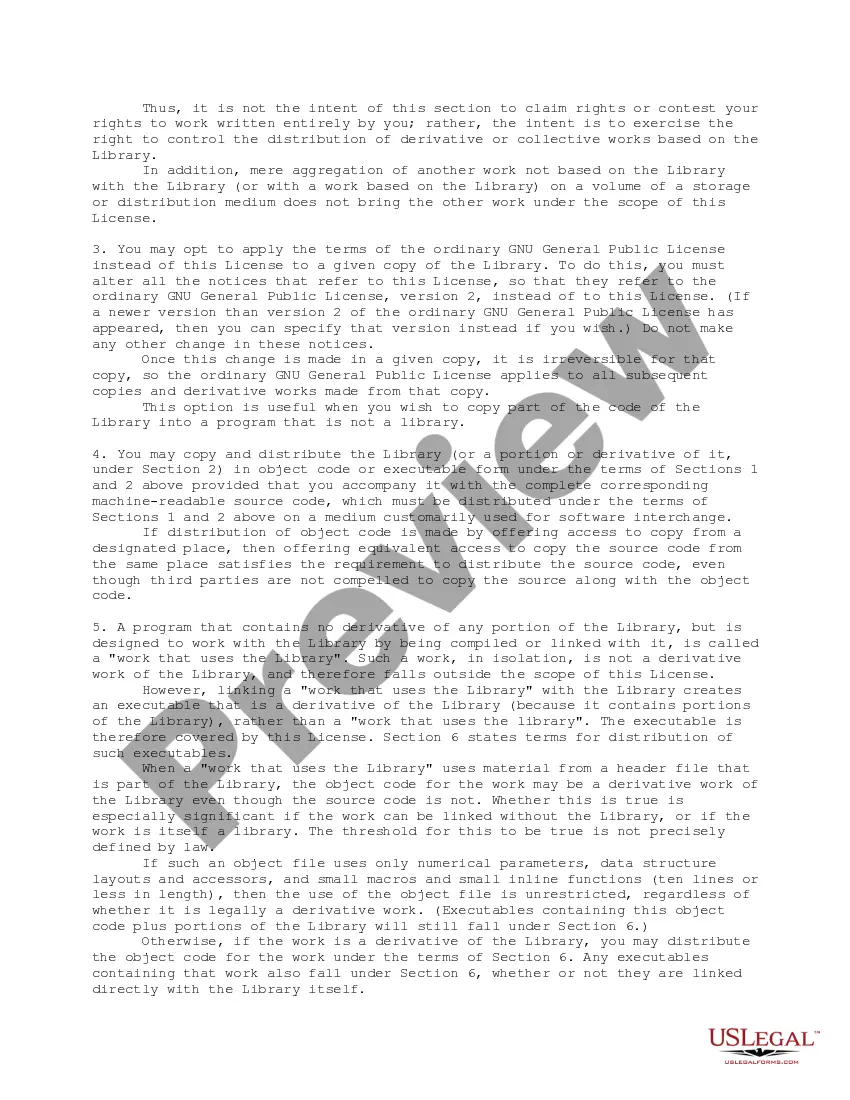
- Requirements for providing source code alongside executable forms.
- Restrictions on patent claims that could affect software users.
- Clarification on what constitutes a derivative work.
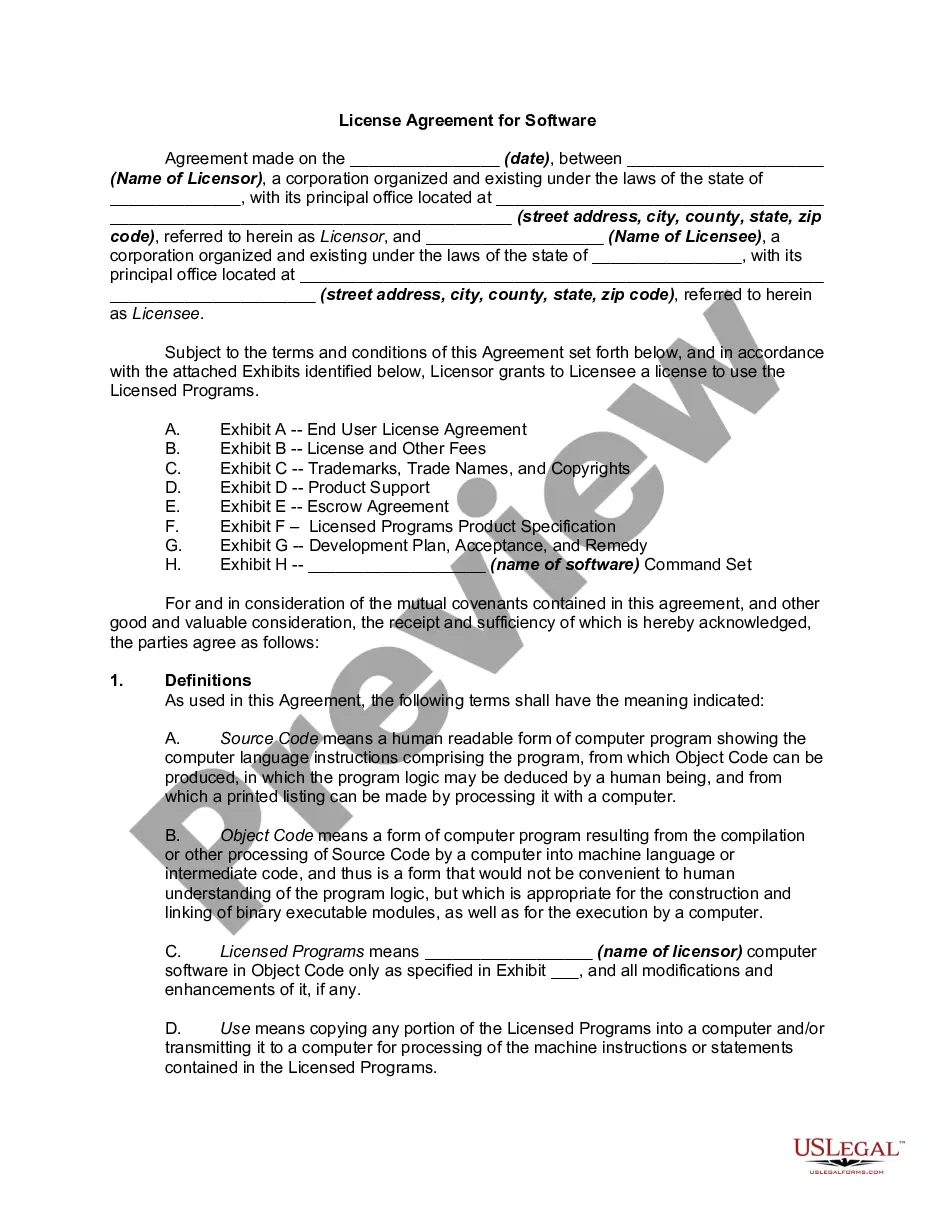
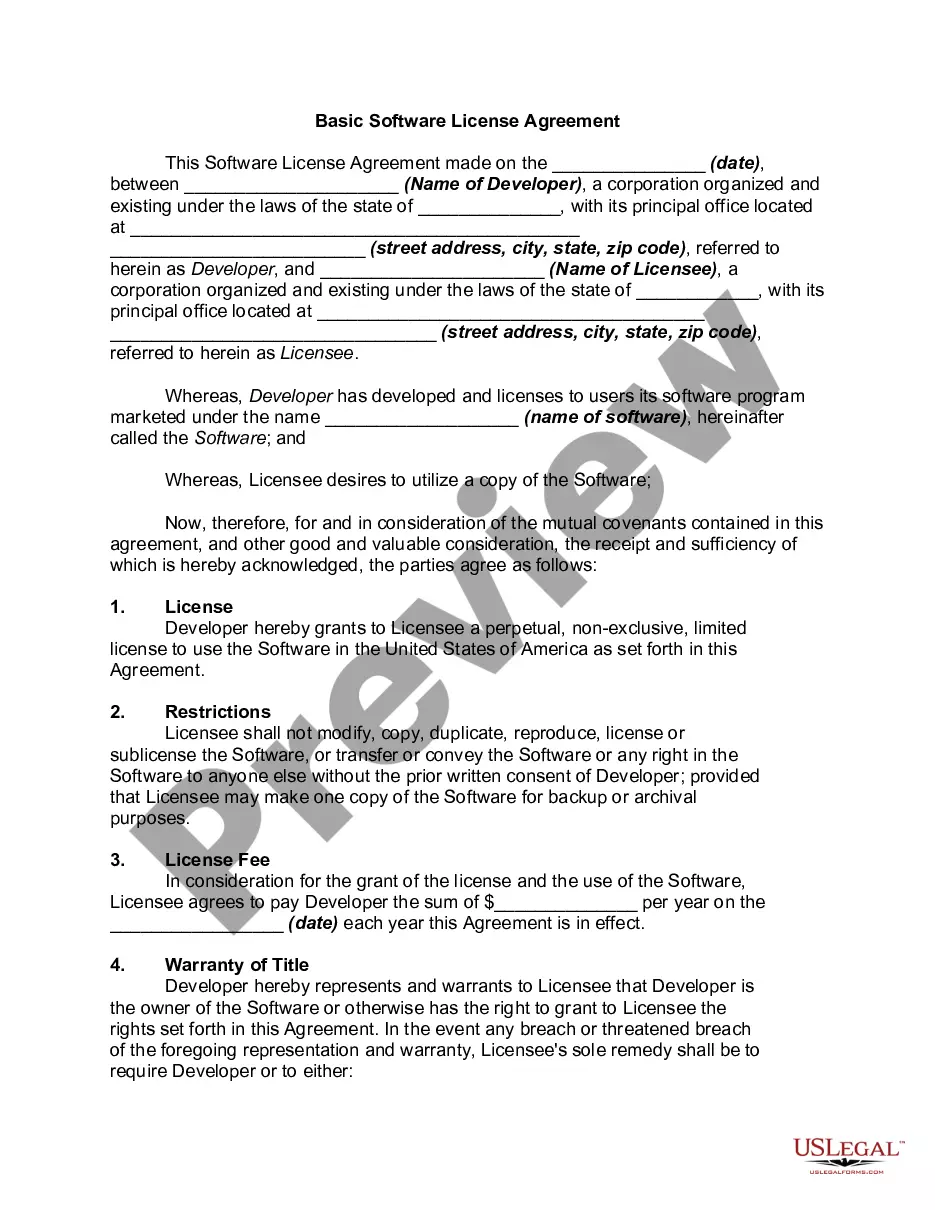
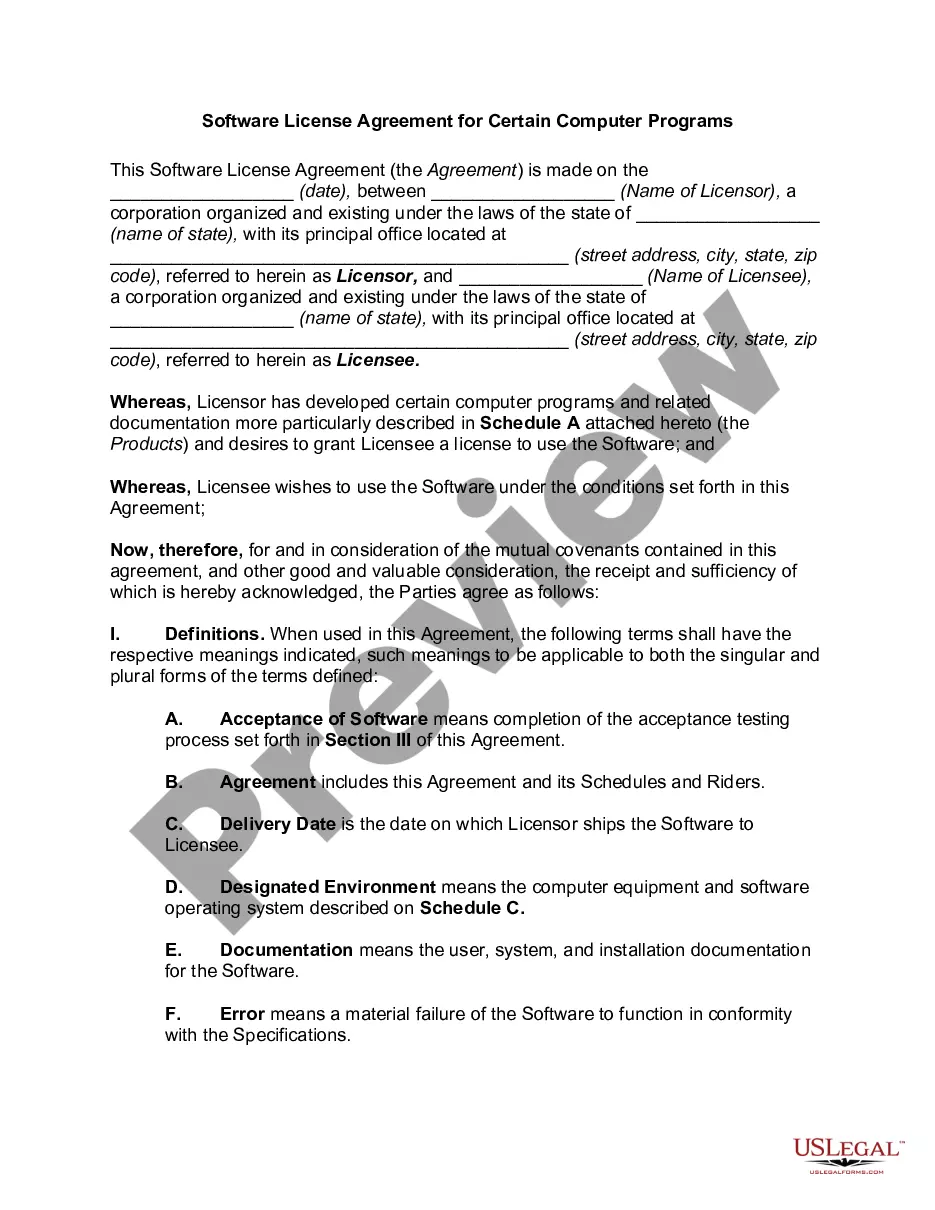
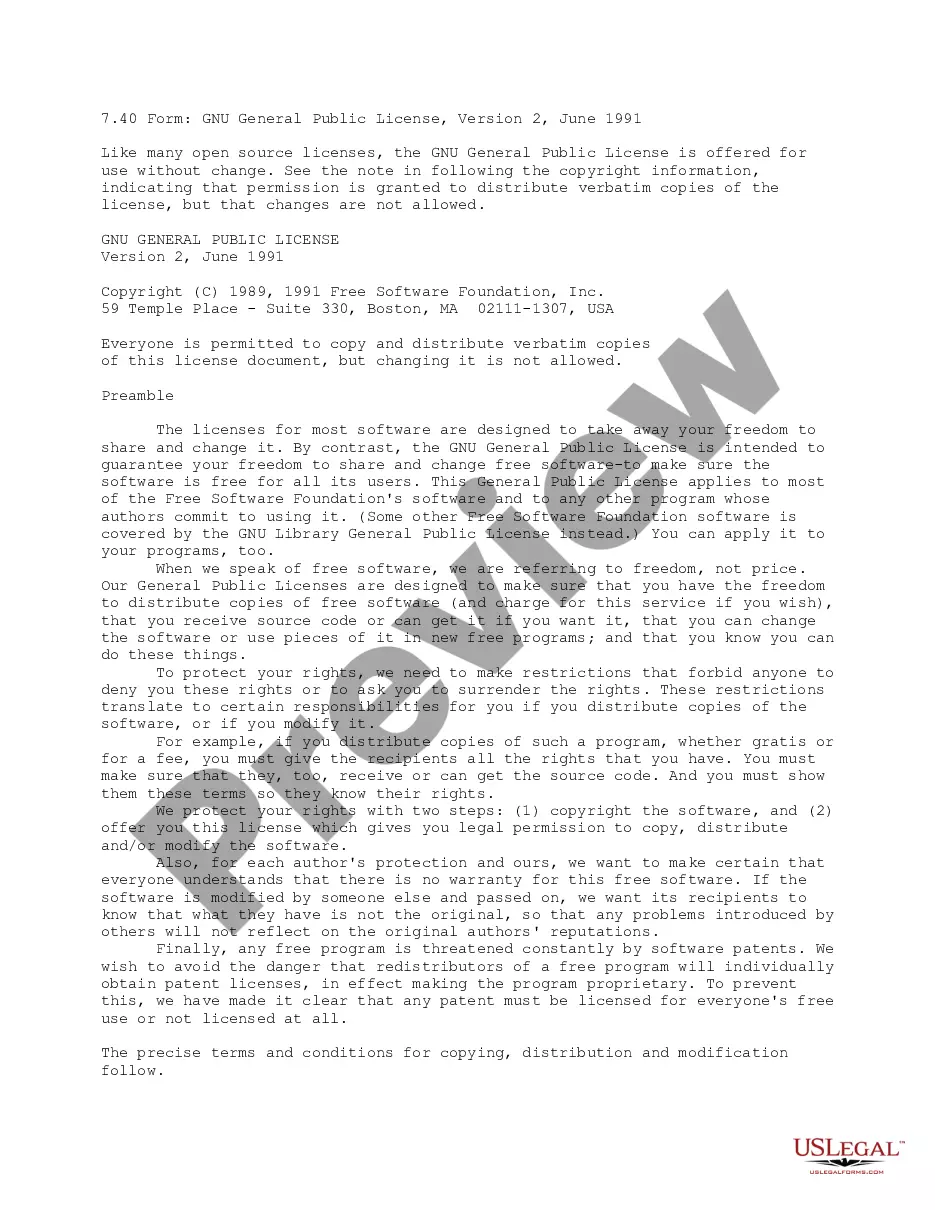
Situations where this form applies
This form is essential for software developers working with library code who want to ensure that their code remains free while allowing it to be used in proprietary software applications. Use this license when you wish to share your libraries with the open-source community while also permitting commercial entities to utilize them in their applications.
Who this form is for
- Software developers creating libraries intended for open-source distribution.
- Programmers looking to integrate existing libraries into their proprietary software.
- Organizations that want to contribute to the open-source community while maintaining some commercial viability.
- Authors of software who want to retain copyright while allowing flexibility in usage.
Instructions for completing this form
- Read through the full text of the LGPL to understand your rights and obligations.
- Identify the software library that you wish to license under the LGPL.
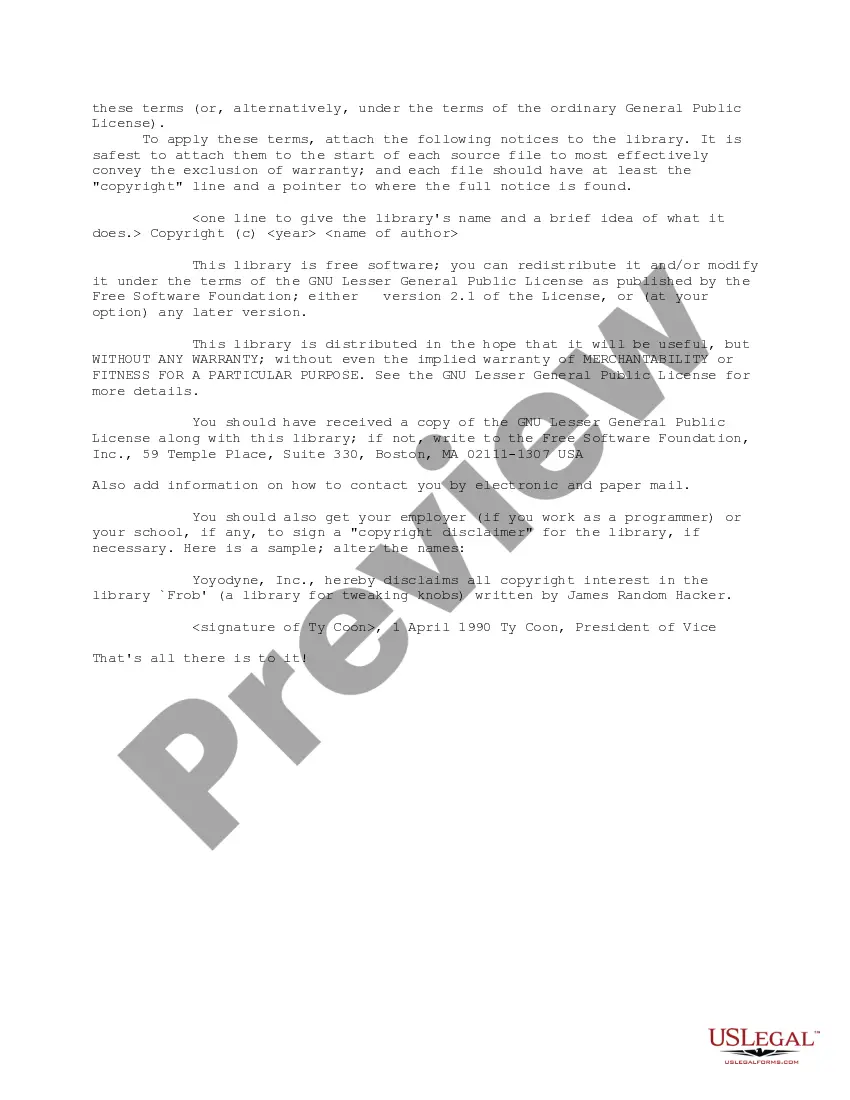
- Attach the required copyright notices and disclaimers to your source code files.
- Distribute the LGPL alongside your library code to permit redistribution.
- Ensure to provide access to the complete source code when distributing the library in object form.
Is notarization required?
This form does not typically require notarization to be legally valid. However, some jurisdictions or document types may still require it. US Legal Forms provides secure online notarization powered by Notarize, available 24/7 for added convenience.
Get your form ready online
Our built-in tools help you complete, sign, share, and store your documents in one place.
Make edits, fill in missing information, and update formatting in US Legal Forms—just like you would in MS Word.
Download a copy, print it, send it by email, or mail it via USPS—whatever works best for your next step.
Sign and collect signatures with our SignNow integration. Send to multiple recipients, set reminders, and more. Go Premium to unlock E-Sign.
If this form requires notarization, complete it online through a secure video call—no need to meet a notary in person or wait for an appointment.
We protect your documents and personal data by following strict security and privacy standards.

Make edits, fill in missing information, and update formatting in US Legal Forms—just like you would in MS Word.

Download a copy, print it, send it by email, or mail it via USPS—whatever works best for your next step.

Sign and collect signatures with our SignNow integration. Send to multiple recipients, set reminders, and more. Go Premium to unlock E-Sign.

If this form requires notarization, complete it online through a secure video call—no need to meet a notary in person or wait for an appointment.

We protect your documents and personal data by following strict security and privacy standards.
Avoid these common issues
- Failing to provide the accompanying source code when distributing object code.
- Not including the proper copyright notices or licensing disclaimers.
- Modifying the LGPL itself without authorization.
- Confusing a work that uses the library with a derivative work of the library.
Benefits of using this form online
- Easy access to the LGPL document for software developers and users.
- Ability to quickly revise and update licensing information as needed.
- Secure storage and distribution of licensing documents, ensuring compliance and transparency.
Legal use & context
- The LGPL legally protects both developers and users of software by maintaining software freedom.
- It allows integration with proprietary software while ensuring the original library remains free.
- Developers must comply with the terms of the LGPL to avoid legal repercussions.
Looking for another form?
Form popularity
FAQ
GPL is the acronym for GNU's General Public License, and it's one of the most popular open source licenses. Richard Stallman created the GPL to protect the GNU software from being made proprietary.
GPL stands for General Public License. LGPL is like an amended version of GPL. It stands for Lesser General Public License. It limits your requirement to provide some of your code, but you still are required to divulge the modifications that you implement.
3 Answers. In short: yes you can. But one important thing to take care of is that the GNU LGPL covered library is dynamically linked, not statically mixed with the main application. It should also be possible to exchange that dynamically linked library for an independently compiled build.
The GNU Lesser General Public License (LGPL) is a free-software license published by the Free Software Foundation (FSF).The LGPL is primarily used for software libraries, although it is also used by some stand-alone applications.
You mention that it is licensed under the LGPL, with reference to the full license. That you distribute the code, and any changes to it, under the terms of the LGPL. You must release the source code in it's preferred form (not minified or obfuscated), including any changes that you make to it.
In short: yes you can. But one important thing to take care of is that the GNU LGPL covered library is dynamically linked, not statically mixed with the main application. It should also be possible to exchange that dynamically linked library for an independently compiled build.
License is LGPL. It is a bad idea, for proprietary vendors will not be able to include this software into their systems. It must be non-copyleft.It allows proprietary vendors to integrate open-source code directly, without thinking too much.