Oklahoma Organizing your Personal Assets Package
What this form package covers
The Oklahoma Organizing Your Personal Assets Package is designed to help you arrange and manage your personal and financial affairs effectively. This package includes state-specific forms tailored for organizing essential documents, analyzing budgets, and planning for future financial needs. Unlike other packages, this one focuses specifically on personal asset organization, ensuring you have everything needed to minimize stress during emergencies and maintain an accurate record for your financial goals.
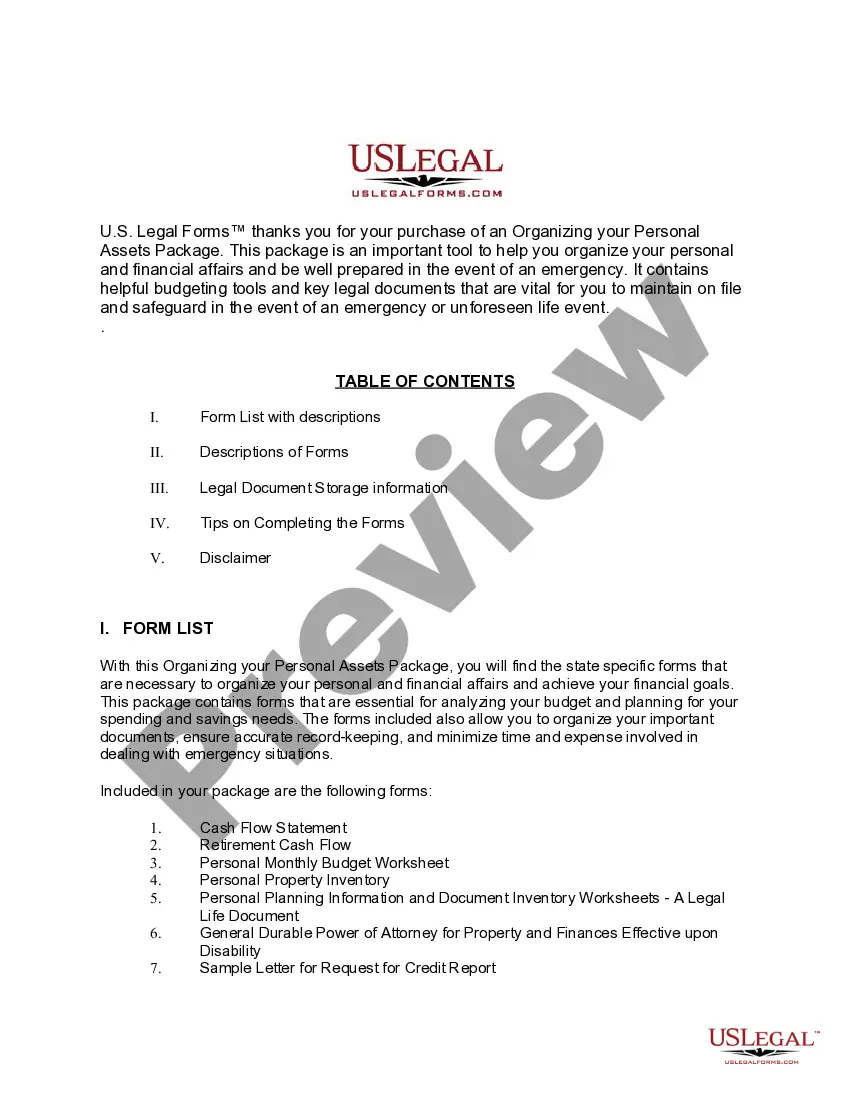
Documents contained in this package
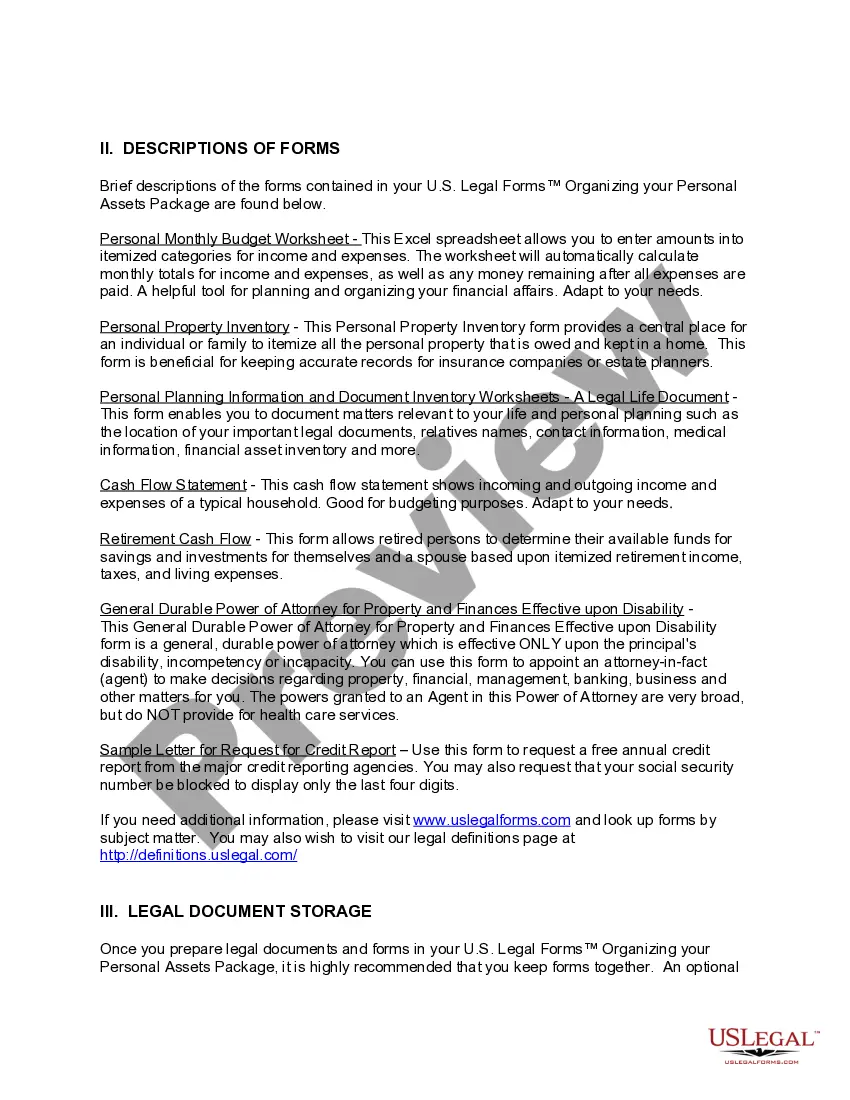
- General Durable Power of Attorney for Property and Finances or Financial Effective upon Disability
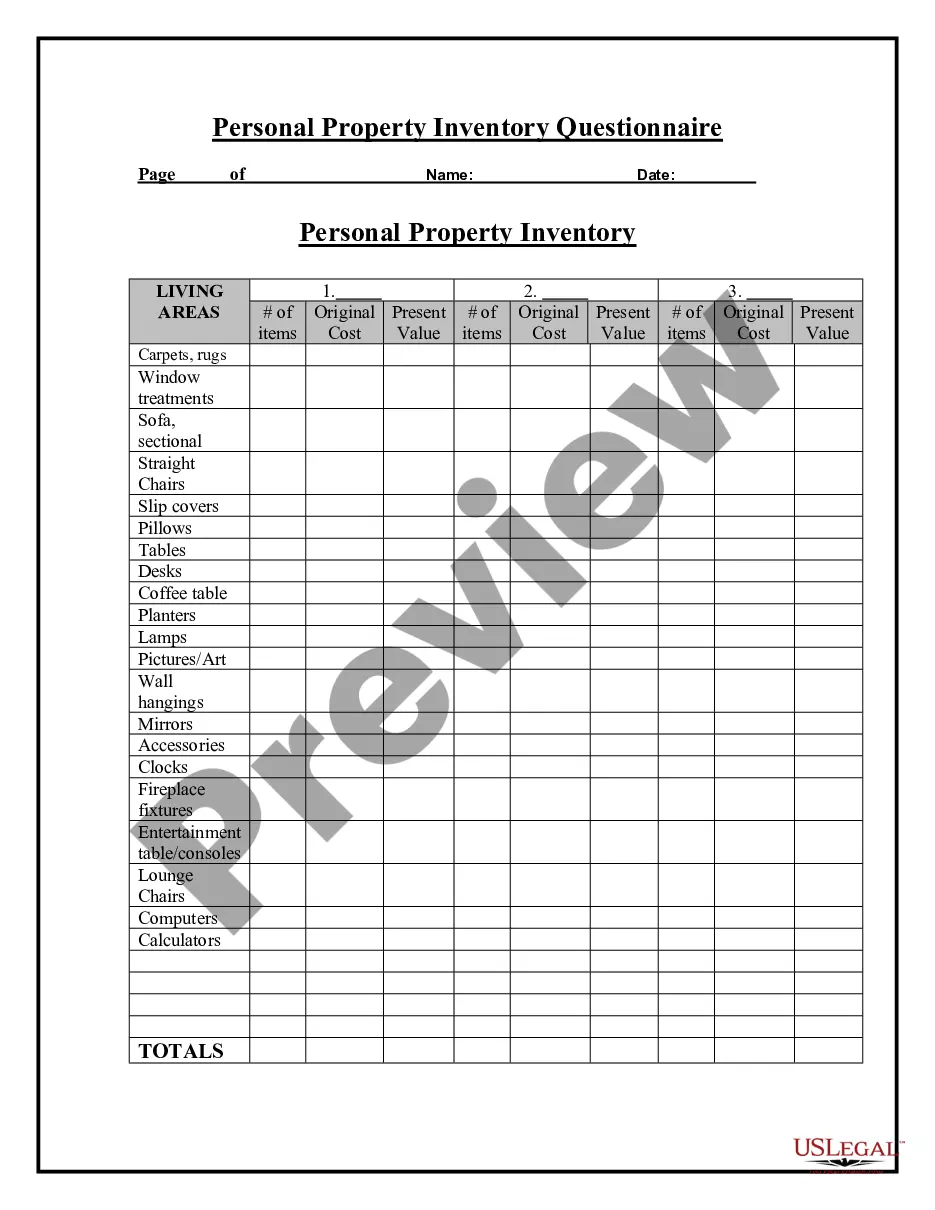
- Personal Property Inventory
- Sample Letter for Request for Free Credit Report Allowed by Federal Law
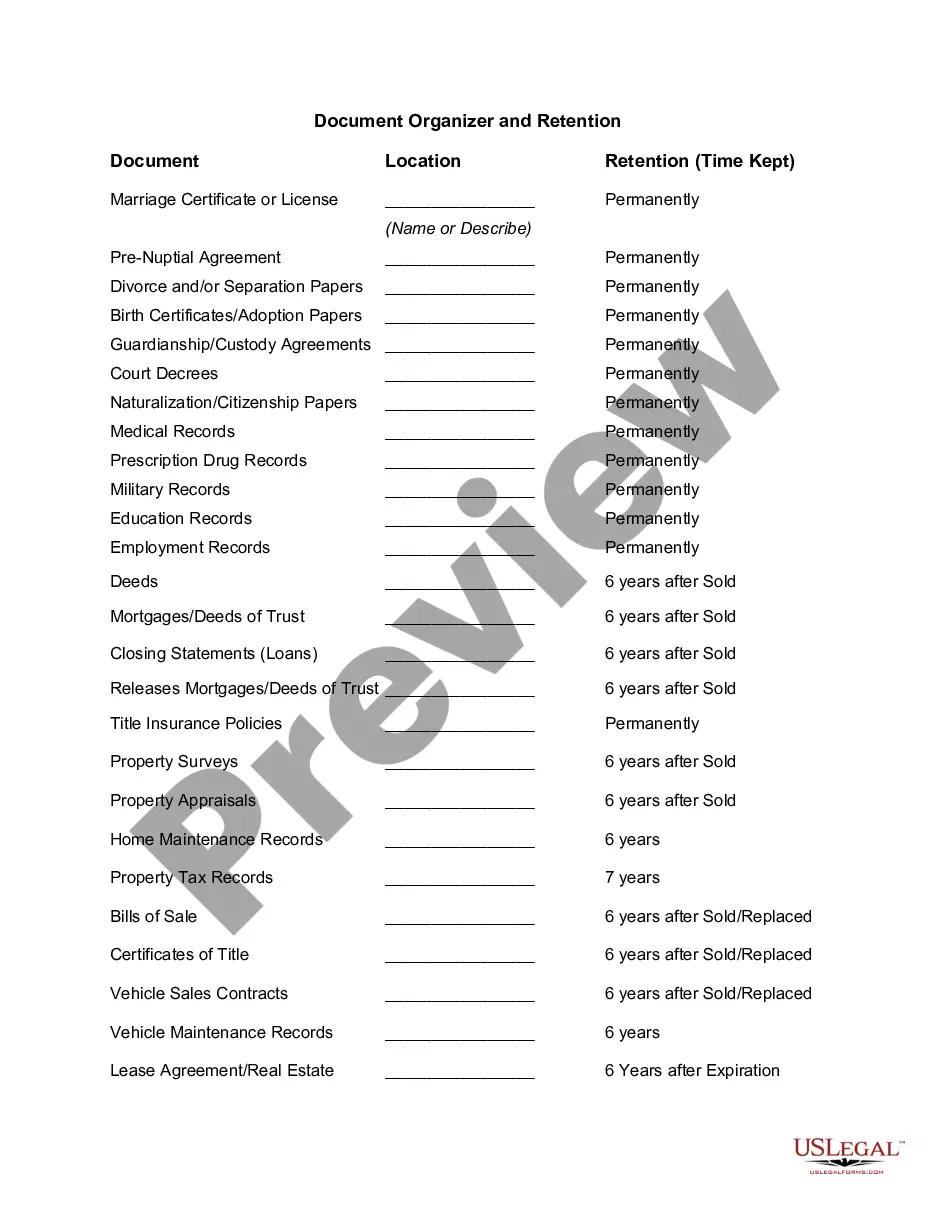
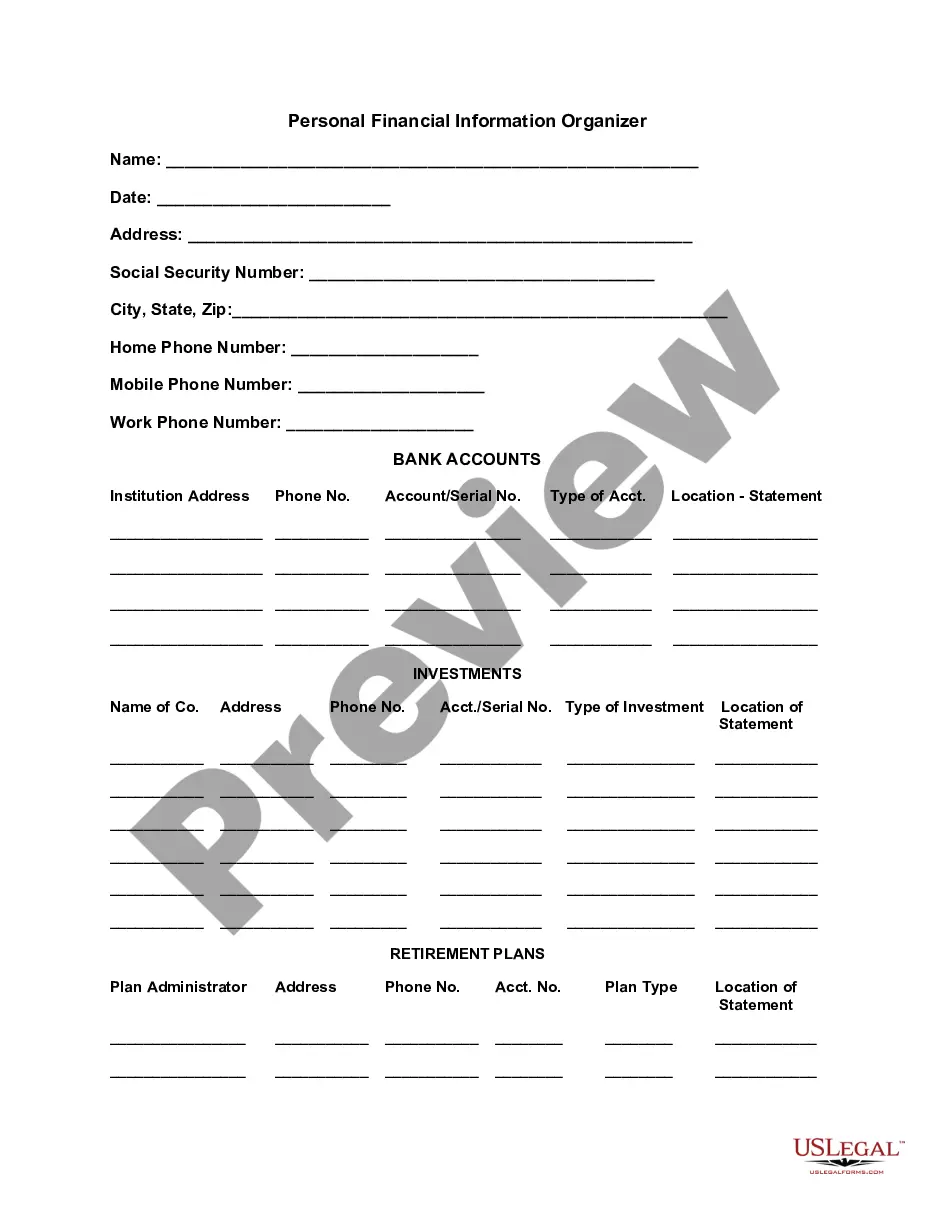
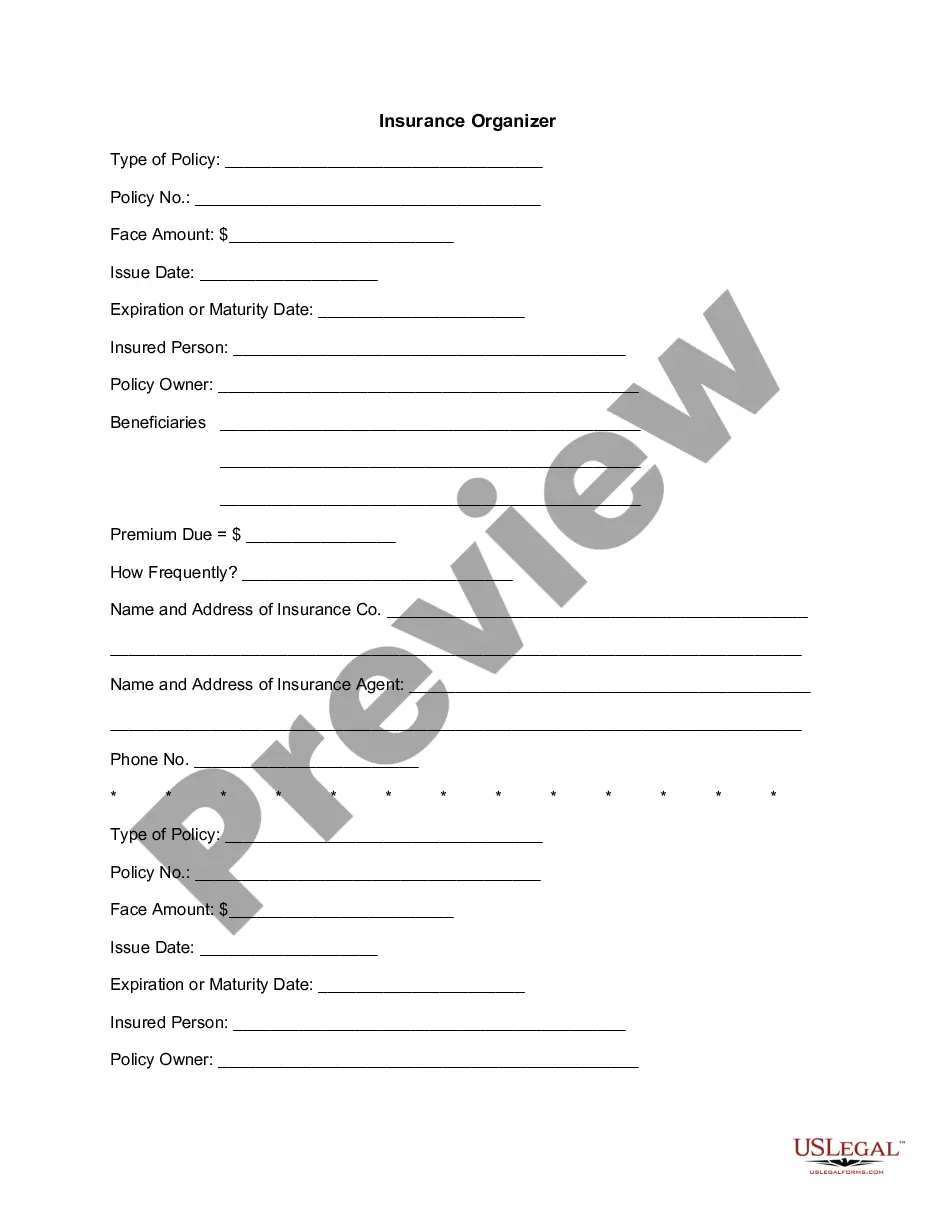
- Personal Planning Information and Document Inventory Worksheets - A Legal Life Document
- Cash Flow Statement
- Retirement Cash Flow
- Personal Monthly Budget Worksheet
Situations where these forms applies
This form package is useful in several real-world scenarios, including:
- If you want to create a detailed budget and track your expenses.
- When preparing for retirement to ensure that you manage your retirement income effectively.
- If you need to document personal property for insurance or estate planning purposes.
- During times of major life events, such as marriage, divorce, or the birth of a child.
- When you want to ensure that your financial information is organized and accessible in case of emergencies.
Who needs this form package
- Individuals looking to organize their personal finances.
- Families wanting to keep track of valuable personal assets.
- People approaching retirement seeking to plan their financial future.
- Anyone wanting to set up a durable power of attorney for financial matters.
Instructions for completing these forms
- Review all included forms to understand their purpose and importance.
- Gather necessary information, including income details and asset lists.
- Complete each form accurately, entering required data in the designated areas.
- Ensure your forms are signed where necessary, particularly the power of attorney.
- Store completed forms securely, such as in a safe deposit box or home safe.
Do forms in this package need to be notarized?
Some included forms must be notarized to ensure validity. US Legal Forms provides secure online notarization powered by Notarize, allowing you to complete the process through a verified video call anytime.
Get your form ready online
Our built-in tools help you complete, sign, share, and store your documents in one place.
Make edits, fill in missing information, and update formatting in US Legal Forms—just like you would in MS Word.
Download a copy, print it, send it by email, or mail it via USPS—whatever works best for your next step.
Sign and collect signatures with our SignNow integration. Send to multiple recipients, set reminders, and more. Go Premium to unlock E-Sign.
If this form requires notarization, complete it online through a secure video call—no need to meet a notary in person or wait for an appointment.
We protect your documents and personal data by following strict security and privacy standards.

Make edits, fill in missing information, and update formatting in US Legal Forms—just like you would in MS Word.

Download a copy, print it, send it by email, or mail it via USPS—whatever works best for your next step.

Sign and collect signatures with our SignNow integration. Send to multiple recipients, set reminders, and more. Go Premium to unlock E-Sign.

If this form requires notarization, complete it online through a secure video call—no need to meet a notary in person or wait for an appointment.

We protect your documents and personal data by following strict security and privacy standards.
Common mistakes to avoid
- Failing to include all relevant assets in the personal property inventory.
- Not updating your power of attorney as life circumstances change.
- Overlooking to sign and date forms when required.
- Neglecting to create copies of completed forms for your records.
Why use this package online
- Immediate access to needed forms, which saves time compared to traditional legal options.
- Editability allows you to customize forms quickly to fit your situation.
- Cost-effective solution with substantial savings compared to purchasing forms separately.
- Reliability of forms drafted by licensed attorneys, ensuring compliance with Oklahoma law.
Main things to remember
- The Oklahoma Organizing Your Personal Assets Package is essential for effective financial management.
- This package helps individuals prepare for emergencies and plan for retirement.
- It is designed for Oklahoma residents to meet state-specific legal requirements.
- The forms are easy to complete and can be edited as needed, providing convenience.
Looking for another form?

Form popularity
FAQ
Waiving Spousal Support If it is agreed that neither party is entitled to spousal support than both parties can agree to waive the support or not claim it at all.
In most jurisdictions, having a prenup in place can help the breadwinner spouse avoid having to pay alimony to the other in the event of a divorce. In order to ensure this occurs, it's important that your prenup clearly states that there will be no award of spousal support to your ex in the event you divorce.
The answer is yes. You can waive alimony in a prenuptial agreement; however, it must be done with the significant caveats and disclosures and there is never a 100% guarantee.However, if the waiver of alimony would leave the spouse needing government assistance, the court can and will set aside the waiver of alimony.
An alimony waiver means that you and/or your spouse agree that no award of support, maintenance or alimony will be made by the Court at the time of the divorce. If you waive alimony at the time of your divorce, you are also waiving any claim for past or future alimony.
If you have been ordered to pay spousal maintenance to your ex-spouse and you have lost your job or have become unemployed, you cannot simply stop making your maintenance payments. Instead, you must petition the court for a modification of your spousal maintenance order under A.R.S. 25-327.
2. Prenups make you think less of your spouse. And at their root, prenups show a lack of commitment to the marriage and a lack of faith in the partnership.Ironically, the marriage becomes more concerned with money after a prenup than it would have been without the prenup.
The three most common grounds for nullifying a prenup are unconscionability, failure to disclose, or duress and coercion.Duress and coercion can also invalidate a prenup. If the prenup was signed the day before your wedding, it may appear that the parties didn't have much time to fully review the agreement.
Under California law, spousal support can be waived by a person prior to the marriage in a prenuptial agreement.The future spouse must have independent legal counsel at the time of signing the prenuptial agreement and the terms must be conscionable at the time of signing.
A prenup can protect the rights and obligations of both parties with respect to property. If one party owned a house before marriage, the prenup could include a provision stating that this spouse would be responsible for all costs associated with the maintenance of that property.