Oklahoma Protecting Deceased Persons from Identity Theft
What this form package covers
The Oklahoma Protecting Deceased Persons from Identity Theft form package is designed to assist families and executors in safeguarding the personal information of deceased individuals. This package provides essential forms to notify creditors and agencies about a person's death and to combat identity theft. Unlike other form packages, this one specifically addresses the unique challenges faced when handling the affairs of a deceased person and the need to protect their identity from potential fraud.
Forms provided in this package
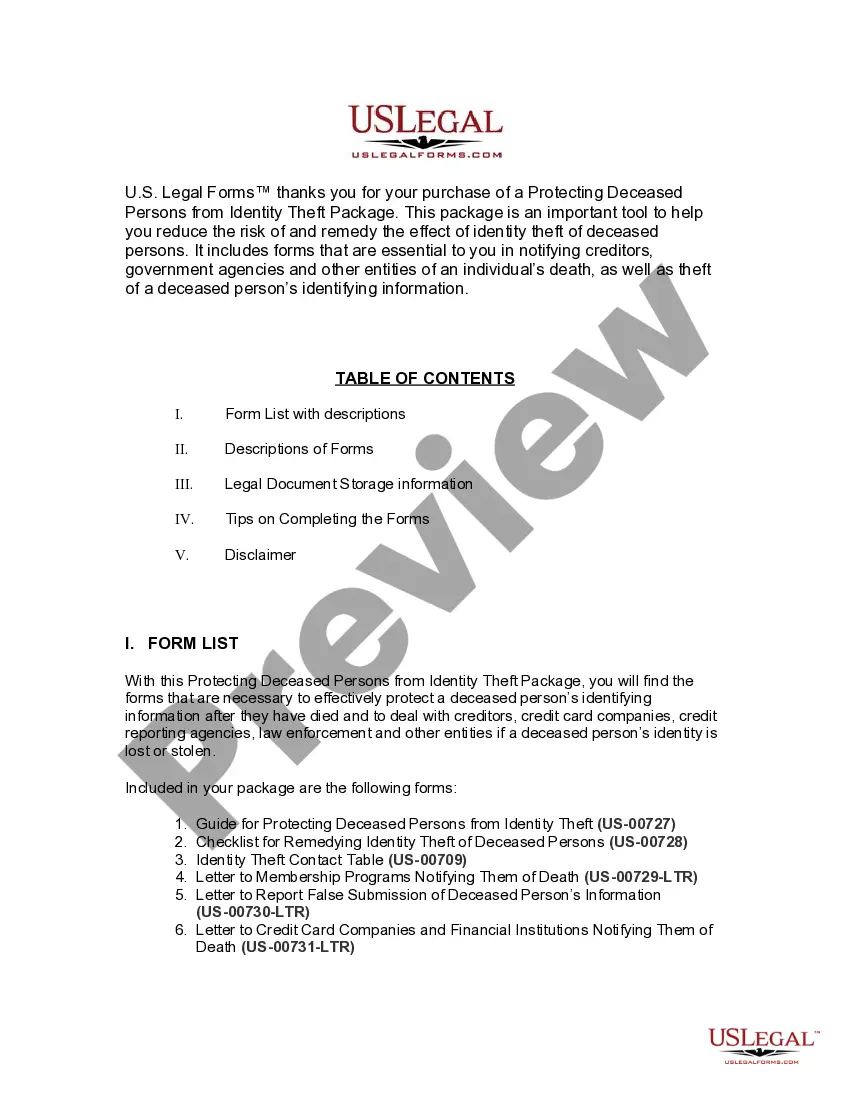
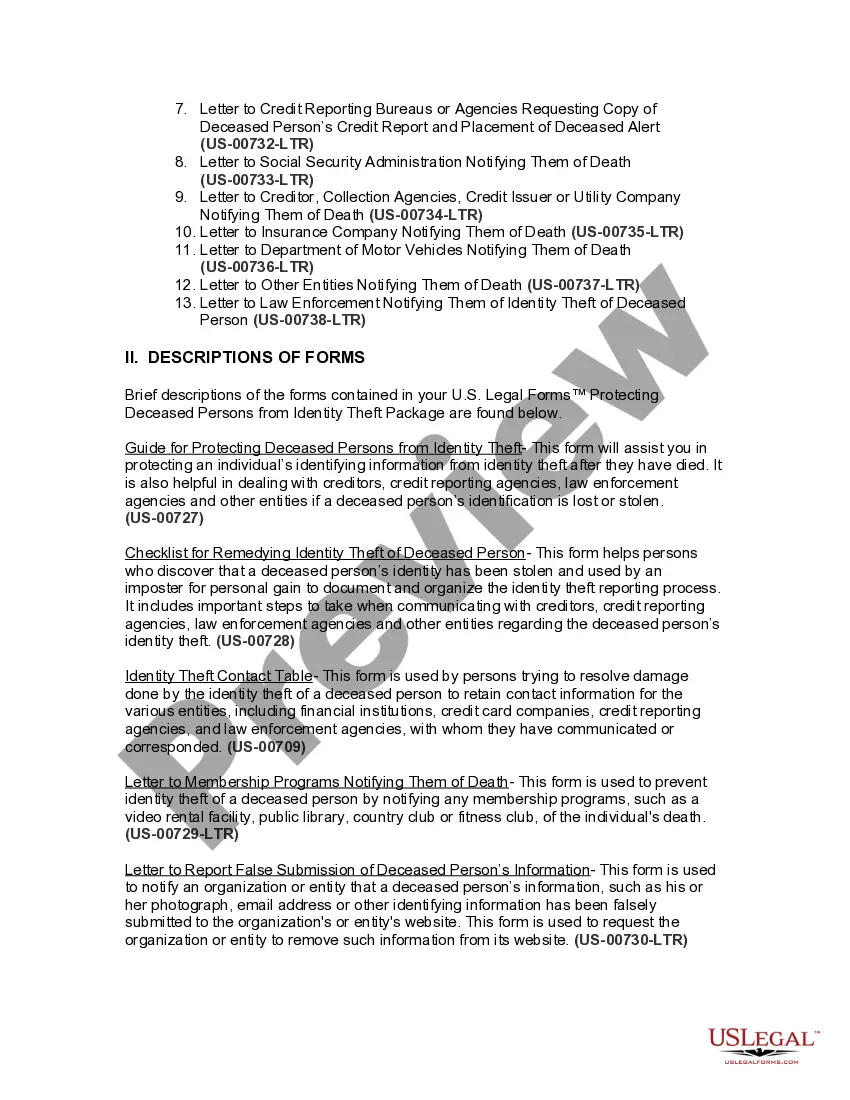
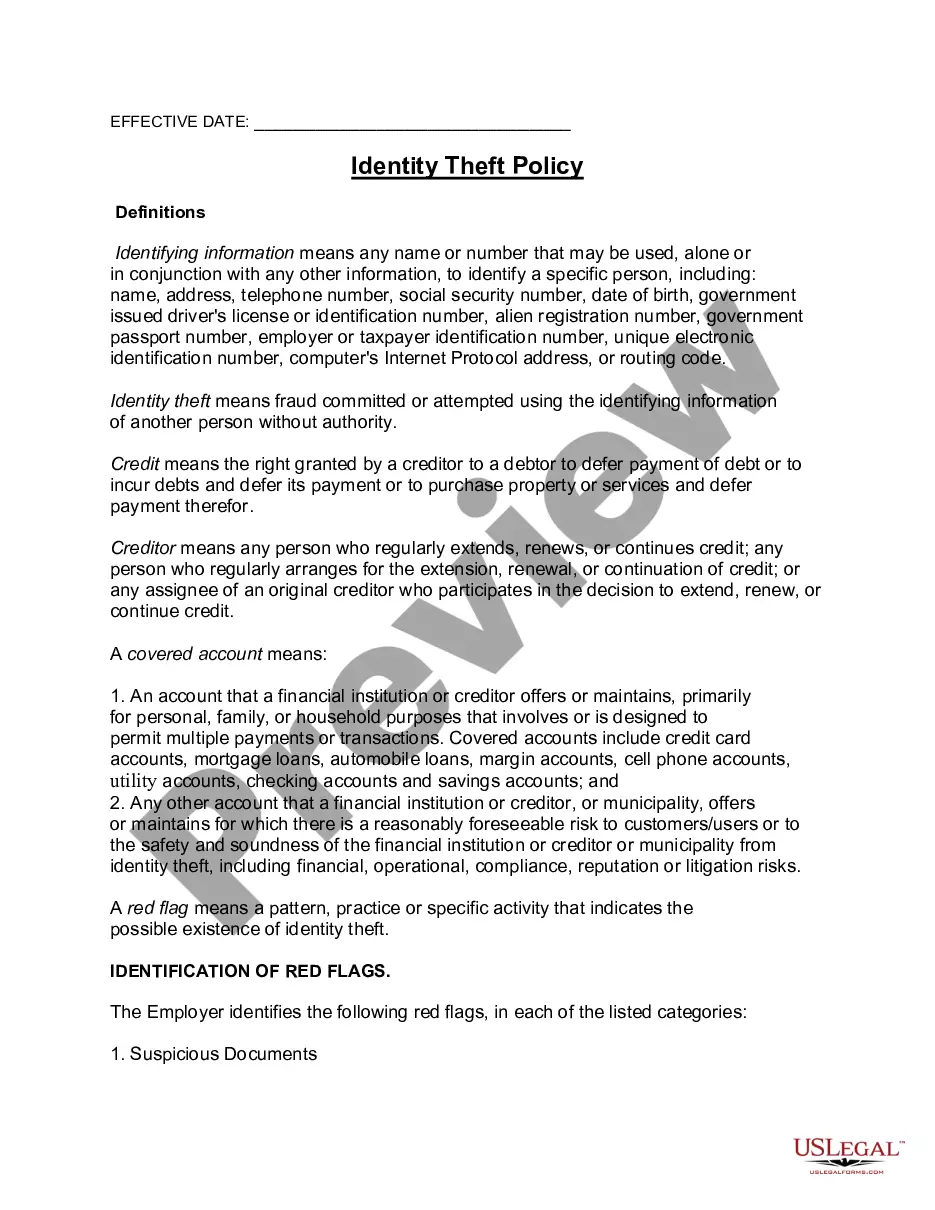
- Identity Theft Contact Table
- Guide for Protecting Deceased Persons from Identity Theft
- Checklist for Remedying Identity Theft of Deceased Persons
- Letter to Membership Programs Notifying Them of Death
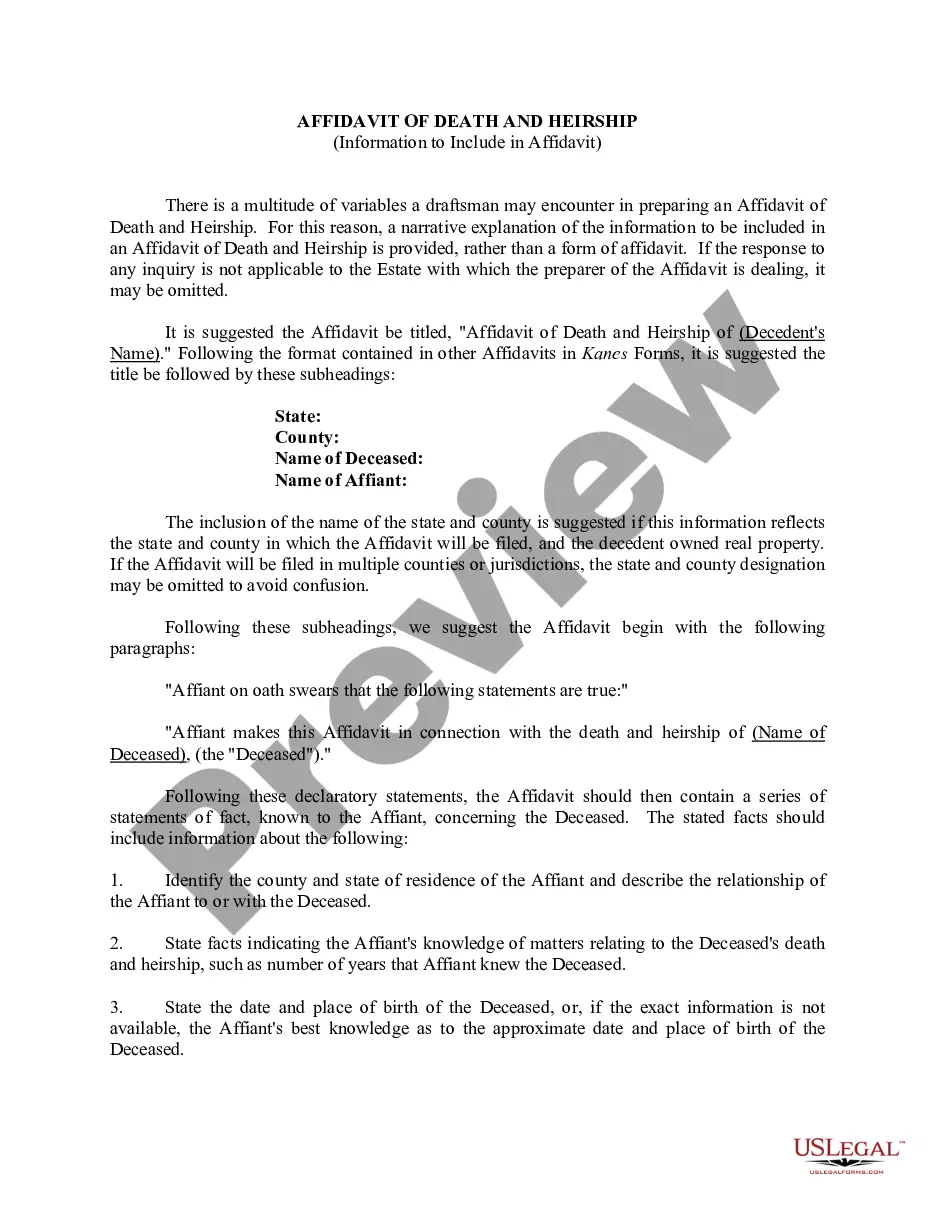
- Letter to Report False Submission of Deceased Person's Information
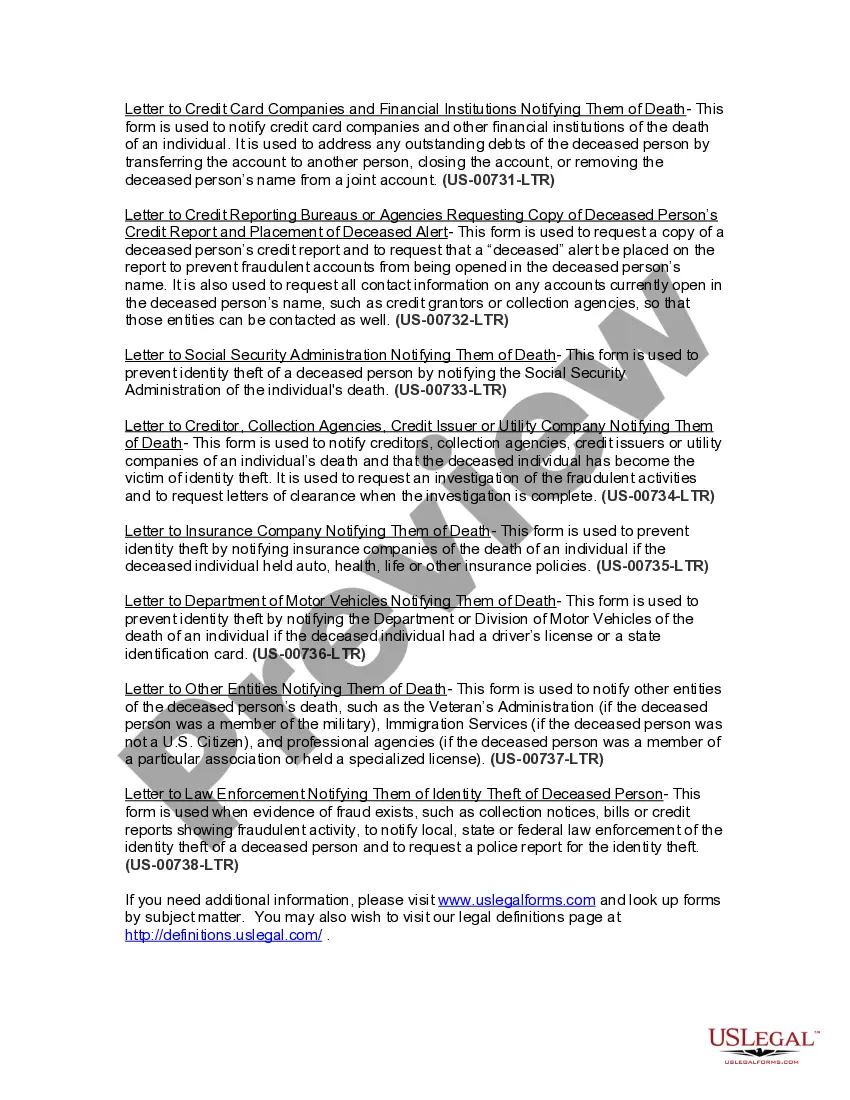
- Letter to Credit Card Companies and Financial Institutions Notifying Them of Death
- Letter to Credit Reporting Bureaus or Agencies Requesting Copy of Deceased Person's Credit Report and Placement of Deceased Alert
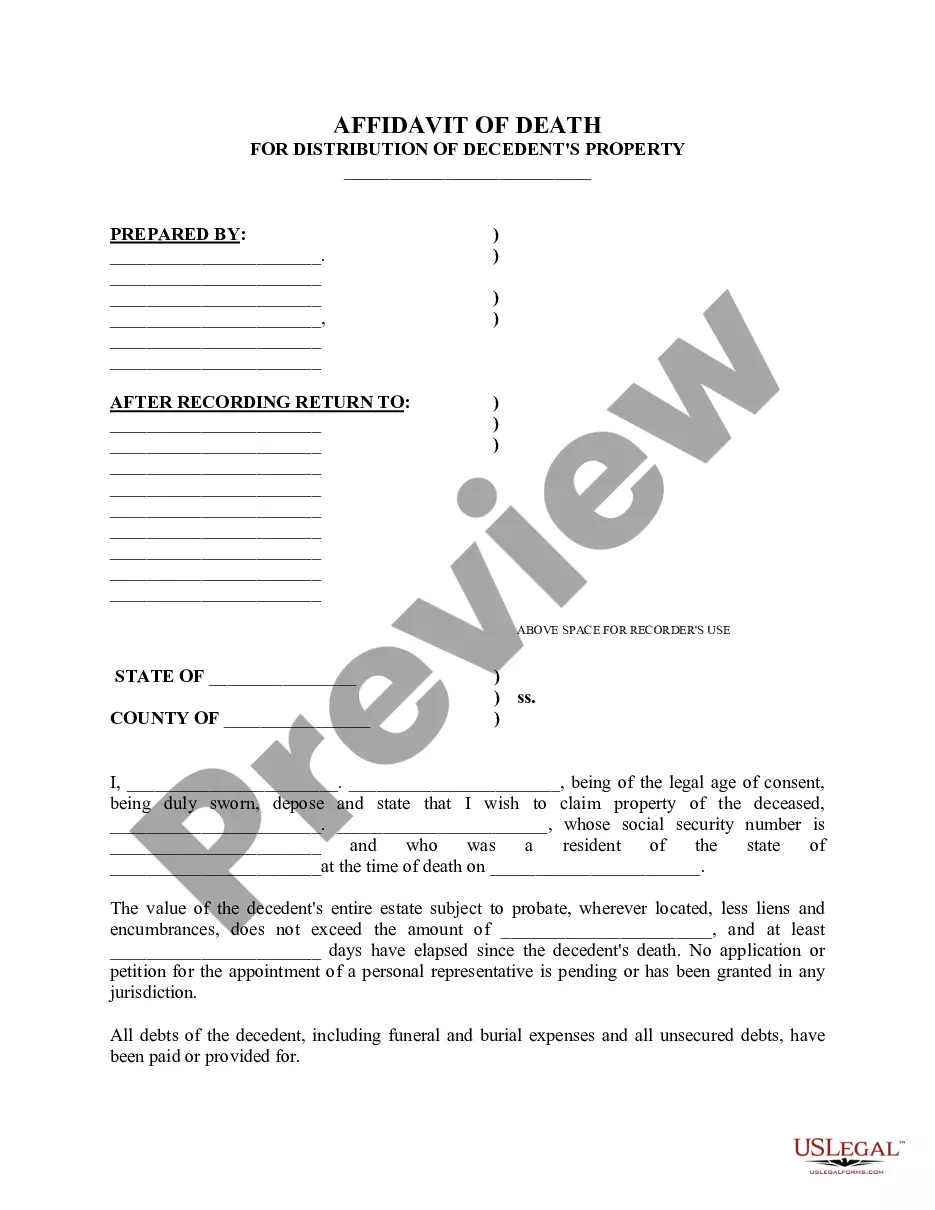
- Letter to Social Security Administration Notifying Them of Death
- Letter to Creditor, Collection Agencies, Credit Issuer or Utility Company Notifying Them of Death
- Letter to Insurance Company Notifying Them of Death
- Letter to Department of Motor Vehicles Notifying Them of Death
- Letter to Other Entities Notifying Them of Death
- Letter to Law Enforcement Notifying Them of Identity Theft of Deceased Person
Common use cases
This form package is particularly useful in the following situations:
- When a loved one passes away and you need to prevent identity theft.
- If you suspect that the deceased's identity has already been stolen.
- When you must notify various agencies and creditors of the individual's death.
- If you need to take steps to clear the deceased person's name from fraudulent activities.
Who this form package is for
- Family members of a deceased person.
- Executors of estates.
- Personal representatives managing the affairs of a deceased individual.
- Anyone needing to address identity theft issues for a deceased person.
How to complete these forms
- Review the included forms in the package for clarity and requirements.
- Gather necessary information about the deceased, including full name, date of death, and documentation.
- Fill out each form as instructed, ensuring all fields are completed accurately.
- Make copies of all completed forms for your records.
- Submit the forms to the appropriate agencies and institutions as outlined in the package.
Notarization details for included forms
Forms in this package typically do not require notarization. However, certain states or document types may still need it. US Legal Forms provides online notarization powered by Notarize, available 24/7 for your convenience.
Get your form ready online
Our built-in tools help you complete, sign, share, and store your documents in one place.
Make edits, fill in missing information, and update formatting in US Legal Forms—just like you would in MS Word.
Download a copy, print it, send it by email, or mail it via USPS—whatever works best for your next step.
Sign and collect signatures with our SignNow integration. Send to multiple recipients, set reminders, and more. Go Premium to unlock E-Sign.
If this form requires notarization, complete it online through a secure video call—no need to meet a notary in person or wait for an appointment.
We protect your documents and personal data by following strict security and privacy standards.

Make edits, fill in missing information, and update formatting in US Legal Forms—just like you would in MS Word.

Download a copy, print it, send it by email, or mail it via USPS—whatever works best for your next step.

Sign and collect signatures with our SignNow integration. Send to multiple recipients, set reminders, and more. Go Premium to unlock E-Sign.

If this form requires notarization, complete it online through a secure video call—no need to meet a notary in person or wait for an appointment.

We protect your documents and personal data by following strict security and privacy standards.
Mistakes to watch out for
- Failing to notify all relevant agencies and creditors of the death.
- Omitting required information in the forms, leading to delays in processing.
- Not keeping copies of submitted forms for personal records.
- Assuming all forms can be submitted electronically without verifying submission requirements.
Advantages of online completion
- Convenience of downloading forms at any time from the comfort of your home.
- Edit and customize documents easily using your computer.
- Access to reliable forms drafted by licensed attorneys, ensuring compliance with legal standards.
Key takeaways
- This package helps prevent identity theft of deceased individuals.
- It includes important letters and guidelines for notifying various parties about a person's death.
- Using this package can simplify the process of managing the deceased's affairs and protecting their identity.
Looking for another form?
Form popularity
FAQ
If you need to report a death or apply for benefits, call 1-800-772-1213 (TTY 1-800-325-0778). You can speak to a Social Security representative between am pm. Monday through Friday. You can also visit your local Social Security office.
What is the first step in protecting yourself from identity theft? Never provide personal data about yourself unless absolutely necessary.
An identity thief's use of a deceased person's Social Security number may create problems for family members.Sometimes delays in reporting can provide time for identity thieves to collect enough personal information to open credit accounts or take other fraudulent actions using the deceased's information.
If Social Security pays the deceased's benefit for that month because it was not notified of the death in time, the survivors or representative payee will have to return the money.
Identity thieves can strike even after death. An identity thief's use of a deceased person's Social Security number may create problems for family members.The Social Security Administration (SSA) maintains a national file of reported deaths for the purpose of paying appropriate benefits.
To report the death of a person with Medicare: Make sure you have the person's Social Security Number. Call Social Security at 1-800-772-1213 (TTY: 1-800-325-0778)
Limit the amount of personal information you share about the deceased in newspaper and online obituaries. Notify the Social Security Administration of the death. Send the IRS a copy of the death certificate so that the agency can note that the person is deceased.
If the eligible surviving spouse or child is not currently receiving benefits, they must apply for this payment within two years of the date of death. For more information about this lump-sum payment, contact your local Social Security office or call 1-800-772-1213 ( TTY 1-800-325-0778).
Your Social Security number and the deceased worker's Social Security number. A death certificate. (Generally, the funeral director provides a statement that can be used for this purpose.) Proof of the deceased worker's earnings for last year (W-2 forms or self- employment tax return).