Connecticut Intervening Complaint
What is this form?
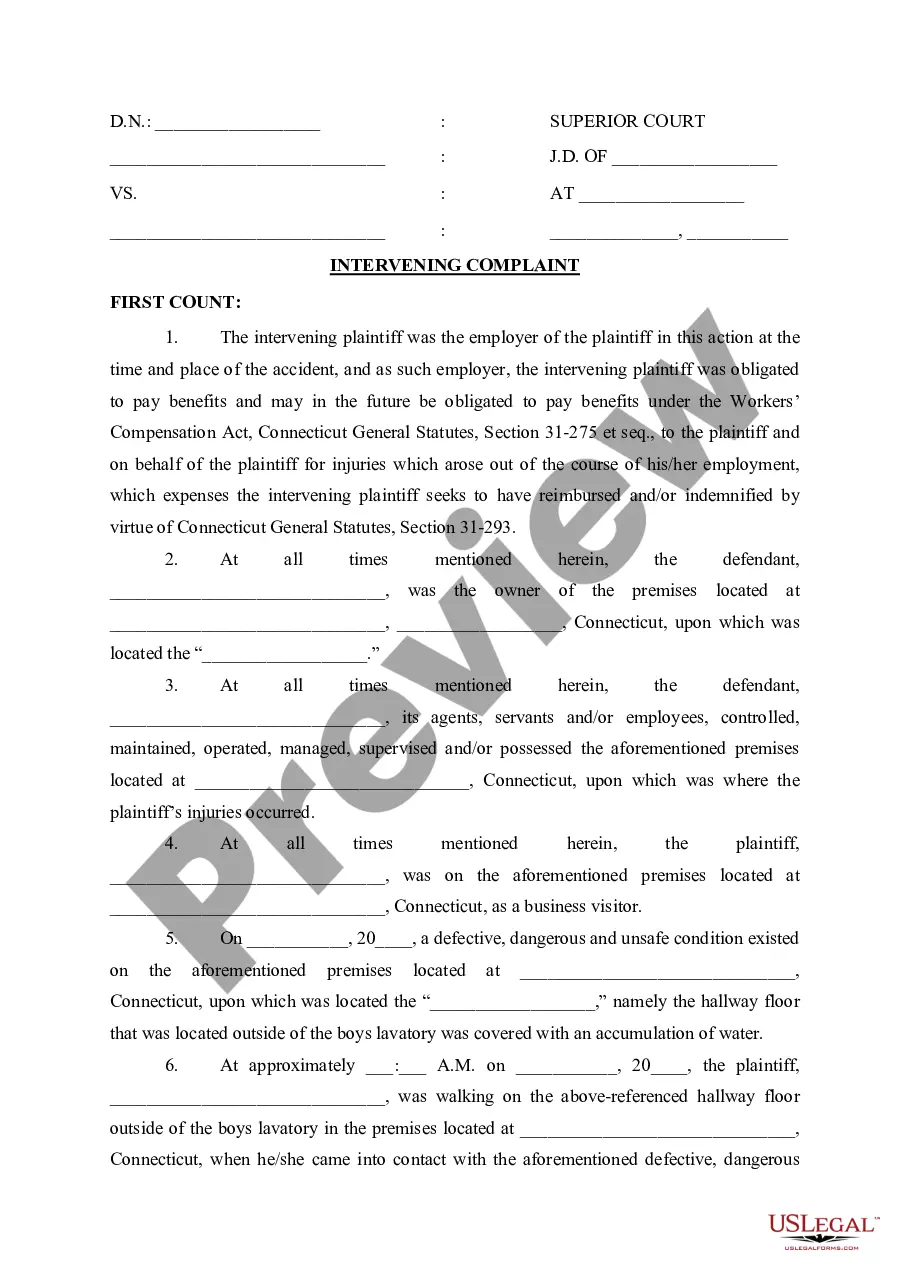
The Intervening Complaint is a legal document that allows a third party, not originally named in a lawsuit, to join an existing case as an intervenor. This form enables the intervenor to assert their rights regarding the claims made in the action. It differs from other complaints in that it specifically addresses the interests of someone who has a stake in the litigation but was not initially involved. By filing an Intervening Complaint, the intervenor becomes a party to the proceedings, with the same rights as the original parties.
Key parts of this document
- Identification of the intervenor and the original parties involved in the action.
- Details of the premises related to the accident, including the location and nature of the unsafe condition.
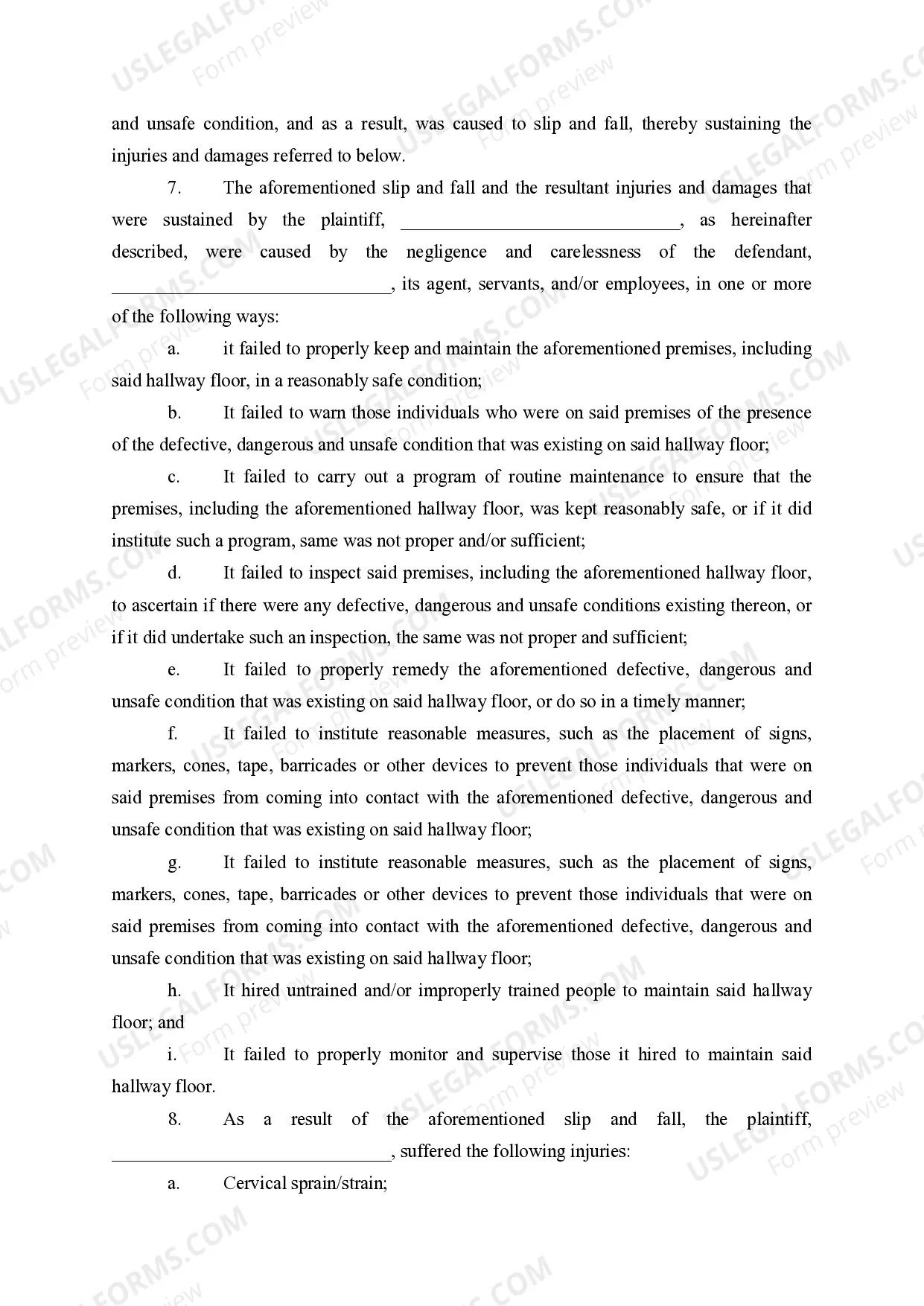
- Allegations of negligence against the defendant, highlighting safety concerns.
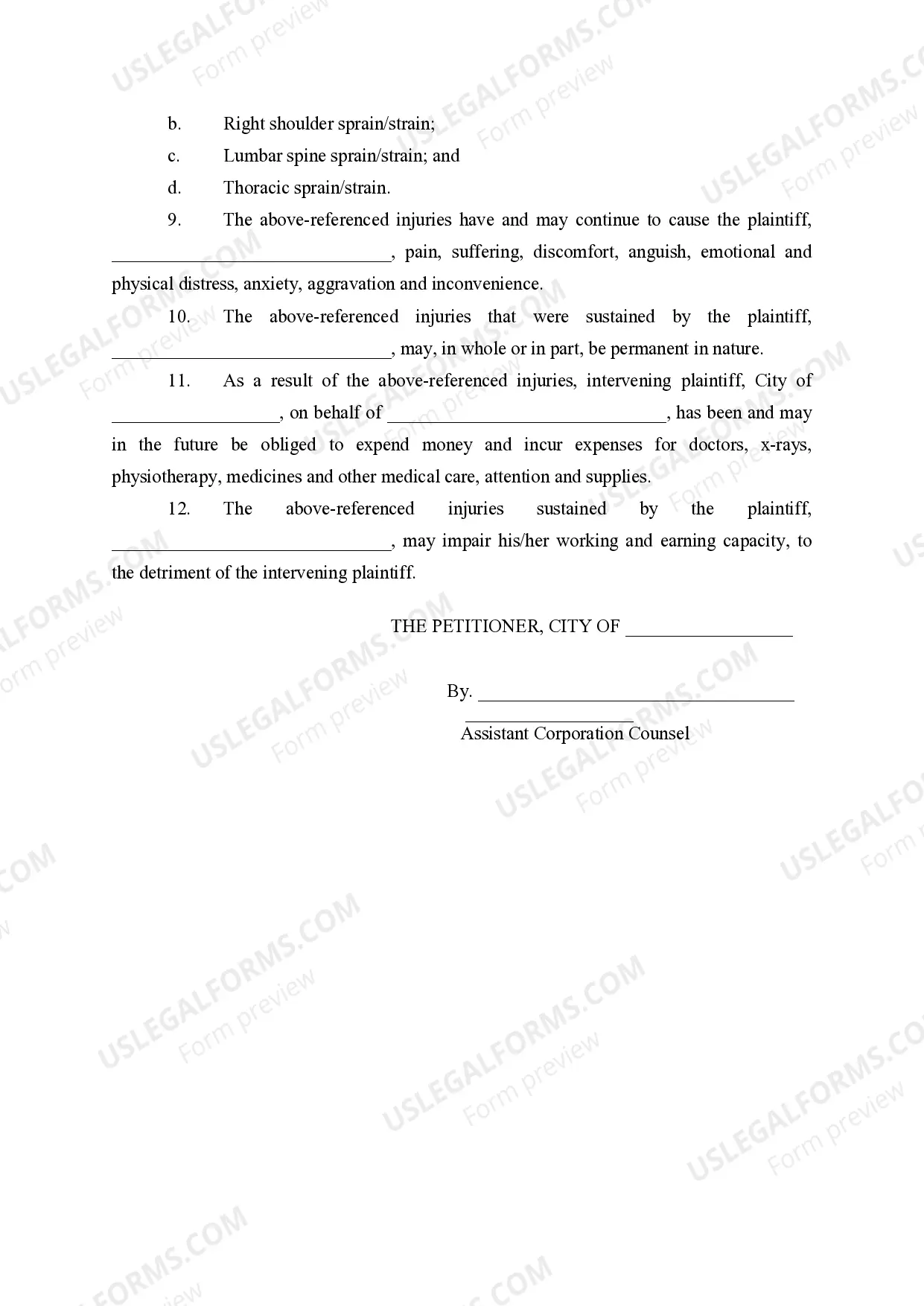
- Specific injuries sustained by the plaintiff as a result of the incident.
- Claims for reimbursement of medical expenses and other related costs incurred by the intervenor on behalf of the plaintiff.

Common use cases
Who should use this form
The following parties may need to use this form:
- Employers who have provided workers' compensation benefits to an employee involved in a personal injury lawsuit.
- Insurance companies that wish to recover costs associated with claims they have paid out on behalf of the insured party.
- Any individual or entity with a financial or legal interest in the outcome of a lawsuit and who meets the criteria for intervention.
How to prepare this document
- Identify the intervenor, the original parties, and specify the court where the case is being heard.
- Clearly state the grounds for intervention and outline the relationship between the intervenor and the original plaintiff.
- Detail the circumstances of the incident, including the date and specific conditions that led to the plaintiff's injuries.
- List the specific allegations of negligence against the defendant and outline how their actions led to damages.
- Include a detailed account of the injuries sustained and any expenses incurred as a result.
Does this form need to be notarized?
This form does not typically require notarization unless specified by local law. Users should ensure that they meet all local requirements for submission and validation of the form.
Get your form ready online
Our built-in tools help you complete, sign, share, and store your documents in one place.
Make edits, fill in missing information, and update formatting in US Legal Forms—just like you would in MS Word.
Download a copy, print it, send it by email, or mail it via USPS—whatever works best for your next step.
Sign and collect signatures with our SignNow integration. Send to multiple recipients, set reminders, and more. Go Premium to unlock E-Sign.
If this form requires notarization, complete it online through a secure video call—no need to meet a notary in person or wait for an appointment.
We protect your documents and personal data by following strict security and privacy standards.

Make edits, fill in missing information, and update formatting in US Legal Forms—just like you would in MS Word.

Download a copy, print it, send it by email, or mail it via USPS—whatever works best for your next step.

Sign and collect signatures with our SignNow integration. Send to multiple recipients, set reminders, and more. Go Premium to unlock E-Sign.

If this form requires notarization, complete it online through a secure video call—no need to meet a notary in person or wait for an appointment.

We protect your documents and personal data by following strict security and privacy standards.
Common mistakes
- Failing to properly identify all parties involved in the original action.
- Omitting necessary details about the incident and the circumstances surrounding the injuries.
- Not detailing claims for reimbursement or the basis for those claims adequately.
- Neglecting to provide supportive evidence or documentation for the allegations made.
Benefits of completing this form online
- Convenient access to legally binding templates drafted by attorneys.
- Easy editing and customization to fit specific case details.
- Quick download and preparation, saving time in legal processes.
- Secure storage and retrieval options for future reference if needed.
Looking for another form?
Form popularity
FAQ
The Connecticut Intervening Complaint form is a Connecticut civil action tool used to join in or add your own claims to an ongoing case after it has started. It lets an intervenor participate in the litigation and seek relief related to their interests. Use it when you have a stake in the action and want to intervene.
Attorney communications are guided by professional conduct rules rather than the form itself. The Connecticut Intervening Complaint does not control who can contact you. If you are represented, coordinate through your attorney and maintain appropriate, confidential communications. Seek legal guidance if you have questions about communications in your case.
Rule 4.2 prohibits certain communications with represented parties. The Connecticut Intervening Complaint does not modify this rule. If you are an intervenor, ensure all communications go through your attorney and avoid contacting opponents directly who are represented. Failing to comply could affect your rights in the case.
Whether emotional distress is recoverable depends on the underlying claims you bring in the intervening complaint and applicable Connecticut law. The form itself only provides a way to file intervening claims; it does not establish available damages. Consult an attorney regarding damages in your specific case.
Deposition scope is governed by discovery rules, not by the intervening complaint. The form does not change deposition limits. Generally, irrelevant, privileged, or overly broad questions may be objected to, and protective orders may limit inquiries. Always follow court rules and local practice when scheduling or conducting depositions in cases with intervening claims.
Unlike a standard complaint filed at the start of a case, the Connecticut Intervening Complaint is used to join a party or assert new claims after a case has begun in Connecticut. It targets intervention within an ongoing action rather than initiating a separate, new lawsuit.