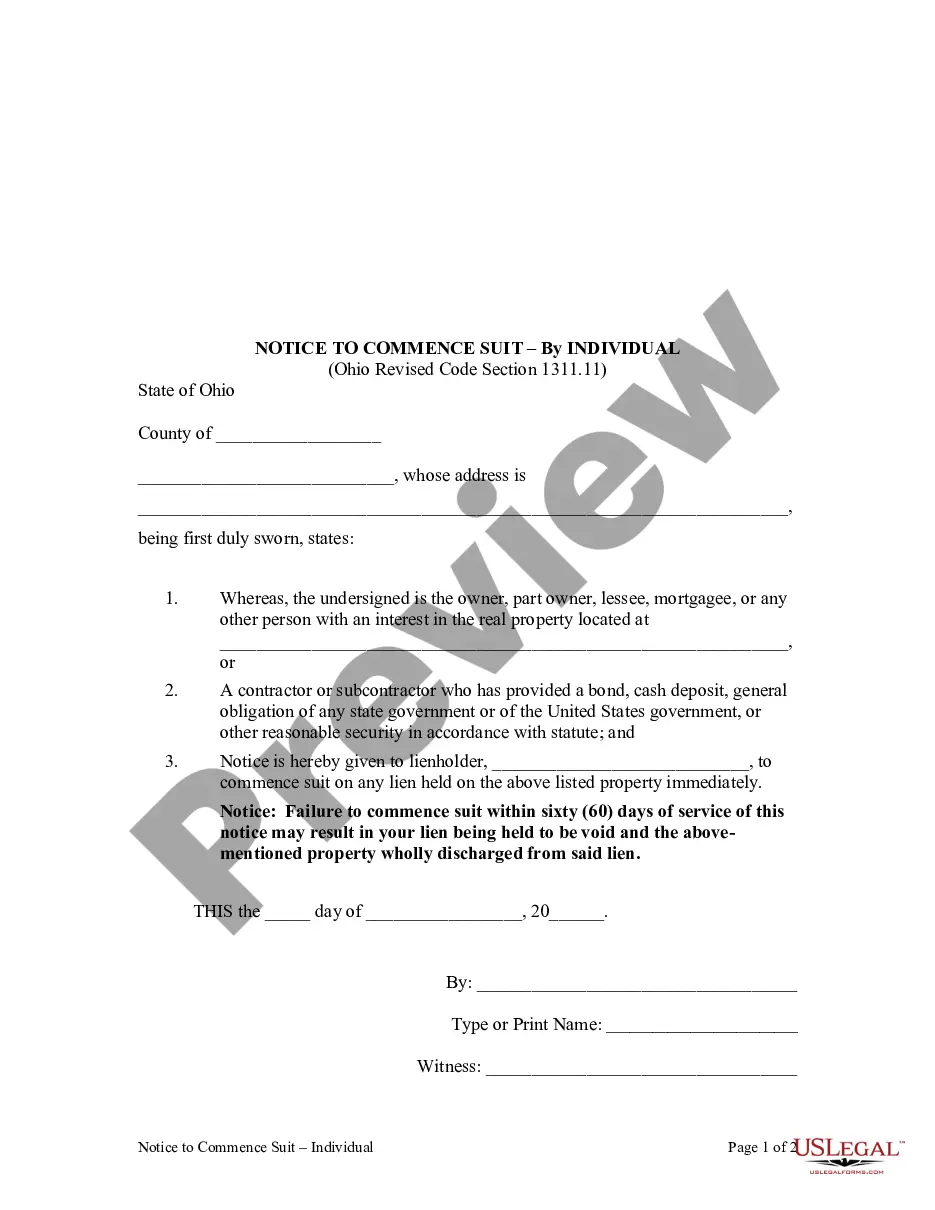
Alternative Complaint for an Accounting which includes Egregious Acts
What is this form?
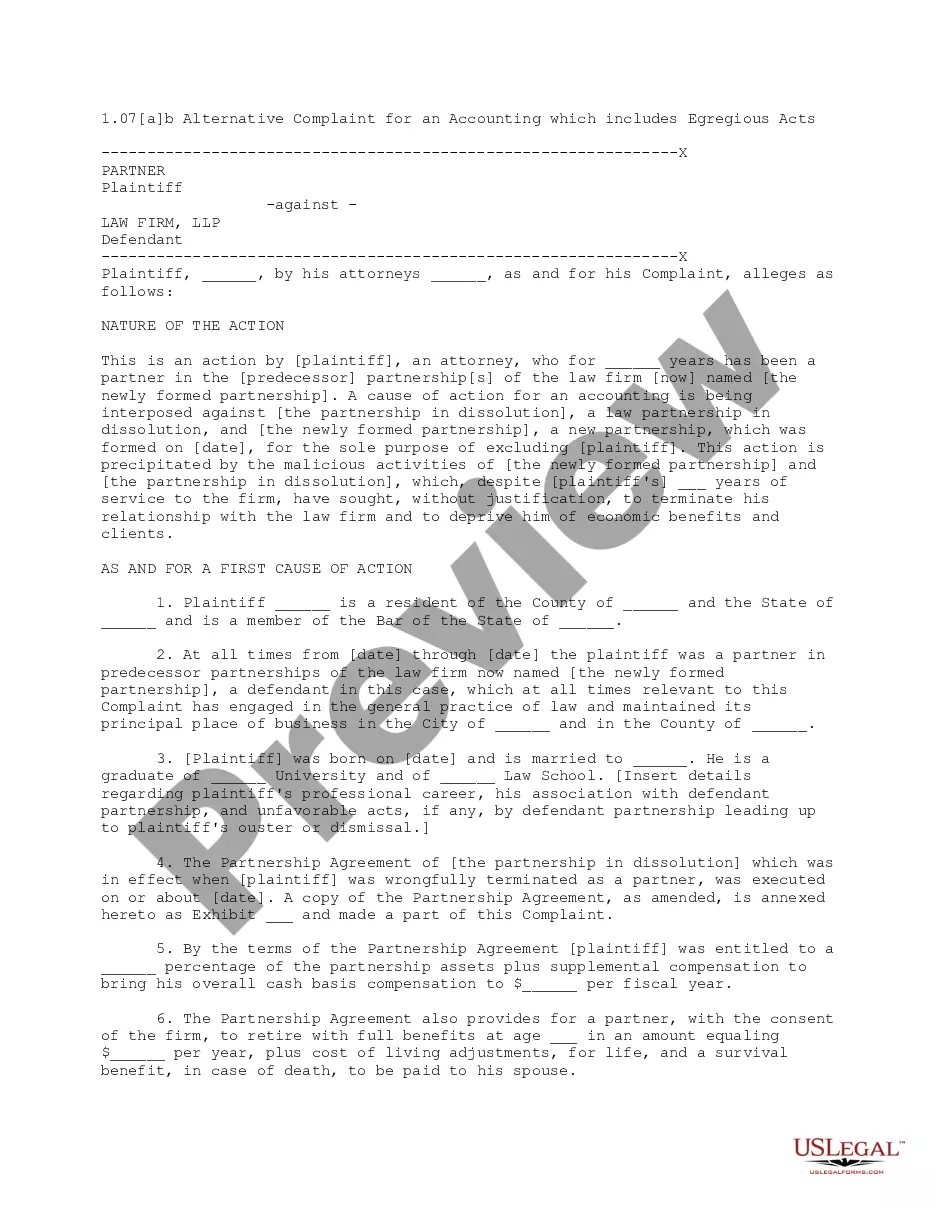
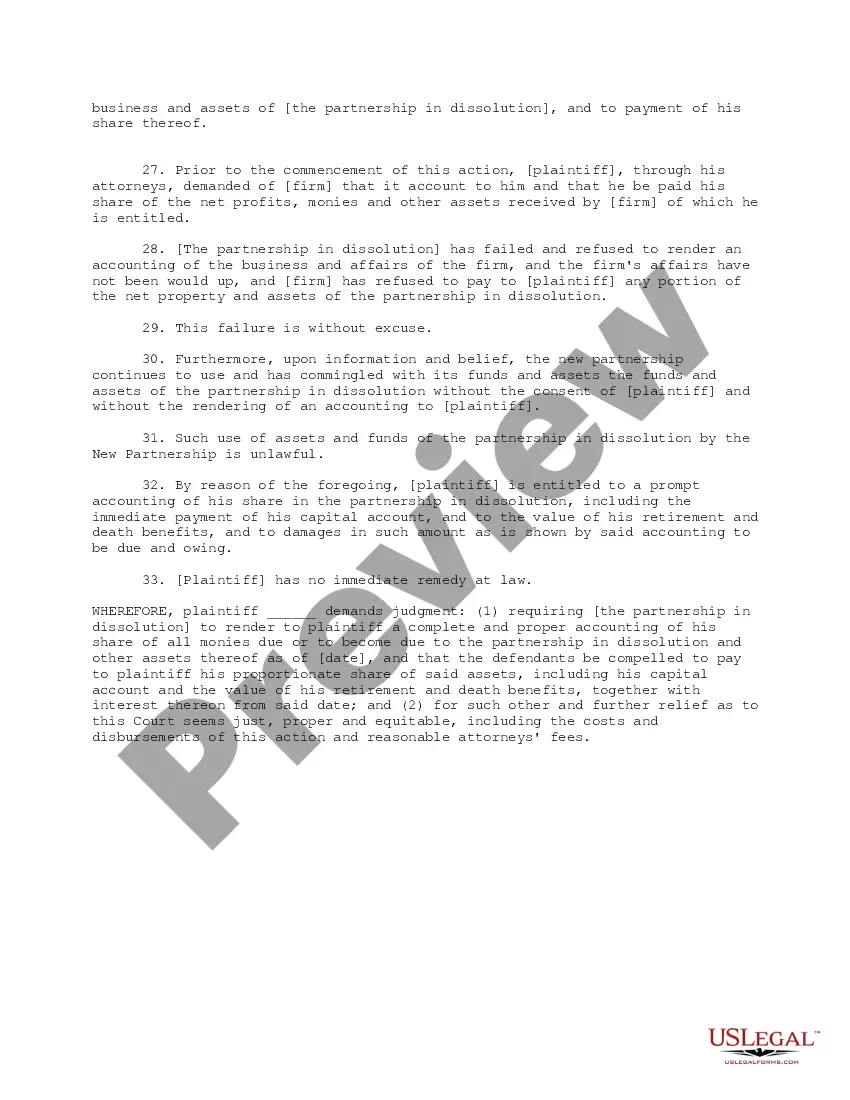
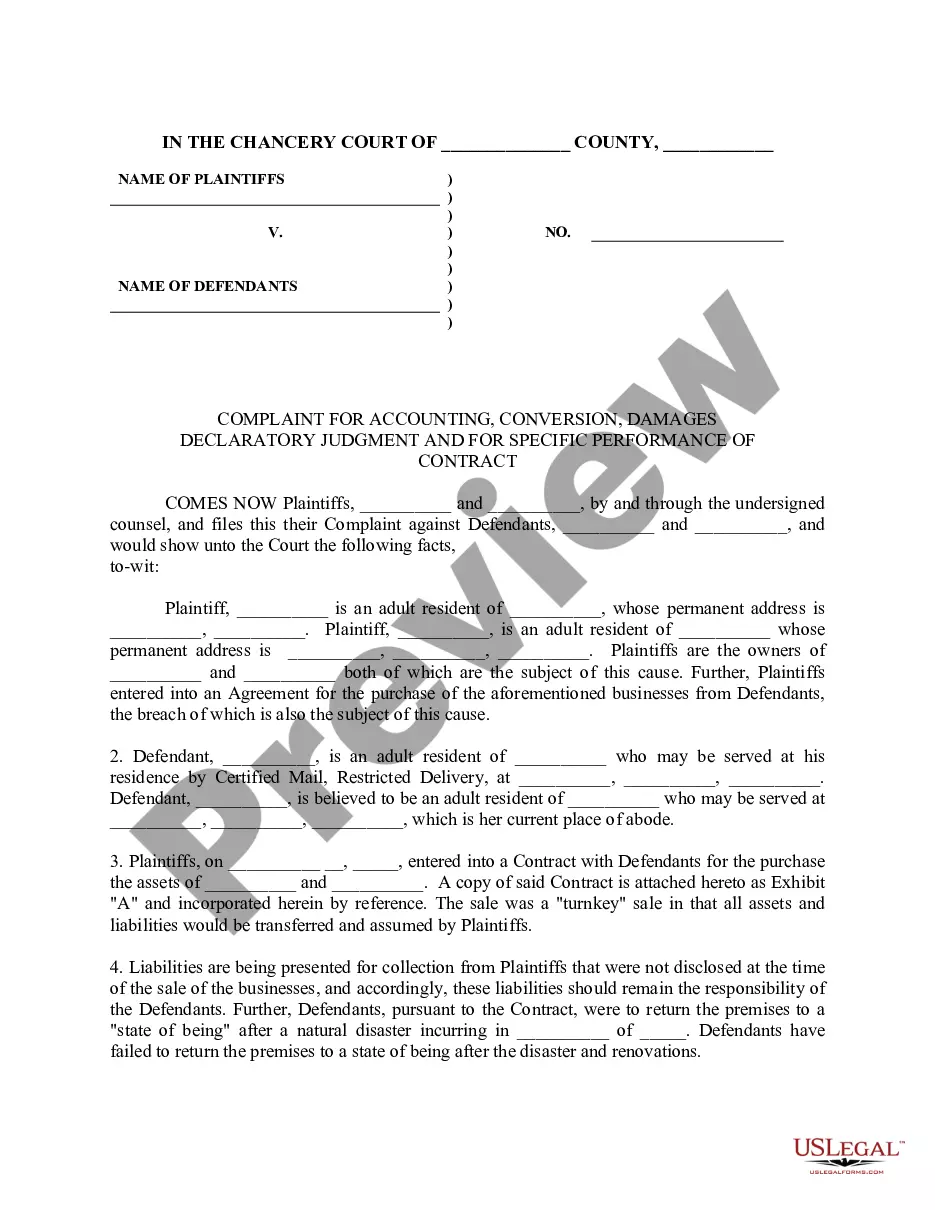
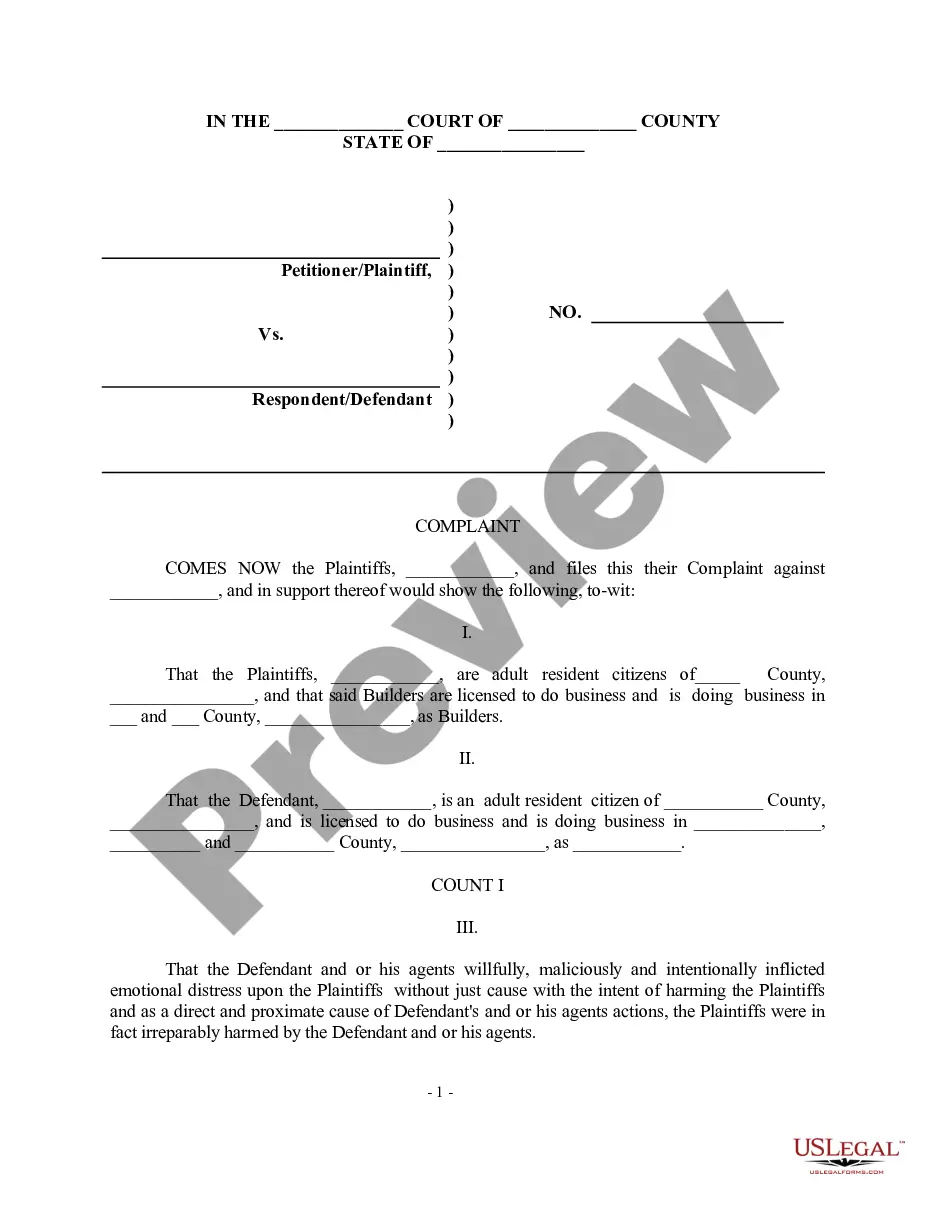
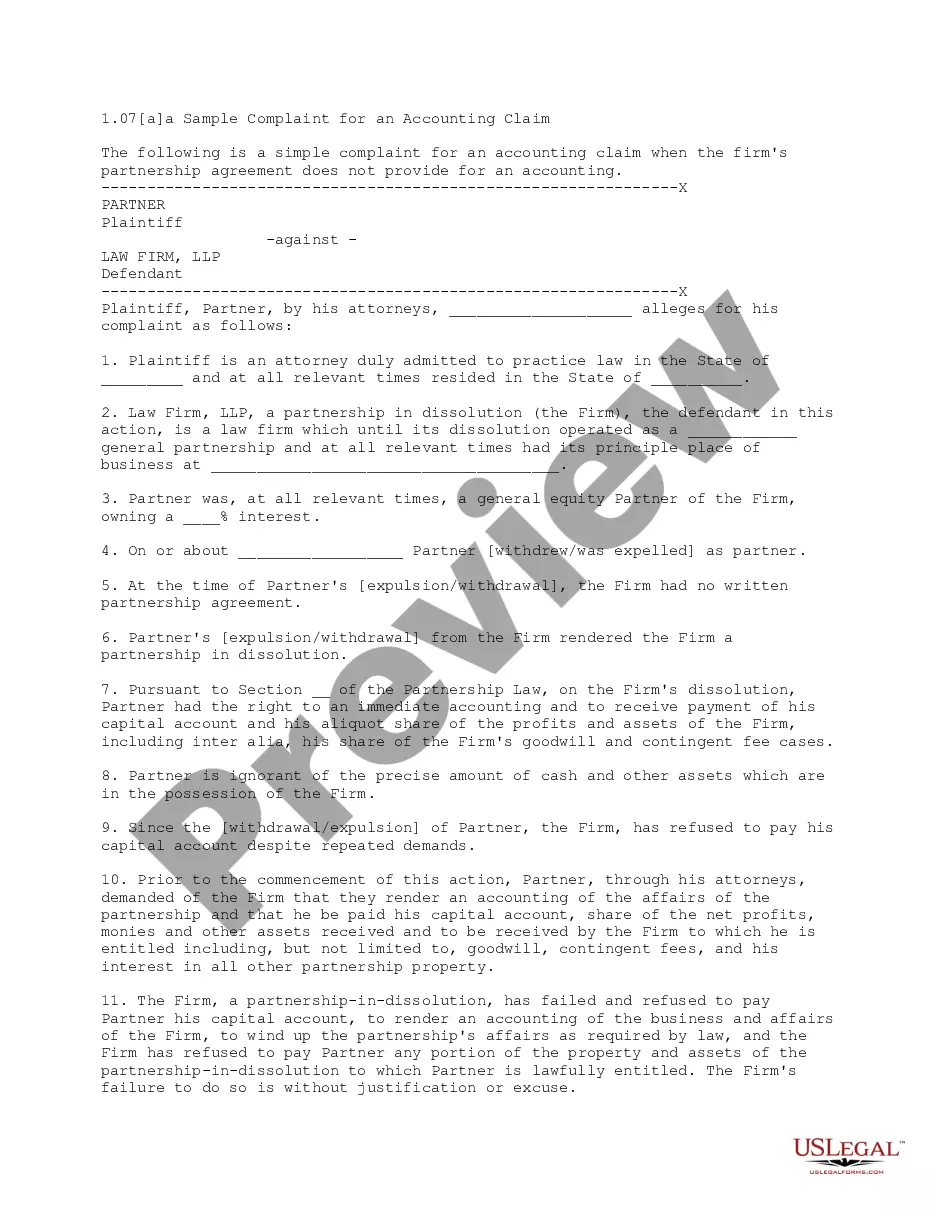
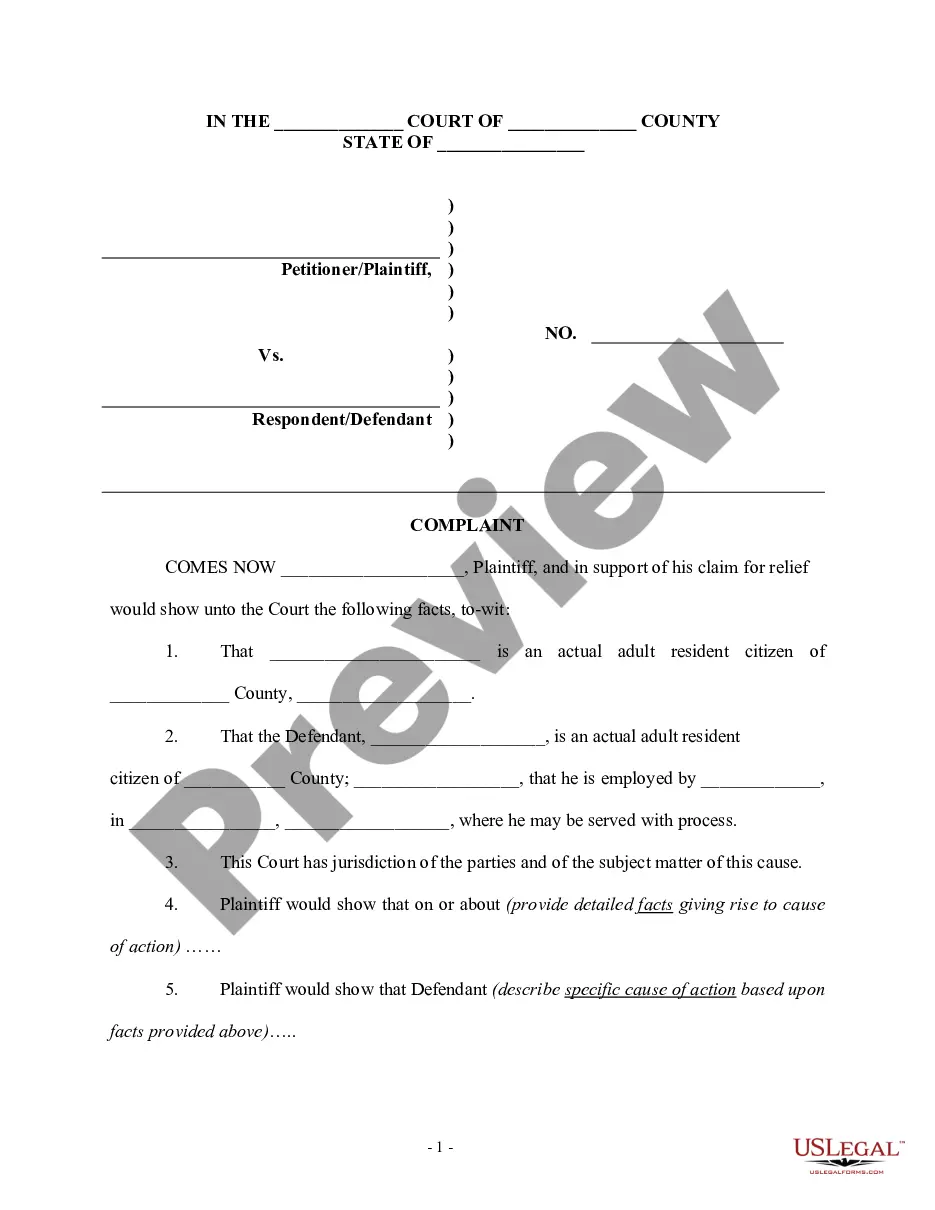
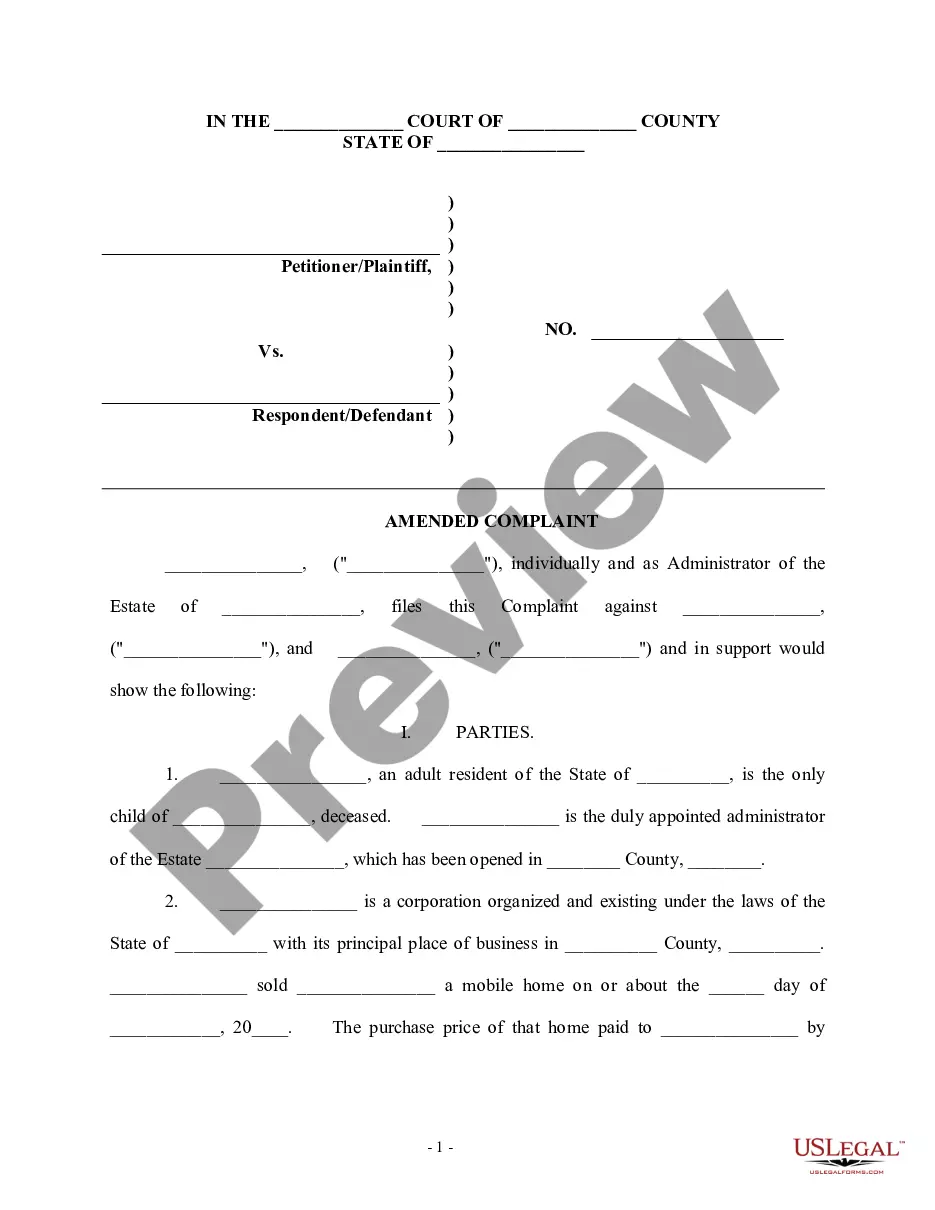
The Alternative Complaint for an Accounting which includes Egregious Acts is a legal document designed for attorneys who have been wrongfully terminated from their partnership. This complaint seeks to obtain a proper accounting of the partnership's financial records and assets while alleging serious misconduct by former partners. This form differs from standard accounting complaints as it includes claims of egregious acts, making it suitable for situations that involve malicious intent by the defendants.
What’s included in this form
- Identification of the plaintiff and defendants.
- Overview of the nature of the action and context of the complaint.
- Details about the partnership agreement and entitlements of the plaintiff.
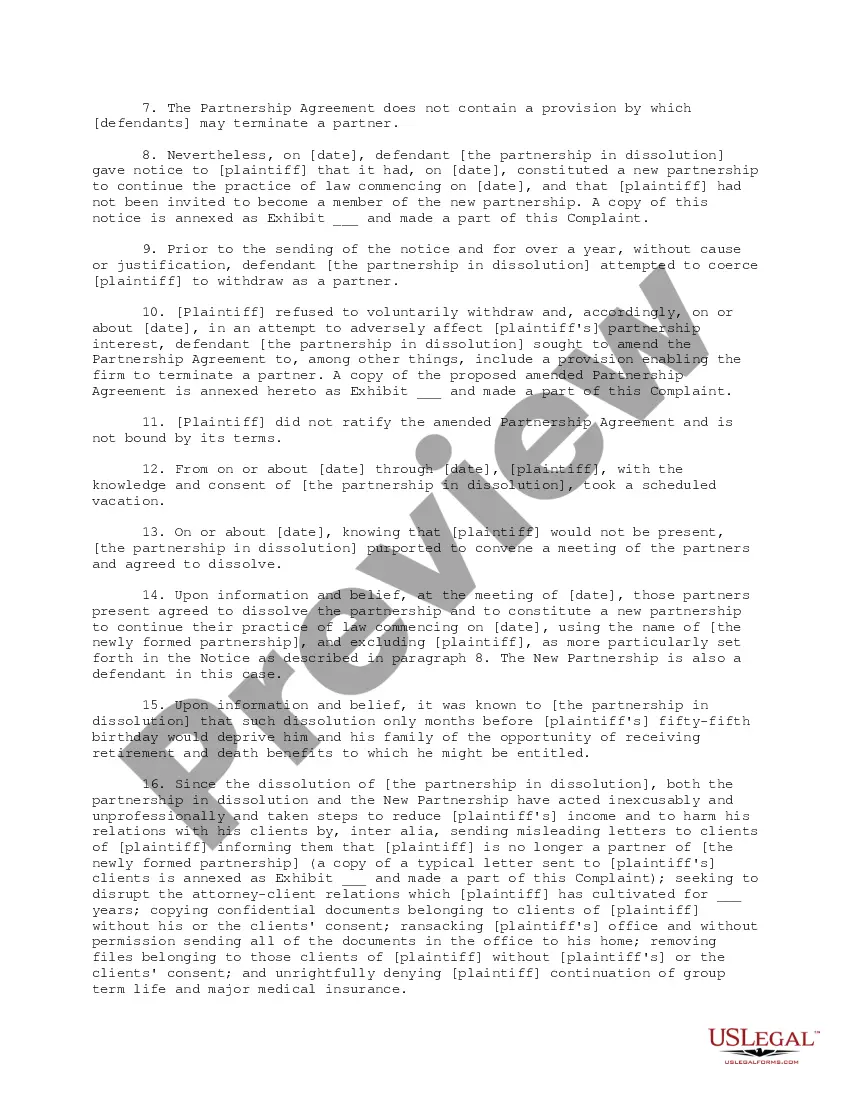
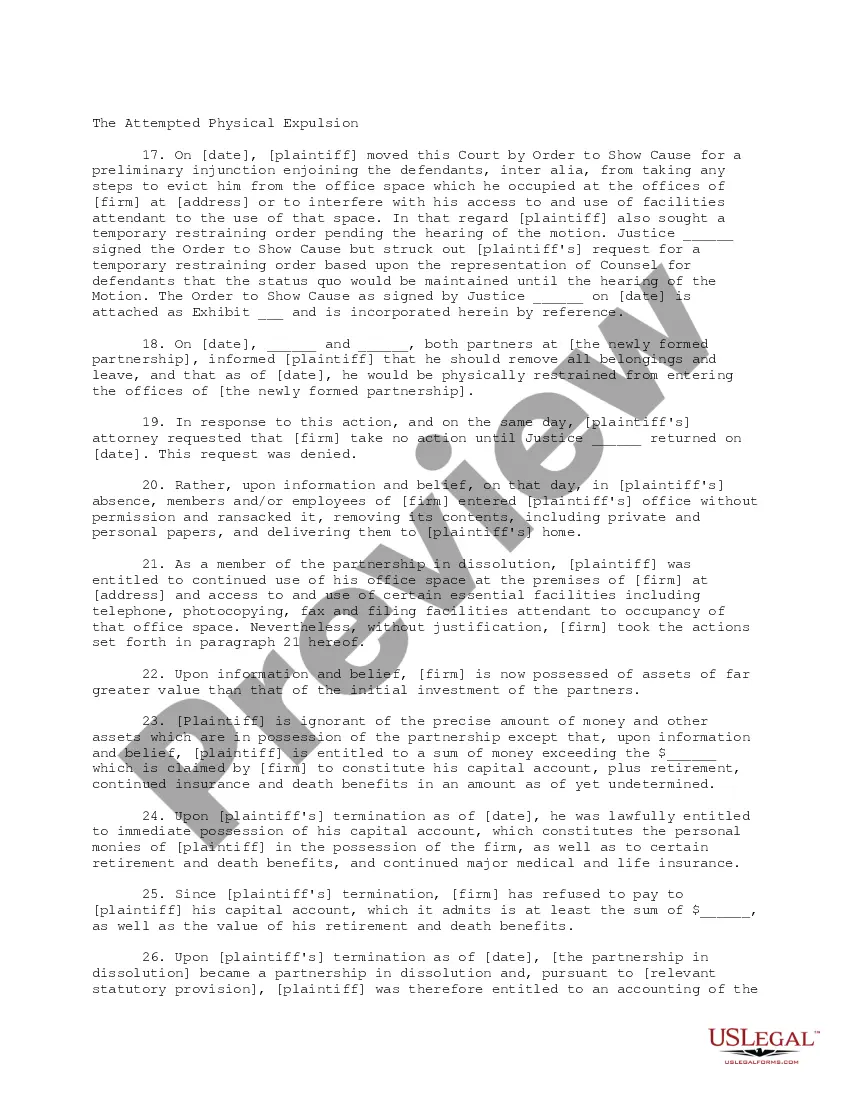
- Allegations of wrongful termination and egregious acts by former partners.
- Request for an accounting of partnership assets and financial benefits.
- Legal demands for judgment including payment of share and damages.
Common use cases
This form is useful when an attorney, previously part of a law firm partnership, believes they have been unjustly removed from their role and seeks compensation or an accounting of the firm's financial assets. It is particularly relevant in cases involving alleged misconduct by former partners, especially in situations where the attorney's financial benefits or client relationships are at risk due to the actions of the firm.
Who this form is for
- Attorneys who have been dismissed from their partnership.
- Legal professionals seeking to challenge the legality of their termination.
- Those who have experienced economic harm due to the actions of former partners.
- Individuals who believe there are egregious acts involved in their removal from a law partnership.
How to complete this form
- Identify all parties involved, including the plaintiff and the law firm.
- Provide details about the partnership agreement and your entitlements under it.
- Outline the allegations regarding wrongful termination and egregious acts.
- Request a specific accounting and include detailed information about the claims for financial compensation.
- Sign and date the form ensuring any required exhibits are attached.
Does this document require notarization?
This form does not typically require notarization unless specified by local law. However, having the document notarized can add an extra layer of verification and may enhance its enforceability in court.
Get your form ready online
Our built-in tools help you complete, sign, share, and store your documents in one place.
Make edits, fill in missing information, and update formatting in US Legal Forms—just like you would in MS Word.
Download a copy, print it, send it by email, or mail it via USPS—whatever works best for your next step.
Sign and collect signatures with our SignNow integration. Send to multiple recipients, set reminders, and more. Go Premium to unlock E-Sign.
If this form requires notarization, complete it online through a secure video call—no need to meet a notary in person or wait for an appointment.
We protect your documents and personal data by following strict security and privacy standards.

Make edits, fill in missing information, and update formatting in US Legal Forms—just like you would in MS Word.

Download a copy, print it, send it by email, or mail it via USPS—whatever works best for your next step.

Sign and collect signatures with our SignNow integration. Send to multiple recipients, set reminders, and more. Go Premium to unlock E-Sign.

If this form requires notarization, complete it online through a secure video call—no need to meet a notary in person or wait for an appointment.

We protect your documents and personal data by following strict security and privacy standards.
Common mistakes to avoid
- Not clearly stating the allegations of egregious acts.
- Failing to provide sufficient details regarding the partnership agreement.
- Omitting required attachments or exhibits, such as the partnership agreement.
- Not clearly identifying all defendants involved in the case.
Benefits of completing this form online
- Convenient access to the form anytime, allowing users to fill out the information at their own pace.
- Editability ensures users can make necessary changes before finalizing.
- Reliability as the form is drafted by licensed attorneys, ensuring legal compliance.
- The complaint is enforceable in court when properly filled out and filed.
- It allows the plaintiff to seek necessary financial transparency from the partnership.
- Limitation periods may apply based on jurisdictional statutes, affecting the timing of filing.
- Understanding local laws regarding partnerships is vital for effective use of this form.
What to keep in mind
- The form aims to hold a law firm accountable for financial mismanagement after a partner's removal.
- It's essential to articulate both the financial entitlements and the egregious acts committed by former partners.
- Proper completion can lead to a prompt accounting and recovery of rightful benefits.
Looking for another form?
Form popularity
FAQ
Comply With the Relevant Federal, State, and Local Rules. Research Before Writing. Allege Subject Matter Jurisdiction, Personal Jurisdiction, and Venue. Draft Concise and Plain Statement of the Facts. Draft Separate Counts for Each Legal Claim. Plead Facts With Particularity Where Necessary.
The Twombly/Iqbal pleading standards not only specify that a complaint must be plausible on its face, but it must bring forth sufficient factual allegations that nudge a claim across the line from conceivable to plausible.Additionally, the claim must raise some legal theory that is cognizable as a matter of law.
The section of a modern complaint that states the redress sought from a court by a person who initiates a lawsuit. The person who is seeking money damages or a court order, called the plaintiff, files a complaint, which notifies or warns the defendant that legal action has begun.
Well-Pleaded Complaint Rule This means that the plaintiff's initial complaint must contain the references to the federal question and the federal issue evoked. The federal question and issue cannot arise in an anticipated defense, it must be presented from the initial complaint.
Your complaint must contain a caption (or heading) that includes the name of the court and county, the parties to the case (and their designation, like plaintiff or defendant), the case number (if you have one), and the title of the document.
Be clear and concise. State exactly what you want done and how long you're willing to wait for a response. Don't write an angry, sarcastic, or threatening letter. Include copies of relevant documents, like receipts, work orders, and warranties. Include your name and contact information.
In a case based upon negligence the plaintiff, under code or com- mon law pleading, must plead facts in his petition showing (1) that the defendant owed a duty to the plaintiff, (2) that the defendant breached the duty, and (3) that as a result of such breach of duty the plaintiff suffered damage.
Typically, a plaintiff verifies a complaint by attaching a page at the end containing a statement made under oath that:The plaintiff has reviewed the complaint. The plaintiff knows or believes that all allegations that the plaintiff has personal knowledge of to be true.
A claim has "facial plausibility" when the plaintiff pleads "factual content that allows the court to draw the reasonable inference that the defendant is liable for the misconduct alleged." Id.