Ohio Identity Theft Recovery Package
Overview of this form package
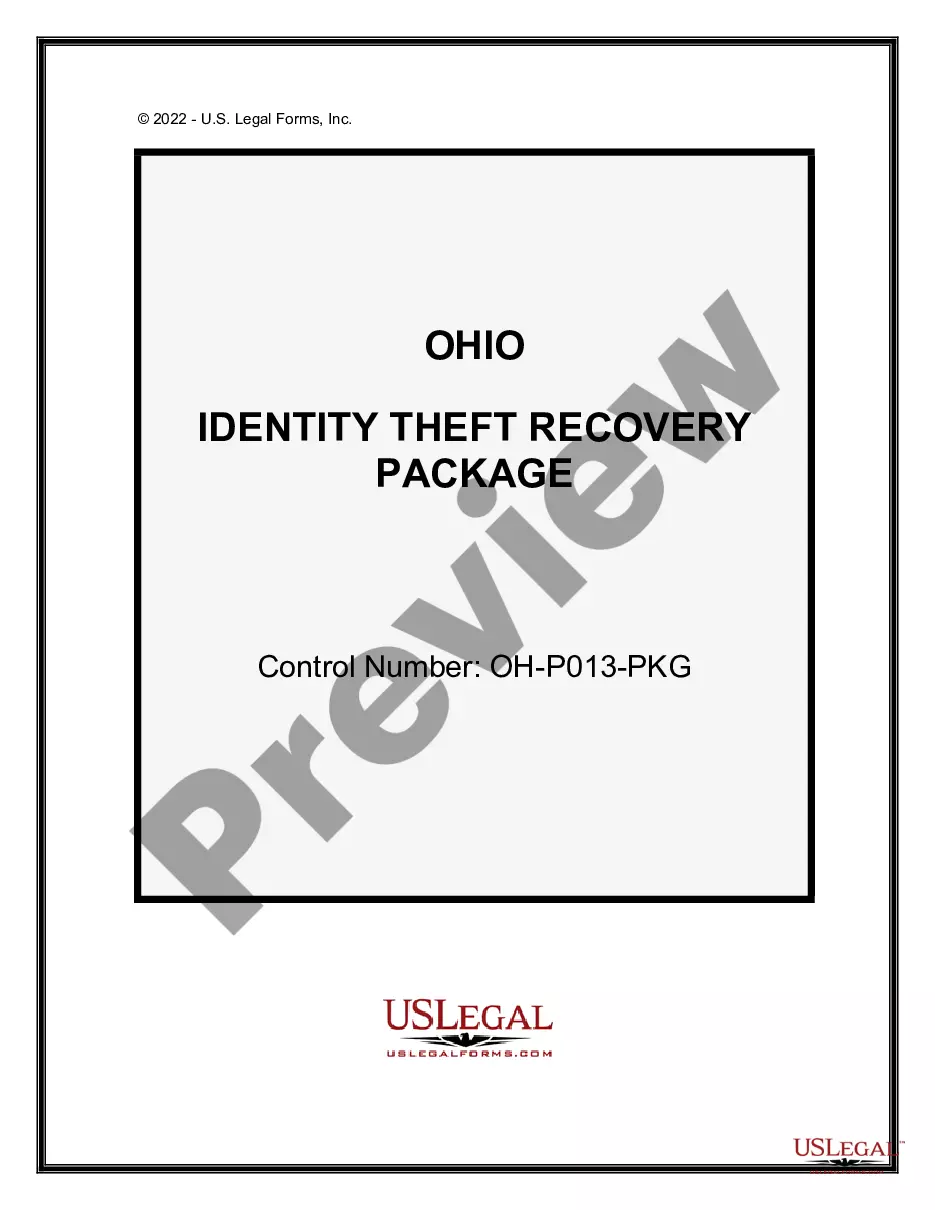
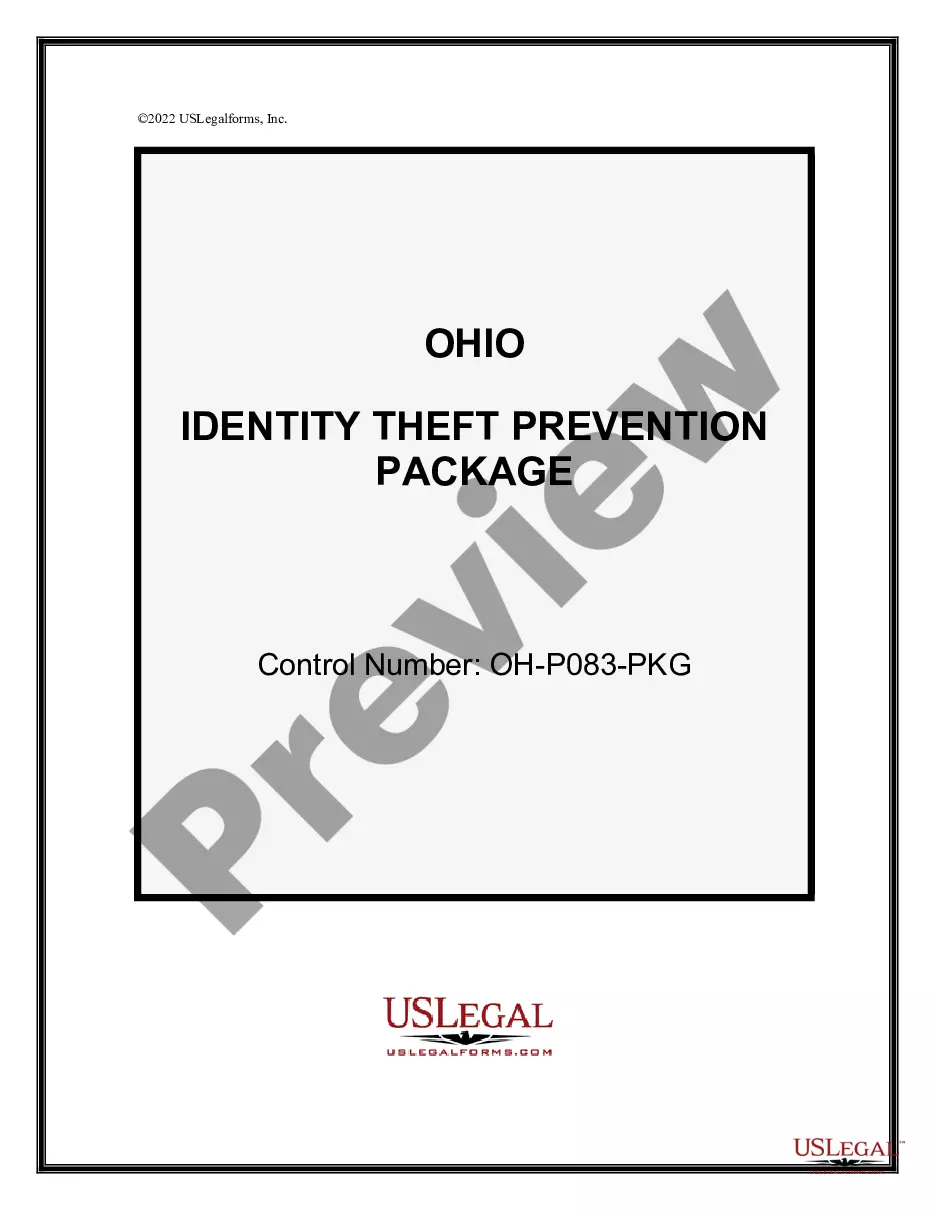
The Ohio Identity Theft Recovery Package is a comprehensive set of legal forms designed specifically for victims of identity theft. This package assists individuals in managing the consequences of having their identification lost or stolen by providing essential documents to communicate with creditors and government agencies. Unlike generic solutions, this package is tailored to address the unique challenges faced by identity theft victims in Ohio, helping to clear their name and restore financial integrity efficiently.
What’s included in this form package
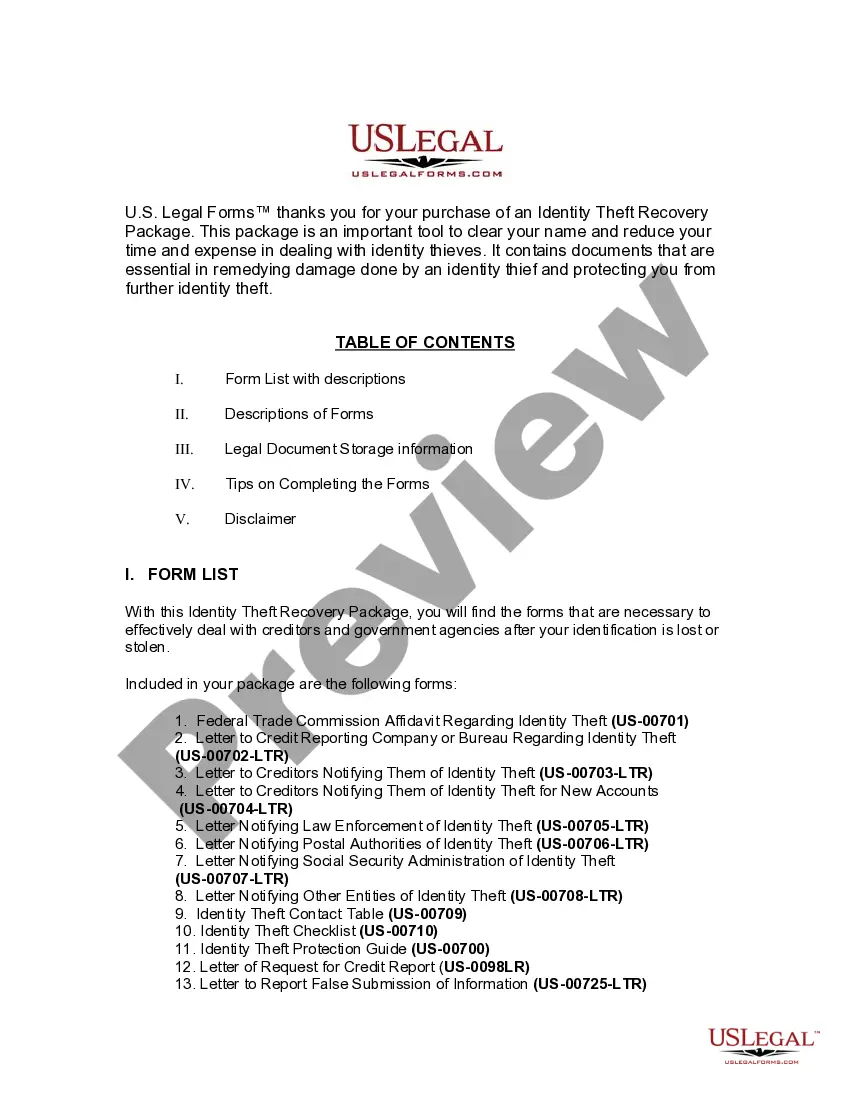
- Identity Theft Protection Guide
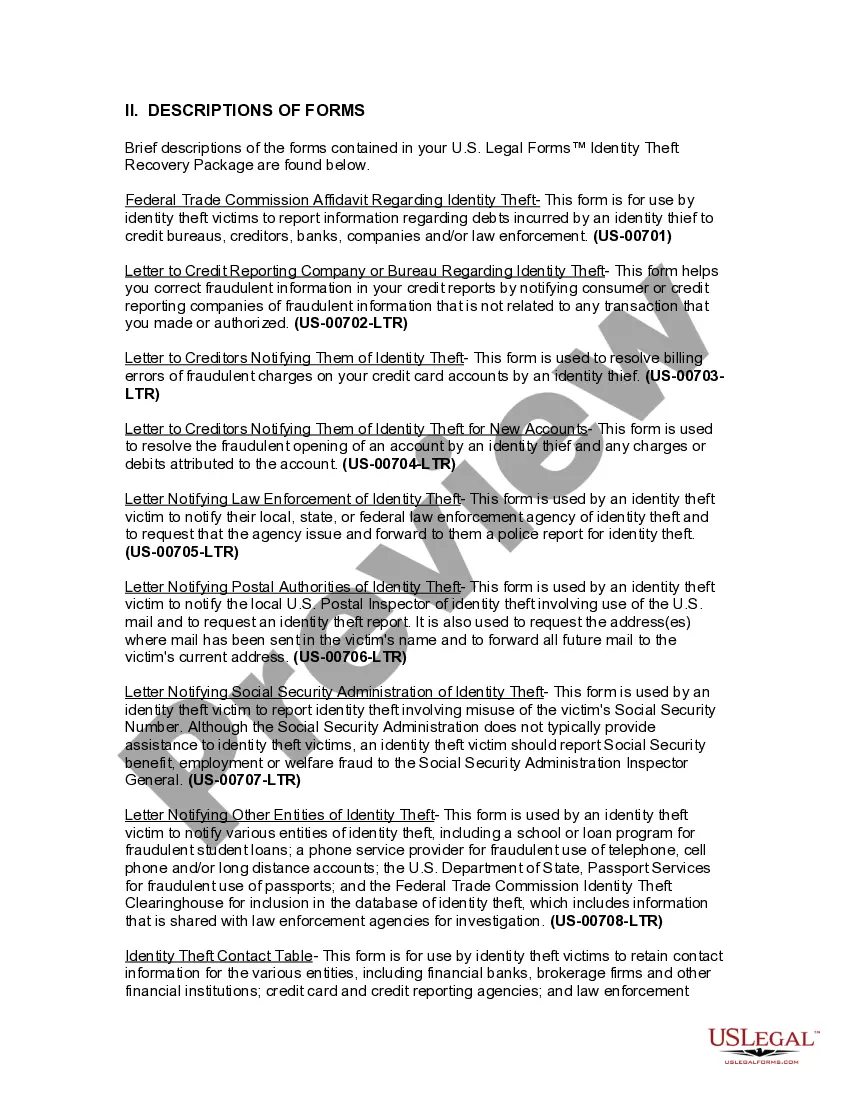
- Federal Trade Commission Affidavit regarding Identity Theft
- Letter to Credit Reporting Company or Bureau regarding Identity Theft
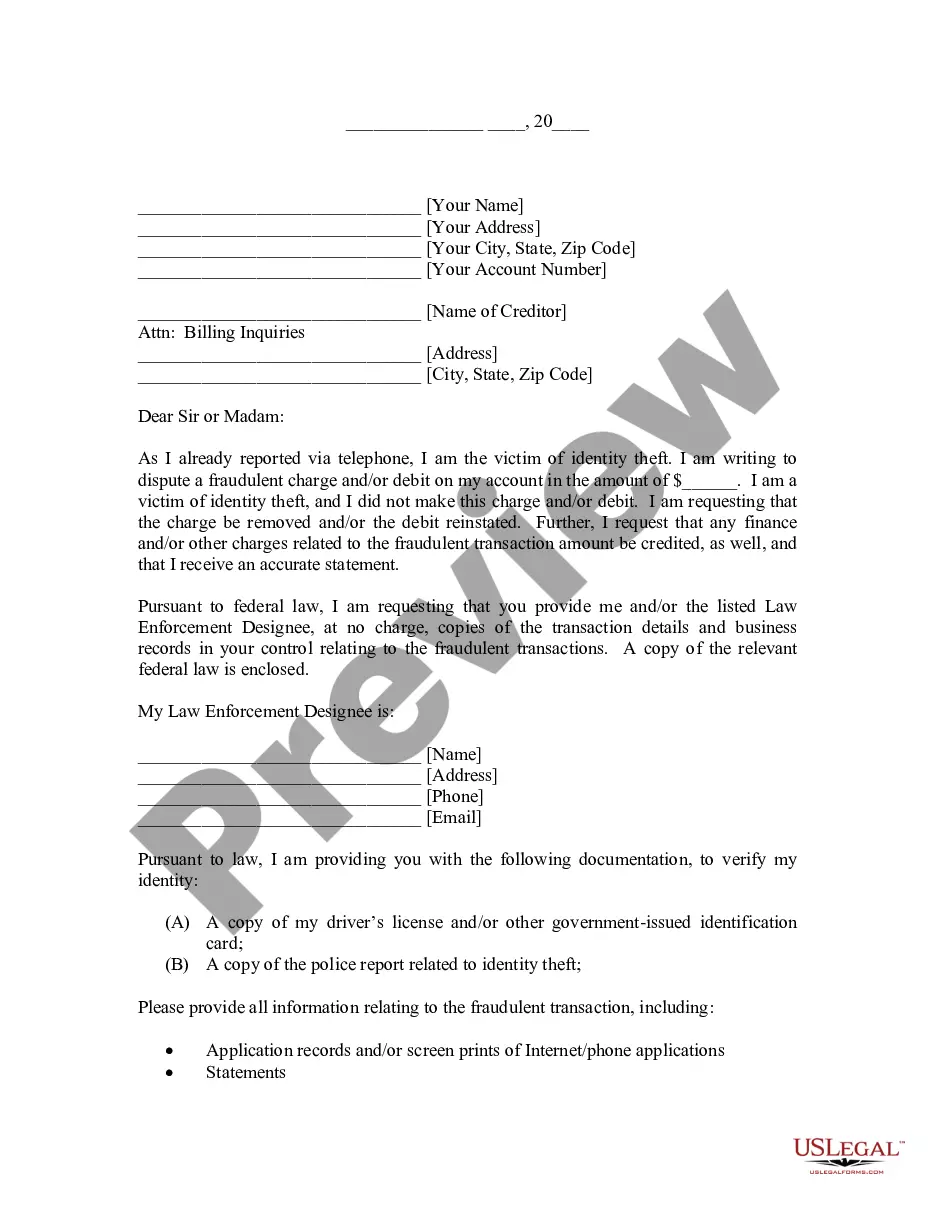
- Letter to Creditors notifying them of Identity Theft
- Letter to Creditors Notifying Them of Identity Theft for New Accounts
- Letter Notifying Law Enforcement of Identity Theft
- Letter Notifying Postal Authorities of Identity Theft
- Letter Notifying Social Security Administration of Identity Theft
- Letter to Other Entities Notifying Them of Identity Theft
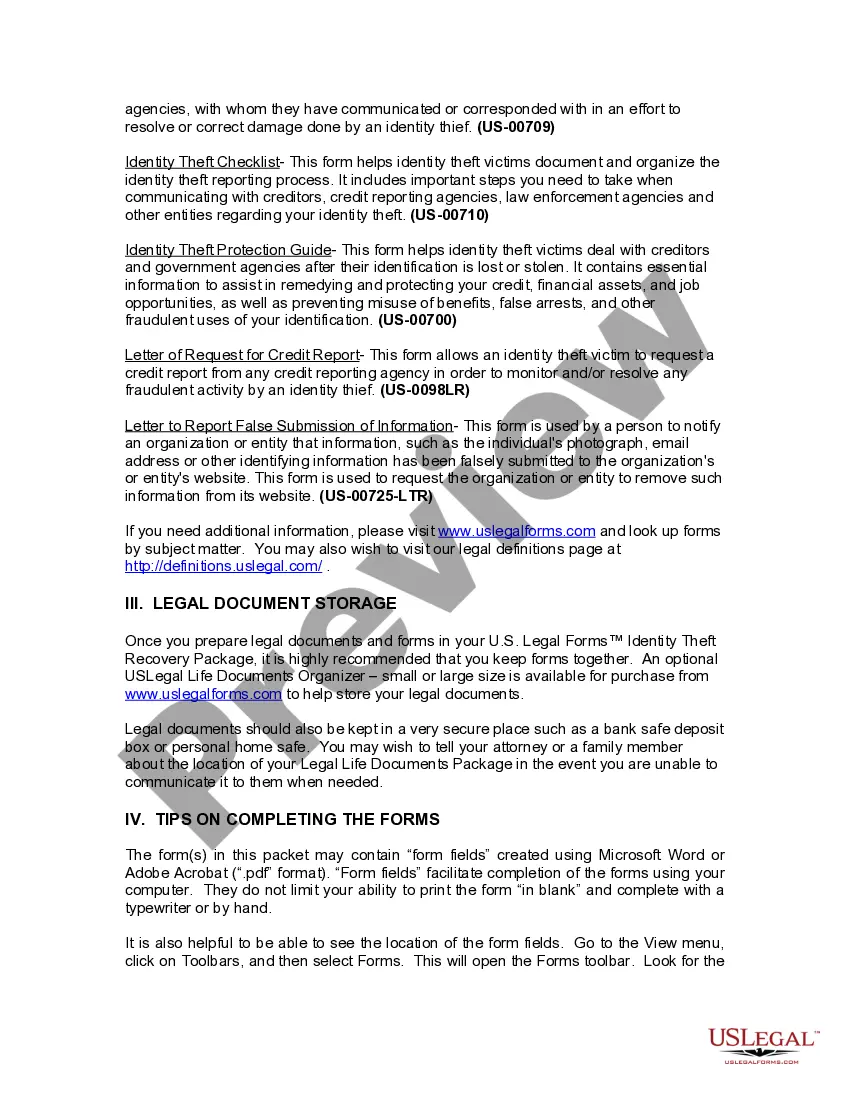
- Identity Theft Contact Table
- Identity Theft Checklist
- Sample Letter to Report False Submission of Information
- Sample Letter for Request for Free Credit Report Allowed by Federal Law
Situations where these forms applies
This package is useful in various scenarios, including:
- If you discover unauthorized transactions on your credit report.
- When you need to report the fraudulent use of your Social Security number.
- If an identity thief opens new accounts in your name without your consent.
- When you need to alert law enforcement or government agencies about identity theft.
- If you are facing challenges with creditors regarding fraudulent charges.
Who can use this document
- Individuals who have experienced identity theft in Ohio.
- Anyone needing to communicate with creditors about fraudulent charges.
- Victims looking to protect their credit and financial assets.
- People needing assistance in reporting identity theft to government agencies.
How to prepare this document
- Carefully review all included forms to understand your options.
- Fill out the Federal Trade Commission Affidavit regarding identity theft to officially document your claim.
- Prepare letters to creditors and credit reporting agencies to report fraudulent charges.
- Notify law enforcement and other relevant agencies using the appropriate letters provided.
- Utilize the Identity Theft Checklist to ensure you complete all necessary steps.
Notarization requirements for forms in this package
Most forms in this package do not require notarization. However, local laws or specific situations may demand it. Our online notarization service, powered by Notarize, lets you complete the process through a verified video call, available anytime.
Get your form ready online
Our built-in tools help you complete, sign, share, and store your documents in one place.
Make edits, fill in missing information, and update formatting in US Legal Forms—just like you would in MS Word.
Download a copy, print it, send it by email, or mail it via USPS—whatever works best for your next step.
Sign and collect signatures with our SignNow integration. Send to multiple recipients, set reminders, and more. Go Premium to unlock E-Sign.
If this form requires notarization, complete it online through a secure video call—no need to meet a notary in person or wait for an appointment.
We protect your documents and personal data by following strict security and privacy standards.

Make edits, fill in missing information, and update formatting in US Legal Forms—just like you would in MS Word.

Download a copy, print it, send it by email, or mail it via USPS—whatever works best for your next step.

Sign and collect signatures with our SignNow integration. Send to multiple recipients, set reminders, and more. Go Premium to unlock E-Sign.

If this form requires notarization, complete it online through a secure video call—no need to meet a notary in person or wait for an appointment.

We protect your documents and personal data by following strict security and privacy standards.
Common mistakes to avoid
- Failing to provide accurate information on the forms.
- Not sending the letters via certified mail, which is important for tracking.
- Neglecting to follow up with creditors or reporting agencies after sending notifications.
- Overlooking the need to keep copies of all correspondence.
Benefits of completing this package online
- Convenient access to essential legal forms from the comfort of your home.
- Editable documents that allow you to personalize your information easily.
- Reliable guidance from forms drafted by licensed attorneys.
- Immediate download after purchase, eliminating waiting times.
Legal use & context
- The documents provided in this package are designed for legal use during identity theft recovery.
- Utilizing these forms properly can help establish a legal basis for disputing fraudulent activities.
- Completing and submitting these forms can assist in protecting your credit rights under applicable laws.
Looking for another form?
Form popularity
FAQ
Analyze Your Situation. Place a Fraud Alert with a National Credit Reporting Agency (CRA) Check Your Financial Accounts. Check Your Computer for Viruses. Secure Your Proof of Identity. File a Complaint with the Federal Trade Commission (FTC) File a Police Report. Keep a Record of Your Actions.
Financial Identity Theft. Financial identity theft is by far the most common type of identity theft. Medical Identity Theft. Criminal Identity Theft. Child Identity Theft. Identity Cloning & Concealment. Synthetic Identity Theft. Mitigate Your Risk.
Report the fraud Contact the organisation or agency that issued your identity document and your financial institution. and tell them what happened. Report cybercrime securely to the Australian Cyber Security Centre at ReportCyber.
Under California law, you can report identity theft to your local police department. Ask the police to issue a police report of identity theft. Give the police as much information on the theft as possible. One way to do this is to provide copies of your credit reports showing the items related to identity theft.
The four types of identity theft include medical, criminal, financial and child identity theft.
At 1-877-IDTHEFT (1-877-438-4338) or go to: www.identitytheft.gov/ To order a copy of your Social Security Administration earnings and benefits statement, or to check whether someone has used your Social Security number to get a job or to avoid paying taxes, visit www.socialsecurity.gov/statement/.
Go to your local police office with: A copy of your FTC Identity Theft Report. Tell the police someone stole your identity and you need to file a report. Ask for a copy of the police report. You may need this to complete other steps.
Aggravated identity theft is punishable by a mandatory minimum sentence of imprisonment for two years or by imprisonment for five years if it relates to a terrorism offense. At least thus far, the government has rarely prosecuted the five-year terrorism form of the offense.
The answer is Yes. If you have some evidence that the person who is living with you stole your property, you can press a charge and sue him, because courts need evidence so if you are accusing someone make sure you have evidence which you have to prove before the courts. So don,t accuse unless you have solid evidence.